


There are 63 national parks in the United States. They sit inside a much larger National Park System, 433 units covering more than 85 million acres, but only 63 carry the capital-letters National Park designation. The parks themselves are spread across 30 states and 2 US territories. This page lists every one of them, by state, with 2025 visitation, acreage, entrance fees, and a link to our full guide for each park.
We’re the Pattiz brothers. We’ve spent the past decade filming in the national parks, and we keep this list checked against the National Park Service’s own roster. Last full update June 2026, using the 2025 visitation numbers NPS released in March.
The 433 figure moves more than folks expect. Five units joined the system in 2024 alone. Amache National Historic Site in Colorado, Blackwell School National Historic Site in Texas, Springfield 1908 Race Riot National Monument in Illinois, Carlisle Federal Indian Boarding School National Monument in Pennsylvania, and Frances Perkins National Monument in Maine, the 433rd. The 63 number has held since New River Gorge got the upgrade in 2020. A bill to make Ocmulgee Mounds in Georgia the 64th park (S. 1131) got a Senate subcommittee hearing on December 9, 2025 and is awaiting a committee vote; the prior Congress’s version cleared committee in 2024 and died when that Congress ended. We track all of this in our running count of every NPS unit.
Prefer the Map Version?
Everything on this page lives on our free interactive map. All 63 parks plus 500+ other NPS sites, filterable by state, with a park finder built in. No download, no email, no fee.
117 public lands destinations are under threat. Get the free briefing that 27,000+ people use to stay informed and take action.
All 63 National Parks at a Glance
One row per park, alphabetical. Visits are full calendar-year 2025 recreation visits straight from the NPS Stats API, not the 2023 numbers most lists are still running. Click any park for our complete guide.
| National Park | State(s) | Est. | 2025 Visits | Acres | Fee |
|---|---|---|---|---|---|
| Acadia | Maine | 1919 | 4,079,318 | 49,071 | $35 |
| American Samoa | American Samoa | 1988 | 43,258 | 8,256 | Free |
| Arches | Utah | 1971 | 1,511,740 | 76,678 | $30 |
| Badlands | South Dakota | 1978 | 1,139,361 | 242,755 | $30 |
| Big Bend | Texas | 1944 | 568,104 | 801,163 | $30 |
| Biscayne | Florida | 1980 | 486,567 | 172,971 | Free |
| Black Canyon of the Gunnison | Colorado | 1999 | 250,086 | 30,779 | $30 |
| Bryce Canyon | Utah | 1928 | 1,967,367 | 35,835 | $35 |
| Canyonlands | Utah | 1964 | 796,057 | 337,597 | $30 |
| Capitol Reef | Utah | 1971 | 1,388,476 | 241,904 | $20 |
| Carlsbad Caverns | New Mexico | 1930 | 410,778 | 46,766 | $15* |
| Channel Islands | California | 1980 | 227,186 | 249,561 | Free |
| Congaree | South Carolina | 2003 | 287,833 | 26,692 | Free |
| Crater Lake | Oregon | 1902 | 632,242 | 183,224 | $30 |
| Cuyahoga Valley | Ohio | 2000 | 3,025,325 | 32,571 | Free |
| Death Valley | California, Nevada | 1994 | 1,320,134 | 3,408,395 | $30 |
| Denali | Alaska | 1917 | 543,300 | 4,740,911 | $15* |
| Dry Tortugas | Florida | 1992 | 89,355 | 64,701 | $15* |
| Everglades | Florida | 1947 | 778,198 | 1,508,938 | $35 |
| Gates of the Arctic | Alaska | 1980 | 14,923 | 7,523,897 | Free |
| Gateway Arch | Missouri | 2018 | 2,209,028 | 91 | Free |
| Glacier | Montana | 1910 | 3,136,557 | 1,013,126 | $35 |
| Glacier Bay | Alaska | 1980 | 740,044 | 3,223,383 | Free |
| Grand Canyon | Arizona | 1919 | 4,430,653 | 1,201,647 | $35 |
| Grand Teton | Wyoming | 1929 | 3,800,648 | 310,044 | $35 |
| Great Basin | Nevada | 1986 | 161,210 | 77,180 | Free |
| Great Sand Dunes | Colorado | 2004 | 432,498 | 107,345 | $25 |
| Great Smoky Mountains | Tennessee, North Carolina | 1934 | 11,527,939 | 522,426 | Free |
| Guadalupe Mountains | Texas | 1972 | 206,423 | 86,367 | $10* |
| Haleakala | Hawaii | 1916 | 853,711 | 33,488 | $30 |
| Hawaii Volcanoes | Hawaii | 1916 | 1,877,854 | 344,812 | $30 |
| Hot Springs | Arkansas | 1921 | 2,494,611 | 5,554 | Free |
| Indiana Dunes | Indiana | 2019 | 2,629,497 | 15,349 | $25 |
| Isle Royale | Michigan | 1940 | 29,091 | 571,790 | $7* |
| Joshua Tree | California | 1994 | 2,932,644 | 795,155 | $30 |
| Katmai | Alaska | 1980 | 34,479 | 3,674,529 | Free |
| Kenai Fjords | Alaska | 1980 | 425,369 | 669,650 | Free |
| Kings Canyon | California | 1940 | 779,791 | 461,901 | $35 |
| Kobuk Valley | Alaska | 1980 | 7,786 | 1,750,716 | Free |
| Lake Clark | Alaska | 1980 | 19,778 | 2,619,816 | Free |
| Lassen Volcanic | California | 1916 | 504,777 | 106,589 | $30 |
| Mammoth Cave | Kentucky | 1941 | 660,734 | 52,830 | Free |
| Mesa Verde | Colorado | 1906 | 463,130 | 52,485 | $30 |
| Mount Rainier | Washington | 1899 | 1,635,342 | 236,381 | $30 |
| New River Gorge | West Virginia | 2020 | 1,958,440 | 7,021 | Free |
| North Cascades | Washington | 1968 | 46,925 | 504,780 | Free |
| Olympic | Washington | 1938 | 3,584,187 | 922,649 | $30 |
| Petrified Forest | Arizona | 1962 | 315,951 | 221,390 | $25 |
| Pinnacles | California | 2013 | 343,208 | 26,685 | $30 |
| Redwood | California | 1968 | 1,202,480 | 138,999 | Free |
| Rocky Mountain | Colorado | 1915 | 4,171,431 | 265,847 | $35 |
| Saguaro | Arizona | 1994 | 847,749 | 92,876 | $25 |
| Sequoia | California | 1890 | 1,378,337 | 404,062 | $35 |
| Shenandoah | Virginia | 1935 | 1,682,152 | 200,445 | $30 |
| Theodore Roosevelt | North Dakota | 1978 | 729,893 | 70,446 | $30 |
| Virgin Islands | US Virgin Islands | 1956 | 471,074 | 15,052 | Free |
| Voyageurs | Minnesota | 1975 | 206,326 | 218,222 | Free |
| White Sands | New Mexico | 2019 | 659,742 | 146,344 | $25 |
| Wind Cave | South Dakota | 1903 | 606,258 | 33,970 | Free |
| Wrangell-St. Elias | Alaska | 1980 | 108,840 | 8,323,146 | Free |
| Yellowstone | Wyoming, Montana, Idaho | 1872 | 4,762,988 | 2,219,790 | $35 |
| Yosemite | California | 1890 | 4,278,413 | 761,747 | $35 |
| Zion | Utah | 1919 | 4,984,525 | 147,242 | $35 |
A few things the table makes obvious. Wrangell-St. Elias tops the column at 8,323,146 acres for the park alone; add its preserve and the full unit runs 13,175,799 acres, which is why you’ll see both numbers floating around. Gateway Arch is the smallest at 91 acres, a rounding error by Alaska standards. NPS itself calls the park 91 acres; the federal acreage report carries 192.83 gross acres for the unit once the Old Courthouse grounds and street easements are counted. Great Smoky Mountains ran away with 2025 again at 11,527,939 visits, more than double second-place Zion, while Kobuk Valley saw 7,786 folks all year. If you want the parks sorted by acreage with the full methodology, that’s our national parks by size post. If you want them ranked by which ones are actually worth your vacation days, we scored all 63 in our national park rankings.
National Parks Checklist Map
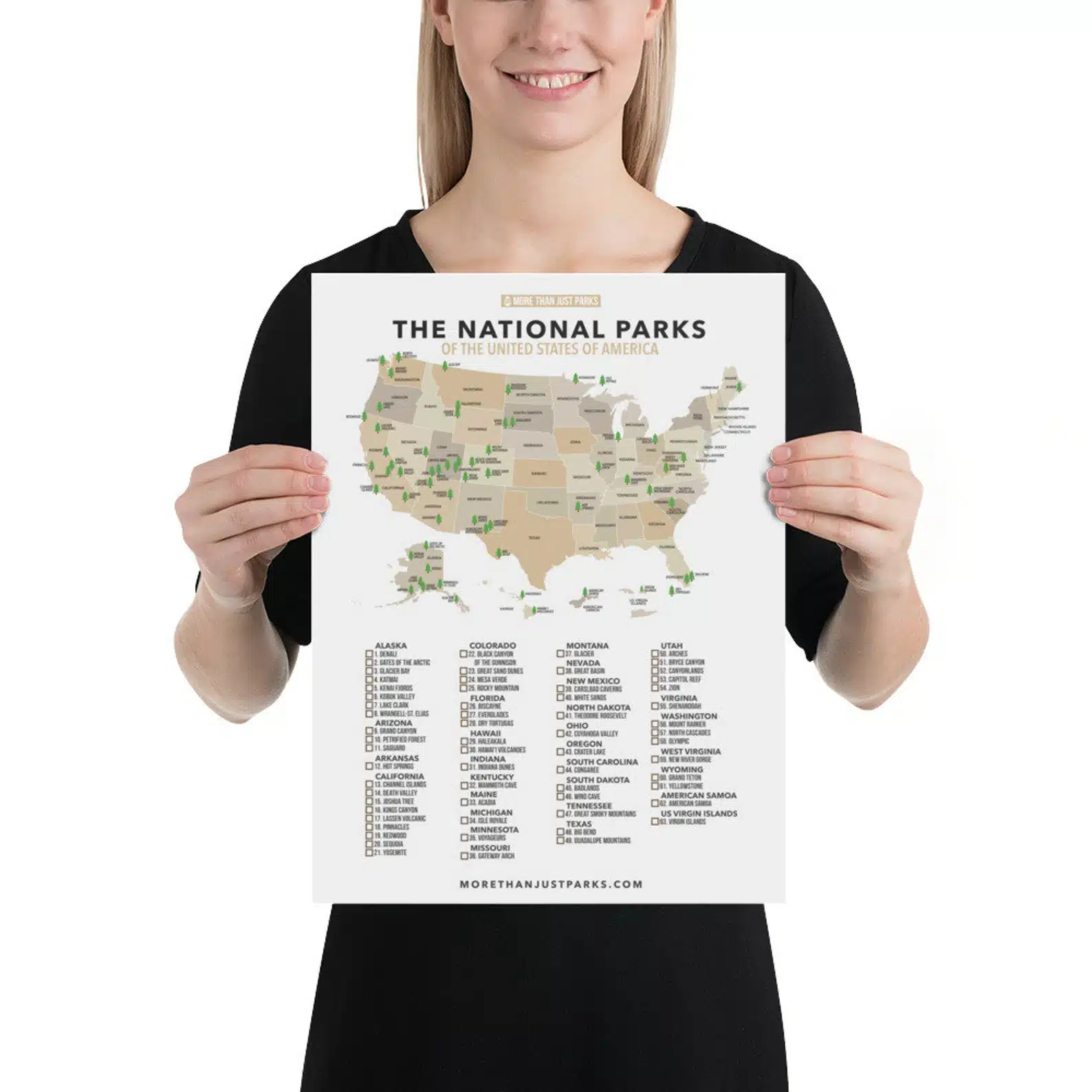
We built this checklist map for the folks who track their park count the way the rest of us track birthdays. Save it, mark it up, argue with our region lines. If you want more planning tools like this one as we build them, our weekly parks dispatch is free and the signup box is at the bottom of the page.
If you’d rather have something for the wall, we also make a national parks checklist poster and a framed 24×36 parks map from our own photography. Those cost money. The PDF does not.
List of National Parks by State
Every state and territory with a national park, alphabetical, plus the other NPS sites worth knowing while you’re there. Parks that cross state lines (Yellowstone, Great Smoky Mountains, Death Valley) appear under each state they touch.
Alaska (8 parks)

No state comes close. Alaska holds eight national parks and more than half of all national park acreage in the system.
- Denali, home of North America’s tallest peak at 20,310 feet, and the only Alaska park that charges an entrance fee
- Gates of the Arctic, entirely above the Arctic Circle with no roads and no trails
- Glacier Bay, 3.2 million acres of tidewater glaciers that most folks see from a cruise ship deck
- Katmai, where the brown bears of Brooks Falls live
- Kenai Fjords, Exit Glacier, the Harding Icefield, and the most reachable of the wild Alaska parks
- Kobuk Valley, arctic sand dunes and caribou crossings, and the least visited park in America at 7,786 visits in 2025
- Lake Clark, no roads in or out, floatplane required
- Wrangell-St. Elias, the largest national park in the country, 8.3 million acres of park plus another 4.8 million in its preserve
Beyond the parks, Alaska has Klondike Gold Rush National Historical Park in Skagway and Sitka National Historical Park. Our full Alaska national parks guide covers how to actually reach all eight.
American Samoa (1 park)

The National Park of American Samoa is the only US national park south of the equator, spread across three volcanic islands about 2,600 miles southwest of Hawaii. It logged 43,258 visits in 2025, and the folks who make it out there have earned the bragging rights.
Arizona (3 parks)

- Grand Canyon, 277 river miles long and a mile deep, with 4,430,653 visits in 2025
- Petrified Forest, a 225-million-year-old fossilized landscape on old Route 66
- Saguaro, two districts of giant cactus bookending Tucson
Arizona’s national monument roster runs deeper than almost any state’s, and Glen Canyon National Recreation Area and Canyon de Chelly add two more heavyweights. We list all of them in our Arizona national parks guide.
Arkansas (1 park)

Hot Springs is the smallest park outside Gateway Arch at 5,554 acres, and the federal government has protected it since 1832, four decades before Yellowstone. The state’s other heavyweight is Buffalo National River, America’s first national river. More in our Arkansas national parks guide.
California (9 parks)

California has more national parks than any other state.
- Channel Islands, five islands off the Ventura coast, boat access only
- Death Valley, shared with Nevada, the hottest place on Earth and the largest park in the lower 48 at 3.4 million acres
- Joshua Tree, where the Mojave and Colorado deserts meet
- Kings Canyon, granite canyons deeper than the Grand Canyon and the General Grant Tree
- Lassen Volcanic, all four types of volcano in one park
- Pinnacles, talus caves and California condors
- Redwood, the tallest trees on the planet
- Sequoia, home of General Sherman, the largest tree on Earth by volume
- Yosemite, the valley that started the whole preservation idea, 4,278,413 visits in 2025
Add Golden Gate National Recreation Area, Point Reyes National Seashore, Lava Beds, and Devils Postpile, and California’s NPS roster runs deeper than most countries’. Full rundown in our California national parks guide.
Colorado (4 parks)

- Black Canyon of the Gunnison, with the 2,250-foot Painted Wall, Colorado’s tallest cliff
- Great Sand Dunes, the tallest dunes in North America, rising about 750 feet
- Mesa Verde, ancestral Puebloan cliff dwellings, protected since 1906
- Rocky Mountain, 4,171,431 visits in 2025 and a timed-entry system to manage them
Colorado also picked up one of the system’s newest units, Amache National Historic Site, a WWII Japanese American incarceration site added in 2024. See our Colorado national parks guide.
Florida (3 parks)

- Biscayne, 95 percent water, just south of Miami
- Dry Tortugas, Fort Jefferson on a remote island 70 miles past Key West, boat or seaplane only
- Everglades, the largest subtropical wilderness in the United States
Big Cypress National Preserve and Canaveral National Seashore round out the state. Details in our Florida national parks guide.
Hawaii (2 parks)

- Haleakala, sunrise above the clouds from a 10,023-foot volcano on Maui
- Hawaii Volcanoes, Kilauea and Mauna Loa on the Big Island, both established in 1916
Pearl Harbor National Memorial is the state’s other essential NPS stop. More in our Hawaii national parks guide.
Idaho (1 park, sort of)
A small slice of Yellowstone crosses into Idaho, which counts, and the state will take it. Idaho’s headline NPS site is really Craters of the Moon National Monument and Preserve, a volcanic landscape big enough to swallow several actual parks. See our Idaho national parks guide.
Indiana (1 park)

Indiana Dunes stretches along 15 miles of Lake Michigan shoreline and pulled 2,629,497 visits in 2025, more than Glacier Bay, Big Bend, and Crater Lake combined. Our Indiana national parks guide has the rest of the state’s sites.
Kentucky (1 park)
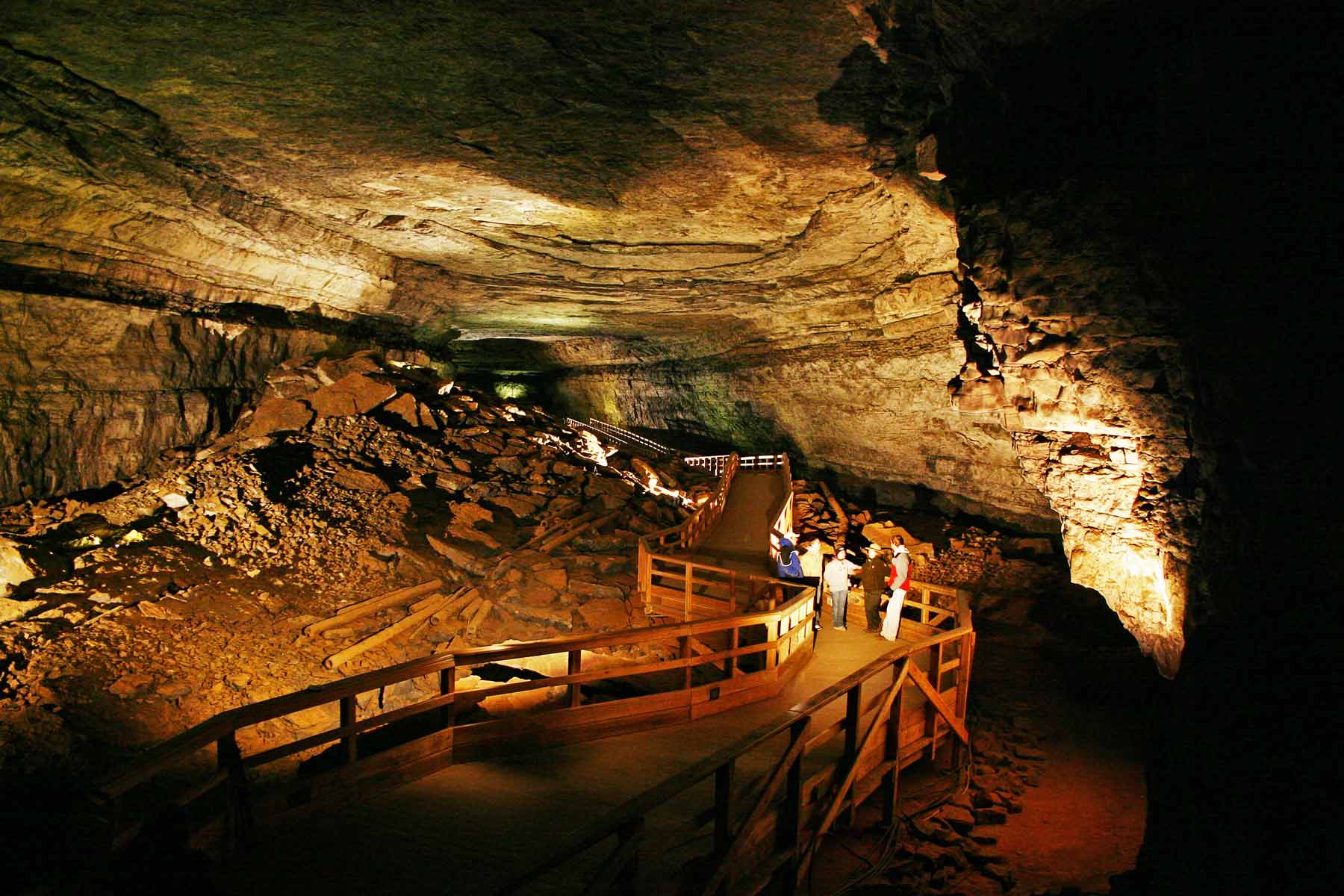
Mammoth Cave is the longest known cave system on Earth, with more than 400 mapped miles and counting. Entry to the park is free; the cave tours are not. Kentucky also has Abraham Lincoln Birthplace and Cumberland Gap. More in our Kentucky national parks guide.
Maine (1 park)

Acadia set an all-time record with 4,079,318 visits in 2025. From October through early March, Cadillac Mountain catches the first sunrise in the United States. Maine also gained Frances Perkins National Monument in December 2024, the 433rd unit in the system. Our Maine national parks guide covers both, plus Katahdin Woods and Waters.
Michigan (1 park)

Isle Royale sits in Lake Superior, reachable only by boat or seaplane, and it’s the only national park that closes completely for winter. Folks who go tend to go back; it has one of the highest repeat-visit rates in the system. Michigan’s lakeshores, Pictured Rocks and Sleeping Bear Dunes, are in our Michigan national parks guide.
Minnesota (1 park)

Voyageurs is a water park in the original sense, a maze of lakes and islands along the Canadian border best explored by boat. Grand Portage National Monument and the Mississippi River corridor are in our Minnesota national parks guide.
Missouri (1 park)

Gateway Arch is the smallest national park at 91 acres and the most urban, sitting on the St. Louis riverfront. Whether a 630-foot stainless steel monument is really a “national park” is a fight we cover in our rankings. Ozark National Scenic Riverways is the state’s wilder side; see our Missouri national parks guide.
Montana (2 parks)

- Glacier, Going-to-the-Sun Road and 3,136,557 visits in 2025
- Yellowstone, three of the park’s five entrances are in Montana
Little Bighorn Battlefield and Bighorn Canyon are the other Montana sites worth a detour. Full list in our Montana national parks guide.
Nevada (2 parks)

- Great Basin, Wheeler Peak, ancient bristlecone pines, and Lehman Caves, all without an entrance fee
- Death Valley, shared with California, including the Nevada-side ghost town country
Lake Mead National Recreation Area and Tule Springs Fossil Beds sit minutes from Las Vegas. See our Nevada national parks guide.
New Mexico (2 parks)
- Carlsbad Caverns, an underground room big enough to hold several football fields
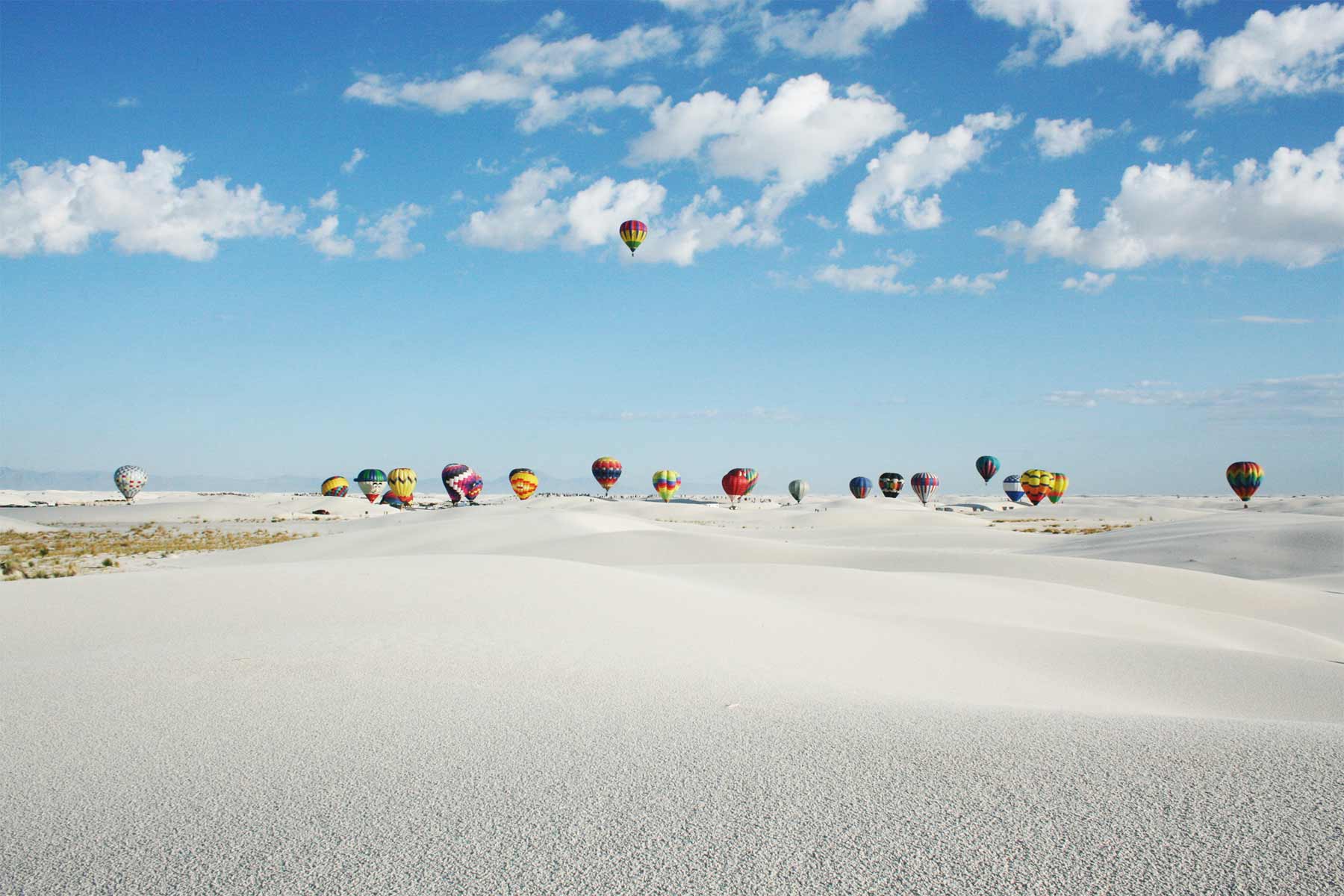
- White Sands, the world’s largest gypsum dunefield, a park since 2019
Bandelier and Chaco Culture cover a thousand years of human history in between. Our New Mexico national parks guide has the full list.
North Carolina (1 park)

North Carolina shares Great Smoky Mountains with Tennessee, and the NC side (Oconaluftee, Cataloochee, Clingmans Dome) is the quieter half of America’s most visited park. The Blue Ridge Parkway and Cape Hatteras National Seashore are giants in their own right. See our North Carolina national parks guide.
North Dakota (1 park)
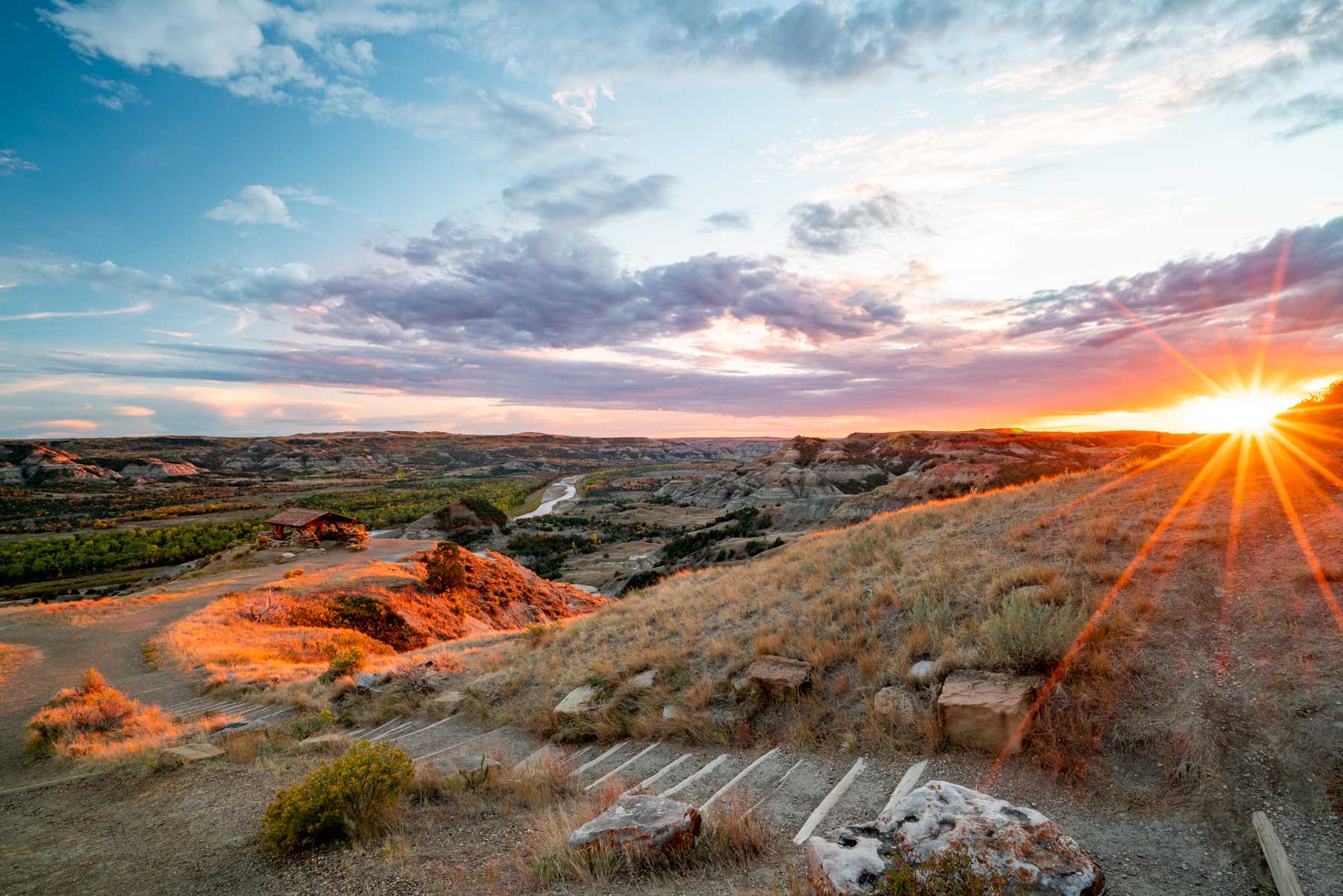
Theodore Roosevelt protects the badlands where the future president ranched in the 1880s, wild horses included. It’s the only national park named for a person. More in our North Dakota national parks guide.
Ohio (1 park)

Cuyahoga Valley runs between Cleveland and Akron and drew 3,025,325 visits in 2025, free of charge. Ohio’s Hopewell Ceremonial Earthworks became a UNESCO World Heritage Site in 2023. Full roster in our Ohio national parks guide.
Oregon (1 park)

Crater Lake is the deepest lake in the United States at 1,943 feet, filling a collapsed volcano with snowmelt and rain. Oregon Caves and John Day Fossil Beds are in our Oregon national parks guide.
South Carolina (1 park)

Congaree holds the largest intact old-growth bottomland hardwood forest left in the Southeast, with some of the tallest trees east of the Mississippi. Fort Sumter and the Reconstruction Era sites are in our South Carolina national parks guide.
South Dakota (2 parks)
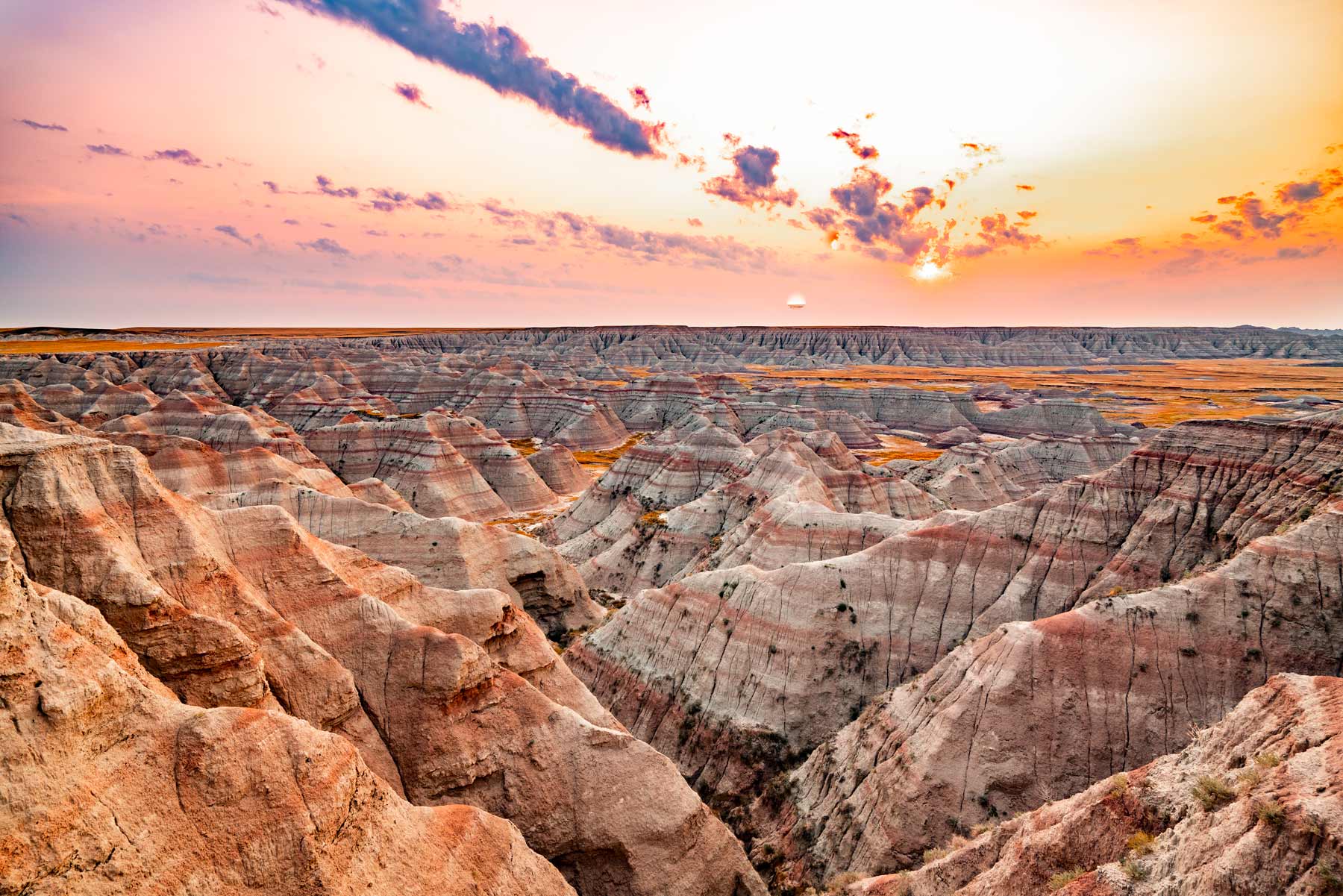
- Badlands, striped rock formations and one of the country’s richest fossil beds
- Wind Cave, one of the world’s longest caves, famous for boxwork formations, with free entry and bison up top
Mount Rushmore, Jewel Cave, and Minuteman Missile are all within an hour or two. Our South Dakota national parks guide maps the loop.
Tennessee (1 park)

Great Smoky Mountains, shared with North Carolina, was the most visited national park in 2025 at 11,527,939 visits. Entry is free, though parking tags now run $5 a day. Big South Fork and the Tennessee end of the Natchez Trace are in our Tennessee national parks guide.
Texas (2 parks)

- Big Bend, 801,163 acres along the Rio Grande with some of the darkest night skies of any park
- Guadalupe Mountains, home of Guadalupe Peak, the highest point in Texas at 8,751 feet
Texas also added Blackwell School National Historic Site in Marfa to the system in 2024. San Antonio Missions and Padre Island round out our Texas national parks guide.
US Virgin Islands (1 park)

Virgin Islands National Park covers roughly 60 percent of St. John, including Trunk Bay and its underwater snorkel trail. Buck Island Reef and Christiansted on St. Croix are the territory’s other NPS sites.
Utah (5 parks)

The Mighty 5, all within a day’s drive of each other.
- Arches, more than 2,000 documented stone arches, timed entry dropped for 2026
- Bryce Canyon, the largest concentration of hoodoos on Earth
- Canyonlands, Utah’s largest park, split into four districts by the Green and Colorado rivers
- Capitol Reef, a 100-mile wrinkle in the Earth’s crust with orchards you can pick in season
- Zion, the second most visited park in America in 2025 at 4,984,525
Our Utah national parks guide covers all five plus the monuments in between, and our Utah road trip itinerary strings them together.
Virginia (1 park)

Shenandoah is built around Skyline Drive, 105 miles of Blue Ridge crest within a couple hours of Washington DC. Virginia’s deep bench of historical parks, Colonial to Appomattox, is in our Virginia national parks guide.
Washington (3 parks)

- Mount Rainier, a 14,410-foot glaciated volcano ringed by wildflower meadows
- North Cascades, more than 300 glaciers and just 46,925 visits in 2025, fewer than several Alaska parks
- Olympic, rainforest, alpine ridge, and wilderness coast in a single park, 3,584,187 visits in 2025
All three sit within a few hours of Seattle. Our Washington national parks guide covers the trio.
West Virginia (1 park)

New River Gorge became the 63rd national park in 2020 and drew 1,958,440 visits in 2025, more than Arches. Harpers Ferry and Gauley River are in our West Virginia national parks guide.
Wyoming (2 parks)

- Grand Teton, the most photogenic mountain range in America, 3,800,648 visits in 2025
- Yellowstone, the world’s first national park, established 1872, with most of its 2.2 million acres in Wyoming
The two parks connect via the John D. Rockefeller Jr. Memorial Parkway, and Devils Tower, the country’s first national monument, anchors the state’s northeast corner. See our Wyoming national parks guide.
States Without a National Park
Twenty states have no national park, but every one of them has National Park Service sites, and a few of those sites would embarrass some actual parks. The standout in each, with our full state guide linked.
- Alabama, Little River Canyon National Preserve, a 600-foot-deep canyon on top of a mountain
- Connecticut, Weir Farm National Historical Park, the system’s park for American painting
- Delaware, First State National Historical Park, which finally got Delaware on the NPS map in 2013
- Georgia, Cumberland Island National Seashore, wild horses on an undeveloped barrier island. Watch this space; Ocmulgee Mounds may yet become park number 64
- Illinois, Pullman National Historical Park, plus the new Springfield 1908 Race Riot National Monument, added in 2024
- Iowa, Effigy Mounds National Monument, sacred mounds above the Mississippi
- Kansas, Tallgrass Prairie National Preserve, the last big remnant of an ecosystem that once covered 170 million acres
- Louisiana, Jean Lafitte National Historical Park and Preserve, swamp and jazz in one unit
- Maryland, Assateague Island National Seashore, the one with the wild ponies on the beach
- Massachusetts, Cape Cod National Seashore, 40 miles of Atlantic beach
- Mississippi, Vicksburg National Military Park and the Natchez Trace Parkway
- Nebraska, Scotts Bluff National Monument, the Oregon Trail’s great landmark
- New Hampshire, Saint-Gaudens National Historical Park, the sculptor’s studio in the hills
- New Jersey, Paterson Great Falls and a share of Delaware Water Gap National Recreation Area
- New York, the Statue of Liberty, which outdraws most national parks without being one
- Oklahoma, Chickasaw National Recreation Area, springs and swimming holes
- Pennsylvania, Independence Hall and Gettysburg, plus the new Carlisle Federal Indian Boarding School National Monument, added in 2024
- Rhode Island, Roger Williams National Memorial and the Blackstone River Valley
- Vermont, Marsh-Billings-Rockefeller National Historical Park, the birthplace of American conservation thinking
- Wisconsin, Apostle Islands National Lakeshore and its sea caves
National Park Fee-Free Days in 2026
The National Park Service waives entrance fees on 10 days in 2026. Big change this year, though. Starting in 2026, fee-free days apply to US citizens and residents only. Everyone else pays the normal entrance fee, plus the new nonresident surcharge where it applies.
- February 16, Presidents Day
- May 25, Memorial Day
- June 14, Flag Day
- July 3, 4, and 5, Independence Day weekend
- August 25, the National Park Service’s 110th birthday
- September 17, Constitution Day
- October 27, Theodore Roosevelt’s birthday
- November 11, Veterans Day
Two fine-print items worth knowing. First, only the entrance fee is waived; timed-entry reservations, camping, and tour fees still apply, and the fee-free crowds are real. Second, as of January 1, 2026, folks visiting from outside the US pay a $100 per person surcharge at 11 of the busiest parks (Acadia, Bryce Canyon, Everglades, Glacier, Grand Canyon, Grand Teton, Rocky Mountain, Sequoia and Kings Canyon, Yellowstone, Yosemite, and Zion), or they can buy the $250 nonresident annual pass instead. We break down every park that requires advance booking in our 2026 national park reservations guide, and the Zion changes specifically in our Zion fee and permit explainer.
List of National Parks FAQ
How many national parks are there?
There are 63 national parks among the 433 units of the National Park System. The other 370 units carry designations like national monument, national historical park, national seashore, and national recreation area. Our full breakdown of every designation keeps the running tally.
Which state has the most national parks?
California, with nine. Alaska has eight, Utah five, and Colorado four. Twenty states have none.
What is the largest national park?
Wrangell-St. Elias in Alaska, at 13,175,799 acres counting its preserve, about 8.3 million for the park portion alone. Either way it’s bigger than nine US states. The smallest is Gateway Arch at 91 acres. Full table in our parks by size post.
What was the most visited national park in 2025?
Great Smoky Mountains, with 11,527,939 recreation visits, more than double any other park. Zion was second at 4,984,525. The least visited was Kobuk Valley in Alaska at 7,786.
What is the newest national park?
New River Gorge in West Virginia, designated in December 2020. White Sands (2019), Indiana Dunes (2019), and Gateway Arch (2018) came just before it. A bill to make Ocmulgee Mounds in Georgia the 64th park (S. 1131) got a Senate subcommittee hearing on December 9, 2025 and is awaiting a committee vote; the prior Congress’s version died without a floor vote.
What is the oldest national park?
Yellowstone, established March 1, 1872, the first national park in the world. Sequoia and Yosemite followed in 1890.
Do all national parks charge an entrance fee?
No. Twenty-three of the 63 parks are free to enter, including every Alaska park except Denali. The most any park charges is $35 per vehicle, and the $80 America the Beautiful annual pass covers all of them. Nonresidents pay an additional $100 surcharge at 11 popular parks as of 2026.
Why Listen to Us About the National Parks

More Than Just Parks started when we set out to film the national parks, all of them, with cinema cameras instead of phones. A decade later our park films have been featured by outlets from the Weather Channel to ABC News, and we maintain this list against the NPS roster and the annual visitation release because we got tired of seeing ranking sites run three-year-old numbers. Every figure on this page is dated and sourced, and when something changes (a new unit, a new fee, a 64th park) we update it.
More National Parks Resources
- The interactive national parks map, all 63 parks plus 500+ NPS sites
- All 63 national parks ranked, scored on a 50-point scale
- National parks by size, every park sorted by acreage
- How many national parks are there?, every designation counted
- List of US national monuments, by state with managing agency
- Which parks require reservations in 2026, the full system-by-system guide


