congaree national park south carolina
We’ll give you eight reasons why you’ll want to make South Carolina your next vacation destination | South Carolina National Park

South Carolina National Parks! We’ve got eight incredible national park sites for you to see on your next visit to the Palmetto State.

Parks Featured in This Guide

2 parks mapped — click a pin for details

I’ve been to so many of these amazing places since retiring from teaching in 2018. Did I mention that I taught history? I spent a lifetime teaching about the history behind these momentous sites. Then I got to see them firsthand. And now I’m sharing the stories of these incredible places with you. It doesn’t get any better than that!

South Carolina National Parks includes historic sites, fascinating forts, gorgeous parks, legendary trails and more.

South Carolina National Parks
Downtown Charleston South Carolina Skyline Aerial. (Shutterstock-Kevin Ruck)

So, What Is A National Park?

We get asked that question a lot because there’s a difference between a “national park” and a “national park site.” To help you understand that difference you might want to check out our article titled: What Is A National Park Really?

If you’re planning a trip to the Palmetto State then one book that I highly recommend is: Classic Carolina Road Trips from Columbia: Historic Destinations & Natural Wonders (History & Guide) by Tom Poland.

We’re going to give you eight wonderful reasons why you’ll want to make South Carolina your next vacation destination.

South Carolina National Parks
Congaree National Park | South Carolina National Parks

Table Of Contents

National Parks in South Carolina


1. Charles Pinckney National Historic Site

For me, one of the best parts of traveling to a national park site is how much I’m able to learn about people, places and events. For example, when you travel to the Abraham Lincoln Birthplace National Historical Park in Kentucky, no one needs to tell you who he was or what he did.

South Carolina National Parks provides a unique experience to become acquainted with some of history’s lesser known yet important figures.

A case in point is the Charles Pinckney National Historic Site.

Did you know that Charles Pinckney was an American Founding Father, planter, and politician? He was also a signer of the United States Constitution.

Pinckney was elected and served as the 37th Governor of South Carolina, later serving two more non-consecutive terms. He also served as a U.S. Senator and a member of the House of Representatives.

With the support of Alexander Hamilton, Pinckney even became the Federalist vice presidential nominee in the 1800 presidential election.

Charles Pinckney National Historic Site | South Carolina National Parks
Charles Pinckney National Historic Site in South Carolina | Courtesy of Wikimedia Commons

Charles Pinckney’s Major Contributions To The Constitution

According to scholars, among Pinckney’s major contributions to the Constitution were the following:

The elimination of religious testing as a qualification to office.
The division of the Legislature into House and Senate.
The power of impeachment being granted only to the House.
The establishment of a single chief executive, who will be called President.
The power of raising an army and navy being granted to Congress.
The prohibition of states to enter into a treaty or to establish interfering duties.
The regulation of interstate and foreign commerce being controlled by the national government. (Source: NPS)

To learn more about Charles Pinckney, I recommend: Forgotten Founder: The Life and Times of Charles Pinckney by Marty D. Matthews.

10 BEST Revolutionary War Sites In America


Things To Do At The Charles Pinckney National Historic Site

Visitors to the Charles Pinckney National Historic Site can take a guided tour of the main house, which was the home of Charles Pinckney, a signer of the U.S. Constitution and a prominent politician during the early years of the United States.

Visitors can also explore the grounds of the site, which include a network of nature trails and a small museum that features exhibits on the history of the Pinckney family and the Lowcountry region of South Carolina.

the site offers various ranger-led programs and events throughout the year, such as nature walks and history talks.

South Carolina National Parks
Charles Pinckney National Historic Site | Courtesy of Wikimedia Commons

Arkansas National Parks (An Expert Guide)


2. Congaree National Park

One of my favorite South Carolina National Parks actually has no historical narrative behind it. Believe it or not.

Visiting Congaree National Park is like going back in time. Here you’ll discover ancient cypress trees and waterways that once dominated the coastal southern United States but now are found only in a few pockets of protected land.

Congaree happens to be one of the more forgotten parks on the east coast which is great for those of us who like to avoid crowds!

Most people don’t think of South Carolina when they think of national parks, but you’ll definitely want to add this magical 26,000 acre park to your must-see list.

Congaree National Park | South Carolina National Parks
Autumn in Congaree National Park (Photo Credit: jt-fineart.com)

Congaree National Park Facts


Things To Do At Congaree National Park

A great place to begin your visit is the Harry Hampton Visitor Center. Visitors can see exhibits on geology, animal life, and human history that are native to this part of South Carolina. There’s an 18-minute film to introduce you to the various natural wonders of the park.

Congaree National Park features over 25 miles of hiking trails and 2.4 miles of boardwalk. The Boardwalk Loop Trail provides access to Weston Lake and other trails that wind through the Congaree floodplain. Bring your camera as this trail is a great place to get that perfect shot.

You can go canoeing or kayaking at Congaree. Cedar Creek is one of the best places to launch your vessel into the water. It marks the start of thae managed Cedar Creek Canoe Trail. Keep an eye out for otters, turtles and the occasional alligator as you paddle along. And have fun!

Congaree is home to one of the largest loblolly pines in the whole world. You should definitely check it out while you’re there.

Congaree National Park | South Carolina National Parks
Congaree National Park | Courtesy of Wikimedia Commons

There Are Hiking Trails, Leaf Strewn Forests & Southern Plantations Too

Another wonderful stop is the Congaree Bluffs Heritage Preserve on the south side of the national park. It’s a magnificent maze of hiking paths and leaf-strewn forests.

It covers 201 acres, encompassing groups of hickory, oak, and tupelo tree, often clad in beautiful clusters of Spanish moss.

If you’re looking for a little history then you don’t have far to look. Near the park is the Millford Plantation Historic Site. You can explore a 19th century plantation household that was home to more than 600 slaves prior to the Civil War.

Millford Plantation Historic Site | South Carolina National Parks
Near Congaree is the Millford Plantation Historic Site | Courtesy of Wikimedia Commons

To learn more about this amazing place, check out: Congaree National Park Facts


3. Cowpens National Battlefield

Now if you enjoy history in general and the history of the American Revolution in particular then South Carolina National Parks will not disappoint you.

Cowpens National Battlefield commemorates the Battle of Cowpens, which was fought on January 17, 1781 during the American Revolutionary War.

The battle was a significant victory for the Patriots, as a smaller and untrained force, led by Brigadier General Daniel Morgan, defeated a larger and more experienced force of British soldiers led by Lieutenant Colonel Banastre Tarleton.

The Patriots’ success at Cowpens helped to turn the tide of the war in the South and ultimately contributed to the eventual defeat of the British at Yorktown.

The battlefield was established as a National Battlefield Site on March 4, 1929 and was later made a National Battlefield Park on October 11, 1972.

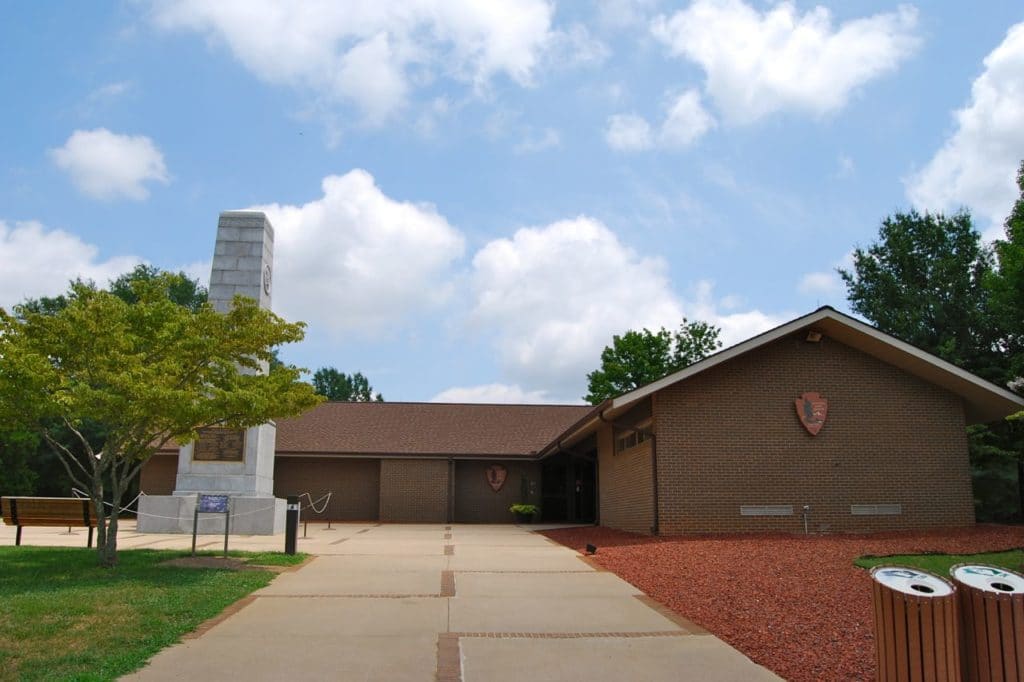
Cowpens National Battlefield Visitor Center | South Carolina National Parks
Cowpens National Battlefield Visitor Center | Courtesy of Wikimedia Commons

Things To Do At Cowpens National Battlefield

There are several activities and things to do at Cowpens National Battlefield. Some of the popular options include:

  1. Visiting the Visitor Center: The Visitor Center has exhibits and displays that provide information about the Battle of Cowpens and the history of the American Revolution in the South.
  2. Taking a self-guided tour: Visitors can take a self-guided tour of the battlefield and see the sites where the battle took place, including key locations such as the Patriot and British lines and the areas where various engagements occurred.
  3. Ranger-led Programs: The park offers ranger-led programs such as battlefield walks, talks, and demonstrations that provide visitors with a deeper understanding of the battle and the history of the American Revolution.
  4. Hiking: There are several hiking trails in the park that visitors can use to explore the battlefield and see the sites where the battle took place.
  5. Picnic: visitors can enjoy picnic with family and friends in the park’s picnic area.
  6. Annual events: The park also hosts annual events such as living history demonstrations, reenactments, and educational programs that provide visitors with a glimpse into what life was like during the Revolutionary War.
South Carolina National Parks
Cowpens National Battlefield Park, battlefield site. (Shutterstock-Zack Frank)

10 BEST Revolutionary War Sites In America


4. Fort Sumter & Fort Moultrie National Historical Park

If you enjoy military history then you’ll love Fort Sumter & Fort Moultrie National Historical Park. It’s located in Charleston, South Carolina and is made up of two historic forts: Fort Sumter and Fort Moultrie.

Fort Sumter
Fort Sumter | Courtesy of Wikimedia Commons

Fort Sumter was built in the early 1850s and was the site of the first shots of the American Civil War on April 12, 1861, when Confederate artillery fired on the fort, which was held by Union troops.

The fort was under siege for 34 hours before the Union troops were forced to surrender. The fort was later used as a prison and as a location to store Confederate artillery.

Today, Fort Sumter is a National Monument, which visitors can reach only by boat.

South Carolina National Parks
Fort Moultrie | Courtesy of NPS

The Fort Was Held By Confederate Troops

Fort Moultrie was built in the late 1700s and was the site of several battles during the American Revolution and the Civil War. It was named after the commander of the fort, William Moultrie, who successfully defended it against a British attack in 1776.

During the Civil War, the fort was held by Confederate troops and was the site of several engagements, including the Battle of Sullivan’s Island in 1861. Today, Fort Moultrie is a National Historic Site, and visitors can explore the fort and its museum.

Together, Fort Sumter and Fort Moultrie serve as a reminder of the important role that Charleston played in American history, and the park offers a variety of educational programs, ranger-led tours, and other activities that help visitors learn about the history of these forts and the events that took place there.

Fort Sumter National Monument | South Carolina National Parks
An aerial view of the Fort Sumter National Monument | Courtesy of the National Park Service

10 BEST Civil War Sites In America


Things To Do

Here are some things to do while visiting:

  1. Fort Sumter Tour: Take a guided tour of Fort Sumter, the site where the first shots of the Civil War were fired. Visitors can take a ferry from downtown Charleston to Fort Sumter and explore the historic fort with a park ranger.
  2. Fort Moultrie Tour: Visit Fort Moultrie, which played a significant role in the American Revolution and the Civil War. Visitors can take a self-guided tour of the fort and learn about its history through interactive exhibits.
  3. Ranger-led Programs: Participate in ranger-led programs, including guided tours, talks, and demonstrations, which are offered throughout the year.
  4. Beaches: Relax on the beaches at Sullivan’s Island, which is part of the national park. Visitors can swim, sunbathe, and enjoy the ocean views.
  5. Birdwatching: Fort Sumter and Fort Moultrie National Historical Park is home to a variety of bird species, including pelicans, egrets, herons, and ospreys. Visitors can bring their binoculars and go birdwatching.
  6. Hiking and Biking: The park offers hiking and biking trails, which offer scenic views of the fortifications and the surrounding landscapes.
  7. Picnicking: The park has several picnic areas, which provide a great opportunity to relax and enjoy the views of the forts and the ocean.
  8. History Exhibits: Visit the park’s visitor center, which features exhibits about the history of Fort Sumter and Fort Moultrie, as well as the Civil War.
  9. Junior Ranger Program: Children can participate in the park’s Junior Ranger Program, which includes fun and educational activities that teach them about the history and ecology of the park.
  10. Living History Events: The park hosts living history events throughout the year, where visitors can see reenactors in period costumes demonstrate military drills, musket firing, and other activities that showcase life during the Civil War era.
South Carolina National Parks
Fort Sumter Visitor Center | Courtesy of NPS

5. Kings Mountain National Military Park

The Battle of Kings Mountain was fought on October 7, 1780 during the American Revolutionary War. It was a decisive victory for the Patriots (colonial rebels) over the Loyalists (colonists loyal to the British Crown).

The Patriots, led by Brigadier General Isaac Shelby and Colonel William Campbell, defeated a force of Loyalists led by Major Patrick Ferguson.

The battle took place near the border of North and South Carolina and was a significant turning point in the southern campaign of the Revolutionary War. The Patriots captured a significant number of prisoners and supplies, while the Loyalists suffered heavy casualties.

The victory at Kings Mountain boosted morale among the Patriots and helped to turn the tide of the war in the South in favor of the rebels.

South Carolina National Parks
Kings Mountain National Military Park | Courtesy of NPS

10 BEST Revolutionary War Sites In America


Things To See & Do At Kings Mountain

At Kings Mountain National Military Park, visitors can participate in a variety of activities, including hiking on the park’s trails, visiting the visitor center and museum to learn about the history of the Battle of Kings Mountain, and attending ranger-led programs and tours.

The park also offers picnicking and camping facilities, as well as opportunities for birdwatching and wildlife viewing.

the park has a self-guiding auto tour and Battlefield trail, which allows visitors to explore the site of the Revolutionary War battle.

Kings Mountain National Military Park | South Carolina National Parks
There are some beautiful hiking trails at Kings Mountain National Military Park | Courtesy of the National Park Service

RELATED: North Carolina National Parks For Your Visit To The Tar Heel State


6. Ninety Six National Historic Site

Ninety Six National Historic Site is located in South Carolina and is named for the nearby town of Ninety Six, which was named for its distance from a Cherokee Indian village in the area.

The site is significant for its role in the American Revolutionary War, specifically the 1781 Battle of Star Fort. The Battle of Star Fort was a siege on the British fortifications at Ninety Six, which was led by General Nathanael Greene on the patriot side and Lt. Col. John Cruger on the British side. The siege lasted for 27 days and ultimately, the Patriots were forced to withdraw.

The site also contains the remains of the original town of Ninety Six, which was established in the 18th century and served as an important trading center and political hub during the colonial period.

South Carolina National Parks
Star Fort Soldier at Ninety Six National Historic Site | Courtesy of Wikimedia Commons

Visit Ninety-Six Today

Today, this national historic site sits on 1,022-acres. It’s located two miles south of the present-day town of Ninety Six on South Carolina Highway 248.

There’s a visitor center that includes a small museum. It contains artifacts found at the site, as well as other period artifacts. There are also paintings of the battle and local leaders of the American Revolution. Visitors can tour the reconstructed palisaded fort, the Star Fort, and the 1790s courthouse, and learn about the history of the area through exhibits and ranger-led tours.

visitors can explore the park’s hiking trails, picnic areas, and campground, and learn about the natural and cultural resources of the region. Visitors can also watch a short film about the battle. There’s a gift shop too. You can rent a self-guided audio tour of the park.

While there, you can take a one-mile interpretive trail from the visitor center to the remains of Star Fort as well as the original site of Ninety Six. There’s also an old unidentified cemetery (believed to be a slave cemetery from post-colonial times).

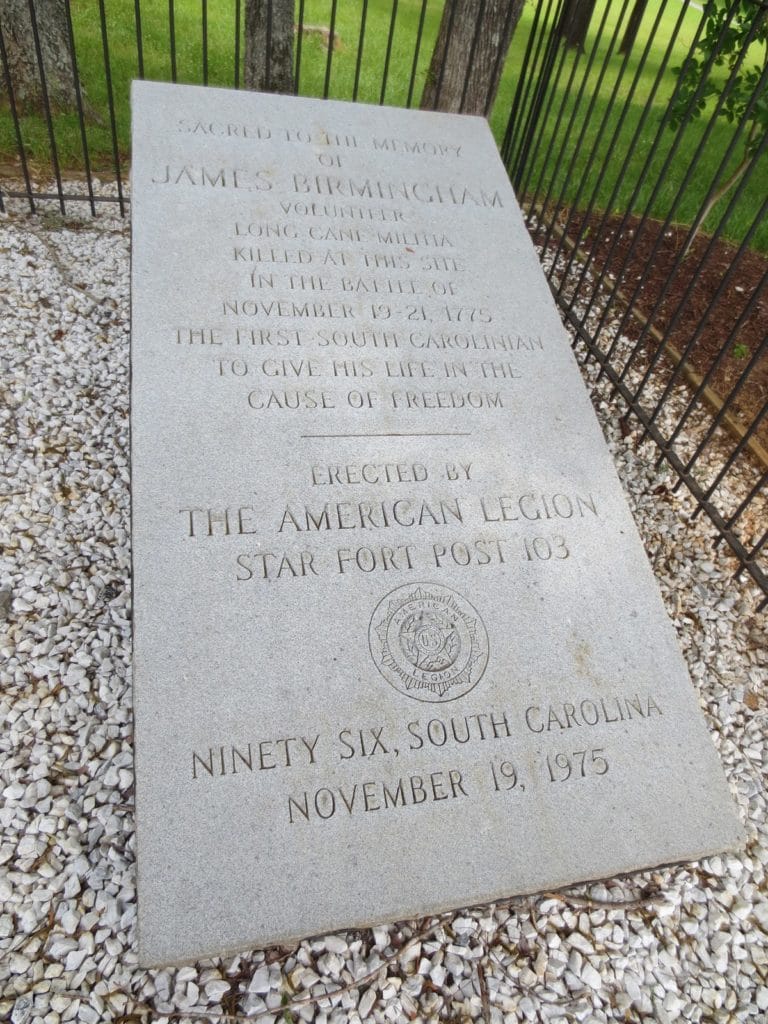
Ninety Six Memorial NPS
James Birmingham, of the Long Cane Militia, is considered to have been the first Patriot killed in the South during the American Revolution. You can see his memorial at Ninety-Six. Courtesy of NPS.

Oklahoma National Parks-Everything To Know


7. Overmountain Victory National Historic Trail

If it seems like South Carolina National Parks offers more Revolutionary War sites than other states there’s a reason for that.

It turns out that the majority of the war was fought in New York, New Jersey, and South Carolina, with more than 200 separate skirmishes and battles occurring in each of these three colonies.

The Overmountain Victory National Historic Trail is a 330-mile trail that follows the route taken by patriot militia during the American Revolutionary War.

The trail is divided into several segments and covers parts of Virginia, Tennessee, North Carolina, and South Carolina.

South Carolina National Parks
The Commemorative March takes place each September and October on the historic dates of the march | Courtesy of NPS

Things To See & Do

Visitors can enjoy a variety of activities along the trail, including:

Hiking: Visitors can hike segments of the trail, which is marked with signs, posts, and markers. The trail is considered as moderate difficulty.

Camping: Campsites are available along the trail, with some developed campgrounds, backcountry campsites, and primitive camping.

Cycling: The trail is also open to bicycles, and it’s a great way to explore the area.

Auto Touring: Some parts of the trail are also open to vehicles, and there are several auto tour routes that visitors can follow.

History: Visitors can learn about the history of the Revolutionary War and the role that the Overmountain Men played in it. Along the trail, there are several historical sites, including the Sycamore Shoals State Historic Area and the Fort Defiance Park and Interpretive Center.

Nature: The trail passes through several different types of landscapes, including forests, meadows, and mountain ranges, and offers opportunities for birdwatching, wildlife viewing, and photography.

-Visit the Overmountain Victory National Historic Trail Visitor Center, which is located in Marion, North Carolina and offers exhibits, films, and ranger-led programs.

RELATED: 2 (EPIC) New Hampshire National Parks For Your Next Visit To The Granite State


8. Reconstruction Era National Historical Park

South Carolina National Parks gives you Revolutionary War sites, Civil War sites and even a site which focuses on Reconstruction. It’s the Reconstruction Era National Historical Park.

Reconstruction Era National Historical Park is a park in Beaufort County, South Carolina that tells the story of the period of American history following the Civil War known as the Reconstruction Era.

This period, which lasted from 1865 to 1877, saw the rebuilding of the South after the war and the effort to integrate newly-freed enslaved people into society as citizens with equal rights.

Reconstruction Era Park NPS
U.S. Congressman James Clyburn (SC-06) received a standing ovation for his role in establishing Reconstruction Era National Monument. Courtesy of the National Park Service

Things To See & Do At The Park

The park includes several sites of significance from this period, including the Beaufort Historic District, which is home to several buildings and structures that were important to the lives of enslaved people and their descendants during the Reconstruction Era.

Some of the notable sites include the Penn Center, which was the first school for enslaved people in the South, and the Brick Baptist Church, which was an important center of worship and community for freed people.

Visitors to the park can take guided tours, attend ranger-led programs, and explore the sites on their own. There is also a visitor center, which houses exhibits and offers information about the history of the Reconstruction Era.

The park offers many opportunities to learn about the history of the period, the challenges and opportunities that African Americans faced during the time and the impact of the period on the nation as a whole.

The park also offer opportunities for hiking, birdwatching, and wildlife viewing, as well as picnicking and other recreational activities.

Reconstruction Era NPS
A living historian represents the thousands of African American soldiers who enlisted and served in the Union Army in the area around Beaufort, SC. (Courtesy of Wikimedia Commons)

20 Best Black History Sites In America For You To Visit


Visit Camp Saxton At The Beaufort County Fort Frederick Heritage Preserve

I would also recommend visiting the Beaufort County Fort Frederick Heritage Preserve. It was there that Camp Saxton, home to the 1st South Carolina Infantry (later renamed the 33rd United States Colored Troops), was established.

While in Beaufort, you might also want to see Porters Chapel. It’s a Reconstruction era Freedman’s Chapel located in the Naval Heritage Park just outside the main gate to Naval Hospital Beaufort.

Camp Saxton NPS
Black soldiers and civilians heard the Emancipation Proclamation at Camp Saxton on January 1, 1863. (Courtesy of the NPS)

Check Out Our Great Smoky Mountains Film


Play video
Great Smoky Mountains National Park 4K (Visually Stunning 3min Tour)

MTJP | Smoky Mountains is a visually stunning journey through Great Smoky Mountain National Park during peak fall color.

This video is the culmination of two weeks exploring Great Smoky Mountains National Park. We chose Great Smoky Mountains as our second park because of it’s extraordinary display of fall colors, it’s incredibly diverse wildlife population, and it’s importance as the most visited national park in the country.

This film was shot entirely in 4K UHD. We chose to capture this park in the Fall as it is home to one of the most wonderful displays of fall foliage on the planet. Fall is also a wonderful time to watch the elk rutting season and experience cooler, less humid temperatures.

Situated in Tennessee & North Carolina Great Smoky Mountain is one a handful of southern National Parks.


What makes South Carolina so special?

South Carolina is known for its tasty barbeque, peach production and the birthplace of sweet tea. In addition, some of the most notable attractions are its cultural sites and landmarks. From Fort Sumter to the USS Yorktown, visitors can explore centuries of American history right in South Carolina’s backyard.

What are the must-see historic sites in South Carolina?

The list of must-see historic sites in South Carolina is as follows:
Fort Sumter & Fort Moultrie National Historical Park
Cowpens National Battlefield
Charles Pinckney National Historic Site
Overmountain Victory National Historic Trail
Reconstruction Era National Historical Park
Patriot’s Point Naval & Maritime Museum
Kings Mountain National Military Park
Oconee Station Historic Site
Boone Hall Plantation
Redcliffe Plantation State Historic Site


Meet The Parks Brothers


Play video
The Pattiz Brothers are regular contributors to The Weather Channel

  1. Charles Pinckney National Historic Site
  2. Congaree National Park
  3. Cowpens National Battlefield
  4. Fort Sumter & Fort Moultrie National Historical Park
  5. Kings Mountain National Military Park
  6. Ninety Six National Historic Site
  7. Overmountain Victory National Historic Trail
  8. Reconstruction Era National Historical Park

We Hope You’ll Follow Our Journey


Our goal here at More Than Just Parks is to share the beauty of America’s national parks and public lands through stunning short films in an effort to get Americans and the world to see the true value in land conservation.

We hope you’ll follow our journey through the parks and help us to keep them the incredible places that they are. If you’re interested in joining the adventure then please sign up below!