

Florida has 11 National Park Service units, and three of them are full national parks. That puts Florida in rare company. Most states have one national park or none. Florida has Everglades, Biscayne, and Dry Tortugas, three parks built almost entirely around water.
My brother and I have filmed across Florida, and the thing that surprises people is how little of its best parkland you see from a car. Biscayne is 95 percent underwater. Dry Tortugas is a fort on a key 70 miles past Key West, reachable only by boat or seaplane. Even the Everglades, the one everyone has heard of, only opens up when you get on the water or out on a boardwalk at dawn. This is a paddling and wading state, not a scenic-drive state.
A note on the count. Of the 11 units, three are national parks, two are national seashores, one is a national preserve, two are national monuments, two are national memorials, and one is an ecological and historic preserve. One unit, Gulf Islands, is shared with Mississippi. I have not padded the list with the Florida National Scenic Trail, because that one is run by the Forest Service, not the Park Service, a common mix-up. Everything below is genuinely NPS.
Florida National Park Sites Compared
| Site | Designation | The Draw | 2026 Fee |
|---|---|---|---|
| Everglades | National Park | The largest subtropical wilderness in the US, alligators and the river of grass | $35 per vehicle |
| Dry Tortugas | National Park | Fort Jefferson, snorkeling, reachable only by boat or seaplane | $15 per person |
| Biscayne | National Park | Coral reef, shipwrecks, 95 percent underwater | Free |
| Big Cypress | National Preserve | Cypress swamp, the Florida panther, free-roaming | Free |
| Canaveral | National Seashore | 24 miles of undeveloped Atlantic beach next to the space coast | $25 per vehicle |
| Gulf Islands | National Seashore (shared with MS) | White-sand barrier islands, Fort Pickens | $25 per vehicle |
| Castillo de San Marcos | National Monument | The oldest masonry fort in the continental US, in St. Augustine | $15 per adult |
| Fort Matanzas | National Monument | A small Spanish coquina fort, reached by free ferry | Free |
| De Soto | National Memorial | The 1539 Spanish landing, a coastal trail | Free |
| Fort Caroline | National Memorial | French colonial history on the St. Johns River | Free |
| Timucuan | Ecological & Historic Preserve | Salt marsh, a plantation, the Theodore Roosevelt area near Jacksonville | Free |
On fees, Everglades is the big one at $35 per vehicle, and the gulf and Atlantic seashores run $25. Dry Tortugas charges $15 per person on top of the ferry or seaplane fare, which is the real cost of getting there. Biscayne, Big Cypress, and the Jacksonville-area sites are free. If you are touring several, the $80 America the Beautiful annual pass covers the vehicle and per-person fees and pays for itself in about three visits. Note that fees rose at several Florida parks in late 2025, and non-US visitors now face an added surcharge at Everglades.
117 public lands destinations are under threat. Get the free briefing that 27,000+ people use to stay informed and take action.
1. Everglades National Park

The flagship, and the only place like it on the continent. The Everglades is a slow-moving river of grass 60 miles wide and a few inches deep, the largest subtropical wilderness in the United States and a place where alligators and crocodiles share the same water.
It is also the most misunderstood park in the country, because you cannot drive through it and see much. The trick is to walk the boardwalks at dawn. The Anhinga Trail near the Royal Palm entrance puts you a few feet from alligators, herons, and turtles, and at first light the wildlife is everywhere. Shark Valley has a tram loop and an observation tower, and the Gulf Coast side at Everglades City is where you launch a canoe into the Ten Thousand Islands. The entrance fee is $35 per vehicle.
Go in the dry season, December through April. Summer brings heat, daily storms, and mosquitoes thick enough to drive you out. For a full plan, see our guide to the best things to do in the Everglades.
2. Dry Tortugas National Park
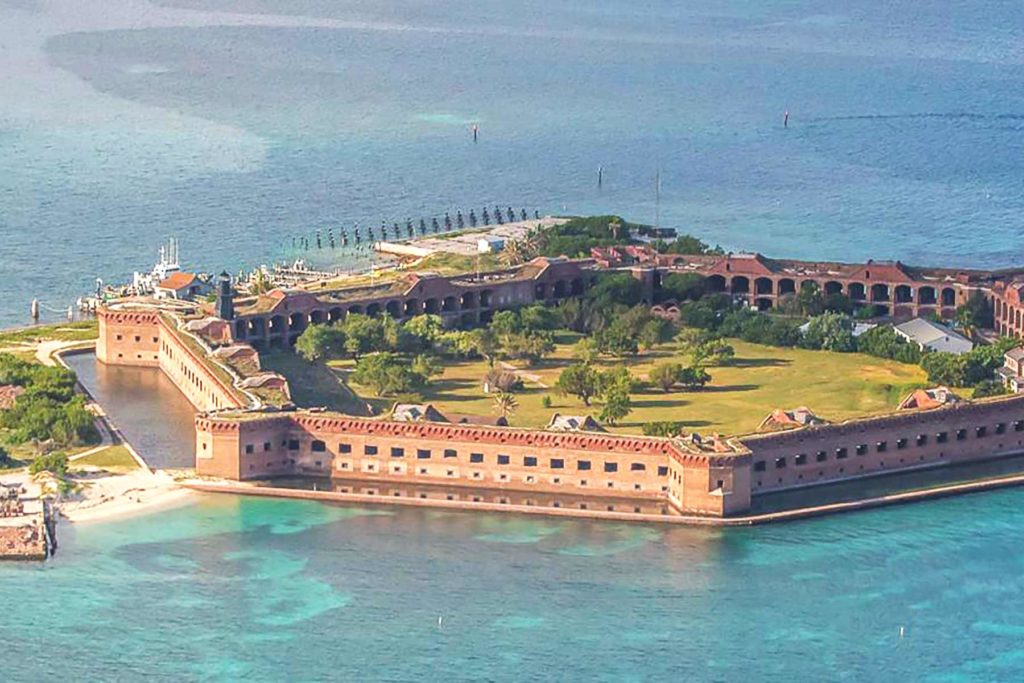
The most remote and most rewarding park in the state. Dry Tortugas sits about 70 miles west of Key West, a cluster of seven small keys reachable only by ferry, private boat, or seaplane.
The centerpiece is Fort Jefferson, a massive 19th-century brick fortress that fills almost an entire island, never finished and never tested in battle. Around it lies some of the clearest water and best snorkeling in the country, with reefs right off the moat wall. Bird watchers come for the spring migration, when the keys fill with frigatebirds and terns. The entrance fee is $15 per person, and you pay it on top of the ferry or seaplane fare, which is the part that takes planning. Most people do it as a long day trip from Key West, but the handful of campsites give you the island after the day-trippers leave.
3. Biscayne National Park

The national park most people drive right past. Biscayne sits just south of Miami, and roughly 95 percent of it is water, which is exactly why it gets overlooked and exactly why it is worth the effort.
The park protects the northernmost stretch of the Florida reef tract, mangrove shoreline, the clear shallows of Biscayne Bay, and a maritime heritage trail of shipwrecks you can snorkel. The only way to see the heart of it is on the water, so book a boat tour, a snorkel trip, or a paddle from the Dante Fascell Visitor Center near Homestead. Entry is free, though boat tours and concessions cost extra. Pair it with the Everglades, which is right next door.
4. Big Cypress National Preserve
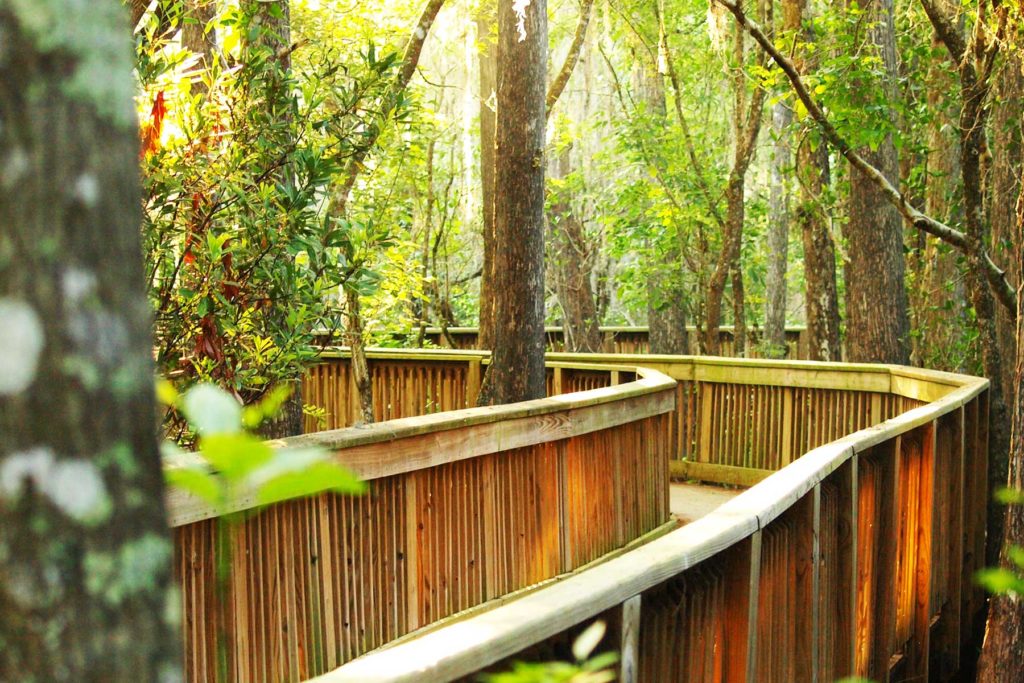
The Everglades without the crowds, and the best place to find a panther. Big Cypress borders the Everglades to the north and protects a vast freshwater swamp of bald cypress, prairie, and pine.
This is core habitat for the endangered Florida panther, and one of the few places it still roams. The Tamiami Trail cuts straight through, with pull-offs where you can watch alligators sun on the bank, and the Oasis and Kirby Storter boardwalks get you over the water without getting wet. The bolder option is a guided swamp walk, wading waist-deep into the cypress. Entry is free, with permits for backcountry and off-road use. It pairs naturally with a Everglades visit on the same loop.
5. Canaveral National Seashore

The longest stretch of undeveloped Atlantic beach in Florida. Canaveral protects 24 miles of barrier-island shoreline next to the Kennedy Space Center, which is the unlikely reason it stayed wild. The space program needed a buffer, and the beach got protected.
You get empty dunes, sea turtle nesting beaches, and a lagoon system rich with manatees and birds. On a clear day you can watch a rocket launch from the sand, which is a strange and memorable thing to do at a national seashore. The entrance fee is $25 per vehicle. Apollo Beach to the north and Playalinda to the south are the two main accesses.
6. Gulf Islands National Seashore

The whitest sand in the country, and a fort to go with it. Gulf Islands stretches along the Florida panhandle and into Mississippi, protecting barrier islands famous for sugar-white quartz sand and clear gulf water.
On the Florida side near Pensacola, Fort Pickens guards the entrance to the bay, a 19th-century brick fort where Apache leader Geronimo was once held prisoner. Beyond the history, this is a swimming and beach-camping seashore, with some of the best water on the gulf. The fee is $25 per vehicle, good across both the Florida and Mississippi units.
7. Castillo de San Marcos National Monument

The oldest masonry fort in the continental United States, and the heart of the oldest city. The Castillo guards St. Augustine, founded by the Spanish in 1565, and its walls are built of coquina, a soft local shellstone that absorbed cannon fire instead of shattering.
That coquina is why the fort never fell to assault in more than 300 years of sieges. You can walk the gun deck over Matanzas Bay, tour the rooms inside the star-shaped walls, and catch a cannon-firing demonstration. It sits right in downtown St. Augustine, so it folds easily into a day in the old city. Admission is $15 per adult.
8. Fort Matanzas National Monument

A small fort with an outsized story, just south of St. Augustine. Fort Matanzas is a compact Spanish watchtower built in 1742 to guard the back door to St. Augustine, the Matanzas Inlet, where a Spanish massacre of French soldiers gave the river its grim name.
The fort sits on its own small island, and a free ferry runs you across the river to walk it. The surrounding monument also protects a stretch of coastal hammock and beach with an easy nature trail. It is free, quiet, and a good half-hour stop on the way down the coast.
9. De Soto National Memorial

Where one of the most consequential expeditions in American history came ashore. The memorial near Bradenton marks the 1539 landing of Hernando de Soto, whose long march through the Southeast was the first major European entry into the interior of the continent, and a disaster for the Native nations in its path.
The site is small and reflective, with a half-mile nature trail through mangroves along the bay, a reconstructed Spanish camp staffed by costumed rangers in winter, and a visitor center that does not flinch from the violence of the conquest. Admission is free, and it is an easy stop on the gulf coast near Tampa.
10. Fort Caroline National Memorial

The site of the first major French foothold in what became the United States. On the St. Johns River near Jacksonville, Fort Caroline marks the 1564 French Huguenot colony that briefly challenged Spain for control of the Florida coast, before the Spanish wiped it out the next year.
A reconstruction of the earthen fort sits on the riverbank, with trails through coastal forest. The memorial is part of the larger Timucuan preserve, so the two go together. Admission is free.
11. Timucuan Ecological & Historic Preserve
One of the last unspoiled coastal wetlands on the Atlantic seaboard. Timucuan protects 46,000 acres of salt marsh, hardwood hammock, and tidal creek at the mouth of the St. Johns River near Jacksonville.
It is a layered place. The Theodore Roosevelt Area has trails through coastal forest, the Kingsley Plantation preserves the oldest plantation house in Florida along with the tabby ruins of slave quarters that tell a hard and necessary story, and the marsh itself is a paddler’s maze. Admission is free, and it bundles naturally with the Fort Caroline memorial inside its boundary.
How to Plan a Florida National Parks Trip
Florida splits into three regions. South Florida holds the heavy hitters, with Everglades, Big Cypress, Biscayne, and Dry Tortugas all reachable from a Miami or Homestead base, though Dry Tortugas means a drive down to Key West for the boat. Northeast Florida around St. Augustine and Jacksonville clusters Castillo de San Marcos, Fort Matanzas, Fort Caroline, and Timucuan within an hour of each other. The gulf and panhandle give you De Soto near Tampa and Gulf Islands up by Pensacola.
Winter is the season, December through April, when the Everglades dries out and the humidity drops. Summer is hot, stormy, and buggy, and hurricane season runs through the fall. If you are building a longer Southeast trip, Florida pairs with the coastal and historic parks of Georgia just to the north. For the bigger picture, our guide to the best national parks puts Florida’s three in national context.
The bottom line
Florida is a water state, and its parks reward anyone willing to get off the road. The Everglades is the headliner, but Dry Tortugas is the one people talk about for years afterward, and Biscayne is the best park in the country that almost nobody visits. Plan around the dry season, get on the water, and Florida will hold its own against any state in the country.