

Dry Tortugas National Park sits 70 miles west of Key West in the middle of the Gulf of Mexico. It is 99% water. The 1% that isn’t water holds the largest masonry structure in the Americas, some of the clearest snorkeling in the country, and exactly zero gift shops.
Getting here requires either a 2-hour-and-15-minute ferry ride or a 40-minute seaplane flight. There’s no bridge. No causeway. No day-tripper loophole. That barrier to entry is precisely what makes this place feel like it belongs to another century.
I’ve visited twice now, once by ferry and once by seaplane, and both times I spent the first 20 minutes just standing on the dock staring at the water. The color is unreal. Not Caribbean-resort blue. Something deeper and more saturated, like someone cranked the clarity slider to 100 and then kept going.
Fort Jefferson and 16 Million Bricks
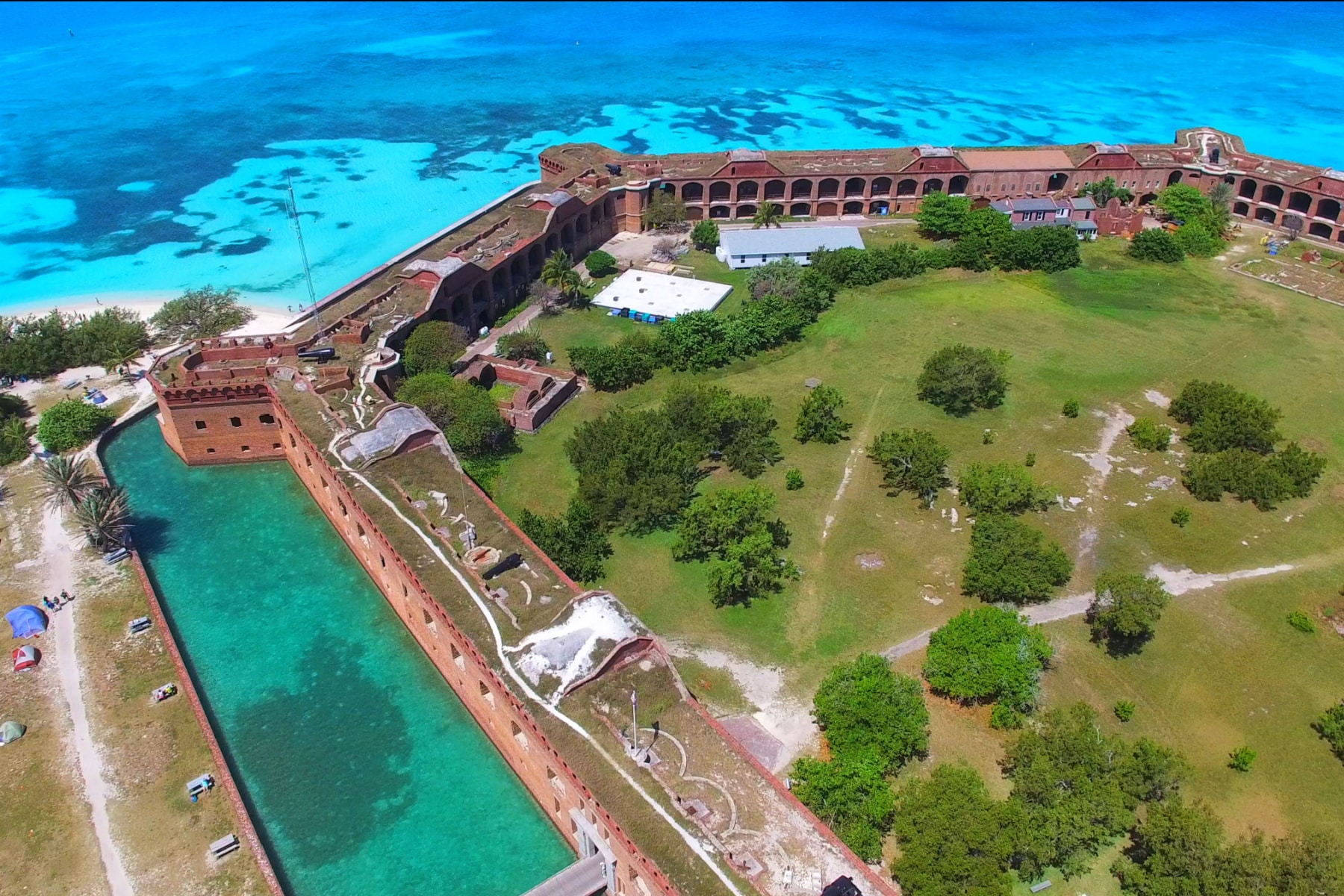
Fort Jefferson dominates Garden Key the way a cathedral dominates a European town square, except this cathedral was built with 16 million bricks, was never finished, and sits on a 16-acre island in the middle of nowhere.
Love Dry Tortugas? It's one of 117 threatened public lands destinations we're tracking. Get the free briefing.
Construction started in 1846. The idea was simple enough. Control the shipping lanes through the Gulf of Mexico by building an enormous coastal fortification at the perfect strategic chokepoint. The execution was anything but simple. Workers hauled every single brick, every barrel of cement, and every piece of iron by ship from the mainland. The nearest lumber yard was a 3-day sail away.
The fort was designed to hold 450 guns and a garrison of 1,500 soldiers. At its peak, it never came close to either number. By the time the rifled cannon made brick fortifications obsolete in the 1860s, Fort Jefferson was still incomplete. The Army kept a skeleton crew here through the Civil War, using it primarily as a military prison.
You can walk the entire upper tier of the fort walls. I’d budget at least an hour for this, maybe more if you’re a photographer. The light through the arched casemates in the late morning is something special. Rows of brick archways stretching into shadow, each one framing a slightly different rectangle of that impossible blue water outside.
Dr. Mudd and the Most Isolated Prison in America
The fort’s most famous resident was Dr. Samuel Mudd, who was convicted of conspiracy in 1865 for setting the broken leg of John Wilkes Booth after Lincoln’s assassination. Mudd maintained his innocence until the day he died. Whether you believe him or not, his punishment was extraordinary. He was shipped to the most remote military prison in the United States, a place where escape meant swimming 70 miles through shark-inhabited, current-swept open ocean.
Mudd actually earned a partial reprieve by treating soldiers during a yellow fever outbreak at the fort in 1867. He was eventually pardoned in 1869 and returned to Maryland. His cell is still marked inside the fort, and the National Park Service has done a solid job with the interpretive displays. It’s one of those stories that makes you stand still for a minute and think about what it would have been like to look out through those narrow windows at nothing but water in every direction.
The Water
I have to be direct about this. The water at Dry Tortugas is the bluest, clearest water I’ve seen in the continental United States. Not close. Not “one of the best.” The best.
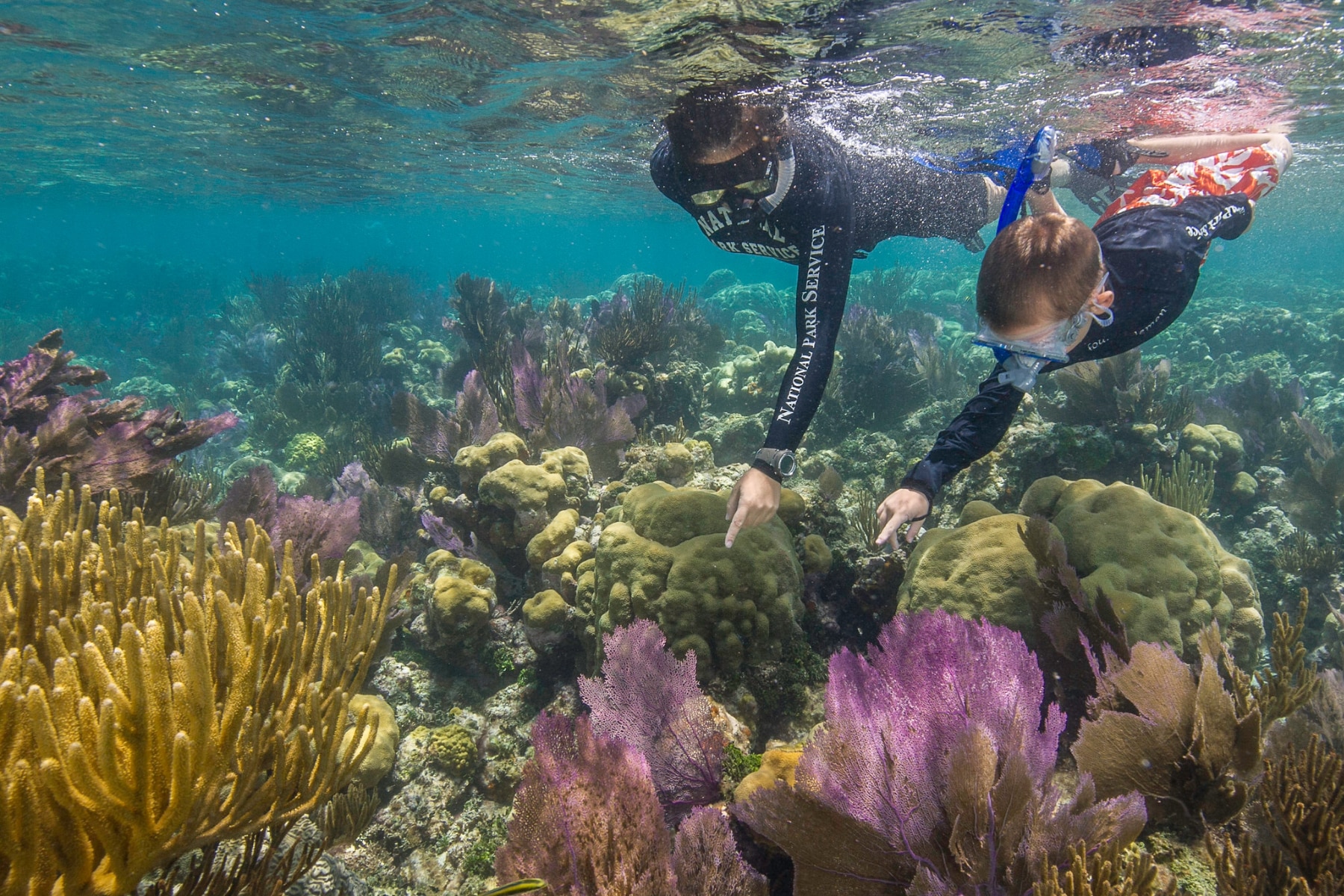
The park sits at the end of the Florida Keys chain, far enough from the mainland that there’s minimal sediment runoff and almost no light pollution in the water column. Visibility regularly hits 60 to 100 feet. The coral is healthy. The fish are abundant and completely unbothered by humans. Nurse sharks cruise the shallows like they own the place (they do).
If you’ve ever snorkeled in Hawaii or the US Virgin Islands and thought that was as good as it gets domestically, Dry Tortugas will recalibrate your scale.
Snorkeling the Fort Walls

There are three main snorkeling areas, and all of them are accessible right from shore.
The moat wall is the star. You swim along the outside of Fort Jefferson’s brick walls, where the foundation drops into deeper water and creates a natural reef structure. Coral grows directly on the fort’s submerged brickwork. Brain coral, sea fans, and elkhorn coral cover the old masonry while sergeant majors, parrotfish, and barracuda patrol the gaps. It feels like snorkeling through a living history exhibit.
South Swim Beach is the easier, more family-friendly option. Shallow water, sandy bottom, and enough scattered coral heads to keep things interesting. Good for warming up or for younger kids.
For campers, night snorkeling along the moat wall is the real prize. After the ferry leaves and the day-trippers are gone, you can slip into the water with a dive light and watch the reef transform. Octopuses come out to hunt. Lobsters emerge from the cracks. The whole ecosystem shifts, and you have it essentially to yourself. This alone is worth spending the night.
Getting There
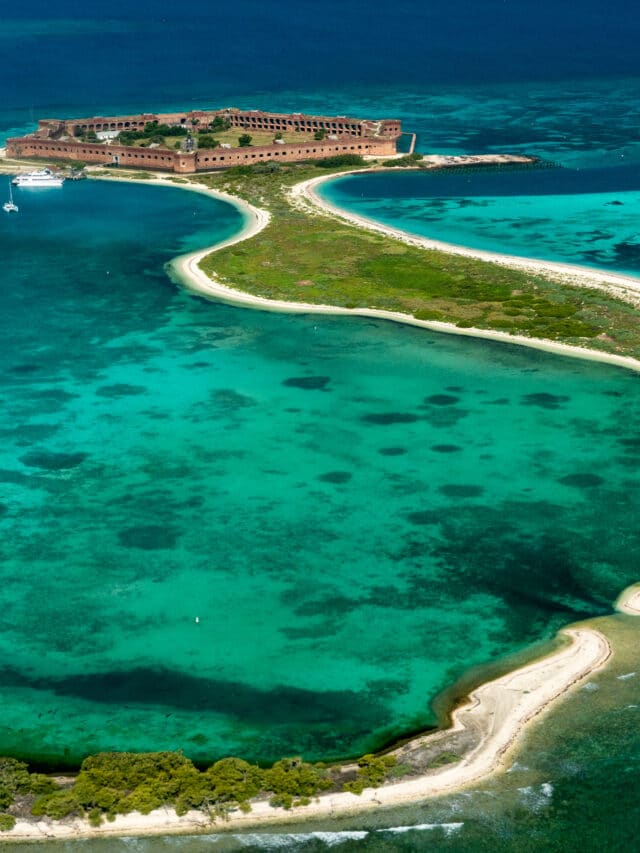
There are exactly two ways to reach Dry Tortugas. No exceptions.
The Yankee Freedom III Ferry departs daily from Key West at 8:00 AM and returns around 5:15 PM. The ride takes about 2 hours and 15 minutes each way, which gives you roughly 4.5 hours on the island. Tickets run $200+ per person but include breakfast, lunch, snorkel gear, and a guided tour of the fort. For a day trip, this is the move. Book at least 2 weeks in advance during peak season (November through April) because it sells out.
Key West Seaplane Adventures gets you there in about 40 minutes. Half-day trips start around $350+ per person. The flight itself is spectacular. You fly at about 500 feet over the reef system, and the color gradient from the shallows to the deep channels is one of those views that’s worth the price of admission by itself. You also get more time on the island since you’re not spending 4.5 hours in transit.
Both options depart from Key West, which means you’ll need to factor in getting to Key West first. If you’re driving down from Miami, that’s another 3.5 hours on the Overseas Highway (which is a spectacular drive in its own right).
Camping on Garden Key
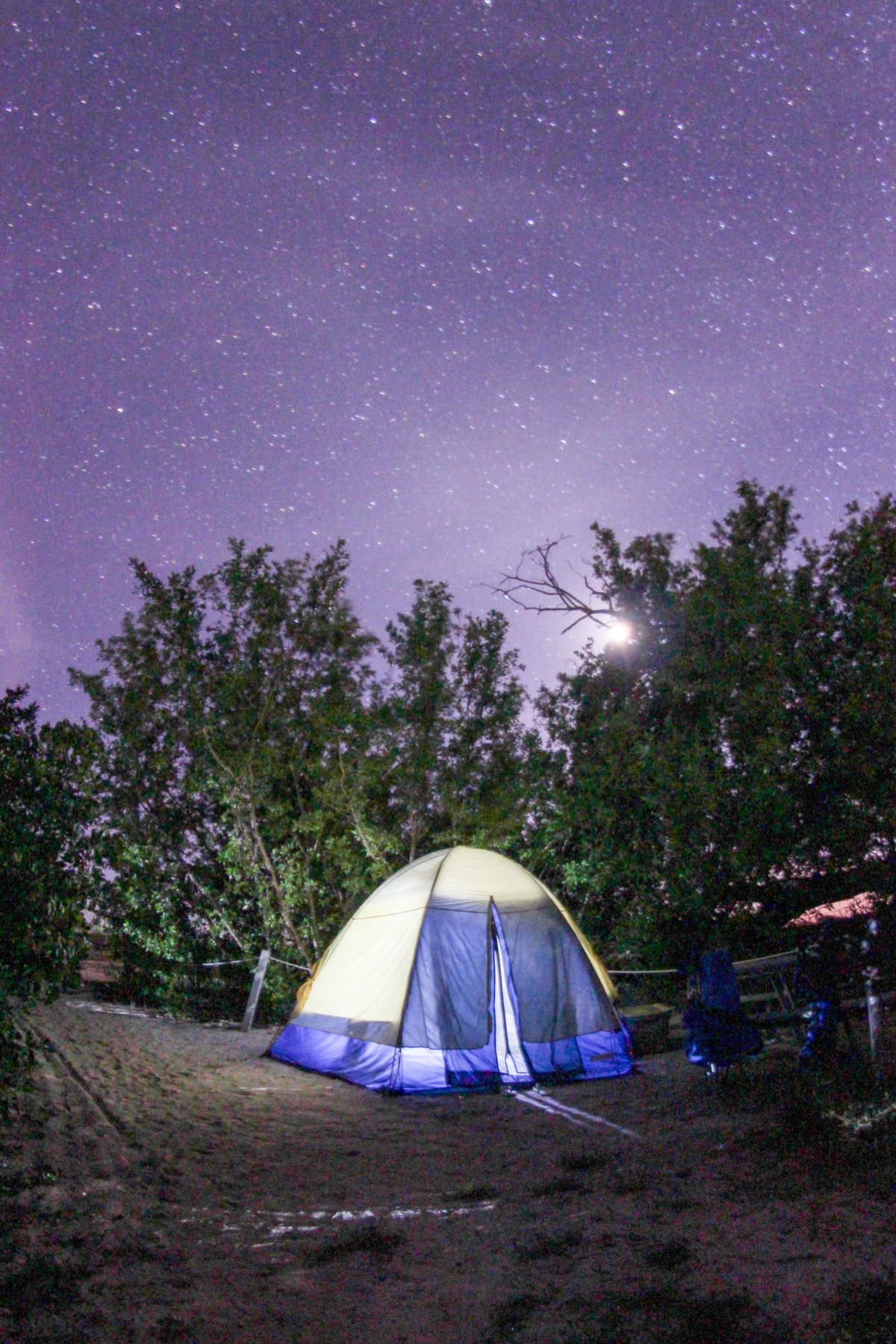
There are 8 first-come, first-served campsites on Garden Key. That’s it. Eight. They fill up fast, especially in spring, so plan to be on the first ferry and claim your spot the moment you step off the boat.
Here’s what you need to know. There is no fresh water on the island. None. No showers, no spigots, no convenience store. Everything you need for your stay, every gallon of water, every meal, every piece of trash, comes with you and leaves with you. The ferry allows campers to bring a reasonable amount of gear, but you’re limited to what you can carry from the dock to the campsite (about a 5-minute walk).
The payoff is extraordinary. After 5:15 PM, when the ferry disappears over the horizon, you share the island with maybe 20 other campers and a handful of park rangers. The fort is yours to explore by flashlight. The moat is yours to snorkel at night. And the sky. With zero light pollution for 70 miles in every direction, the Milky Way doesn’t just appear overhead. It dominates. I’ve photographed dark skies across the country, from Big Bend to Death Valley, and Dry Tortugas ranks in the top three.
100,000 Sooty Terns and the Bird Watching

The park’s name comes from the Spanish word for turtles, but the birds might be the bigger spectacle. Bush Key, which sits just across a shallow channel from Garden Key, hosts one of the largest sooty tern colonies in North America. From April through September, over 100,000 birds nest here. The noise is constant and impressive and audible from inside the fort.

Bush Key is closed to foot traffic during nesting season, but you can observe the colony from the fort walls with binoculars or a telephoto lens. Brown noddies nest alongside the sooty terns, and you’ll also spot magnificent frigatebirds, masked boobies, and roseate terns depending on the season. For serious birders, Dry Tortugas is one of the premier birding destinations in the southeastern United States, particularly during spring migration when exhausted warblers and other songbirds drop onto the island after crossing the Gulf.
What You Need to Know Before You Go

Entrance fee. $15 per person, valid for 7 days. This is separate from your ferry or seaplane ticket. You can also use your America the Beautiful annual pass.
Best time to visit. March through May offers the best combination of calm seas (fewer cancelled ferries), warm water, and peak bird activity. Summer is hot and hurricane season starts June 1. Winter has cooler temps and excellent visibility but rougher seas that occasionally cancel the ferry.
What to bring. More water than you think. Reef-safe sunscreen (the coral here is thriving, keep it that way). Polarized sunglasses for seeing through the water. A dry bag for your camera gear. And if you’re camping, a shade structure is not optional. There are no trees at the campsites.
Cell service. Nonexistent. There is no cell signal, no Wi-Fi, and no way to call anyone unless you have a satellite communicator. For some people, that’s the best part.
What to skip. Don’t try to cram Dry Tortugas into a Key West vacation as an afterthought. This park deserves a full day at minimum, and ideally an overnight. People who show up on the ferry, speed-walk the fort in 45 minutes, and spend the rest of the time sunbathing on the beach are missing the point.
Dry Tortugas is one of the least visited parks in the system (roughly 80,000 visitors per year compared to the Smokies’ 12+ million), and that low visitation is its superpower. This is a place where the reef is healthy, the water is clear, the fort is fascinating, and you can camp under some of the darkest skies in North America. The logistics are real, but so is the reward.
For more on Florida’s national parks, check out our complete guide. And if you’re planning to snorkel, Biscayne National Park makes an excellent companion stop on your way down to the Keys.
What to Bring to Dry Tortugas
Gear we recommend for Dry Tortugas. Affiliate links support our work at no cost to you.
More Than Just Parks may earn a small commission from purchases made through these links, at no extra cost to you. We only recommend gear we would actually use.
Affiliate disclosure: Some links on this page earn us a small commission at no extra cost to you. We only recommend gear we actually use.