


There are 138 national monuments in the United States as of June 2026. No other category of protected public land is more varied, more misunderstood, or closer to the center of the current fight over America’s public lands.
We’ve spent more than a decade filming in these places, from the slickrock of Bears Ears to the river bluffs of Upper Missouri Breaks. This page is our complete, current list of every US national monument, with the state, managing agency, designation year, acreage, and a column you won’t find anywhere else. Status.
That last column matters more in 2026 than at any point since 1906. Several monuments are in federal court, six are on an Interior Department list for possible shrinking, and a Justice Department opinion issued in 2025 claims a president can erase a monument outright. Nobody has tried it yet. We’ll get to all of it below, with dates and receipts.
This page covers the full roster, how monuments work, who manages them, the 2025-2026 rescission fight, and our honest take on which monuments are actually worth a trip. We update it as the news moves.
117 public lands destinations are under threat. Get the free briefing that 27,000+ people use to stay informed and take action.

How Many National Monuments Are There?
There are 138 national monuments in the United States. The newest are Chuckwalla and Sáttítla Highlands, both designated in California on January 14, 2025. The oldest is Devils Tower in Wyoming, proclaimed by Theodore Roosevelt on September 24, 1906.
If you’ve seen other numbers floating around, here’s why. Presidents and Congress have created far more monuments than 138 over the past 120 years, but dozens were later promoted to other designations. At least 31 became national parks, including Grand Canyon, Zion, and Death Valley. Others became national historical parks, like Pullman in Chicago, which left the monument rolls in 2022. The 138 figure counts what exists today, and we reconcile it against the federal roster rather than copying a number from 2022, which is what most lists in the search results still do.
A few superlatives, all current.
- Largest Papahanaumokuakea Marine National Monument at 372,848,597 acres, bigger than all 63 national parks combined
- Smallest Military Working Dog Teams National Monument in Texas at roughly 0.07 acres, about the footprint of a generous living room
- Oldest Devils Tower, Wyoming (1906)
- Newest Chuckwalla and Sáttítla Highlands, California (January 14, 2025)
- Most in one state California with 20, then Arizona with 19 and New Mexico with 13
What Is Happening to National Monuments in 2025 and 2026?
Short version. No national monument has been rescinded. The count is still 138. But the legal machinery to rescind one is being assembled in plain view, and protections inside five marine monuments have already been rolled back. Since we cover this fight every week, here is the factual state of play.

Monuments Under Pressure, June 2026
| Monument | What Happened | Where It Stands |
|---|---|---|
| Chuckwalla (CA) | The administration signaled in March 2025 it would try to revoke the designation. A motorized recreation group and a miner then sued to void it. | Active. Five tribal nations and nine conservation groups joined the case as defendants in March 2026. No rescission proclamation has been issued. |
| Sáttítla Highlands (CA) | Named alongside Chuckwalla as a revocation target and analyzed by name in the 2025 Justice Department opinion. | Active. No rescission proclamation has been issued. |
| Bears Ears (UT) | Cut 85 percent in 2017, restored in 2021, and placed on Interior’s boundary review list in 2025. | Active at full 1.36 million acres. Review pending, no new proclamation. |
| Grand Staircase-Escalante (UT) | On the review list, plus a March 2026 congressional resolution to void its management plan. | Active. The Senate fast-track on that resolution expired June 11, 2026 without a vote. The plan stands. |
| Baaj Nwaavjo I’tah Kukveni (AZ) | On Interior’s boundary review list. A grandfathered uranium mine already operates inside its boundary. | Active at 917,618 acres. Review pending. |
| Ironwood Forest (AZ) | On Interior’s boundary review list. | Active. Review pending. |
| Organ Mountains-Desert Peaks (NM) | On Interior’s boundary review list. | Active. Review pending. |
| Pacific Islands Heritage Marine | An April 2025 proclamation opened it to commercial fishing. | Designation intact. A federal court in Hawaii blocked the fishing authorization in August 2025. Litigation continues. |
| Northeast Canyons and Seamounts Marine | A February 2026 proclamation opened the Atlantic’s only marine monument to commercial fishing. | Designation intact, fishing protections stripped. Conservation groups sued in May 2026. |
| Papahanaumokuakea, Marianas Trench, Rose Atoll Marine | A June 11, 2026 proclamation opened portions of all three to commercial fishing. | Designations intact, fishing protections rolled back. This happened days ago and is still developing. |
How We Got Here, a Timeline
- January 14, 2025 Chuckwalla and Sáttítla Highlands are designated, bringing the total to 138.
- March 2025 A White House fact sheet briefly states the new administration is “terminating” both California monuments, then the language is quietly removed. No proclamation follows.
- April 17, 2025 A proclamation opens Pacific Islands Heritage Marine National Monument to commercial fishing. Native Hawaiian and conservation groups sue in May.
- April 2025 Reporting reveals Interior is reviewing the “appropriate size” of six monuments. Secretary Doug Burgum later confirms the review.
- May 27, 2025 The Justice Department’s Office of Legal Counsel issues an opinion concluding presidents can revoke monument designations, reversing the position the department held since 1938. The opinion analyzes Chuckwalla and Sáttítla by name. We broke down what it means in National Monuments Can Now Be Erased, Justice Department Rules.
- August 11, 2025 A federal judge in Hawaii vacates the agency action that had opened Pacific Islands Heritage to fishing.
- February 6, 2026 A proclamation opens Northeast Canyons and Seamounts to commercial fishing.
- March 4, 2026 Senator Mike Lee and Representative Celeste Maloy file resolutions to void the Grand Staircase-Escalante management plan under the Congressional Review Act. Our coverage, Mike Lee Re-Emerges to End Grand Staircase-Escalante National Monument and The House Vote That Decides Grand Staircase’s Future.
- March 5, 2026 A federal court allows five tribal nations and nine organizations to intervene in defense of Chuckwalla.
- June 11, 2026 Two things on one day. The Senate’s 60-day fast-track window on the Grand Staircase resolution expires without a vote, and a new proclamation opens portions of Papahanaumokuakea, Marianas Trench, and Rose Atoll to commercial fishing.
We track every one of these threats, plus mines, drilling leases, and land transfers, on our Threatened Public Lands Map. If you want the longer history of the law behind all this, start with The Law That Saved the American Soul Is Now Under Attack.
One more thing worth saying plainly. In 120 years, no president of either party has ever erased a national monument. Eighteen presidents have used the Antiquities Act to create them. Whether the Act’s next chapter gets written with an eraser is the question that will define this era of public lands, and it will almost certainly be answered by the Supreme Court rather than a press release.
What Is a National Monument?
A national monument is federal land protected for “objects of historic or scientific interest” under the Antiquities Act of 1906, or in some cases by an act of Congress. That dry phrase covers everything from the Statue of Liberty to half a million acres of Sonoran Desert to an underwater mountain range in the Pacific.

How a Monument Gets Made
Congress passed the Antiquities Act in 1906 because looters were stripping ancestral Puebloan sites in the Southwest faster than legislation could move. The fix was to let the president act alone. A monument can be proclaimed with a signature, no hearings, no vote, as long as it protects objects of historic or scientific interest on land the federal government already owns or controls.
Theodore Roosevelt signed the Act in June 1906 and used it on Devils Tower by September. Eighteen presidents from both parties have followed. Only Nixon, Reagan, and George H. W. Bush never used it. Bill Clinton created 19 monuments. Jimmy Carter proclaimed 15 in Alaska in one swing, 7 of which later became national parks. Barack Obama created or expanded 34, the most of any president. Congress also creates monuments directly by statute now and then, which is how Jurassic and Saint Francis Dam Disaster joined the list in 2019.
National Monument vs National Park
- Who creates them. Only Congress can create a national park. A president can create a national monument alone. That speed is the whole point of the Act, and it’s also why monuments are politically easier to attack.
- Why they’re protected. Parks are preserved for scenery, recreation, and inspiration. Monuments protect specific historic, cultural, or scientific objects, though “objects” has been read broadly enough to cover entire landscapes.
- Who runs them. Every national park is run by the National Park Service. Monuments are scattered across nine agencies in five federal departments, which we cover next.
- How durable they are. Nobody seriously argues a president can erase a national park. Whether one can erase a monument is the open legal question of the decade.
Can a National Monument Be Revoked?
The Antiquities Act says presidents can declare monuments. It says nothing about undoing them, and Congress left it that way on purpose when it reserved land decisions to itself in later law. In 1938, Attorney General Homer Cummings advised President Franklin Roosevelt that the Act does not authorize a president to abolish a monument, and that position guided the Justice Department for 87 years.
Shrinking is murkier. Presidents have trimmed monument boundaries before, most dramatically in 2017 when Bears Ears lost 85 percent of its acreage and Grand Staircase-Escalante lost nearly half. Lawsuits challenging those cuts never reached a ruling because the 2021 restorations made them moot. So the courts have never actually decided whether shrinking, let alone revoking, is legal.
That vacuum is what the May 2025 Justice Department opinion fills. It formally disavows the 1938 position and concludes a president can revoke a predecessor’s monument. An opinion is not a court ruling. It is a permission slip the executive branch wrote for itself, and it has not been tested. When a rescission proclamation eventually lands, the fight goes straight to federal court.
Who Manages National Monuments?
Here’s the thing most folks get wrong. A national monument is usually not run by the National Park Service. Nine federal agencies across five departments manage the 138 monuments, and the agency on the sign changes what you should expect when you show up.
| Agency | Department | Monuments Managed |
|---|---|---|
| National Park Service (NPS) | Interior | 89 |
| Bureau of Land Management (BLM) | Interior | 31 |
| US Forest Service (USFS) | Agriculture | 16 |
| Fish and Wildlife Service (FWS) | Interior | 9 |
| NOAA | Commerce | 5 (all marine, co-managed with FWS) |
| US Army / Air Force / DOE / AFRH | Various | 1 or 2 each |
The numbers add up to more than 138 because 17 monuments are co-managed by two agencies. Bears Ears, for example, is run jointly by the BLM and the Forest Service, with five tribal nations co-stewarding. One more wrinkle worth a sentence. On its own books NPS counts 87 monuments among its 433 units; the two extra in our tally are Grand Canyon-Parashant and Avi Kwa Ame, co-managed BLM monuments that overlap Lake Mead National Recreation Area without standing as NPS units, so both the 87 and the 89 are right.
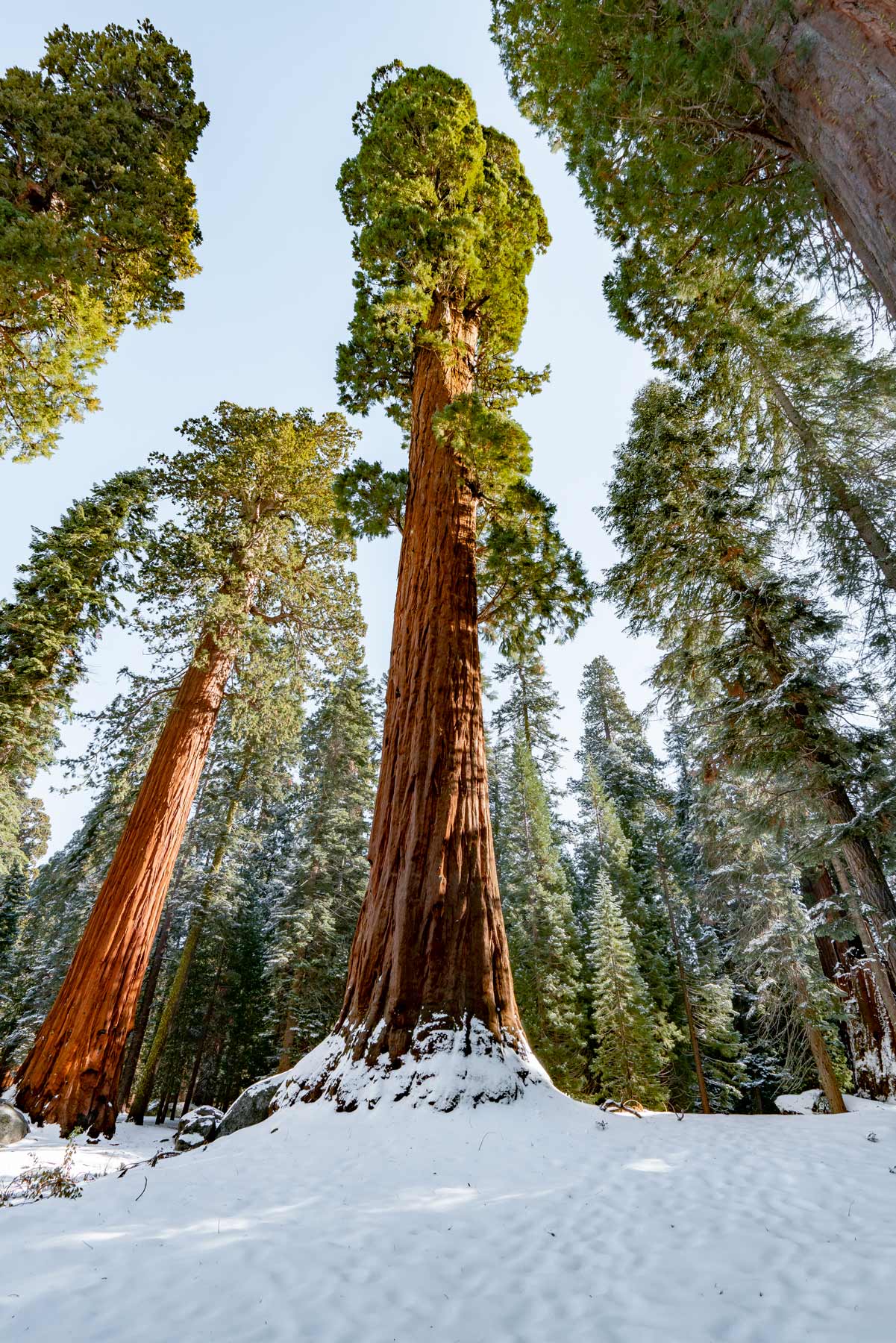
What the agency means in practice.
- NPS monuments work like small national parks. Visitor centers, rangers, marked trails, entrance fees. Montezuma Castle and Bandelier are the model.
- BLM monuments are the wild ones. Dirt roads, few signs, free entry, dispersed camping, and almost nobody around. Grand Staircase-Escalante is 1.87 million acres with a handful of visitor centers on its edges. Bring a map, water, and a full tank.
- USFS monuments sit inside national forests. Expect trailheads and campgrounds rather than visitor centers, with Mount St. Helens as the big exception.
- FWS and NOAA monuments are mostly remote islands and open ocean. Papahanaumokuakea is one of the largest protected areas on the planet, and unless you’re a researcher you will likely never set foot in it. It protects the place, not your itinerary.
Before any monument trip, especially the BLM and Forest Service ones, check our live public lands conditions page for closures, fire activity, and air quality.
Complete List of US National Monuments
All 138 national monuments, alphabetical, with state, managing agency, designation year, acreage, and current status. Acreage figures come from federal land reports and designating proclamations, and the marine monuments count water as well as land, which is how Papahanaumokuakea ends up with more acres than Texas and California combined.
In the status column, “Protected” means exactly that, no active federal action against it. The other entries are explained in the status section above, which we update as the news moves.
| National Monument | State | Agency | Year | Acres | Status |
|---|---|---|---|---|---|
| Admiralty Island | Alaska | USFS | 1978 | 1,019,861 | Protected |
| African Burial Ground | New York | NPS | 2006 | 0.35 | Protected |
| Agate Fossil Beds | Nebraska | NPS | 1997 | 3,058 | Protected |
| Agua Fria | Arizona | BLM | 2000 | 70,980 | Protected |
| Aleutian Islands World War II | Alaska | FWS | 2008 | 4,950 | Protected |
| Alibates Flint Quarries | Texas | NPS | 1965 | 1,371 | Protected |
| Aniakchak | Alaska | NPS | 1978 | 137,176 | Protected |
| Avi Kwa Ame | Nevada | BLM, NPS | 2023 | 506,814 | Protected |
| Aztec Ruins | New Mexico | NPS | 1923 | 318.4 | Protected |
| Baaj Nwaavjo I’tah Kukveni-Ancestral Footprints of the Grand Canyon | Arizona | BLM, USFS | 2023 | 917,618 | On Interior review list |
| Bandelier | New Mexico | NPS | 1916 | 33,677 | Protected |
| Basin and Range | Nevada | BLM | 2015 | 703,585 | Protected |
| Bears Ears | Utah | BLM, USFS | 2016 | 1,360,000 | On Interior review list |
| Belmont-Paul Women’s Equality | District of Columbia | NPS | 2016 | 0.34 | Protected |
| Berryessa Snow Mountain | California | USFS, BLM | 2015 | 344,476 | Protected |
| Birmingham Civil Rights | Alabama | NPS | 2017 | 0.88 | Protected |
| Booker T. Washington | Virginia | NPS | 1956 | 239.01 | Protected |
| Browns Canyon | Colorado | BLM, USFS | 2015 | 21,604 | Protected |
| Buck Island Reef | US Virgin Islands | NPS | 1961 | 19,015 | Protected |
| Cabrillo | California | NPS | 1913 | 159.94 | Protected |
| California Coastal | California | BLM | 2000 | 2,628 | Protected |
| Camp Hale-Continental Divide | Colorado | USFS | 2022 | 53,804 | Protected |
| Camp Nelson | Kentucky | NPS | 2018 | 373 | Protected |
| Canyon de Chelly | Arizona | NPS | 1931 | 83,840 | Protected |
| Canyons of the Ancients | Colorado | BLM | 2000 | 176,370 | Protected |
| Cape Krusenstern | Alaska | NPS | 1978 | 649,096 | Protected |
| Capulin Volcano | New Mexico | NPS | 1916 | 792.84 | Protected |
| Carlisle Federal Indian Boarding School | Pennsylvania | NPS, Army | 2024 | 24.5 | Protected |
| Carrizo Plain | California | BLM | 2001 | 211,045 | Protected |
| Casa Grande Ruins | Arizona | NPS | 1918 | 472.5 | Protected |
| Cascade-Siskiyou | Oregon, California | BLM | 2000 | 114,000 | Protected |
| Castillo de San Marcos | Florida | NPS | 1924 | 19.38 | Protected |
| Castle Clinton | New York | NPS | 1946 | 1 | Protected |
| Castle Mountains | California | NPS | 2016 | 21,026 | Protected |
| Castner Range | Texas | Army | 2023 | 6,672 | Protected |
| Cedar Breaks | Utah | NPS | 1933 | 6,155 | Protected |
| Charles Young Buffalo Soldiers | Ohio | NPS | 2013 | 59.66 | Protected |
| Chimney Rock | Colorado | USFS | 2012 | 4,724 | Protected |
| Chiricahua | Arizona | NPS | 1924 | 12,025 | Protected |
| Chuckwalla | California | BLM | 2025 | 624,270 | In court; on Interior review list |
| Colorado | Colorado | NPS | 1911 | 20,536 | Protected |
| Craters of the Moon | Idaho | NPS, BLM | 1924 | 343,000 | Protected |
| César E. Chávez | California | NPS | 2012 | 116.56 | Protected |
| Devils Postpile | California | NPS | 1911 | 800.19 | Protected |
| Devils Tower | Wyoming | NPS | 1906 | 1,347 | Protected |
| Dinosaur | Colorado, Utah | NPS | 1915 | 210,282 | Protected |
| Effigy Mounds | Iowa | NPS | 1949 | 2,526 | Protected |
| El Malpais | New Mexico | NPS | 1987 | 114,347 | Protected |
| El Morro | New Mexico | NPS | 1906 | 1,279 | Protected |
| Emmett Till and Mamie Till-Mobley | Illinois, Mississippi | NPS | 2023 | 5.7 | Protected |
| Florissant Fossil Beds | Colorado | NPS | 1969 | 6,300 | Protected |
| Fort Frederica | Georgia | NPS | 1936 | 305 | Protected |
| Fort Matanzas | Florida | NPS | 1924 | 300.11 | Protected |
| Fort McHenry | Maryland | NPS | 1925 | 43.26 | Protected |
| Fort Monroe | Virginia | NPS | 2011 | 367.12 | Protected |
| Fort Ord | California | BLM | 2012 | 14,658 | Protected |
| Fort Pulaski | Georgia | NPS | 1924 | 5,623 | Protected |
| Fort Stanwix | New York | NPS | 1935 | 15.52 | Protected |
| Fort Union | New Mexico | NPS | 1956 | 720.6 | Protected |
| Fossil Butte | Wyoming | NPS | 1972 | 8,198 | Protected |
| Frances Perkins | Maine | NPS | 2024 | 57 | Protected |
| Freedom Riders | Alabama | NPS | 2017 | 5.96 | Protected |
| George Washington Birthplace | Virginia | NPS | 1930 | 653.18 | Protected |
| George Washington Carver | Missouri | NPS | 1943 | 210 | Protected |
| Giant Sequoia | California | USFS | 2000 | 352,626 | Protected |
| Gila Cliff Dwellings | New Mexico | NPS | 1907 | 533.13 | Protected |
| Gold Butte | Nevada | BLM | 2016 | 296,937 | Protected |
| Governors Island | New York | NPS | 2001 | 22.91 | Protected |
| Grand Canyon-Parashant | Arizona | BLM, NPS | 2000 | 1,021,030 | Protected |
| Grand Portage | Minnesota | NPS | 1960 | 709.97 | Protected |
| Grand Staircase-Escalante | Utah | BLM | 1996 | 1,870,000 | On Interior review list; survived CRA attack |
| Hagerman Fossil Beds | Idaho | NPS | 1988 | 4,351 | Protected |
| Hanford Reach | Washington | FWS, DOE | 2000 | 194,451 | Protected |
| Harriet Tubman Underground Railroad | Maryland | FWS | 2013 | 480 | Protected |
| Hohokam Pima | Arizona | NPS | 1972 | 1,690 | Protected |
| Hovenweep | Colorado, Utah | NPS | 1923 | 784.93 | Protected |
| Ironwood Forest | Arizona | BLM | 2000 | 129,055 | On Interior review list |
| Jewel Cave | South Dakota | NPS | 1908 | 1,274 | Protected |
| John Day Fossil Beds | Oregon | NPS | 1974 | 14,062 | Protected |
| Jurassic | Utah | BLM | 2019 | 850 | Protected |
| Kasha-Katuwe Tent Rocks | New Mexico | BLM | 2001 | 4,647 | Protected |
| Katahdin Woods and Waters | Maine | NPS | 2016 | 87,564 | Protected |
| Lava Beds | California | NPS | 1925 | 46,692 | Protected |
| Little Bighorn Battlefield | Montana | NPS | 1940 | 765.34 | Protected |
| Marianas Trench Marine | Northern Mariana Islands, Guam | FWS, NOAA | 2009 | 61,077,668 | Islands Unit opened to fishing June 2026 |
| Medgar and Myrlie Evers Home | Mississippi | NPS | 2020 | 0.74 | Protected |
| Military Working Dog Teams | Texas | Air Force | 2013 | 0.069 | Protected |
| Mill Springs Battlefield | Kentucky | NPS | 2020 | 1,459 | Protected |
| Misty Fjords | Alaska | USFS | 1978 | 2,294,072 | Protected |
| Mojave Trails | California | BLM | 2016 | 1,600,000 | Protected |
| Montezuma Castle | Arizona | NPS | 1906 | 1,016 | Protected |
| Mount St. Helens Volcanic | Washington | USFS | 1982 | 113,205 | Protected |
| Muir Woods | California | NPS | 1908 | 553.55 | Protected |
| Natural Bridges | Utah | NPS | 1908 | 7,636 | Protected |
| Navajo | Arizona | NPS | 1909 | 360 | Protected |
| Newberry Volcanic | Oregon | USFS | 1990 | 57,323 | Protected |
| Northeast Canyons and Seamounts Marine | Atlantic Ocean | FWS, NOAA | 2016 | 3,144,320 | Opened to fishing Feb 2026; in court |
| Oregon Caves | Oregon | NPS | 1909 | 4,554 | Protected |
| Organ Mountains-Desert Peaks | New Mexico | BLM | 2014 | 419,532 | On Interior review list |
| Organ Pipe Cactus | Arizona | NPS | 1937 | 330,689 | Protected |
| Pacific Islands Heritage Marine | US Minor Outlying Islands | FWS, NOAA | 2009 | 313,941,851 | Opened to fishing 2025; ruling vacated the move |
| Papahānaumokuākea Marine | Hawaii, US Minor Outlying Islands | FWS, NOAA | 2006 | 372,848,597 | Opened to commercial fishing June 2026 |
| Petroglyph | New Mexico | NPS | 1990 | 7,209 | Protected |
| Pipe Spring | Arizona | NPS | 1923 | 40 | Protected |
| Pipestone | Minnesota | NPS | 1937 | 281.78 | Protected |
| Pompeys Pillar | Montana | BLM | 2001 | 51 | Protected |
| Poverty Point | Louisiana | NPS | 1988 | 910.85 | Protected |
| Prehistoric Trackways | New Mexico | BLM | 2009 | 5,280 | Protected |
| President Lincoln and Soldiers’ Home | District of Columbia | AFRH | 2000 | 2.3 | Protected |
| Rainbow Bridge | Utah | NPS | 1910 | 160 | Protected |
| Rose Atoll Marine | American Samoa | FWS, NOAA | 2009 | 8,609,045 | Opened to commercial fishing June 2026 |
| Russell Cave | Alabama | NPS | 1961 | 310.45 | Protected |
| Río Grande del Norte | New Mexico | BLM | 2013 | 242,710 | Protected |
| Saint Francis Dam Disaster | California | USFS | 2019 | 353 | Protected |
| Salinas Pueblo Missions | New Mexico | NPS | 1909 | 1,071 | Protected |
| San Gabriel Mountains | California | USFS | 2014 | 452,096 | Protected |
| San Juan Islands | Washington | BLM | 2013 | 970 | Protected |
| Sand to Snow | California | BLM, USFS | 2016 | 154,000 | Protected |
| Santa Rosa and San Jacinto Mountains | California | BLM, USFS | 2000 | 280,009 | Protected |
| Sáttítla Highlands | California | USFS | 2025 | 224,676 | Rescission threatened; named in DOJ opinion |
| Scotts Bluff | Nebraska | NPS | 1919 | 3,005 | Protected |
| Sonoran Desert | Arizona | BLM | 2001 | 486,400 | Protected |
| Springfield 1908 Race Riot | Illinois | NPS | 2024 | 1.57 | Protected |
| Statue of Liberty | New York, New Jersey | NPS | 1924 | 58.38 | Protected |
| Stonewall | New York | NPS | 2016 | 7.7 | Protected |
| Sunset Crater Volcano | Arizona | NPS | 1930 | 3,040 | Protected |
| Timpanogos Cave | Utah | NPS | 1922 | 250 | Protected |
| Tonto | Arizona | NPS | 1907 | 1,120 | Protected |
| Tule Lake | California | NPS, FWS | 2008 | 1,391 | Protected |
| Tule Springs Fossil Beds | Nevada | NPS | 2014 | 22,650 | Protected |
| Tuzigoot | Arizona | NPS | 1939 | 811.89 | Protected |
| Upper Missouri River Breaks | Montana | BLM | 2001 | 377,346 | Protected |
| Vermilion Cliffs | Arizona | BLM | 2000 | 279,566 | Protected |
| Virgin Islands Coral Reef | US Virgin Islands | NPS | 2001 | 12,708 | Protected |
| Waco Mammoth | Texas | NPS | 2015 | 107.23 | Protected |
| Walnut Canyon | Arizona | NPS | 1915 | 3,529 | Protected |
| Wupatki | Arizona | NPS | 1924 | 35,422 | Protected |
| Yucca House | Colorado | NPS | 1919 | 33.87 | Protected |
A few footnotes for the completists. Hohokam Pima in Arizona is closed to the public entirely, at the request of the Gila River Indian Community whose land surrounds it. Poverty Point in Louisiana is operated by the state. And Grand Canyon-Parashant and Avi Kwa Ame overlap Lake Mead National Recreation Area, so the Park Service shares them with the BLM.
Which States Have the Most National Monuments?
National monuments sit in 33 states, plus Washington DC and five territories. The Southwest dominates, which tracks, since the Antiquities Act was written to protect Southwestern archaeology in the first place.
| State | National Monuments | Our Coverage |
|---|---|---|
| California | 20 | California’s parks and monuments |
| Arizona | 19 | Arizona’s parks and monuments |
| New Mexico | 13 | New Mexico’s parks and monuments |
| Utah | 9 | Utah beyond the Mighty 5 |
| Colorado | 9 | Colorado’s parks and monuments |
| New York | 6 | New York’s NPS sites |
| Alaska | 5 | Alaska’s parks and monuments |
California took sole possession of first place in January 2025 with Chuckwalla and Sáttítla. Arizona answered in 2023 with Baaj Nwaavjo I’tah Kukveni, the nearly million-acre monument wrapping the Grand Canyon. If the two states are racing, we’re rooting for a tie that never ends.
National Monuments That Became National Parks
The Antiquities Act is the farm system for the national parks. A president protects a place fast, Congress catches up years or decades later, and the monument graduates. At least 31 current national parks started life as monuments. Some of the heavyweights below spent longer as monuments than they’ve been parks.
- Grand Canyon, monument 1908, park 1919. Roosevelt protected it over the loud objections of Arizona’s mining boosters, a story that should sound familiar by now.
- Zion, monument 1909 (as Mukuntuweap), park 1919
- Acadia, monument 1916 (as Sieur de Monts), park 1919
- Petrified Forest, monument 1906, park 1962
- Arches, monument 1929, park 1971
- Death Valley, monument 1933, park 1994
- Joshua Tree, monument 1936, park 1994
- Pinnacles, monument 1908, park 2013
- White Sands, monument 1933, park 2019
- Grand Teton, expanded with Jackson Hole National Monument lands in 1950, after a fight so bitter Congress restricted the Antiquities Act in Wyoming forever
Add Jimmy Carter’s 1978 Alaska monuments, seven of which became parks like Denali’s expansion, Glacier Bay, and Katmai, and the pattern is hard to miss. Today’s contested monument is tomorrow’s beloved park. For the full park side of the ledger, see our list of national parks by state and how many national parks there are.
Which National Monuments Are Actually Worth a Trip?
Honest answer, not all 138. Some monuments are among the finest landscapes in America. Some are a plaque and a parking lot. One is closed to the public entirely. We’ve filmed in a lot of them, we ranked every single one in our complete national monuments ranking, and here’s the short version.

Plan a Whole Trip Around These
These are national parks in everything but name, and several are better than a fair number of actual national parks.
- Bears Ears (UT) Cedar Mesa’s cliff dwellings and rock art make it the densest archaeological landscape in the country. Go before the next round of boundary lawyering, and treat every site like the irreplaceable thing it is. More in our Utah guide.
- Grand Staircase-Escalante (UT) 1.87 million acres of slot canyons, waterfalls, and petrified wood with a fraction of Zion’s crowds. Famously the last region of the lower 48 to be mapped, and it still feels like it.
- Dinosaur (CO/UT) A wall of 1,500 Jurassic fossils you can touch, plus Green River canyons that would be a famous national park anywhere else.
- Organ Pipe Cactus (AZ) The only place in the US where organ pipe cactus grows wild, and a UNESCO biosphere reserve. Winter only, unless you enjoy 115 degrees.
- Bandelier (NM) Ladder-climbing into cliff dwellings beats reading about them. Pairs with the rest of New Mexico’s federal lands.
- Devils Tower (WY) The first monument is still one of the best, especially at dawn before the parking lot fills.
- Mount St. Helens (WA) A volcano that took its own summit off in 1980, with the most interesting ecology lesson in the Northwest growing back around it.
- Craters of the Moon (ID) Lava fields so otherworldly NASA trained Apollo astronauts here.
Worth a Real Detour
- Cedar Breaks (UT) Bryce Canyon’s amphitheater at 10,000 feet without Bryce’s tour buses
- Chiricahua (AZ) A forest of balanced rock spires in Arizona’s sky islands, criminally overlooked
- Natural Bridges (UT) Three of the largest natural bridges on earth and some of the darkest certified night sky anywhere
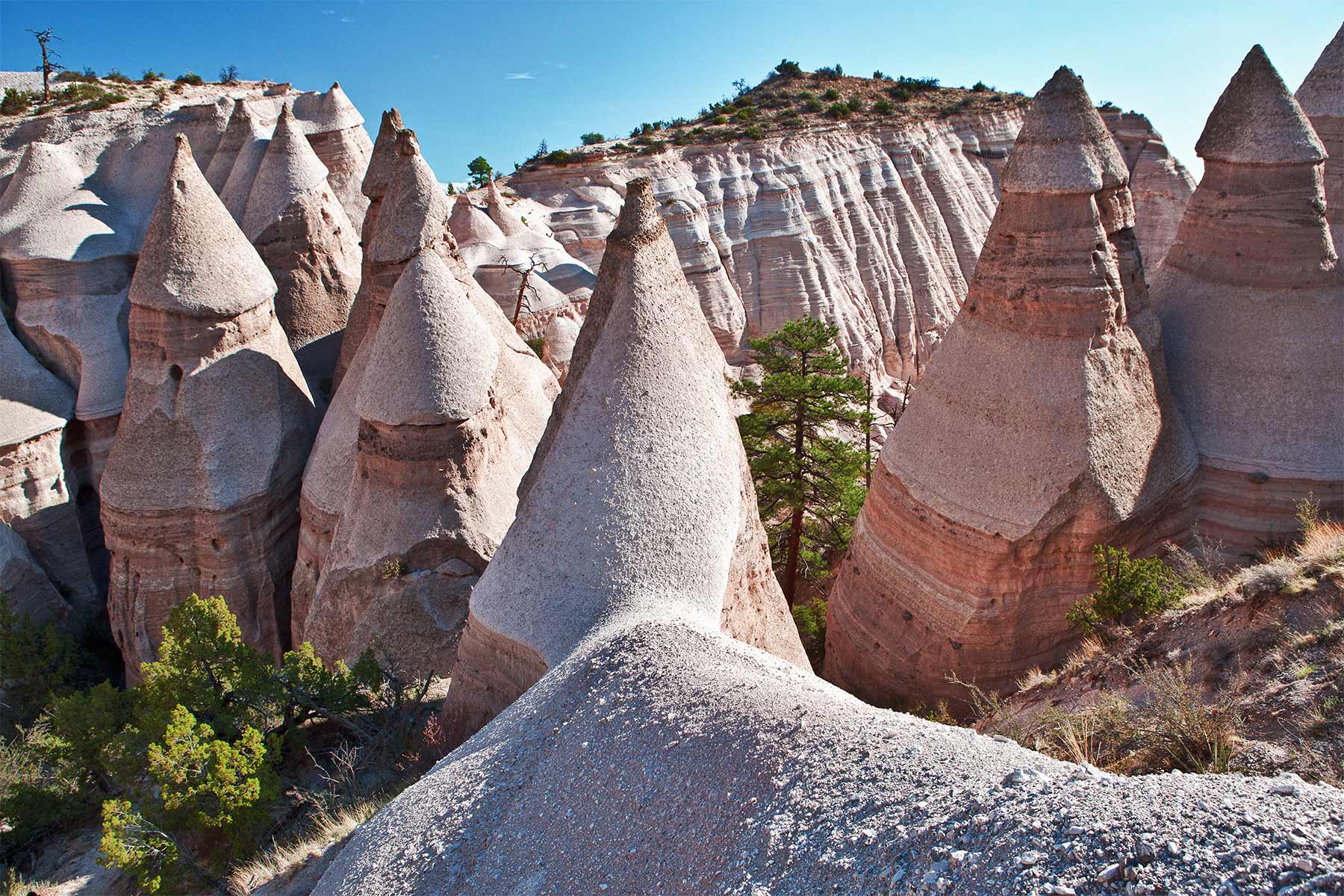
- Kasha-Katuwe Tent Rocks (NM) Cone-shaped hoodoos and a slot canyon trail, reservations required now, book ahead
- John Day Fossil Beds (OR) The Painted Hills at golden hour justify the drive on their own
- Upper Missouri River Breaks (MT) Float the same white cliffs Lewis and Clark described in 1805, nearly unchanged. We made a film here and still think about it.
- Katahdin Woods and Waters (ME) The North Woods at their emptiest, with Maine’s other federal lands nearby
- Vermilion Cliffs (AZ) Home of the Wave, with a permit lottery so oversubscribed it makes Yosemite camping look casual. The rest of the monument requires no luck at all.
- Muir Woods (CA) Old growth redwoods 12 miles from the Golden Gate Bridge. Parking reservations required, worth the hassle.
If You’re Already Nearby
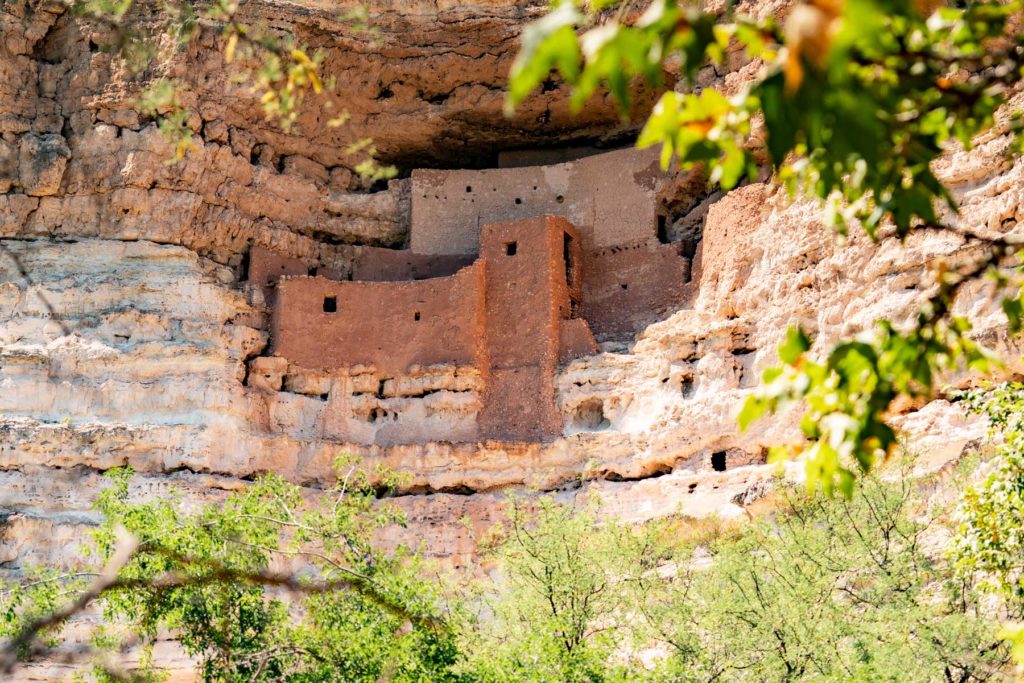
The historic monuments, the forts, the fossil quarries, the small urban sites. Most are an excellent hour and a poor vacation. The exceptions prove the rule. Statue of Liberty is a monument and obviously merits the ferry. Montezuma Castle in Arizona is a five-story cliff dwelling visible from a third-of-a-mile paved loop, which makes it the best effort-to-wonder ratio in the Southwest. And we’ll defend Yucca House, an unexcavated pueblo in a Colorado field with no trail, no facilities, and no crowds, as the most honest monument in America. It protects the archaeology by simply leaving it alone.
Map of US National Monuments
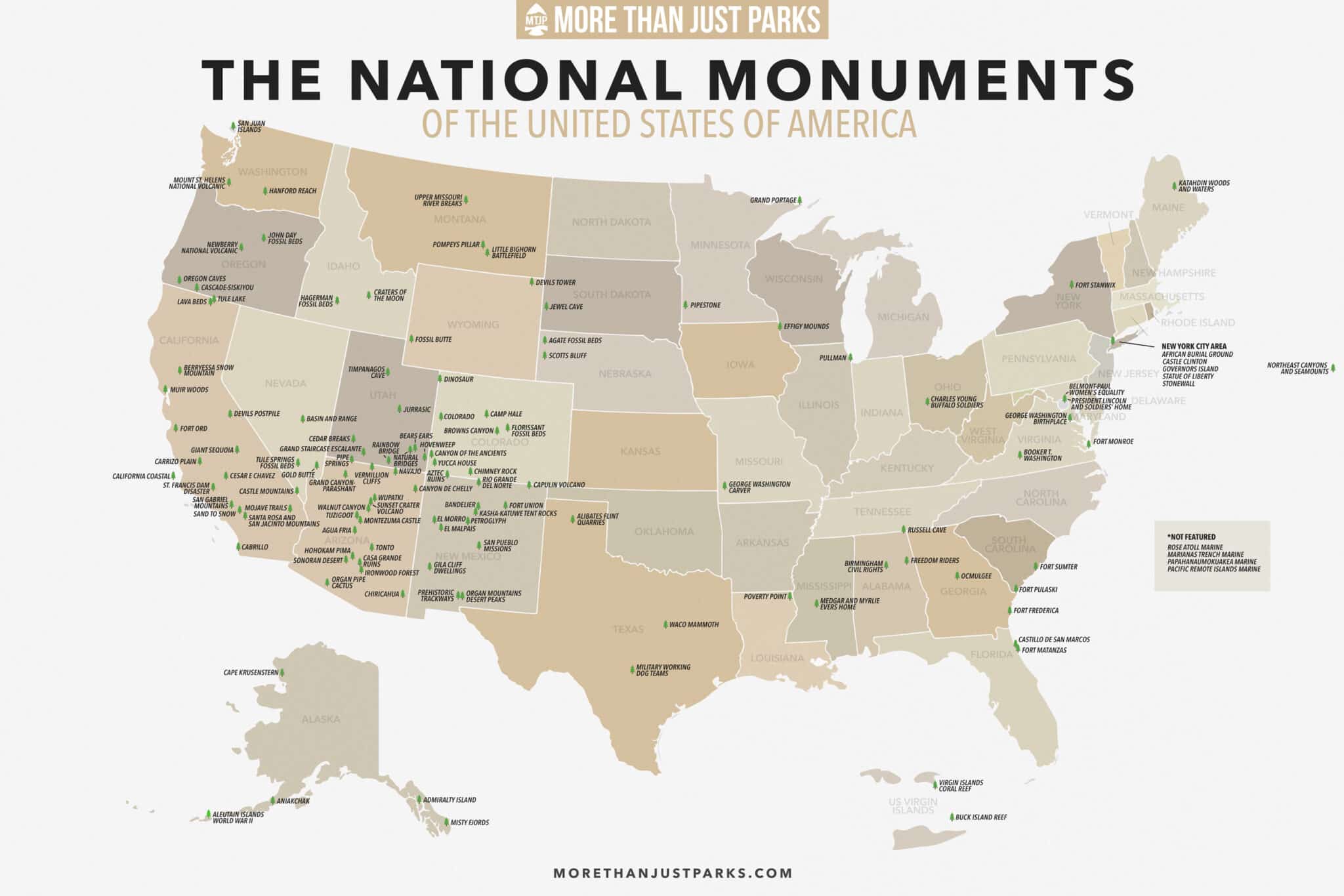
For a live, zoomable version with every monument, park, and protected area in the country, use our free interactive map at Explore Public Lands. And to see which of these places are facing mines, drilling, or rescission attempts right now, the Threatened Public Lands Map is the companion piece to the status column above.
FAQ About National Monuments
There are 138 national monuments in the United States as of June 2026. None has been rescinded, though several face boundary reviews and court challenges.
The newest US national monuments are Chuckwalla and Sáttítla Highlands, both designated in California on January 14, 2025.
Devils Tower in Wyoming is the oldest national monument, proclaimed by Theodore Roosevelt on September 24, 1906, three months after the Antiquities Act became law.
Papahanaumokuakea Marine National Monument is the largest at 372,848,597 acres, making it bigger than all 63 national parks combined.
Military Working Dog Teams National Monument in Texas is the smallest at roughly 0.07 acres.
No president has ever rescinded a national monument in the 120-year history of the Antiquities Act. A 2025 Justice Department opinion claims a president can, reversing the government’s position since 1938, but no court has ever ruled on the question.
California has the most national monuments with 20, followed by Arizona with 19 and New Mexico with 13.
More Helpful Related Articles
National Monuments Ranked Every US National Monument Ranked, Best to Worst
Threatened Public Lands The Threatened Public Lands Map
National Parks by State List and Map of All 63 National Parks
National Parks Ranked All 63 US National Parks Ranked
How Many National Parks Are There Every NPS Designation Explained
Current Conditions Live Conditions on America’s Public Lands
Explore The Interactive Public Lands Map


