We'll give you 12 reasons why you'll want to make North Carolina your next vacation destination | North Carolina National Parks
We’re giving you twelve reasons why you’ll want you’ll want to make North Carolina your next vacation destination | Mingus Mill at Great Smoky Mountains National Park

North Carolina National Parks! We’ve got twelve incredible national park sites for you to see on your next visit to the Tar Heel State.

I’ve been to so many of these amazing places since retiring from teaching in 2018. Did I mention that I taught history? I spent a lifetime teaching about the history behind these momentous sites. Then I got to see them firsthand. And now I’m sharing the stories of these incredible places with you. It doesn’t get any better than that!

North Carolina National Parks includes historic sites, scenic parkways, gorgeous parks, national seashores, legendary trails and so much more.

North Carolina National Parks
North Carolina Museum of Art | Courtesy of Wikimedia Commons

So, What Is A National Park?

We get asked that question a lot because there’s a difference between a “national park” and a “national park site.” To help you understand that difference you might want to check out our article titled: What Is A National Park Really?

If you’re planning a trip to the Tar Heel State then one book that I highly recommend is: Backroads of North Carolina: Your Guide to Great Day Trips & Weekend Getaways by Kevin Adams.

We’re going to give you twelve wonderful reasons why you’ll want to make North Carolina your next vacation destination.

North Carolina National Parks
Illustrated map of North Carolina, USA. Travel and attractions. (Shutterstock-Stellar_bones)

Table Of Contents

1. Appalachian National Scenic Trail

Need a good stretch of the legs? Check out the longest hiking trail in the world.

The Appalachian National Scenic Trail, also known as the A.T, is a long-distance hiking trail that runs along the East Coast of the United States, from Springer Mountain in Georgia to Mount Katahdin in Maine, covering a total distance of about 2,200 miles.

The trail is one of the most famous hiking trails in the world and is considered one of the premier long-distance hiking trails in the United States.

The trail passes through 14 states, including Georgia, North Carolina, Tennessee, Virginia, West Virginia, Maryland, Pennsylvania, New Jersey, New York, Connecticut, Massachusetts, Vermont, New Hampshire, and Maine.

It goes through a wide variety of landscapes, including forests, mountains, and meadows, and passes through many different ecological regions, including the Southern Appalachians, the Blue Ridge Mountains, the Green Mountains, and the White Mountains.

North Carolina National Parks
The Appalachian Trail | Courtesy of NPS

The Trail Is Maintained By A Network Of Volunteer Organizations

The trail is maintained by a network of volunteer organizations and the National Park Service. Hikers can choose to hike the entire trail in one trip, a journey that typically takes about 5-7 months, or they can choose to hike sections of the trail. The trail is marked with white blazes and is well-maintained with shelters and campsites along the way.

The trail is a great way to experience the natural beauty and cultural heritage of the Appalachian Mountains. It offers an opportunity to connect with nature, challenge oneself physically and mentally, and for many, it is a spiritual experience.

The trail is open year-round, but some sections may be closed due to weather or other factors. It is a National Scenic Trail, and a unit of the National Park Service.

appalachian national trail
Appalachian National Scenic Trail | Courtesy of the National Park Service

Arkansas National Parks (An Expert Guide)


2. Blue Ridge Parkway

Believe it or not, North Carolina National Parks include the single most visited unit in the U.S. National Parks System. What site is that? Why it’s the Blue Ridge Parkway.

While you can drive through it in only 10-12 hours, if you want to see and do all of the wonderful things available along the way then be prepared to set aside five to seven days.

The parkway spans 469 miles. There are more than 450 mileposts along the way. So, what is one to do? I’m someone who likes to do a “reconnaissance mission” before I go out into the field. This means that I like to gather as much ‘intel’ as I can.

The Blue Ridge Parkway Visitor Center near the beautiful city of Asheville is a great place to gather information about all of the things there are to see and do. Now that having been said, I’m going to give you some recommendations based on a few of my favorites.

But first, a short history of the parkway.

Road trips usa - Great Smoky Mountains National Park North Carolina Tennessee

History of the Blue Ridge Parkway

Construction on the Blue Ridge Parkway began September 11, 1935. It was part of the massive public works programs of Franklin Roosevelt’s New Deal which was the original program to build back better. Construction on the parkway was not completed until 1987.

Now how’s that for a short history!

If you’re interested in a longer one then I recommend: Super-Scenic Motorway: A Blue Ridge Parkway History by Anne Mitchell Wisnant.

12 MUST-SEE Historic Sites In Georgia


Thing To Do On The Blue Ridge Parkway

Think of the parkway as a magic portal that can take you to some very magical places. Of course there’s biking, camping, fishing, hiking, wildlife watching, etc. It’s all there depending on what you want to do and where you want to go.

Cumberland Knob is a great place to begin. It’s where construction began on this magnificent parkway. If you love to hike or just went to soak up some beautiful nature, there are find 1,000 acres of recreation, including the easy Cumberland Knob Trail.

If it’s music you love there are special events and concerts along the parkway. They include Humpback Rocks (Milepost 5.8), Roanoke Mountain Picnic Area (Milepost 120.4), and Mabry Mill (Milepost 176).

Blue Ridge Parkway
The Blue Ridge Parkway | Courtesy of Wikimedia Commons

Amazing Hiking Trails Near Asheville | Blue Ridge Parkway

Within an hour of Asheville, North Carolina, there are some amazing hiking trails. They include:

  1. At milepost 364 there’s Craggy Pinnacle at Craggy Gardens. It’s a beautiful 1.2 mile round trip hike where you’ll see some amazing rock formations.
  2. Another great hike is at Rattlesnake Lodge. It’s the former summer home of Asheville physician and outdoor activist Dr. Chase Ambler. This 3 mile hike This follows the Mountains-to-Sea Trail connecting the Great Smoky Mountains to the North Carolina Outer Banks.
  3. If you’re feeling more ambitious then how about a 4.8 mile hike that begins at Craven Gap. It’s a good introduction to Asheville’s mountain scenery. In 2010, President Barack Obama and Michelle Obama made this hike.
  4. If you love a great panoramic view then there’s a 2.6 mile hike at milepost 407.6 It will take you to the top of Asheville’s most recognizable mountain–Mount Pisgah.
Hiking along the Blue Ridge Parkway
Hiking along the Blue Ridge Parkway | Courtesy of NPS

3. Cape Hatteras National Seashore

North Carolina National Parks include incredible trails and amazing parkways. But we’re just getting started.

What’s more fun than a trip to the beach? At the Cape Hatteras National Seashore you’ll feel the fine grains of sand between your toes as you head out to the best surfing location in the eastern United States of America.

There are nearly 70 miles of beautiful beach. You can enjoy an ocean swim during the day and a warm beach fire at night. There’s opportunities to fly kites, enjoy a picnic along the seashore, search for sea shells washed ashore, build castles in the sand or just relax.

Cape Hatteras National Seashore | North Carolina National Parks
Typical beach scene at Cape Hatteras National Seashore | Courtesy of the National Park Service

Fishing At Cape Hatteras

I started fishing as a boy. Some of my fondest memories are of fishing along the Delaware River. There’s a much better selection of fish at Cape Hatteras than there was for me along the Delaware. I had to settle for little Crappies (such an appropriate name if you ask me).

Many different types of fish can be taken from the surf, piers, and freshwater ponds as well as from boats in the inlets, the sound, and offshore in the Gulf Stream.

The best fishing is in the spring and fall.

Enjoy your day fishing, but remember that any person aged 16 and older who wants to fish recreationally in any water designated as coastal and joint waters of North Carolina must purchase a Coastal Recreational Fishing License.

This license can be purchased on a 10-day, annual or lifetime basis, or combined with a variety of licenses issued by the Wildlife Resources Commission (WRC). (Source: National Park Service)

North Carolina National Parks
Just before dawn at Bodie Island lighthouse along North Carolina’s Outer Banks. (Shutterstock-anthony heflin)

Hiking At Cape Hatteras

I have three sons who also double as personal fitness trainers at least for me. “Did you get your steps in today, Dad?” I typically hear that at least two to three times a week from one if not all three of them.

You won’t have to worry about getting your steps in at the Cape Hatteras National Seashore as there are some wonderful hiking trails which will give you both the exercise you need and the nature you desire.

19+ Best Hiking Apps RANKED By Experts (From Best To Worst)

There are three designated hiking trails which include:

  1. Buxton Woods Trail-It’s a .75 mile loop where you will see the diverse maritime forest ecosystem up close. You will traverse some of the highest points on Hatteras Island and can celebrate completing your trek with a picnic since both the start and end of the loop is at the Buxton Woods Picnic Area.
  2. Open Ponds Trail-It’s 4.5 miles (one direction) and 9 miles (round trip). That’s a lot of steps! Why so long? Because it goes from the mountains to the sea. You’ll see dunes, shrub thickets, and the forests of Hatteras Island as you wind your way between the British Cemetery near the Buxton Woods Picnic Area and Trailhead and the Frisco Campground.
  3. Hammock Hills Trail-It’s a .75 mile which takes you past dunes and scrub thickets, through a maritime forest, and to the salt marsh. You will have some wonderful views of the Pamlico Sound, before you loop back through the forest.
North Carolina National Parks
Coquina Beach on the Outer Banks in North Carolina at Cape Hatteras National Seashore. (Shutterstock-Sherry V. Smith)

Enjoy The Water At Cape Hatteras

At Cape Hatteras, there are a number of wonderful aquatic activities. They include:

  1. Canoeing
  2. Crabbing
  3. Kayaking
  4. Kiteboarding
  5. Snorkeling
  6. Surfing
  7. Windsurfing
Cape Hatteras Crabbing NPS
Blue crab caught during a ranger-led crabbing program | Courtesy of the National Park Service

Three Historic Lighthouses At Cape Hatteras

You don’t have to travel to New England to see those historic lighthouses. There are three historic lighthouses located at Cape Hatteras.

Both the Cape Hatteras Lighthouse and the Bodie Island Lighthouse are open seasonally for self-guided climbs. The third lighthouse, the Ocracoke Island Lighthouse, is not open for climbing.

Bodie Island Lighthouse | North Carolina National Parks
Sunrise at the Bodie Island Lighthouse | Courtesy of the National Park Service

ALL of Florida’s National Parks Ranked


4. Cape Lookout National Seashore

North Carolina National Parks offers you not one, but two national seashores. At Cape Lookout National Seashore, there’s everything from birding, to camping, to fishing, to learning about the history of Cape Lookout Light Station. It’s all there waiting for you!

I’m a strong believing in gathering information when I arrive to make sure that I’m able to see and do all of the things I want to. A great place to gather that information is the Harkers Island Visitor Center. You’ll find interactive exhibits and informative materials to help you get the most out of your stay.

Speaking of visitor centers, there’s also the Beaufort Visitor Information Center. There you’ll find exhibits on island ecology and history; map of the park; informational materials and more.

Cape Lookout National Seashore | North Carolina National Parks
Looking for beautiful lighthouses, look no farther than Cape Lookout National Seashore | Courtesy of the National Park Service

Things To Do At Cape Lookout National Seashore

There are some wonderful things to do while at Cape Lookout. They include:

  1. Boating-Canoeing, Kayaking, paddling, windsurfing and more. You can even rent a houseboat if you want to have an aquatic adventure.
  2. Camping-There is camping though it is primitive. Be prepared for the natural conditions to be found at the park.
  3. Bird Watching-You can see terns and herons are best seen in the summer. In the spring and fall seasons you can see shorebirds, hawks, and songbirds. If you go in the winter then ducks and geese are most common.
  4. Fishing-Most of the beach is open for fishing. Fishing regulations, including seasons and licensing requirements are set by the North Carolina Division of Marine Fisheries
  5. Horse Watching-It’s not only the birds that you can see at Cape Lookout. More than 100 wild horses, living in groups called harems or bands, roam free along the entire length and width of Shackleford Banks island.
  6. Hiking-There are no trails on the seashore, but many people do backpack or hike the islands.
  7. Sea Shells-When I was a kid, I loved looking for and collecting sea shells. But you don’t have to be a kid to enjoy it. Cape Lookout is an excellent place to explore for shells. A limit of two gallons of shells per day can be taken off the seashore.
Cape Lookout National Seashore | North Carolina National Parks
Cape Lookout National Seashore in North Carolina | Courtesy of Wikimedia Commons

And Let’s Not Forget The History At Cape Lookout

As a retired history teacher, I’m always interested in the stories behind the places that I visit. And you can learn about those stories at Cape Lookout. There are some fascinating local museums and other historical sites. They include:

  1. Core Sound Waterfowl Museum & Heritage Center-It highlights the traditional lifestyle of those living “Down East” through exhibits and demonstrations.
  2. North Carolina Maritime Museum-This waterfront museum preserves the tradition of wooden boat building as well as other facets of North Carolina’s maritime heritage.
  3. Rachael Carson Reserve– It’s a part of the North Carolina National Estaurine Research Reserve. The islands of the reserve serve as a living laboratories for research, education and coastal management.
  4. The History Place-This is a museum and research library operated by the Carteret County Historical Society.
  5. Beaufort Historic Site-Here visitors can see 18th and 19th century life in Beaufort. The site includes six restored buildings which are open for tours.
North Carolina Maritime Museum | North Carolina National Parks
A horse drawn carriage in front of the North Carolina Maritime Museum. Courtesy of Wikimedia Commons

RELATED: Whose Island Is It Anyway | A History & Guide To Cumberland Island


5. Carl Sandburg Home National Historic Site

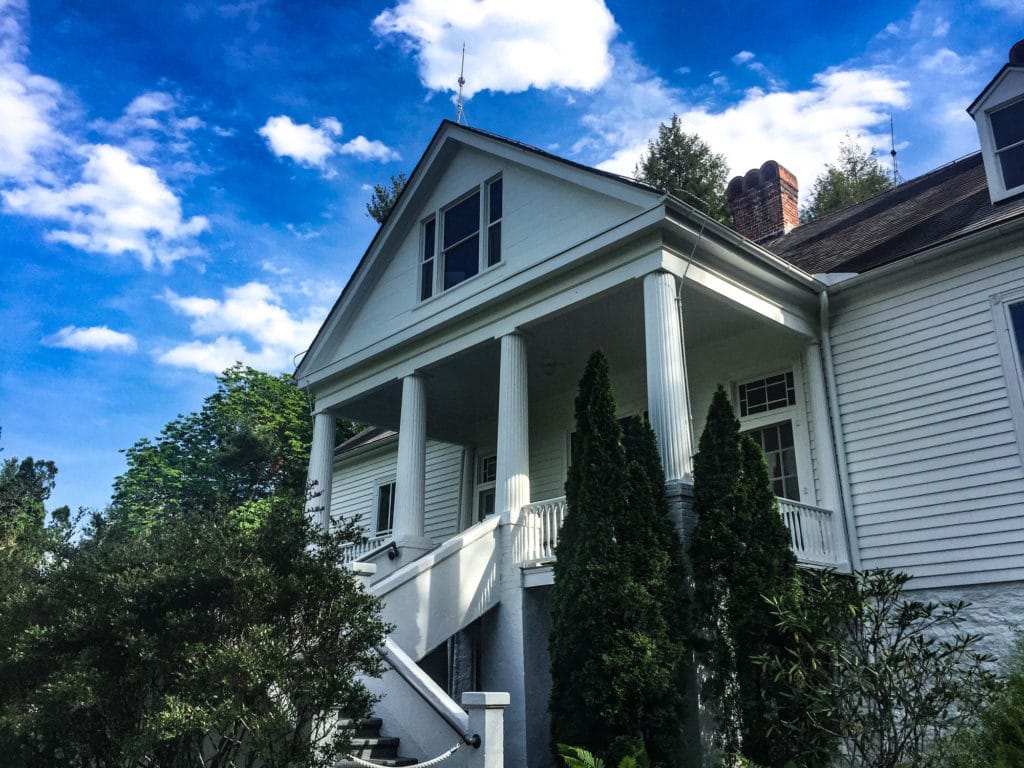
As someone who spent over a quarter of a century teaching history, when I travel to North Carolina National Parks, or any national parks for that matter, I’m also on the hunt for the history behind the place. Or, in the case of this national park site, the history behind the man who wrote such memorable history.

The Carl Sandburg Home National Historic Site preserves the home and farm of Carl Sandburg, who was an American poet, writer, and historian. He and his family lived there from 1945 until his death in 1967.

The home, named Connemara, sits on 244 acres and includes the main residence, dairy barns, farm buildings, and the author’s writing studio. The National Park Service operates the house as a museum, which is open to the public for tours.

Carl Sandburg Home National Historic Site | North Carolina National Parks
Carl Sandburg Home National Historic Site in North Carolina | Courtesy of the National Park Service

Visitors can see the house and studio, which are filled with original furniture, photographs, and personal items of the Sandburg family.

The farm features trails that are open to the public for hiking, and the park service also offers ranger-led tours of the farm and gardens. The site is dedicated to preserving the legacy of Carl Sandburg and interpreting his work and life.

Carl Sandburg Home National Historic Site | North Carolina National Parks
Carl Sandburg Home National Historic Site in North Carolina |Courtesy of the National Park Service

Carl Sandburg’s Lincoln

In 2021, C-SPAN asked a group of distinguished presidential historians to rank our nation’s presidents from worst to best. At the top of their list, with a total score of 897 points, was Abraham Lincoln. George Washington and Franklin Roosevelt came in second and third respectively.

Why is Abraham Lincoln ranked as the greatest president of all time? Simply put, he saved the Union. In the process of saving the nation, Lincoln managed to define the creation of a more perfect Union in terms of liberty and economic equality that rallied the citizenry behind him.

In its review of Carl Sandburg’s Lincoln, The New York Times noted that “What Mr. Sandburg has done, cannot well be repeated; his achievement is an intensely individual one, suffused by the qualities which are peculiarly his own as a poet.”

Abraham Lincoln: The Prairie Years & The War Years (Six Volume Set) is the definitive biography of America’s 16th President. If you’re a history buff like I am, it’s definitely worth reading.

North Carolina National Parks
Civil War Reenactors

10 BEST Civil War Sites In America


6. Fort Raleigh National Historic Site

If I haven’t convinced you that North Carolina National Parks has it all then rest assured that we’re not finished yet. We haven’t gotten to any historically significant forts yet, but we’re about to. Of course, I’m referring to Fort Raleigh National Historical Site.

Fort Raleigh National Historic Site | North Carolina National Parks
Fort Raleigh National Historic Site | Courtesy of Wikimedia Commons

Fort Raleigh National Historic Site is located on Roanoke Island in North Carolina and is named after Sir Walter Raleigh, the English explorer who funded several expeditions to the New World in the late 16th and early 17th centuries.

In 1584, Raleigh sent an expedition to Roanoke Island led by explorer and artist John White, who established a colony there. This colony, known as the “Lost Colony,” disappeared under mysterious circumstances, with the fate of its settlers unknown.

In the late 19th and early 20th centuries, a group of citizens from North Carolina established the Roanoke Island Historical Association to preserve the history of the Lost Colony and the island’s role in American history. In 1941, the Association donated lands on Roanoke Island to the National Park Service, and Fort Raleigh National Historic Site was established.

The site includes the location where the Lost Colony was established, as well as the location of the first English settlement in the New World, and a number of historic structures and monuments. Fort Raleigh National Historic Site continues to commemorate the history of the Lost Colony and the role of Roanoke Island in American history, and serves as a hub for historical research, interpretation, and education.


Things To See & Do At Fort Raleigh

At Fort Raleigh, you can learn the story of England’s first New World settlements from 1584 to 1590. You’ll take a journey back to the Roanoke of the 1500s. Roanoke Island became known to the English on an exploratory voyage in 1584.

Shrouded in mystery and suspense, the establishment of a military colony in 1585 and a settlement colony in 1587 would become famous as the “Lost Colony of Roanoke.” Roanoke was an attempt by Sir Walter Raleigh to found the first permanent English settlement in North America.

Following the failure of this settlement, a second colony arrived in 1587. It landed on the same island and became known as the Lost Colony due to the subsequent unexplained disappearance of its population.

Fort Raleigh National Historic Site | North Carolina National Parks
The original earthen fort was likely built in 1585, though its exact purpose and time of construction remain a mystery. Courtesy of the National Park Service

Hike The Freedom Or Thomas Hariot Trail At Fort Raleigh

If you want to get your history and your exercise there are some excellent hiking opportunities at Fort Raleigh. There’s the Freedom Trail which takes hikers through a maritime forest. It’s a 1.25-mile trail that ends with views of the Croatan Sound on the western edge of the park.

There’s also the Thomas Hariot Trail. It’s a 0.3-mile loop through the island’s maritime forest to the sandy shores of Albemarle Sound. Along the way hikers will see interpretive signs describing the forest habitat, the Algonquian methods for gathering food.

There’s also a reconstructed earthwork which includes copper nuggets, charcoal, antimony ore and furnace bricks. These could be the workshop site of Joachim Gans, a metal expert on the 1585 expedition.

And there’s the First Light of Freedom Monument. It commemorates the Roanoke Island Freedman’s Colony that was set up during the American Civil War. The colony provided a safe haven and education for the formerly enslaved to help prepare them for a new life.

North Carolina National Parks
First Light of Freedom Monument | Courtesy of Wikimedia Commons

Kentucky National Parks To Visit On Your Visit To The Bluegrass State


7. Great Smoky Mountains National Park

The Great Smoky Mountains National Park is the is the most visited national park in the country and a true monument to the beauty of the Appalachians. It’s the proverbial jewel in the crown known as North Carolina National Parks.

Established in the depths of the Great Depression by generous local communities, wealthy philanthropists like John D. Rockefeller Jr., and the U.S. government, this pristine area was spared from further logging and development and is now a premiere outdoor destination belonging to all Americans.

Great Smoky Mountains National Park Facts
Great Smoky Mountains National Park Scenic Sunset Landscape vacation getaway destination (Shutterstock-Weidman Photgraphy)

One Of The Most Beautiful Parks On The Planet

Located in the misty mountains of Tennessee and North Carolina, Great Smoky Mountains is easily one of the most beautiful national parks on the planet. If you don’t believe me, visit in the fall and you’ll see exactly what I’m talking about, more on that later!

If you’re wondering how crowded the park is considering it’s the most visited national park in the country, you might be surprised by the answer. While it certainly depends on where you go in the park and what time of year you visit, Great Smoky Mountains doesn’t see anywhere near the crowding that parks like Zion or Yosemite do these days.

To find out when, where, and why to go in this Appalachian wonderland, read on!

Great Smoky Mountains National Park | North Carolina National Parks

About Great Smoky Mountains

Located in the heart of the Southern Appalachian Mountains is a place where time seems to have stood still. Here are the last remains of the ancient forests that once dominated the Eastern United States.

In the words of President Franklin Roosevelt, “there are trees here that stood before our forefathers ever came to this continent; there are brooks that still run as clear as on the day the first pioneer cupped his hand and drank from them.”

These misty mountains are home to America’s most visited national park, a land of vast hardwood forests, clear mountain streams, frontier cabins, and iconic wildlife. This is Great Smoky Mountains National Park.

Great Smoky Mountains | North Carolina National Parks
Great Smoky Mountains National Park | North Carolina National Parks

Facts About Great Smoky Mountains National Park


Watch Our Award-Winning Great Smoky Mountains Video


This video is the culmination of two weeks exploring Great Smoky Mountains National Park. More Than Just Parks chose Great Smoky Mountains as our second park because of it’s extraordinary display of fall colors, it’s incredibly diverse wildlife population, and it’s importance as the most visited national park in the country.

Play video
MTJP | Smoky Mountains is a visually stunning journey through Great Smoky Mountain National Park during peak fall color.

Best Things to Do in Great Smoky Mountains National Park


Be sure to heck out our article: 15 Incredible Things to Do at Great Smoky Mountains National Park


Go Leaf Peeping

Fall in the Great Smoky Mountains is simply spectacular with burning red oaks and brilliant yellow and orange maples. The park is home to many varieties of deciduous trees which turn fantastic colors in the fall.

Overlooks and creeks are ablaze with the colorful greetings of autumn and everywhere is a great spot to see this once-a-year feast for the eyes.

fontana lake - more than just parks
Fontana Lake at Great Smoky Mountains National Parks

Take in the View from Clingmans Dome

The observation tower at Clingmans Dome provides sweeping views of the entire park and the surrounding mountains and lakes.

On clear days you can see over 100 miles in any direction. This highest peak in the park is easy to access for visitors of all ages and abilities and a must for any visit.

clingmans dome - more than just parks
Clingmans Dome, Great Smoky Mountains National Park

Tour the Historic Cabins and Mills

The historic cabins and buildings that dot the park are part of what makes Great Smoky Mountains National Park so great if you’ll excuse the pun. Seriously though, these beautiful rustic pioneer structures hearken back to the hard scrabble life forged by early settlers of the area and add to the beauty of the park.

There’s lots of great information on these historic structures in the park visitor centers and many are staffed by volunteers and interpreters who can tell you all about what life like for the people who built these frontier settlements.

A cabin in fall - more than just parks
Historic Cabin at Great Smoky Mountains

Ditch the Tourists and Head for Cataloochee

Far from the hustle and bustle of Gatlinburg and the tourists you’ll find this peaceful mountain valley. Known as Cataloochee, the valley was formerly home to a small mountain community before the park was established.

Now you can explore the remaining historic homes and buildings and take in the peaceful mountain charm that once made this an ideal place to settle.

There is also a herd of elk that can be commonly seen grazing the pastures of this peaceful valley, some of the bull elk can grow to immense sizes with very large antler racks. You can also spot wild turkeys and a number of other interesting wildlife in this scenic and quiet part of the park.

newfound gap overlook
Great Smoky Mountains National Park

RELATED: 9+ Mississippi National Parks For Your Dixie Bucket List (Expert Guide)


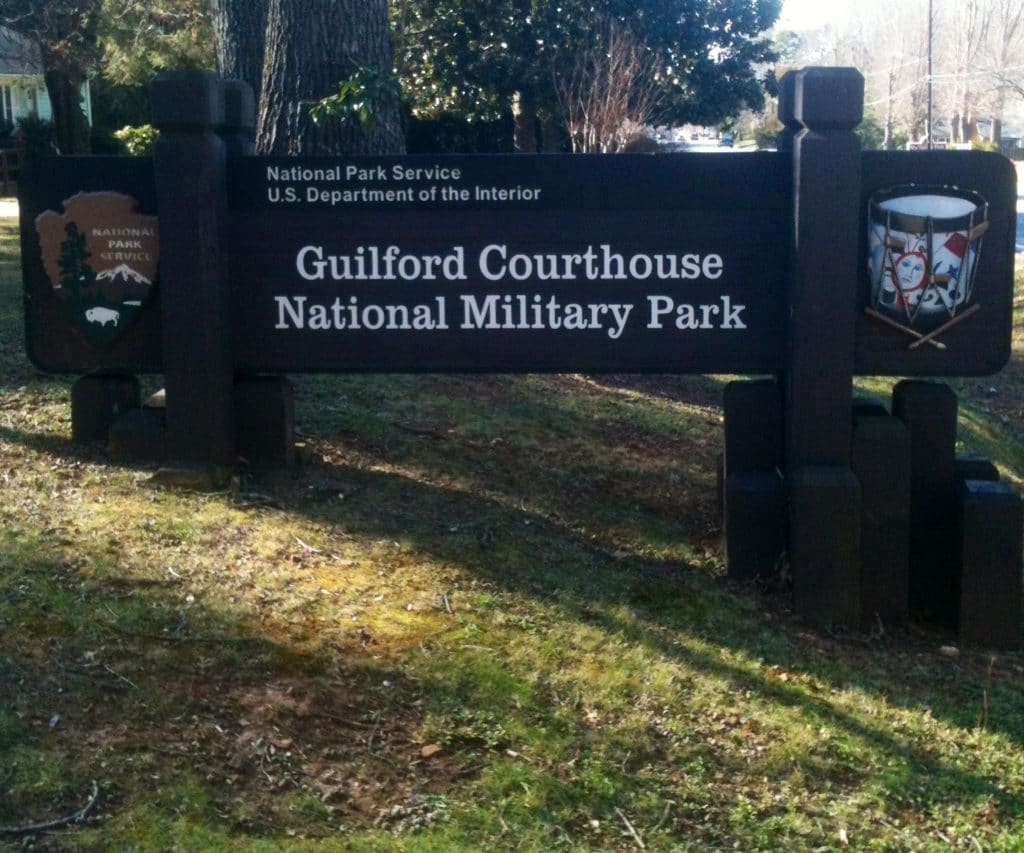
8. Guilford Courthouse National Military Park

We go from the most popular national park to one of the most interesting Revolutionary War Battles. North Carolina National Parks truly has it all and Guilford Courthouse National Military Park proves it.

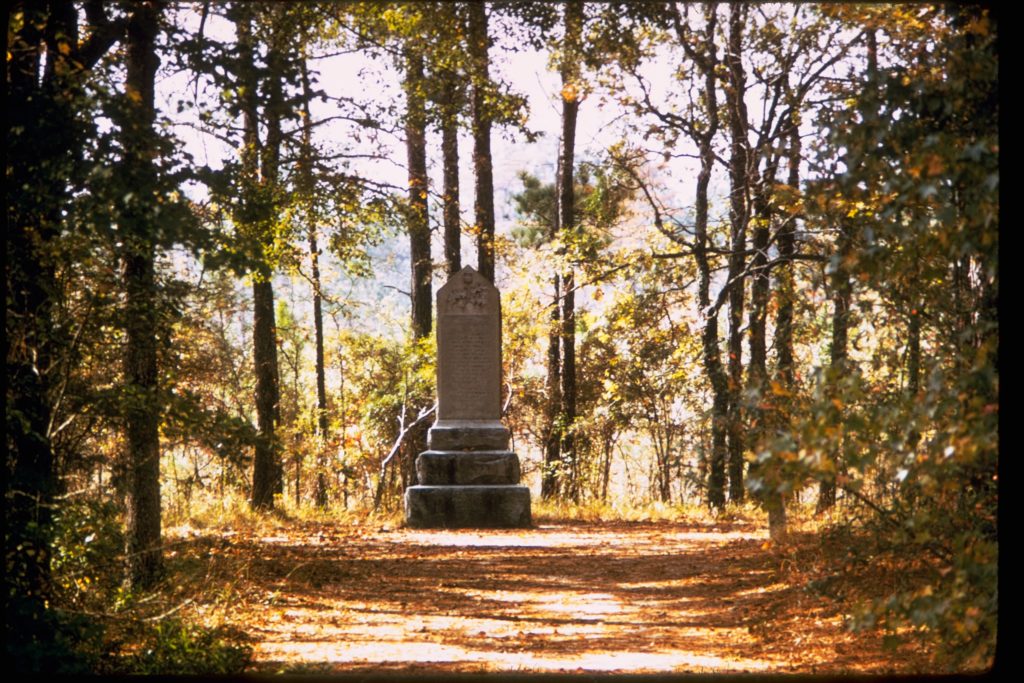
The Battle of Guilford Courthouse was considered a victory within a defeat. It was on of the pivotal battles of the American Revolutionary War. It took place on March 15, 1781.

The British troops under Lieutenant General Charles Cornwallis (1738-1805) scored a tactical victory at Guilford Courthouse over American forces under Major General Nathanael Greene (1742-86). Nevertheless, the British suffered significant troop losses during the battle.

Afterward, Cornwallis abandoned his campaign for the Carolinas and instead took his army into Virginia, where in October of that year he surrendered to General George Washington (1732-99) following the Battle of Yorktown, the last major land battle of the war.

Guilfrod Courthouse National Military Park NPS
Courtesy of the National Park Service

10 Best Revolutionary War Sites in America


Things To Do At Guilford Courthouse

I recommend that you begin your tour at the Visitor Center where you can pick up a map of the battlefield. There are self-guided cell phone walking and driving tours.

You can explore the inner trails of the battlefield and visualize the events of March 15, 1781 as you listen to the Park Ranger’s narration.

The walking tour begins at the Hoskins Farm parking area. The entire walk is 1.75 miles. The tour last approximately 1.5 hours.

While you’re there you can visit the Hoskins Farmstead. It’s a late 18th and early 19th century farmstead, telling the story of Joseph and Hannah Hoskins, two colonists who fled the war during the Northern Campaign and settled in the Carolina backcountry planning for a peaceful life.


9. Moores Creek National Battlefield

If you are fascinated by America’s War for Independence (a.k.a. the American Revolutionary War) then North Carolina National Parks not one, not two, but three amazing battlefield sites. (Please Note: I haven’t gotten to the third one yet, but be patient. It’s coming.)

The Battle at Moores Creek Bridge was the first battle of the Revolutionary War to take place in North Carolina. This was a battle in which a group of North Carolina Patriots defeated a group of North Carolina Tories thereby thwarting a British invasion of the southern colonies.

Moores Creek National Battlefield NPS
“King George and Broadswords! shouted loyalists as they charged across partially dismantled Moores Creek Bridge on February 27, 1776. Just beyond the bridge nearly a 1,000 North Carolina patriots waited quietly with cannons and muskets poised to fire. This dramatic victory ended British rule in the colony forever. (Courtesy of the National Park Service)

25 BUCKET-List Famous Landmarks In America (MUST-SEE)


Things To Do At Moores Creek

At Moores Creek, you can learn about history while getting into shape. There’s a one mile trail where you can enjoy a quiet walk through a 244-year-old battlefield. It doesn’t get any better than that!

If you’re thinking of hosting a special event of your own then the beautiful natural landscapes which are perfect venues for a variety of special activities.

Be advised that most special events and activities held in the park require a special use permit, issued only after the National Park Service (NPS) determines, from the applicant’s information, that the activities involved will not impair park values and resources. (Source: NPS)

Moores Creek Boardwalk NPS
Moores Creek Boardwalk in Fall | Courtesy of the National Park Service

10. Overmountain Victory National Historic Trail

As promised, North Carolina National Parks delivers not one, not two, but three Revolutionary War Sites.

The third and final one is the Overmountain Victory National Historic Trail. It traces the route that was used by the Patriots during the Kings Mountain Battle of 1780.

The route is 330 miles and it goes through four states (Virginia, Tennessee, North and South Carolina).

You can explore this route by following a Commemorative Motor Route which uses existing state highways. It is marked with a distinctive trail logo and includes 87 miles of walkable pathways.

Overmountain Victory NPS
Signs for Biggerstaff Hanging Tree and for the Overmountain Victory National Historic Trail | Courtesy of the National Park Service

The Battle Of Kings Mountain

The Battle Of Kings Mountain was a battle which pitted Patriots against Tories. No British soldiers participated as this was a fight strictly between those who wanted to break free of British rule versus those who didn’t.

A force of 1,800 backcountry or “Overmountain” men defeated a force of 1,000 Tories at King’s Mountain on October 7, 1780.

According to British commander Henry Clinton, the American victory “proved the first Link of a Chain of Evils that followed each other in regular succession until they at last ended in the total loss of America.”

North Carolina National Parks
You can trod the same ground traveled by American Patriots | Courtesy of the National Park Service

10 Best Revolutionary War Sites In America


What You Can See In North Carolina | Overmountain Victory National Historic Trail

The following sites along the Overmountain Victory National Historic Trail are in North Carolina:

  1. Trail #308 & Road #5545, Yellow Mtn. Gap, Avery Co., 1.5 Miles
  2. Overmountain Victory NHT, Elkin, NC, 3.75 Miles
  3. Yadkin River Greenway, Wilkesboro, NC, 7 Miles
  4. Overmountain Victory NHT, W. Kerr Scott Dam & Reservoir, 11 Miles
  5. Yadkin River Greenway, Caldwell County, NC, 1 Mile
  6. Patterson School Overmountain Trail, Caldwell County, 1 Mile
  7. Gillespie Gap, Blue Ridge Parkway, NC, 5.75 Miles
  8. Rose Creek Trail, West Side of Blue Ridge Parkway, MP 326, 1.4 Miles
  9. Black Bear Tract Trail, North Shore of Lake James, 2.1 Miles
  10. Trail #308G & Road #1238, Pisgah National Forest, 4.1 Miles
  11. 1780 Community, North Shore of Lake James – 1 Mile
  12. Paddy’s Creek Trail, New Part of Lake James State Park, 2.3 Miles
  13. Overmountain Victory NHT, Lake James State Park, 1.5 Miles
  14. Catawba River Greenway, Morganton, NC, 5 Miles
  15. Overmountain Victory NHT, Rutherfordton, NC, 3 Miles
  16. Alexander’s Ford Trail, Polk Co., NC, 2 Miles
  17. Overmountain Vineyards, Polk Co., NC, 1 Mile (Source: NPS)

11. Trail Of Tears National Historic Trail

As a former history teacher, I believe no study of American history is complete without an understanding of the Trail of Tears. This history lesson begins in 1830. Don’t worry there’s no homework assignment. It was in that year that Congress passed the Indian Removal Act.

The Trail of Tears refers to the forced relocation of Native American nations, primarily the Cherokee, Creek, Seminole, Chickasaw, and Choctaw, from their ancestral homelands in the southeastern United States to Indian Territory (present-day Oklahoma) in the 1830s.

The relocations were carried out by the U.S. government, under the Indian Removal Act of 1830, which authorized the President to negotiate treaties to exchange Native American land in the east for territory to the west of the Mississippi River.

The forced removals were carried out at gunpoint and resulted in the deaths of thousands of Native Americans from disease, starvation, and exposure. The forced march westward, known as the Trail of Tears, was a tragic event in American history that resulted in the loss of life and cultural destruction for the affected tribes.

The phrase “Trail of Tears” originated from the Cherokee Nation, and it is now used to refer to the forced removal of Native American nations from the southeastern United States.

This image has an empty alt attribute; its file name is Trail-Of-Tears-Map-NPS-1024x505.gif
The Trail of Tears map shows one of the most shameful episodes of American history, today preserved as the Trail of Tears National Historic Trail | Courtesy of the National Park Service

The Trail Of Tears Today

This incredible trail stretches 5,043 miles across nine states. You can follow the trail on foot, by vehicle, over water, by bicycle or by horse. Along the way, you will see sacred sites which tell the story of death and suffering as well as survival.

While in North Carolina, check out the North Carolina Museum of History which has an excellent exhibit on the Trail of Tears and its impact in North Carolina and elsewhere.

ALL 63 Us National Parks Ranked By Experts (Best To Worst)


12. Wright Brothers National Memorial

North Carolina National Parks takes flight with one of my favorite historical sites. It’s the Wright Brothers National Memorial.

History is replete with monumental moments that change the trajectory of humankind. One such moment occurred on December 17, 1903. Orville & Wilbur Wright, otherwise known as the Wright Brothers, ushered in the aerial age with their successful first flight of a heavier-than-flying machine at Kitty Hawk, North Carolina.

This airplane, known as the Wright Flyer, was the product of a sophisticated four-year program of research and development conducted by the brothers beginning in 1899.

Together, these two aeronautical visionaries pioneered many of the basic tenets and techniques of modern aeronautical engineering, such as the use of a wind tunnel and flight testing as design tools.

The impact of the airplane on the 20th century is beyond measure. The Wrights not only solved a long-studied technical problem, but also helped create an entirely new world.

My favorite book on The Wright Brothers was written by award-winning author David McCullough. It’s aptly titled: The Wright Brothers.

Wright Brothers National Memorial NPS
The Wright Flyer reproduction in the visitor center of Wright Brothers National Memorial | Courtesy of the National Park Service

“The desire to fly is an idea handed down to us by our ancestors who, in their grueling travels across trackless lands in prehistoric times, looked enviously on the birds soaring freely through.”

-Orville Wright

Things To Do & See At The Wright Brothers National Memorial

Visitors can relive the epic adventures of two intrepid brothers from Ohio. Visitors can see the reconstructed hangar and living quarters offer a glimpse of what camp life was like for the Wrights in 1903.

Stand at the place where Wilbur and Orville Wright first took to the air in their 1903 flyer and landed. You can climb Big Kill Devil Hill to see the nation’s monument commemorating the brothers’ historic achievement.

Wright Brothers Visitor Center NPS
Wright Brothers National Memorial visitor center shortly after completion

What makes North Carolina so special?

North Carolina offers a mild climate and 300 miles of shoreline. Geographically, the state is divided in three. Its Coastal Plain is filled with beautiful beaches, including the Outer Banks, which marks the spot where the Wright brothers made the first successful flight in history in 1903.

What are the must-see historic sites in North Carolina?

The following is a list of must-see historic sites in North Carolina:
Wright Brothers National Memorial
Guilford Courthouse National Military Park
Carl Sandburg Home National Historic Site
Fort Raleigh National Historic Site
Overmountain Victory National Historic Trail
The International Civil Rights Center & Museum, Greensboro
USS North Carolina
Reed Gold Mine
Tryon Palace Historic Sites & Garden
Fort Fisher


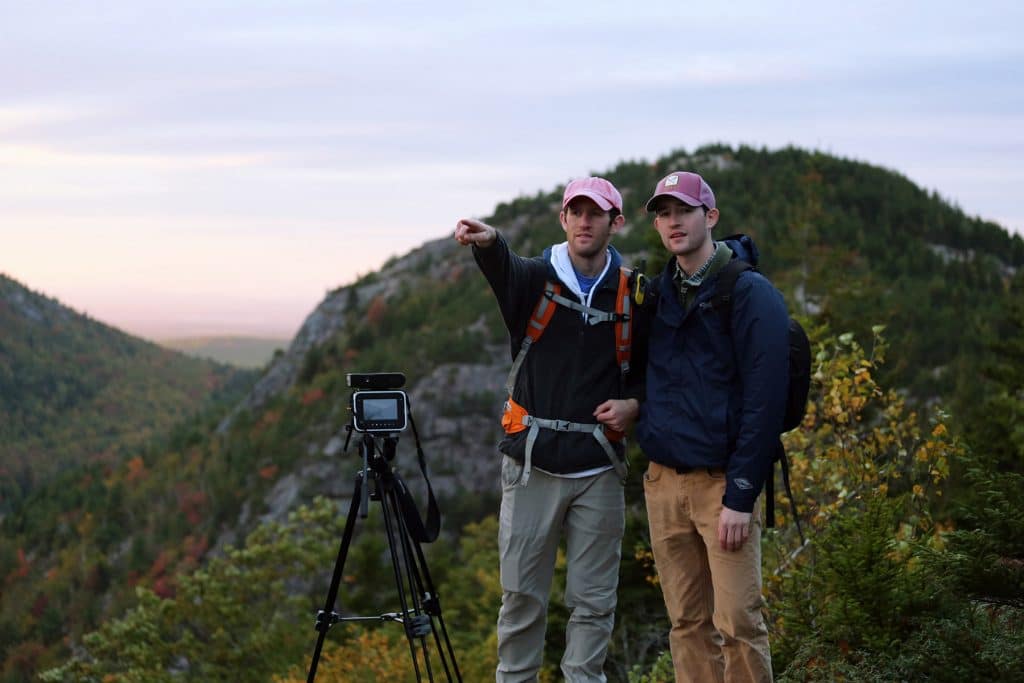
We’re Jim Pattiz and Will Pattiz, collectively known as the Pattiz Brothers (and sometimes the Parks Brothers) and we absolutely LOVE the national parks.

You should probably know that we don’t just make this stuff up out of thin air. We’ve spent our entire adult lives exploring and filming America’s national parks and public lands.

We’ve worked with the National Park Service, the Department of Interior, USDA, and the U.S. Forest Service for years creating films on important places and issues. Our work has been featured in leading publications all over the world and even some people outside of our immediate family call us experts on the national parks.


Meet The Parks Brothers


Play video
The Pattiz Brothers are regular contributors to The Weather Channel

  1. Appalachian National Scenic Trail
  2. Blue Ridge Parkway
  3. Cape Hatteras National Seashore
  4. Cape Lookout National Seashore
  5. Carl Sandburg Home National Historic Site
  6. Fort Raleigh National Historic Site
  7. Great Smoky Mountains National Park
  8. Guilford Courthouse National Military Park
  9. Moores Creek National Battlefield
  10. Overmountain Victory National Historic Trail
  11. Trail Of Tears National Historic Trail
  12. Wright Brothers National Memorial

We Hope You’ll Follow Our Journey


Our goal here at More Than Just Parks is to share the beauty of America’s national parks and public lands through stunning short films in an effort to get Americans and the world to see the true value in land conservation. 

We hope you’ll follow our journey through the parks and help us to keep them the incredible places that they are. If you’re interested in joining the adventure then please sign up below!