


After traveling to most of the national parks in America, we can tell you there is nothing quite like Hawaii’s. They are some of the most beautiful parks in the system, and they are also among the more expensive to reach.
Hawaii has exactly two full national parks: Hawai’i Volcanoes National Park on the Big Island and Haleakala National Park on Maui. The state holds seven other National Park Service sites as well, which we cover at the bottom, but those are historical parks, a historic trail, and a memorial, not national parks. This guide walks through both parks in detail, with the best times to visit, how to get there, where to stay, and what to do.
About Our Travels to Hawaii’s National Parks
I first visited Hawai’i Volcanoes nearly a decade ago, and it was a life-changing trip. There was something unforgettable about arriving into the park at night, seeing the red glow of the volcano on the underside of the clouds, catching that sulfur smell in the air, and then actually seeing lava. Seeing sunset at the crater on Haleakala (I know, sunrise is the famous one) was just as memorable. Driving up the island after a morning swim in warm ocean water, then needing a jacket at the summit, still feels surreal.

We have spent our adult lives exploring and filming America’s national parks and public lands, and we have worked with the National Park Service, the Department of the Interior, and the U.S. Forest Service on films about these places. The goal at More Than Just Parks is to share the beauty of these lands through short films and help people see the value in conservation.
117 public lands destinations are under threat. Get the free briefing that 27,000+ people use to stay informed and take action.
Things to Know Before You Visit
Sunscreen: Use it, and bring plenty. Hawaii has banned the sunscreens most damaging to its reef, so pack a reef-safe option.
Insect repellent: Worth carrying, especially on the Pipiwai Trail, where mosquitoes can be thick.
1. Hawai’i Volcanoes National Park
Location: Hawaii (the Big Island)
Score: 36.5 of 50. Accessibility 5, Recreation 7, Crowds 9, Amenities 7.5, Scenery 8.

About Hawai’i Volcanoes National Park
Hawaii’s flagship park once included Haleakala on Maui as a single unit before the two were split. What remains is otherworldly, a Mars-like landscape that offers a rare chance to see active volcanism up close, or at least its effects, depending on whether Kilauea is erupting during your visit. The park protects two of the world’s most active volcanoes, Kilauea and Mauna Loa.

Getting There
Once you land on the Big Island, getting to the park is straightforward. Rent a car at the airport and drive in. The trip takes about 2 hours from Kona Airport, usually the cheaper flight option, or about 40 minutes from Hilo Airport.

Best Time to Visit
My pick is November through March, when much of the mainland is cold and Hawaii offers a warm escape. The park is warm year-round given how close it sits to the equator. The catch is that those same months are the rainy season, so the weather is a bit of a gamble.

Watch Our Hawai’i Volcanoes Film
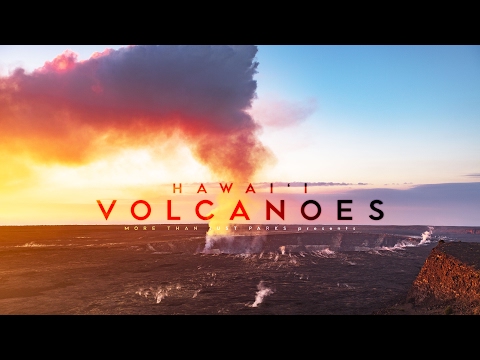
Hawai’i Volcanoes 8K is the result of several weeks filming in the rugged volcanic landscapes of the park. Set on the island of Hawaii in the remote South Pacific, it is a land of massive mountains, rare wildlife, and active volcanoes. Journey with us through an ever-growing land shaped by fire.
Thurston Lava Tube
Thurston Lava Tube (Nahuku) is a 500-year-old tube near the Kilauea Caldera, carved by a roughly 2,000-degree lava flow into the cavern that survives today. The short hike runs through lush tropical forest and into the lit cavern below.

Kilauea Iki Crater
The Kilauea Iki Crater is one of the best hikes in Hawai’i Volcanoes, reached via the Kilauea Iki and Crater Rim trails. What was a boiling lava lake in 1959 is now a hardened crater floor you can walk straight across.

Pu’u Loa Petroglyphs
The Pu’u Loa petroglyph field holds more than 23,000 carvings, one of the largest concentrations in Hawaii. A boardwalk lets you view them up close, without touching, many dating back hundreds of years.

Where to Stay Near Hawai’i Volcanoes
The town of Volcano, just outside the park, has the closest lodging: Kilauea Lodge, Volcano Inn, and Volcano Village Lodge among them. See places to stay near the park.
2. Haleakala National Park
Location: Maui
Score: 34 of 50. Accessibility 5.5, Recreation 7.5, Crowds 6.5, Amenities 7, Scenery 7.5.

About Haleakala National Park
On Maui, Haleakala is my personal favorite of the two and splits neatly into two very different sections. The summit district is famous for what many call the finest sunrise in the national park system, provided you beat the crowds and the weather cooperates. Sunrise at the summit now requires an advance reservation through recreation.gov. The other section, the Kipahulu coast near Hana, is the tropical opposite, with waterfalls, ocean pools, palms, and rainforest.

Getting There
Unless you live in Hawaii, reaching Maui means a flight of several hours, though competitive fares are common across domestic airlines. Flying into Honolulu can be the cheapest route, with a short hop to Maui on a local carrier from there. If you can fly straight into Kahului on Maui, it simplifies the trip considerably. Rent a car and you are on your way to the park.
Food options are slim inside Kipahulu, so pack snacks and plan ahead. There are a few good spots to eat near the park entrances.

Best Time to Visit
Winter is a fine time to visit Haleakala. Temperatures stay pleasant and the roads see less of the summer traffic. That said, is there ever really a bad time to be in Hawaii?
Watch Our Award-Winning Haleakala Film

Haleakala 8K is the result of several weeks and multiple trips to the remote reaches of Maui. Journey with us to the House of the Sun and discover ancient volcanoes steeped in legend, rugged mountains, dense rainforest, hidden beaches, and the wild creatures that still call this place home.
Things to Do at Haleakala
Haleakala Summit
When we say the summit, we mean the summit. Atop Haleakala you will find an observatory, a parking area, and several trailheads. At sunrise or sunset from up here, perched above the clouds with Maui and the Pacific spread out below, you get one of the great views in the entire park system. On a clear day, it is one you will not forget.

The Road to Hana
The Road to Hana, the Hana Highway, is a narrow, winding, single-lane-in-places drive through some of the most beautiful country in Hawaii. It is not for the faint of heart, as famously tight and slow as it is gorgeous. If you are renting a car and feel up to it, the drive is worth it for the access it gives to the Kipahulu side of the park.

Waimoku Falls and the Pipiwai Trail
Waimoku Falls drops some 400 feet to the forest floor in the Kipahulu area. It sits at the turnaround of the 4-mile round-trip Pipiwai Trail, which passes waterfalls and streams the whole way. About a mile in, the trail gives way to a boardwalk through a soaring bamboo forest, with the rustle of the stalks in the wind. It is the best hike on this side of the park.

Hawaii’s Two National Parks, Ranked
- Hawai’i Volcanoes National Park (score 36.5)
- Haleakala National Park (score 34)
Other National Park Service Sites in Hawaii
Hawaii has seven more National Park Service units. They are not national parks by designation, but several are well worth your time, especially Pearl Harbor:
- Pearl Harbor National Memorial (Oahu)
- Pu’uhonua o Honaunau National Historical Park (Big Island)
- Kaloko-Honokohau National Historical Park (Big Island)
- Pu’ukohola Heiau National Historic Site (Big Island)
- Kalaupapa National Historical Park (Molokai)
- Honouliuli National Historic Site (Oahu)
- Ala Kahakai National Historic Trail (Big Island)

Helpful Related Articles
- Hawai’i Volcanoes: Guide to Hawai’i Volcanoes National Park
- Haleakala: Haleakala National Park Facts and Guide
- Pipiwai Trail: Waimoku Falls and the Pipiwai Trail Hike
- Compare: Utah’s Mighty 5 for your next park trip
Tips for Visiting Hawaii’s National Parks
Permit Systems and Reservations
Check whether your park has a permit or reservation system before you go. Haleakala sunrise requires an advance reservation, and parks across the country increasingly control entry to protect the resource. Parks with reservation systems of some kind include Yosemite, Yellowstone, Zion, Rocky Mountain, Glacier, Arches, and Acadia.
Want Fewer Crowds? Try a National Forest
Pair your trip with a national forest to escape the crowds. There are 154 national forests in America, many every bit as beautiful as the parks they border and far less visited. On the mainland, try the Flathead National Forest next to Glacier or the Dixie, which borders nearly all of the Utah national parks.
Practice Safety, Seriously
National parks are wild places, so basic safety matters. People die in these parks every year, and most of it is avoidable:
- Stick to the trails, and never walk on unstable lava crust
- Check the weather before any hike
- Keep your distance from wildlife, at least 25 yards from most animals and 100 yards from predators
- Stay back from ledges and steep drop-offs
Affiliate disclosure: Some links on this page earn us a small commission at no extra cost to you. We only recommend gear we actually use.


