
Montana National Parks! We’ve got ten incredible national park sites for you to see on your next visit to Big Sky Country.
Parks Featured in This Guide
2 parks mapped — click a pin for details
I’ve been to so many of these amazing places since retiring from teaching in 2018. Did I mention that I taught history? I spent a lifetime teaching about the history behind these momentous sites. Then I got to see them firsthand. And now I’m sharing the stories of these incredible places with you. It doesn’t get any better than that!
More Than Just Parks spent countless hours exploring and appreciating the incredible national parks of Montana. Montana’s Glacier National Park is among the most beautiful places on the planet.
The scenery you’ll find here is like no other place in the world and the memories we’ve created in Montana are among our most cherished.
Montana National Parks include historic battlefields, national monuments, amazing parks and so much more.
We get asked that question a lot because there’s a difference between a “national park” and a “national park site.” To help you understand that difference you might want to check out our article titled: What Is A National Park Really?
If you’re planning a trip to Big Sky Country then one book that I highly recommend is: Backroads & Byways of Montana: Drives, Day Trips & Weekend Excursions by Jeff Welsch.
We’re going to give you ten wonderful reasons why you’ll want to make Montana your next vacation destination.

Table Of Contents
1. Glacier National Park
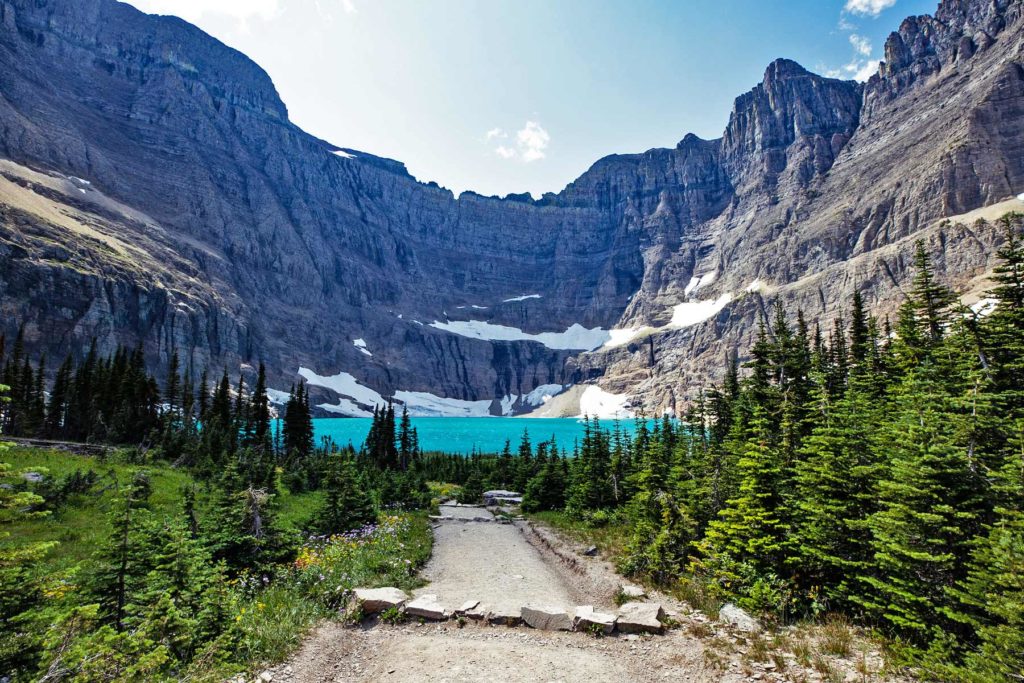
Montana National Parks feature some of the most breathtaking places on the planet. One such place is Glacier National Park which has quite a fascinating story to tell.
George Bird Grinnell, who some people consider “America’s First Environmental Activist,” called it the “Crown of the Continent.” We know it as Glacier National Park. This magnificent park features stunning waterfalls, captivating wildlife, and gorgeous mountain slopes covered in a blanket of wildflowers.
My youngest son, the one who isn’t a part of More Than Just Parks, returned from a trip to Glacier. He said it was one of the most incredible experiences of his life. He told me the next time I go I need to bring bear spray so I’m telling you too.

Looking for things to do in Glacier National Park on your next trip? Check out our article: 15 EPIC Things to Do in GLACIER National Park (Photos + Map) 2022
About Glacier National Park
Before we get to all of the wonderful things that you can do at Glacier, let’s begin with a short history lesson. Don’t roll your eyes. I promise it will be short and remember I don’t give any homework. After all I’m retired. And grading homework was never that much fun anyway.
As for Glacier, it officially became a national park in 1910. Fast forward to 2019 [I told you the lesson would be brief] and Glacier National Park is the 10th most visited park, making this one of the most popular national parks to visit in the United States.
Now if you want to learn more about the man who has a glacier, a lake and a mountain named after him at Glacier National Park then check out the article below.
America’s First Environmental Activist

Things To Do At Glacier National Park
With over a million acres to explore, there’s no shortage of things to do at Glacier. The park has over 700 miles of hiking trails. A great place to get familiar with the place is the 50 mile Going-to-the-Sun Road which is he main thoroughfare for many park explorations.
In addition to hiking, there’s boating, fishing, stargazing, bicycling, and taking guided excursions such as the park’s iconic Red Bus Tours. There’s also a shuttle service that will take you through the park.
There’s so much to do that your toughest job will be deciding which great activity to partake in. Now isn’t that a fun problem to have!
If it’s wildlife watching that you love, common sighting include marmots, mountain goats, and bighorn sheep, as well as the occasional grizzly and black bear.

Places You’ll Want To See While At Glacier
Remember that old Beatles song (you may or may not depending on your age). It starts out, “There are places I remember . .” Well, I’m going to give you a list of places I believe you’ll remember too.
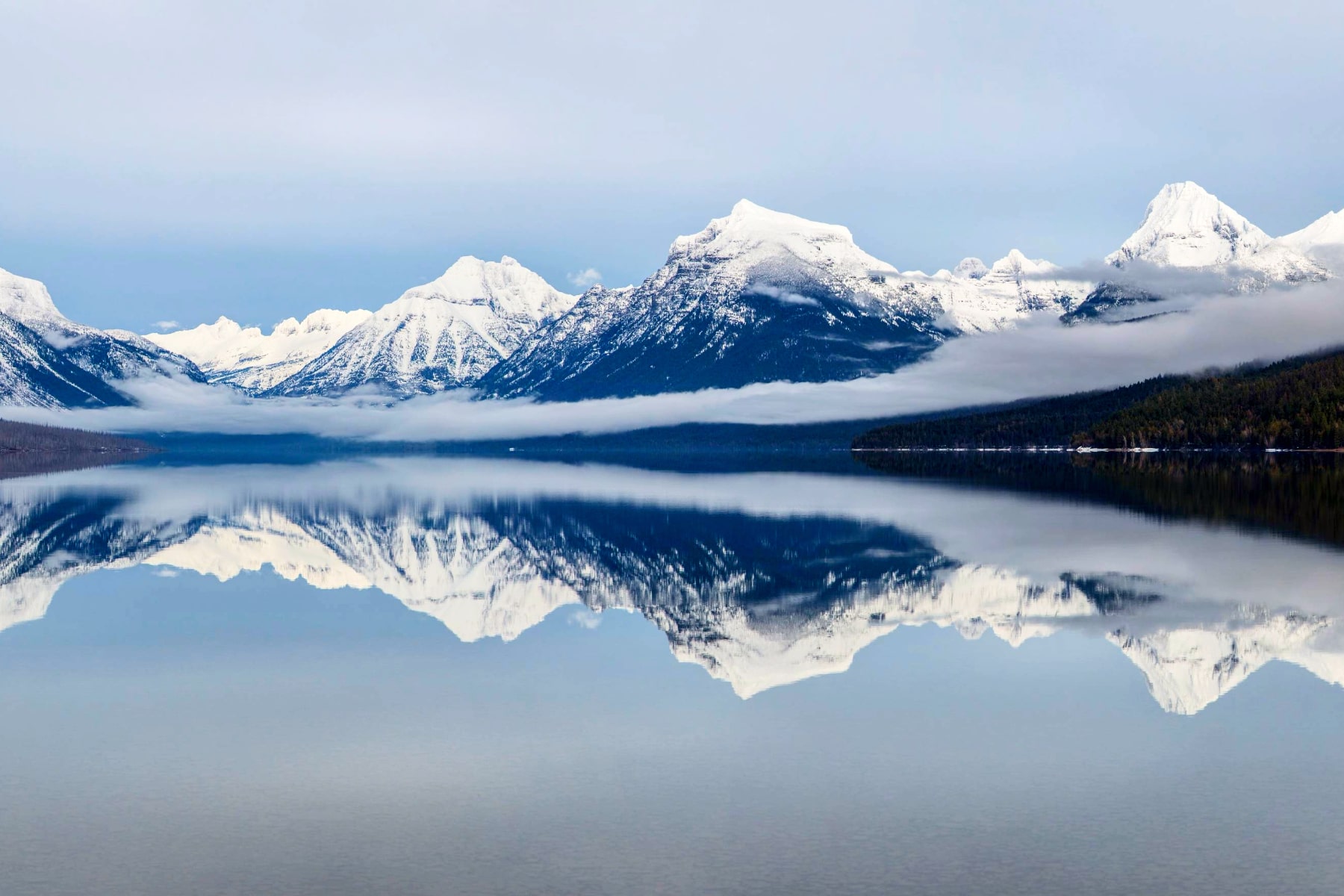
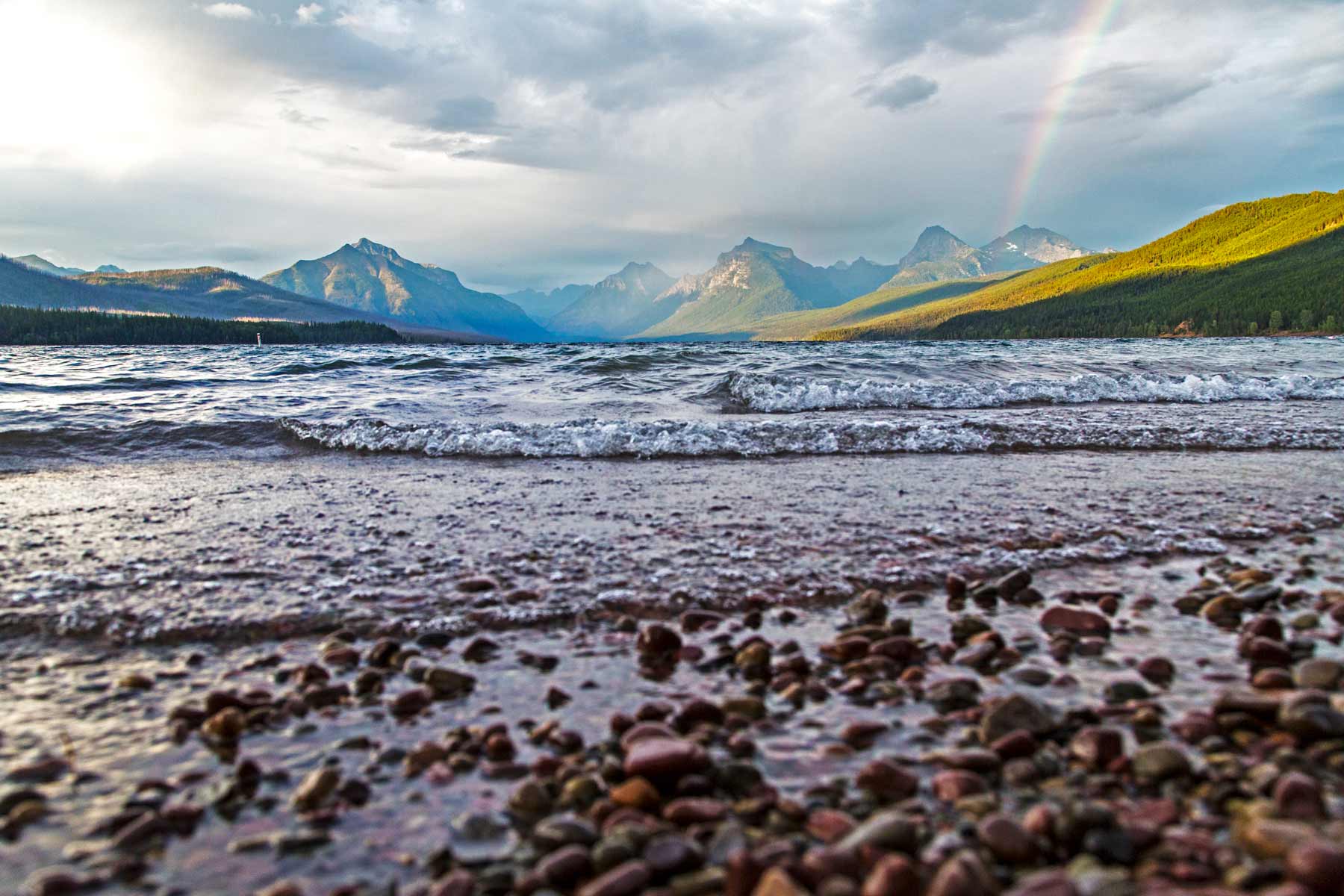
Lake McDonald is the largest lake in the park at approximately 10 miles long. It has incredibly clear water, colorful rocks, and the mountains that make it for a perfect sunset or sunrise.
Avalanche Gorge and Avalanche Lake are definitely worth seeing. Given the surrounding scenic beauty, they’re among the most popular trails in the park.
Trail of the Cedars is a short loop hike, less than a mile, that begins and ends on the Going-to-the-Sun Road. It features a raised boardwalk that passes through a fragrant, old-growth red cedar forest, but the highlight is at the midway point.
Hidden Lake is another great place to visit especially at night as you’ll be treated to a spectacular star show.
If you’re planning to make the hike you’ll have a couple of options. Choose the one that makes the most sense for you given your level of experience.
2. Yellowstone National Park
Among the Montana National Parks there’s one which has the unique distinction of being America’s oldest national park.

Yellowstone National Park was established in 1872 as the first national park in the world.
The area that is now Yellowstone National Park has a long history of human use and habitation. Native American tribes, including the Crow, Blackfoot, and Shoshone, have lived in the region for thousands of years.
European explorers and fur trappers began to arrive in the area in the early 1800s, and by the mid-19th century, the region had become a popular destination for hunting, fishing, and sightseeing.
Looking for things to do in Yellowstone on your next trip? Check out our 15 BEST Things to Do in Yellowstone National Park article
The Hayden Expedition
In 1871, a government-funded expedition led by geologist Ferdinand Hayden explored the region and documented its many geological wonders, including geysers, hot springs, and colorful mineral terraces. As a result of the expedition, Congress passed legislation to create Yellowstone National Park in 1872.
The park was initially managed by the U.S. Army, but in 1916 management was transferred to the National Park Service.
Throughout its history, Yellowstone National Park has faced a number of challenges, including natural disasters, poaching, and issues with overcrowding.
However, it has also been a source of inspiration and wonder for millions of visitors, and it continues to be one of the most popular national parks in the United States.
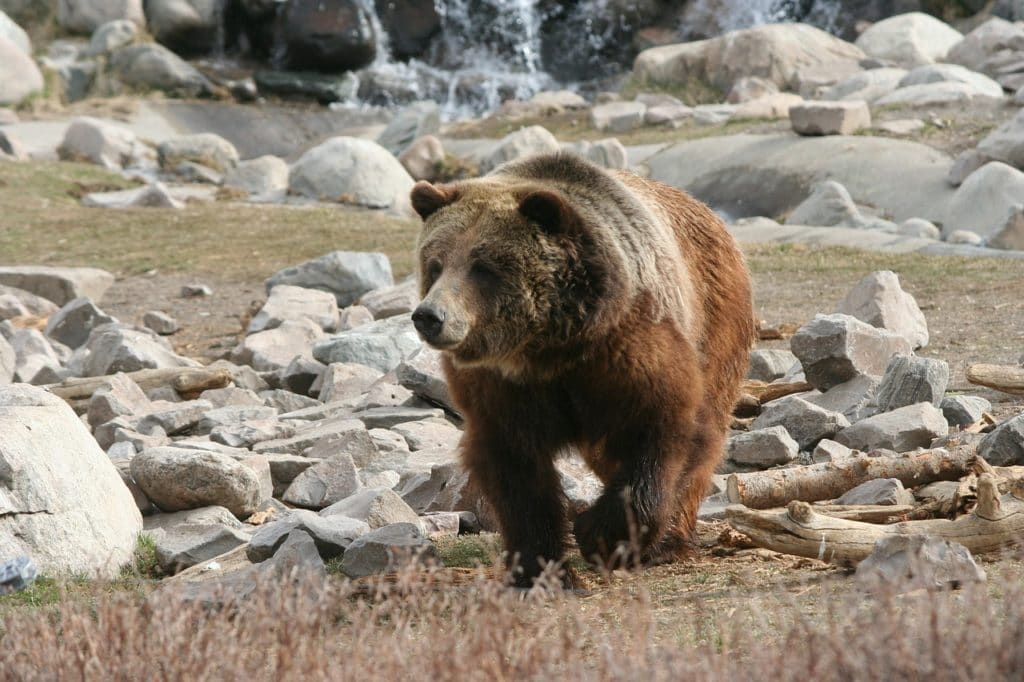
The park is also home to diverse flora and fauna, including grizzly bears, wolves, bison and elk and several endangered species.

RELATED: 18 (Fascinating) Yellowstone National Park Facts You Probably Didn’t Realize
10 Things To Do At Yellowstone National Park
There are so many wonderful things to see and do at Yellowstone National Park.
10. Go Camping-There are many campsites inside the park though you should check availability before you arrive.
9. Go Fishing-Try the trout waters north, south and west of Cody. They’re filled with native brown trout, rainbow trout and brook trout.
8. The Local Culture-See the Plains Indian Museum or visit one of five museums at the Buffalo Bill Center of the West.
7. Explore The Rocks & Fossils-Inside Yellowstone you will find basalt columns formed by lava and a petrified forest.
6. Go Rafting-Raft down one of the nearby rivers or check out the information on rafting trips which is available at the park entrances.
For a full list, see our article: Things to Do in Yellowstone National Park
Things to Do at Yellowstone National Park Continued
5. Take A Hike-There’s a 1,300 mile trail system. Some of the most popular hikes are Bunsen Peak, Fairy Falls and Uncle Tom’s Trail.
4. Visit The Grand Canyon Of The Yellowstone-This incredible place includes three glorious waterfalls. The overlook of the lower falls offers a breathtaking view.
3. See The Incredible Wildlife-Yellowstone is home to more wild animals than anyone else in America. There are are Bears, Wolves, Moose, Elk, Bison, Badgers, Otters, Fox and so much more to see inside the park.
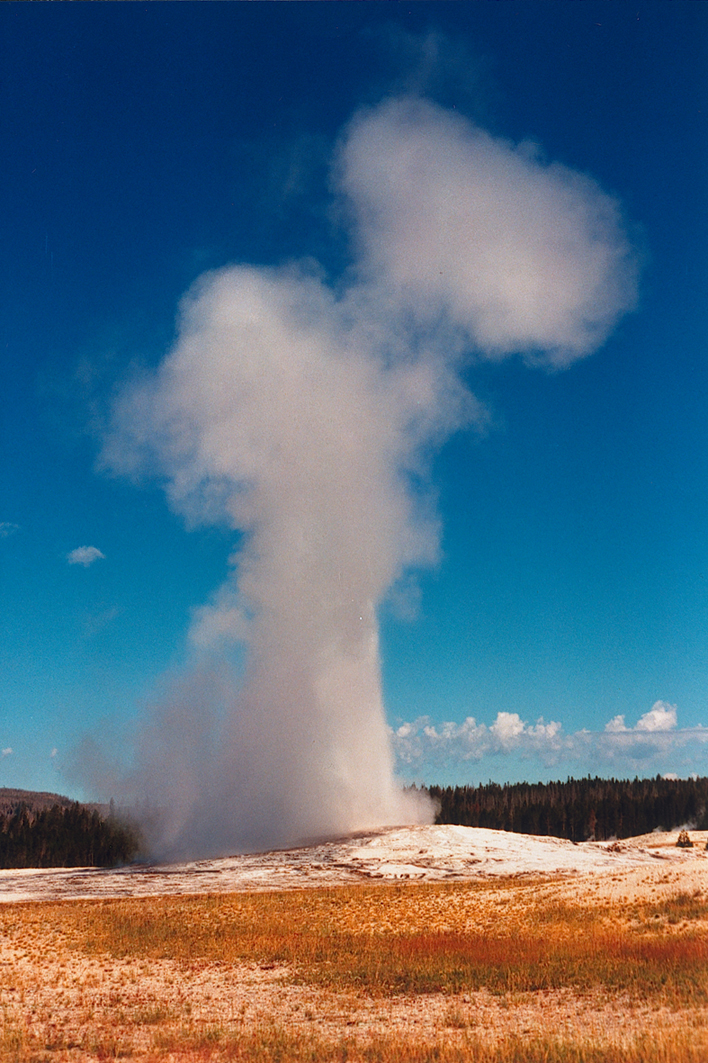
2. See The Geysers Erupt– What would a visit to Yellowstone be without a trip to the Old Faithful Geyser. You don’t have to stop there, however, as Yellowstone is home to the most active geyser field in the world.
1. Sit Back, Relax & Soak It All In-After all, you’re on vacation. You can do as little or as much as you want. I’m very good at doing as little as I want. My wife tells me if that they gave out a Ph.D. in the subject, I’d have one. But that’s a story for another day.
3. Big Hole National Battlefield
We’re just getting warmed up as Montana National Parks also features a legendary battlefield.
Big Hole National Battlefield is a National Battlefield Site located in Montana. It preserves the site of the Battle of the Big Hole, which occurred on August 9 and 10, 1877.
The battle was fought between the United States Army and a band of Nez Perce Native Americans, who were attempting to flee the reservation to which they had been forcibly relocated. The Nez Perce, led by Chief Joseph, were outnumbered and outgunned by the U.S. Army, and suffered heavy casualties.
The battle was a significant defeat for the Nez Perce, and marked the end of their resistance to forced relocation. The site was made a National Battlefield Site in 1966 and was designated as a National Monument in 1974.
If You Love History Then Check Out: 10 BEST Civil War Sites In America
Touring The Big Hole Battlefield
If you haven’t been to the Big Hole National Battlefield before then I recommend starting at the visitor center. It offers museum exhibits, a film, and a book sales area.
I’m someone who likes to do a “reconnaissance mission” before I go out into the field. This means that I like to gather as much ‘intel’ as I can.
What better place to do that then in the visitor center. And, don’t be afraid to ask those friendly folks questions. That’s what they’re there for.
As part of my reconnaissance, I learned about the award winning film There’s No Turning Back: Battle at Big Hole. It’s impactful! The film provides an introduction to Nez Perce Flight of 1877 and the battle which took place at this site.
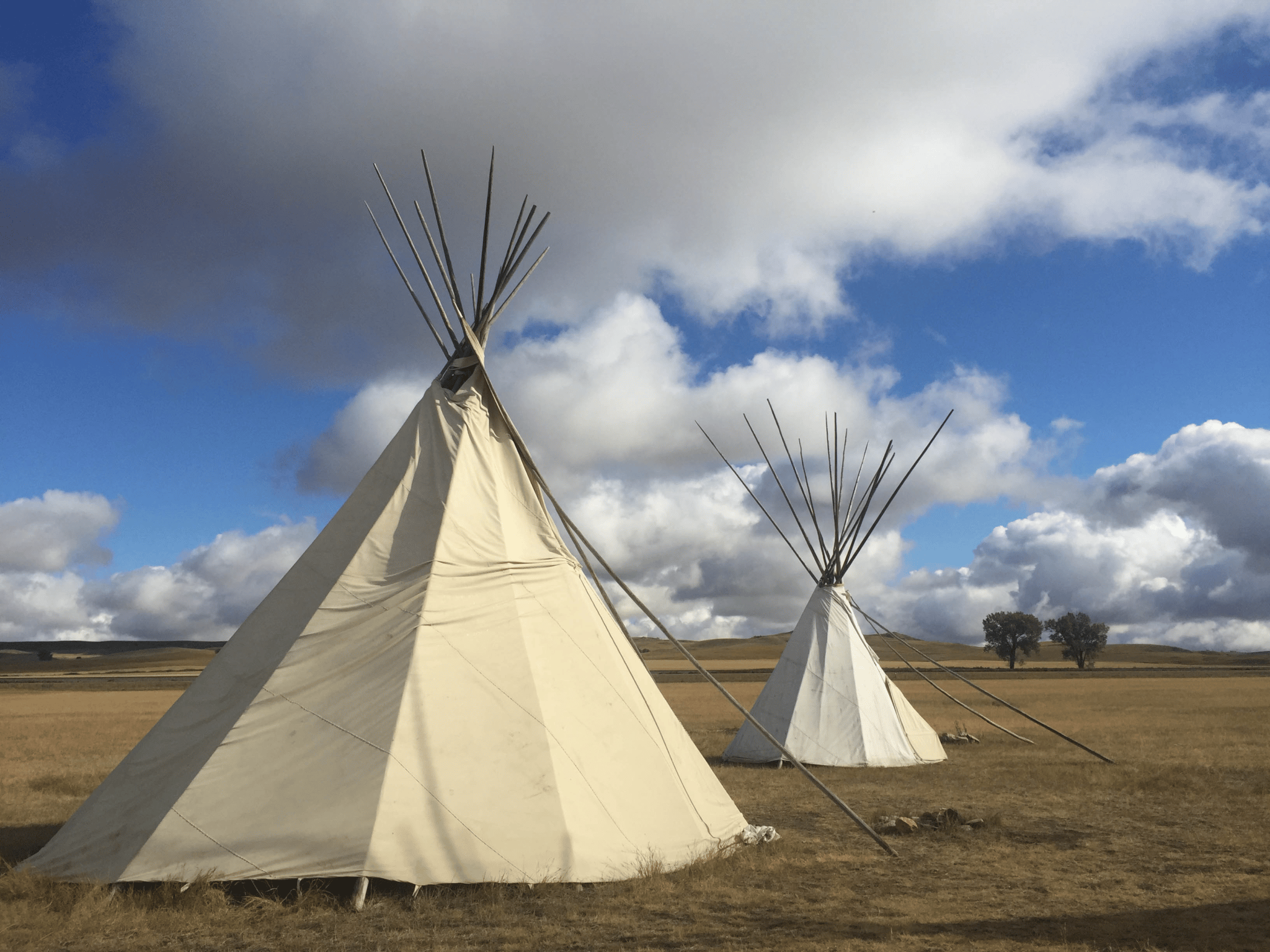
Outside of the visitors center, there’s an observation deck which provides you with an opportunity to explore the battlefield year round. Viewing scopes allow close inspection of the tipis, the 1883 granite monument, and the howitzer cannon from afar.

Explore The Battlefield Trails At Big Hole
There are three trails open from sunrise to sunset daily year-round. The Nez Perce Camp Trail leads to the site where the sleeping Nez Perce were camped when the army attacked on the morning of August 9, 1877.
The trail is a 1.6 miles round-trip walking trail with no elevation gain. Hikers should look out for ground squirrel holes. These can easily be stepped into. You don’t want to twist an ankle or ruin a squirrel’s day.

You Can Get Your Steps In Too
The trail takes approximately one hour to complete. Remember, however, you’re getting those steps in. When my son calls me that’s the first question he asks. “Dad, did you get your steps in?”
I thought I was smarter than him when I kept telling him that the weather in my neighborhood was too terrible to go walking. Then he and his two brothers conspired against me. They got me a treadmill. But I digress . .
The Siege Area Trail is 1.2 miles round-trip and climbs about fifty feet in elevation. The trail takes approximately forty-five minutes to complete. Visitors can look at the rifle pits dug by the soldiers and see the monument dedicated to the Seventh U.S. Infantry soldiers.
The Howitzer Trail is a 0.8 mile spur trail off of the Siege Area trail that climbs 320 feet in elevation. It takes approximately 40 minutes to hike. Visitors will find a replica cannon at the site.

Arkansas National Parks (An Expert Guide)
4. Bighorn Canyon National Recreation Area
If you’re more interested in recreation than history then have no fear as the Montana National Parks has you covered.
Bighorn Canyon National Recreation Area is located in northern Wyoming and southern Montana.
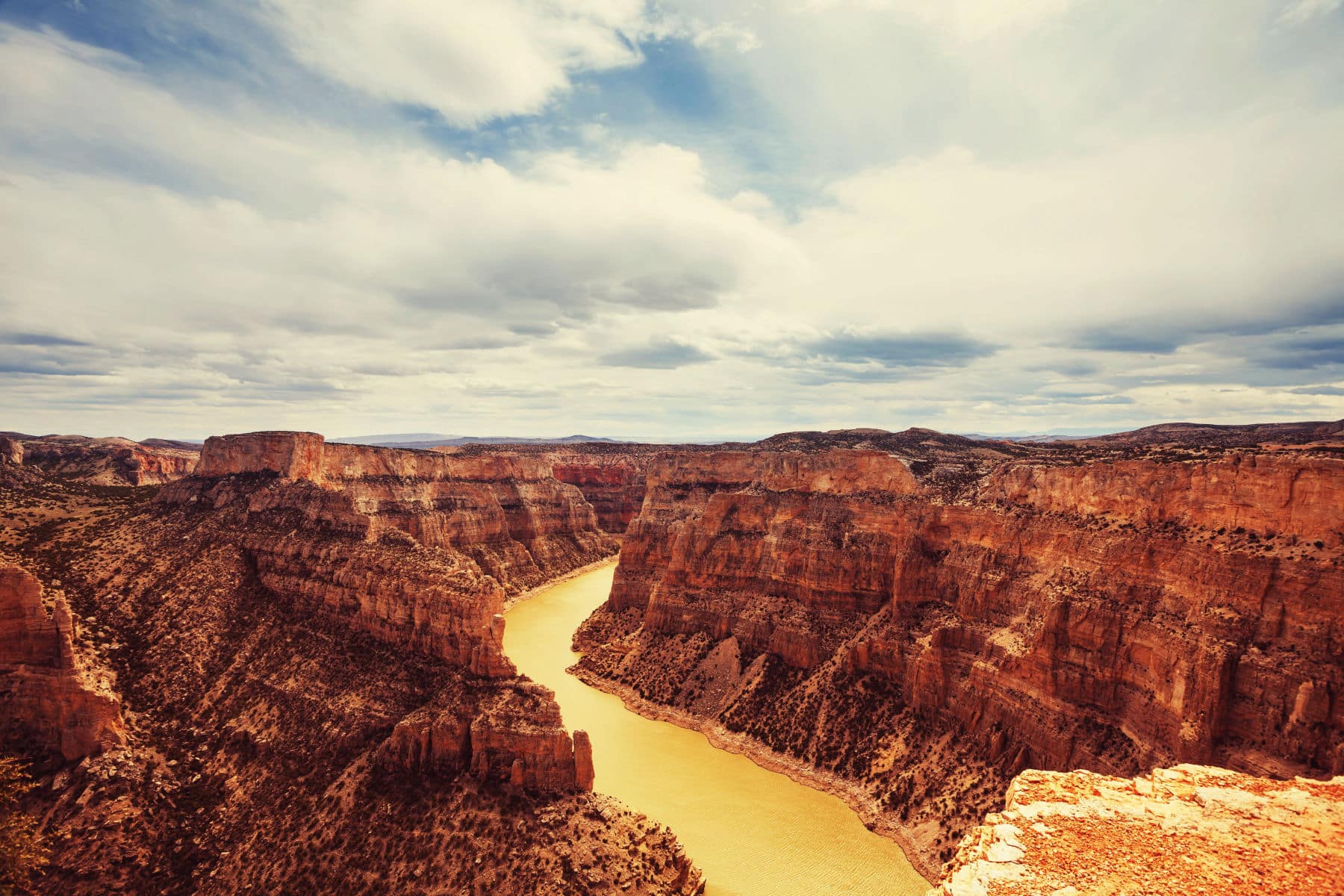
It encompasses over 120,000 acres of land along the Bighorn River, including the Bighorn Canyon, which is over 14 miles long and up to 1,000 feet deep. The area is known for its unique geology, including colorful rock formations and cliffs, as well as its wide variety of plant and animal life.
An Area Rich In Cultural History
The area is also rich in cultural history, with evidence of human habitation dating back over 10,000 years.
The area was home to several Native American tribes, including the Crow, Cheyenne, and Arapaho, and also saw significant activity during the days of the American West, including the presence of the U.S. Army and the development of the Homestead Act.
Today, the Bighorn Canyon National Recreation Area offers a variety of recreational activities, including fishing, boating, hiking, and camping. Visitors can also take guided boat tours of the canyon, and learn about the area’s history and natural resources at the Bighorn Canyon Visitor Center.
Things To Do At Bighorn Canyon
Like most people, I’m someone who’s looking for fun things to do when I head off to a national park. For Bighorn Canyon, however, it might take me less time were I to list the things you can’t do rather then the things you can do.
Bighorn offers a wide range of recreation activities including:
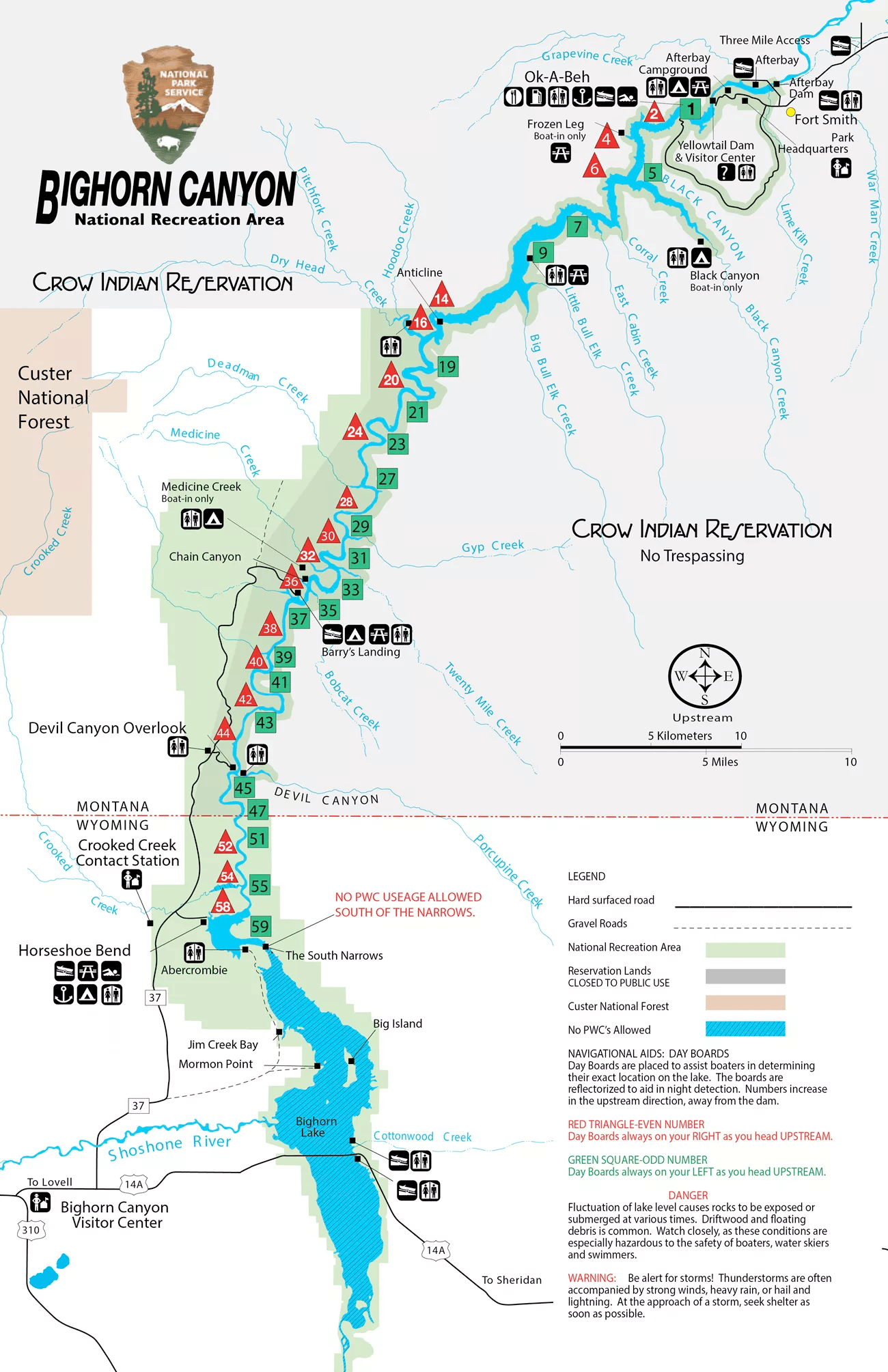
- Bicycling-If you’re looking for a good workout take the South District park road where you parallel the ancient Bad Pass Trail or in the North District pedal the Ok-A-Beh road.
- Boating-You will enjoy the waters of the Bighorn Lake.
- Camping-There are five camping areas with over 100 spots.
- Fishing-At Bighorn, there is a range of fish including trout and walleye.
- Hiking-There are over 27 miles of trails (see below).
- Historic Ranches– Visitors can see an amazing collection of ranches that have been kept in their original condition.
- Horseback Riding-The park allows horseback riding in the South District.
- Wildlife-From herds of wild horses to bears in their natural habitat to Bighorn Sheep roaming the high desert there’s a bevy of wildlife to watch.

Fishing At Bighorn Canyon
I started fishing when I wasn’t much older than the boy in the photo above. Some of my fondest memories are of fishing along the Delaware River.
The good news for you is that you can enjoy fishing at Bighorn. There’s a much better selection of fish there than the little Crappies (such an appropriate name if you ask me) which I was pulling out of the Delaware.

Georgia National Parks-Everything To Know”>RELATED: 10+ AMAZING Georgia National Parks-Everything To Know
5. Fort Union Trading Post National Historic Site
I may be a retired history teacher, but I still love the past which is what excites me about Montana National Parks especially this next one.
Fort Union Trading Post National Historic Site preserves the site of the Fort Union Trading Post, which was an important hub of trade and commerce in the American West during the 19th century.
The fort was established in 1828 by the American Fur Company, and was the largest fur trading post on the Upper Missouri River.
It Was A Key Center For Trade
The fort was a key center for trade between the American Fur Company and the various Native American tribes of the region, including the Mandan, Hidatsa, and Arikara tribes.
The fort played a key role in the American expansion into the West, as well as the development of the fur trade industry. The post was also a place where the U.S. army could maintain peace among the tribes, the traders and the settlers.
The fort was in operation until 1867, after which it fell into ruin. The site was designated as a National Historic Site in 1966, and excavations and reconstructions of the fort have been carried out since then.
Today, visitors to the site can learn about the history of the fort and the fur trade industry through exhibits and guided tours.
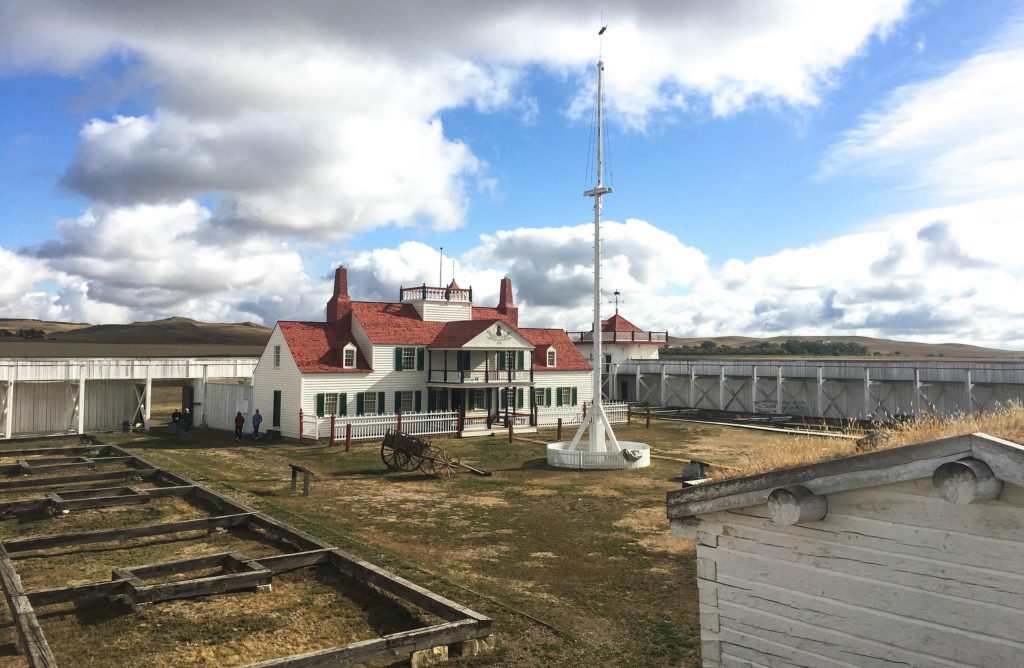
Fort Union’s Trade House
You have a wonderful opportunity to travel back in time with a visit to Fort Union’s Trade House. A costumed Park Ranger will explain how this place was the fort’s most important building.
I have to give these incredible Park Rangers a shout out. Not only are they friendly and helpful, but they get dressed up in these amazing costumes and go all out to make you believe they were actually there back in the day.
Trading was the name of the game back in the day. American Fur Company Traders and the fort’s tribal trade partners, the Assiniboine, Crow, Blackfeet, Plains Cree, Plains Ojibwa, Mandan, Hidatsa, Arikara, Lakota, and others, all entered this space for one purpose, the act of trade.
So it was more than just a store on the Upper Missouri River.
The Trade House was where diplomatic negotiations transpired, families reconnected, stories were shared, and feasts were held. It was truly a happening place.

7+ AMAZING Kansas National Parks-Everything You Need To Know
There’s A Wonderful Bookstore & Gift Shop Too
So many books, so little time. I enjoy researching and writing articles for the Pattiz Brothers who happen to be my sons. And the best part of all is that they pay me in books! It works for them and it works for me.
The only one it doesn’t work for is my wife who tells me that we’re running out of bookshelves, but I digress . .
45 Best National Parks Books (Great Gifts For Park Lovers)
6. Grant-Kohrs Ranch National Historic Site
As you’re considering which of the Montana National Parks you want to visit next you may be asking yourself: Where’s the beef? I’m glad you asked.
The Grant-Kohrs Ranch National Historic Site, located in Montana, tells the story of the western cattle industry from the 1850s to the 1960s through the history of the Grant and Kohrs families, who were prominent cattle ranchers in the area.
The ranch was originally established by Johnny Grant in the 1850s and was later purchased by Conrad Kohrs in the late 1800s. Under Kohrs’ management, the ranch became one of the largest and most successful cattle operations in the West.
The ranch remained in the Kohrs family until it was donated to the National Park Service in 1972.
Today, the site serves as a living history museum, showcasing the life and work of the cowboys, cattle drivers, and other workers who were a part of the western cattle industry during the late 19th and early 20th centuries.

The Open Cattle Range Industry Didn’t Last
The open-range cattle industry lasted only three decades. Unfortunately, few of its pioneering men and women who made their fortunes are remembered today.
From their humble beginnings, this business has evolved into the more scientific ranching of today, with its own risks and uncertainties.
That is the legacy of the Grants and the Kohrs, whose pioneer ranch, complete with original furnishings, is a reminder of an important chapter in the history of the West. (Source: NPS)
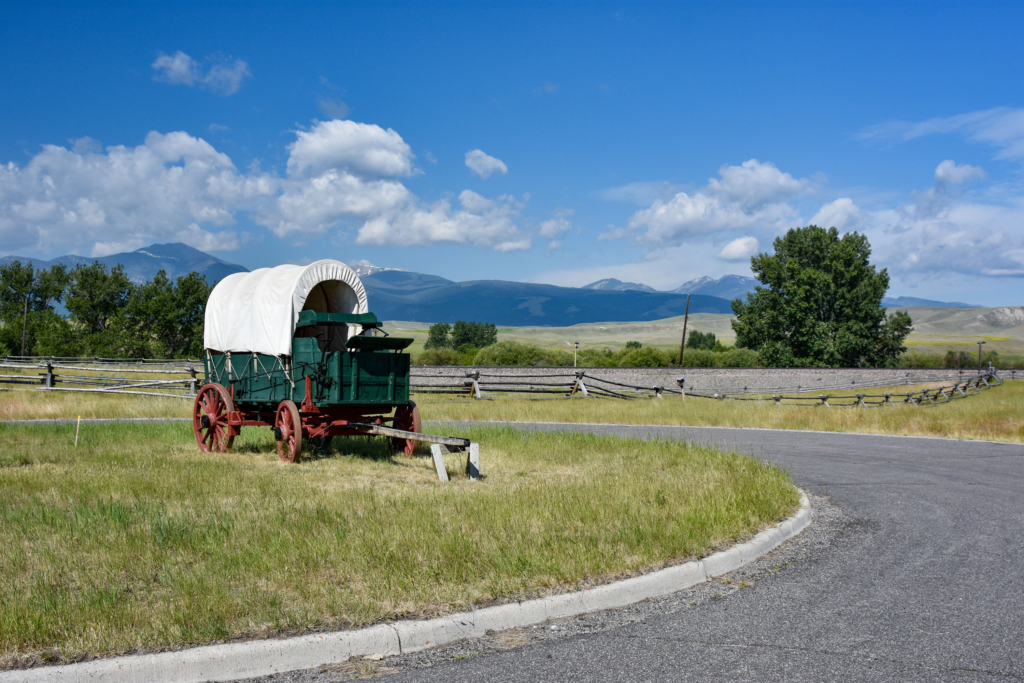
Things To Do | Grant Kohrs Ranch
You can see how the cowboys lived at the Grant Kohrs Ranch. There’s a self-guided tour of the bunkhouse and the working ranch.
Remember, it’s a working ranch. This means you’ll be able to see today’s cowboys carrying on an old and proud tradition. You will need to be careful, however, as you won’t want to get in harm’s way.
You might see a team of horses waiting for a harness in the barn, or a cowboy riding out to check the herd. I cannot overemphasize the importance of being aware of your surroundings.
I want you to be able to safely explore the ranch as opposed to telling your friends about your trip to the Emergency Room and how many stitches they had to put in your head.
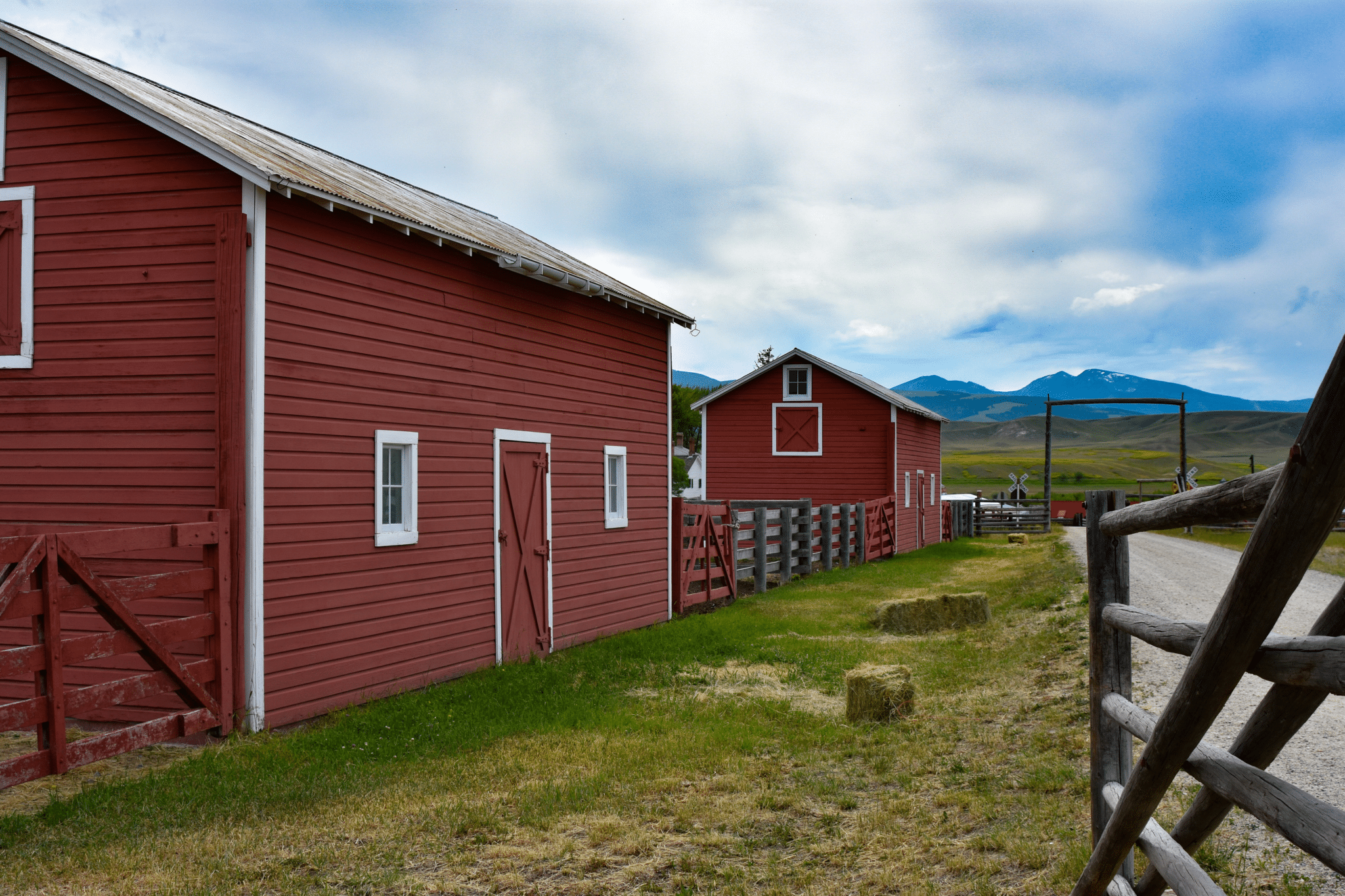
25 BUCKET-LIST Famous Landmarks In America (MUST-SEE)
Tour The Ranch House At Grant Kohrs
The Ranch House was built by Johnny Grant in 1862. You can take a guided tour which offers a unique look into the lives of both of the families. Visitors can see how they lived through viewing their original furnishings and personal items.
There’s also a Wagon Tour which will take you around the ranch. You’re actually hitched up to a team of horses and it doesn’t get any better than that.

RELATED: 6 Missouri National Parks Worth A Stop On Your Next Midwest Road Trip
7. Ice Age Floods National Geologic Trail
If you’re more interested in origin stories then cattle ranches have no fear because the Montana National Parks will not fail to deliver.
The Ice Age Floods National Geologic Trail is a trail that stretches across parts of Montana, Idaho, Washington and Oregon, and it tells the story of the Missoula Floods, a series of massive floods that occurred during the last Ice Age.

The Floods Created A Lake Larger Than Any Of The Great Lakes
The floods were caused by the repeated breaching of an ice dam on the Clark Fork River, which created a lake that was larger than any of the Great Lakes. The floods released huge amounts of water that carved deep channels and gorges into the landscape, leaving behind a unique geologic record.
The trail, which was designated as a National Geologic Trail in 2009, takes visitors through some of the most significant and spectacular features created by the floods, such as Dry Falls, which was once the largest waterfall in the world, and the Grand Coulee, a giant channel that was carved by the floods.
Along the trail, visitors can also learn about the Ice Age animals that roamed the region and the Native American tribes that have lived in the area for thousands of years.

There Are Some Wonderful Museums To Visit
Well, maybe school’s not entirely out. There are some wonderful museums for you to visit to learn more about this amazing story. They include the following:
- Idaho-Museum of North Idaho, 115 Northwest Blvd, Coeur d’Alene, ID 83814, (208) 664-3448
- Montana-Montana Natural History Center, 120 Hickory St # A, Missoula, MT 59801, (406) 327-0405
- Oregon-Columbia Gorge Discovery Center, 5000 Discovery Drive, The Dalles, OR 97058, (541) 296-8600
- Washington-Columbia Gorge Interpretive Center, 990 SW Rock Creek Drive, Stevenson, WA 98648, (509) 427-8211

7. Lewis & Clark National Historic Trail
Montana National Parks are more than just amazing national parks, fascinating cattle ranches or geologic wonders from the ancient past. They also include legendary trails too.
The Lewis and Clark National Historic Trail follows the historic outbound and inbound routes of the Lewis and Clark Expedition.
I don’t know about you, but I get goosebumps just thinking about the Corps of Discovery.
Commemorating the Lewis & Clark Expedition (1804-06), the Lewis & Clark Trail connects 16 states (Pennsylvania, Ohio, West Virginia, Kentucky, Indiana, Illinois, Missouri, Kansas, Nebraska, Iowa, South Dakota, North Dakota, Montana, Idaho, Washington and Oregon).
This trail is administered by the National Park Service. It’s not a hiking trail, but does provide opportunities for hiking, boating and horseback riding at many locations along the route.
It’s a great opportunity to see the USA while learning about the brave men (and one woman) who weren’t able to make the journey in an air-conditioned SUV.

What Can I See In Montana That’s Connected To This Historic Trail
I’m so glad you asked. After all, our focus in this article is on Montana.
Believe it or not, the Lewis and Clark route covered more miles in Montana than any other state. The campsite at Slaughter River was used by the Corps of Discovery on both legs of their journey through Montana.
Today, Lewis and Clark’s Slaughter River is known as Arrow Creek.
It’s located within the Upper Missouri River Breaks National Monument in Lewistown, Montana. The camp includes a shelter and two outhouses. It’s a great place to visit in Montana while you retrace their historic route.
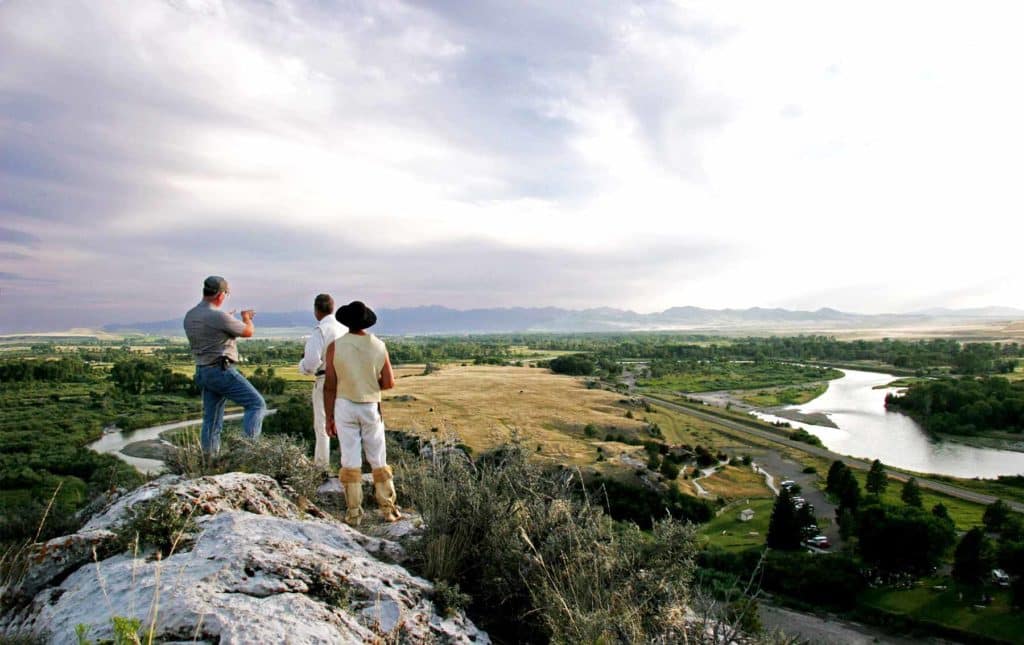
Undaunted Courage | Lewis & Clark
Before setting out on your adventure, I highly recommend reading Stephen Ambrose’s Undaunted Courage.
There’s nothing like reading about their amazing story and the incredible hardships they faced to put you in the mindset of Lewis and Clark as get you ready for your own adventure.
40+ Best National Parks Books (Great Gifts For Parks Lovers)
8. Little Bighorn Battlefield National Monument
Montana National Parks also explores the history of the American West with one of the greatest battles ever fought on American soil between Native Americans and the U.S. Cavalry.
Folks, were not going to get into the subject of casualties or what Custer was thinking when he attacked a force many times the size of his own.
George Armstrong Custer. Where do we begin? So much has been said, so much has been written and so much has been researched about his final Battle at the Little Bighorn.
While we know what happened on that fateful day there’s always more to learn about why.

The Aftermath Of The Battle Of The Little Bighorn
The Battle of the Little Bighorn, also called Custer’s Last Stand, marked themost decisive Native American victory and the worst U.S. Army defeat in the long Plains Indian War.
The demise of Custer and his men outraged many white Americans and confirmed their image of Native Americans as wild and bloodthirsty.
Despite their overwhelming victory, the Battle of Little Bighorn had severe consequences for the Sioux nations and Plains Indians.
Prior to the battle, the American public generally agreed with the government’s policy of trying to negotiate peacefully with these Native Americans.
However, once the news spread that 200 U.S. soldiers had been murdered by the Sioux, public opinion quickly turned against them.
The U.S. Army dispatched more troops. Their mission was to seek them out and “deal” with them.
The Lakota hunting grounds were invaded by powerful Army expeditionary forces determined to conquer the Northern Plains Indians. Most of the declared “hostiles” had surrendered within one year of the fight.
The Black Hills were taken by the U.S. government without any compensation.

Things To Do At Little Bighorn Battlefield National Monument
I recommend beginning at the Little Bighorn Visitors Center. There’s a wonderful 25 minute orientation video for visitors unfamiliar with the history leading up to the battle. There are also some fascinating exhibits there which illustrate the events surrounding the Little Bighorn.
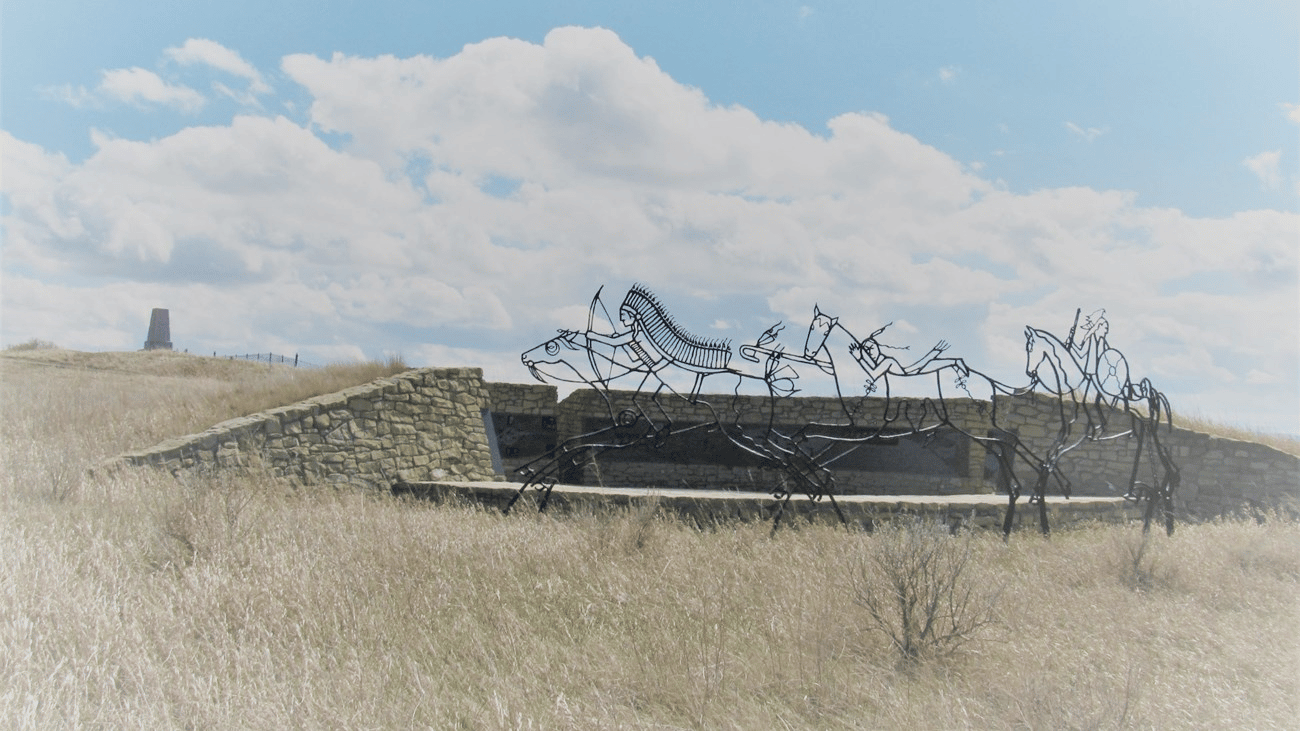
From there you can take a self-guided tour of the Indian Memorial, Custer’s Last Stand and walk through the Deep Ravine Trail which is a .25 mile self-guided walking tour. You can also walk through the national cemetery.
If you have additional time then I recommend driving the 4.5 mile tour road to the Reno-Benteen Battlefield, the second stage of the Battle of the Little Bighorn.

25 Bucket List Famous Landmarks In America (MUST-SEE)
To Learn More About The Battle Of The Little Bighorn
Author Nathaniel Philbrick has written an excellent book about the battle titled, The Last Stand: Custer, Sitting Bull, and the Battle of the Little Bighorn.
I have read it. Remember, I’m the guy who works for books. Philbrick is a gifted author and he tells a powerful story.
If you’re particularly interested in military strategy and tactics then you also might wish to pick up a copy of The Strategy of Defeat at the Little Big Horn: A Military and Timing Analysis of the Battle by Frederick Wagner, III.
I’ve read this one too. What can I say? I work for books and the Pattiz Brothers make sure that I’m well paid.
45 BEST National Parks Books
9. The Nez Perce National Historic Park
Are you ready for a whirlwind experience at another of the truly amazing Montana National Parks? The Nez Perce National Historical Park offers thirty-eight sites in four states. Wow!
While you may have neither the time nor the money to see it all, there are three sites in Montana. One is the Big Hole National Battlefield covered earlier.
The other two are Canyon Creek and Bear Paw Battlefield.

Canyon Creek
Canyon Creek-After emerging from Yellowstone National Park, the Nez Perce were pursued by Colonel Samuel Sturgis’ Seventh Cavalry.
In a rearguard action on September 13, 1877 the Nez Perce were able to gain time by stopping Sturgis’ troopers.
Directions: From Interstate 90 continue north on US Highway 310 into Laurel and past the statue of Chief Joseph. Continue up First Avenue until it changes to Montana Highway 532.
The monument and interpretive signs are approximately 8.3 miles from the freeway. (Source: NPS)

Bear Paw Battlefield
Bear Paw Battlefield-Just 40 miles short of the Canadian border, the Nez Perce were besieged by the U.S. Army. With losses mounting, Joseph gave his rifle to General Oliver O. Howard, ending the siege on October 5, 1877.
They had traveled 1,170 miles in the nearly four months since the first skirmishes.

Directions: The visitor center is located at the Blaine County Museum, 501 Indiana Street in Chinook. The battlefield is 16 miles south of Chinook, Montana on County Highway 240. (Source: NPS)
A Brief (& Informative) History Of America’s National Park Rangers
We’re More Than Just Parks So Check Out One Of Our Amazing National Forest Films
Check Out Our Flathead National Forest Video
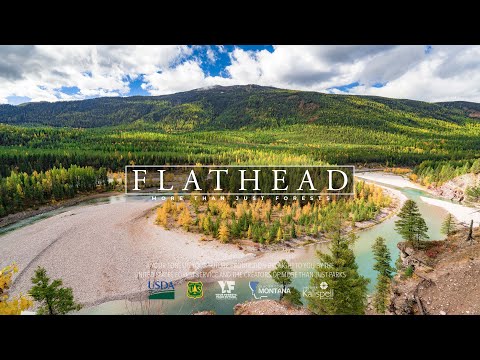
From the creators of More Than Just Parks, in partnership with the U.S. Forest Service, More Than Just Forests proudly presents Flathead National Forest 8K!
Join us as we take you on a visual journey through one of the most beautiful regions of the country. Explore iconic mountains, emerald lakes, and vast forests of deep green and brilliant gold. This is the Flathead.
It’s A Land Of Dramatic Mountain Beauty
With over 1 million acres of wilderness, 2,600 miles of hiking trails, 250 species of wildlife and 22 species of fish, the Flathead National Forest truly has plenty to do. We encourage you to visit this beautiful landscape and experience this unique part of America.
Situated in the northwestern corner of Montana, the Flathead National Forest comprises 2.4 million acres of dramatic mountain beauty. In the wild heart of the Flathead lies over 1 million acres of wilderness. Lynx, grizzly bears, timber wolves, and a vast and diverse array of other wildlife call the Flathead home.
Montana’s best-known national park, Glacier National Park, is one of those places everyone should visit in a lifetime. The northern tip of Yellowstone National Park is also in Montana, including the steamy Mammoth Hot Springs area, and shares a similar must-see status.
Montana is most famous for its natural beauty, diverse wildlife, and abundance of natural mineral resources. That is why it is called the “Treasure State”. The Rocky Mountains and Yellowstone National Park are two of the state’s most well-known features.
Below is a list of the must-see historic sites in Montana:
Glacier National Park
Little Bighorn National Monument
Yellowstone National Park
Nez Perce National Historic Park
Big Hole National Battlefield
Bannock Ghost Town
Fort Union Trading Post National Historic Site
Grant-Kohrs Ranch National Historic Site
Ice Age Floods National Geologic Trail
Lewis & Clark National Historic Trail
Pictograph Cave State Park
Virginia City Historic District
Pompey’s Pillar National Monument
Fort Benton Historic District
Great Northern Railway Buildings
We’re Jim Pattiz and Will Pattiz, collectively known as the Pattiz Brothers (and sometimes the Parks Brothers) and we absolutely LOVE the national parks.
You should probably know that we don’t just make this stuff up out of thin air. We’ve spent our entire adult lives exploring and filming America’s national parks and public lands.
We’ve worked with the National Park Service, the Department of Interior, USDA, and the U.S. Forest Service for years creating films on important places and issues. Our work has been featured in leading publications all over the world and even some people outside of our immediate family call us experts on the national parks.
Meet The Parks Brothers

Situated in the northwestern corner of Montana, the Flathead National Forest comprises 2.4 million acres of dramatic mountain beauty. In the wild heart of the Flathead lies over 1 million acres of wilderness.
Lynx, grizzly bears, timber wolves, and a vast and diverse array of other wildlife call the Flathead home. With over 1 million acres of wilderness, 2,600 miles of hiking trails, 250 species of wildlife and 22 species of fish, the Flathead National Forest truly has plenty to do.
Explore iconic mountains, emerald lakes, and vast forests of deep green and brilliant gold. This is the Flathead!
- Big Hole National Battlefield
- Bighorn Canyon National Recreation Area
- Fort Union Trading Post National Historic Site
- Glacier National Park
- Grant-Kohrs Ranch National Historic Site
- Ice Age Floods National Geologic Trail
- Lewis & Clark National Historic Trail
- Little Bighorn Battlefield National Monument
- Nez Perce National Historic Park
- Yellowstone National Park
We Hope You’ll Follow Our Journey
Our goal here at More Than Just Parks is to share the beauty of America’s national parks and public lands through stunning short films in an effort to get Americans and the world to see the true value in land conservation.
We hope you’ll follow our journey through the parks and help us to keep them the incredible places that they are. If you’re interested in joining the adventure then please sign up below!