Article Overview: How to See Yosemite’s Firefall
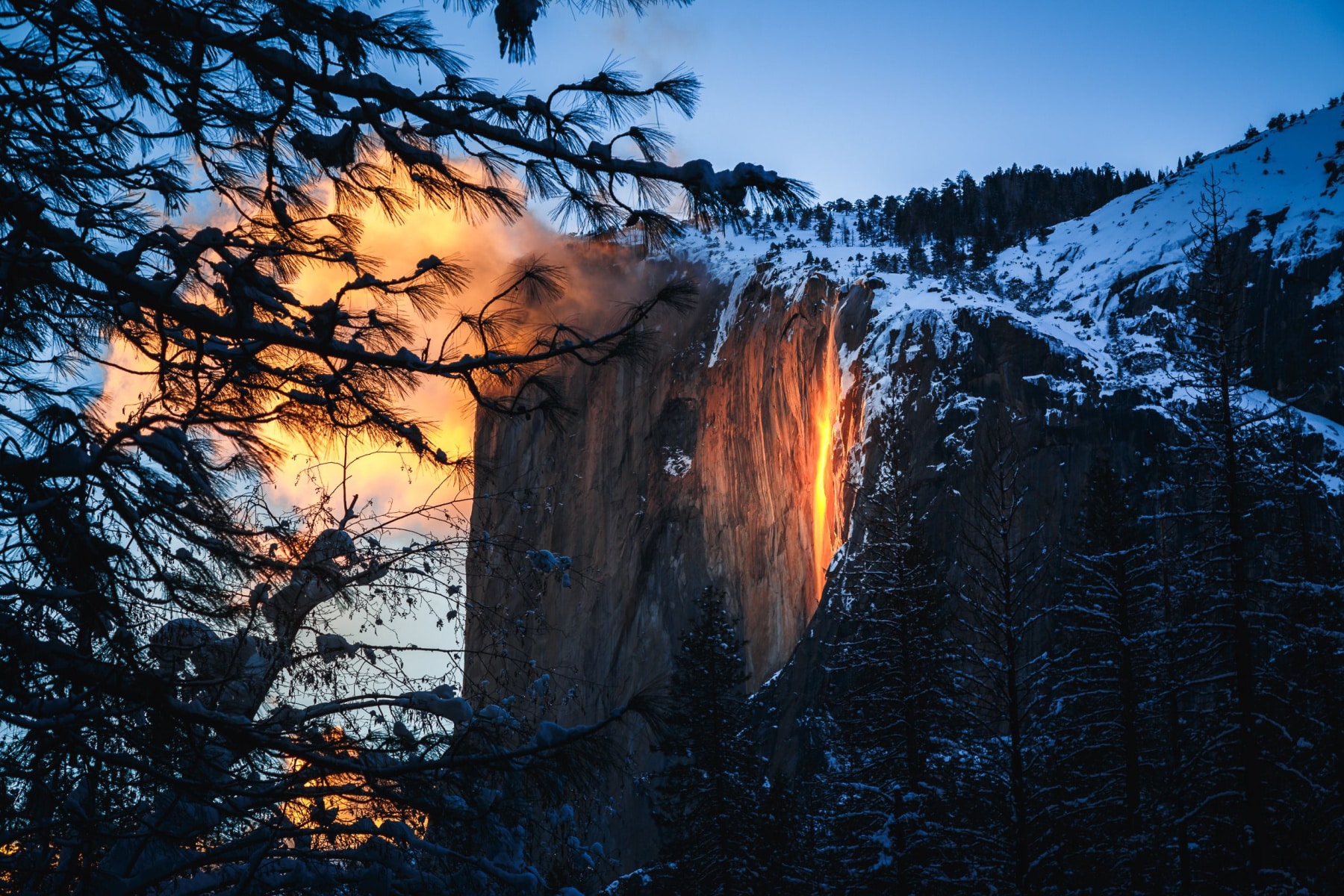
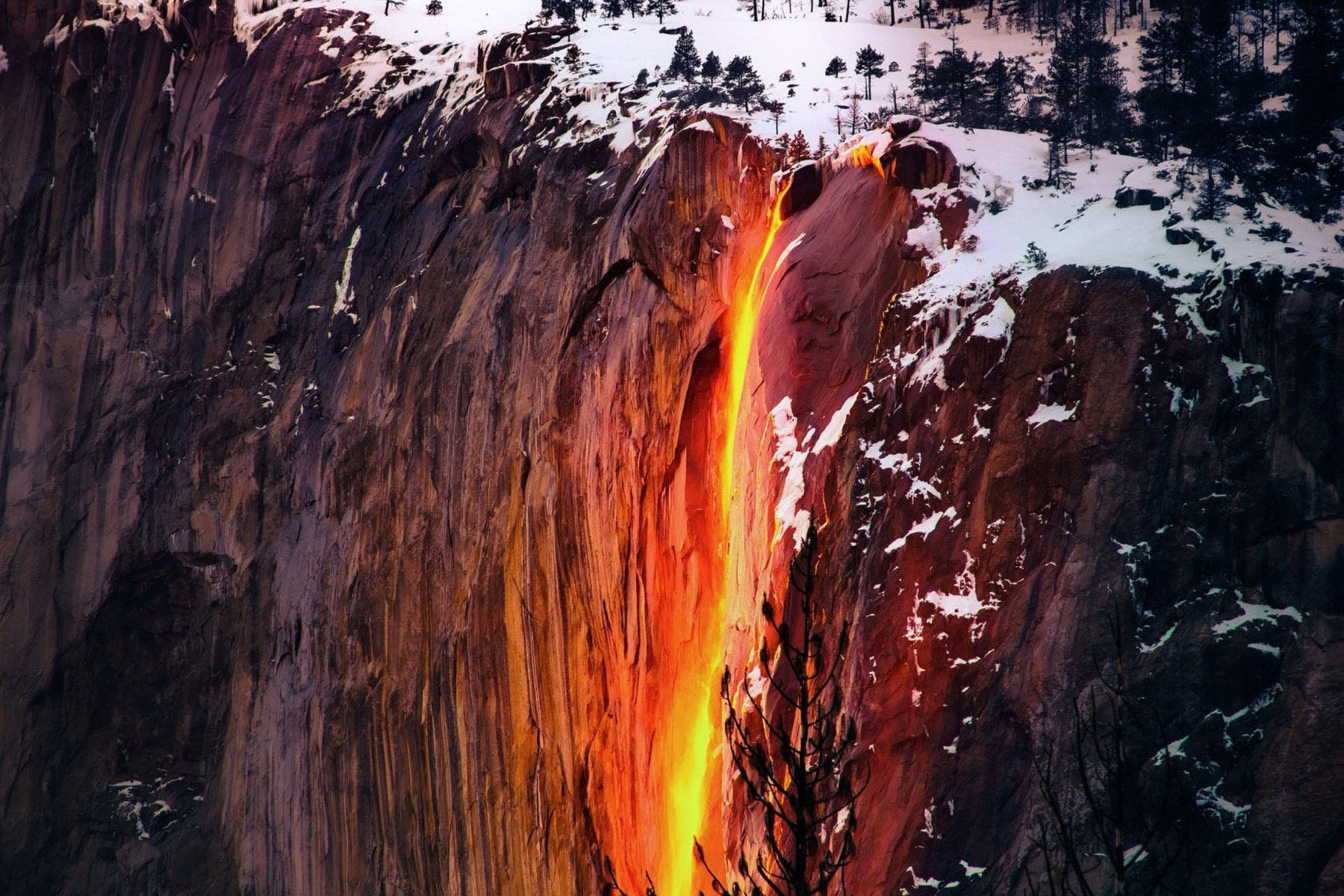
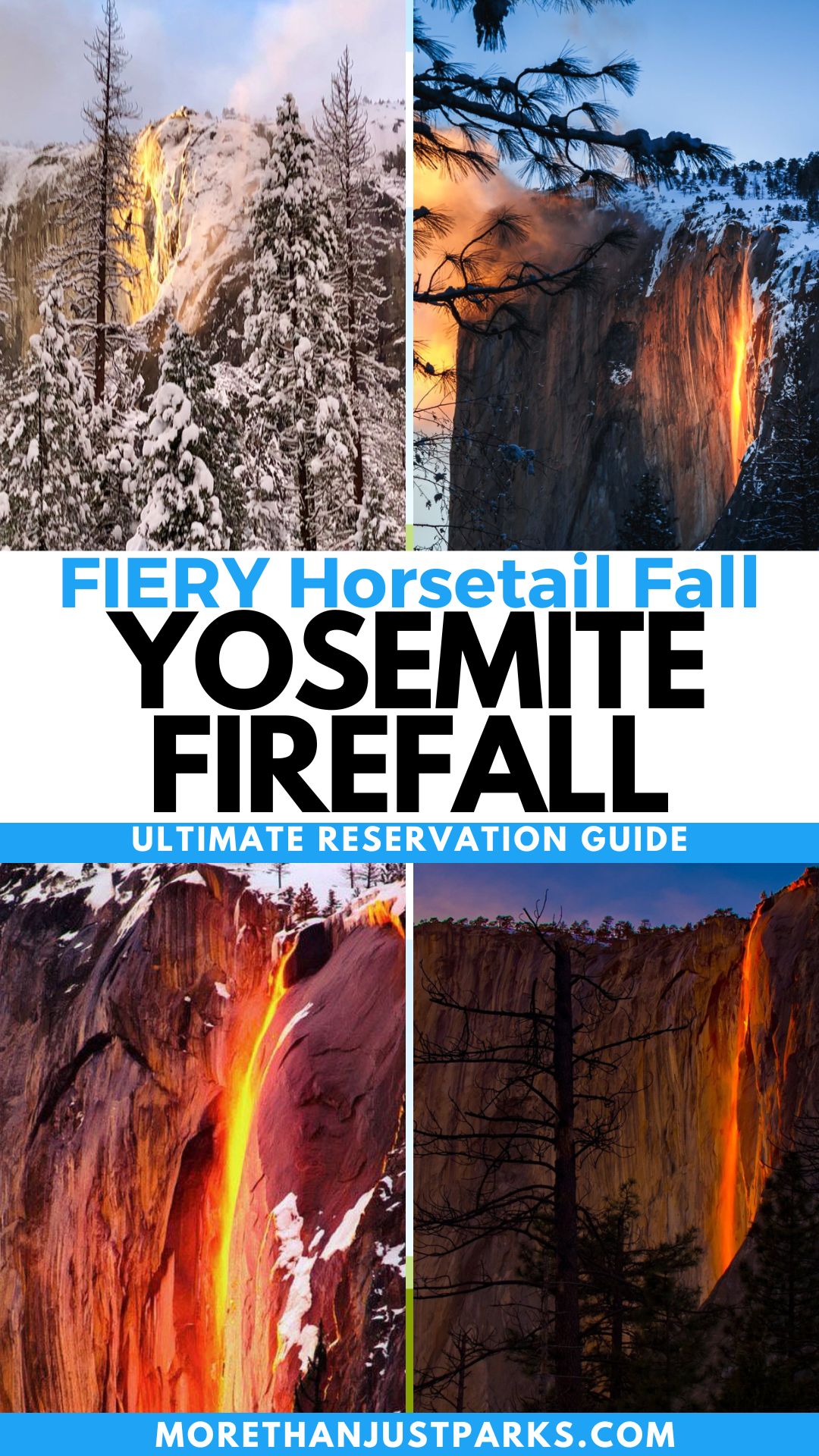
Yosemite’s Firefall dominates the landscape at the popular national park for a few fleeting moments throughout February. The natural phenomenon harnesses the power of the winter sunset and turns Horsetail Fall into a glowing, fiery stream plunging down the side of El Capitan.
The first photo of the natural Firefall in color was captured on camera in the early 1970s. The ephemeral site was never mentioned by the Father of National Parks, John Muir. Did he not know about this molten magic? Did Ansel Adams, master of black and white photography, never see the fire fall down the mountain?
At first, Yosemite’s Firefall was a secret of sorts. Then, like moths to a glowing, watery flame, the visitors came. Now, limited access is allowed during one of the most brutal weather months in the Sierras. But the crowds keep coming. If you don’t act fast, your chance to see it will be as fleeting as the falls themselves.
Here’s everything you need to know about getting a spot to see Yosemite Firefall 2024.
Table of Contents: How to See Yosemite’s Firefall
Yosemite Firefall Reservation Details
Since time is of the essence, let’s jump right into the fire with reservation information. It’s not just campsites that require a reservation for Firefall 2024 – it also includes access to the parks on most February weekends!
Accessing Yosemite in February
The latest guidance for Firefall 2024 from Yosemite National Park states that reservations are required for anyone who wants to enter the park on three weekends in February. Those dates are:
- February 10 & 11
- February 17, 18, & 19 (President’s Day)
- February 24 & 25
The Day Use Reservations open up to the public on December 1, 2023. Half of the reservations will be available. We recommend you create a Recreation.gov account ASAP, then be ready at 8:00 am Pacific Time (11:00 am Eastern Time). The reservations are expected to go quickly.
The other half of reservations become available two days before a reservation date. For example, if you want to visit Firefall 2024 on February 24, you’ll need to try to get a reservation on February 22 starting at 8:00 am Pacific Time.
It’s important to know there is a $2 reservation fee and you’ll still need to purchase a park pass. Furthermore, reservations are still required even if you don’t plan on taking part in the Firefall viewing. You also don’t need a reservation if you are booked at one of the hotels inside Yosemite.
DAY USE PERMIT FYI: The day-use reservation does allow access for the next seven days, and a person can book a reservation once every seven days.
Camping for Yosemite Firefall
Winter camping at Yosemite usually doesn’t require advance notice as long as you are one the first to grab a spot. That changes during the Firefall weekends in February.
Camping reservations for Yosemite Firefall 2024 start on a different date than the park access reservations. Starting December 15 at 7:00 am Pacific Time (10:00 am Eastern Time), the following campsites will open for booking. Again, that’s for any campsite mentioned below from February 9 through February 25, 2024.
- Camp 4
- Hodgon Meadow
- Wawona Campgrounds
Anyone booking a campsite for the weekends in February will be required to book two nights. Upper Pines Campground reservations can be booked up to five months ahead of time.
Why Are Reservations Required?
It’s not just that the bucket list item has grown in popularity, but also the increasing crowds spread into delicate areas, destroyed vegetation, and even caused a bank of the Merced River to collapse.
That’s in addition to the trash left behind and unsanitary conditions when crowds found there weren’t restrooms nearby. Even as recently as 2022, nearly 2,500 people were in places that threatened the sanctity of the park.
The reservations, crowd control, and strict rules allow for plenty of people to see Horsetail Fall without putting the integrity of the park at risk.
Horsetail Fall Firefall Safety
Yosemite’s average temperature during February is a high of 53°F and a low of 30°F. That’s in Yosemite Valley, so expect an increase in elevation to lower temperatures by 5° for every 1,000 feet. As an example, Glacier Point averages 42°F for a high and 19° for a low – and that’s before any wind chill is factored in.
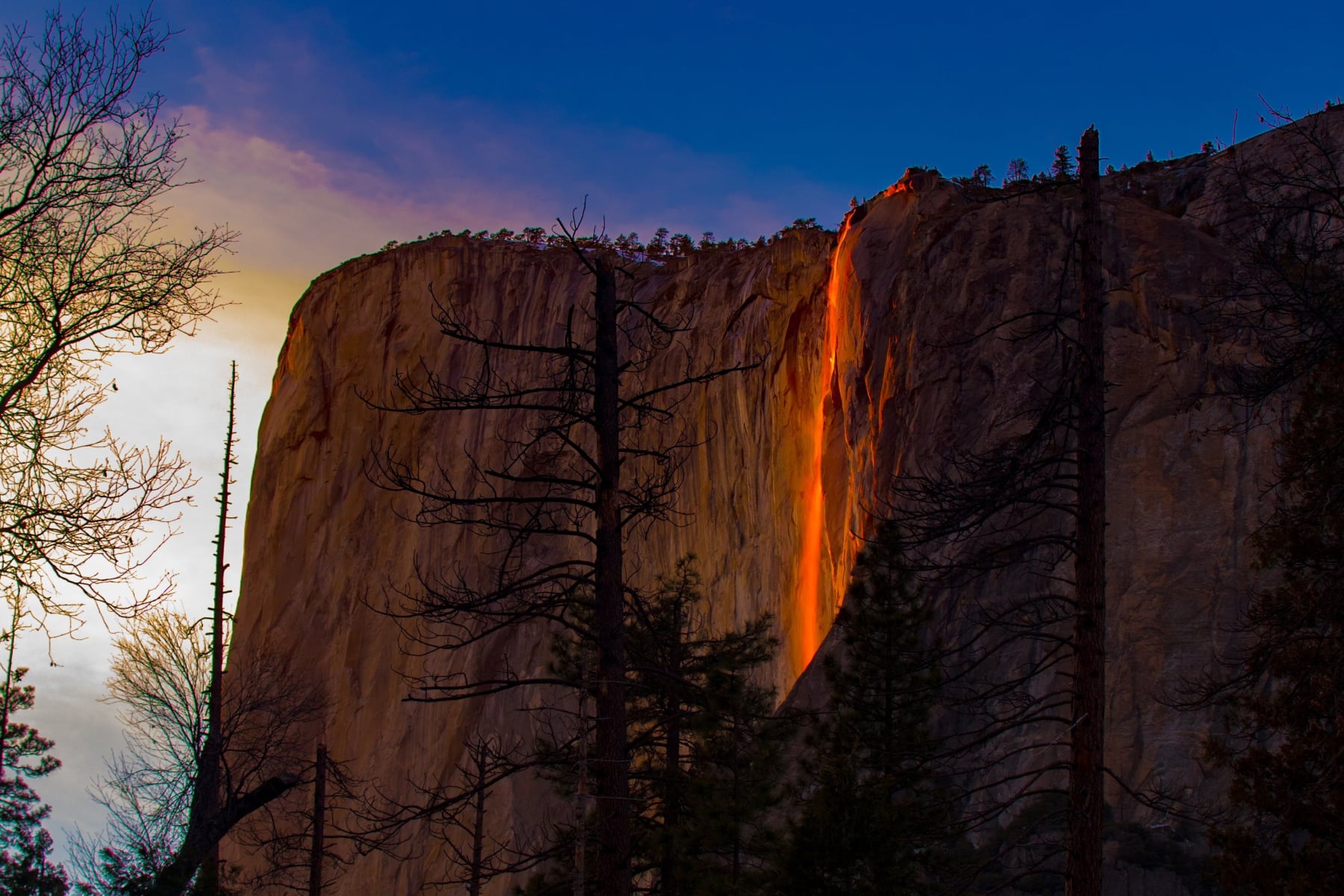
That means you’ll need to dress warmly in layers, as the temperatures will be dropping as the sun goes down. You can see on the map below the parking areas, and most locations will require a 1.5 to three-mile walk to get to a great viewing location. Shuttles will be available, but expect those to be crowded and it might be faster to walk.
All visitors should bring a headlamp to navigate after the sun sets. It will help to have crampons or other traction, as you’ll be walking through ice and snow.
Other safety tips include:
- Stay On Trails: Don’t step off them for even a second or two to snap a photo.
- Do Not Cross Fences: Fences are put up for your safety and the safety of the wildlife and landscape.
- Pack Out Trash: As part of Leave No Trace, you should be doing this anyway. The El Capitan Picnic Area has trash cans.
- Use Designated Restrooms: When you have to “go,” use the toilets provided in the picnic area. They are vault toilets.
FYI: While the display is commonly referred to as Firefall, many park traditionalists believe that name should only apply to the Firefall event that was human-created. They believe this phenomenon should only be referred to as Horsetail Fall. (And it’s NOT Horsetail FALLS.)
Why is Yosemite’s Firefall Only in February?
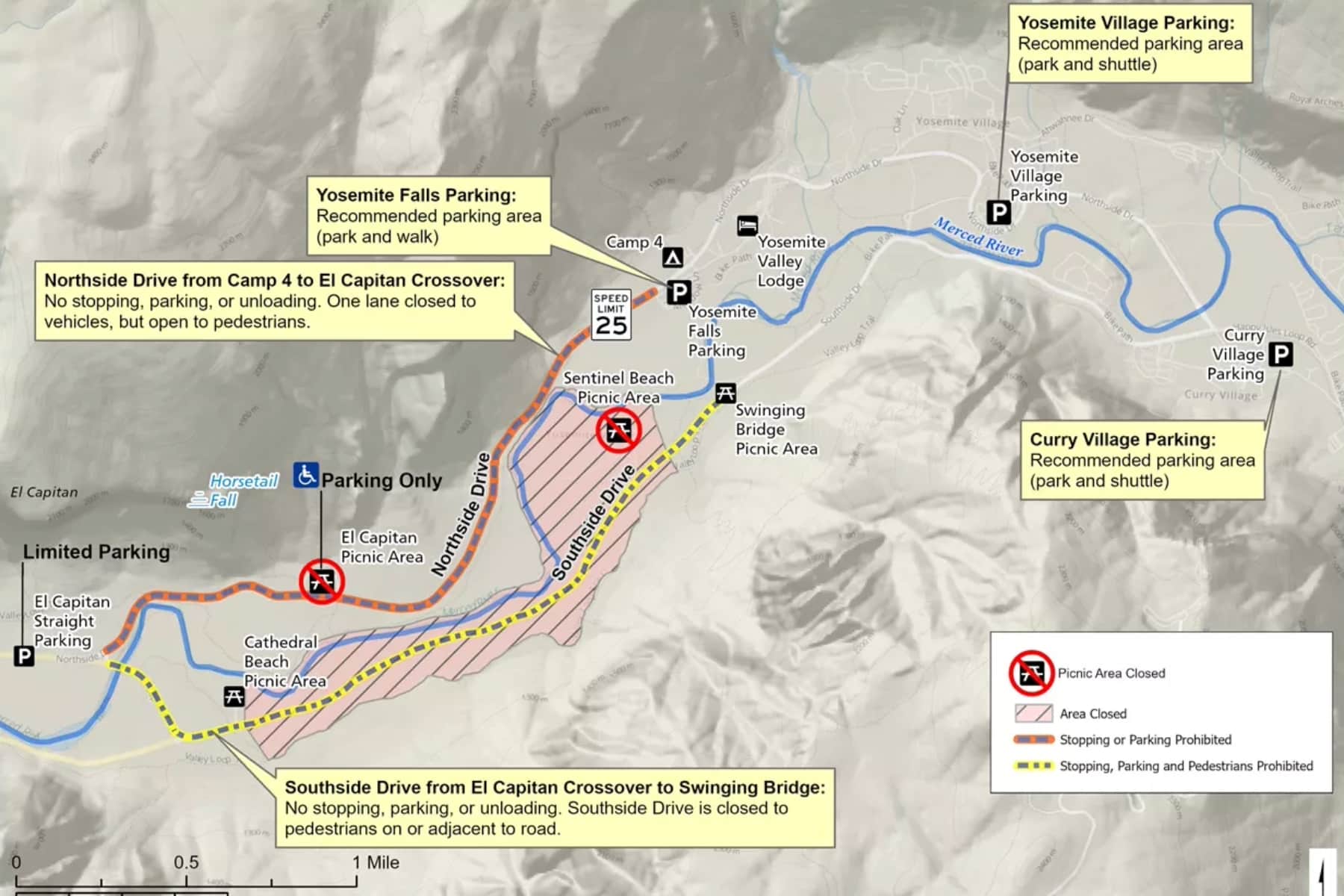
It should be noted that February is the only month you can *potentially see the Firefall. The conditions have to be just right to get that glow going.
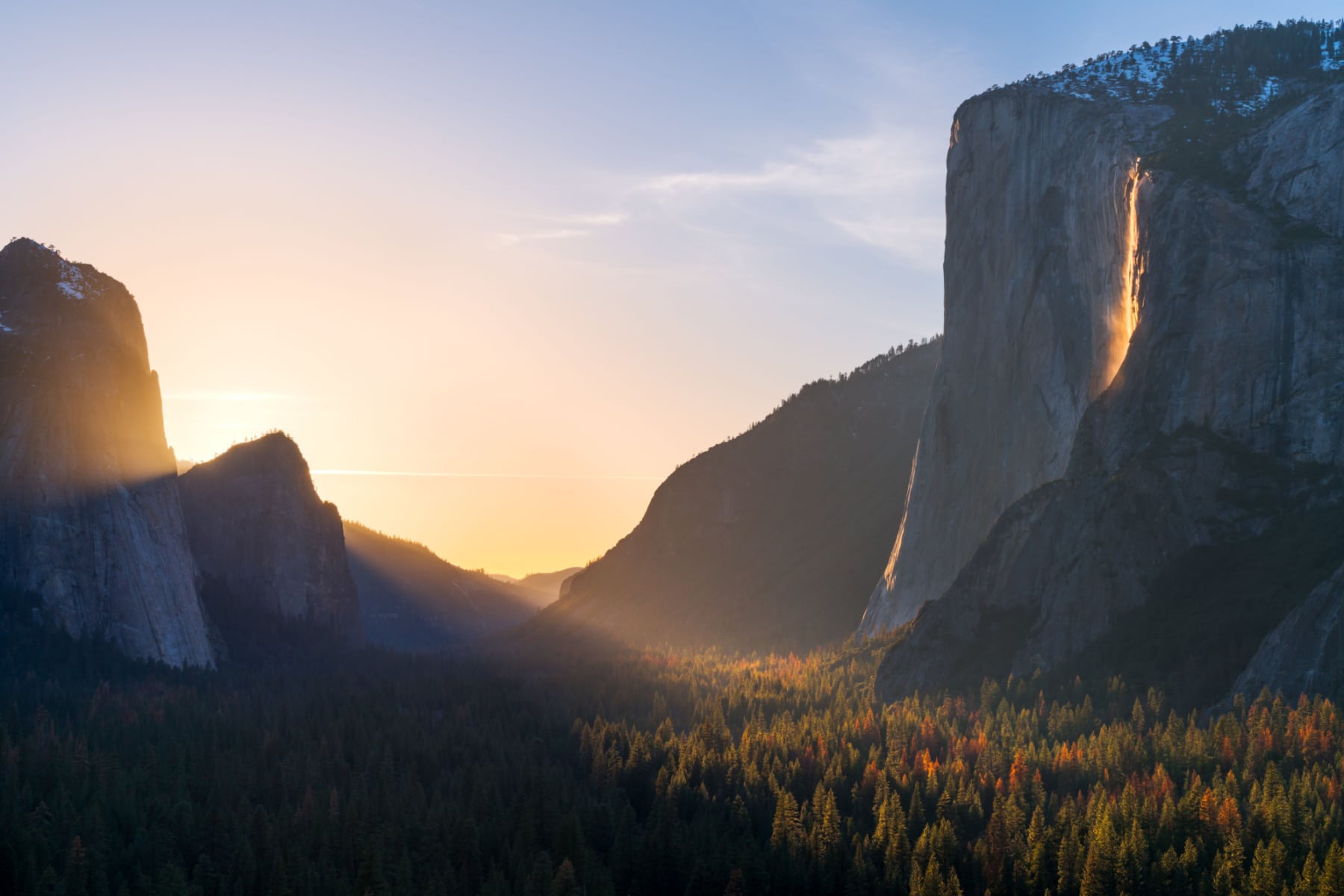
Yosemite’s Firefall is a natural phenomenon that occurs when the setting sun hits Horsetail Fall in Yosemite Valley at just the right angle. It typically occurs for about two weeks in mid-to-late February each year.
A mix of perfect conditions need to happen:
- Sun Angle: The Firefall only occurs when the sun is at the right angle to illuminate Horsetail Fall. This happens in mid-to-late February because the Earth’s tilt is causing the Northern Hemisphere to lean towards the sun, making the sun’s rays more direct.
- Snowmelt: Yosemite’s Firefall also requires that Horsetail Fall be flowing. This is because the waterfall is fed by snowmelt, and the snowpack doesn’t typically start to melt until February. If there is not enough snowmelt, the waterfall will not be flowing and there will be no Firefall.
- Clear skies: Finally, clear skies are also necessary for the Firefall to occur. If there are clouds in the sky, they will block the sunlight and prevent the waterfall from glowing.
Due to these factors, the Firefall is a relatively rare and unpredictable event. Even if all of the conditions are right, there is no guarantee that the Firefall will occur. However, when it does, it is a truly spectacular sight.
Firefall History
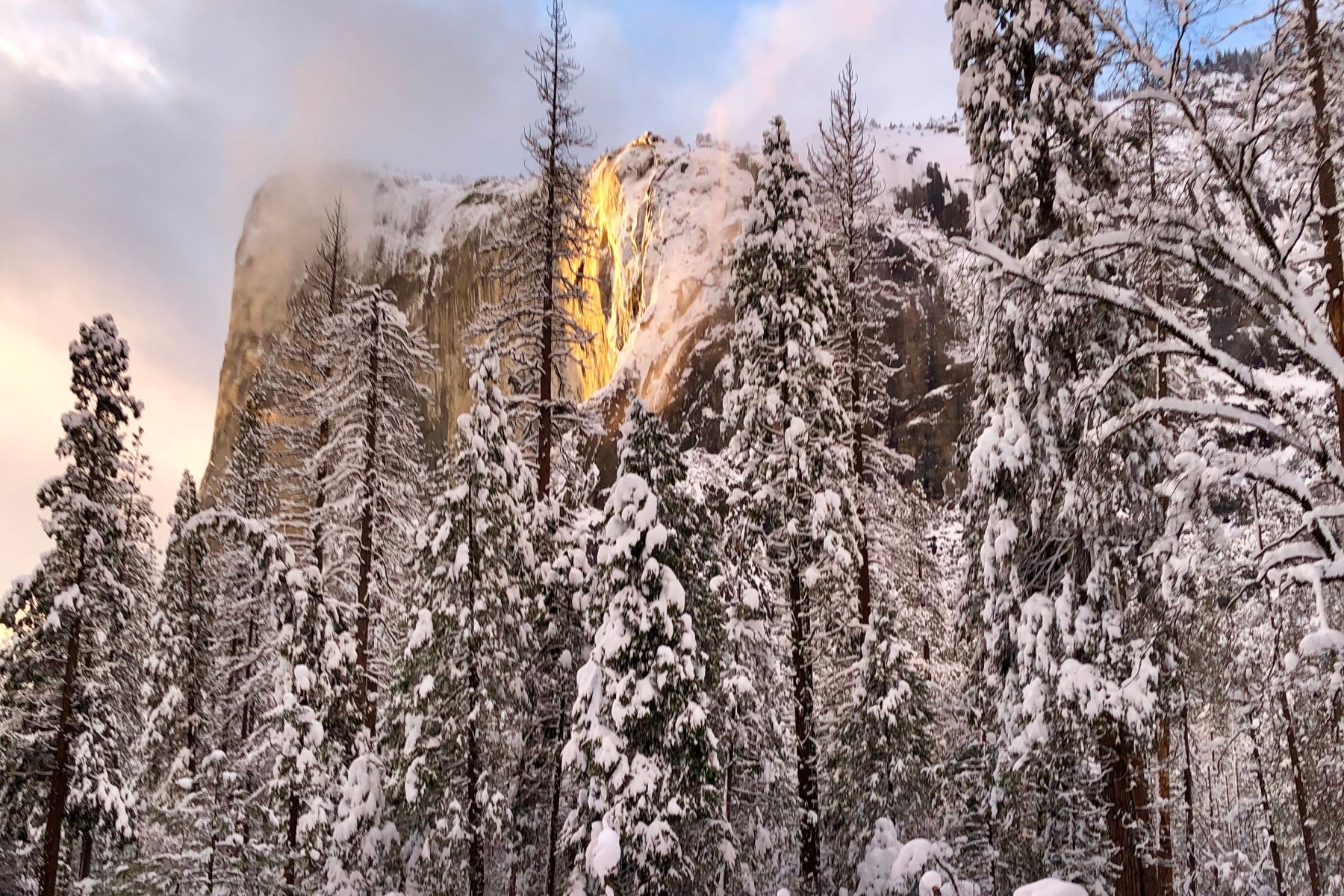
Perhaps one of the most fascinating aspects of nature’s gift comes from the history of Yosemite Firefall. Years ago, a manmade Firefall of embers was pushed over the edge of Glacier Point. That started in 1872 – 18 years before Yosemite even became a National Park.
As the act of burning embers and pushing them off a mountain clearly flies in the face of Leave No Trace, the fake Firefall practice was stopped in 1968.
What’s particularly odd is that the fake Firefall was remarkably similar to the real Firefall, though it doesn’t seem anyone knew about the natural occurrence until five years later when Galen Rowell snapped a picture of it. The photo became known as “Last Light on Horsetail Fall.”
“Years later after thousands of people have photographed the fall, I think he would be flattered that so many people are coming to photograph this rare phenomenon.”
Tony Rowell, son of Galen Rowell
Map of Horsetail Fall Firefall
Horsetail Fall Firefall Video
Thanks to the team at Yosemite Mariposa County Tourism Bureau for providing this excellent video of Yosemite’s Firefall.
Pin Yosemite Firefall
Helpful Related Articles
Things to Do in Yosemite: 20 Epic Things to Do in Yosemite National Park
Clouds Rest Hike: Hike Clouds Rest in Yosemite, NOT Half Dome (Honest Guide)
Half Dome Hike: Here’s Why You May Want to Reconsider the Half Dome Hike
Best Hikes in Yosemite: 20 Best Hikes in Yosemite National Park
Yosemite Facts: 10 Shocking Yosemite National Park Facts
Hetch Hetchy: Hetch Hetchy – The Epic Enviro Battle That Changed America
West Coast Parks: 20 BEST West Coast National Parks Ranked by Experts
Things to Do Sequoia: 15 Amazing Things to Do in Sequoia National Park
Redwood National Park: Redwood National Park Ultimate Guide
Things to Do Redwood National Park: 15 EPIC Things to Do in Redwood National Park
Death Valley National Park Guide: Death Valley National Park Ultimate Guide
Things to Do Death Valley: 18 EPIC Things to Do in Death Valley National Park

Leave a Reply