

Sequoia protects the biggest living things on the planet. The General Sherman Tree alone weighs an estimated 2.7 million pounds, and standing under it rearranges your sense of scale. But the park is more than the famous trees. It climbs from foothills to the granite high country of the Sierra, and it shares a boundary and an entrance fee with Kings Canyon next door, so most people see both in one trip.
Below are 15 things to do in Sequoia, ranked and grouped by the Giant Forest hub and the deeper reaches of the park. Each item lists the trailhead, distance, difficulty, and the best time to go. For the full overview and current road status, start at our Sequoia National Park hub.
Some links below are affiliate links. If you book a stay or buy a recommended map or guidebook through them, we may earn a small commission at no extra cost to you. It helps keep our park coverage free.
Where to stay near Sequoia National Park: Most visitors base themselves in Three Rivers, California, the closest gateway with a real range of options. You can compare hotels and lodges near Sequoia National Park to find dates that still have availability, since the best places book out months ahead in peak season.
Love Sequoia? It's one of 117 threatened public lands destinations we're tracking. Get the free briefing.
It is also worth carrying a paper map and a good guidebook, because cell service is spotty across most of the park. We use the National Geographic Trails Illustrated map for Sequoia National Park for trail planning, paired with a detailed Sequoia National Park guidebook for trip ideas and logistics.

At a Glance
| Activity | Type | Distance / Time | Difficulty |
|---|---|---|---|
| General Sherman Tree | Walk | 1 mi RT to the tree | Easy to moderate |
| Congress Trail | Hike | 2.7 mi loop | Easy to moderate |
| Moro Rock | Hike | 0.5 mi RT, 350+ steps | Moderate |
| Big Trees Trail | Walk | 1.3 mi loop | Easy, accessible |
| Tokopah Falls | Hike | 3.8 mi RT | Moderate |
| Crystal Cave | Cave tour | Ticketed, seasonal | Moderate |
| Alta Peak | Hike | 13.8 mi RT | Strenuous |
| Tunnel Log | Drive-through | Roadside | Easy |
The Giant Forest
1. See the General Sherman Tree

Trailhead: Sherman Tree parking area off the Generals Highway. Distance: about 1 mile round trip. Difficulty: Easy down, moderate climbing back up at elevation. Best time: Early morning to beat the crowds.
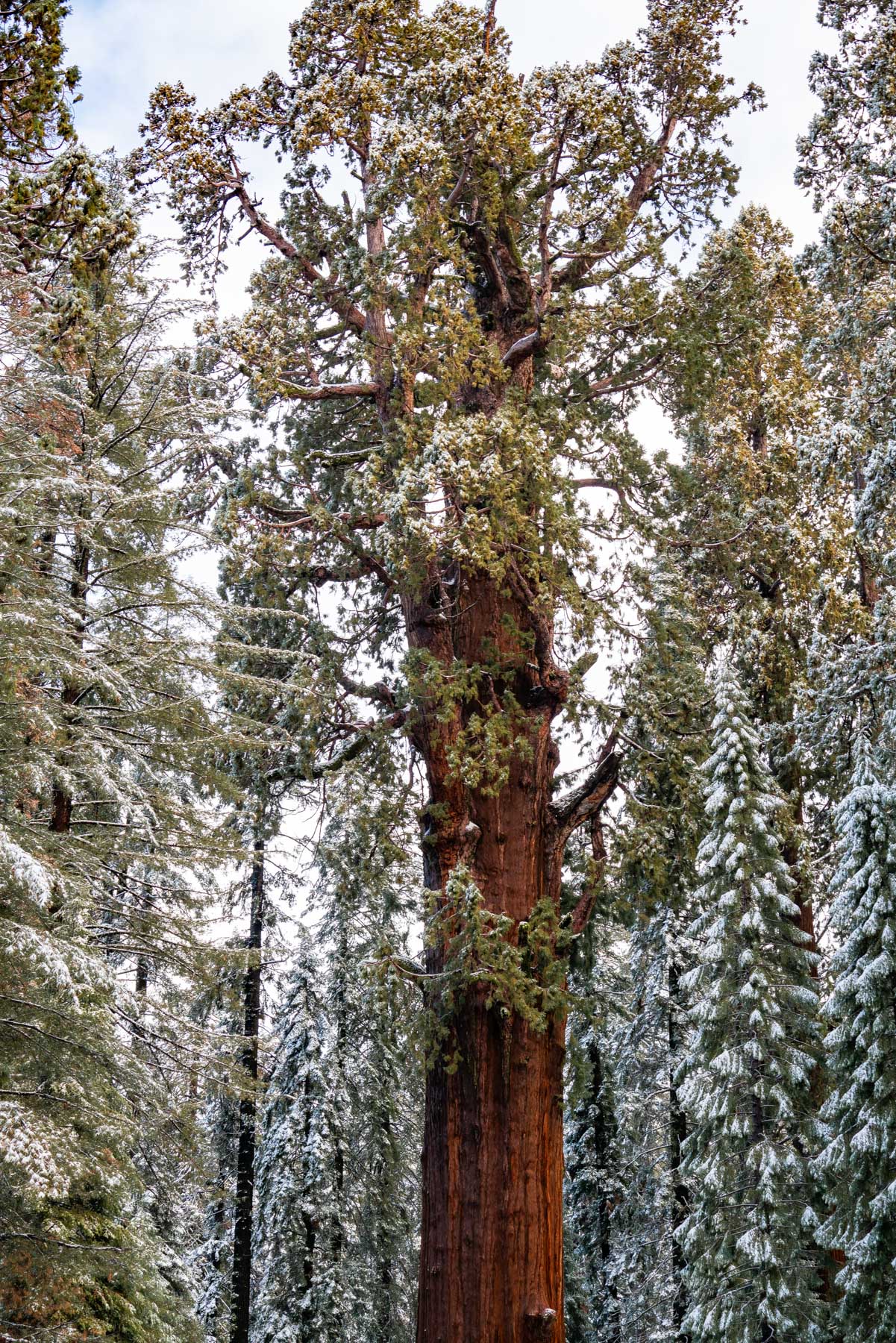
The largest living tree on earth by volume, and the reason most people come. The paved trail descends to its base, where a railing keeps you back far enough to take in the full 275-foot height and 36-foot base diameter. Remember the walk down is the easy part, and you are at 6,800 feet, so the climb back tests your lungs. Go early and you might get a quiet moment with it.
2. Hike the Congress Trail

Trailhead: Begins at the General Sherman Tree. Distance: 2.7-mile loop. Difficulty: Easy to moderate. Best time: Morning.
The best way to actually walk among the giants rather than just photograph one. This paved loop starts at the Sherman Tree and threads past named groves like the House and the Senate, where sequoias cluster so thick they form walls. It is the single best hike in the Giant Forest, and it stays surprisingly quiet once you get past the Sherman crowds.
3. Walk the Big Trees Trail

Trailhead: Giant Forest Museum. Distance: 1.3-mile loop. Difficulty: Easy, wheelchair accessible. Best time: Any time.
A flat, accessible loop around Round Meadow, ringed by big sequoias with interpretive signs along the way. It is the most family-friendly trail in the park and a good first walk to understand how these trees fit into the larger forest. Spring and early summer bring wildflowers to the meadow.
4. Climb Moro Rock

Trailhead: Moro Rock parking, off Crescent Meadow Road. Distance: 0.5 miles round trip. Stairs: more than 350. Difficulty: Moderate, steep and exposed. Best time: Sunset on a clear day.
A granite dome with a staircase carved right into it, climbing to a railed summit with a huge view over the foothills and, on a clear day, the Great Western Divide. It is short but steep, with exposure and thin air, so take your time. Skip it in a thunderstorm, because there is nowhere to hide up there.
5. Drive Through Tunnel Log

Location: Crescent Meadow Road. Difficulty: Easy. Best time: Any time the road is open.
A sequoia that fell across the road in 1937 and had a tunnel cut through it, big enough to drive a normal car under. It is a classic park photo op and takes two minutes. Taller vehicles use the bypass alongside it.
6. Visit the Giant Forest Museum

Location: Giant Forest, Generals Highway. Difficulty: Easy. Best time: Start of your visit.
A small, well-done museum in a historic building that explains how sequoias live, burn, and survive for thousands of years. It is the right first stop to understand what you are about to walk through, and it anchors the Big Trees Trail and the free shuttle in summer. The fire ecology exhibit is genuinely eye-opening.
7. Catch Sunset at Beetle Rock
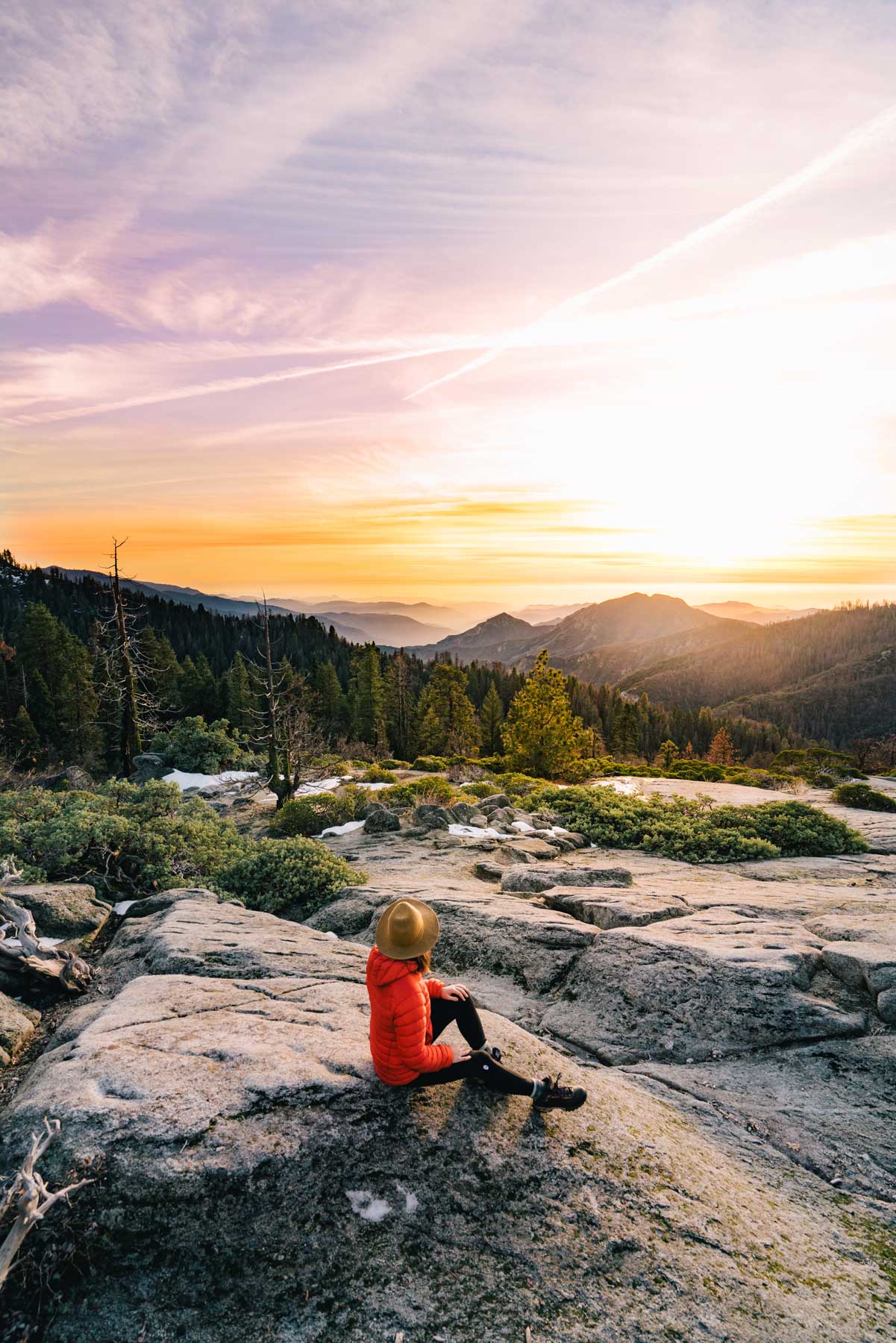
Location: Across from the Giant Forest Museum. Difficulty: Easy, short walk. Best time: Sunset.
A broad granite slab a short walk from the museum, facing west over the foothills. It is a quieter sunset alternative to Moro Rock, with room to spread out and no stairs to climb. Bring a layer and watch the light go gold across the lower country.
Deeper Into the Park
8. Take a Crystal Cave Tour

Location: Crystal Cave Road, off the Generals Highway. Duration: about 50 minutes underground. Difficulty: Moderate, stairs and uneven footing. Best time: Book ahead, tours run roughly late spring through fall.
A marble cave full of formations, reached by a winding road and a half-mile downhill walk to the entrance. Tours are ticketed through the Sequoia Parks Conservancy and must be booked online in advance, since you cannot buy them at the cave. The road and tour schedule have changed in recent years after fire damage, so confirm the current season and book early.
9. Hike to Tokopah Falls

Trailhead: Lodgepole Campground. Distance: 3.8 miles round trip. Difficulty: Moderate. Best time: Late spring and early summer for peak flow.
A river-canyon hike to a 1,200-foot cascade tumbling down a granite headwall, framed by the cliffs of the Tokopah Valley. It is at its most powerful in late spring when the snowmelt runs hard. The trail follows the Marble Fork of the Kaweah, so it is pretty the whole way, not just at the falls.
10. Hike to Muir Grove

Trailhead: Dorst Creek Campground. Distance: 4 miles round trip. Difficulty: Moderate. Best time: Summer.
A quieter grove that takes a real hike to reach, which means you may have these giants to yourself. The trail rolls through forest before opening into a stand of massive sequoias far from any crowd. This is the move when the Giant Forest feels too busy and you want the trees on your own terms.
11. Hike to Hanging Rock

Trailhead: Moro Rock parking area. Distance: about 0.6 miles round trip. Difficulty: Easy to moderate. Best time: Pair it with Moro Rock.
A short trail from the Moro Rock lot to a balanced boulder perched on the edge of a drop, with a side view of Moro Rock itself and the canyon below. It is an easy add-on to a Moro Rock visit and gives you a different angle on the same dramatic country. Mind the edges with kids.
12. Hike to Alta Peak

Trailhead: Wolverton. Distance: 13.8 miles round trip. Elevation gain: about 4,000 feet. Difficulty: Strenuous. Best time: Mid to late summer once snow clears.
The big day hike in this part of the park, climbing to 11,204 feet for a view across the Great Western Divide and, on a clear day, all the way to Mount Whitney. It is a serious effort with major elevation gain at altitude, so come fit, acclimated, and early. The high meadows along the way are worth the climb on their own.
13. Hike the Marble Falls Trail
Trailhead: Potwisha Campground. Distance: 7.4 miles round trip. Difficulty: Strenuous. Best time: Spring, when the foothills are green and the falls run.
A foothills hike that climbs through chaparral to a powerful whitewater cascade on the Marble Fork. Because it sits low, it is hikeable in spring when the high country is still buried in snow, which makes it a great shoulder-season option. Start early, because the foothills heat up fast.
Night Skies and Beyond
14. Go Stargazing

Where: Open meadows and high points away from the lodges. Difficulty: Easy. Best time: New moon, clear night.
Away from the Central Valley’s light, the night sky over Sequoia gets dark and deep, especially up at elevation. Pull off at a meadow or open viewpoint, let your eyes adjust, and the Milky Way comes out. The park and conservancy run summer astronomy programs, so check the schedule.
15. Visit Kings Canyon National Park

Location: North of Sequoia, same entrance fee. Difficulty: Varies. Best time: Summer, when the canyon road is open.
Your Sequoia entrance fee covers Kings Canyon next door, so it is a waste not to see it. The General Grant Tree and one of the deepest canyons in the country sit just up the road. The scenic drive into Cedar Grove on Highway 180 is one of the best in the Sierra, and it is only open in the warmer months.
Planning Your Sequoia Visit
Fees and Reservations
The entrance fee is $35 per private vehicle, $30 per motorcycle, or $20 per person, good for seven days, and it covers both Sequoia and Kings Canyon. There is no timed-entry or reservation system to enter. The one thing you must reserve ahead is a Crystal Cave tour, booked online through the Sequoia Parks Conservancy.
How Many Days You Need
One full day covers the Giant Forest highlights, the Sherman Tree, the Congress Trail, Moro Rock, and Tunnel Log. Two days lets you add Tokopah Falls or a Crystal Cave tour and slip over to Kings Canyon. Three or more days opens up the bigger hikes like Alta Peak and the Cedar Grove area.
Getting Around and Road Notes
The Generals Highway through the park is steep and winding, so allow more driving time than the map suggests, and vehicles over 22 feet should check length restrictions near the foothills. In summer a free shuttle serves the Giant Forest, which is the easiest way to avoid the parking crunch at the Sherman Tree. Carry chains in winter, when they are often required.
Where to Stay
Inside the park, Wuksachi Lodge is the main hotel, and Lodgepole and Dorst Creek are the big reservable campgrounds, all booked through Recreation.gov. Just outside the foothills entrance, the town of Three Rivers has lodging and food. There is also dispersed camping on the surrounding public lands destinations in Sequoia National Forest and the Giant Sequoia National Monument.
When to Go
Summer is peak, with all roads open and the high country accessible, but it is also the busiest. Late spring and early fall are quieter and still pleasant in the Giant Forest. Winter turns the sequoias into a snow-globe scene and is worth the trouble, though chains are often required and the higher roads close. The foothills hikes are best in spring.
Frequently Asked Questions
What are the top spots in Sequoia?
The General Sherman Tree and the Congress Trail in the Giant Forest, Moro Rock for the view, and Tunnel Log for the classic photo. Add Tokopah Falls or a Crystal Cave tour if you have a second day.
How old is the General Sherman Tree?
It is estimated to be around 2,200 years old. It is not the tallest or widest tree in the world, but it is the largest by total wood volume, which is what makes it the biggest living tree on earth.
Do I need a reservation for Sequoia?
No reservation is required to enter the park. The exception is Crystal Cave, whose tours are ticketed and must be booked online in advance through the Sequoia Parks Conservancy.
When is the best time to visit Sequoia?
Summer for full access to the high country, late spring and early fall for fewer crowds, and winter for snow-covered sequoias if you are prepared for chains and closures. The foothills are at their best in spring.
Pair Sequoia with its neighbor for a full Sierra trip, and dig into the trees with our roundup of Sequoia and Kings Canyon facts.
What to Bring to Sequoia
Gear we recommend for Sequoia. Affiliate links support our work at no cost to you.
More Than Just Parks may earn a small commission from purchases made through these links, at no extra cost to you. We only recommend gear we would actually use.
Affiliate disclosure: Some links on this page earn us a small commission at no extra cost to you. We only recommend gear we actually use.


