

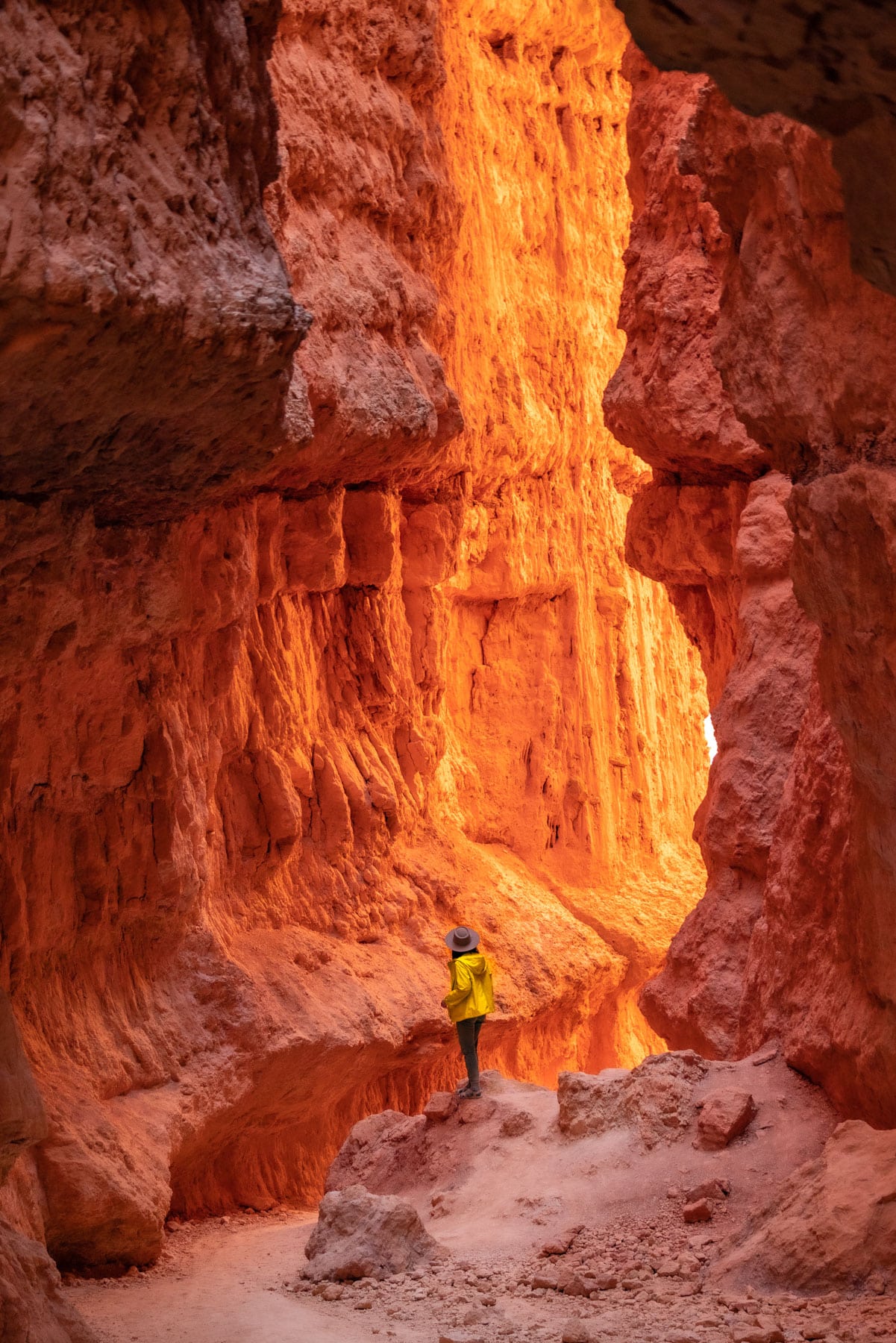
Hoodoos, those tall, thin spires of weathered rock, exist on every continent on Earth. But the largest concentration of them found anywhere is packed into one small park in southern Utah. Stand on the rim of Bryce Canyon National Park at first light and the amphitheater below looks like a crowd turned to stone. The Paiute, who knew this place long before it had an English name, said that is exactly what it is.
What follows are 12 facts about Bryce Canyon, the people who named it, and the strange geology that built it. For trip planning, trails, and lodging, start with our full Bryce Canyon National Park guide.
Tony Pattiz taught American history for more than 25 years before he began writing it for this site. Will and Jim have filmed across southern Utah’s plateau country, including the Dixie National Forest that borders this park, though we have not yet made a film in Bryce Canyon itself. Every date, number, and name below has been checked against the National Park Service and the primary sources listed at the end of this article. Last verified July 2026.
Bryce Canyon National Park Basics
- Location: Southern Utah, along the eastern rim of the Paunsaugunt Plateau
- Size: 35,835 acres, per the NPS park statistics
- Highest elevation: 9,115 feet at Rainbow Point
- Lowest elevation: 6,620 feet at Yellow Creek
- Visitation: 1,967,367 recreation visits in 2025, the first year counted under the park’s improved visitor counting method
- Established: National monument on June 8, 1923; national park on February 25, 1928
- Designation: International Dark Sky Park (2019)
1. The Paiute Knew The Hoodoos As People Turned To Stone
Who looked at these rock spires first, and what did they see? The Fremont and Ancestral Puebloan peoples lived in the region from roughly 200 to 1200 A.D., and the Paiute occupied the country around what is now Bryce Canyon starting around 1200 A.D., using the plateau for seasonal hunting and gathering rather than year-round villages. The winters at 8,000 feet explain why.
Love Bryce Canyon? It's one of 117 threatened public lands destinations we're tracking. Get the free briefing.
The Paiute knew this place as Angka-ku-wass-a-wits, meaning red painted faces. In their tradition the spires are the Legend People, the To-when-an-ung-wa, punished for their bad deeds. In 1936 a Paiute elder known as Indian Dick explained the story to the park.
Because they were bad, Coyote turned them all into rocks. You can see them in that place now all turned into rocks.
Indian Dick, a Paiute elder, as recorded by the National Park Service in 1936
The park notes that it is the custom of the Paiute to tell these stories only during the winter season, which is why the full account is not repeated on the park’s own wayside exhibits. Stand among the hoodoos at dusk and you will understand how the story took hold.

2. The Powell Survey Made The First Scientific Study Of This Country
The first scientific eyes on this country belonged to the Powell Survey. In 1872, Almon H. Thompson, the geographer of Major John Wesley Powell’s survey of the Colorado Plateau region, made the first scientific traverses of the Paunsaugunt and Aquarius plateaus, and members of his party climbed into the breaks of what is now Bryce Canyon. Powell himself came through in 1879.
Powell is one of the most remarkable figures in the history of American exploration. He commanded Union artillery in the Civil War and lost most of his right arm at the Battle of Shiloh. Seven years later, in 1869, he led the first documented expedition down the Green and Colorado rivers, a three month journey that only six of the ten men who set out completed. That trip carried him through the Grand Canyon, a story we tell in full in our Grand Canyon facts article.
3. A Scottish Carpenter Gave The Park His Name
The park is named for a man who never sought the honor. Ebenezer Bryce, a Scottish-born carpenter who learned his trade in the shipyards before converting to the Latter-day Saints and emigrating to Utah, was sent by his church to help settle the Paria Valley. He homesteaded below the amphitheater in the 1870s and stayed only about five years before moving his family to Arizona in 1880.
In that short stay he left his mark. Bryce built a road into the amphitheater to haul out timber and firewood, and the people who knew him took to calling the place where it ended Bryce’s Canyon. He is also reputed to have summed up his namesake with the least romantic description it has ever received, a hell of a place to lose a cow. The name outlasted the man, and half a century later it went on the map of the national parks.
4. Bryce Canyon Is Not Actually A Canyon
Here is the misconception to clear up first. A canyon is carved by a flowing river, and no river runs through Bryce. The park is instead a series of bowl-shaped amphitheaters eroded into the eastern edge of the Paunsaugunt Plateau by seasonal rain and melting snow working back into the rim.
The distinction matters because it explains what you see. Rivers cut down and leave walls. Rim erosion eats sideways and leaves spires. The most famous of the bowls, the Bryce Amphitheater, holds the densest concentration of hoodoos in the park, and its four classic viewpoints sit within the first 3 miles of the park road.
5. It Holds The Largest Concentration Of Hoodoos On Earth
The National Park Service states it plainly. Hoodoos exist on every continent, but here is the largest concentration found anywhere on Earth. The park notes a Southern Paiute word for scary or spirit, pronounced oo’doo, that has been associated with this place.
What machine carves rock into a forest of spires? Mostly ice. The rim of the plateau sees more than 170 nights a year that swing above and below freezing. Water seeps into cracks by day, freezes by night, and expands by 9 percent as it turns to ice, prying the rock apart from within. The rock being pried is the Claron Formation, a layered stack of limestones, dolostones, mudstones, siltstones, and sandstones. Each layer erodes at its own rate, and that uneven wearing is what gives every hoodoo its lumpy, top-heavy profile.

6. Thor’s Hammer Is The Park’s Most Famous Hoodoo
One hoodoo has become the park’s calling card. Thor’s Hammer, a blocky caprock balanced on a slender stem, stands nearly directly below Sunset Point, and the Park Service itself calls it the park’s most famous hoodoo.
You do not need a backcountry permit to meet it. The Navajo Loop Trail drops from Sunset Point into the amphitheater, 1.3 miles with 515 feet of elevation change, and passes beneath the Hammer on its Two Bridges side. It is the single best short hike in the park for understanding what a hoodoo looks like from below rather than above.

7. It Was Almost Named Utah National Park
Bryce Canyon nearly carried a different name entirely. After a Forest Service supervisor named J.W. Humphrey sent photographs and motion pictures of the canyon to officials in Washington and at the Union Pacific Railroad, word spread fast. President Warren G. Harding proclaimed Bryce Canyon a national monument on June 8, 1923.
Then came the almost. On June 7, 1924, Congress passed a bill to establish the site as Utah National Park, and for nearly four years that was its designated future name. Utahns can be grateful the original name won out. On February 25, 1928, Bryce Canyon officially became a national park, and the rancher’s surname was fixed to one of the most recognizable places in America.
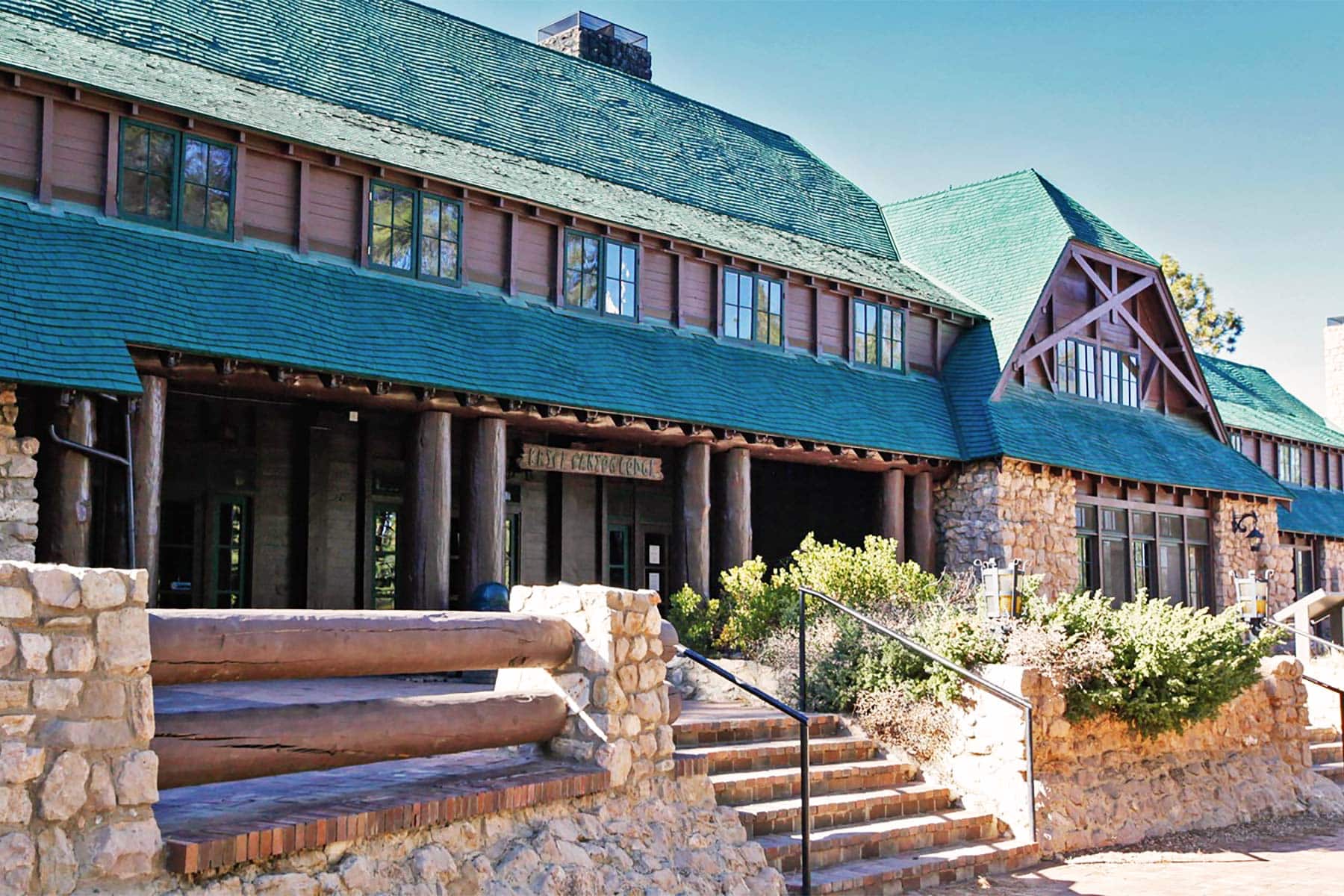
8. The Park’s Natural Bridge Is Really An Arch
One of the most photographed stops on the park road is named wrong, and the Park Service says so. A true natural bridge is carved by the movement of a stream or river cutting through rock. The red-rock span at the Natural Bridge overlook is instead a natural arch, or window, opened by the same quiet forces that build hoodoos, frost-wedging, chemical weathering, and gravity.
The arch spans 85 feet of air, and it looks permanent. It is not. The ice that opened the window keeps widening it every winter, and one day the span will fall, the same fate that eventually waits for every hoodoo in the park.
9. It Protects One Of The Darkest Night Skies In America
When the sun leaves, the park’s other show begins. On August 13, 2019, Bryce Canyon was certified as an International Dark Sky Park, a recognition that took the staff more than a decade of sky-quality measurement and lighting work to earn. On a clear, moonless night here you can see thousands of stars, with the band of the Milky Way running horizon to horizon.
The stargazing tradition is older than the certificate. The park was one of the first in the national park system to offer night sky programs and had run them for 50 years by the time the designation arrived. Its Astronomy Rangers still lead programs through the year, and every summer the park hosts a 4-day Astronomy Festival.
10. It Is The Smallest Of Utah’s Mighty Five
Utah has five national parks, Arches, Bryce Canyon, Canyonlands, Capitol Reef, and Zion, and at 35,835 acres Bryce Canyon is the smallest of them. Arches, the next smallest, covers more than twice its ground. We compare all five in our guide to the Utah national parks.
Small is a feature here, not a flaw. The hoodoos crowd into a compact run of amphitheaters along one rim, which means a single day delivers more famous scenery per mile than almost any park in the system. Its nearest neighbor makes the pairing easy. The NPS puts Zion’s east entrance 78 miles away, and the two parks anchor more Utah road trips than any other pair. Our Zion National Park facts article covers the neighbor.
11. Utah Prairie Dogs Came Back From The Brink Here
The park’s meadows host a conservation story most visitors drive past. The Utah prairie dog, found only in the southwestern corner of the state, lost more than 90 percent of its range in the past century. From about 95,000 animals in the early 1920s, the species fell to roughly 3,000 by the 1970s. It was federally listed as endangered in 1973 and reclassified as threatened in 1984 as recovery work took hold.
Bryce Canyon became part of that recovery. Reintroduction inside the park succeeded, and its meadows now support more than 600 prairie dogs in 10 separate towns. They share the park with 59 mammal species, 175 bird species, and 11 reptile species, a surprising census for a park this size and this high.
12. Its Oldest Trees Have Stood For More Than 1,600 Years
The hoodoos get the cameras, but the oldest living things in the park are trees. Great Basin bristlecone pines grow along the park’s high southern rim, and the oldest known bristlecone in the park, near Yovimpa Point on the Bristlecone Loop Trail, is estimated at more than 1,600 years old. It was already ancient when the first written accounts of this country were made.
The species itself is the longest-lived non-clonal organism on Earth. Elsewhere in its range, in Nevada and California, individual bristlecones have been dated at nearly 4,900 years. The ones at Bryce survive on the thin, rocky soil of the rim at over 9,100 feet, twisted by wind into shapes almost as strange as the rock below them.

How To See The Hoodoos Yourself
An honest note before the viewing plan. We have filmed across the high plateau country that surrounds this park, but we have not yet made a film inside Bryce Canyon, so this section is built on the park’s named viewpoints and ranger programs rather than our own footage. The good news is that Bryce is the rare park whose best moments are reachable by nearly everyone. The main park road runs 18 miles to Rainbow Point, and the four classic Bryce Amphitheater viewpoints, Sunrise, Sunset, Inspiration, and Bryce Point, all sit within the first 3 miles. Rangers point sunrise watchers to the amphitheater rim, and the Navajo Loop puts you at the feet of the hoodoos within an hour. After dark, the Astronomy Rangers take over.
For a full ranking of hikes, viewpoints, and seasons, see our guide to the best things to do in Bryce Canyon National Park.
Where These Facts Come From
Every claim in this article was checked against the sources below in July 2026. Numbers that change over time, like annual visitation and wildlife counts, are stated with the year they were reported.
- NPS, Bryce Canyon Park Statistics, for acreage and elevations
- NPS news release, March 2026, for 2025 visitation and the counting method change
- NPS, American Indian History at Bryce Canyon, for the Paiute, Fremont, and Ancestral Puebloan record and the 1936 Legend People account
- NPS, Bryce Canyon Park History, for the 1923 monument, the 1924 Utah National Park bill, and the 1928 park
- NPS, Bryce Point and NPS, A Pioneer Story, for Ebenezer Bryce, his road, the naming, and the Paiute word associated with the hoodoos
- NPS Historic Resource Study, Bryce Canyon, for the Powell Survey traverses and Bryce’s 1880 move, and NPS, John Wesley Powell, for Powell’s Shiloh wound and 1869 expedition
- NPS, Bryce Canyon National Park and NPS, Hoodoos, for the largest-concentration statement, freeze-thaw counts, and the Claron Formation
- NPS, See the Bryce Amphitheater, for the amphitheater-not-canyon distinction and viewpoint locations
- NPS, Sunset Point and NPS, Navajo Loop Trail, for Thor’s Hammer and the trail figures
- NPS, Natural Bridge and NPS, Natural Bridge wayside, for the arch distinction and the 85 foot span
- NPS news release, August 2019, NPS, Stargazing at Bryce Canyon, and NPS, Astronomy Programs, for the dark sky certification and festival
- NPS, Utah Prairie Dog, US Fish and Wildlife Service species profile, and NPS, Wildlife, for the prairie dog recovery and species counts
- NPS, Great Basin Bristlecone Pine, for the ages of the park’s oldest trees
- NPS, Bryce Canyon Frequently Asked Questions, for the distance to Zion and the park road
Keep Exploring Bryce Canyon
- Bryce Canyon National Park Guide, our full trip planning hub
- Best Things To Do In Bryce Canyon National Park, every hike and viewpoint ranked
- Utah National Parks Guide, all of the Mighty Five compared
- Zion National Park Facts, the neighbor 78 miles west
- Arches National Park Facts, more strange rock from Utah
- All 63 US National Parks Ranked
- Before you go, check live alerts and air quality on our national park conditions dashboard
What to Bring to Bryce Canyon
Gear we recommend for Bryce Canyon. Affiliate links support our work at no cost to you.
More Than Just Parks may earn a small commission from purchases made through these links, at no extra cost to you. We only recommend gear we would actually use.
Affiliate disclosure: Some links on this page earn us a small commission at no extra cost to you. We only recommend gear we actually use.