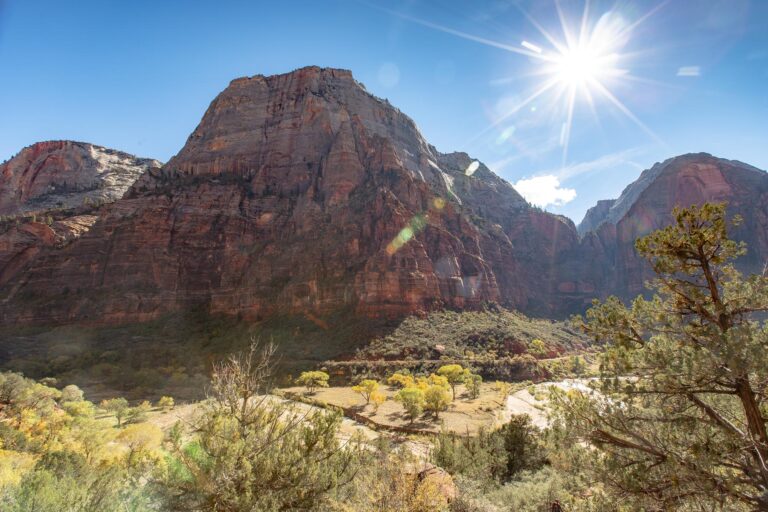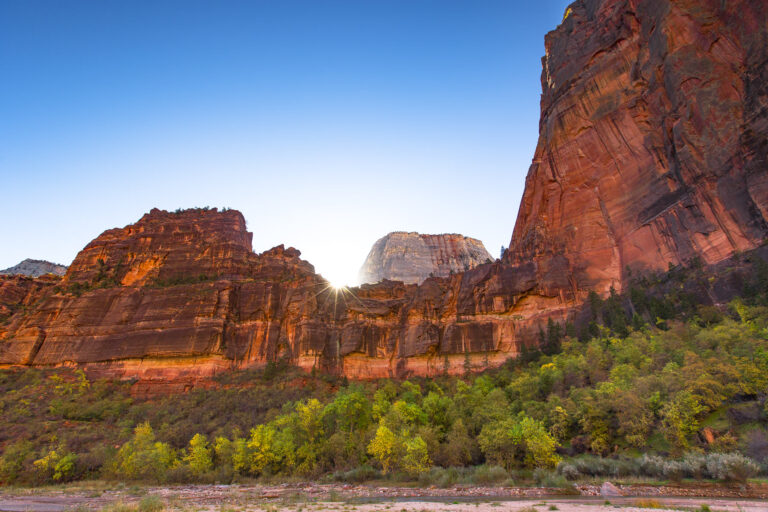


Zion is the park that turned a lot of people, me included, into canyon obsessives. Towering sandstone walls in red, cream, and pink rise straight up from the Virgin River, and the trails here range from flat riverside strolls to one of the most exposed hikes in the country. Will and I have spent a lot of time in this canyon, and it never gets old.
Zion is also one of the busiest parks in the system, so a little planning goes a long way. The big things to know up front are the mandatory canyon shuttle in the busy season and the permit lottery for Angels Landing. Here is my honest, ranked list of the best things to do in Zion National Park.
Some links below are affiliate links. If you book a stay or buy a recommended map or guidebook through them, we may earn a small commission at no extra cost to you. It helps keep our park coverage free.
Where to stay near Zion National Park: Most visitors base themselves in Springdale, Utah, the closest gateway with a real range of options. You can compare hotels and lodges near Zion National Park to find dates that still have availability, since the best places book out months ahead in peak season.
Love Zion? It's one of 117 threatened public lands destinations we're tracking. Get the free briefing.
It is also worth carrying a paper map and a good guidebook, because cell service is spotty across most of the park. We use the National Geographic Trails Illustrated map for Zion National Park for trail planning, paired with a detailed Zion National Park guidebook for trip ideas and logistics.

For the full picture, including lodging and a day-by-day plan, see our complete Zion National Park guide.
Things to Do at a Glance
| Activity | Type | Distance | Difficulty |
|---|---|---|---|
| The Narrows (bottom up) | River hike | Up to 9.4 mi round trip | Moderate to strenuous |
| Angels Landing | Hike (permit) | 5.4 mi round trip | Strenuous |
| Observation Point (East Mesa) | Hike | About 7 mi round trip | Moderate |
| Emerald Pools | Hike | 1.2 to 3 mi | Easy to moderate |
| Canyon Overlook | Hike | 1 mi round trip | Easy to moderate |
| Riverside Walk | Walk | 2.2 mi round trip | Easy |
1. Hike The Narrows
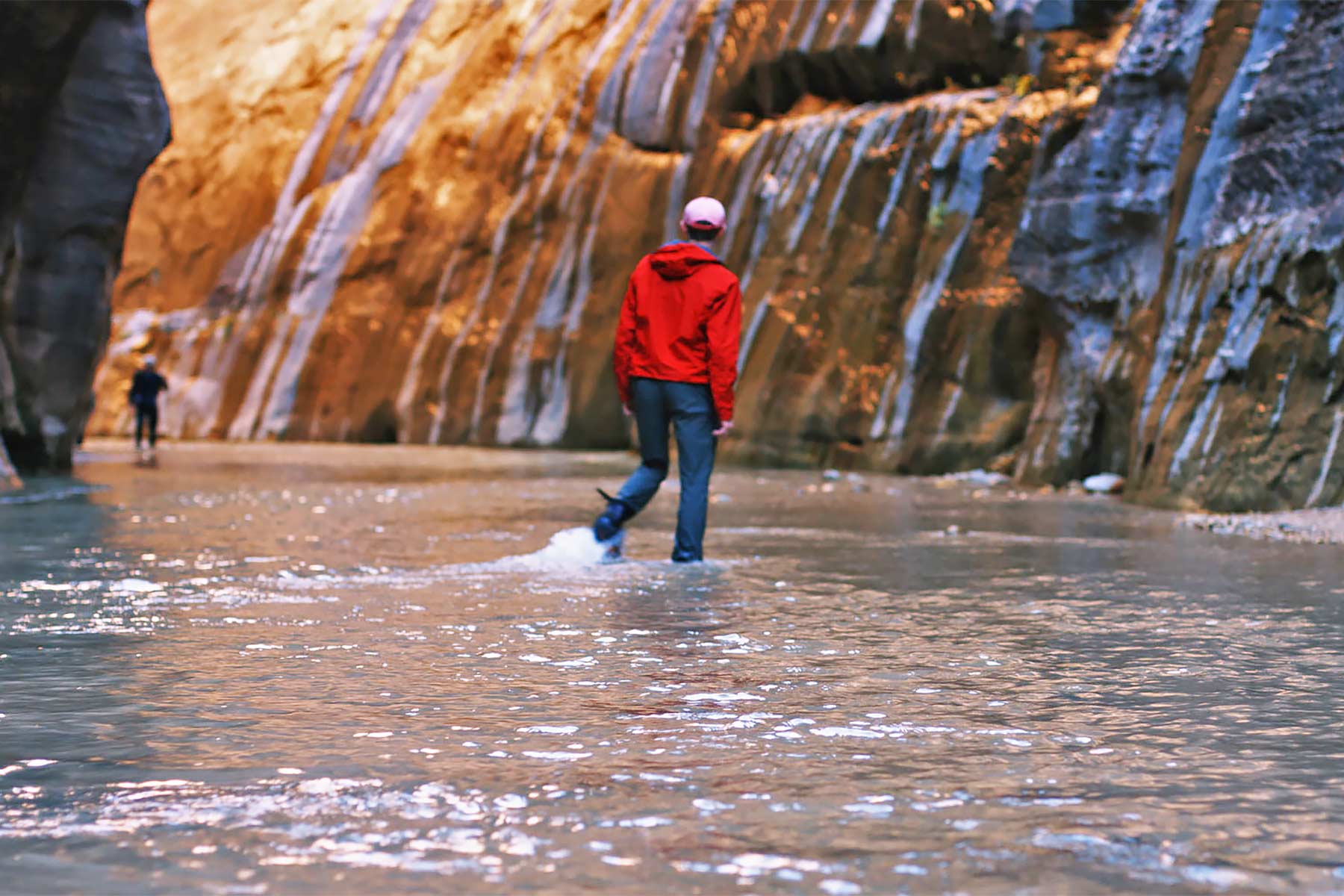
Hiking up the Virgin River between thousand-foot walls is the signature Zion experience and my top recommendation in the park. Most people go bottom up from the Temple of Sinawava, wading and sometimes swimming as far as they like before turning around. You are literally walking in the river, which is unlike anything else.
- Distance and difficulty: No permit needed for the bottom-up day hike. You can go as far as Big Spring, about 9.4 miles round trip, or turn around whenever you want. Moderate to strenuous depending on distance and water level.
- Access: Take the shuttle to the last stop, Temple of Sinawava, then walk the Riverside Walk to the river.
- Safety: Check the flash flood forecast every time. Rent neoprene socks, canyoneering shoes, and a sturdy stick, especially in cold months. The river is closed when flows are too high.
2. Climb Angels Landing
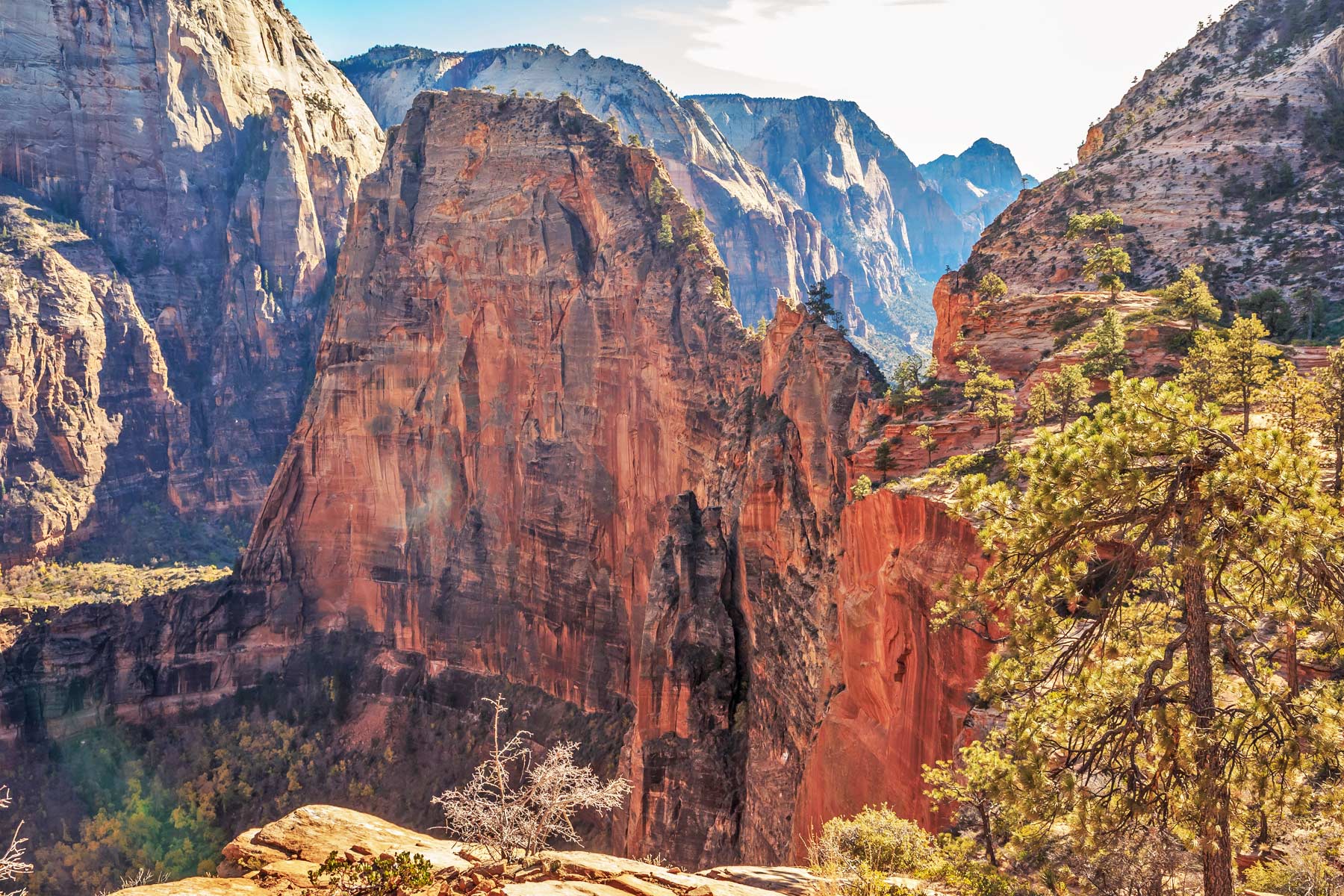
Angels Landing is the famous, white-knuckle ridge climb that ends on a fin of rock with the whole canyon at your feet. The final half mile follows chains across a narrow spine with sheer drops on both sides. It is thrilling and not for anyone uneasy with heights or exposure.
- Distance and difficulty: About 5.4 miles round trip, strenuous, with steep switchbacks and chain-assisted scrambling.
- Permit: A permit is required and issued through a seasonal lottery with a small application fee, plus a per-person fee if you win. There is also a day-before lottery. Apply on recreation.gov well ahead.
- Tip: If you do not draw a permit, hike to Scout Lookout, the saddle just below the chains, which has a huge view and needs no permit.
3. Hike to Observation Point
Observation Point looks down on Angels Landing and delivers what may be the best overall view in the canyon, with far less exposure. The most reliable route comes in from the East Mesa Trail outside the canyon, which is a more moderate hike than the old, often-closed canyon route.
- Distance and difficulty: About 7 miles round trip from the East Mesa trailhead, moderate, mostly gentle grade. No permit required.
- Access: The East Mesa trailhead is reached by road or a local shuttle service outside the park, not the canyon shuttle.
4. Walk the Emerald Pools
The Emerald Pools trails link a set of spring-fed pools and seasonal waterfalls below hanging gardens. The Lower Pool is short and easy, and you can extend to the Middle and Upper Pools for more effort and better payoff. It is a good choice with kids or on a hot afternoon.
- Distance and difficulty: From 1.2 miles for the Lower Pool to about 3 miles for the full set, easy to moderate.
- Access: Shuttle to Zion Lodge.
5. Hike the Canyon Overlook Trail

For a big view at a small price, this short hike on the east side of the tunnel is hard to beat. It ends at a railing-protected overlook above the main canyon and Pine Creek. It is one of the few major viewpoints you reach with your own car, since it is outside the shuttle-only zone.
- Distance and difficulty: About 1 mile round trip, easy to moderate with some drop-offs.
- Parking: The small lot just east of the Zion-Mount Carmel Tunnel fills early, so come at dawn.
6. Drive the Zion-Mount Carmel Highway
This engineering marvel climbs the east side of the park through a long 1930s tunnel and switchbacks past slickrock domes and the famous Checkerboard Mesa. You can drive it in your own vehicle year round, which makes it a good plan for days when the canyon shuttle lines are long.
- Note: Oversized vehicles need a tunnel permit for one-way traffic control through the narrow tunnel.
7. Stroll the Riverside Walk
This paved, mostly flat path follows the Virgin River to the start of The Narrows, with hanging gardens and shade most of the way. It is the easiest way to feel the scale of the canyon, and it is accessible to most visitors, including strollers and wheelchairs.
- Distance and difficulty: About 2.2 miles round trip, easy. Shuttle to Temple of Sinawava.
8. Explore Kolob Canyons
Most visitors never make it to Kolob Canyons, the park’s quiet northwest section off Interstate 15. The short scenic drive ends at a viewpoint over red finger canyons, and trails like Taylor Creek lead to the Double Arch Alcove. It is the antidote to the main canyon crowds.

- Taylor Creek Trail: About 5 miles round trip, moderate, with creek crossings to the Double Arch Alcove.
9. Watch for Wildlife and Condors
Mule deer, bighorn sheep on the east side, wild turkeys, and even rare California condors all turn up in Zion. Scan the cliffs above Angels Landing and the east entrance for condors riding the thermals, and keep your distance from all wildlife.
10. Ride the Canyon Shuttle and Learn the System

During the busy season the canyon shuttle is not optional, it is the only way into Zion Canyon, so understanding it is part of doing the park well. The narrated ride is also a fine low-effort way to see the canyon, hop off at viewpoints, and rest your legs between hikes.
- How it works: From roughly March through November, private vehicles cannot drive the Zion Canyon Scenic Drive, and you ride the free shuttle. In the quieter winter months you can usually drive the canyon yourself. Confirm current dates before you go.
11. Catch Sunrise or Sunset on the Walls

The canyon walls light up like embers at the edges of the day. The Towers of the Virgin near the Human History Museum are a classic sunrise spot, and the view up-canyon from the Canyon Junction bridge is a favorite at sunset. Bring a tripod and get there early to claim your spot.
12. Try Canyoneering with a Guide
Zion is one of the world’s great canyoneering destinations, with slot canyons like the Subway and Pine Creek that require rappels and route-finding. These need permits and real skills, so first-timers should book a licensed guide outside the park. It is the most adventurous way to experience the slickrock.
13. Stargaze in the Canyon
Zion has dark skies, and on a clear night the stars over the canyon walls are excellent. Look for ranger-led night sky programs in season, or just find a dark pullout on the east side away from the lodge lights and look up.
14. Visit the Zion Human History Museum
An easy shuttle stop, the museum covers the human story of the canyon, from Indigenous peoples to early settlers, and its patio frames a great view of the Towers of the Virgin. It is a worthwhile, low-key stop to round out the geology with some history.
15. Bike or Walk the Pa’rus Trail
The Pa’rus Trail is a paved, mostly flat path along the river from the visitor center to Canyon Junction, open to bikes, strollers, and leashed pets. Riding it at golden hour, with the walls glowing and the shuttle doing the climbing, is one of the most relaxing things you can do here.
16. Hike the Watchman Trail
Starting right near the visitor center, the Watchman Trail climbs to a bench with a clean view over the lower canyon, Springdale, and the Watchman peak. Because it leaves from outside the shuttle zone, it is a great early-morning or late-day hike when you want a view without a long shuttle line.
- Distance and difficulty: About 3.3 miles round trip, moderate, with a steady climb.
17. Wander Lower Pine Creek
Just below the Canyon Overlook trailhead, an informal path follows Pine Creek through a small, water-carved slot with pools and slickrock. It is not a maintained trail, so go carefully and skip it if water is high, but it is a quiet, scenic spot most visitors drive right past.
18. Relax at Zion Lodge
The historic Zion Lodge sits in the heart of the canyon, and its lawn under the cottonwoods is a fine place to eat lunch, rest between hikes, or wait out the midday heat. Even if you are not staying, it makes a natural base for the Emerald Pools and the Grotto trails.
19. Photograph Checkerboard Mesa
On the east side of the park, Checkerboard Mesa is a giant dome of cross-hatched sandstone, scored by wind and water into a grid you have to see to believe. There is a pullout right off the Zion-Mount Carmel Highway, making it an easy stop on the drive over the tunnel.
20. Explore Springdale
The gateway town of Springdale earns a spot on this list. After a day of hiking, it is the place for good food, a cold drink, gear shops, and galleries, all framed by the same red cliffs. Basing here and walking or shuttling to the entrance is the easiest way to do Zion in the busy season.
Planning Your Visit to Zion National Park
Getting There
The main south entrance is at Springdale, Utah, about 2.5 hours from Las Vegas and 4.5 hours from Salt Lake City. Springdale runs a free shuttle to the park entrance, so many visitors park in town and walk in.
Fees, Permits, and the Shuttle
The private vehicle entrance fee is $35 and is good for seven days. From roughly March through November, the Zion Canyon Scenic Drive is closed to private vehicles and you must ride the free shuttle. Angels Landing requires a lottery permit year round. Fees and permit rules can change, so check our Zion fee and permit update and the park website before you go.
Best Time to Visit
Spring and fall bring the best weather and the best water for The Narrows, along with the biggest crowds. Summer is hot and busy, so start early and save canyon time for the heat of the day. Winter is quiet and often lets you drive the canyon yourself, with a real chance of snow on the red rock.
How Many Days Do You Need?
Two full days lets you do a big hike like The Narrows or Angels Landing plus a mix of shorter trails and drives. Three days gives you room to add Kolob Canyons and the east side without feeling rushed.
For lodging, maps, and a full itinerary, see our complete Zion National Park guide.
What to Bring to Zion
Gear we recommend for Zion. Affiliate links support our work at no cost to you.
More Than Just Parks may earn a small commission from purchases made through these links, at no extra cost to you. We only recommend gear we would actually use.
Affiliate disclosure: Some links on this page earn us a small commission at no extra cost to you. We only recommend gear we actually use.
More Than Just Parks Film Watch our 8K film of Zion We spent weeks in Zion, one of our favorite public lands destinations, capturing it the way it deserves. Take a few minutes and see it for yourself.