July Weather: Highs around 85°F. Lows around 50°F. 1 to 2 days of rain.
Crowds: High.
What’s Open: All roads. No timed entry or reservations needed. Sequoia NP included with same $35 entry fee.
What’s Closed: Nothing.
Park Guide: Things to Do | Facts
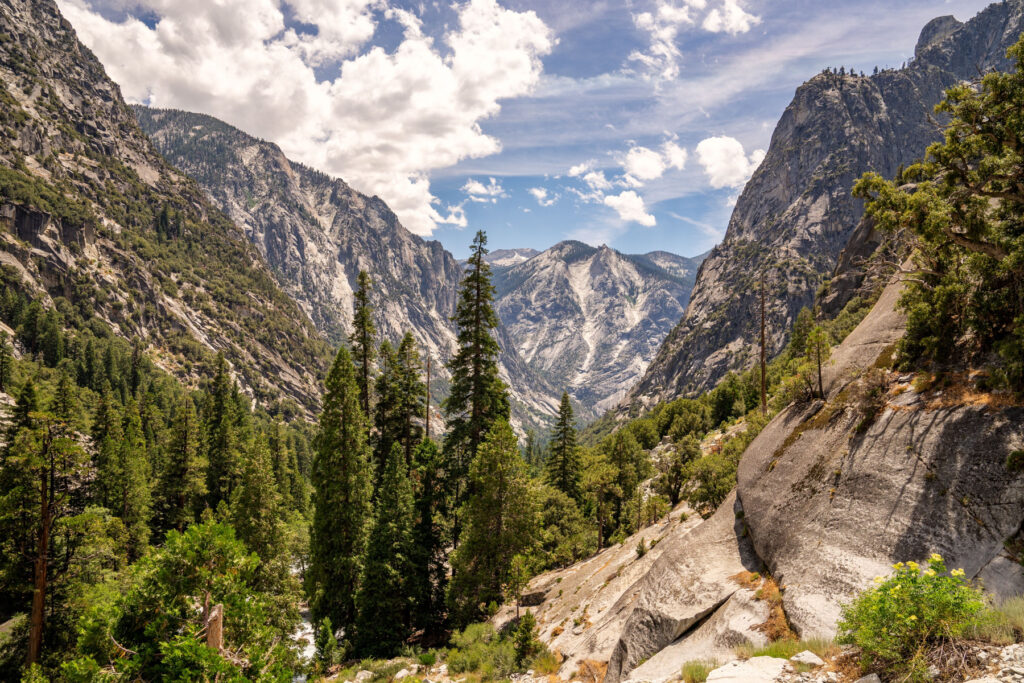
Why July: John Muir called this canyon a “rival to Yosemite,” and it’s deeper than the Grand Canyon by 2,000 feet. Your $35 entry also gets you into Sequoia National Park. No reservations needed. Rock climbers get a Yosemite experience without the El Capitan crowds.
Consider the Majestic Mountain Loop connecting Yosemite, Sequoia, and Kings Canyon. Mist Falls is a rewarding strenuous hike, and Big Baldy gives panoramic views without the technical challenge.
The honest caveat: The parks are remote. Lodging is sparse outside the park. Stay at a campsite or lodge inside to avoid long daily drives. Entrances are where traffic bottlenecks.
8. Mount Rainier National Park
Location: Washington
July Weather: Longmire highs near 75°F. Paradise tops out at 65°F. Lows in the 40s.
Crowds: High. Timed reservations required starting at 6 AM.
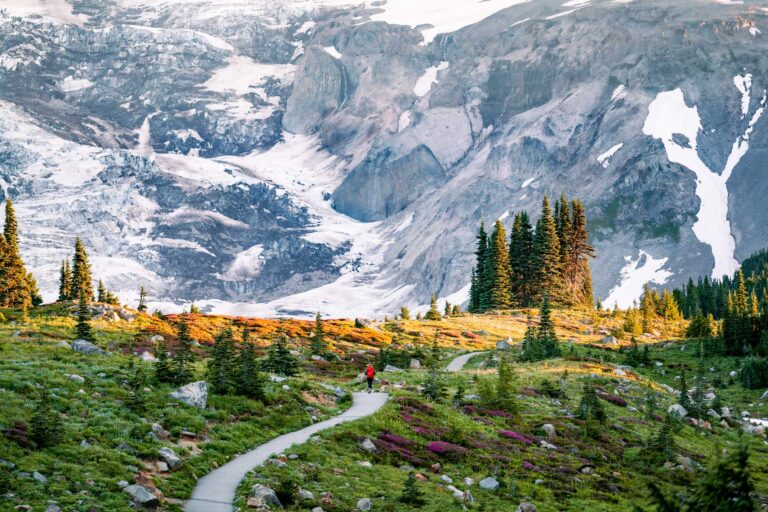
What’s Open: Sunrise corridor (only open about 3 months a year). All trails. Wildflower meadows at Paradise.
What’s Closed: Mowich Lake access can be closed through mid-July.
Park Guide: Things to Do | Best Hikes | Facts
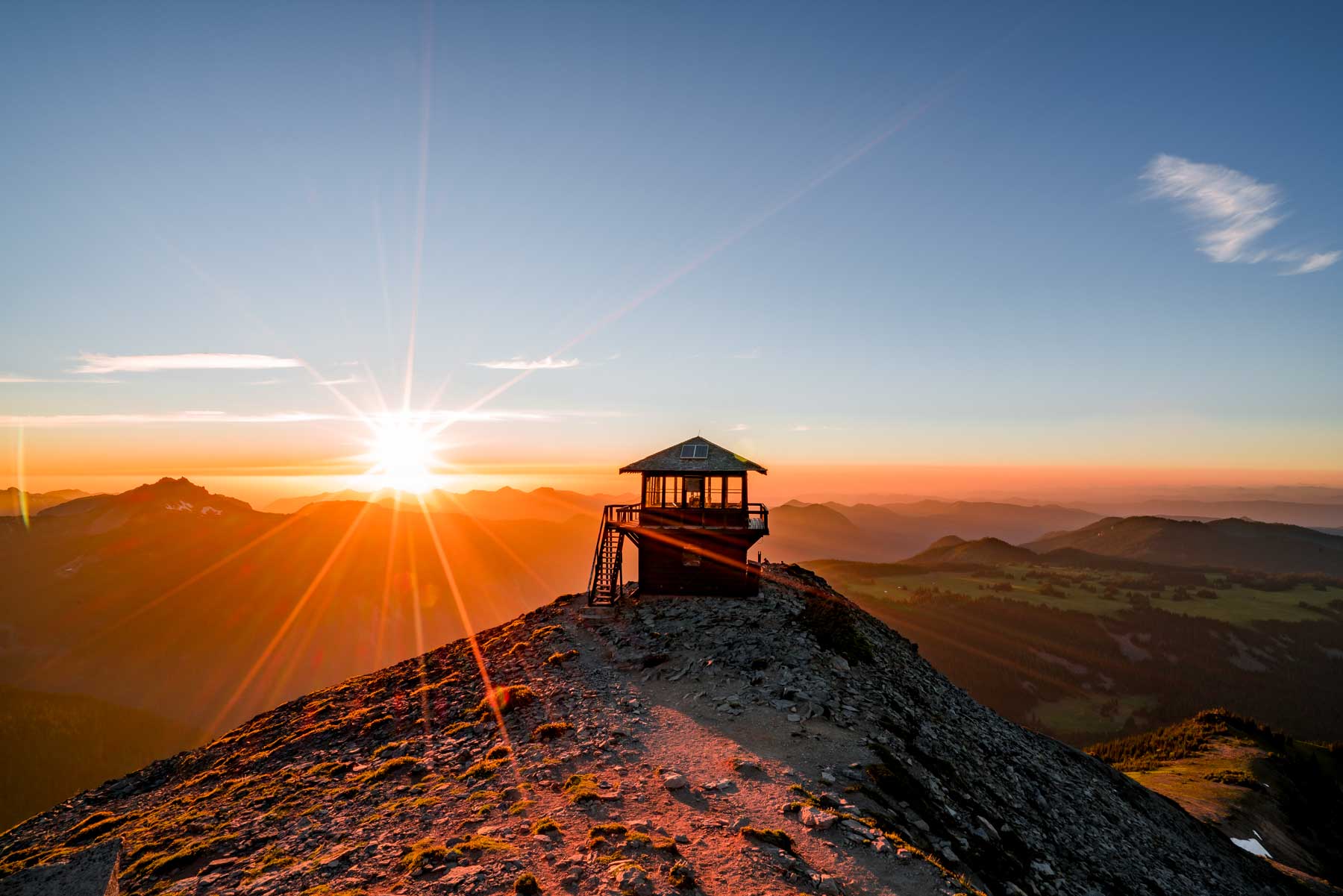
Why July: The Sunrise corridor is only open about three months of the year, and July is the first full month. The wildflower meadows at Paradise are legendary. The Fremont Lookout Trail sunrise view is worth the pre-dawn alarm.
Parks Featured in This Guide
7 parks mapped — click a pin for details
Less crowded alternatives include Reflection Lake to Narada Falls, Sunrise Rim Trail, and Comet Falls (hike past the falls for solitude). When Tolmie Peak Lookout opens, it’s an epic sunset spot.
The honest caveat: Getting there before the 6 AM timed reservations is the best strategy. Otherwise, plan for crowded parking lots by mid-morning. Backcountry permits are the ultimate crowd escape.
11. Redwood National Park
Location: California
July Weather: Highs mid-60s to low 70s. Lows mid-40s to low 50s. Minimal rain.
Crowds: Medium.
What’s Open: No entry fee. Federal pass covers state park day-use fees. Fern Canyon. Kayak tours on the Smith River. All groves.
What’s Closed: Nothing.
Park Guide: Things to Do | Expert Guide
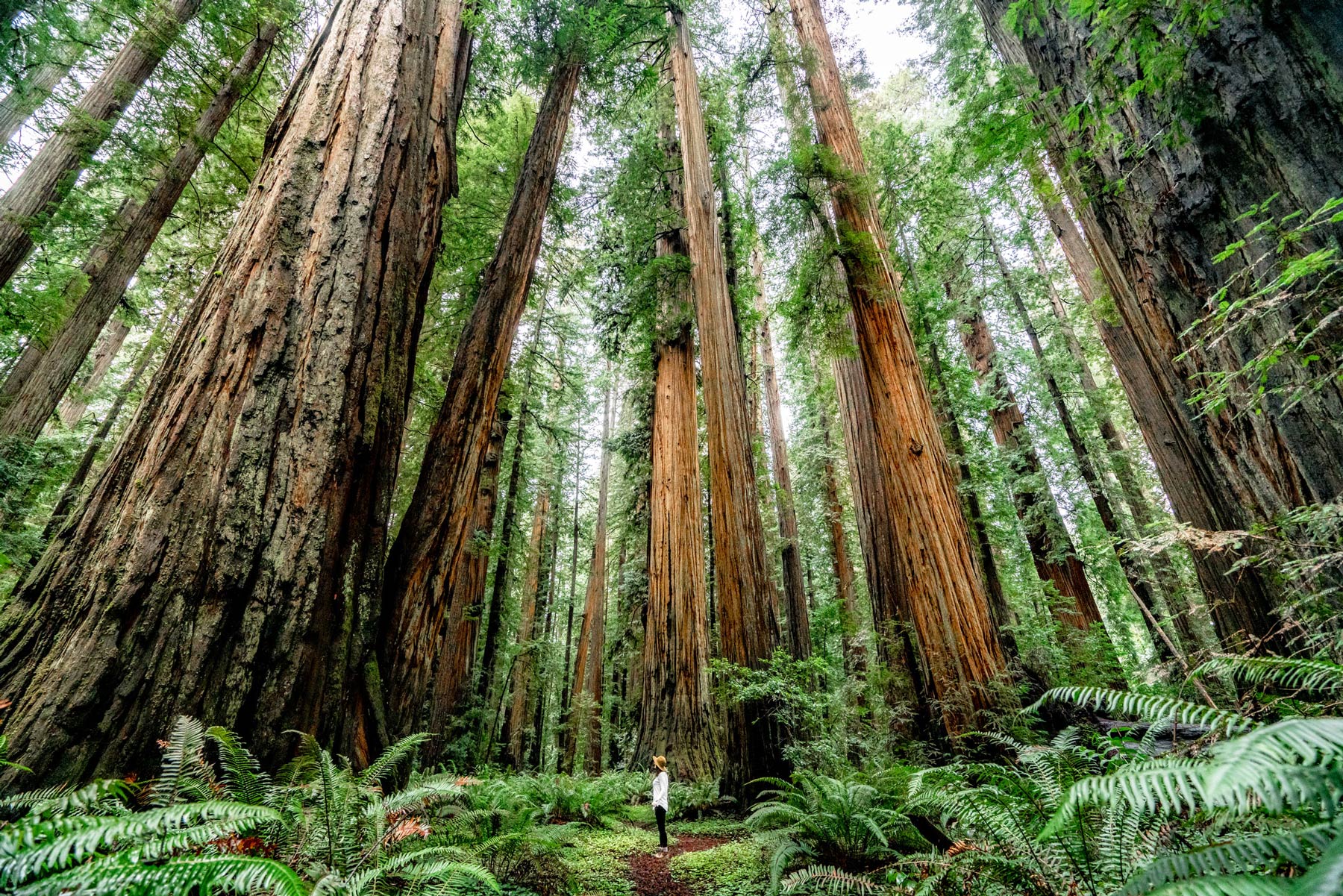
Why July: The tallest trees on Earth, no entry fee, and your federal pass covers three state parks. The mild weather with almost no rain makes July ideal. The Smith River kayak tours top out at Class II, so the ride is scenic, not scary. Fern Canyon is a place that doesn’t look real.
The honest caveat: Summer fog is common along the coast. Temperatures in the 60s can feel cold if you’re coming from inland California. Bring layers.
12. Wind Cave National Park
Diablo Lake in North Cascades National Park (Shutterstock-Anna Abramskaya)
Location: South Dakota
July Weather: Highs mid-70s to mid-80s. Lows mid-50s to low 60s. Afternoon thunderstorms possible.
Crowds: Medium.
What’s Open: Cave tours (check elevator status). Prairies with bison, elk, and pronghorn. Off-trail hiking. Wildflowers blooming.
What’s Closed: The cave elevator was replaced in 2026. Check current access status before visiting.
Park Guide: Things to Do | Facts
Why July: One of the oldest cave systems on Earth below ground, and expansive prairies bursting with wildflowers above. Off-trail hiking is rare in the national park world, and Wind Cave allows it. Bison, elk, and pronghorn roam freely. Jewel Cave National Monument, Mount Rushmore, Badlands, and Black Hills National Forest are all nearby.
The honest caveat: The cave elevator was replaced in 2026. Verify cave tour availability before making it the centerpiece of your trip. Jewel Cave (30 minutes away) is a solid backup if Wind Cave is inaccessible.
13. Great Basin National Park
Location: Nevada
July Weather: Lower elevations 85 to 90°F. Above 10,000 feet 65 to 70°F. Lows 35 to 55°F depending on elevation.
Crowds: Low to Medium. Rarely tops 25,000 people a month.
What’s Open: Wheeler Peak (13,000+ feet, 6th highest in the contiguous US). Lehman Caves. Wild caving permits. Dark Sky programs at the astronomy amphitheater. Wildflowers peaking.
What’s Closed: Nothing.
Park Guide: Things to Do
Why July: Wheeler Peak stands over 13,000 feet and beats Yellowstone’s Eagle Peak by 1,700 feet. Baker Creek Trail is one of my favorite wildflower spots in the country. The Dark Sky Park astronomy amphitheater delivers some of the darkest skies in the nation. Wild caving permits give you access to seven caves.
Take the Park to Park in the Dark road trip from Death Valley to Great Basin for one of the best drives in the country.
The honest caveat: Lehman Cave tours sell out. Book ahead. The park is 70 miles from the nearest real town (Ely). Stock up before you arrive.
14. Lassen Volcanic National Park
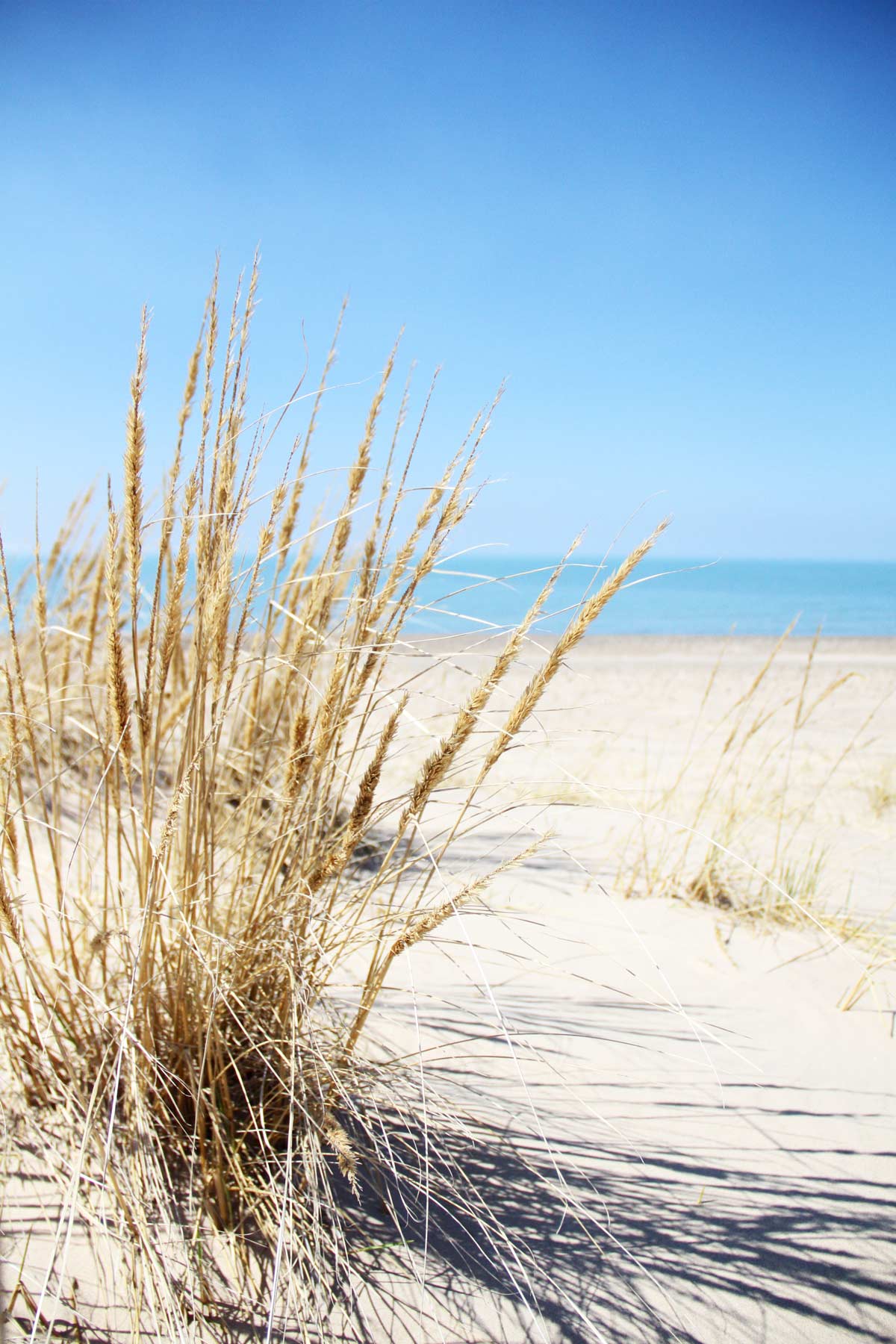
Dunbar Beach at Indiana Dunes National Park. (NPS)
Location: California
July Weather: Highs 65 to 80°F. Lows 40 to 50°F. Minimal rain.
Crowds: Medium. Yosemite sees in one summer month what Lassen sees in a year.
What’s Open: Entire park (last snow usually melts by July). Bumpass Hell thermal basin. Lassen Peak Trail. Juniper Lake. All campgrounds.
What’s Closed: Nothing by July.
Park Guide: Things to Do | Facts
Why July: Yellowstone’s hydrothermal features without any of the crowds. The Bumpass Hell thermal basin only opens in summer, and the Big Boiler’s water temperatures peak above 320°F. Boardwalks keep you safe. Crystal-clear Juniper Lake sits in the shadow of the park’s youngest volcano. The night skies are pristine.
July is the busiest month, but “busy” here means nothing compared to Yosemite or Yellowstone. Every type of volcano found on Earth exists in this one park.
The honest caveat: The park is remote. Services are limited inside the park and in surrounding towns. Come prepared with supplies.
15. Indiana Dunes National Park
Location: Indiana
July Weather: Highs around 82°F. Lows around 63°F. About 9 days of rain, 3 inches total.
Crowds: Medium to High. Most visited month.
What’s Open: 15 miles of Lake Michigan shoreline. Peak wildflower bloom. All trails. West Beach for guaranteed parking.
What’s Closed: Nothing.
Park Guide: Things to Do | Facts
Why July: Where else in the Midwest do you get 15 miles of expansive beach on Lake Michigan? July brings peak wildflower bloom along Cowles Bog Trail and West Beach. The birding is excellent with numerous species nesting across the dunes and Great Marsh.
West Beach guarantees parking, connects to several trails and massive dunes, and you only need to arrive before 9 AM to beat the biggest crowds.
The honest caveat: This is the most visited month. Weekends get packed. The humidity can be oppressive. Go mid-week if possible.
Alaska National Parks in July
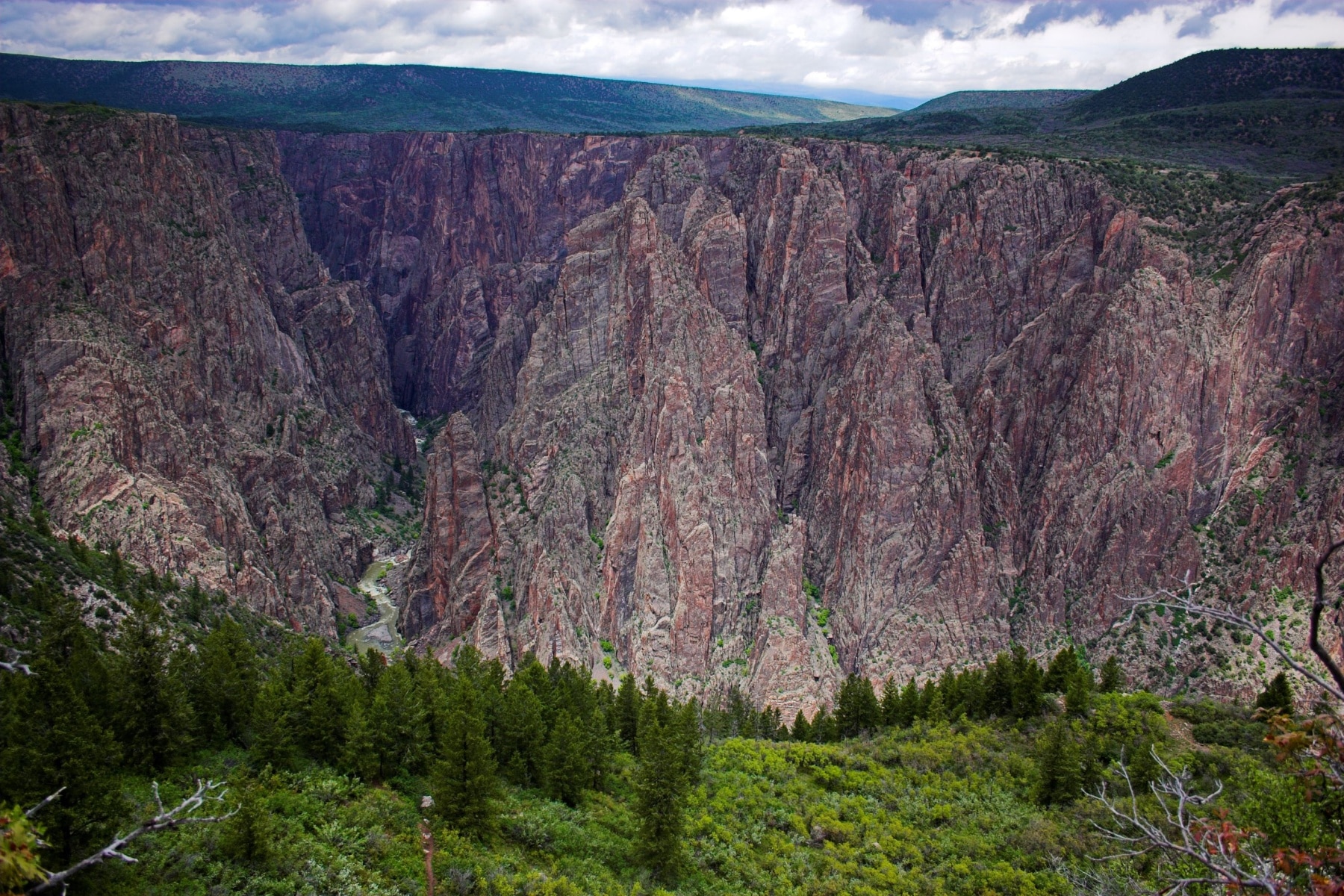
Black Canyon of the Gunnison, Colorado | Best National Parks to Visit in July
Summer is the only realistic time to visit Alaska’s national parks. About 87% of Alaska has no roads. Several parks require seaplane access. But July brings up to 24 hours of daylight and the best weather of the year. Here’s the quick rundown.
Glacier Bay: Most popular Alaska park. Cruise ships pass through the boundary (everyone on board counts as a visitor). To actually explore, take the state ferry from Juneau to Gustavus. Roadless once you’re there.
Denali: Tallest mountain in North America (20,310 feet). Four hours north of Anchorage. The park road stops at Mile 43 through at least 2026 due to the Pretty Rocks landslide. Buses still run to Mile 43.
Katmai: Fat bears start gathering at Brooks Falls in late July for the salmon run. Access by floatplane or air taxi from King Salmon. Budget accordingly.
Kenai Fjords: Melting glaciers you should see before they’re gone. Drive the Seward Highway from Anchorage. The Harding Icefield Trail is the one epic hike. July is the busiest month.
Gates of the Arctic: Pure wilderness. No trails. No roads. Fly from Fairbanks to Bettles. Not for average day hikers.
Wrangell-St. Elias: Largest park in the US (13 million acres). Seven-hour drive from Anchorage to Kennecott. Contains a glacier larger than Rhode Island. See the Kennecott Mines historic landmark.
Lake Clark: Roadless. Flight required. Pick one section per trip. Turquoise waters and the Chigmit Mountains.
Parks to Skip in July
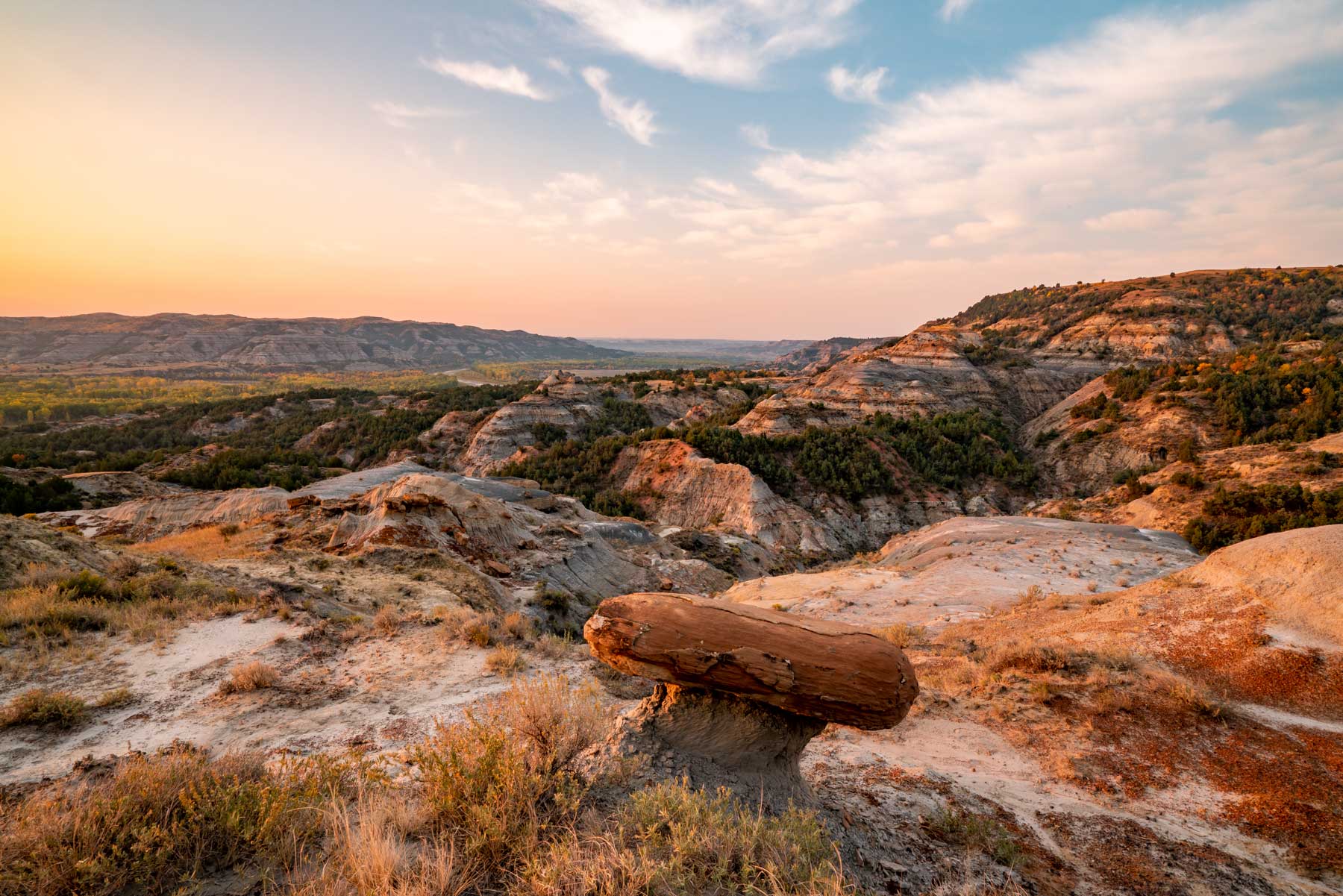
Theodore Roosevelt National Park | Best National Parks to Visit in July
Death Valley. Average high of 116°F. The park sees its lowest visitation in summer for good reason. Most trails should be completed by 10 AM. Save it for winter.
Arches National Park. Highs hit 96°F with minimal shade. The timed entry system and crowds make July one of the worst months. October and March are dramatically better.
Everglades. Peak hurricane season. Peak humidity. Peak mosquitoes. December through March is the move.
Guadalupe Mountains. One of the hottest and rainiest months. The roadless park offers amazing trails but significant heat and storm dangers in July.
Map of Best National Parks in July
Fire Tower on Mount Fremont Lookout Trail | Sunrise Corridor at Mount Rainier National Park
Where are you headed this July? I’d love to hear which park you’re planning to visit. If you’ve been to any of these in summer, share your best tip in the comments below.
Related Monthly Guides
A wide view of Kings Canyon, the deepest canyon in the country, in California’s High Sierras. (Shutterstock/Wasim Muklashy)
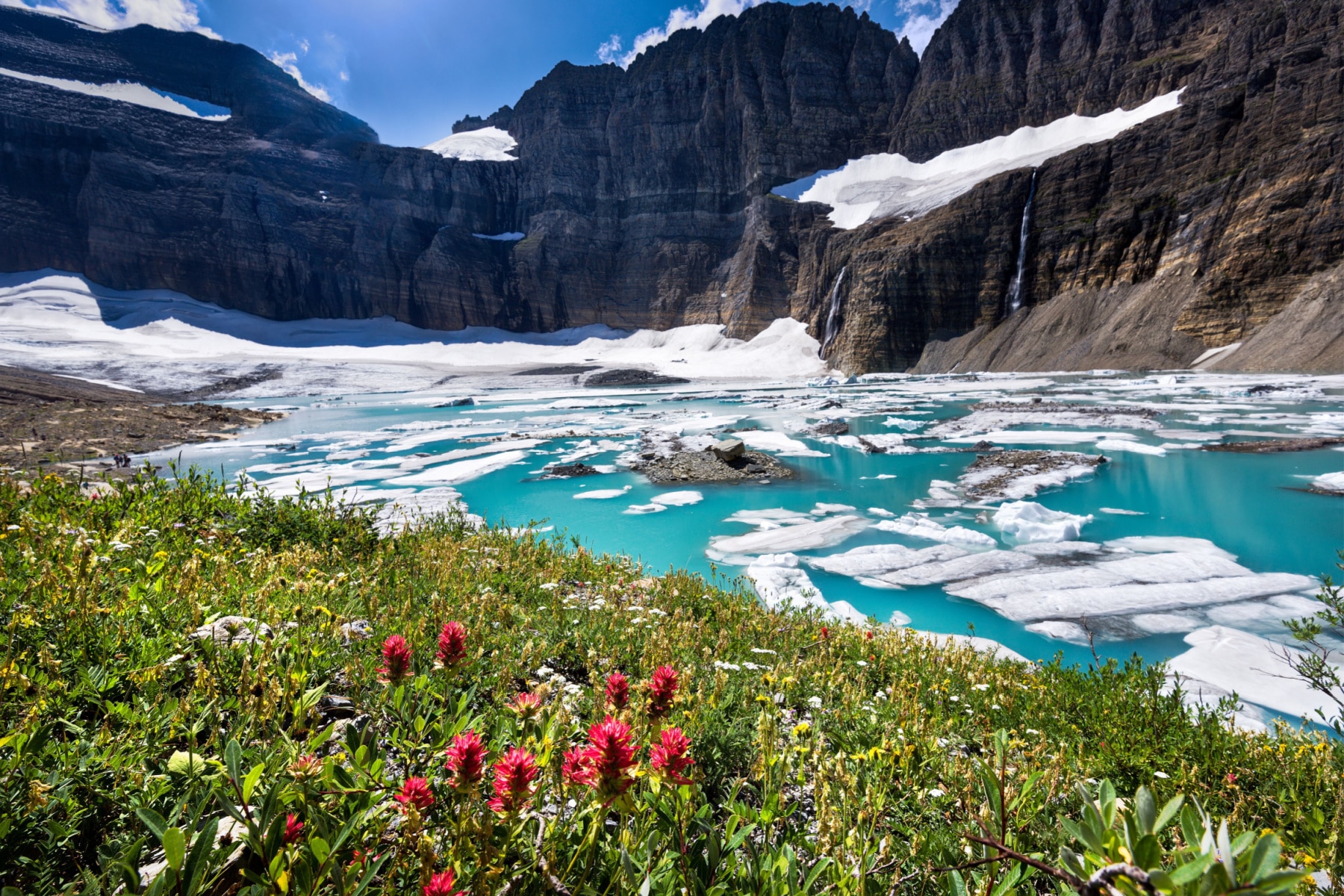
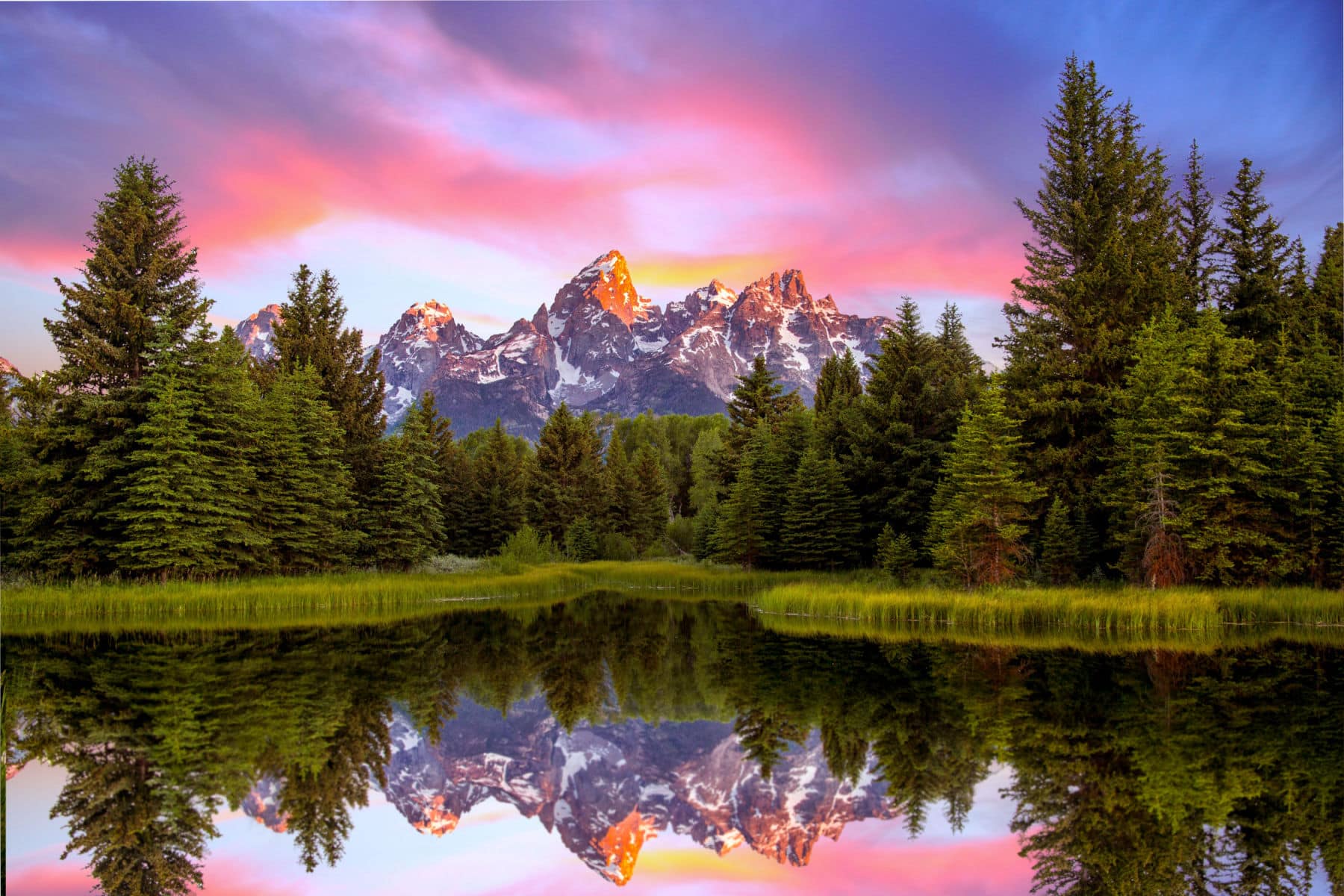
The intoxicating view of Grinnell Glacier in Glacier National Park.(Shutterstock/Dean Fikar)
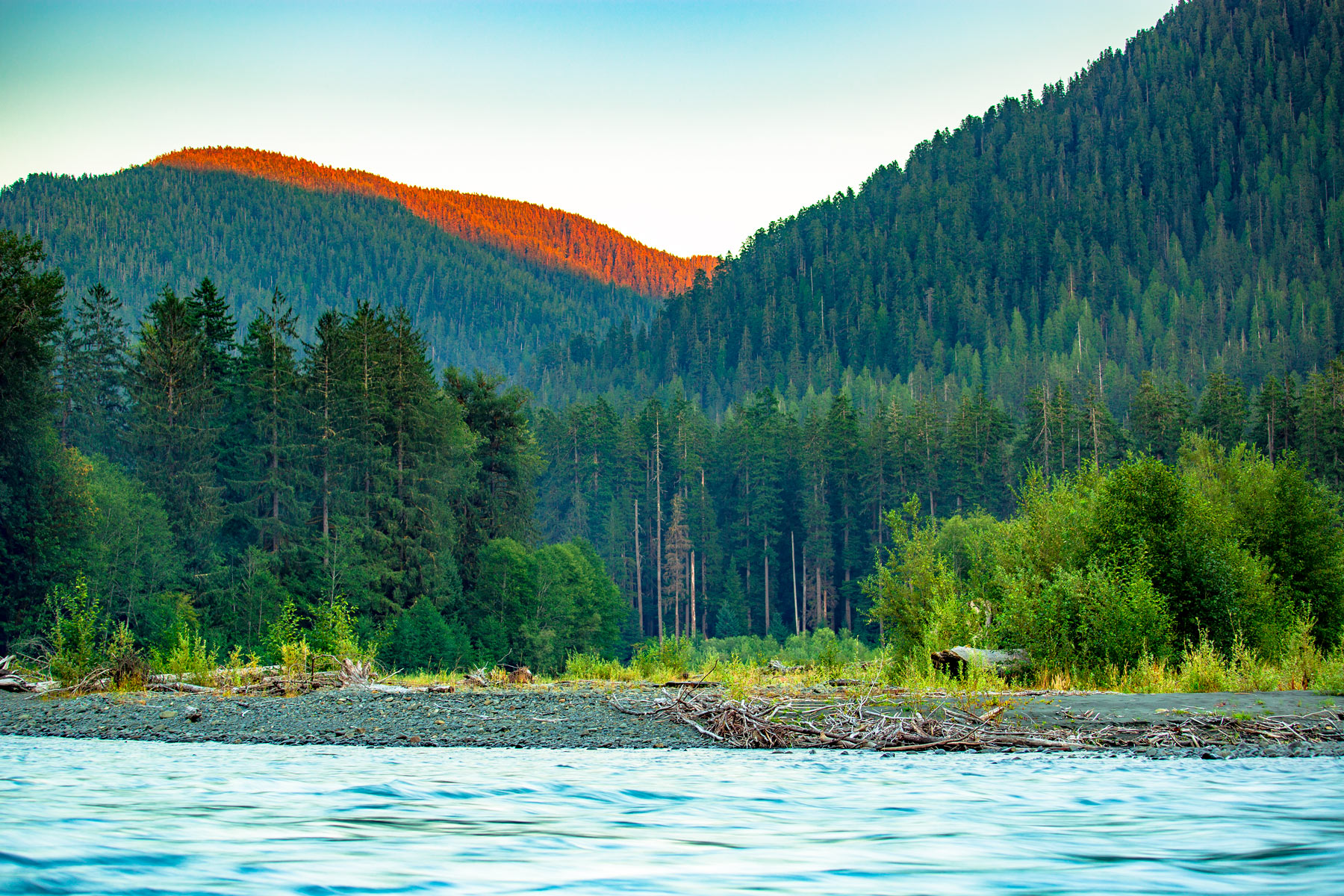
Olympic National Park Hoh Rain Forest | Best National Parks to Visit in July
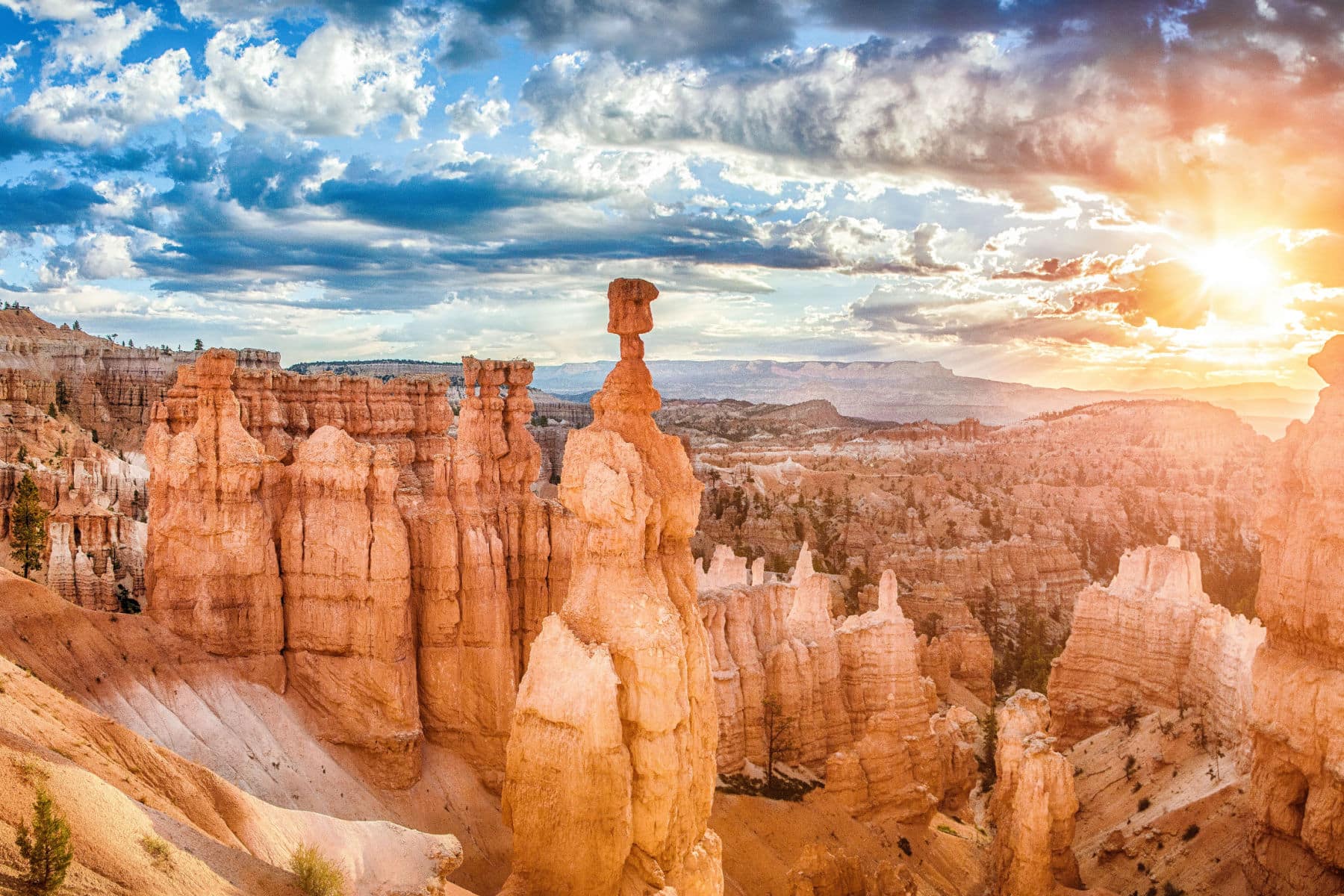
Bryce Canyon National Park at Sunrise | Best National Parks to Visit in July (Shutterstock-canadastock)
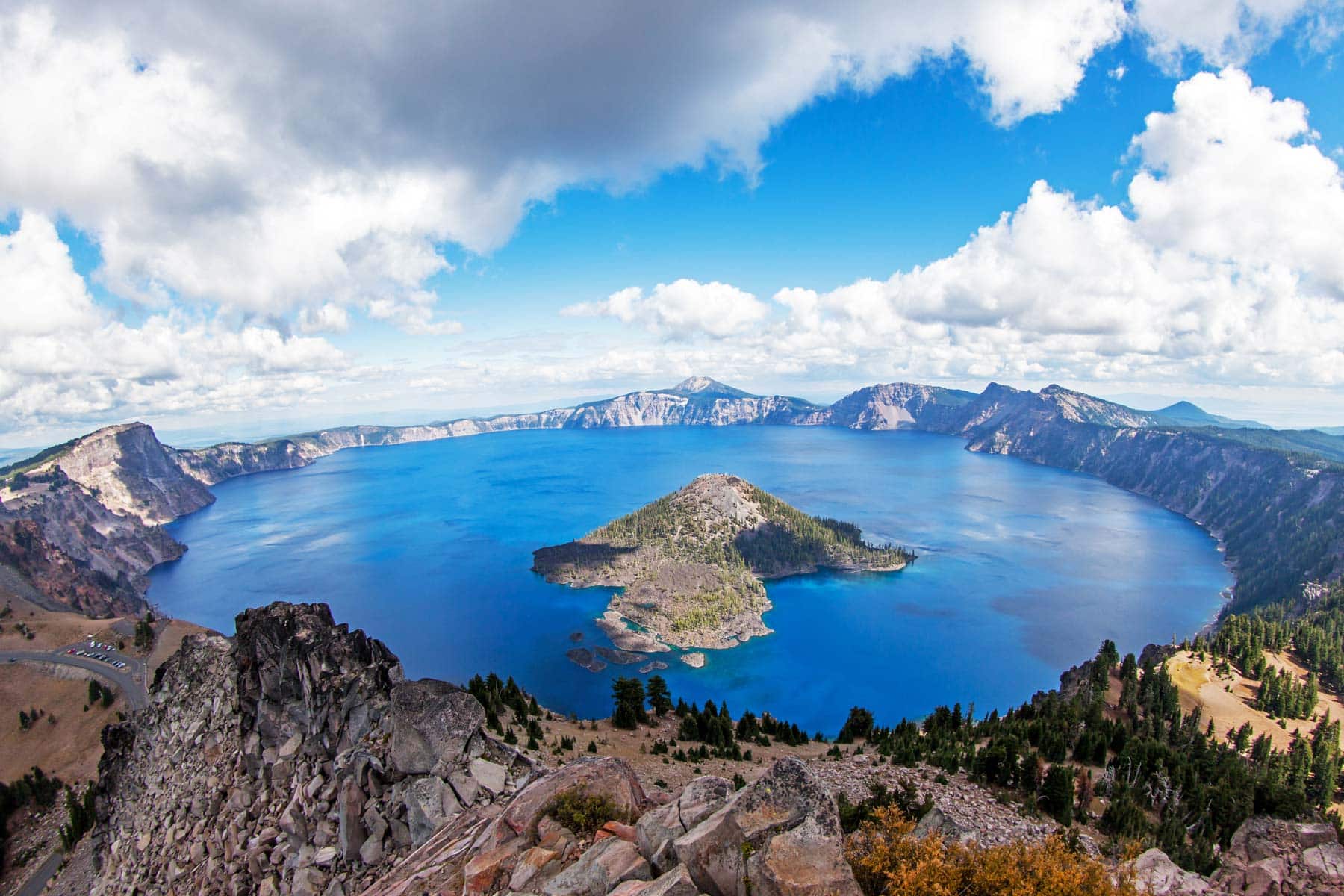
Crater Lake National Park | Best National Parks to Visit in July (Shutterstock/Tami Freed)
Previous Month: 15 Best National Parks to Visit in June
Next Month: 15 Best National Parks to Visit in August
All Months: National Parks by Season Hub
Best National Parks Ranked: All 63 National Parks Ranked by Experts
Two brothers who've spent their entire adult lives exploring America's public lands and fighting to protect them. What started as a film project has grown into one of the most active public lands grassroots networks in the country. 20,000+ people now stand with us.