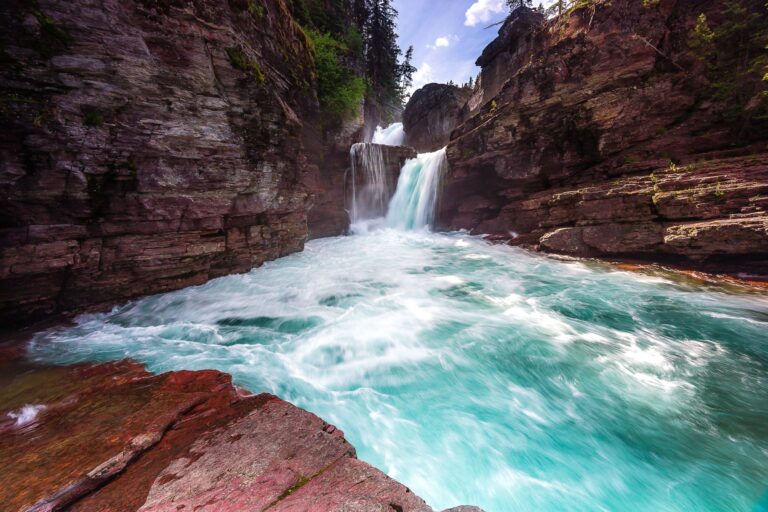


Lassen Volcanic National Park sits at the southern end of the Cascade Range in far northern California, and it is the rare place where you can see all four types of volcano in the world in one park: plug dome, shield, cinder cone, and composite. The centerpiece, Lassen Peak, is one of the largest plug dome volcanoes on earth and erupted as recently as 1915. The whole landscape is still alive with boiling mud pots, steaming fumaroles, and hissing hot springs.
What keeps Lassen quiet is its location and its short season. It is hours from the nearest big city, and deep snow buries the high country most of the year, so the main road and most trails only open for a stretch of summer and fall. That means smaller crowds than the famous California parks, and a real sense of a working volcano. Here are 20 things worth doing, with the 2026 logistics that decide what is actually open.
20 Things to Do in Lassen Volcanic National Park
1. Drive the Lassen Park Highway

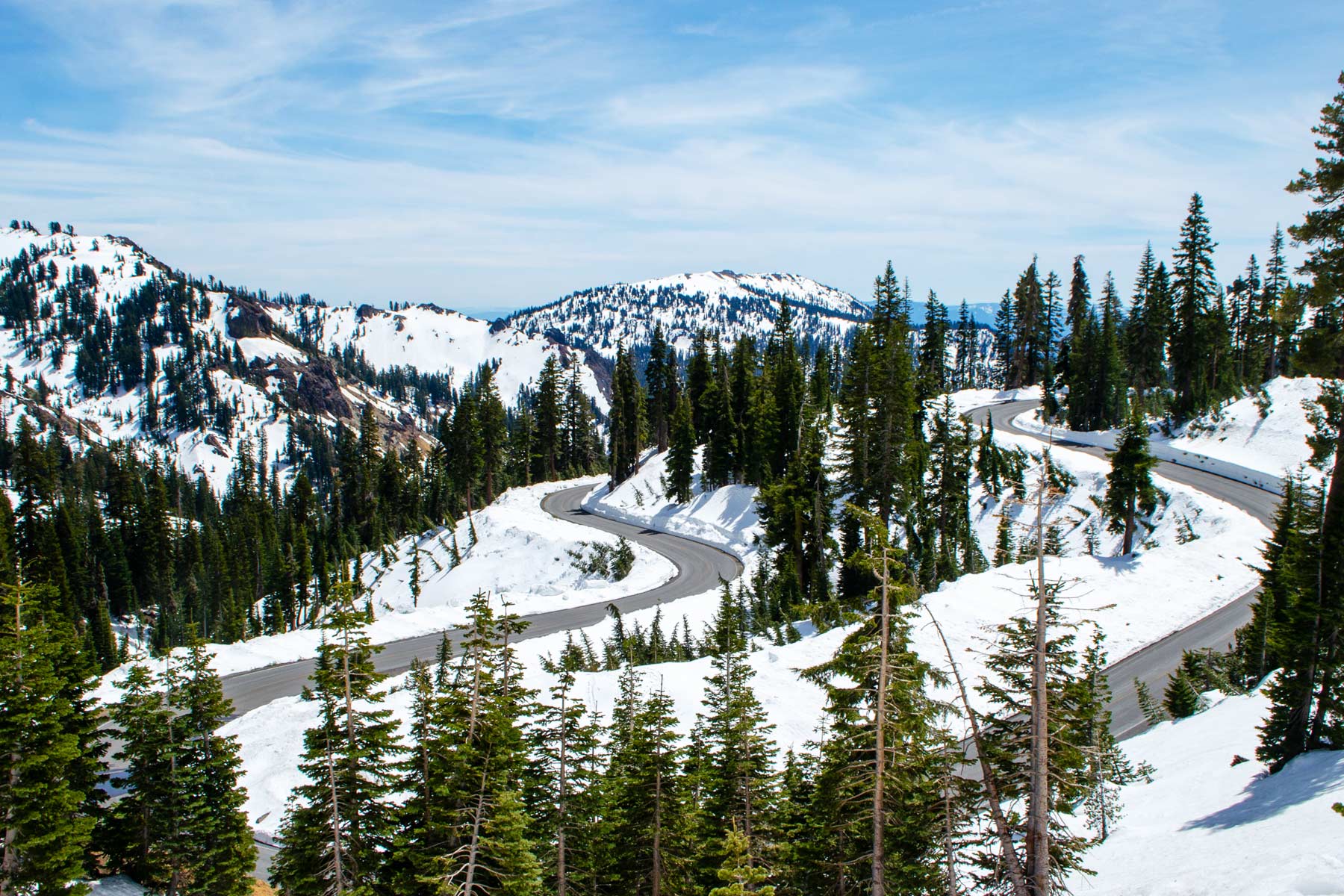
The Lassen Park Highway, the 30-mile stretch of California 89 through the park, is the main event. It climbs past 8,500 feet near Lassen Peak and connects nearly every major feature: the hydrothermal areas, the trailheads, the lakes, and the overlooks. It is seasonal because of snow, and in 2026 it opened to vehicles on May 22, one of the earlier openings in recent years thanks to a light snowpack. Allow a half day with stops, and check for any repair-related closures before you go.
2. Climb Lassen Peak
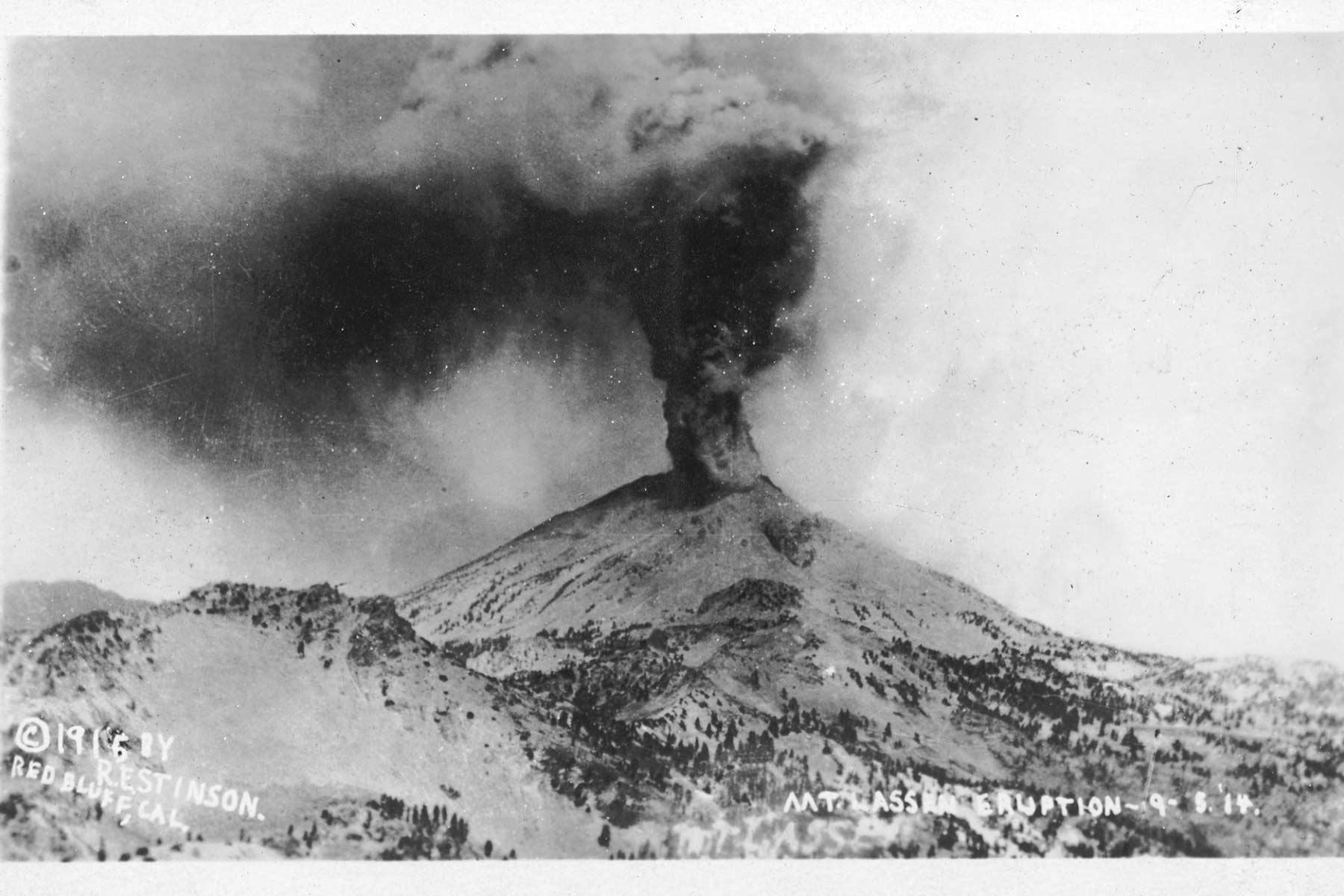
The Lassen Peak Trail is the park’s signature hike, climbing about 2,000 feet over roughly five miles round trip to the 10,457-foot summit of the volcano that erupted in 1915. The grade is steady and the switchbacks are long, but the trail is well built and the views from the top stretch to Mount Shasta on a clear day. Start early, carry water and sun protection, and watch for lingering snowfields near the summit even in midsummer. It is a demanding but achievable bucket of a hike for fit walkers.
Love Lassen Volcanic? It's one of 117 threatened public lands destinations we're tracking. Get the free briefing.
3. Hike to Bumpass Hell
Bumpass Hell is the largest hydrothermal area in the park, a basin of boiling mud pots, fumaroles, and steaming pools reached by a boardwalk so you can safely walk among them. It is the closest thing to Yellowstone in California. The main Bumpass Hell Trail has been undergoing repair, so check current status: when the main trail is closed, rangers have approved an alternate route in from the Kings Creek Picnic Area by way of Cold Boiling Lake. Either way, stay on the boardwalk, because the ground here is dangerously hot and thin.
4. Walk through the Sulphur Works
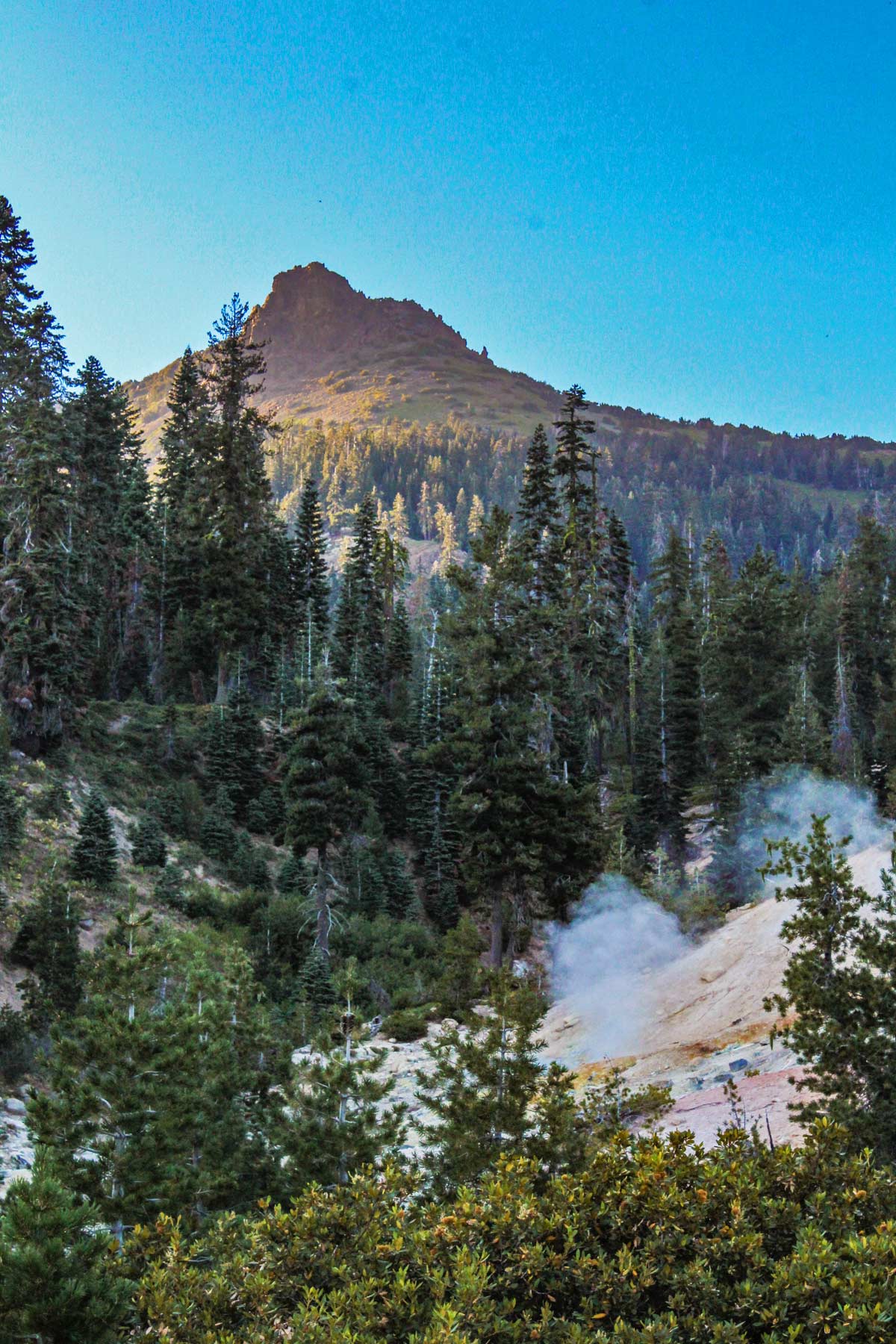
The Sulphur Works is the most accessible hydrothermal area in the park, right beside the highway near the southwest entrance. A short walk along a boardwalk and roadside fence brings you to bubbling mud pots and steam vents you can smell before you see, all heated by the magma still simmering below. Because it requires almost no effort, it is the perfect first stop to convince anyone that this is a living volcano.
5. Explore the Devastated Area
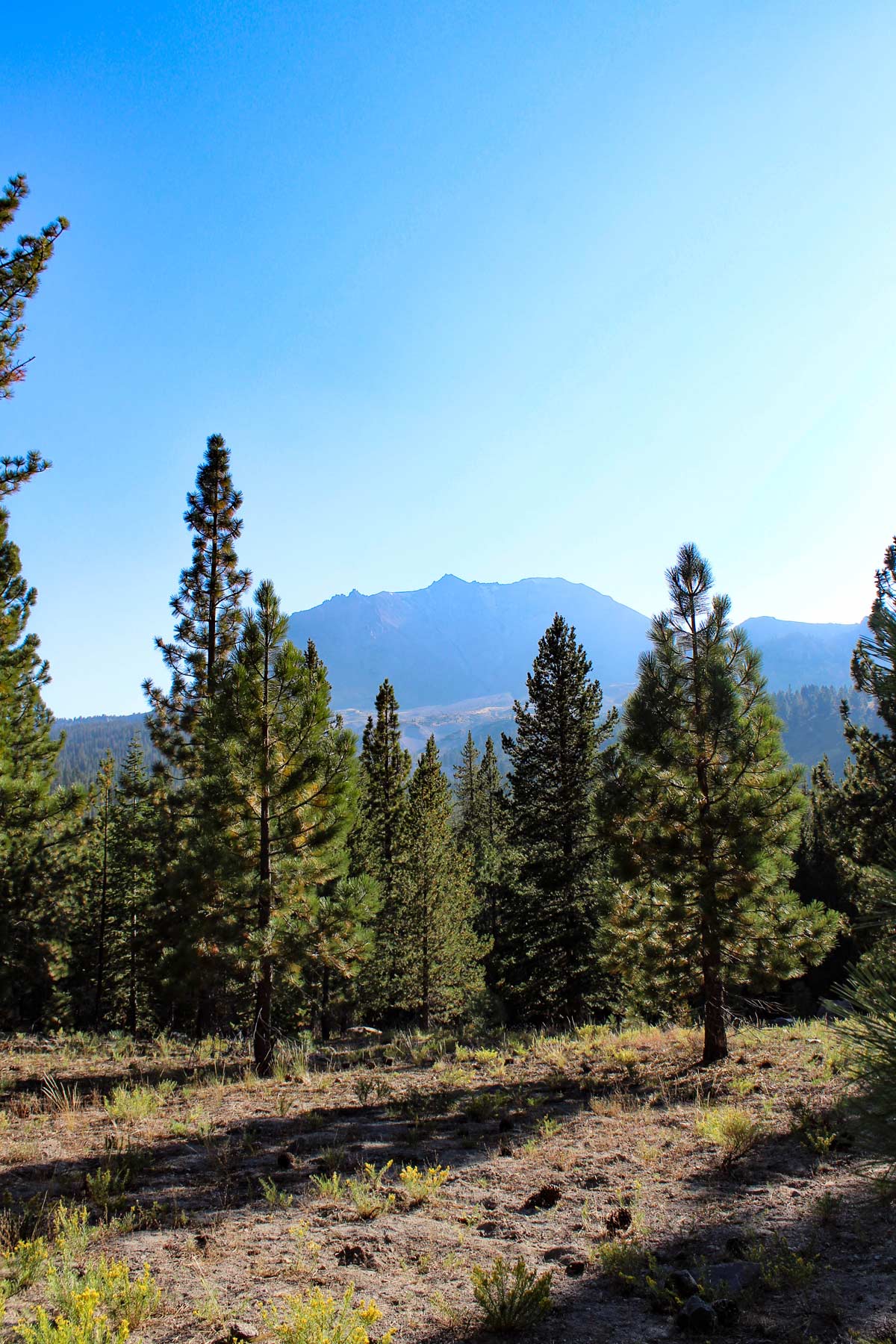
The Devastated Area is where the 1915 eruption blasted the mountainside, sending a massive avalanche and mudflow down the slope and snapping trees like matchsticks. Today a flat, paved, half-mile interpretive trail loops through the recovering landscape past house-sized boulders the eruption carried for miles. Signs explain the geology and the slow return of life. It is an easy, kid-friendly walk that tells the eruption story better than any exhibit.
6. Visit Boiling Springs Lake
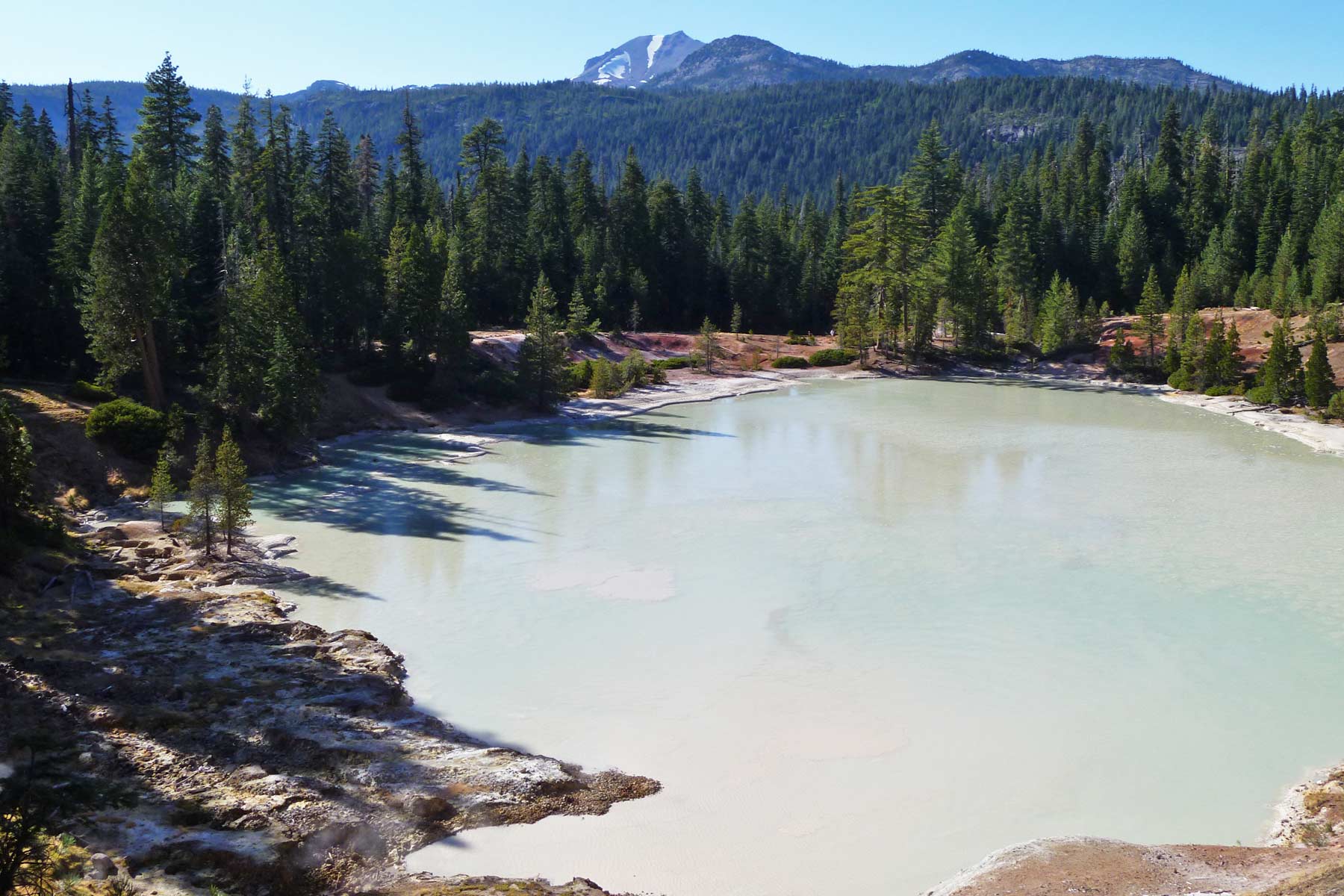
In the remote Warner Valley area on the south side of the park, Boiling Springs Lake is a milky green pool kept near 125 degrees by the heat below, rimmed by bubbling mud pots. The hike in is about three miles round trip from the Warner Valley trailhead near Drakesbad. It is one of the most otherworldly spots in the park and far less crowded than the highway features, because it takes effort and a longer drive to reach.
7. Find Devils Kitchen
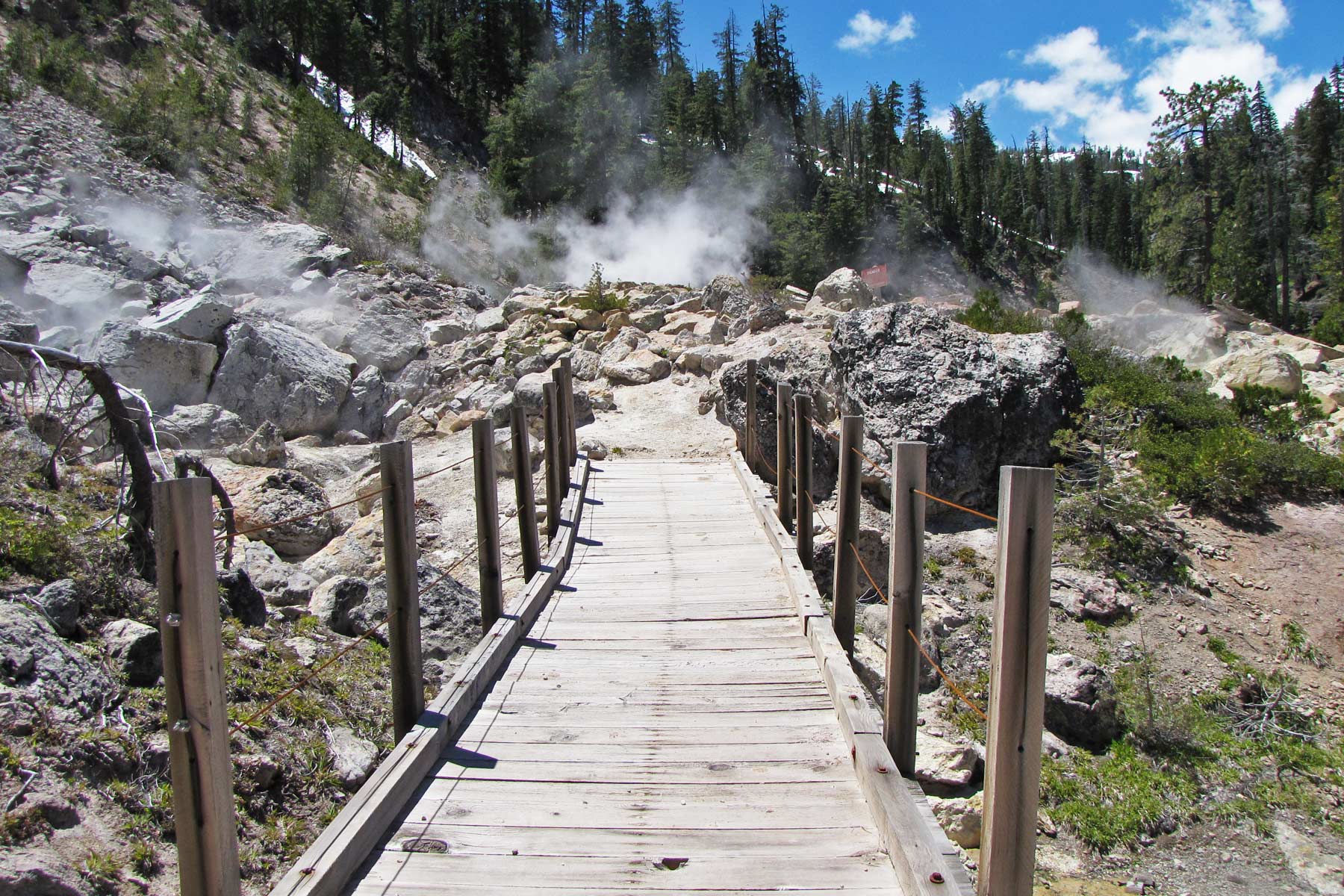
Also in Warner Valley, Devils Kitchen is another active hydrothermal basin full of mud pots, steam vents, and fumaroles, reached on a moderate hike of roughly four miles round trip. It sees a fraction of the visitors that Bumpass Hell does, so you can often have the boiling ground nearly to yourself. The trail crosses meadows and a footbridge before reaching the steaming basin. As everywhere here, stay on the marked path.
8. Hike to Kings Creek Falls
Kings Creek Falls is a 30-foot cascade reached by a popular hike of about three miles round trip off the park highway. The trail descends through forest and meadow to a viewpoint of the falls tumbling over volcanic rock. There is a steep stretch on a rocky section, so take care, especially when it is wet. The wildflower meadows along Kings Creek are a highlight in early summer.
9. Climb Brokeoff Mountain
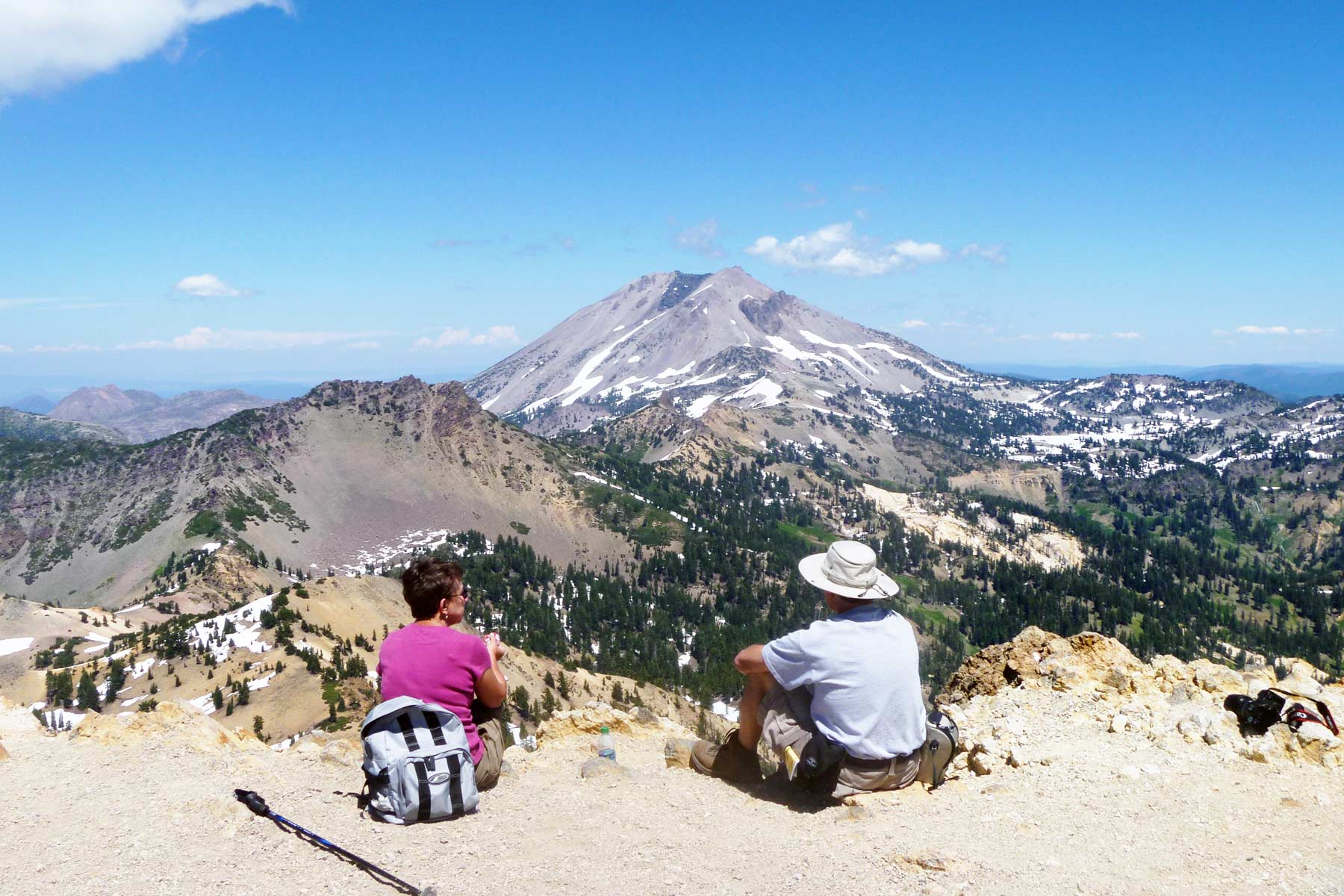
Brokeoff Mountain is the remnant of an ancient, much larger volcano called Mount Tehama, and at 9,235 feet it offers one of the best summit views in the park, including a striking angle on Lassen Peak itself. The hike is about seven miles round trip with steady elevation gain through forest, meadow, and open ridge. It is quieter and arguably more scenic than the Lassen Peak climb. Bring plenty of water and start early.
10. Hike to Crags Lake at the Cinder Cone area
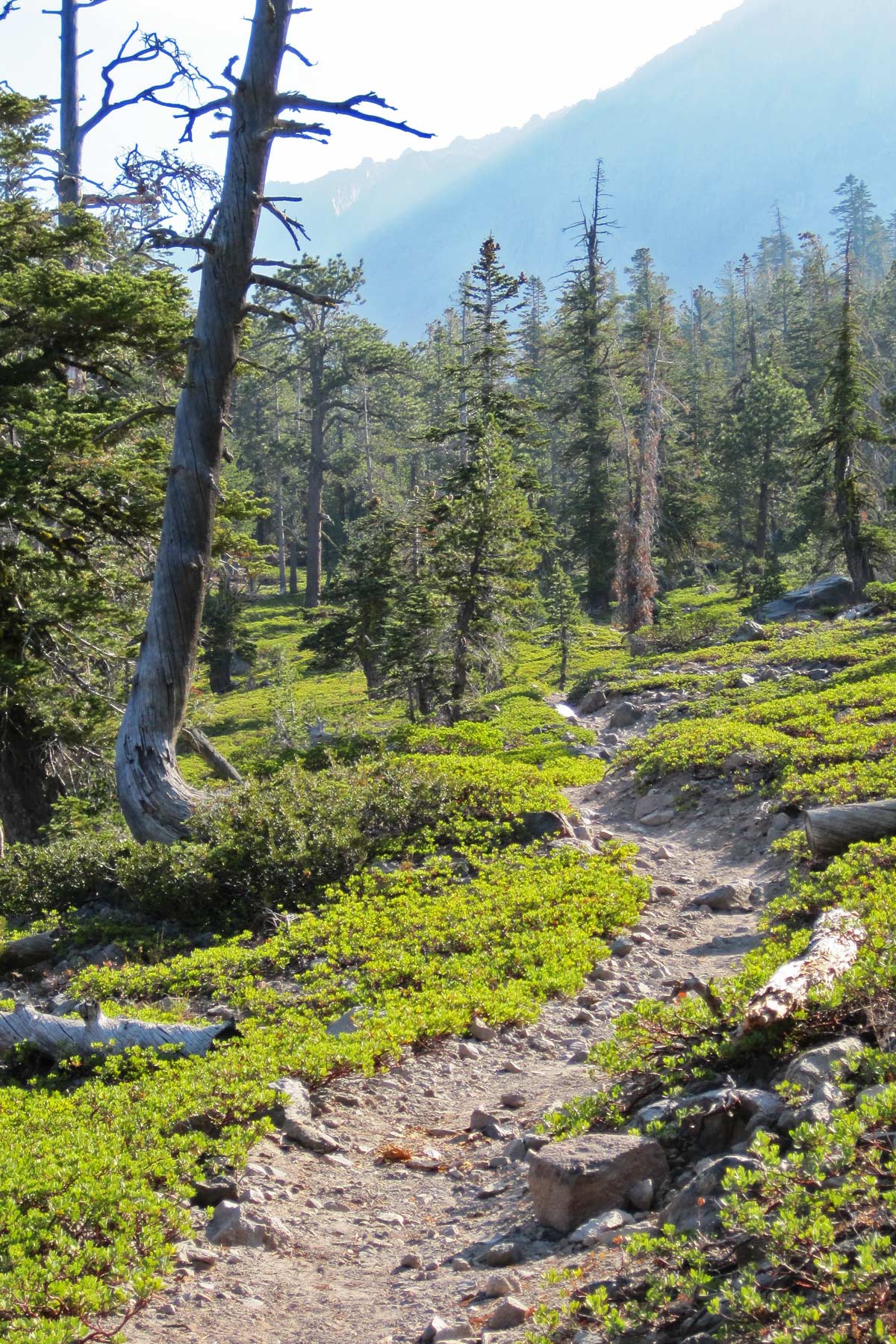
The trail to Crags Lake climbs to a small crater lake set beneath the jagged Chaos Crags lava domes, a rough and dramatic landscape of broken rock. The hike is about four miles round trip and gains real elevation, so it is moderately strenuous. Whether there is water in the lake depends on the season and snowmelt, but the crags themselves and the view make the climb worth it. The trailhead is near Manzanita Lake at the park’s northwest end.
11. Climb the Cinder Cone
In the remote northeast corner, the Cinder Cone is a near-perfect volcanic cone you can climb on a steep, sandy trail for a 360-degree view over the Painted Dunes and the Fantastic Lava Beds, fields of multicolored volcanic ash and black lava. The full hike is about four miles round trip from the Butte Lake area, and the climb up the loose cinders is a workout. The view of the painted landscape from the rim is one of the most distinctive in the park.
12. Relax at Manzanita Lake
Manzanita Lake, near the northwest entrance, is the gentle, family-friendly heart of the park. A flat 1.8-mile trail loops the shore with a classic reflection of Lassen Peak on calm mornings. You can rent kayaks and paddleboards at the camper store, fish (catch and release), and watch for birds and the occasional bald eagle. It is the easiest place to spend a relaxed couple of hours and the prime spot for sunrise photos.
13. Hike to Mill Creek Falls
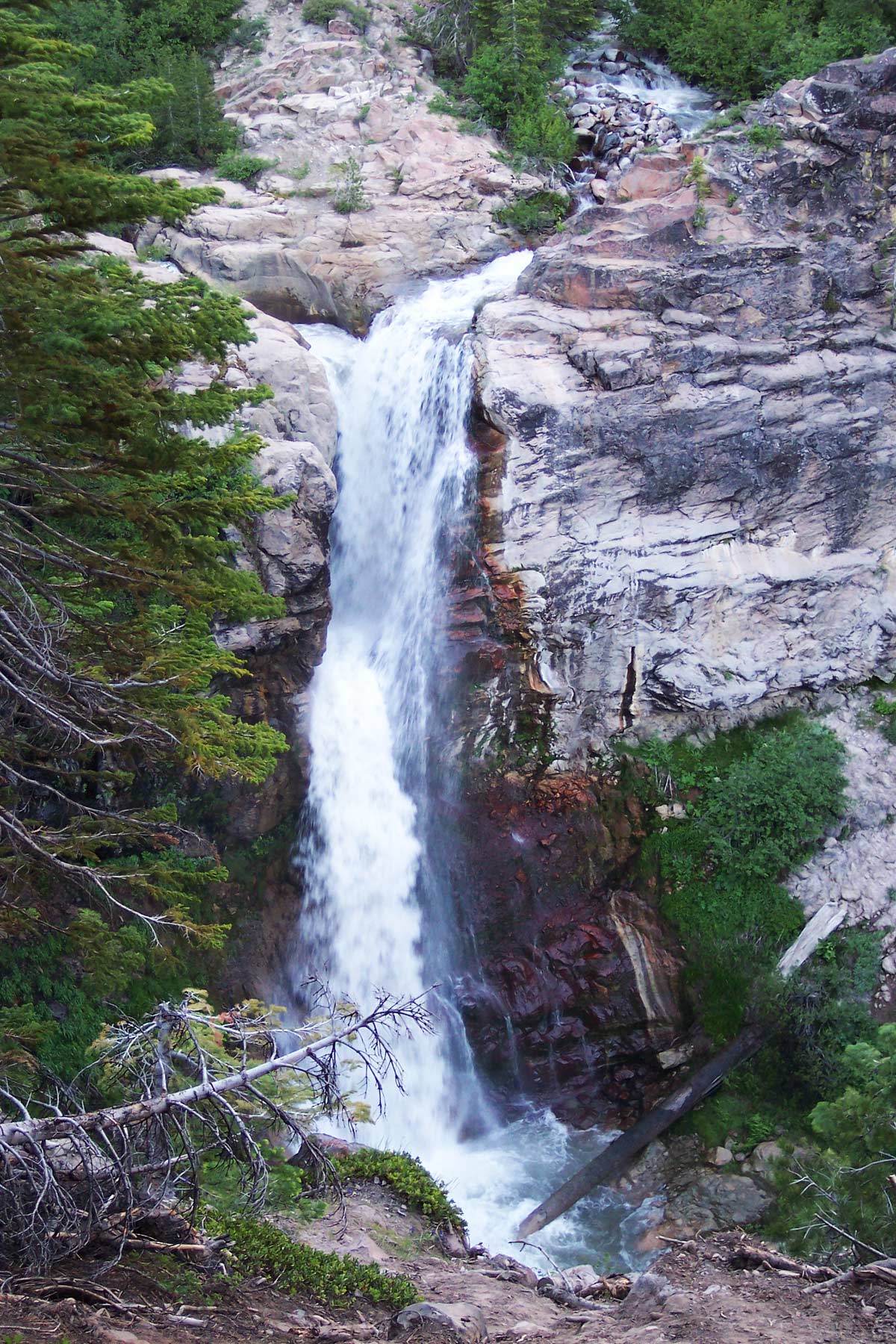
Mill Creek Falls is the tallest waterfall in the park at around 70 feet, reached on a hike of roughly four miles round trip from the Southwest Walk-in Campground area. The trail rolls through forest and meadow before reaching the overlook where two creeks join and plunge into a gorge. It is best in early summer when snowmelt has the falls running full and the wildflowers are out.
14. Stargaze under dark Cascade skies

Lassen’s remoteness makes for some of the darkest skies in California. The park runs a Dark Sky Festival and astronomy programs in summer, and on a clear, moonless night the Milky Way arcs over Lassen Peak. Manzanita Lake and the highway overlooks make fine viewing spots. Bring warm layers because nights at elevation are cold even in July, plus a red flashlight to protect your night vision.
15. Camp at Manzanita Lake or Summit Lake
The park’s two largest campgrounds are Manzanita Lake near the northwest entrance, the biggest and best equipped with a store and showers, and Summit Lake in the high center of the park beside a swimmable alpine lake. Both reserve on Recreation.gov and fill on summer weekends, so book ahead. Manzanita also rents rustic camping cabins. There are several smaller and more remote campgrounds for those who want quiet.
16. See the historic Loomis Museum
The Loomis Museum near the Manzanita Lake entrance displays the famous photographs Benjamin Loomis took of the 1915 eruption, the images that helped make the case for protecting the area as a national park in 1916. It is a small but worthwhile stop with exhibits, a bookstore, and ranger information. Pair it with the lake loop right next door to combine history and an easy walk.
17. Walk the Lily Pond and easy nature trails
Not every walk here is a thigh-burner. The Lily Pond Nature Trail near the Loomis Museum is a short, mostly level interpretive loop, and several other easy paths branch off the highway. These are good for families, for acclimating to the elevation, or for a low-key afternoon. Grab a trail guide at a visitor center and pick one that fits your energy level for the day.
18. Soak up the view at the Kohm Yah-mah-nee Visitor Center
The Kohm Yah-mah-nee Visitor Center at the southwest entrance is the park’s main hub, open year round, with exhibits, a film, a restaurant, and a gift shop. It is the place to get current road and trail conditions, which matter enormously here given the snow and the ongoing trail repairs. In winter it doubles as the base for snowshoeing and ranger snowshoe walks. Start here to plan a smart day.
19. Try snowshoeing or skiing in winter
When the highway closes for the season, Lassen becomes a snow park. The southwest area near the visitor center stays plowed for access, and ranger-led snowshoe walks run on winter weekends. You can snowshoe or backcountry ski into the silent, snow-buried landscape with the steam of the Sulphur Works rising through the white. The winter entrance fee drops to a fraction of the summer rate. Check the schedule and avalanche conditions before heading out.
20. Look for wildlife and wildflowers
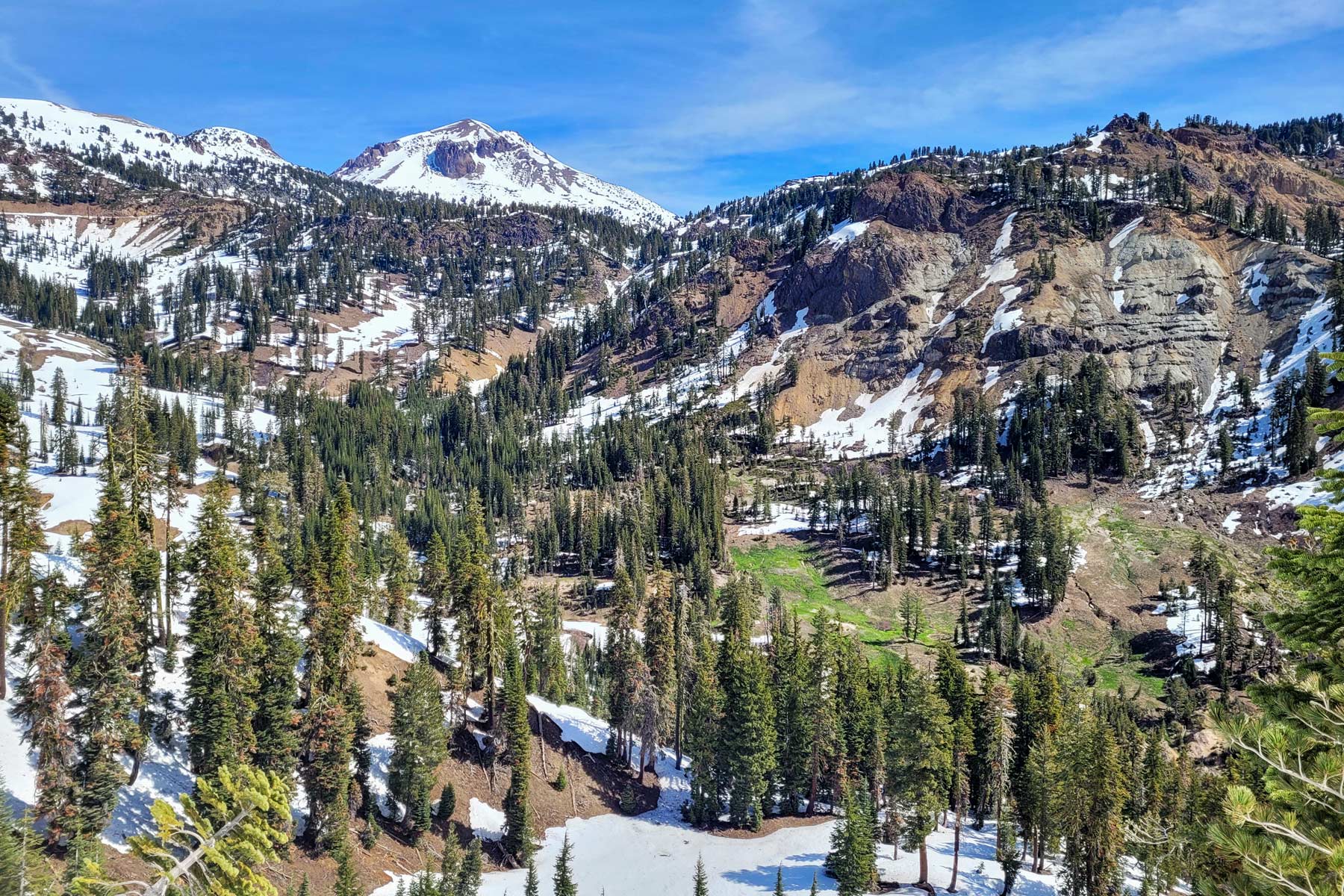
For a place defined by volcanoes, Lassen is full of life. Black bears, mule deer, marmots, and pikas live here, and the meadows explode with wildflowers as the snow recedes through July. The high lakes draw ducks and the occasional bald eagle. Early summer in the meadows along Kings Creek and around Summit Lake is the peak bloom. Move quietly, keep your distance from wildlife, and never feed anything.
Lassen Volcanic at a Glance
| Detail | What to know |
|---|---|
| Entrance fee | $30 per vehicle in summer (April 16 to November 30), $10 in winter. Covered by the America the Beautiful pass. |
| Park Highway | CA 89 through the park is seasonal. It opened for 2026 on May 22; closes with the snow, usually by late fall. |
| Bumpass Hell | Main trail has been under repair. When closed, rangers approve an alternate route via Cold Boiling Lake. Check current status. |
| Top hikes | Lassen Peak (about 5 miles, 2,000 feet), Brokeoff Mountain, Cinder Cone, plus easy walks at the Devastated Area and Manzanita Lake. |
| Camping | Manzanita Lake (largest, with store and showers) and Summit Lake reserve on Recreation.gov; book ahead for summer. |
| Best season | July through September for full road and trail access and peak wildflowers. Winter is for snowshoeing. |
| Safety | Stay on boardwalks in hydrothermal areas; the ground is scalding and unstable. Expect cold nights at elevation year round. |
Planning Your Lassen Visit in 2026
Lassen is a short-season park, so the single most important planning step is checking what is open. With the Park Highway open from late May through fall in 2026, summer is when you get the full menu: the hydrothermal areas, the peak climbs, the lakes, and the wildflowers. A first visit can cover the highway end to end, the Sulphur Works, the Devastated Area, and Manzanita Lake in a day, with a longer hike like Lassen Peak or Bumpass Hell added if you have the legs.
The honest 2026 reality is that trail repairs and snow can change the plan. The main Bumpass Hell Trail has been under repair, with a ranger-approved alternate route in place, and snowfields can linger on the high trails into July. The remote Warner Valley and Butte Lake areas are worth the longer drive for solitude but add real time. Always confirm road and trail conditions at the Kohm Yah-mah-nee Visitor Center or on the park website before you commit, and remember that the ground in the hydrothermal areas is genuinely dangerous, so stay on the boardwalks.
For where Lassen fits among the state’s parks, see our guide to the national parks in California and our roundup of West Coast national parks. You can also compare nearby options like things to do in Pinnacles National Park.
What to Bring to Lassen Volcanic
Gear we recommend for Lassen Volcanic. Affiliate links support our work at no cost to you.
More Than Just Parks may earn a small commission from purchases made through these links, at no extra cost to you. We only recommend gear we would actually use.
Affiliate disclosure: Some links on this page earn us a small commission at no extra cost to you. We only recommend gear we actually use.