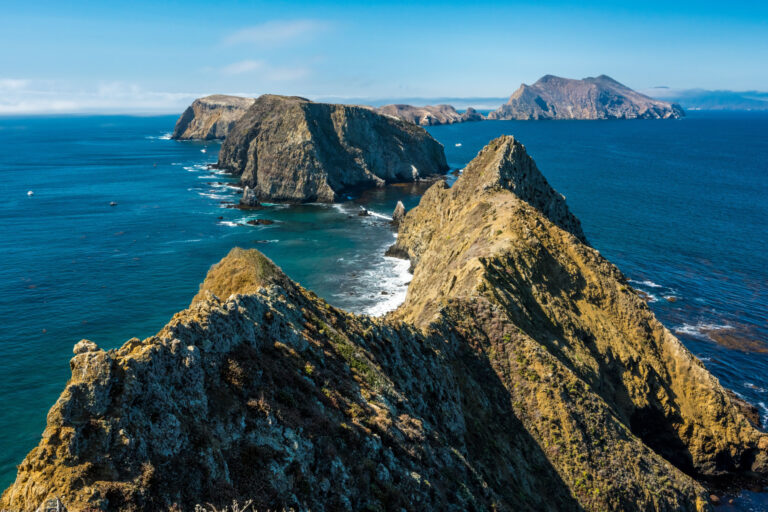


Channel Islands National Park facts. You cannot drive to this park. That single detail tells you most of what makes it different from every other national park in the country. The five islands sit off the Southern California coast, reachable only by boat or small plane, and that isolation has preserved plants, animals, and human history found nowhere else on Earth.
I spent a career teaching history before I started visiting these parks in person, and the Channel Islands reward a history teacher more than almost anywhere I have been. Shipwrecks, bootleggers, a hermit, a lone woman who lived alone for eighteen years. The stories here run as deep as the kelp forests.
For the full picture on planning, camping, and current conditions, start with our Channel Islands National Park hub. Below are 13 facts about Channel Islands National Park, each one checked against the record.
Basic Facts About The Channel Islands
Channel Islands National Park lies off the coast of Southern California and protects five islands: Anacapa, Santa Cruz, Santa Rosa, San Miguel, and Santa Barbara. The park covers 249,354 acres, and roughly half of that total lies underwater, protecting the kelp forests and waters around each island.
Love Channel Islands? It's one of 117 threatened public lands destinations we're tracking. Get the free briefing.
Camping is available year-round on all five islands, and trails on the larger islands open up long days of hiking with no roads, no crowds, and no easy way back. The mainland visitor center in Ventura is the place to get oriented before you board a boat.

How The Park Was Created
On April 26, 1938, President Franklin D. Roosevelt signed a proclamation designating Anacapa and Santa Barbara Islands as Channel Islands National Monument.
On March 14, 1979, Congressman Robert J. Lagomarsino introduced a bill creating Channel Islands National Park. President Jimmy Carter signed that legislation, Public Law 96-199, into law on March 5, 1980.

1. The Northern Islands Hold One Of North America’s Oldest Clusters Of Human Sites
Archaeologists working on the Channel Islands have found evidence of seafaring people who reached these shores more than twelve thousand years ago. Crossing open water in small boats, they left behind one of the oldest records of coastal human life in the Americas.
San Miguel, Santa Rosa, and Santa Cruz hold dozens of sites dated between roughly 13,000 and 7,000 years ago. According to the National Park Service, nowhere else in North America is there as large a concentration of sites known to be this old.

2. Early Island People Built An Economy Around Shellfish
The first islanders lived largely on what the sea provided: fish, shellfish, and sea mammals, supplemented by wild plants such as acorns. They were foragers who learned to store both food and water on islands where fresh water was always scarce.
What sets them apart is that they developed a medium of exchange. Shell beads, a kind of shell money, were used to barter for goods, an early island economy built from the same shellfish that fed them.
READ MORE: 15 Best Things To Do At Channel Islands National Park
3. San Miguel Island Earned The Name “Graveyard Of The Pacific”
San Miguel is the westernmost of the Channel Islands, lying about 26 miles south of Point Conception. It is often wrapped in fog and counts among the most dangerous islands to approach by sea.
The reputation is earned. More than 150 historic ships and aircraft are documented to have wrecked within the boundaries of Channel Islands National Marine Sanctuary and the national park, which is how this stretch of water came to be called the “Graveyard of the Pacific.”

The Wreck Of The Winfield Scott
The side-wheel passenger steamer Winfield Scott left San Francisco on December 1, 1853, carrying more than 500 passengers and a shipment of gold bullion.
The captain, Simon F. Blunt, tried to save time by cutting through the Santa Barbara Channel rather than passing outside the islands. In thick fog, the ship struck Middle Anacapa Island at full speed. There was no loss of life, and most passengers were rescued eight days later by the steamer California.

4. An Otter Hunter Left His Mark On The Islands
The stories of the people who passed through these islands are what make the history come alive. One of my favorites involves an adventurer named George Nidever.
According to the National Park Service, Nidever was an American otter hunter and maritime tradesman who became a known figure in Santa Barbara and on the Channel Islands. He arrived in 1835 and made at least two hunting trips to the islands, once traveling with a hunter known as Black Steward and a local named Isaac Sparks.
On one expedition his party clashed with another group of hunters, exchanging gunfire on a remote shore. Nidever’s account of that day, with its talk of canoes and long-range muskets, reads like something out of a frontier novel, which is part of why his name still turns up across the island record.

To learn more about this remarkable man, see The Life and Adventures of George Nidever, 1802-1883, by William Henry Ellison.
5. Santa Rosa Was Known As The “Island Of The Cowboys”
Santa Rosa Island earned the name “Island of the Cowboys” for good reason. Its grasslands and water supply made it suited to livestock, and it became home to one of California’s most successful sheep and, later, cattle ranches.
At its peak, the ranch ran tens of thousands of sheep across the island, a working operation that lasted well into the twentieth century before the land passed into the national park.
6. Santa Cruz Island Was An Early Hollywood Filming Location
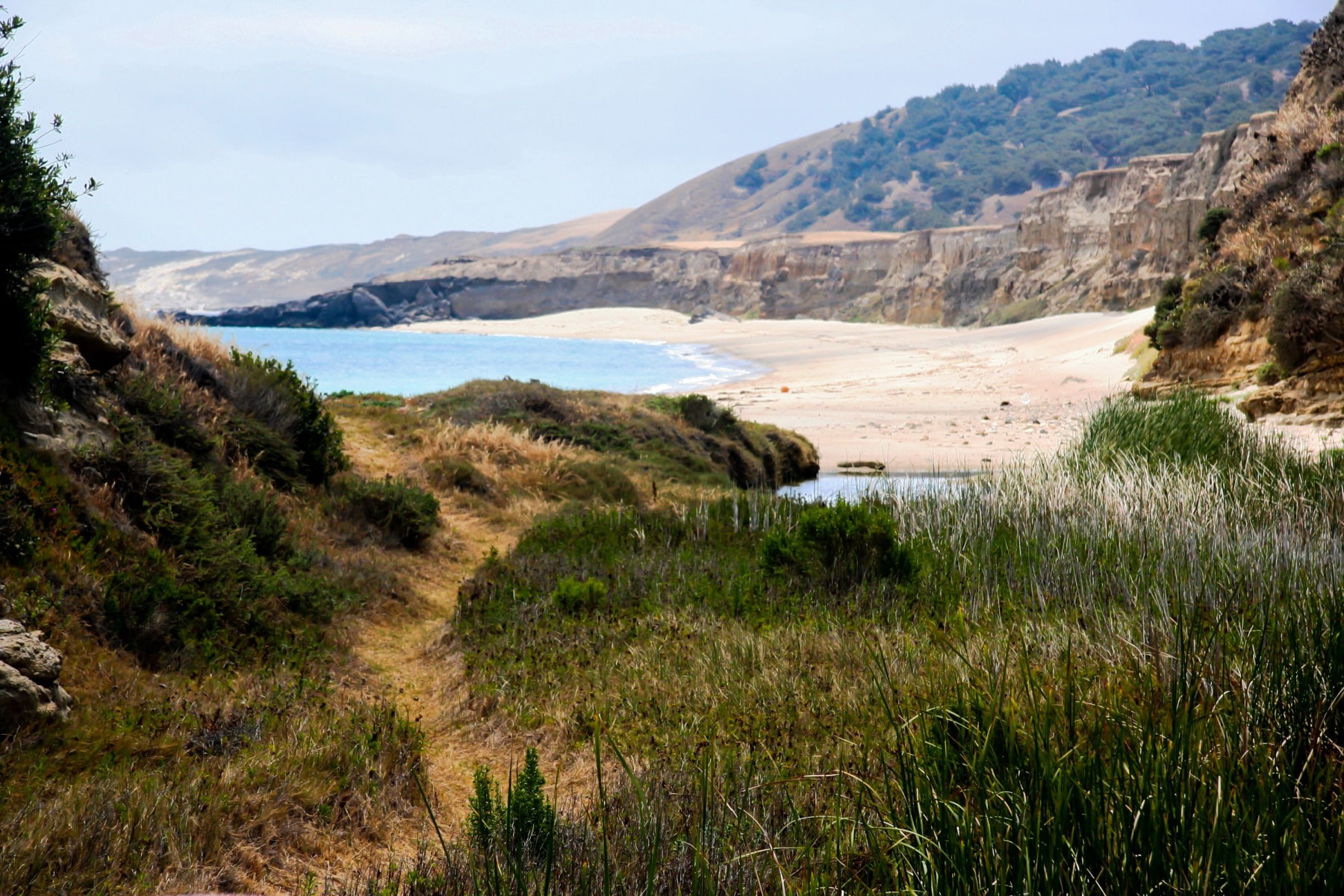
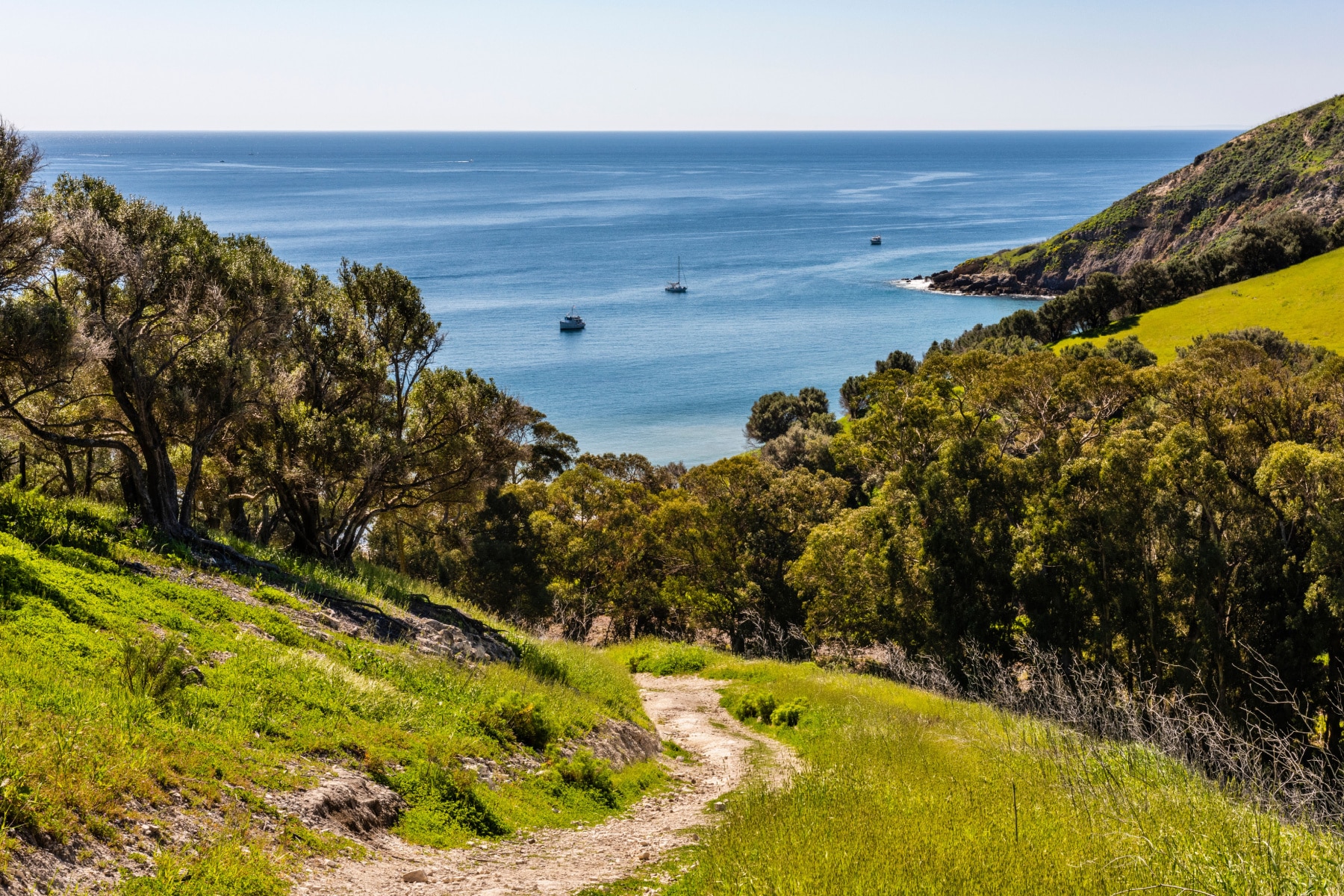
Santa Cruz, the largest of the Channel Islands, became a favored stand-in for far-off places during the silent film era. Its rugged coves and beaches gave filmmakers an exotic backdrop within reach of Los Angeles.
Productions shot on or around the island included Pearls of Paradise (1916), Male and Female (1919), Peter Pan (1924), and The Rescue (1928).
READ MORE: 25+ Classic Movies Filmed In The National Parks
7. A Bootlegger Leased Anacapa Island During Prohibition
One of the lesser-known chapters in the islands’ history is that Anacapa Island was, for a time, a base for a bootlegger.
A short history lesson, since I cannot help myself. Prohibition began in 1920 with the 18th Amendment, which banned the manufacture, transport, and sale of intoxicating liquors. The Volstead Act enforced it. The illegal trade that followed, the speakeasies and the organized crime, eroded support for Prohibition until the 21st Amendment repealed it on December 5, 1933.

Enter Ira Eaton
Into that backdrop stepped Ira Eaton and his wife Margaret. They ran a resort on Santa Cruz Island that catered to sailors, fishermen, and film crews.
Eaton held a lease to Anacapa Island for roughly a decade beginning in 1917. He used it to store bootlegged liquor, which he ran into ports along the Southern California coast once Prohibition took hold.
The Island Also Had Its Own Hermit
After Eaton’s lease expired, another character added to Anacapa’s lore. Raymond “Frenchy” Le Dreau was born in Brittany, France, on April 15, 1875. He had studied for the priesthood, lost his faith in the church, and went to sea on merchant vessels bound for China and America.
He served in the U.S. Navy, drifted to San Pedro, and became a skiff fisherman. He married in San Pedro and had three children, but his wife Emma died in the influenza pandemic that killed an estimated 675,000 people in the United States. After her death, Frenchy sought solitude.

Frenchy built a cabin on Anacapa Island. A narrow trail ran from his shack to the beach, where he kept his lobster traps and skiff. He traded lobster for supplies and begged fresh water from passing boats. After Anacapa became a national monument in 1938, he acted as an unofficial Park Service representative, reporting vandalism and island activity.
After World War II, authorities, worried about his age, eyesight, and health, told him he had to leave. In 1954, after a fall in his eightieth year, he agreed. He moved to a house in Santa Barbara and lived another eight years. Frenchy died on April 21, 1962, and is buried in Calvary Cemetery.
8. Painted Cave Is One Of The Largest Sea Caves In The World
The sea caves carved into Santa Cruz Island are among the park’s most striking features, and Painted Cave stands above the rest. Named for the colorful rock, lichens, and algae that streak its walls, it reaches roughly 1,227 feet into the island’s cliffs, ranking it among the largest sea caves in the world.
Its entrance towers more than 130 feet high, large enough that a boat can nose into the opening while sea lions bark from the rocks. Kayakers slip even deeper into the dark, which is the only way to grasp its true scale.

9. A Nearby Island Inspired “Island Of The Blue Dolphins”
San Nicolas is not one of the five islands in the national park, but it holds one of the most haunting stories tied to this stretch of coast: the tale of the Lone Woman of San Nicolas.
When the island’s native people were removed to the mainland, a woman was left behind. She lived alone on San Nicolas for roughly eighteen years. In 1853, George Nidever’s party found her on the west end of the island, sheltered behind a windbreak of whale ribs and brush, dressed in skins and feathers.
She came willingly to Santa Barbara, where she became a local sensation, though no one could understand her language. She communicated in sign and pantomime. Within weeks, her body could not adjust to the new diet, and she died. The Franciscans named her Juana Maria and buried her at the Santa Barbara Mission cemetery.
Her life inspired Scott O’Dell’s 1960 novel Island of the Blue Dolphins, which was made into a film of the same name in 1964.
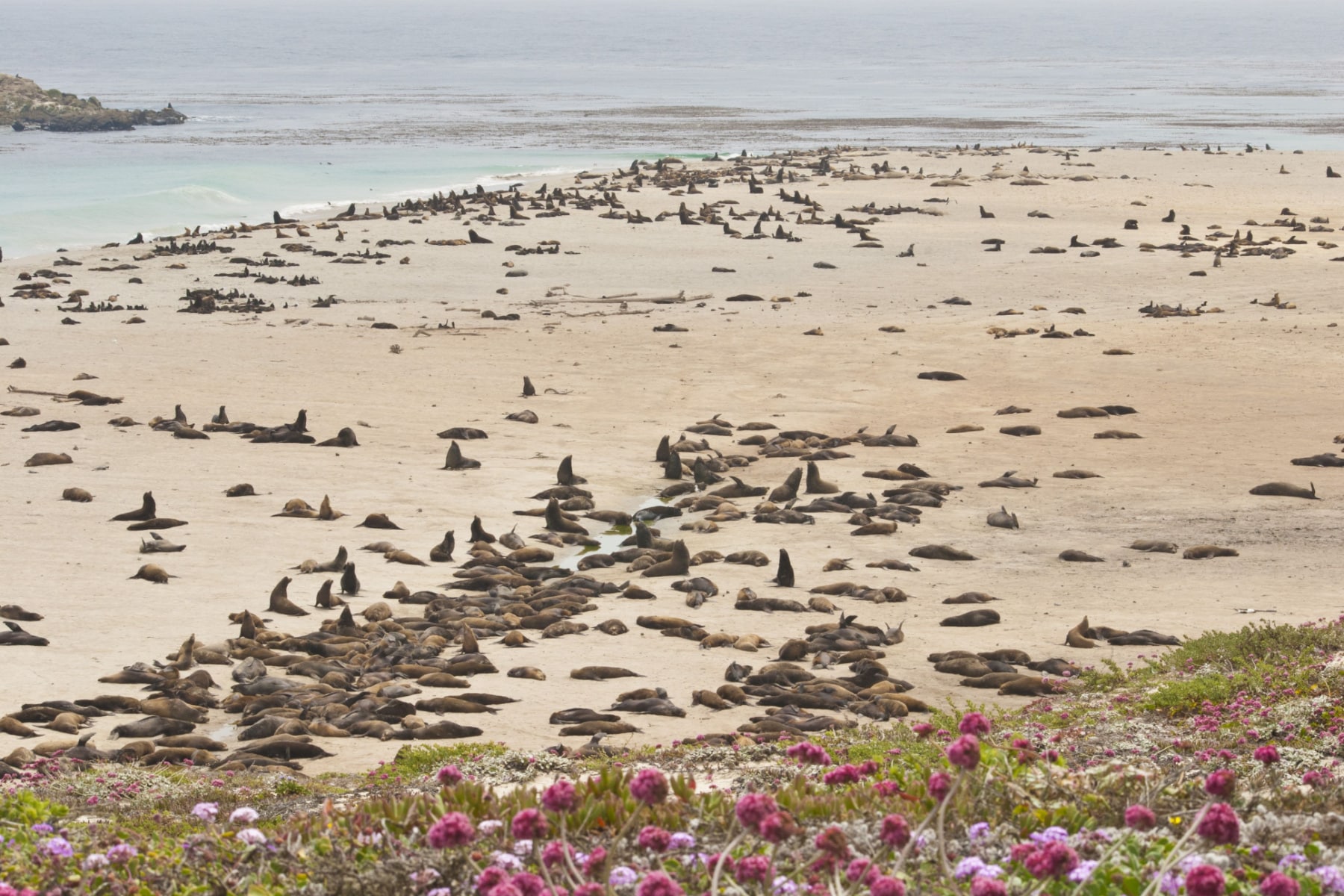
10. San Miguel Hosts One Of The Largest Wildlife Gatherings On Earth
At Point Bennett on San Miguel Island, as many as five species of pinnipeds, including northern elephant seals, California sea lions, harbor seals, and northern fur seals, haul out together. In peak season the gathering can exceed 30,000 animals, ranking it among the largest concentrations of wildlife anywhere in the world.
11. The Islands Have Very Few Native Land Mammals
Wildlife on the Channel Islands is unusual precisely because there is so little of it on land. The only native land mammals are the island fox, the island deer mouse, the harvest mouse, and the spotted skunk, along with several species of bats.
The island fox is the standout. Found nowhere else on Earth, it is one of the smallest canids in the world and the subject of one of the most successful recovery efforts the National Park Service has ever run, after the population crashed in the 1990s.

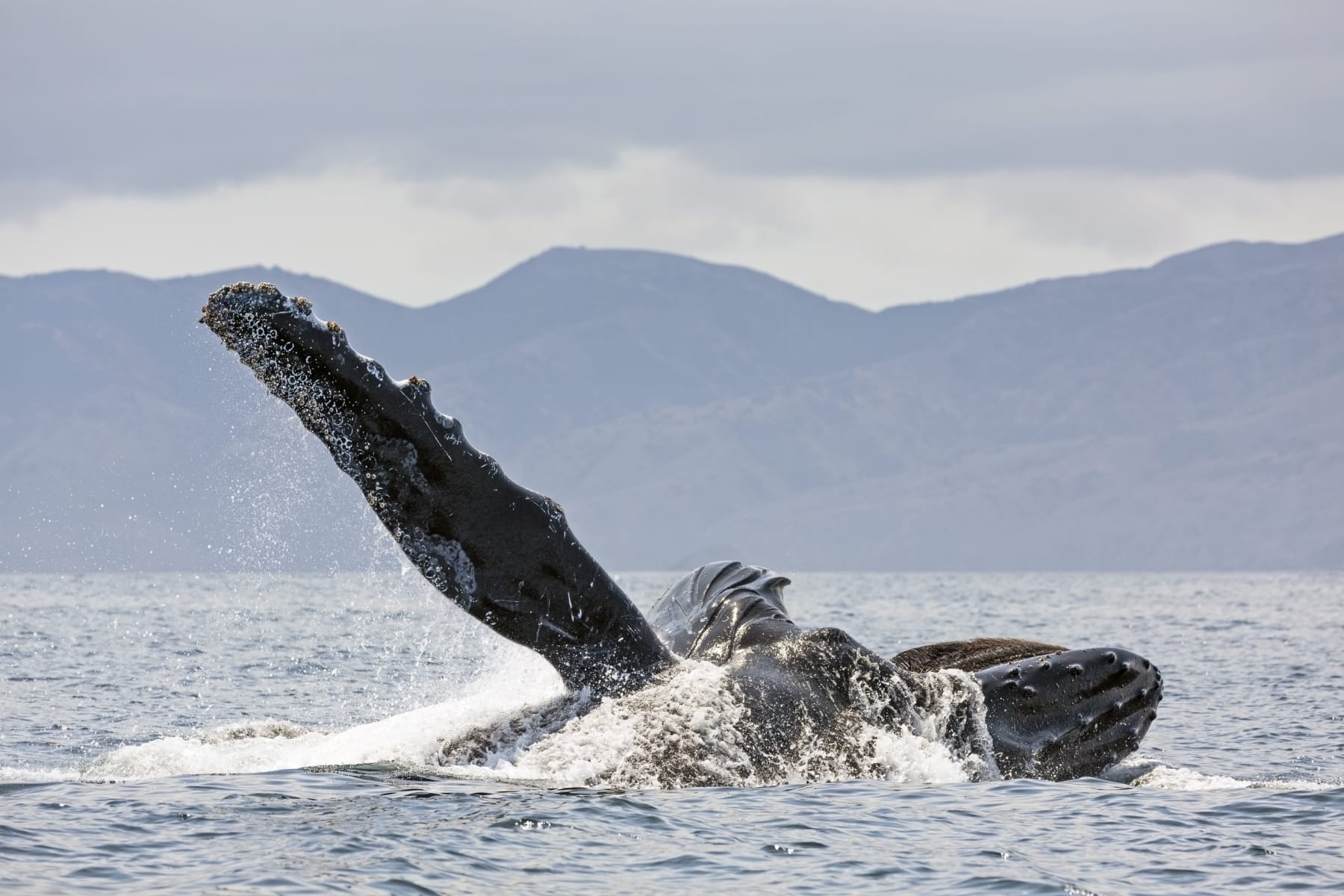
12. You Can Watch The Gray Whale Migration From Shore
From December through mid-March, gray whales pass the islands on their annual migration. One of the best vantage points is the short hike to Cavern Point on Santa Cruz Island, looking out over Scorpion Anchorage.
There are no guarantees with wildlife, but the odds here beat almost anywhere else along the coast, and watching a gray whale surface against the open Pacific is worth the wait.
13. You Might Kayak Alongside Harbor Seals
Here is the most enjoyable fact on the list. If you take a kayak out around the sea caves, do not be surprised to find company. Harbor seals often swim alongside paddlers near the cave entrances, curious and unbothered by the boats.
It is one of the simplest, most direct ways to experience why these islands are worth the boat ride. Grab a paddle and head out.

13 Channel Islands National Park Facts At A Glance
- The northern islands hold one of North America’s oldest clusters of human sites
- Early island people built an economy around shellfish
- San Miguel Island earned the name “Graveyard of the Pacific”
- An otter hunter left his mark on the islands
- Santa Rosa was known as the “Island of the Cowboys”
- Santa Cruz Island was an early Hollywood filming location
- A bootlegger leased Anacapa Island during Prohibition
- Painted Cave is one of the largest sea caves in the world
- A nearby island inspired “Island of the Blue Dolphins”
- San Miguel hosts one of the largest wildlife gatherings on Earth
- The islands have very few native land mammals
- You can watch the gray whale migration from shore
- You might kayak alongside harbor seals

Related Links
- Channel Islands National Park hub
- 15 Best Things To Do At Channel Islands National Park
- All 63 National Parks Ranked By Experts
- 25+ Classic Movies Filmed In The National Parks
- More Than Just Parks Films
What to Bring to Channel Islands
Gear we recommend for Channel Islands. Affiliate links support our work at no cost to you.
More Than Just Parks may earn a small commission from purchases made through these links, at no extra cost to you. We only recommend gear we would actually use.
Affiliate disclosure: Some links on this page earn us a small commission at no extra cost to you. We only recommend gear we actually use.