


Here is the part nobody tells you about San Diego. You get one National Park Service site inside the city limits, and then a long drive to everything else. San Diego sits farther south than the parks cluster, so every big-name park is an hour or two farther from you than it is from Los Angeles. That is the honest math, and it is worth knowing before you load the car.
The good news is that the one site you do have is excellent, and it is fifteen minutes from downtown. Cabrillo National Monument out on Point Loma is the easy local win, the kind of place you can fold into an ordinary afternoon. After that, the real national parks start at two and a half hours and run to six. Joshua Tree is the closest true national park. Death Valley and Sequoia are full weekends. Channel Islands looks close on a map and is anything but, because you drive three hours north to Ventura and then get on a boat. More Than Just Parks has filmed in both Joshua Tree and Death Valley, spending weeks in each, and those two are where I would point a first-timer with real time to spend.
I have ordered these by drive-cost versus payoff. Closest and easiest first, the long hauls last. I have also been straight about the parts nobody puts on a postcard, like Death Valley heat that can kill you, parking lots that fill before breakfast, and a Channel Islands ferry that costs more than the gas to get there. If you only have one weekend, jump to the planning section at the bottom and I will tell you where to point the car.

San Diego’s Parks At A Glance
Drive times are from downtown San Diego and assume reasonable traffic. Fees are the standard private-vehicle rate, good for 7 days, as of 2026. Cabrillo is the only one you can reach in under two hours, and the only one that is genuinely a day trip without an early alarm.
117 public lands destinations are under threat. Get the free briefing that 27,000+ people use to stay informed and take action.
| Park | Drive from San Diego | Best season | Signature draw | Entrance fee (per vehicle, 2026) |
|---|---|---|---|---|
| Cabrillo National Monument | ~15 min | Year-round | Tidepools, harbor views, 1542 history | $20 |
| Joshua Tree NP | ~2 hr 30 min to 3 hr | Oct to Apr | Joshua trees and granite boulders | $30 |
| Santa Monica Mountains NRA | ~2 hr 30 min to 3 hr | Oct to May | Backbone Trail, Malibu coast, free trails | Free |
| Channel Islands NP | ~3 hr to Ventura + ~1 hr boat | May to Oct (calmer seas) | Sea caves, island fox, no crowds | Free (boat from ~$63/person) |
| Death Valley NP | ~5 hr | Nov to Mar | Badwater Basin, sand dunes, dark skies | $30 |
| Sequoia & Kings Canyon NP | ~6 hr | Late spring to early fall | Largest trees on Earth | $35 (covers both) |
1. Cabrillo National Monument
Drive time from San Diego: about 15 minutes (roughly 10 miles via N Harbor Drive to the tip of Point Loma)
Entrance fee: about $20 per vehicle, good for 7 days. The America the Beautiful pass gets you in free.
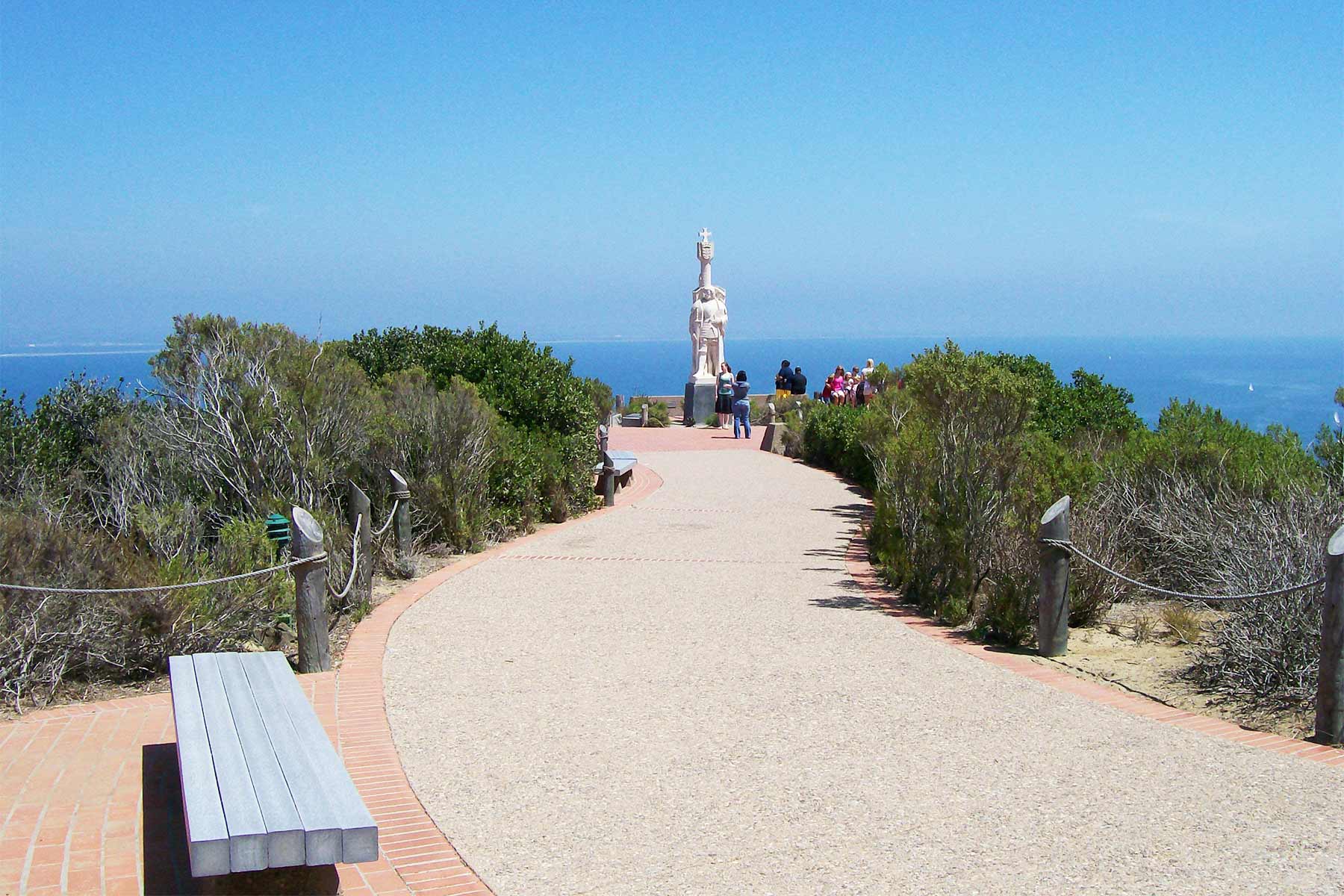
This is the one San Diego gets to keep, and it punches above its size. Cabrillo National Monument sits at the southern tip of Point Loma, where the peninsula drops into the mouth of San Diego Bay, and from the overlook you get the whole city laid out across the water with the Coronado Bridge and the Navy fleet in the foreground. It was set aside in 1913 to mark the spot where the Spanish explorer Juan Rodriguez Cabrillo made landfall in 1542, the first European to set foot on what is now the West Coast. There is a statue, a small museum, and the restored Old Point Loma Lighthouse from 1855 that you can walk through.
What to actually do here. Go for the tidepools, and time it around low tide, because that is the whole trick. When the water pulls back along the rocky shore on the ocean side, you get anemones, hermit crabs, and the occasional octopus in the pools, and a kid will lose an hour without noticing. Walk the Bayside Trail, a two-mile out-and-back that drops below the visitor center through coastal sage scrub with the bay on one side the entire way. In winter, the same overlook doubles as one of the best land-based gray whale watching spots in the country as the whales migrate south past Point Loma from late December into March. Bring binoculars and check the tide chart before you go, both of those small bits of homework change the trip completely.
Honest caveats. This is a monument, not a wilderness, so set your expectations. The whole site is small and you can see the headline pieces in two to three hours, and the tidepool area is a separate, lower parking lot that fills fast on weekends and at low tide, which are exactly when you want to be there. Go on a weekday morning if you can. The park closes in the early evening, so it is not a sunset spot the way the rest of Point Loma is. For more San Diego history in the same vein, see our roundup of historic sites in California.
2. Joshua Tree National Park
Drive time from San Diego: about 2 hours 30 minutes to 3 hours (roughly 165 miles north via I-15 and then east toward the park)
Entrance fee: $30 per vehicle, good for 7 days. No entry reservation required.
This is the closest true national park to San Diego, and the one to start with. The drive is straightforward, the payoff per mile is the best on this list, and More Than Just Parks spent the better part of a month filming here, so I have a soft spot for it. Joshua Tree National Park was protected as a national monument in 1936 and upgraded to a national park in 1994. It sits at the seam where two deserts meet, the higher and cooler Mojave in the north and west, and the lower and hotter Colorado Desert in the south and east. The Joshua trees only grow in the Mojave half, so the park changes character completely as you drive through it. If you come up from San Diego, the Cottonwood Entrance in the south is the one you reach first.
What to actually do here. The boulders are the secret. People come for the trees and leave talking about the rock. Hidden Valley is a flat one-mile loop ringed by climbing walls, and it is the best introduction to the park, especially with kids. Drive up to Keys View late in the afternoon for the long look down into the Coachella Valley and across to the San Andreas Fault. If you have the legs, Ryan Mountain is three miles round trip for the best summit view in the park. And stay after dark, because Joshua Tree has some of the darkest skies in Southern California, dark enough that the Milky Way reads clearly with the naked eye once you get away from the campgrounds. Will and Jim shot the stars heavily in their film for exactly that reason.

Honest caveats. Summer is brutal. June through September routinely runs past 100 degrees, and the desert does not care how fit you are. Go October through April. Spring weekends and the cooler months pull big crowds, and while there is no timed-entry system, the popular trailhead lots fill by mid-morning. Come in through the West Entrance before 8am if you want a parking spot at Hidden Valley. Bring far more water than you think you need, because there is almost none for sale inside the park.
Watch Our Joshua Tree Film

3. Santa Monica Mountains National Recreation Area
Drive time from San Diego: about 2 hours 30 minutes to 3 hours (roughly 160 miles via I-5 and I-405, longer if LA traffic decides to happen)
Entrance fee: free. There is no gate. A few of the individual state parks inside the recreation area charge for parking, so carry a few dollars.
This one is a recreation area rather than a national park, but it is free, it covers a lot of ground, and it is one of the largest urban national parks in the world. The Santa Monica Mountains National Recreation Area runs along the coast just north and west of Los Angeles, a patchwork of federal, state, and local parkland stitched together across the mountains that wall off Malibu from the San Fernando Valley. The Park Service manages it alongside California State Parks, which is why the boundaries feel a little ragged. For a San Diegan it is the same drive distance as Joshua Tree but a completely different landscape, chaparral hills running straight down to the Pacific.
What to actually do here. The headline is the Backbone Trail, a 67-mile route that runs the spine of the range from Will Rogers State Historic Park near the coast out to Point Mugu, and you can pick off a single section as a half-day hike without committing to the whole thing. Sandstone Peak is the high point of the mountains at just over 3,100 feet and a popular summit on a clear day. Down at the water, the beaches of Malibu and the old movie ranches in the hills give the place a strange double life as both wilderness and back lot. There are over 500 miles of trail in here, so this is a return-trip park, not a one-and-done.
Honest caveats. This is not a single park with a single entrance, it is dozens of trailheads spread across two counties, so look up the specific spot you want before you leave and put that address in the map, not the name of the recreation area. Summer brings heat and fire risk in the chaparral, and trails do close during red-flag conditions, so check before a hot-weather hike. The cooler, greener months from late fall through spring are the time to come, and the hills go genuinely green after winter rain.

4. Channel Islands National Park
Drive time from San Diego: about 3 hours to Ventura Harbor (roughly 175 miles up I-5 and US-101), then about an hour on the boat
Entrance fee: none. You pay for the boat instead. Island Packers runs the ferry from Ventura, and round-trip day fares start around $63 for adults and $45 for kids. Book ahead, walk-up space is rare.
For a San Diegan, this is the one with the biggest gap between how it looks on a map and what it actually takes. The islands sit off the coast near Ventura and Santa Barbara, which is a solid three-hour drive north before you even reach the harbor, and then you still have an hour on the water. Treat it as a weekend, not a day trip. Channel Islands National Park protects five of the eight islands off the Southern California coast, and you cannot drive to any of them. The crossing is what keeps the crowds away, which is exactly why the islands feel like California looked two hundred years ago. The park was established in 1980 and covers about 249,000 acres of land and sea. Santa Cruz, the largest island and the one most people visit, is roughly a one-hour boat ride out of Ventura.
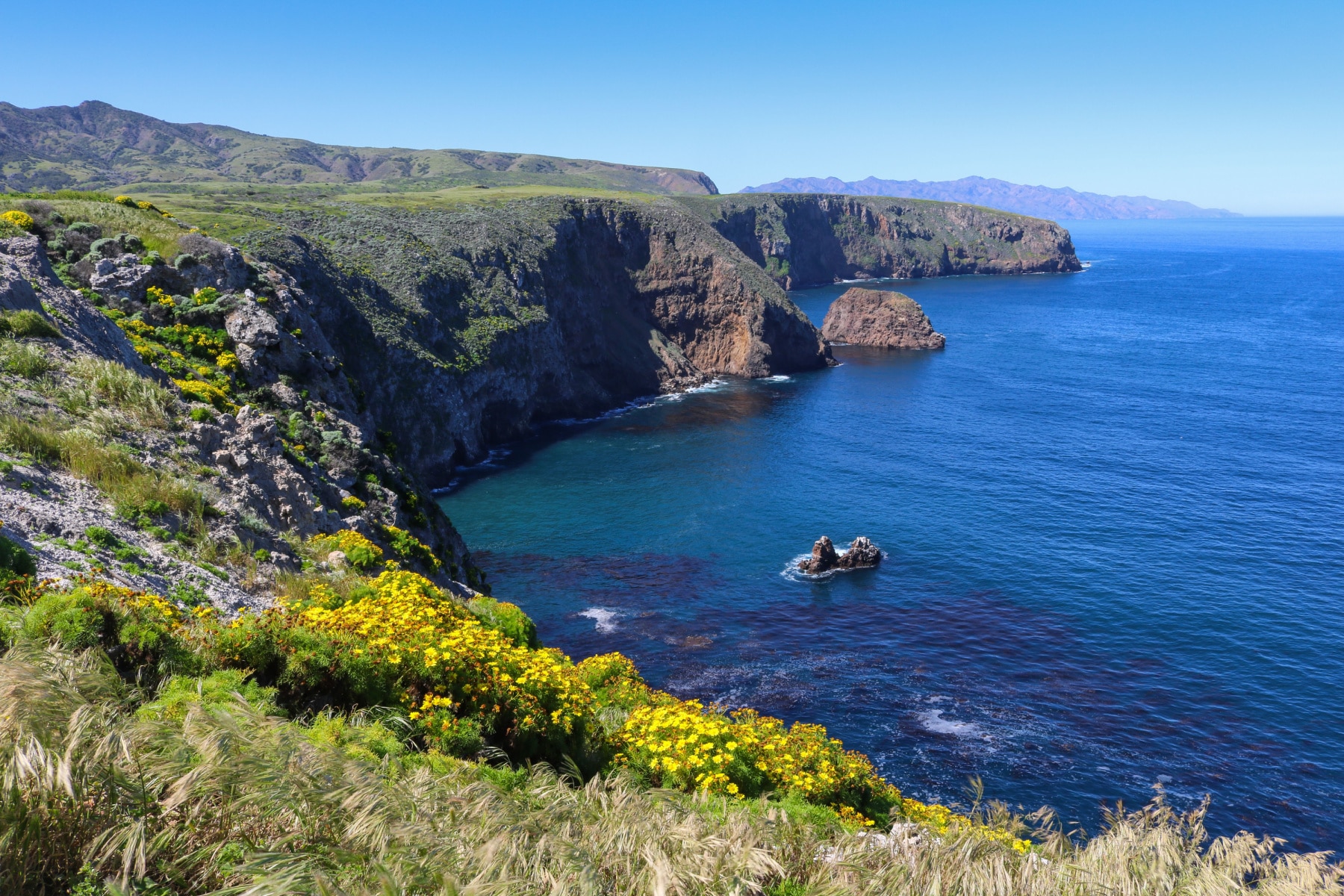
What to actually do here. On Santa Cruz, the hike up to Cavern Point and along the bluff to Potato Harbor is the easy win, about two miles of cliff-edge ocean views that you will photograph more than you walk. The trail down to Smugglers Cove is longer and quieter if you want to outrun the day-trippers. The real draw, though, is the water. Santa Cruz holds one of the largest sea caves in the world, and the kayaking through the caves and along the kelp forests is the best in the state. Watch for the island fox, a cat-sized animal found nowhere else on Earth that has gone from near-extinction back to thriving, and is bold enough to walk right through your picnic. The Chumash people lived on these islands for thousands of years, fishing and trading across the channel long before any European saw the coast.
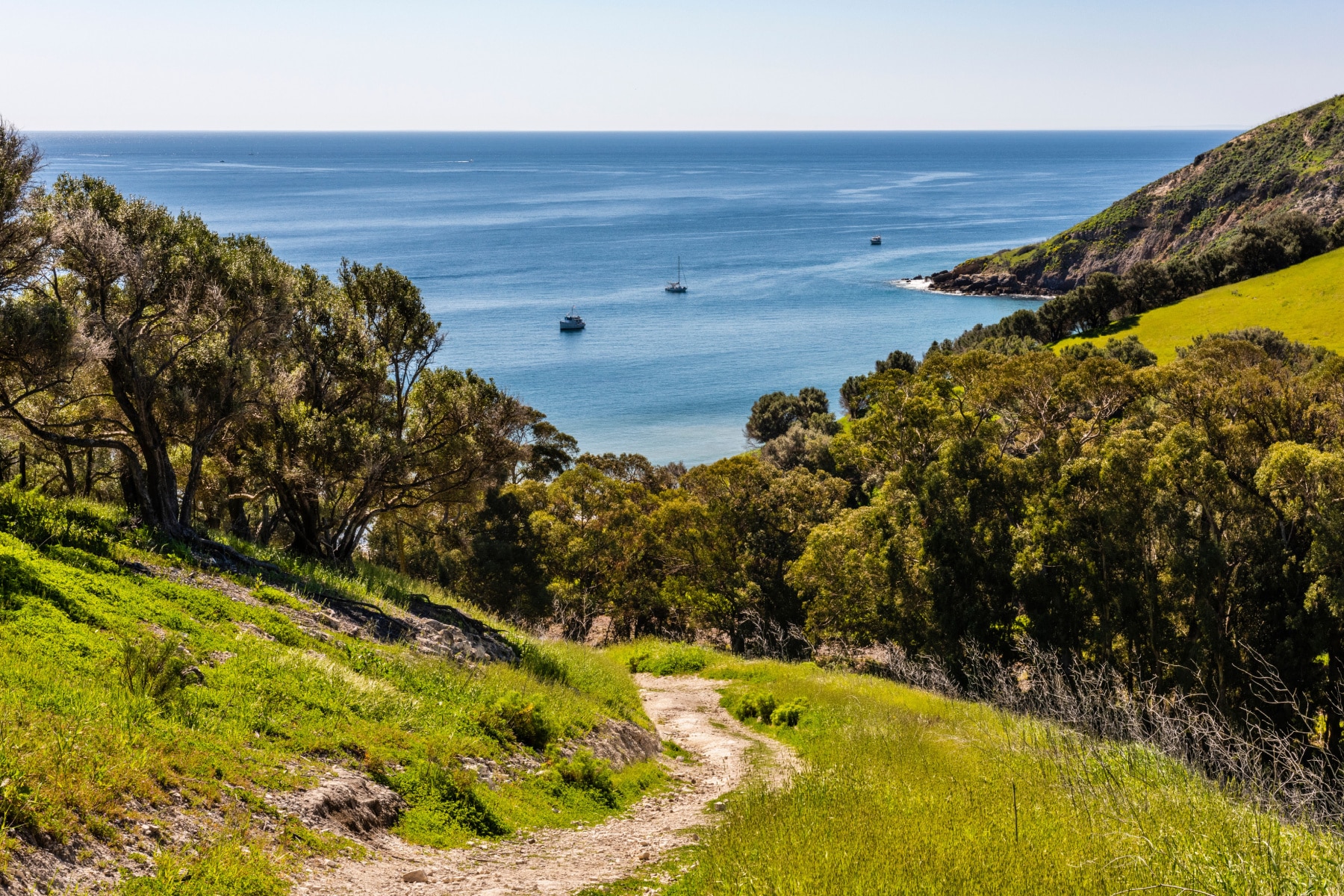
Honest caveats. The boat is the whole trip. If the seas are rough the crossing gets miserable, and the channel can be genuinely choppy, so take the motion-sickness medication before you board, not after. There is no food, no store, and no shade once you land, so carry everything in and everything out. Book the earliest boat you can to maximize your hours on the island, and aim for late spring through early fall when the water is calmest and the fog burns off by midday. From San Diego, the smart move is to drive up the afternoon before and sleep in Ventura so you are not adding a 3am wake-up to a long day. For more on the park, see our Channel Islands National Park facts.
5. Death Valley National Park
Drive time from San Diego: about 5 hours (roughly 285 miles, mostly via I-15 north and then US-395)
Entrance fee: $30 per vehicle, good for 7 days.
This is a real haul from San Diego, a five-hour drive, and Death Valley is worth every mile of it. It is the largest national park in the lower 48 at 5,270 square miles, the hottest place on Earth by recorded temperature, and home to Badwater Basin, the lowest point in North America at 282 feet below sea level. It became a national park in 1994. My sons Will and Jim spent weeks filming here, and it remains one of the strangest, most photogenic places they have ever pointed a camera at. The Timbisha Shoshone have lived in this region for thousands of years. From San Diego, the cleanest line is I-15 north toward Baker, then up Highway 127 and into the park from the southeast.
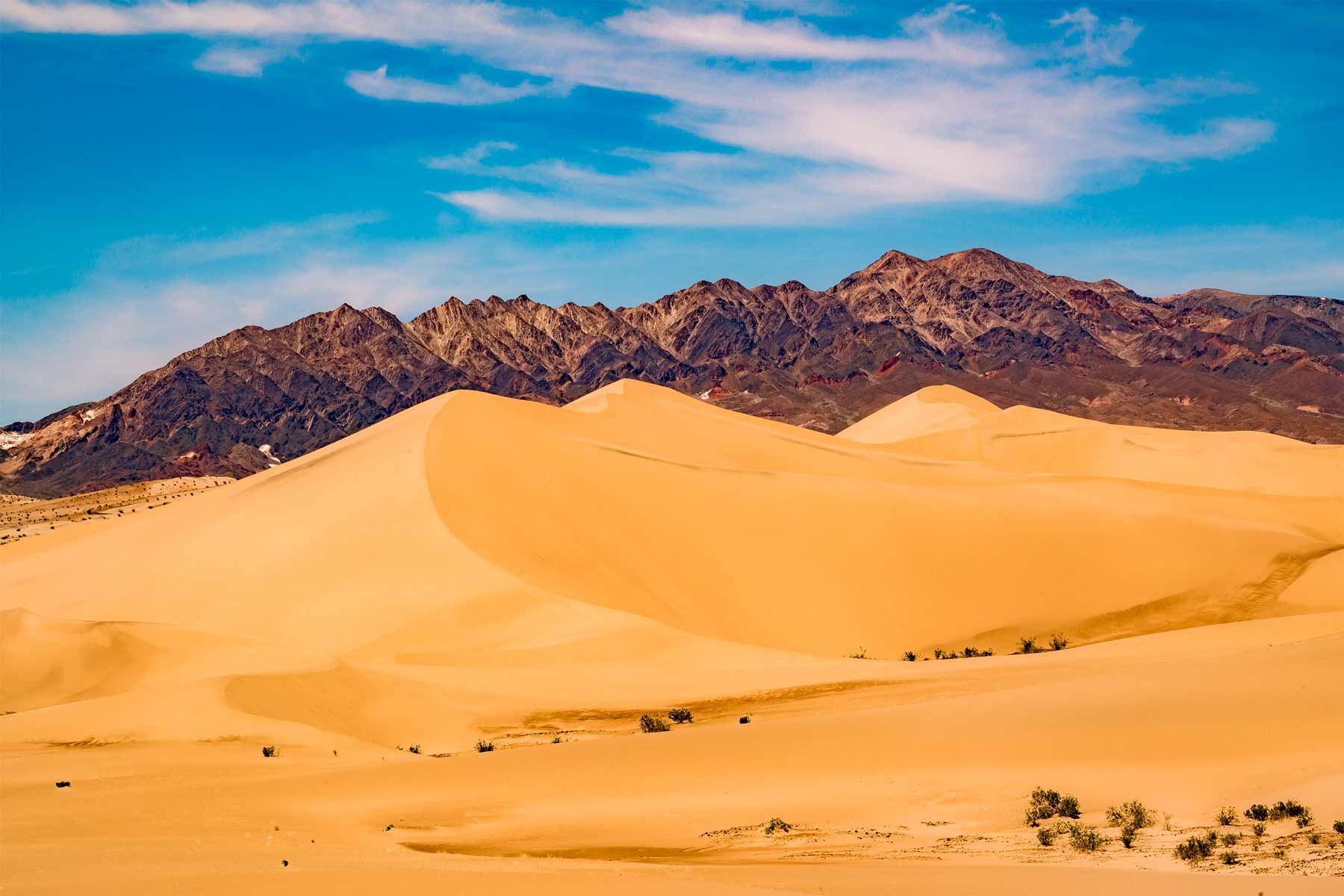
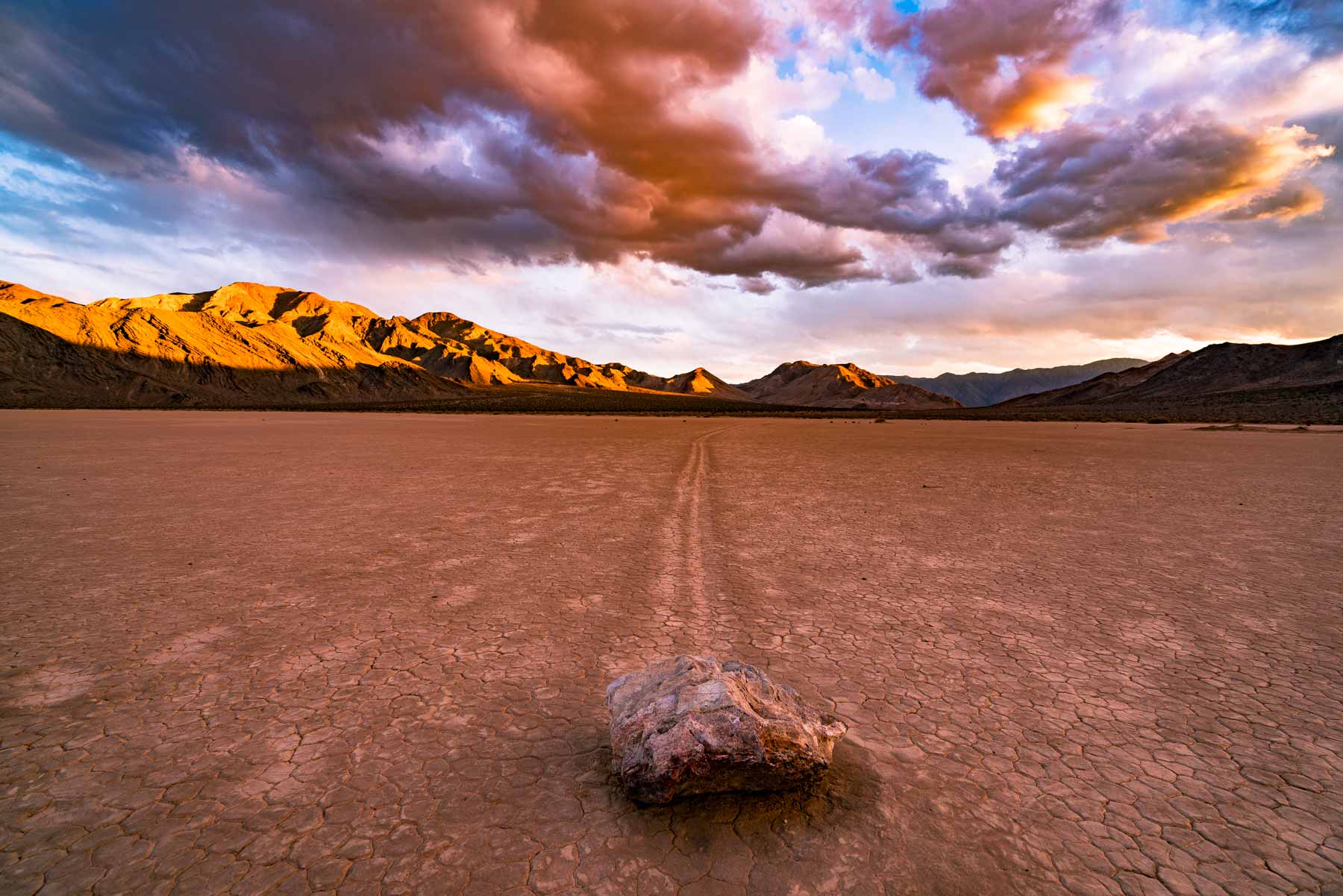
What to actually do here. Walk out onto the salt flats at Badwater Basin, where the cracked hexagons of salt run flat to the horizon and the air shimmers off the ground. Drive the one-way Artists Drive loop and stop at Artists Palette, where copper, iron, and manganese turn the hillsides green, pink, and gold. Get to the Mesquite Flat Sand Dunes for sunrise or the last hour before sunset, when the low-angle light rakes across the ridges and turns the whole field of dunes to fire. Zabriskie Point at dawn is the classic, and it earns the early alarm. Then stay for the stars, because Death Valley is a certified International Dark Sky Park and the night sky here is as good as it gets in the country.
- Badwater Basin: the lowest point in North America, an easy walk straight out onto the salt.
- Artists Drive and Palette: a short scenic loop through mineral-stained hills, best in late-afternoon light.
- Mesquite Flat Sand Dunes: shoot them at sunrise or sunset, avoid midday entirely.
- Zabriskie Point: the badlands overlook, unbeatable at first light.
- Furnace Creek Visitor Center: water, maps, current road conditions, and air conditioning.
Honest caveats. Do not visit in summer. From late spring through early fall this park can hit 120 degrees, and the Park Service is not exaggerating when it tells you not to hike after 10am. Go November through March. Cell service is almost nonexistent, gas is expensive and far apart, so fill up before you arrive and carry several gallons of water per person. Flash floods occasionally close roads, so check conditions at the visitor center before you commit to any backcountry route. For a full breakdown of how to spend your time, see our guide to things to do in Death Valley.
Watch Our Death Valley Film

6. Sequoia & Kings Canyon National Parks
Drive time from San Diego: about 6 hours (roughly 360 miles via I-5 and Highway 99 to the Sierra foothills)
Entrance fee: $35 per vehicle, good for 7 days, and it covers both parks.
This is the longest drive on the list and the only one I would not attempt without at least two nights, but the largest living things on the planet are at the end of it. Sequoia and Kings Canyon sit side by side in the southern Sierra Nevada, and the Park Service runs them as a single unit. Sequoia was established in 1890, making it the second national park in the country after Yellowstone. Kings Canyon, with its own deep glacial gorge, was added in 1940. From San Diego the drive climbs from sea level into giant forest, and the road into Sequoia is a winding mountain grade, so leave the cruise control at home.
What to actually do here. The headliner is the General Sherman Tree, the largest tree on Earth by volume. It stands 275 feet tall and measures over 36 feet across at the base, and standing under it does something to your sense of scale that a photo never will. Walk the Congress Trail loop from there to spend an hour among the biggest sequoias without the crowd at the main tree. Over in Kings Canyon, the General Grant Tree is the second-largest tree in the world at 267 feet, the nation’s official Christmas tree, and an easy paved stroll. Climb the staircase up Moro Rock for a granite-dome view across the Great Western Divide, and walk through the Tunnel Log if you want the classic drive-your-car-through-a-tree photo. For the full list, see our guide to things to do in Sequoia.
Honest caveats. This is high country, so the season matters more than at the desert parks. Winter brings snow and tire-chain requirements, and the Kings Canyon Scenic Byway and the Mineral King road close entirely in the cold months. Late spring through early fall is the window. Black bears are active, so use the food lockers and never leave a scented thing in your car. Summer weekends fill the main parking lots near General Sherman, so go early or use the shuttle when it runs. From San Diego this is a true road trip, so build in a stop and do not try to drive it and hike it in the same day.
How To Pick, And A Weekend Plan
San Diego makes you choose between the easy trip and the big one in a way LA does not. Here is how I would call it.
- The easy afternoon: Cabrillo National Monument. Fifteen minutes out, time it to low tide, walk the Bayside Trail, and you are home for dinner. In winter, add the gray whales. It is the only true day trip on this page.
- Easiest first park trip: Joshua Tree. The closest real national park, the best payoff for the least driving, and the one I would pick for a first overnight. Leave Saturday morning, camp or grab a place in the town of Joshua Tree, and you are home Sunday night having seen the boulders, Keys View, and a sky full of stars.
- Best escape from the crowds: Channel Islands. Fewer people than anywhere on this list, but only if you commit to the drive and the boat. Sleep in Ventura the night before and take the earliest ferry out.
- Best winter trip: Death Valley. While the Sierra is buried in snow, Death Valley is in its prime November through March. It is a five-hour drive, so make it a true two-night weekend.
- The bucket-list haul: Sequoia and Kings Canyon. Six hours each way means this is a long-weekend road trip, not a quick getaway. The biggest trees on Earth, and two parks on one fee, make it worth the drive.
One honest note on what counts as near. People in San Diego always ask about Grand Canyon and Zion, and yes, you can reach both, but they are seven to eight hours out and over state lines, so they belong on a different list. Closer to home, the Mojave National Preserve sits about four hours northeast off I-15 and protects 1.6 million acres of Joshua tree forest, the Kelso Dunes, and volcanic cinder cones with almost nobody around, and it is free. If you want a national park feel without the entrance line, it is an easy addition to a Death Valley weekend.
Frequently Asked Questions
Cabrillo National Monument is the closest National Park Service site to San Diego, about 15 minutes from downtown on Point Loma. The closest true national park is Joshua Tree National Park, roughly 2 hours 30 minutes to 3 hours northeast.
The only National Park Service site inside the city is Cabrillo National Monument on Point Loma, which costs about $20 per vehicle for a 7-day pass. It is a monument rather than a national park, known for its tidepools, harbor views, and the spot where Juan Rodriguez Cabrillo landed in 1542.
Yes. Because San Diego sits farther south, most of the big national parks are an hour or two farther from it than from Los Angeles. Joshua Tree is about 2 hours 30 minutes to 3 hours, Death Valley is about 5 hours, and Sequoia and Kings Canyon is roughly 6 hours from San Diego.
A note on who is telling you this. More Than Just Parks is a family operation. My sons Will and Jim are filmmakers who have spent years working in these parks, including a month on the ground at Joshua Tree, on projects with the National Park Service, the Department of the Interior, the USDA, and the U.S. Forest Service. The drive times and the caveats above come from those trips, earned from the driver’s seat heading north out of San Diego.
Keep Planning
- National Parks Near Los Angeles
- Best National Parks Near San Francisco
- 14 Things to Do at Joshua Tree National Park
- 25 Things to Do in Death Valley National Park
- Channel Islands National Park Facts
- Sequoia & Kings Canyon National Parks Facts
- Historic Sites in California
- Watch Our National Park Films


