

One summer evening in 1898, a teenage cowboy in southeastern New Mexico saw what looked like smoke boiling out of the desert floor. It was not smoke. It was hundreds of thousands of bats pouring from the mouth of a cave, and the boy who rode toward them would spend the rest of his life exploring what lay beneath. That cave is now Carlsbad Caverns National Park, and the story of how it was found is only the beginning of what makes it strange.
What follows are 10 verified facts about Carlsbad Caverns, the reef it was carved from, the people who explored it, and the life that fills its darkness. For tours, timed entry, and trip planning, start with our full Carlsbad Caverns National Park guide.
Tony Pattiz taught American history for more than 25 years before he began writing it for this site, and Carlsbad is exactly the kind of place he taught about. None of us has descended into Lechuguilla, which is closed to all but researchers, but the bat flight and the main cavern are open to any visitor, and this article draws on the National Park Service record for the rest. Every date, number, and name below has been checked against the NPS and the primary sources listed at the end. Last verified July 2026.
Carlsbad Caverns National Park Basics
- Location: Southeastern New Mexico, in the Guadalupe Mountains of the Chihuahuan Desert, near the town of Carlsbad
- Size: 46,766 acres, per the National Park Service
- Caves: More than 119 known caves within the park boundary
- Visitation: 410,778 recreation visits in 2025, per NPS Stats
- Cave temperature: About 56 degrees Fahrenheit year round
- Established: National monument October 25, 1923; national park May 14, 1930
- Designation: UNESCO World Heritage Site, inscribed 1995
1. The Cave Was Carved From A 265 Million Year Old Fossil Reef
Long before there were caves here, there was an ocean. About 265 million years ago, in the Permian, an inland sea covered this corner of New Mexico, and along its edge grew the Capitan Reef, built by sponges, algae, and other marine life. When the sea dried up, the reef was buried, then slowly lifted and exposed as the Guadalupe Mountains rose.
Love Carlsbad Caverns? It's one of 117 threatened public lands destinations we're tracking. Get the free briefing.
The caves came later, and they were not dissolved by ordinary groundwater. Hydrogen sulfide rising from oil and gas deposits deep below mixed with oxygen in the water table to form sulfuric acid, and that acid ate the limestone from below. It is an unusual recipe, and it left behind more than 119 known caves inside the park alone, Carlsbad Cavern the most famous among them.
2. Native Peoples Knew The Cave Long Before It Had A Trail
Who noticed a cave that breathes bats at dusk? People did, and they did so a very long time ago. American Indians lived in the Guadalupe Mountains twelve to fourteen thousand years ago, and cooking-ring sites, mescal roasting pits, and pictographs survive within the park today.
The Mescalero Apache and the Zuni both knew the entrance. Their names for it point straight at what made it unforgettable. Where the trail now switchbacks down into the dark, generations of people had already gathered at the mouth of a cave they understood as the home of the bats. There is little sign that they went deep inside, but they did not need to. They knew it was there.
3. A Sixteen Year Old Cowboy Named Jim White Explored It First
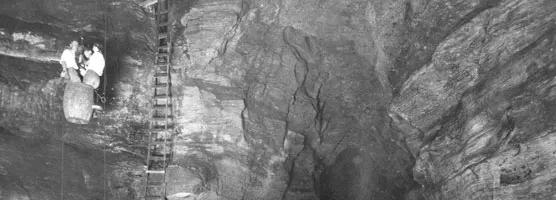
The modern exploration of Carlsbad Caverns begins with a boy and a mistake. In 1898, a sixteen year old cowboy named Jim White was working cattle when he spotted what he took to be smoke from a wildfire rising off the desert. He rode toward it and found instead a black column of Brazilian free-tailed bats streaming from a hole in the ground. He watched them for the better part of an hour before the light failed.
Spanish travelers had passed through this country as far back as the 1500s, and a few later claimed to have seen the entrance, but none left a record that survived. White is the one who went in. He came back alone with wire and scraps of wood, built a ladder, anchored it at the mouth, and climbed down some sixty feet into a darkness his lantern could barely dent. He kept at it for years and named much of what he found, the Devil’s Spring, the Devil’s Den, the Witch’s Finger, and later, as the place grew familiar, the plain and enormous Big Room.
4. A National Geographic Expedition Put The Cave On The Map In 1924
For years almost no one believed White’s descriptions. What changed everything was a scientist with a camera. In 1924, the USGS geologist Willis T. Lee led a six month National Geographic Society expedition to photograph, survey, and build trails through the cavern. The magazine’s images reached a national audience and settled the argument. This place was real, and it was extraordinary.
Recognition had already begun. President Calvin Coolidge had proclaimed Carlsbad Cave National Monument on October 25, 1923, the year before Lee arrived. The expedition confirmed what the proclamation had gambled on, and Jim White, the cowboy nobody had believed, went on to become the cavern’s chief ranger in 1926.
5. The Big Room Is The Largest Cave Chamber In North America
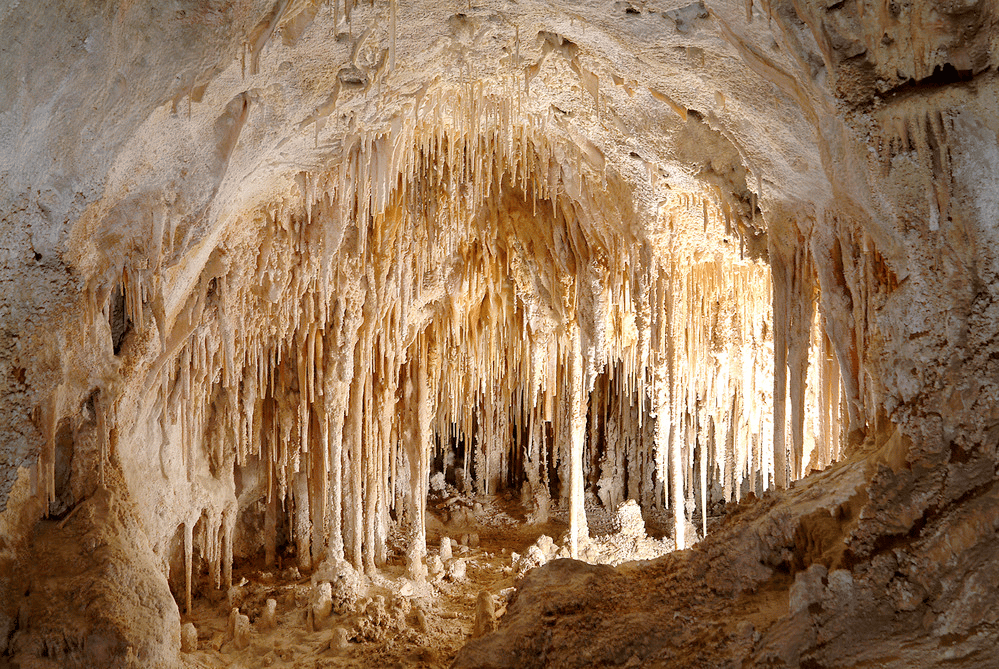
The single space that White named without ceremony turned out to be the giant of the continent. The Big Room covers about 8.2 acres of floor, roughly 4,000 feet long, 625 feet wide, and 255 feet high at its tallest point. It is the largest single cave chamber in North America and one of the largest anywhere on Earth.
A paved trail loops the whole room, an hour or two of walking past stalactites, stalagmites, columns, and pools in near silence. You can reach it by riding an elevator down more than 750 feet, or by hiking the steep natural entrance the way Jim White did, minus the ladder.

6. Hundreds Of Thousands Of Bats Pour Out At Dusk
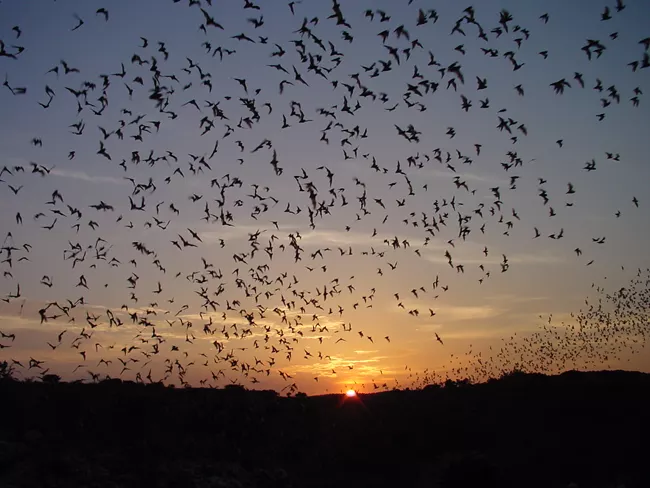
The bats that fooled Jim White are still here, and they are still the show. Carlsbad is summer home to a colony of Brazilian free-tailed bats numbering in the hundreds of thousands. The Park Service has documented peaks as high as 793,000 bats in the cavern in 2005, and researchers using thermal imaging keep refining the count, because a swirling cloud of bats is a genuinely hard thing to tally.
From spring through fall the bats spiral out of the natural entrance at dusk to hunt insects, and rangers narrate the exodus from the Bat Flight Amphitheater before it begins. The park hosts 17 bat species in all. If you can time a single evening at Carlsbad, this is the one to catch, and our guide to the best things to do in Carlsbad Caverns tells you how the program works.
7. Lechuguilla Cave Is One Of The Deepest In The Country And Off Limits
For most of a century, one of the park’s greatest caves looked like nothing at all. Lechuguilla Cave was a 90 foot entrance pit leading to a few hundred feet of dead-end passage, valuable only for the bat guano mined from it under a claim filed in 1914. But cavers kept feeling wind roar up through the rubble on its floor, and they were sure something lay below.
A team of Colorado cavers got permission and began digging in 1984. On May 26, 1986, they broke through into enormous walking passages, and what they found ranks among the finest cave exploration on the planet. Surveyors have since mapped more than 145 miles of passage, as of 2019, and pushed the cave to a depth of 1,604 feet, second deepest of any limestone cave in the United States. It is not open to the public. Entry is limited to approved researchers, survey teams, and NPS trips, which is exactly how a cave this fragile stays intact.

8. Rock Eating Microbes In Lechuguilla May Hold Medical Value
What lives in a cave with no light, no plants, and no food falling in from above? At Carlsbad, the answer is stranger than most visitors ever learn. Deep in Lechuguilla, scientists have found rare chemolithoautotrophic bacteria, rock-eaters that feed on the sulfur, iron, and manganese in the stone itself rather than on anything a green world provides.
These microbes matter beyond their oddity. Some appear to carry natural resistance to antibiotics, a resistance that developed in total isolation from human medicine, and researchers are studying them for what they might teach about disease and drug resistance. A cave sealed off from the surface turns out to be one of the more promising laboratories on the planet, which is another reason so few people are allowed inside.
9. The Desert Above The Cave Is Full Of Life
It would be a mistake to keep your eyes only on the ground. The park sits where three biological regions meet in the Chihuahuan Desert, and the surface holds far more than most people expect. The Park Service counts 67 species of mammals, 357 species of birds, 55 reptiles and amphibians, 5 fish, and more than 600 insects, with new ones logged nearly every year.
Cougars, coyotes, foxes, badgers, and ringtails move through the canyons, cave swallows nest at the natural entrance, and the whole community is stitched together by the same limestone and desert that made the caves. The reef that built Carlsbad runs on across the state line into Guadalupe Mountains National Park in Texas, and the two parks protect different faces of one ancient formation.
10. It Is A National Park And A World Heritage Site
Carlsbad’s climb from a cowboy’s tall tale to a protected wonder took less than a lifetime. The 1923 national monument became Carlsbad Caverns National Park by act of Congress on May 14, 1930, once the National Geographic expedition had proved the cave’s importance to the country.
The world caught up in 1995, when UNESCO inscribed the park as a World Heritage Site, citing its exceptional cave formations and the rare geology that made them. It stands today alongside a short list of the most significant natural places on Earth, and it earned the honor from below the surface, not above it.
How To See This Yourself
We should be plain about this. Lechuguilla is closed to everyone but researchers, so no visitor, ourselves included, gets to see its crystal pools in person. What is open is still remarkable. Any visitor can walk the natural entrance trail down into the cool, still air of the main cavern, where the temperature holds near 56 degrees no matter the season and the desert heat vanishes within a few switchbacks. The Big Room loop is paved and self-guided, and rangers lead deeper trips into places like the Kings Palace by reservation.
The one thing to plan your day around is the evening bat flight from spring through fall, free, unticketed, and unforgettable. Reservation rules and tour options change with the season, so confirm the current details on the park hub before you drive out. Our Carlsbad Caverns things to do guide ranks the tours and tells you which to book first.
Where These Facts Come From
Every claim in this article was checked against the sources below in July 2026. Numbers that change over time, like surveyed cave miles and annual visitation, are stated with the year they were reported.
- NPS, Geologic Formations at Carlsbad Caverns, for the Capitan Reef, the 265 million year age, sulfuric acid cave formation, and the 119 caves
- NPS, History and Culture of Carlsbad Caverns, for the American Indian history and the 1923 and 1930 dates
- NPS, Jim White, Cave Explorer, for the 1898 discovery, the ladder, and the named features
- NPS, Carlsbad Cavern Geology brochure, for the Big Room dimensions and North American record
- NPS, Bats of Carlsbad Caverns, for the Brazilian free-tailed bat colony estimates and the 17 bat species
- NPS, Lechuguilla Cave, for the 1986 breakthrough, the 145 mile survey as of 2019, the depth, the microbes, and the access limits
- NPS, Animals of Carlsbad Caverns, for the mammal, bird, reptile, fish, and insect counts
- NPS Stats (IRMA), for the 2025 recreation visits and park acreage
- UNESCO World Heritage Centre, Carlsbad Caverns National Park, for the 1995 inscription
Keep Exploring Carlsbad Caverns
- Carlsbad Caverns National Park Guide, our full trip planning hub
- Best Things To Do In Carlsbad Caverns National Park, every tour and the bat flight ranked
- Guadalupe Mountains National Park Facts, the same reef just across the state line
- Mammoth Cave National Park Facts, more history from the underground
- New Mexico National Parks Worth Visiting
- Before you go, check live alerts and air quality on our national park conditions dashboard
What to Bring to Carlsbad Caverns
Gear we recommend for Carlsbad Caverns. Affiliate links support our work at no cost to you.
More Than Just Parks may earn a small commission from purchases made through these links, at no extra cost to you. We only recommend gear we would actually use.
Affiliate disclosure: Some links on this page earn us a small commission at no extra cost to you. We only recommend gear we actually use.


