

National park rangers are the people on the front lines of America’s national parks. They protect the land, assist visitors, lead educational programs, perform emergency medical care, fight fires, and stand between our public lands and those who would abuse them.
This is the story of how the profession came to be: the soldiers who guarded the first parks, the guardians and gamekeepers who came before the uniform existed, the 1916 law that created the National Park Service, and the rangers who broke barriers along the way. I am a retired history teacher, and after almost 30 years in the classroom, I have spent my retirement walking these parks and digging into their history. What follows is dedicated to these public servants.
As Stephen Mather, the first director of the National Park Service, put it: “The parks do not belong to one state or to one section. The Yosemite, the Yellowstone, the Grand Canyon are national properties in which every citizen has a vested interest.” Without the men and women who serve as rangers, none of it would be possible.

One of America’s Most Dangerous Jobs
In my travels through the national parks, I have met people who envy the ranger’s life. “How wonderful to get paid for basking in the sunshine and being surrounded by all of this splendor,” one woman told me. A man at the Grand Tetons went further: “I can’t believe they pay these folks. Shouldn’t these park rangers be paying Uncle Sam?” I told him, politely, no. He walked off a little perturbed.
117 public lands destinations are under threat. Get the free briefing that 27,000+ people use to stay informed and take action.

“If You Cannot Work Ten or Twelve Hours a Day, Don’t Fill Out the Attached Blank”
Horace Albright, the second director of the National Park Service, would have disagreed with that tourist too. In a letter to prospective rangers, he wrote: “The duties are exacting and require the utmost patience and tact at all times. A ranger’s job is no place for a nervous, quick-tempered man, nor the laggard, nor the one who is unaccustomed to hard work. If you cannot work hard ten or twelve hours a day, and always with patience and a smile on your face, don’t fill out the attached blank.” (Source: Horace Albright, The Birth of the National Park Service)

Ranger Danger
The work is not without real risk. As former ranger Andrea Lankford writes, “In the United States, a park ranger is more likely to be assaulted in the line of duty than is any other federal officer, including those who work for the ATF, the Secret Service, and the DEA. A park ranger is twelve times more likely to die on the job than is a special agent for the FBI.” (Source: Andrea Lankford, Ranger Confidential)

America’s First National Park Under Siege
Yellowstone was America’s first national park. It could just as easily have been its last. Congress established it on March 1, 1872, with President Ulysses S. Grant’s signature, but the law gave the new park almost no protection. A contract between the Department of the Interior and the Yellowstone Park Improvement Company even allowed the company to rent the park out to private parties, who did as they pleased, including the wholesale slaughter of its wildlife.

Related: our guide to Yellowstone National Park facts.
George Bird Grinnell
For early conservationists like George Bird Grinnell, the assault on Yellowstone threatened some of America’s most important wild places. Grinnell edited and published Forest and Stream, an influential magazine of hunting, fishing, and the outdoors, and he sounded the alarm in a series of blistering editorials. He understood that the Age of Industry, which had driven the American economy to the front of the world, was now poised to exploit and destroy the American West.

The Yellowstone National Park Protection Act
Grinnell ran weekly editorials calling for federal protection and recruited powerful allies to the fight, including Theodore Roosevelt and Speaker of the House Thomas Reed. By spotlighting the poaching and the corporate threat, he helped secure passage of the Yellowstone National Park Protection Act in 1894, which finally gave the park real legal teeth.

The U.S. Army Were the Earliest Park Protectors
The earliest protectors of the national parks were not rangers in the green and gray we know today. There was no National Park Service in the 19th century, so the job fell to the U.S. Army. From 1886, Yellowstone was guarded by soldiers, and from 1891 to 1914 the Army also protected Yosemite, Sequoia, and General Grant, now Kings Canyon. Without them, we might have no national parks at all.

The Buffalo Soldiers in the Parks
Among the soldiers who guarded Yosemite and Sequoia were the Buffalo Soldiers, the African American regiments formed after the Civil War. As ranger Shelton Johnson writes in his essay “Invisible Men: Buffalo Soldiers of the Sierra Nevada,” their story has only recently come to light. These men built roads and trails, stopped poaching, and in effect served as some of the country’s first park rangers.


Related: our guide to the 20 best Black history sites in America.
Fourteen Years of Corrupt or Incompetent Management
The soldiers arrived to find a park on the brink of ruin. As writer Jim Morrison notes, “Fourteen years of corrupt or incompetent management by political appointees threatened its existence.” Horace Albright described the early chaos plainly: hunters shot bison, ranchers grazed cattle inside the boundaries, and visitors threw objects into the geysers, even pouring in soap flakes to trigger eruptions. Poaching grew so brazen that Buffalo Bill Cody wrote to the New York Sun pleading for federal protection.

Acres of Precious Land Were Being Devastated
It was not only the wildlife. Park lands were grazed bare, timber was cut at an alarming rate, and fires burned unchecked. The soldiers put a stop to it. Their administration of Yellowstone became the model for the early management of Yosemite, Sequoia, and Kings Canyon. As Yellowstone historian Lee Whittlesey put it, “The Army went a long way toward protecting an area that had very little protection, and turned it into a place of relative tranquility.” With the creation of the National Park Service in 1916 and America’s entry into World War I a year later, the soldiers began to withdraw. Their job was done, but one question remained: who would replace them?

America’s First Park Ranger
Yosemite was not America’s first national park, but it was the first place the federal government moved to protect. On June 30, 1864, President Abraham Lincoln signed the Yosemite Grant Act, setting aside Yosemite Valley and the Mariposa Grove for the state of California to hold in public trust. It was the first time any government had protected land purely for its scenic value and the enjoyment of its people. Yosemite did not become a national park until October 1, 1890, eighteen years after Yellowstone.

Related: our guide to Yosemite National Park facts.
Galen Clark
Who would guard this newly protected land? On May 21, 1866, the Yosemite pioneer Galen Clark was named “Guardian of Yosemite,” the first protection officer ever appointed to safeguard America’s public lands. In effect, Galen Clark was America’s first park ranger. In 1870 he made the first arrest inside a park, charging two men for felling a giant pine. Like the rangers who followed, Clark fought fires, protected the land, and shared his knowledge as a guide and educator. (Source: Charles R. Farabee, Jr., National Park Ranger: An American Icon)
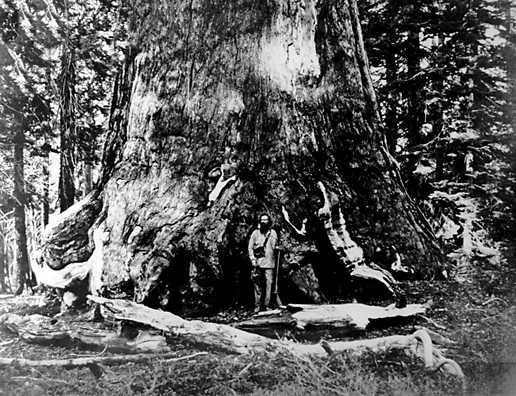
Galen Clark and John Muir
John Muir, whom many call the “Father of the National Parks,” described Clark as “the best mountaineer I ever met and one of the most sincere tree-lovers I ever knew.” The two made many wilderness trips together, and on an 1872 outing Clark helped Muir set stakes in an ice field on Mount Maclure for his glacial research. Clark also wrote a fine account of his years in the valley, The Yosemite Valley.
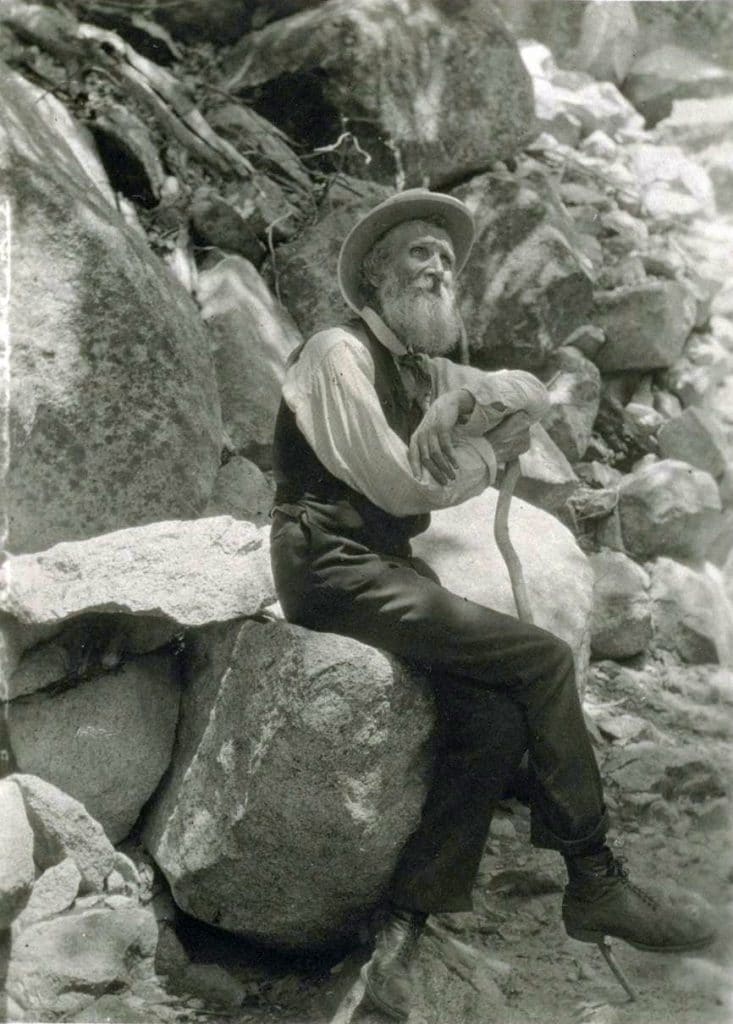
The First African American Park Superintendent
The figures we remember are few compared with those we have forgotten, and the forgotten ones are often the most remarkable. A case in point is Colonel Charles Young, the first African American to serve as superintendent of a national park.

Born into slavery during the Civil War, Young was the first African American to graduate from a white high school in Ohio. In 1884 he won an appointment to West Point through a competitive examination and, after enduring the racism of his era, became only the third African American to graduate from the academy.
Young commanded an all-Black cavalry regiment at the Presidio in San Francisco. In the summer of 1903, when the Army managed the parks, he led his troops to Sequoia and General Grant, now part of Kings Canyon National Park, and served as acting superintendent, the first African American to hold such a post. Under his command, his troops built the first wagon road into the Giant Forest and stopped poaching in the parks. A sequoia tree was later named in his honor.

“A journey through this park will convince even the least thoughtful man of the needfulness of preserving these mountains just as they are. In this lies the necessity of forest preservation.”
Charles Young, Sequoia National Park, 1903
Robert Stanton: From Ranger to NPS Director
It would be decades before another African American led a national park. That honor went to Robert Stanton. Recruited in 1962 from Huston-Tillotson, a historically Black college, during a push by Interior Secretary Stewart Udall to diversify the workforce, Stanton became one of only three Black rangers at Grand Teton National Park. At the time, there was just one Black ranger in the entire service.

Stanton became a park superintendent in 1970 and, in 1997, the first African American director of the National Park Service. Under his leadership, the agency worked to diversify its staff and to recognize and protect the cultural and historic sites of communities long left out of the national story.

America’s First National Park Ranger
Galen Clark earned the honor of being America’s first ranger, but because Yosemite was not yet a national park, the title of first national park ranger went to someone else. Harry Yount had served as a Union soldier in the Civil War, then worked across the West as a hunter, guide, and freight-wagon driver. In 1880, Yellowstone hired him to protect its wildlife from commercial hunters.

“Rocky Mountain Harry,” as he was known, lasted fourteen months before quitting, arguing that the park was simply too large for one man to patrol, and recommending instead a force of mounted rangers. His title had been “gamekeeper,” but later NPS historians credited him as the nation’s first national park ranger.
The Creation of the National Park Service
By the early 1900s the parks were a patchwork, run by different agencies with little consistency. Horace Albright recalled that Stephen Mather’s chief complaint was the “miserable conditions” he found, from rundown facilities to filthy lodging and food. After the bitter fight over the damming of the Hetch Hetchy Valley, the Sierra Club and its allies pressed for a single federal agency to manage the parks.
On August 25, 1916, President Woodrow Wilson signed the National Park Service Organic Act into law, creating the agency and giving it the mandate it still carries: to conserve the parks “unimpaired for the enjoyment of future generations.”

Stephen Mather
Stephen Mather became the first director of the National Park Service. He brought concessions into the parks so visitors could buy food and supplies, and he promoted the road system that opened the parks to the automobile. Above all, he wanted the ranger position to be a true career, not a temporary job.

Related: Stephen Mather and Horace Albright, the founders of the National Park Service.
The Earliest Park Rangers
The first rangers were hired for their skill in woodsmanship and wilderness survival. Among the earliest at Yellowstone were Jim McBride, Harry Trischman, and Raymond Little. In 1923 a ranger earned about a thousand dollars a year, working up to $1,320, and had to buy his own uniform and food. Even so, the service was flooded with applicants.
In his 1916 report, Mather laid out his vision: “The longer a man is in the service the more valuable he is, and therefore I think a ranger should enter the service with the desire of making it his life’s work, so that each man would have the fullest incentive to give his best service, knowing that advancement would be based on character and general efficiency.”

In 1926, President Calvin Coolidge ended the practice of appointing rangers without examination, directing the Civil Service Commission to set qualifications and a competitive test. The required skills give a sense of the breadth of the job: fighting forest and prairie fires, packing horses and mules, reading topographic maps and a compass, building fire lines and trails, handling firearms, driving cars and motorcycles, cooking, snowshoeing and skiing, and, above all, tact in handling people. (Source: Horace Albright, The Birth of the National Park Service)

The First Female Ranger
Clare Marie Hodges was the first woman ranger in Yosemite and is generally considered the first fully commissioned female ranger in the National Park Service. She first visited Yosemite at fourteen, after a four-day horseback ride, and returned in 1916 to teach. In 1918, with male applicants scarce during World War I, Superintendent Washington B. Lewis hired her as a ranger. She wore the same uniform, Stetson, and badge as the men and carried the same duties, with one exception: she would not carry a gun. (Source: Sierra College)

Other Female Pioneers
Other early women rangers followed. Helene Wilson was hired six weeks after Hodges to serve at Mount Rainier National Park. Isabel Bassett Wasson became Yellowstone’s first female naturalist in 1920. And Marguerite Lindsley, born and raised in Yellowstone, became the first permanent female ranger-naturalist after a ten-year career, having been an accomplished horsewoman, skier, and cross-country motorcyclist.

The First Ranger to Rise to NPS Director
Russell E. Dickenson began his career as a ranger at Grand Canyon in 1946 and worked his way up through a series of park and office assignments before becoming director in 1980. He was the first director to have risen from the ranger ranks, and he used that standing to restore stability after a run of short-term leaders. Dickenson won support from Congress for the Park Restoration and Improvement Program, which devoted more than a billion dollars over five years to park resources and facilities. He retired in 1985.

Ranger Stories
In researching this piece I came across more wonderful ranger stories than I could ever fit here. So I will share three favorites, spanning the early years of the service to more recent times.

Colonel John White
John White was an Englishman who joined the Philippine Constabulary in 1901 and rose to colonel. He worked in Europe with the Red Cross and the Rockefeller Foundation, became an American citizen, and served as a Signal Corps pilot in World War I, then as a provost during the 1919 Paris Peace negotiations. After the war he joined the National Park Service, glad to take a job as a ranger at the Grand Canyon despite his experience.
A year later, French Field Marshal Ferdinand Foch, the Supreme Allied Commander of World War I, visited Yellowstone, and White, who spoke fluent French, served as his guide. Standing at the rim of the canyon, White asked Foch what he thought, hoping for a quotable line. “Ah,” Foch replied, “what a place to bring a mother-in-law.” White went on to serve as superintendent at the Grand Canyon, Sequoia, and General Grant.

Betty Reid Soskin
Betty Reid Soskin became the oldest active ranger in the National Park Service. During World War II she worked as a file clerk in a segregated union hall, and in 1945 she and her husband Mel Reid founded one of the first Black-owned music stores in the country. She later worked for a Berkeley city council member and for two members of the California State Assembly.

In the early 2000s she helped plan the Rosie the Riveter / World War II Home Front National Historical Park, working with the NPS to uncover the untold stories of African Americans on the home front. That work led to a temporary position at age 84, and in 2007 she became a permanent NPS employee, leading programs and sharing her own memories at the park visitor center until her retirement in 2022 at age 100. (Source: NPS)

Jerry Bransford
Jerry Bransford grew up a few miles from Mammoth Cave National Park, knowing only a little of his family’s deep connection to the caves. He served in the Army during the Vietnam War, then spent 30 years at Dow Corning. After retiring, in 2004, he began a new chapter as an interpretive ranger at Mammoth Cave, the fifth generation of his family to guide there.
The story he tells is a hard and important one. His great-great-grandfather, Materson Bransford, was born into slavery in 1849 and was enslaved by Thomas Bransford, who was also, it turns out, his father. Materson and another enslaved man named Nicholas were rented out to explore the caves and lead tours. Bransfords guided at Mammoth Cave for a century.
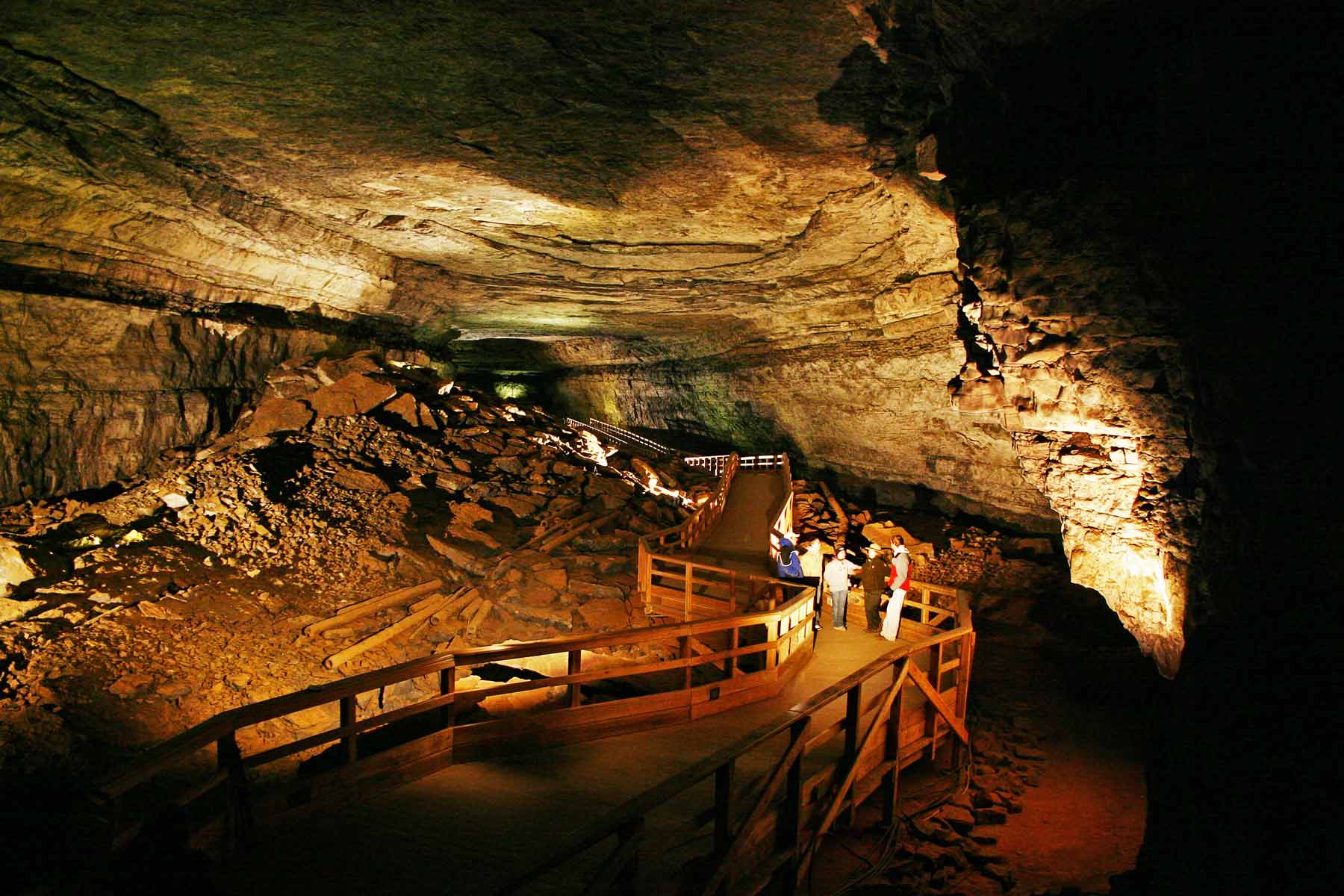
When the National Park Service took over Mammoth Cave in 1941, none of the Black guides, including the fourth-generation Bransfords, were kept on, ending a century of Black and white guides working side by side. Jerry Bransford’s return in 2004 reclaimed that legacy. “I believe I’ve been chosen as a representative to tell their stories,” he said, “things that went untold for more than 170 years.” (Source: NPS and The News-Enterprise)

What Park Rangers Do Today
The word “ranger” covers far more than most visitors realize. Broadly, the work splits into two tracks: interpretive rangers, who lead programs, staff visitor centers, and tell the stories of each park; and protection rangers, who are commissioned law enforcement officers handling emergencies and resource protection. In practice, a single ranger may do dozens of jobs. A partial list:
- Perform search and rescue and emergency medical care
- Enforce federal, state, and local laws
- Fight structural fires and manage wildland fires
- Give interpretive talks and lead guided walks
- Protect threatened and endangered plants and animals
- Investigate accidents and crimes
- Research and collect scientific data
- Monitor air, water, and night-sky quality
- Map caves and document historic buildings
- Conduct snow surveys and control avalanches
- Curate museums and maintain archives
- Manage campgrounds, entrance stations, and visitor centers
- Produce living history demonstrations
- Pack mules, shoe horses, and clear trails (Source: Charles R. Farabee, Jr., National Park Ranger: An American Icon)
Further Reading on the Rangers
- The Birth of the National Park Service by Horace Albright
- Oh, Ranger! by Horace Albright
- Hey Ranger! by Jim Burnett
- Ranger Confidential by Andrea Lankford
- The Wonder of It All: 100 Stories from the National Park Service by the Yosemite Conservancy
About the People Behind More Than Just Parks
We don’t make this up out of thin air. My sons have spent their adult lives exploring and filming America’s national parks and public lands.

As for me, I am a retired educator and the proud father of these two, who are happily obsessed with the national parks. I taught history for more than a quarter of a century, and now I research and write for More Than Just Parks, always on the hunt for the places where nature and history meet.
More Than Just Parks is a family operation. My sons Will and Jim, collectively known as the Pattiz Brothers, love the national parks and have worked with the National Park Service, the Department of the Interior, and the U.S. Forest Service for years, creating films on the places and issues that matter.
Affiliate disclosure: Some links on this page earn us a small commission at no extra cost to you. We only recommend gear we actually use.