

When I taught American history, the civil rights era was the unit that hit my students the hardest. You could hear a pin drop in the classroom. These places carry that same weight when you stand in them in person.
I am a retired history teacher who now researches and writes for More Than Just Parks. What follows is my guide to ten civil rights sites worth your time, ranked, with the real history behind each one and what you will see when you visit. Most of these are sacred ground, and I have tried to tell their stories with the honesty and the gravity they deserve.
More Than Just Parks helped film and produce “Twenty & Odd,” a National Park Service film that visits many of the most important civil rights sites in America. You can watch it below.

The 10 Best Civil Rights Sites at a Glance
| Rank | Site | Managed by | Location | Why It Matters |
|---|---|---|---|---|
| 1 | Birmingham Civil Rights National Monument | National Park Service | Birmingham, AL | Heart of the 1963 Birmingham campaign |
| 2 | Selma to Montgomery National Historic Trail | National Park Service | Selma to Montgomery, AL | The 1965 voting rights march |
| 3 | Martin Luther King, Jr. National Historical Park | National Park Service | Atlanta, GA | King’s birthplace, church, and tomb |
| 4 | Rosa Parks Museum | Troy University | Montgomery, AL | The Montgomery Bus Boycott |
| 5 | Freedom Rides Museum / Freedom Riders National Monument | State of Alabama / National Park Service | Montgomery & Anniston, AL | The 1961 Freedom Rides |
| 6 | 16th Street Baptist Church | Congregation (National Historic Landmark) | Birmingham, AL | Site of the 1963 bombing |
| 7 | Dexter Avenue King Memorial Baptist Church | Congregation (National Historic Landmark) | Montgomery, AL | King’s first pastorate |
| 8 | Martin Luther King, Jr. Memorial | National Park Service | Washington, D.C. | National tribute to Dr. King |
| 9 | The National Memorial for Peace and Justice | Equal Justice Initiative (private) | Montgomery, AL | Memorial to lynching victims |
| 10 | The Legacy Museum | Equal Justice Initiative (private) | Montgomery, AL | From enslavement to mass incarceration |
10. The Legacy Museum
Location: Montgomery, Alabama | Managed by: Equal Justice Initiative (private)
117 public lands destinations are under threat. Get the free briefing that 27,000+ people use to stay informed and take action.
We begin with The Legacy Museum: From Enslavement to Mass Incarceration, because to understand the struggle for civil rights you have to start with what came before it. As the historian David McCullough put it, “History is who we are and why we are the way we are.”
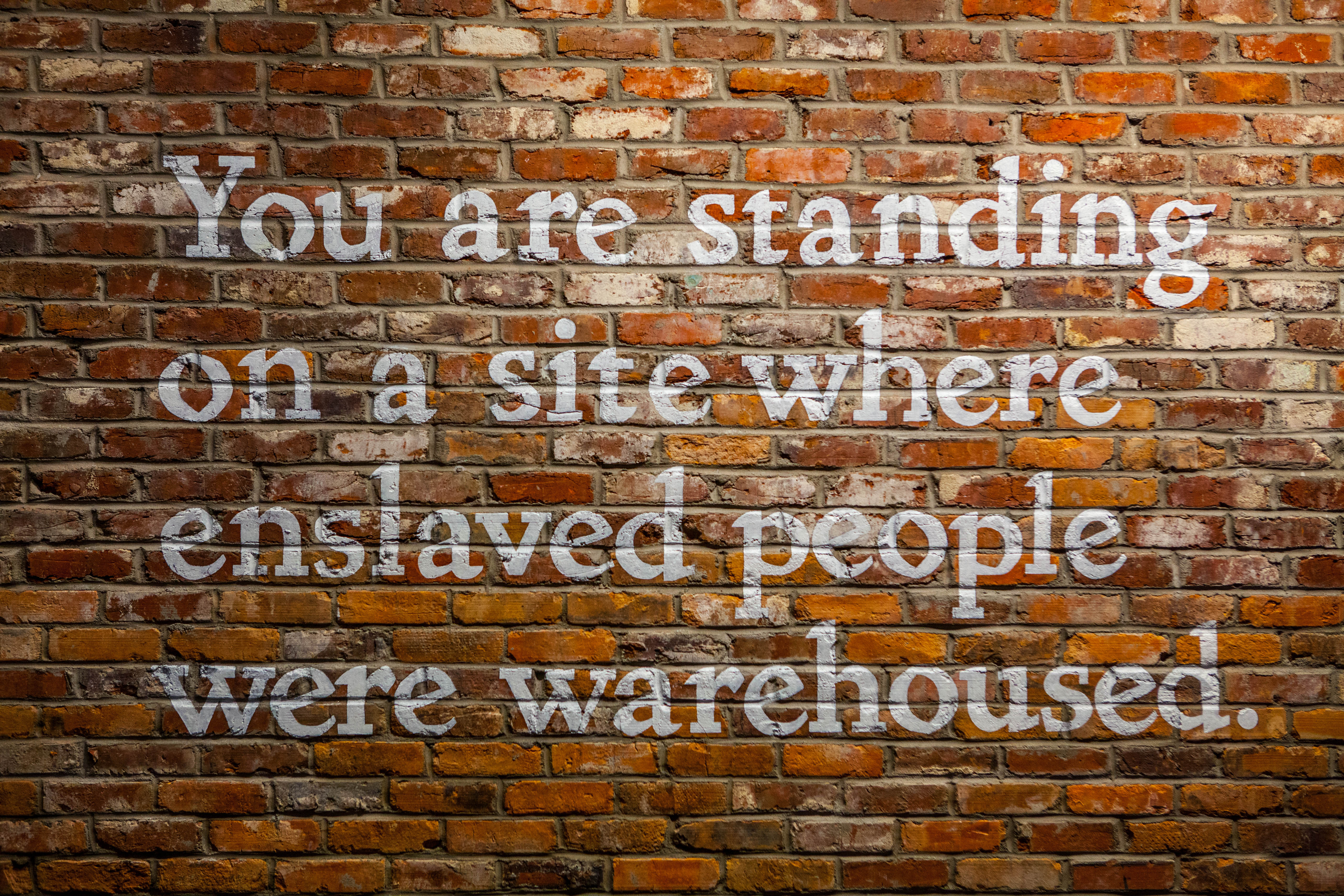
The museum, run by the Equal Justice Initiative, sits near the site of one of the most prominent slave auctions in the country, steps from the rail station where tens of thousands of enslaved people were trafficked. It traces a direct line from slavery through lynching and Jim Crow to mass incarceration today.
What You Will See
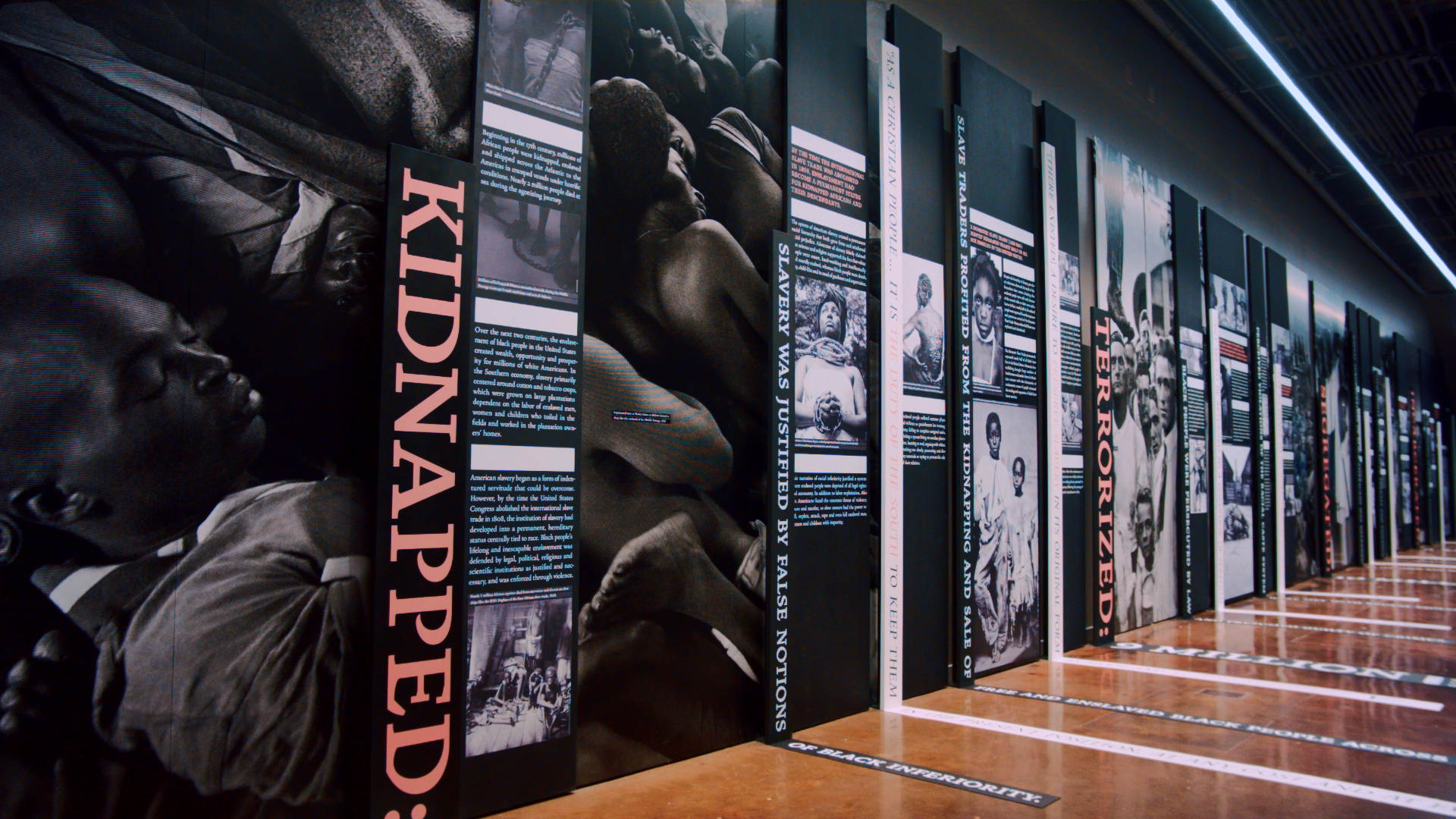
On entering, visitors pass replicas of slave pens where, through sights and sounds, you experience what it would have meant to wait for the auction block. Narration drawn from first-person accounts of enslaved people gives the exhibits a sobering authenticity. Beyond slavery, the displays document the racial terror of Jim Crow and connect that history to present-day issues of mass incarceration and police violence.
“Those who deny freedom to others deserve it not for themselves, and, under a just God, cannot long retain it.”
Abraham Lincoln, April 6, 1859
Slavery by Another Name
To understand the history the museum confronts, I recommend Slavery by Another Name: The Re-Enslavement of Black Americans from the Civil War to World War II by Douglas A. Blackmon, winner of the 2009 Pulitzer Prize. It documents how, long after the 13th, 14th, and 15th Amendments, tens of thousands of Black Americans were arrested on flimsy charges, fined sums they could not pay, and then leased as forced labor to mines, lumber camps, railroads, and farms. Many were simply seized and held in years of involuntary servitude, bought and sold and beaten, for decades after slavery was officially abolished.
See more in our guide to historic sites in Alabama.
9. The National Memorial for Peace and Justice
Location: Montgomery, Alabama | Managed by: Equal Justice Initiative (private)
Just up the hill from the Legacy Museum is the National Memorial for Peace and Justice. In 1903, W. E. B. Du Bois wrote that “the problem of the twentieth century is the problem of the color line.” This memorial reckons with what that meant.
Opened on April 26, 2018, it is the nation’s first memorial dedicated to the victims of lynching and racial terror. Between 1877 and 1950, more than 4,400 African American men, women, and children were murdered by white mobs across the United States.

Confronting the Legacy of Racial Terror
The memorial uses sculpture, art, and design to confront that history directly. At its center hang 800 weathered steel monuments, one for each county in the United States where a documented racial terror lynching took place, each inscribed with the names of the victims. Visitors are led on a journey from slavery through lynching and into the civil rights era. To go deeper, read Black Reconstruction in America, 1860-1880 by W. E. B. Du Bois.

8. Martin Luther King, Jr. Memorial
Location: Washington, D.C. | Managed by: National Park Service
On the National Mall, the Martin Luther King, Jr. Memorial honors the Baptist minister who became the leading voice of the civil rights movement. Described as the “conscience of the nation,” Dr. King advanced the cause through nonviolence, and his marches and protests built the pressure that produced the landmark Civil Rights Act and Voting Rights Act.
“Injustice anywhere is a threat to justice everywhere.”
Dr. Martin Luther King, Jr.
Nobel Peace Prize
On October 14, 1964, Dr. King received the Nobel Peace Prize for his work against racial injustice. At 35, he was the youngest man to receive the honor at the time, and one of two Georgians to win it, alongside President Jimmy Carter.

Visiting the Memorial
The centerpiece is the Stone of Hope, a 30-foot granite sculpture of King emerging from a mountain, drawn from his line “out of the mountain of despair, a stone of hope.” A surrounding inscription wall carries quotations from across his life. A bookstore near the memorial offers further reading.

7. Dexter Avenue King Memorial Baptist Church
Location: Montgomery, Alabama | Managed by: the congregation (National Historic Landmark)
If only these walls could talk. The Dexter Avenue King Memorial Baptist Church was the setting for some of the most important meetings of the civil rights era. It was here that mass meetings organized the Montgomery Bus Boycott, which ran from December 5, 1955, to December 20, 1956, and is regarded as the first large-scale American demonstration against segregation.

Where Dr. King Began His Ministry
The church is preserved as it was when Dr. Martin Luther King, Jr. served as pastor here from 1954 to 1960, his first pastorate. It was designated a National Historic Landmark in 1974. Much of Montgomery’s early civil rights organizing was directed by King from his office in the lower level. Today visitors from around the world come to learn about its history and King’s role in the bus boycott.

“The ultimate measure of a man is not where he stands in moments of comfort and convenience, but where he stands at times of challenge and controversy.”
Dr. Martin Luther King, Jr.
6. 16th Street Baptist Church
Location: Birmingham, Alabama | Managed by: the congregation (National Historic Landmark)
The 16th Street Baptist Church served as an organizing headquarters and a rallying point for Birmingham’s civil rights campaign. It also holds one of the movement’s most heartbreaking chapters.
On Sunday morning, September 15, 1963, members of the Ku Klux Klan planted dynamite beneath the church. The blast killed four girls preparing for services: Addie Mae Collins (14), Cynthia Wesley (14), Carole Robertson (14), and Carol Denise McNair (11). More than twenty others were injured.

A Bombing Becomes a Turning Point
National outrage over the murders, and the violence that followed in Birmingham, drew the country’s attention to the brutality Black Americans faced and helped build momentum for the Civil Rights Act of 1964. Justice came slowly. Klansman Robert Chambliss was convicted of murder in 1977. Two other Klansmen, Thomas Blanton and Bobby Frank Cherry, were finally convicted in 2001 and 2002. A fourth suspect, Herman Frank Cash, died in 1994 before he could be tried. (Source: History)

The Survivor’s Story
A fifth girl survived. Sarah Collins, the younger sister of Addie Mae, was twelve and standing beside her sister when the bomb went off. The blast left her badly wounded and blind in one eye. Her account is told in The 5th Little Girl: Soul Survivor of the 16th Street Baptist Church Bombing by Tracy Snipe, with Sarah Collins Rudolph.
Visiting the Church
The church offers guided tours of the sanctuary and the spaces where civil rights meetings were held. Plan at least an hour, and check the church website for current tour hours and admission.
5. Freedom Rides Museum and Freedom Riders National Monument
Location: Montgomery and Anniston, Alabama | Managed by: State of Alabama and National Park Service
In 1961, the Freedom Riders set out to test a Supreme Court ruling that had outlawed segregation in interstate bus travel. Organized by the Congress of Racial Equality under director James Farmer, interracial groups of activists rode Greyhound and Trailways buses from Washington, D.C. toward New Orleans.
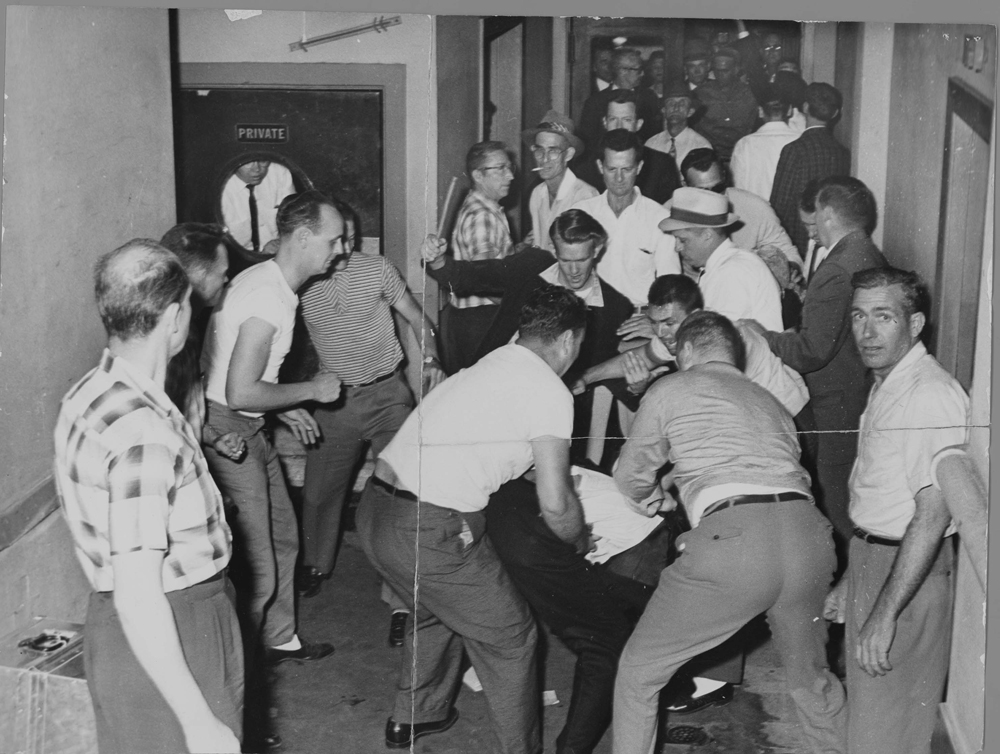
Met by a Mob
The journey went without incident until Alabama. Outside Anniston, a white mob slashed the tires of one bus and firebombed it as the riders escaped. In Montgomery, another mob attacked riders at the terminal with bats, pipes, and bricks. Among those badly beaten were future congressman John Lewis and fellow activist Jim Zwerg. For their story, read Freedom Riders: John Lewis and Jim Zwerg on the Front Lines of the Civil Rights Movement by Ann Bausum.
“In the movement, we didn’t know how history would play itself out. When we were getting arrested and waiting in jail, we didn’t know what would happen, but we knew it had to happen.”
John Lewis, Across That Bridge
Visiting the Sites
The Freedom Rides Museum in Montgomery occupies the historic Greyhound bus station where riders were attacked. About an hour northeast, the Freedom Riders National Monument in Anniston preserves the former Greyhound station and the spot on Highway 202 where the bus was firebombed.

See more in our guide to Alabama national parks.
4. Rosa Parks Museum
Location: Montgomery, Alabama | Managed by: Troy University
Troy University’s Rosa Parks Museum stands on the site where Rosa Parks was arrested. It honors her life and the Montgomery Bus Boycott that her act of resistance set in motion, the campaign that brought integration to the city’s buses and the world’s attention to the cause.

Rosa Parks’s Life and Legacy
On December 1, 1955, Rosa Parks refused to give up her seat to a white passenger on a Montgomery bus. Her arrest sparked a boycott that lasted 381 days and made her known as “the Mother of the Civil Rights Movement.” Parks was no accidental figure. She had served as secretary of the Montgomery NAACP for more than a decade and was a trained, committed activist.

After the boycott, Parks lost her job and faced death threats, and she and her husband Raymond moved to Detroit in 1957. She remained active in the movement, worked for years in the office of Congressman John Conyers, and in 1999 received the Congressional Gold Medal, the highest civilian honor in the country. To learn more, read Rosa Parks: My Story by Rosa Parks and Jim Haskins.
What to See at the Museum
The museum holds significant artifacts, including Parks’s original fingerprint arrest record, a 1950s Montgomery city bus, court documents and police reports, and a restored 1955 station wagon, one of the “rolling churches” used to carry boycotters to work. The exhibits let you hear the voices of the people who built the boycott and glimpse daily life in the segregated South.
3. Martin Luther King, Jr. National Historical Park
Location: Atlanta, Georgia | Managed by: National Park Service
In Atlanta’s Sweet Auburn neighborhood, the Martin Luther King, Jr. National Historical Park preserves the world Dr. King came from and the legacy he left. In the 1950s and 1960s he led the movement to end segregation through nonviolent protest and delivered some of the most important speeches of the century.
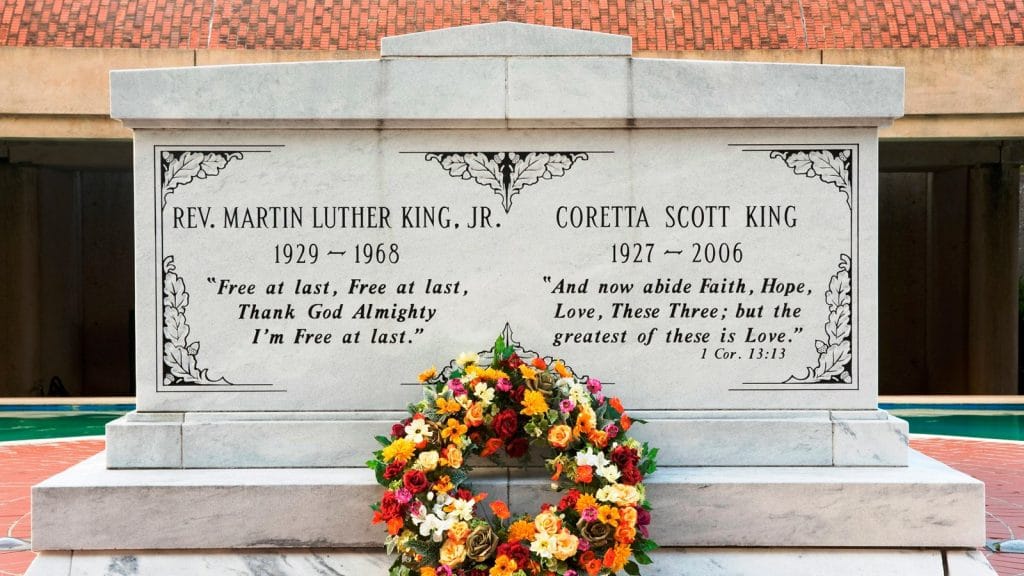
What to See
The park takes in several sites along Auburn Avenue: King’s boyhood home, the original Ebenezer Baptist Church where he and his father preached, and the King Center for Nonviolent Social Change, where Dr. King and Coretta Scott King are entombed. The Park Service has restored the surrounding buildings to their 1930s and 1940s appearance, the era when King grew up here, so you can walk the neighborhood much as he knew it. (Source: NPS)
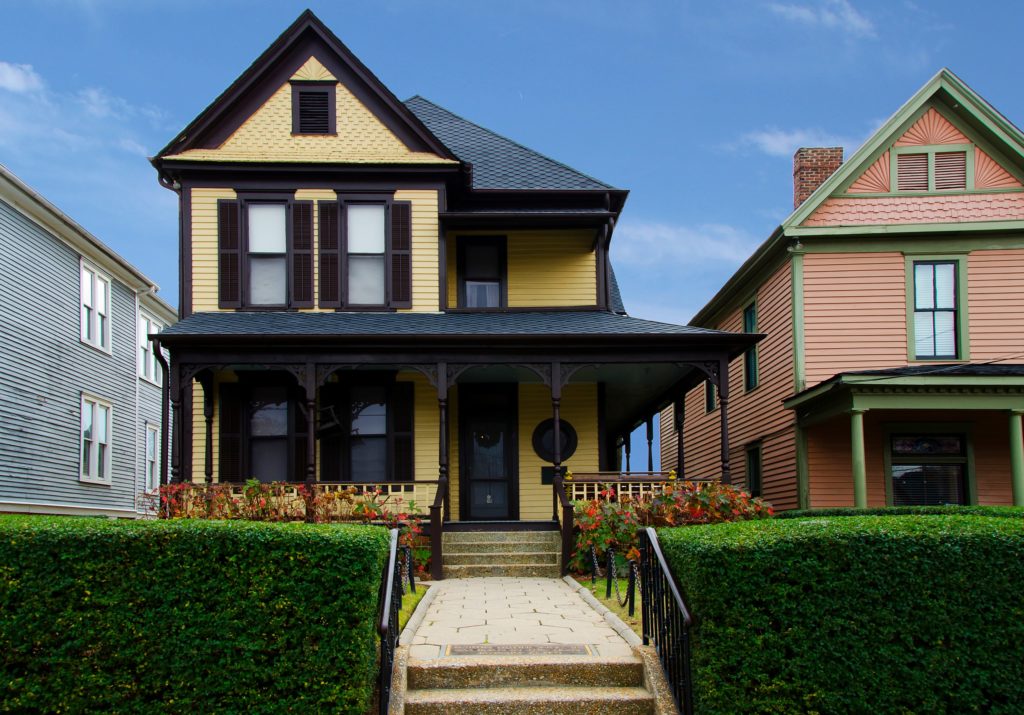
A History of the Movement
The finest overall history of the movement is Taylor Branch’s trilogy: Parting the Waters, Pillar of Fire, and At Canaan’s Edge. Together they tell the story of race and democracy, violence and nonviolence, through the lives of the everyday people who carried it.
See more in our guide to historic sites in Georgia.
2. Selma to Montgomery National Historic Trail
Location: Selma to Montgomery, Alabama | Managed by: National Park Service
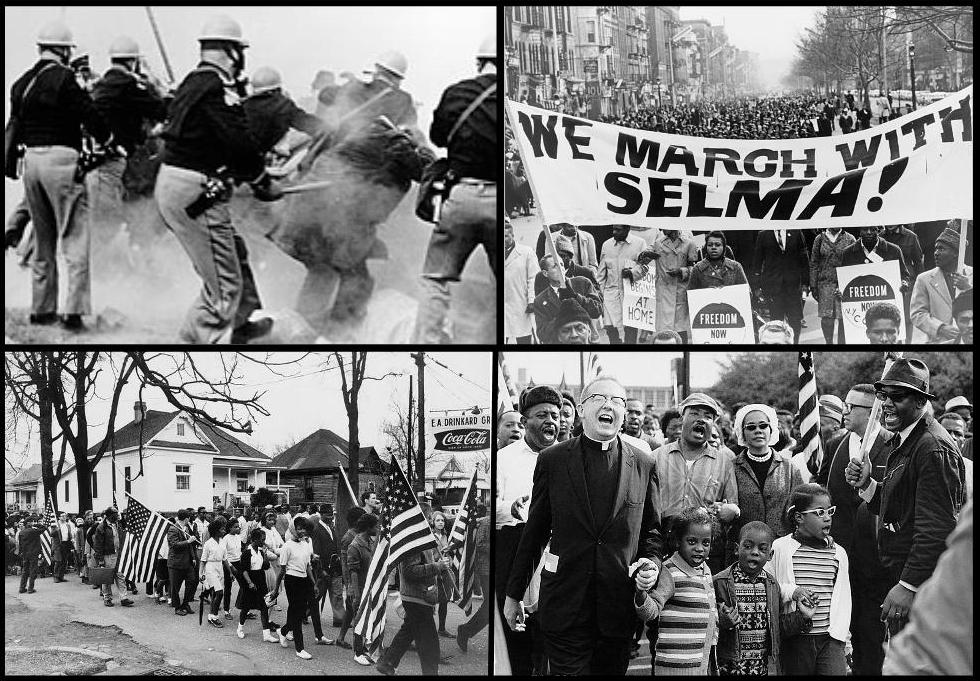
The Selma to Montgomery National Historic Trail follows the 54-mile route of the 1965 voting rights marches. On March 25, 1965, Dr. King led thousands of marchers to the steps of the Alabama capitol in Montgomery, the end of a five-day journey that had begun in violence.
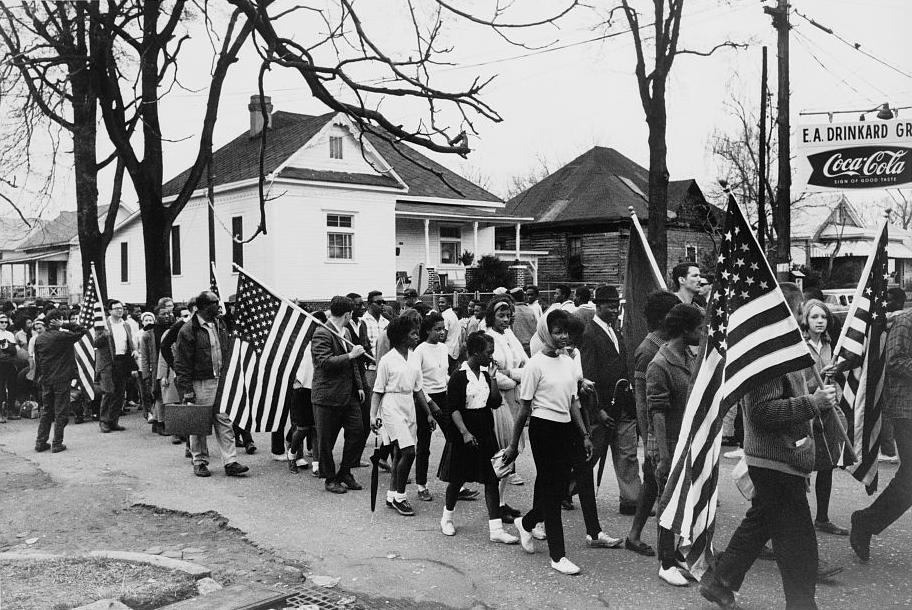
Bloody Sunday
The first attempt came on March 7, 1965, a day remembered as Bloody Sunday. The 25-year-old activist John Lewis led some 600 marchers across the Edmund Pettus Bridge in Selma. On the far side, state troopers gave a two-minute warning and then charged, swinging clubs and firing tear gas. Lewis suffered a skull fracture and was among 58 people treated for injuries. Television cameras captured the assault, and when the footage aired that night, the nation was appalled.
Lewis: I was hit on my head right here. I was hit with a billy club, and I saw the state trooper that hit me. I was hit twice, once when I was lying down and was attempting to get up.
John Lewis, congressional testimony on Bloody Sunday
“Their Cause Must Be Our Cause Too”
On March 15, 1965, President Lyndon Johnson addressed Congress and aligned himself with the marchers in a televised speech: “Their cause must be our cause too. Because it is not just Negroes, but really it is all of us, who must overcome the crippling legacy of bigotry and injustice. And we shall overcome.” Days later, a federal judge ordered Alabama to allow the march to proceed.

The March to Montgomery
On the third attempt, the marchers made it. Some 25,000 people joined Dr. King on the steps of the Alabama capitol, where he declared, “The end we seek is a society at peace with itself, a society that can live with its conscience.” Five months later, Johnson signed the Voting Rights Act of 1965.
Retracing the Trail
You can drive the same route the marchers walked. Start at the Selma Interpretive Center at the foot of the Edmund Pettus Bridge, which offers exhibits and a bookstore. Other stops in Selma include Brown Chapel A.M.E. Church, the National Voting Rights Museum, and the bridge itself. In Montgomery you will find the Rosa Parks Museum, the Dexter Avenue church, and the state capitol.

1. Birmingham Civil Rights National Monument
Location: Birmingham, Alabama | Managed by: National Park Service
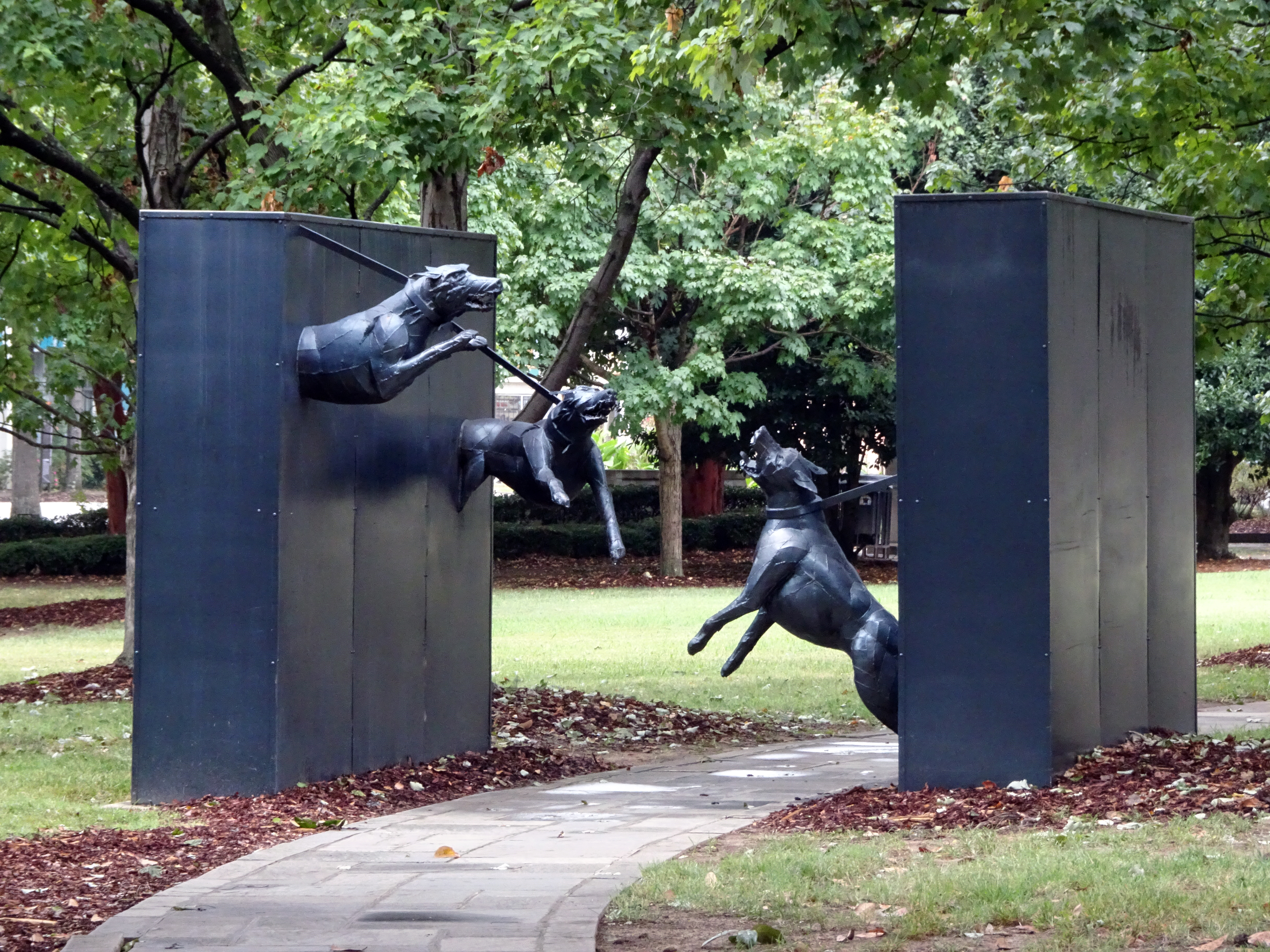
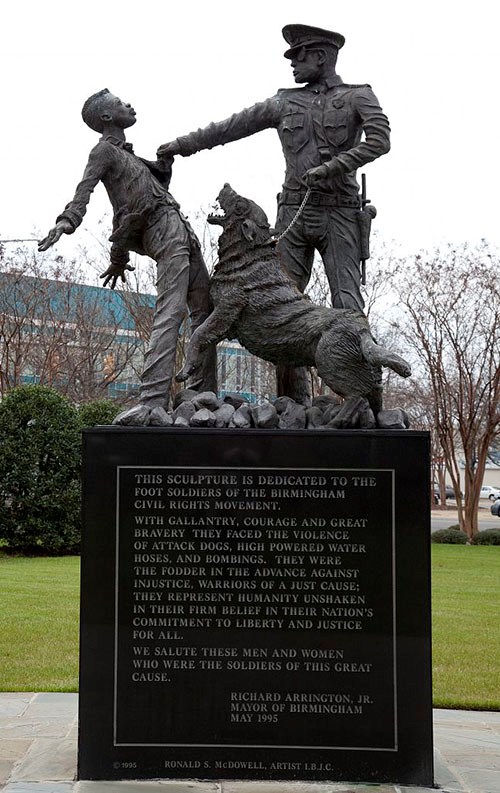
Our top civil rights site is the Birmingham Civil Rights National Monument. The images that came out of Birmingham in 1963, of police dogs and fire hoses turned on peaceful demonstrators, including children, did as much as anything to shift the conscience of the nation.
The Struggle for Civil Rights
The monument takes in roughly four city blocks of downtown Birmingham. At its center is the A. G. Gaston Motel, which served as the headquarters of the 1963 Birmingham campaign. From April through May of that year, movement leaders, including Dr. Martin Luther King, Jr., made the key decisions of the nonviolent campaign to overturn the city’s segregation laws here.
Landmarks Worth Visiting
- The 16th Street Baptist Church, target of the September 1963 bombing that killed four girls.
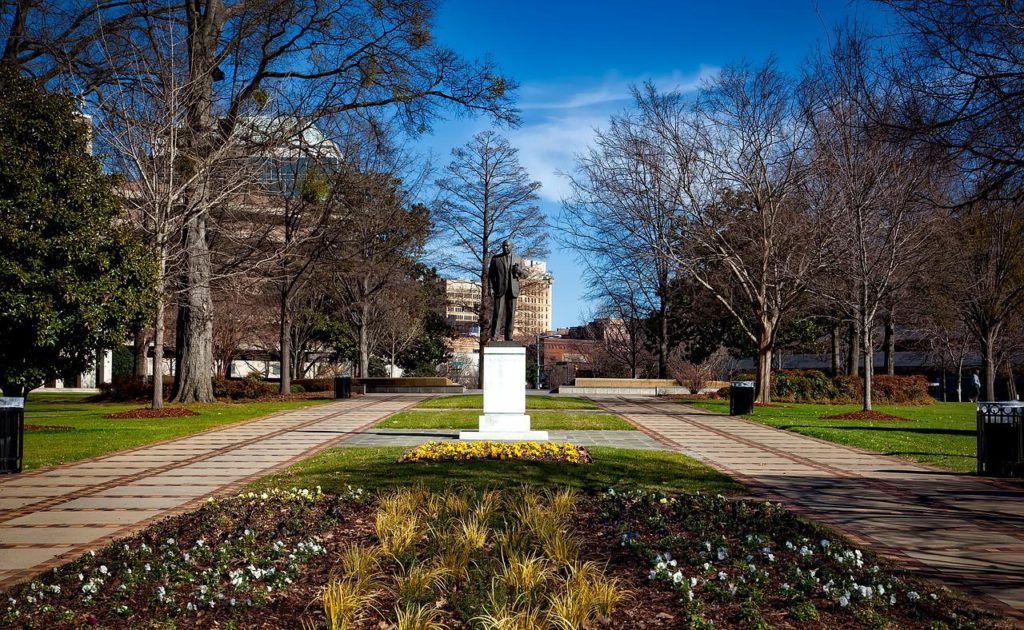
- Kelly Ingram Park, where protesters, many of them children, were attacked with police dogs and fire hoses in scenes that shocked the world.
- The 4th Avenue Historic District, the retail and entertainment heart of Birmingham’s Black community during segregation.
- Bethel Baptist Church, headquarters of the Alabama Christian Movement for Human Rights, bombed three times between 1956 and 1962. (Source: NPS)
“If you see something that is not right, not fair, not just, you have a moral obligation to do something about it.”
John Lewis
The 10 Best Civil Rights Sites
- Birmingham Civil Rights National Monument, Birmingham, Alabama
- Selma to Montgomery National Historic Trail, Alabama
- Martin Luther King, Jr. National Historical Park, Atlanta, Georgia
- Rosa Parks Museum, Montgomery, Alabama
- Freedom Rides Museum and Freedom Riders National Monument, Alabama
- 16th Street Baptist Church, Birmingham, Alabama
- Dexter Avenue King Memorial Baptist Church, Montgomery, Alabama
- Martin Luther King, Jr. Memorial, Washington, D.C.
- The National Memorial for Peace and Justice, Montgomery, Alabama
- The Legacy Museum, Montgomery, Alabama
More Than Just Parks was founded by my sons Jim Pattiz and Will Pattiz, collectively known as the Pattiz Brothers, and they love the national parks. I wrote this guide. I am their father, a retired history teacher who has spent years visiting the places I once taught about.
Further Reading on Civil Rights
- Parting the Waters: America in the King Years 1954-63 by Taylor Branch
- Pillar of Fire: America in the King Years 1963-65 by Taylor Branch
- At Canaan’s Edge: America in the King Years 1965-68 by Taylor Branch
- The Autobiography of Martin Luther King, Jr., edited by Clayborne Carson
- The Essential Writings and Speeches of Martin Luther King, Jr.
- Three African-American Classics: Up from Slavery, The Souls of Black Folk, and Narrative of the Life of Frederick Douglass
- Why We Can’t Wait by Dr. Martin Luther King, Jr.
- Where Do We Go from Here: Chaos or Community? by Dr. Martin Luther King, Jr.
Affiliate disclosure: Some links on this page earn us a small commission at no extra cost to you. We only recommend gear we actually use.