


Here is the honest math on national parks near Albuquerque. Only two of them are true national parks, Carlsbad Caverns and White Sands, and both sit three and a half to five hours south of you. Everything else within reach is a national monument, a historical park, or a preserve. That is not a downgrade. New Mexico’s monuments hold thousand-year-old cliff dwellings and the largest petroglyph collection in North America, and most of them are free.
The good news is that the closest one is inside the city. Petroglyph National Monument is a 20-minute drive from downtown. From there the radius opens up fast. You can stand in a volcanic caldera or under cliff dwellings within two hours, walk through the largest pre-Columbian site in North America in three (over a road I will warn you about), and reach the white gypsum dunes or the cave in a single long day if you leave early.
I have ordered these by drive-cost versus payoff. Close and free first, the long southern hauls last. I have been straight about the parts nobody puts on a brochure, like the 20 miles of rough dirt that guards Chaco, the timed reservation you now need to get into Carlsbad, and the missile range next to White Sands that occasionally shuts the highway. If you only have one weekend, skip to the planning section at the bottom and I will tell you where to point the car.
Albuquerque’s Parks At A Glance
Drive times are from downtown Albuquerque. Fees are the standard 2026 rate. Most of these sites are free, which is one of the real perks of basing yourself here. Where a fee or a reservation applies, I have flagged it. Always check nps.gov before you go, since seasonal shuttles and hours shift.
117 public lands destinations are under threat. Get the free briefing that 27,000+ people use to stay informed and take action.
| Park | Drive from Albuquerque | Best season | Signature draw | Entrance fee (2026) |
|---|---|---|---|---|
| Petroglyph National Monument | ~20 min | Oct to May | 20,000+ rock carvings on volcanic escarpment | Free (small parking fee at Boca Negra) |
| Valles Caldera National Preserve | ~1 hr 40 min | Jun to Oct | 13-mile volcanic caldera, elk, dark skies | $25 per vehicle |
| Bandelier National Monument | ~1 hr 30 min | Apr to Oct | Cliff dwellings and ladders in Frijoles Canyon | $25 per vehicle (peak-season shuttle) |
| Manhattan Project NHP (Los Alamos) | ~1 hr 30 min | Year-round | Birthplace of the atomic bomb | Free |
| Aztec Ruins National Monument | ~3 hr | Apr to Oct | Reconstructed Great Kiva | Free |
| Chaco Culture NHP | ~3 hr (incl. ~20 mi dirt) | Apr to Oct | Pueblo Bonito, the largest great house | $25 per vehicle |
| White Sands National Park | ~3 hr 30 min | Oct to Apr | World’s largest gypsum dunefield | $25 per vehicle |
| Carlsbad Caverns National Park | ~4 hr 30 min to 5 hr | Year-round (cave is climate-stable) | The Big Room, 750 feet underground | $15 per person + timed reservation |
| Gila Cliff Dwellings National Monument | ~4 hr | Apr to Oct | Mogollon cliff dwellings in a canyon | $10 per person |
1. Petroglyph National Monument
Drive time from Albuquerque: about 20 minutes (7 miles to the visitor center on the city’s west side)
Entrance fee: free. The one exception is a small parking fee at the Boca Negra Canyon lot ($2 on weekdays, $3 on weekends). Bring a few dollars in cash.
This is the one you do first because you barely have to drive. Petroglyph protects a 17-mile volcanic escarpment on the western edge of the city, and the basalt boulders along it carry more than 20,000 carvings, one of the largest collections of rock art in North America. Ancestral Puebloan people and later Spanish settlers cut most of them between 400 and 700 years ago. It became a national monument in 1990, and the lava the carvings sit on came from volcanoes you can still see on the skyline.
What to actually do here. There are three separate canyons and they are not connected, so pick by how much time you have. Boca Negra Canyon is the quick win, a paved set of short loops where you can see around a hundred carvings in under an hour. Rinconada Canyon is the better walk, a flat 2.2-mile sand trail where the petroglyphs reveal themselves slowly along the base of the cliff, and you will spot more the longer you look. Piedras Marcadas has the highest concentration of all. Go in the morning when the low light rakes across the rock and throws the carvings into relief, because by midday the flat sun washes them out.
Honest caveats. There is no shade and the trails are loose sand and lava rock, so this is a cool-season activity. From June through September go at opening or skip it. The carvings are sacred to the Pueblo communities here, so stay on the trail and do not touch the rock. And start at the visitor center on Unser Boulevard, because the three canyons have separate entrances spread along the mesa and it is easy to drive to the wrong one.
2. Valles Caldera National Preserve
Drive time from Albuquerque: about 1 hour 40 minutes (roughly 90 miles via US-550 N and NM-4)
Entrance fee: $25 per vehicle, good for 7 days. Check nps.gov for current backcountry permit rules before you go.
This is the closest place near Albuquerque that feels like a full-scale national park, and most people drive right past it on the way to Bandelier. About 1.25 million years ago a volcanic eruption collapsed the ground into a 13-mile-wide circular bowl, and the floor of that caldera is now a vast grassland ringed by forested domes. It became a preserve in 2000 and the Park Service took it over in 2015. The first time you crest the rim on NM-4 and the whole green basin opens up below you, it stops you cold.
What to actually do here. The huge meadows hold one of the largest elk herds in New Mexico, and dawn and dusk are when you see them, hundreds of animals grazing the valley floor. Drive in to the main entrance and walk the easy trails near the historic Cabin District, which has stood in for plenty of Western film sets over the years. If you want a real hike, the climb up Cerro La Jara is short, and the longer routes run close to 20 miles into the backcountry. After dark the sky here is among the best in northern New Mexico, well away from any city glow.
Honest caveats. The preserve sits above 8,000 feet, so it runs cold and the access road can close with snow from late fall into spring. Summer afternoons bring fast monsoon thunderstorms, so do your hiking in the morning. Backcountry vehicle access is limited and sometimes requires a reservation, and cell service is gone the moment you leave the highway. Fill the tank and download your map first.
3. Bandelier National Monument
Drive time from Albuquerque: about 1 hour 30 minutes (roughly 100 miles via I-25 N and NM-4)
Entrance fee: $25 per vehicle, good for 7 days. Read the caveat below about the peak-season shuttle, because it changes how you plan the whole day.
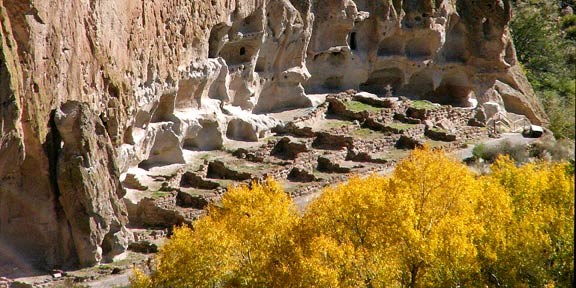
This is the one that wins people over. Bandelier protects more than 33,000 acres of canyon and mesa, and the heart of it is Frijoles Canyon, where Ancestral Puebloan people carved homes into the soft volcanic rock and built a village on the canyon floor. They lived here from the 1100s into the mid-1500s. It was set aside in 1916, and walking the canyon is the closest thing to time travel that this list offers.
What to actually do here. The Main Loop Trail is the must-do, a flat 1.2-mile paved walk past the excavated pueblo of Tyuonyi and a string of cavates, the small carved alcoves you can climb up wooden ladders to enter. Keep going on the Alcove House spur and you will climb 140 feet of ladders and stone stairs to a ceremonial cave set high in the cliff. It is not for anyone afraid of heights, but the view back down the canyon is worth the climb. If you have more time, the trail to the Upper and Lower Falls drops down toward the Rio Grande through a different landscape entirely.
Honest caveats. From mid-May through mid-October you usually cannot drive your own car into Frijoles Canyon during the day. You park at the White Rock Visitor Center and ride a free shuttle in, and private vehicles are only allowed early morning or late afternoon. It works fine, but it means you cannot just show up at noon and drive to the trailhead, so check the current shuttle window on nps.gov before you leave. The canyon also sits at 6,000 feet, so the climbs feel harder than the distances suggest. Go in spring or fall, since summer afternoons bring thunderstorms and the parking fills early.
4. Manhattan Project National Historical Park (Los Alamos)
Drive time from Albuquerque: about 1 hour 30 minutes (roughly 95 miles via I-25 N to Los Alamos)
Entrance fee: free.
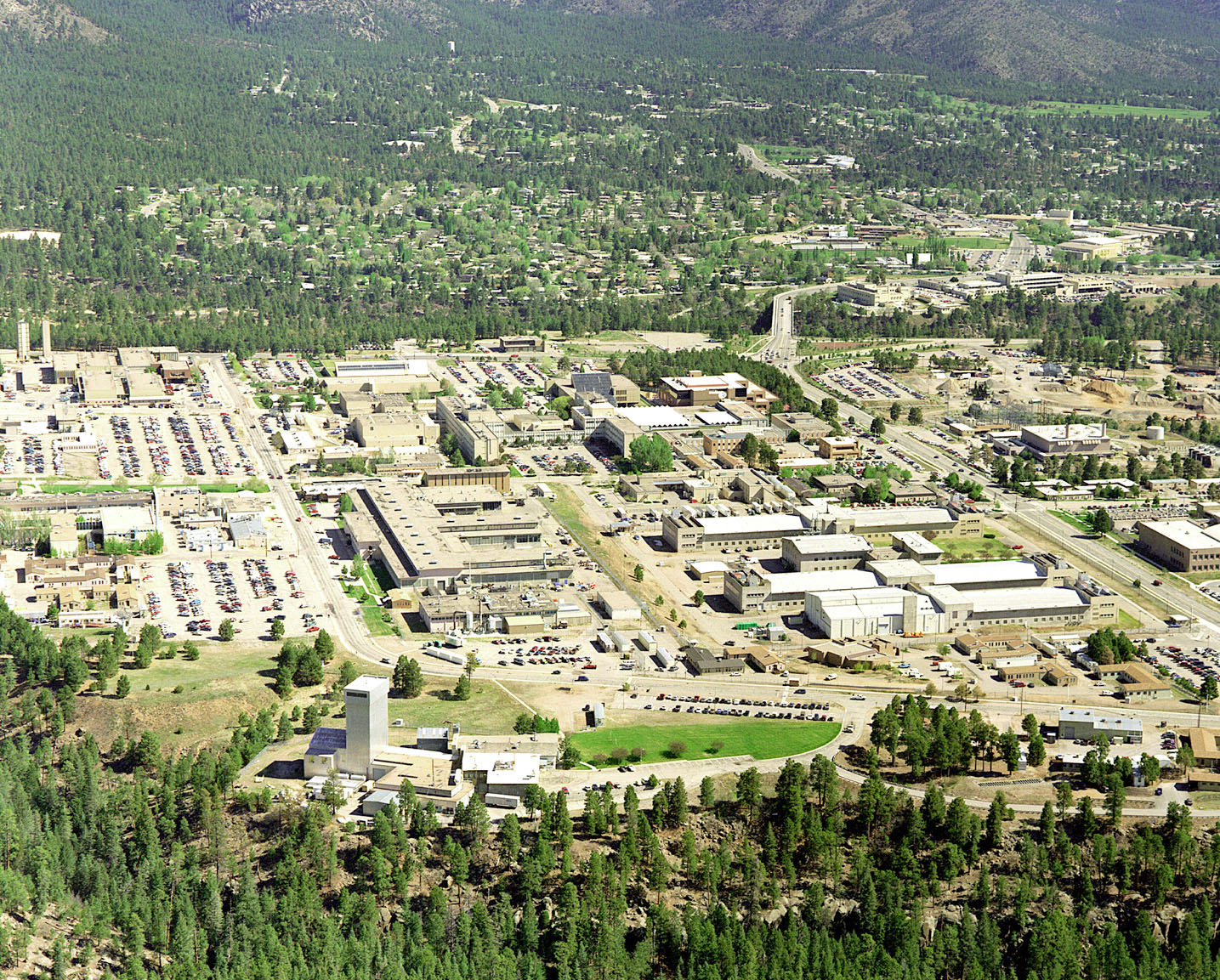
This one is for the history, not the scenery, and it pairs perfectly with Bandelier since they sit on the same plateau. The Manhattan Project National Historical Park spans three sites across the country, and the Los Alamos unit is where the scientific work happened, the place where the first atomic bombs were designed in secret during World War II. Congress created the park in 2015. After the 2023 film put Oppenheimer back in the public eye, interest here has climbed.
What to actually do here. Start at the park office downtown, then walk the small historic core of Los Alamos. Bathtub Row is the street of original cottages where the senior scientists lived, including the home Oppenheimer used. The Bradbury Science Museum, run by the lab and free to enter, lays out the technical story and the moral weight of what was built here. The setting matters too, a town the government carved into a remote mesa at 7,300 feet precisely because nobody would find it.
Honest caveats. This is a working national laboratory town, so most of the actual lab is closed to the public and the park experience is buildings, exhibits, and walking tours rather than open landscape. Some ranger programs run seasonally, so check the schedule before you drive up. If you want nature on the same trip, combine it with Bandelier or Valles Caldera, both within 30 to 45 minutes.
5. Aztec Ruins National Monument
Drive time from Albuquerque: about 3 hours (roughly 180 miles via US-550 N)
Entrance fee: free.
The name is a misnomer that stuck. Early settlers wrongly credited the Aztecs of Mexico, but this was built by Ancestral Puebloan people in the 1100s and 1200s, part of the same world that produced Chaco a day’s walk to the south. Aztec preserves a large great house of several hundred rooms, and it became a national monument in 1923. What sets it apart from every other ruin on this list is one building you can walk inside.
What to actually do here. Walk the half-mile self-guided loop through the West Ruin, where you can step into roofed rooms with the original 900-year-old timbers still overhead, one of the few places you can do that. The centerpiece is the reconstructed Great Kiva, rebuilt in 1934 and the only fully restored great kiva anywhere. Stepping down into that cool, circular ceremonial chamber, dim and quiet, is the moment people remember. The whole visit takes about an hour and the small museum is worth the start.
Honest caveats. It is a three-hour drive each way, which makes it a stretch as a day trip from Albuquerque on its own. The smart move is to pair it with Chaco or with Mesa Verde over in Colorado and make it an overnight, basing yourself in nearby Farmington or Durango. Summer afternoons are hot and exposed, so come earlier in the day.

6. Chaco Culture National Historical Park
Drive time from Albuquerque: about 3 hours, and the last 20 miles are rough dirt road (roughly 160 miles total)
Entrance fee: $25 per vehicle, good for 7 days.
This is the most important site on the list and the hardest to reach, and the two facts are related. Chaco was the ceremonial and political center of the Ancestral Puebloan world from roughly 850 to 1250 AD, a complex of massive stone great houses, ruler-straight roads, and great kivas aligned to the sun and moon. The largest building, Pueblo Bonito, held more than 600 rooms and stood up to four stories tall, the biggest structure in North America for centuries. It is a UNESCO World Heritage Site and one of the great archaeological places on the continent. The remoteness that nearly buried it from memory is exactly what has kept it so intact.
What to actually do here. The 9-mile Canyon Loop Drive connects the major great houses, and you get out and walk into each one. Pueblo Bonito is the headliner, and the self-guided trail leads you right through its rooms and plazas. Walk the short trail to Casa Rinconada, one of the largest great kivas anywhere. If you can stay after dark, do it. Chaco is a certified International Dark Sky Park with its own observatory, and the people who built this place were astronomers, so the night sky is part of the point.
Honest caveats. The road is the whole story. The final stretch in is unpaved washboard dirt, badly rutted, and it turns to impassable mud after rain or snow. A regular car can make it in dry weather if you go slow, but check conditions with the park before you commit, and do not attempt it wet. There is no gas, no food, and almost no cell service out here, so arrive with a full tank, water, and a downloaded map. The campground is the only lodging for many miles. This is a half-day of driving for a half-day on site, and it is still worth every mile.

7. White Sands National Park
Drive time from Albuquerque: about 3 hours 30 minutes (roughly 225 miles via I-25 S and US-70)
Entrance fee: $25 per vehicle, good for 7 days.
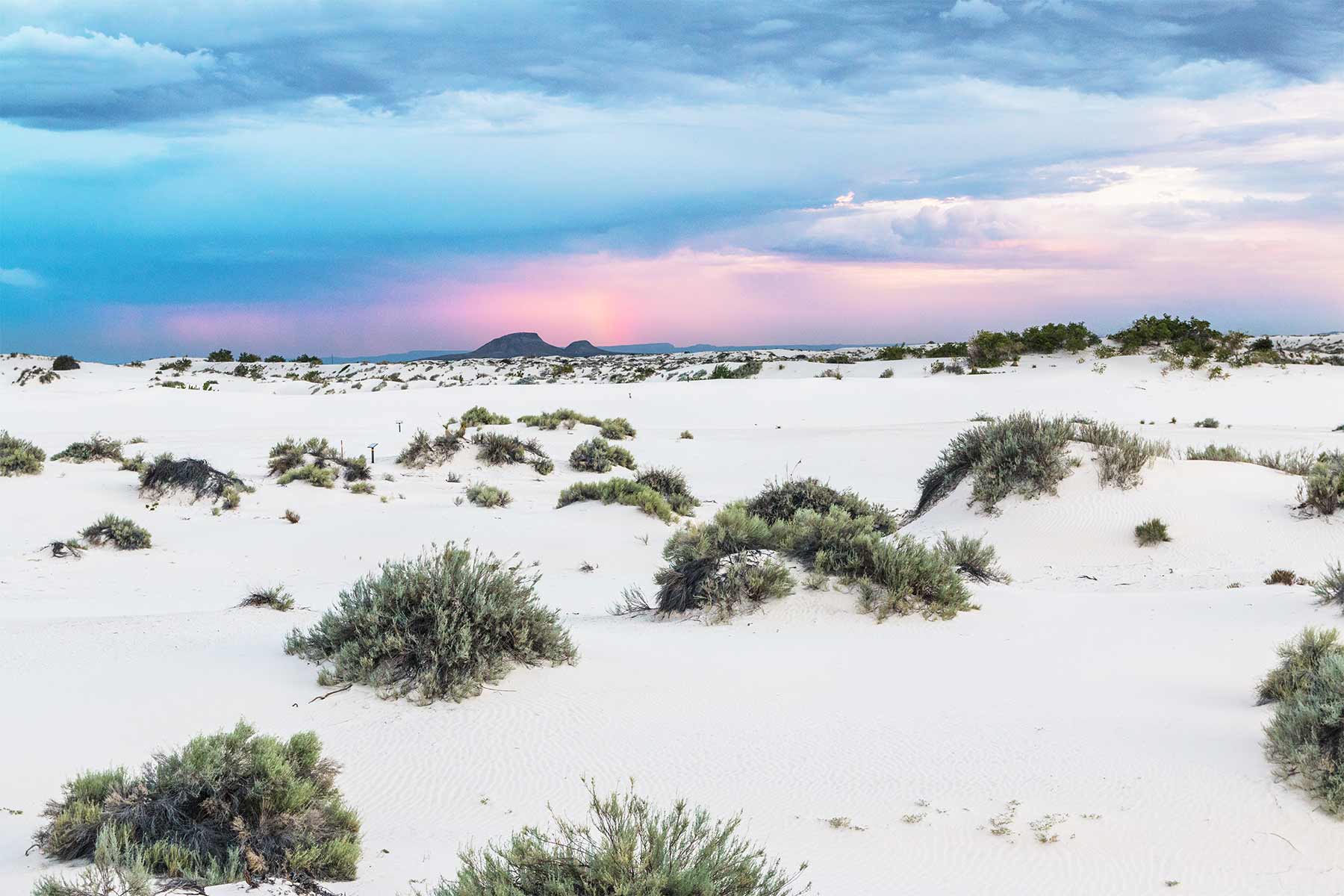
One of only two true national parks within reach, and unlike anything else in the state. White Sands holds the largest gypsum dunefield on Earth, 275 square miles of wave after wave of sand so white it looks like snow. Gypsum almost never forms dunes because it dissolves in water, but a closed basin with no outlet to the sea let it happen here. It was a national monument from 1933 and was upgraded to a national park in 2019.
What to actually do here. Drive the 8-mile Dunes Drive into the heart of the field, then get out and walk. The Alkali Flat Trail is a 5-mile loop into the tallest dunes, marked only by posts, so it is real desert navigation, not a stroll. The Interdune Boardwalk is the easy option for everyone else. The real move is to buy a plastic saucer at the gift shop and sled the dunes, which is exactly as fun as it sounds at any age. Then stay for sunset, when the low light turns the white sand gold and pink and the whole field glows. It is one of the best sunsets in the Southwest.
Honest caveats. The park sits inside White Sands Missile Range, and the military closes the park and the stretch of US-70 beside it for missile tests, usually for a couple of hours at a time. These closures are scheduled and posted on the park website, so check before you drive, or you will sit at a roadblock. Summer is brutally hot with no shade, so go October through April, and carry far more water than feels reasonable. There is no overnight lodging in the park, so base in nearby Alamogordo.

8. Carlsbad Caverns National Park
Drive time from Albuquerque: about 4 hours 30 minutes to 5 hours (roughly 300 miles via US-285 S)
Entrance fee: $15 per person, good for 3 days, and you now need a timed-entry reservation to go underground. Reserve at recreation.gov before you go.
The longest haul on this list, and the payoff is a world most people never see. Carlsbad Caverns protects more than 100 caves dissolved out of an ancient reef by sulfuric acid over millions of years. The headline cave is enormous, and the Big Room, a single chamber the size of several football fields, sits about 750 feet underground. It became a national park in 1930. The cave holds a steady temperature year-round, which makes this the rare park you can enjoy in the dead of summer.
What to actually do here. Walk in through the Natural Entrance, a steep mile-and-a-quarter switchback that drops you into the earth past formations the whole way down, then loop the 1.25-mile Big Room trail at the bottom. If your knees object, the elevator takes you straight down to the Big Room. From late spring into October, stay for the Bat Flight Program at dusk, when hundreds of thousands of Brazilian free-tailed bats pour out of the natural entrance to hunt. A ranger gives a talk, phones go away, and you watch a river of bats spiral into the sky.
Honest caveats. The timed reservation is the thing people get wrong. It is cheap but required, and the slots sell out on busy days, so book it before you make the drive. The bat flight only happens in the warm months when the bats are in residence, so do not count on it in winter. It is a long way from anywhere, so most people stay in the town of Carlsbad and treat it as a two-day trip, often paired with White Sands and Guadalupe Mountains across the Texas line.


9. Gila Cliff Dwellings National Monument
Drive time from Albuquerque: about 4 hours, and the last 40 miles are slow mountain switchbacks (roughly 250 miles via I-25 S to NM-15)
Entrance fee: $10 per person.
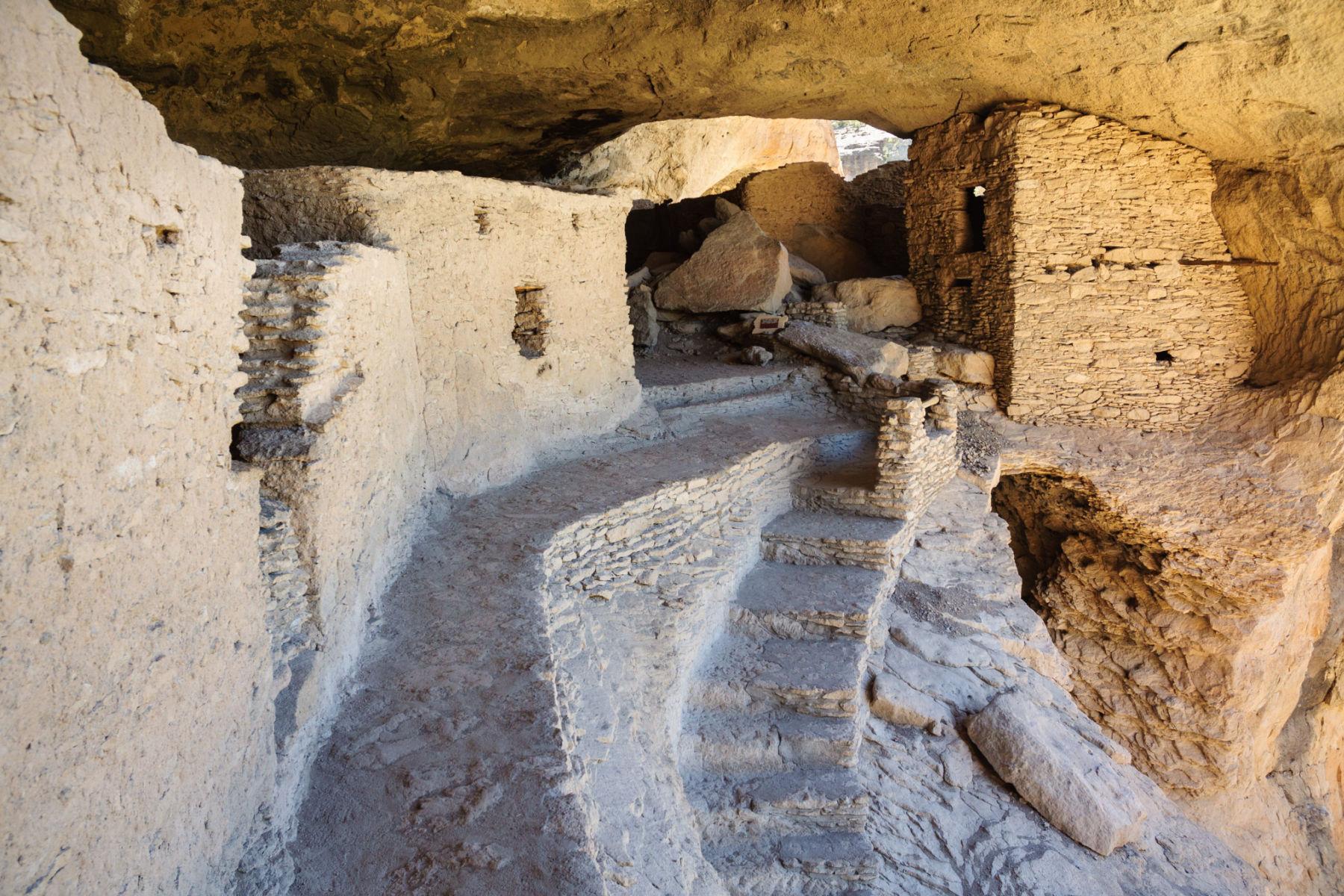
This is the long shot that rewards the people who make it, set deep inside the country’s first designated wilderness. The Mogollon people built homes inside natural cliff alcoves above a side canyon, lived there for about a generation in the late 1200s, and then left. The monument was set aside in 1907. Getting here means driving up into the Gila high country on a road that earns its reputation, and that effort is exactly why this place still feels undisturbed.
What to actually do here. The main event is a 1-mile loop trail that climbs about 180 feet to the dwellings, where you walk through the actual cliff rooms the Mogollon built into five caves. Unlike most ruins on this list, you can step right inside them. A ranger or volunteer is usually stationed up top to answer questions. Down at the trailhead, the short walk to the natural hot springs along the Gila River is the local reward after the climb. Give yourself a full half-day on site once you account for the drive in.
Honest caveats. The drive is the real cost. NM-15 is a narrow, winding mountain road, and the Park Service tells you to allow two hours to cover the last 44 miles from Silver City, so do not trust the mileage. It is not a day trip from Albuquerque. Base in Silver City and make it an overnight. The monument sits at elevation, the road can be hazardous in winter ice, and there is no fuel near the dwellings, so fill up in Silver City first.
How To Pick, And A Weekend Plan
The smart way to use Albuquerque is to cluster these sites by direction, since the close ones group north and the two real national parks group south. Here is how I would choose.
- Best half-day with no commitment: Petroglyph. Twenty minutes out, free, and you can walk Rinconada Canyon before lunch and still have the afternoon in Old Town.
- Best northern day trip: the Los Alamos plateau. Bandelier and the Manhattan Project park sit 30 minutes apart, both about 90 minutes from the city. Do the cliff dwellings in the morning and the atomic history in the afternoon. Add Valles Caldera and you have a full, varied two-day loop with a base in Los Alamos or Santa Fe.
- Best deep-history overnight: Chaco and Aztec. Both sit in the northwest corner about three hours out. Drive up, do Chaco one day and Aztec the next, and base in Farmington. Just respect the Chaco dirt road and the weather.
- Best southern road trip: White Sands and Carlsbad Caverns. The two true national parks are both a long way south, so combine them into one three-day loop through Alamogordo and Carlsbad. Book the Carlsbad reservation first and check for missile-range closures on US-70.
- The committed-traveler haul: Gila Cliff Dwellings. Four hours and a mountain road each way mean this is never a day trip. Make it the centerpiece of a Silver City weekend and soak in the hot springs after the climb.
One honest note on what counts as near. People expect a list like this to be full of national parks, and the truth is that New Mexico has only two, both of them a long drive south. What Albuquerque gives you instead is the densest cluster of ancient cliff dwellings and great houses in the country, most of them free. If you came for famous national parks you will leave talking about the monuments, which is the best kind of surprise.
Frequently Asked Questions
Petroglyph National Monument is the closest National Park Service site to Albuquerque, about a 20-minute drive on the city’s west side, and it is free. The closest true national park is White Sands, about 3 hours 30 minutes south. New Mexico has only two national parks, White Sands and Carlsbad Caverns, and both are a long drive from Albuquerque.
You can reach Chaco Culture National Historical Park in a standard car in dry weather, but the final stretch is roughly 20 miles of rough, washboard dirt road that becomes impassable mud after rain or snow. Check road conditions with the park before you go, drive slowly, and do not attempt the road when it is wet.
Yes. As of 2026 you need a timed-entry reservation to enter Carlsbad Caverns, booked through recreation.gov, in addition to the $15-per-person entrance fee. The reservation is inexpensive but required, and slots can sell out on busy days, so book it before you make the drive from Albuquerque.
You should know that this guide does not come out of thin air. More Than Just Parks is a family operation. My sons Will and Jim have spent their adult lives exploring and filming America’s national parks and public lands destinations, working with the National Park Service, the Department of the Interior, the USDA, and the U.S. Forest Service on films about the places that matter. Their work has run in publications around the world, and a few people outside our own family have even called them experts on the parks. I taught American history for 25 years, and I write our history and travel guides.


