
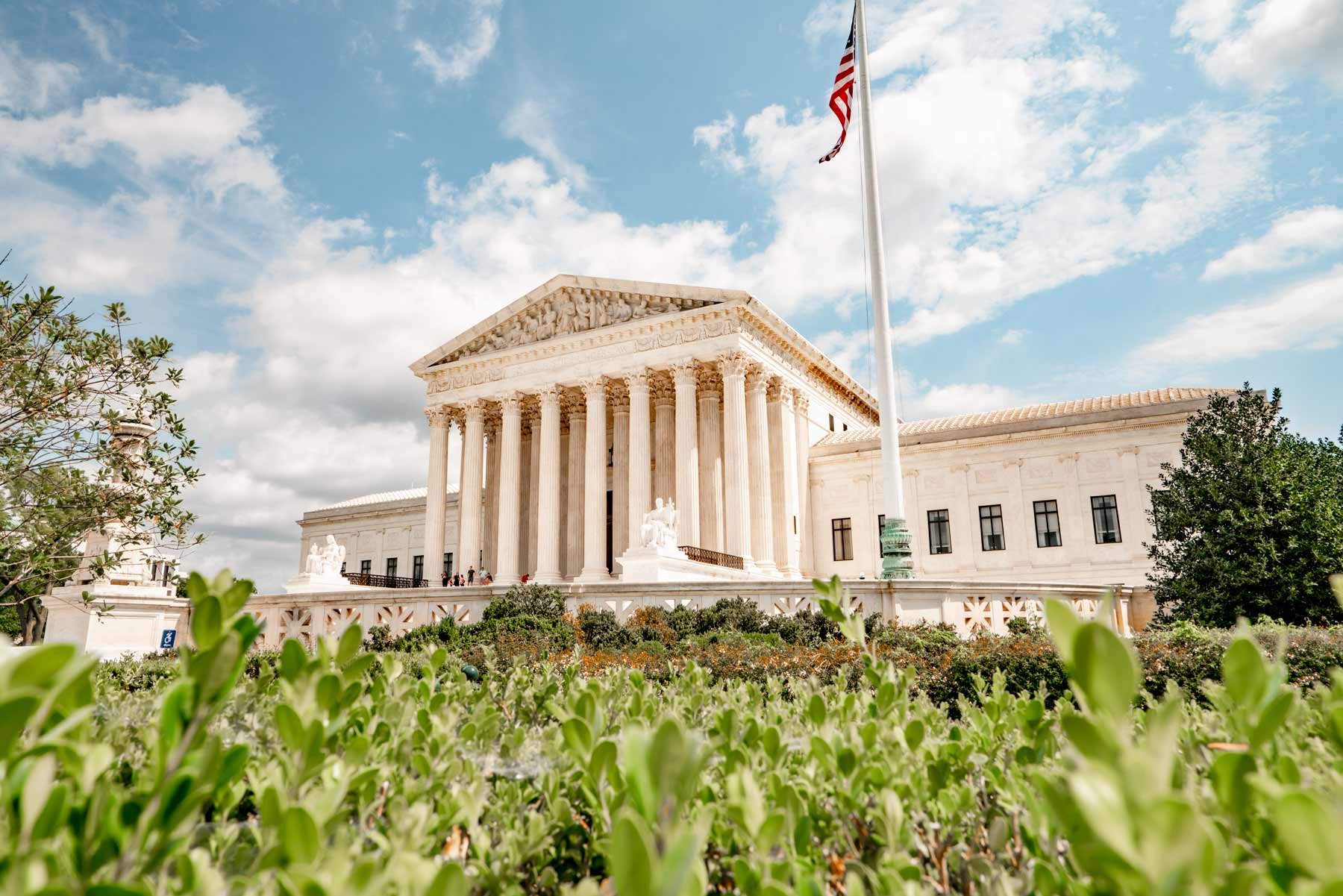


America’s most famous landmarks are more than postcard backdrops. They are where the country argued itself into existence, fought its hardest battles, mourned its dead, and reckoned with its failures. Some celebrate triumph. Others, told honestly, force us to confront forced removal, broken treaties, and the people whose labor and land built the nation. The best of them do both at once.
I taught American history for decades before I started visiting these places in person, and seeing them firsthand changed how I understood the story. Here are 25 famous landmarks in America I think are worth seeing, counting down to my favorite. A mix of National Park Service sites, federal buildings, state and tribal sites, and privately run icons. At More Than Just Parks, we cover all of it.
Let’s get started.
Famous Landmarks In America At A Glance
| Landmark | Location | Managed By |
|---|---|---|
| Statue of Liberty National Monument | New York Harbor | National Park Service |
| Independence National Historical Park | Philadelphia, PA | National Park Service |
| Mount Rushmore National Memorial | Black Hills, SD | National Park Service |
| Arlington National Cemetery | Arlington, VA | U.S. Department of the Army |
| Lincoln Memorial | Washington, D.C. | National Park Service |
| Pearl Harbor National Memorial | Honolulu, HI | National Park Service |
| The Alamo | San Antonio, TX | Texas General Land Office / Alamo Trust |
| 9/11 Memorial & Museum | New York, NY | Private nonprofit |
| World War II Memorial | Washington, D.C. | National Park Service |
| Martin Luther King, Jr. Memorial | Washington, D.C. | National Park Service |
| Gettysburg National Military Park | Gettysburg, PA | National Park Service |
| Ellis Island | New York Harbor | National Park Service |
| Vietnam Veterans Memorial | Washington, D.C. | National Park Service |
| Thomas Jefferson Memorial | Washington, D.C. | National Park Service |
| The White House | Washington, D.C. | National Park Service (President’s Park) |
| Empire State Building | New York, NY | Private |
| Library of Congress | Washington, D.C. | Legislative branch |
| Women’s Rights National Historical Park | Seneca Falls, NY | National Park Service |
| U.S. Capitol | Washington, D.C. | Legislative branch |
| Lewis & Clark National Historical Park | OR / WA | National Park Service |
| Fort Sumter & Fort Moultrie Nat’l Historical Park | Charleston, SC | National Park Service |
| Brooklyn Bridge | New York, NY | City of New York |
| Trail of Tears National Historic Trail | Nine states | National Park Service |
| Golden Gate Bridge | San Francisco, CA | Golden Gate Bridge District |
| Space Needle | Seattle, WA | Private |
25. The Space Needle
We begin in Seattle with a symbol of mid-century optimism. The Space Needle was built for the 1962 World’s Fair, its flying-saucer silhouette capturing a moment when America was looking confidently toward the future and the space age.
117 public lands destinations are under threat. Get the free briefing that 27,000+ people use to stay informed and take action.
At 605 feet, the observation deck and rotating glass floor offer sweeping views of the city, Puget Sound, and Mount Rainier on a clear day. It is privately owned, and it remains the defining image of the Seattle skyline more than 60 years later.
24. The Golden Gate Bridge

Spanning the entrance to San Francisco Bay, the Golden Gate Bridge is one of the most beautiful pieces of engineering ever built. When it opened in 1937, its 4,200-foot main span was the longest in the world, and its distinctive International Orange color has been iconic ever since.
Walk or bike across it for the full effect, with the city behind you and the Pacific stretching out ahead. Often wreathed in fog, it manages to look both monumental and graceful. It is a landmark that rewards the time it takes to experience on foot.
23. Trail of Tears National Historic Trail

Not every landmark commemorates something to celebrate. The Trail of Tears National Historic Trail marks one of the darkest chapters in American history. Under the Indian Removal Act of 1830, the U.S. government forced tens of thousands of Cherokee, Muscogee, Seminole, Chickasaw, and Choctaw people from their ancestral homelands in the Southeast and drove them west to Indian Territory.
Thousands died of cold, hunger, and disease along the way. The Cherokee called it the trail where they cried. The national historic trail traces those routes across nine states, and it asks us to center the perspective of the Indigenous nations who endured this forced removal, and whose descendants carry the memory forward today. It is essential, sobering ground.
22. The Brooklyn Bridge

When it opened in 1883, the Brooklyn Bridge was the longest suspension bridge in the world and an instant symbol of American ambition. Its Gothic stone towers and steel-cable web connected two cities into one, and it remains one of the great urban landmarks anywhere.
The bridge cost the lives of more than 20 workers, including the designer, John Roebling. His son Washington took over, and when he was disabled by the bends, his wife Emily Roebling stepped in to oversee its completion. Walk the elevated pedestrian promenade for one of the best views in New York.
21. Fort Sumter and Fort Moultrie National Historical Park

In Charleston Harbor sits the place where the Civil War began. Before dawn on April 12, 1861, Confederate guns opened fire on the Union garrison at Fort Sumter, starting a war that would claim more American lives than any before or since.
The site is now part of Fort Sumter and Fort Moultrie National Historical Park, redesignated under that name in 2019. Fort Sumter is reached by boat, and the harbor crossing is part of the experience. It is a landmark that marks the moment a nation turned its weapons on itself.
20. Lewis & Clark National Historical Park

At the mouth of the Columbia River, Lewis & Clark National Historical Park marks the end of the Corps of Discovery’s epic 1804-06 journey across the continent. Here, at a reconstructed Fort Clatsop, the expedition spent a wet, miserable winter before turning home.
The park spans sites in Oregon and Washington and tells the story of the expedition, including the indispensable help of the Shoshone woman Sacagawea and the many Native nations without whose knowledge and aid the journey would have failed. It is a thoughtful look at a pivotal, and complicated, moment in westward expansion.
19. The U.S. Capitol

The great white dome of the U.S. Capitol is the seat of the legislative branch and one of the most recognizable buildings in the world. Since 1800, Congress has met here to debate and pass the nation’s laws beneath a dome that was famously completed during the Civil War, at Lincoln’s insistence, as a sign the Union would endure.
It is worth noting that the Capitol is managed by the legislative branch, not the National Park Service. Free guided tours take you through the Rotunda and Statuary Hall, and the underground visitor center is the place to start. It is a working symbol of American self-government.
18. Women’s Rights National Historical Park
In Seneca Falls, New York, the movement for women’s equality found its voice. Women’s Rights National Historical Park preserves the site of the 1848 Seneca Falls Convention, the first women’s rights convention in the United States, where Elizabeth Cady Stanton and others issued the Declaration of Sentiments demanding equality, including the right to vote.
The park includes the restored Wesleyan Chapel where the convention met and Stanton’s home nearby. It would take more than 70 years for women to win the vote nationally, and the work it began is not finished. This is one of the most important sites in the long struggle for equal rights.
17. The Library of Congress

The Library of Congress is the largest library in the world, holding more than 170 million items, and its Thomas Jefferson Building is one of the most ornately beautiful interiors in the country. The Great Hall, with its soaring marble and gold-leaf ceilings, takes the breath away.
Founded in 1800 and rebuilt around Jefferson’s personal library after the British burned the Capitol in 1814, it is part of the legislative branch rather than the Park Service. It is free to visit, and the building alone is worth the trip even before you consider the treasures inside, including a Gutenberg Bible.
16. The Empire State Building

Rising 102 stories above Midtown Manhattan, the Empire State Building was the tallest building in the world when it opened in 1931, built in just over a year at the depth of the Great Depression. Its Art Deco spire has defined the New York skyline ever since.
The observation decks on the 86th and 102nd floors offer some of the finest city views anywhere. From King Kong to countless films, the building has been a star in its own right. This privately owned tower remains the quintessential symbol of New York ambition.
15. The White House

The White House has been the home and office of every U.S. president except George Washington, who oversaw its construction. Completed in 1800 and rebuilt after the British burned it in 1814, it is among the most recognizable residences in the world.
The grounds, known as President’s Park, are managed by the National Park Service. Public tours of the interior must be arranged in advance, but the views from Pennsylvania Avenue and the Ellipse are open to all. It is the enduring symbol of the executive branch.
14. Thomas Jefferson Memorial

On the south shore of the Tidal Basin, the domed, columned Thomas Jefferson Memorial honors the author of the Declaration of Independence and the third president. Inscribed on its walls are his words on liberty, religious freedom, and the need for laws to evolve with the times.
Administered by the National Park Service as part of the National Mall and Memorial Parks, it is especially lovely in spring, framed by the cherry blossoms that ring the basin. The memorial invites reflection on Jefferson’s towering ideals and the contradictions of a man who wrote that all men are created equal while enslaving hundreds.
13. Vietnam Veterans Memorial

Few memorials move people the way the Vietnam Veterans Memorial does. Maya Lin’s design, a long wall of polished black granite cut into the earth, lists the names of more than 58,000 Americans who died or went missing in the war, in the order they were lost.
Visitors trace names with their fingers, leave letters and mementos, and see their own reflections in the stone alongside the dead. Administered by the National Park Service, it transformed how the nation memorializes sacrifice. It is among the most powerful places in Washington.
12. Ellis Island

Between 1892 and 1954, more than 12 million immigrants passed through the great hall at Ellis Island, the gateway to a new life in America. Roughly 40 percent of Americans today can trace an ancestor who first set foot in the country here.
Now part of the Statue of Liberty National Monument and run by the National Park Service, the restored main building houses a moving museum of the immigrant experience. Standing in the Registry Room, where so many anxious newcomers waited to learn their fate, you feel the hopes and fears of generations. It is the story of who Americans are.
11. Gettysburg National Military Park
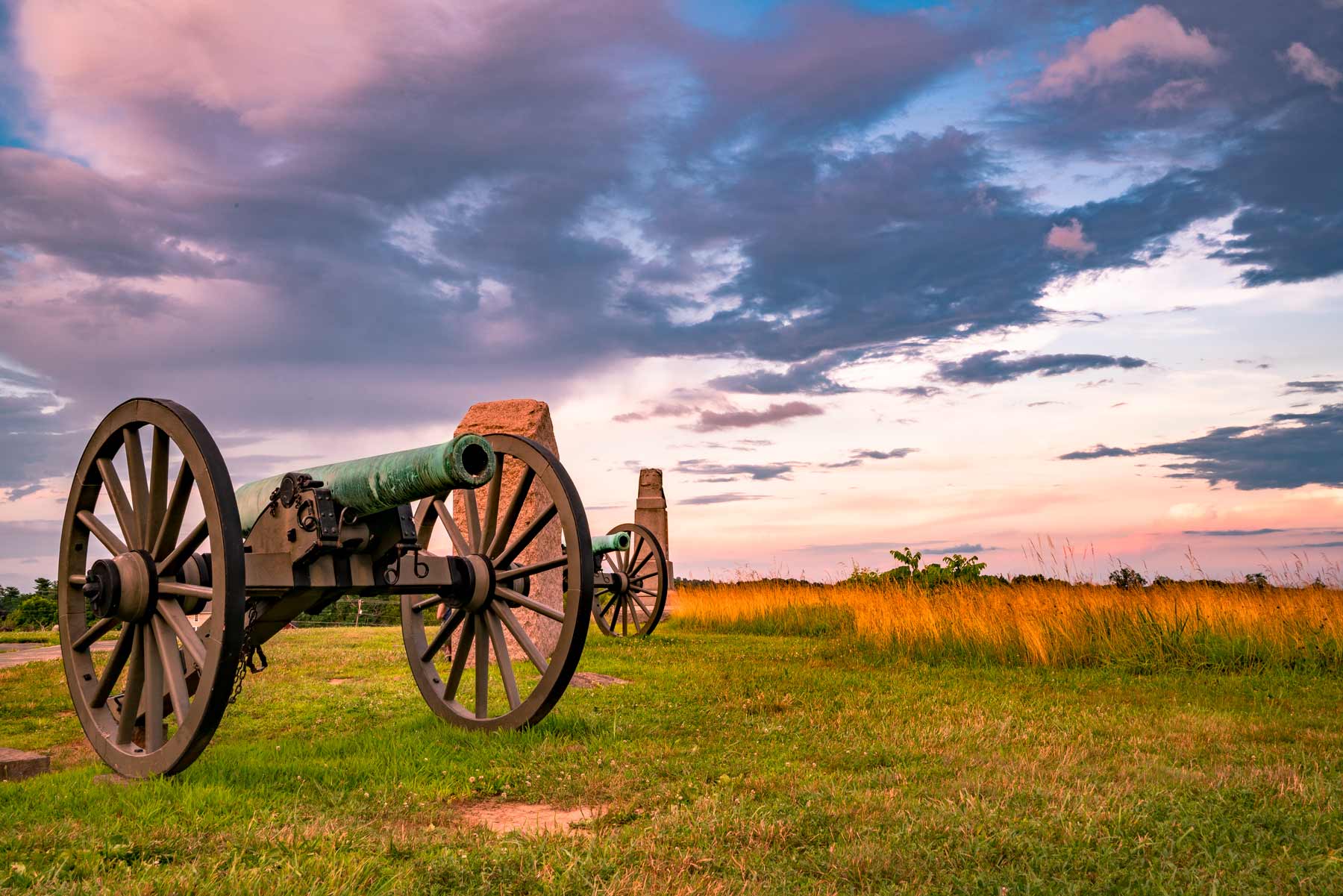
Over three days in July 1863, the largest battle ever fought in North America raged at Gettysburg, leaving more than 50,000 men dead, wounded, or missing and turning back Lee’s invasion of the North. It is widely considered the turning point of the Civil War.
That November, Lincoln came here to dedicate the soldiers’ cemetery and delivered the Gettysburg Address, redefining the war’s purpose in 272 words. The national military park preserves the battlefield with hundreds of monuments and a superb museum. No place better conveys the scale of the war’s cost.
10. Martin Luther King, Jr. Memorial

On the Tidal Basin, the Martin Luther King, Jr. Memorial honors the leader of the civil rights movement. A 30-foot likeness of Dr. King emerges from the Stone of Hope, drawn from a line in his 1963 “I Have a Dream” speech delivered just across the water at the Lincoln Memorial.
It was the first memorial on the Mall dedicated to an African American and to a man who held no public office. Run by the National Park Service, its surrounding wall is inscribed with King’s words on justice, peace, and equality. It is a fitting tribute to a movement that changed the country.
9. World War II Memorial

Between the Lincoln Memorial and the Washington Monument, the World War II Memorial honors the 16 million Americans who served and the more than 400,000 who died in the war. Fifty-six granite pillars represent the states and territories, ringing a plaza and fountains.
Dedicated in 2004, long after most veterans had passed, it remains a frequent destination for the Honor Flights that bring aging veterans to see it. A wall of 4,048 gold stars represents the fallen. Administered by the National Park Service, it is a dignified tribute to the generation that won the war.
8. The 9/11 Memorial & Museum

On the site of the fallen Twin Towers, the National September 11 Memorial & Museum honors the nearly 3,000 people killed in the attacks of September 11, 2001, and the six who died in the 1993 World Trade Center bombing. Two enormous reflecting pools sit in the footprints of the towers, their names inscribed in bronze around the edges.
The water falling into the voids where the towers stood is profoundly moving. Note that this is run by a private nonprofit foundation, not the National Park Service. The underground museum tells the story of the day with artifacts and testimony. It is a place of grief and remembrance unlike any other.
7. The Alamo

In the heart of San Antonio, the Alamo is the most famous mission in Texas. In 1836, a small group of Texian and Tejano defenders held the old Spanish mission against the much larger army of Santa Anna for 13 days before being overwhelmed. “Remember the Alamo” became the rallying cry of the Texas Revolution.
The Alamo is owned by the Texas General Land Office and operated by the nonprofit Alamo Trust. It is part of the UNESCO-inscribed San Antonio Missions, listed in 2015, though it is the only one of the five missions not run by the National Park Service. The site is free to enter, and it draws millions each year to one of the founding legends of Texas.
6. Pearl Harbor National Memorial

On the morning of December 7, 1941, the Japanese attack on Pearl Harbor drew the United States into World War II. More than 2,400 Americans were killed, nearly half of them aboard the USS Arizona, which sank with most of her crew still entombed inside.
The Pearl Harbor National Memorial, established in 2019 when it was split from the former World War II Valor in the Pacific National Monument, includes the USS Arizona Memorial that floats above the sunken ship. Oil still rises from the wreck, drop by drop, a haunting reminder. It is one of the most solemn places in the country.
5. The Lincoln Memorial

At the west end of the National Mall, the Lincoln Memorial houses Daniel Chester French’s monumental seated statue of the president who saved the Union and ended slavery. The walls are inscribed with the Gettysburg Address and Lincoln’s second inaugural, and the view down the reflecting pool to the Washington Monument is unforgettable.
It was on these steps in 1963 that Dr. King delivered his “I Have a Dream” speech, and the memorial has been the stage for moments of national reckoning ever since. Administered by the National Park Service, it is open day and night, free to all. Visit after dark, when the marble glows, for the full effect.
4. Arlington National Cemetery

Across the Potomac from Washington, Arlington National Cemetery is the resting place of more than 400,000 service members and their families. The Tomb of the Unknown Soldier, guarded around the clock in all weather, and the eternal flame at John F. Kennedy’s grave are among its most visited sites.
The cemetery is administered by the U.S. Department of the Army, not the National Park Service, though the Park Service runs Arlington House on the hill above. The land was once Robert E. Lee’s estate, seized during the Civil War and deliberately turned into a burial ground. The rows of white headstones stretching to the horizon are an image no visitor forgets.
3. Mount Rushmore National Memorial

Carved into a granite cliff in the Black Hills of South Dakota, the 60-foot faces of Mount Rushmore depict four presidents: Washington, Jefferson, Lincoln, and Theodore Roosevelt. Sculpted between 1927 and 1941, it draws millions of visitors a year and is one of the most recognizable monuments in the country.
Its history demands honesty. The Black Hills, called He Sapa, are sacred to the Lakota and were guaranteed to them by the 1868 Treaty of Fort Laramie. The United States seized the land after gold was found, through the 1877 Black Hills Act. In 1980, the Supreme Court ruled in United States v. Sioux Nation that the taking was unlawful and awarded compensation, but the Lakota have refused the money, seeking instead the return of the land. To understand Mount Rushmore fully is to hold the monument and that unresolved injustice in the same view.
2. Independence National Historical Park
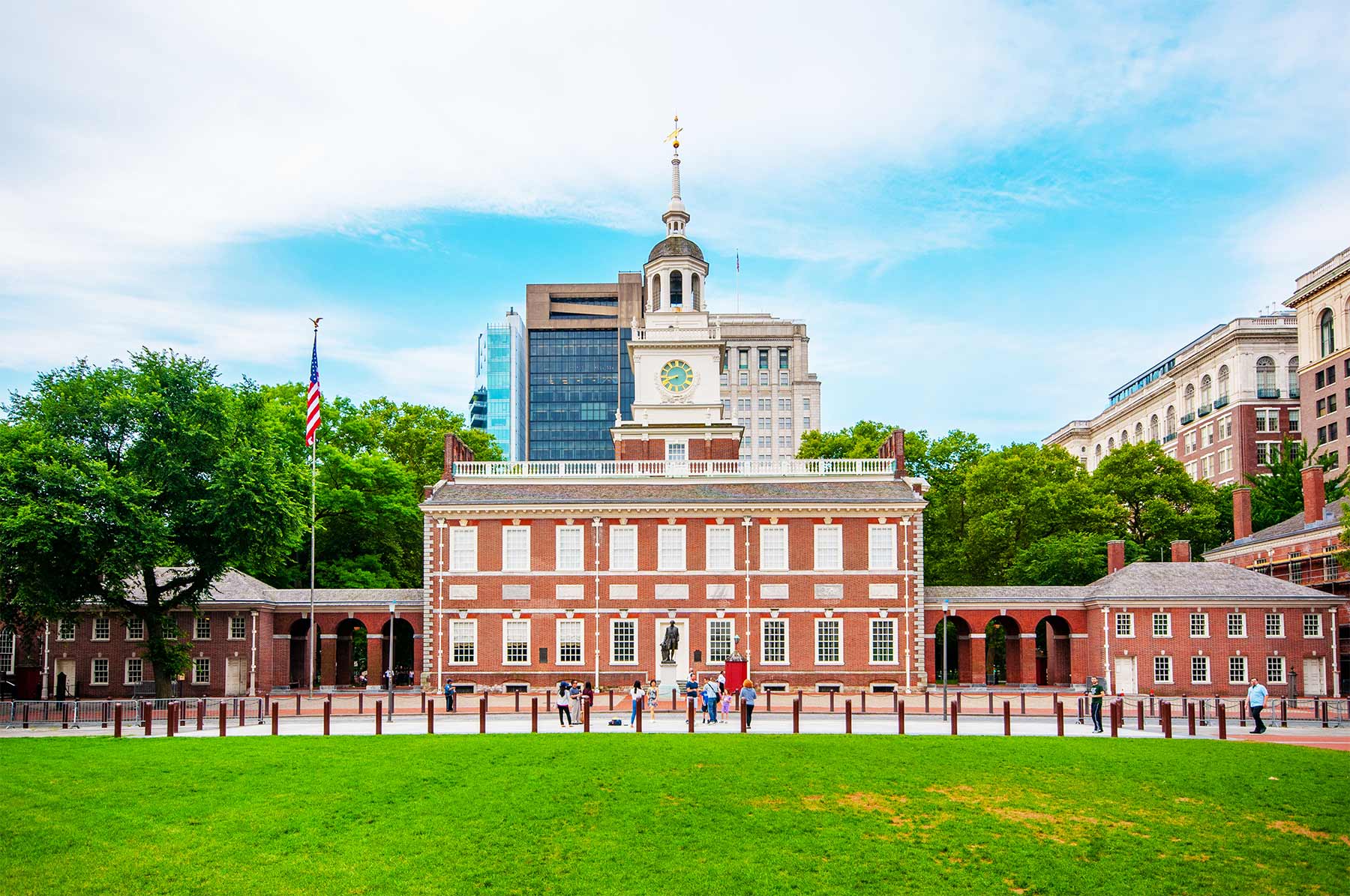
In Philadelphia, Independence National Historical Park takes in the ground where the United States was born. In Independence Hall, the Declaration of Independence was adopted in 1776 and the Constitution was drafted in 1787. The hall is a UNESCO World Heritage Site, inscribed in 1979.
Across the street, the Liberty Bell draws visitors from around the world, free to see. The park also includes Congress Hall and other founding sites within a few walkable blocks. For anyone who loves history, there is no place quite like standing in the room where the founders argued, signed, and risked everything.
1. Statue of Liberty National Monument
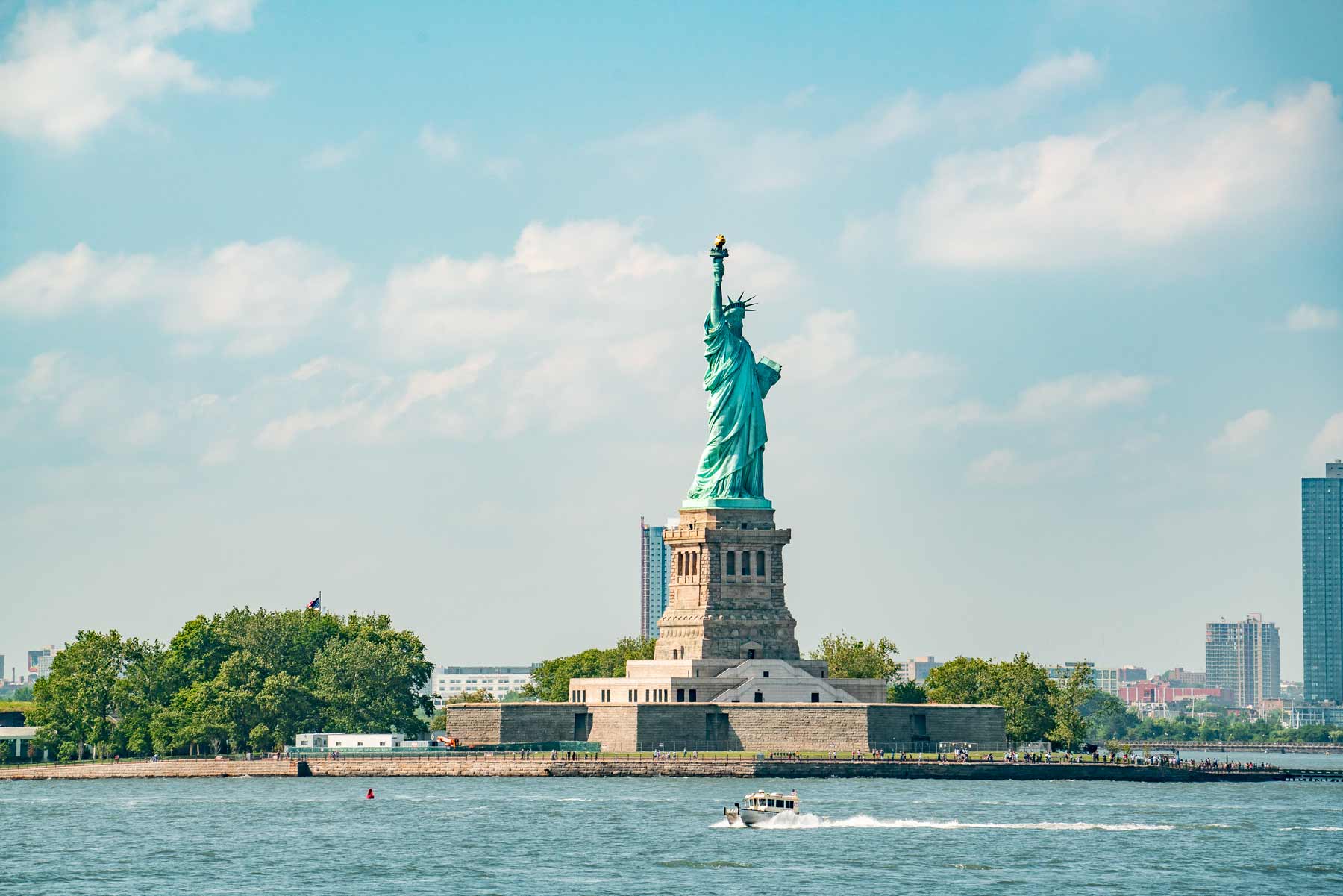
At the top of my list stands the great symbol of freedom and welcome. A gift from France dedicated in 1886, the Statue of Liberty has greeted ships entering New York Harbor for nearly 140 years, torch raised, a beacon to immigrants arriving by the millions. Emma Lazarus’s poem at her base, with its call to the “huddled masses yearning to breathe free,” became the nation’s promise to newcomers.
The Statue of Liberty National Monument, run by the National Park Service, was inscribed as a UNESCO World Heritage Site in 1984. You can take the ferry to Liberty Island, tour the pedestal, and, with a reservation, climb to the crown. No single landmark better captures what America has aspired to be, which is why it earns my top spot.
More Famous Landmarks And Parks To Explore
If you love iconic American places, these guides will help you plan your next trip.


