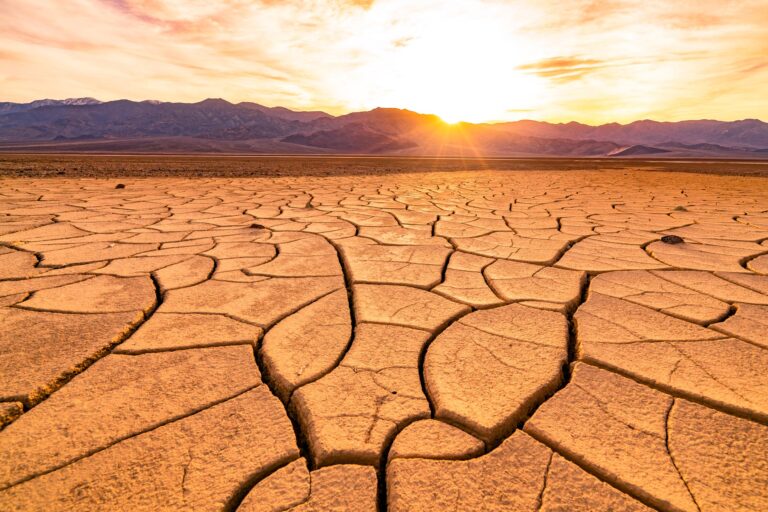


There’s a reason Death Valley holds the record for the hottest temperature ever recorded on Earth (134 degrees Fahrenheit, July 10, 1913). In summer, this 3.4-million-acre expanse of salt flats, sand dunes, and eroded badlands regularly pushes past 120 degrees. It is, by most reasonable measures, trying to kill you.
But between November and February, something remarkable happens. Temperatures drop into the 60s and 70s during the day. The light gets low and warm and stays that way for hours. You can actually hike without rationing every sip of water like a survivalist. Winter turns America’s hottest national park into one of its most comfortable, and I’d argue one of its most photogenic.
Why Winter Is the Best Time to Visit Death Valley
I’ve photographed Death Valley in every season (yes, including a regrettable July trip where my camera gear was almost too hot to touch). Winter wins, and it’s not particularly close.
Daytime highs sit between 65 and 77 degrees Fahrenheit from November through February. Nights can dip into the 30s and 40s, which means you’ll want layers, but the days are perfect for being outside. December is the coolest month at Furnace Creek, with an average high of 65 and an average low of 38, and the coldest temperature on record there is 15 degrees, on January 8, 1913. Compare that to summer, when the thermometer routinely crosses 120 degrees and the National Park Service issues warnings about touching metal surfaces with bare skin.
Love Death Valley? It's one of 117 threatened public lands destinations we're tracking. Get the free briefing.
The other advantage nobody talks about enough is the light. In winter, the sun hangs low in the sky for most of the day, throwing long shadows across the dunes and badlands that you’d normally only get during a narrow golden hour window in summer. For photographers, this is an all-day shooting environment. For everyone else, it just means everything looks more dramatic.
If you’re curious about what the park looks like when the heat is at full blast, I wrote a separate guide on visiting Death Valley in summer. Fair warning, it’s a different experience entirely.
The Best Things to Do in Death Valley in Winter
Winter opens up the full menu of Death Valley experiences. In summer, many of these spots are a quick photo stop at best because lingering means risking heat exhaustion. In winter, you can actually take your time.
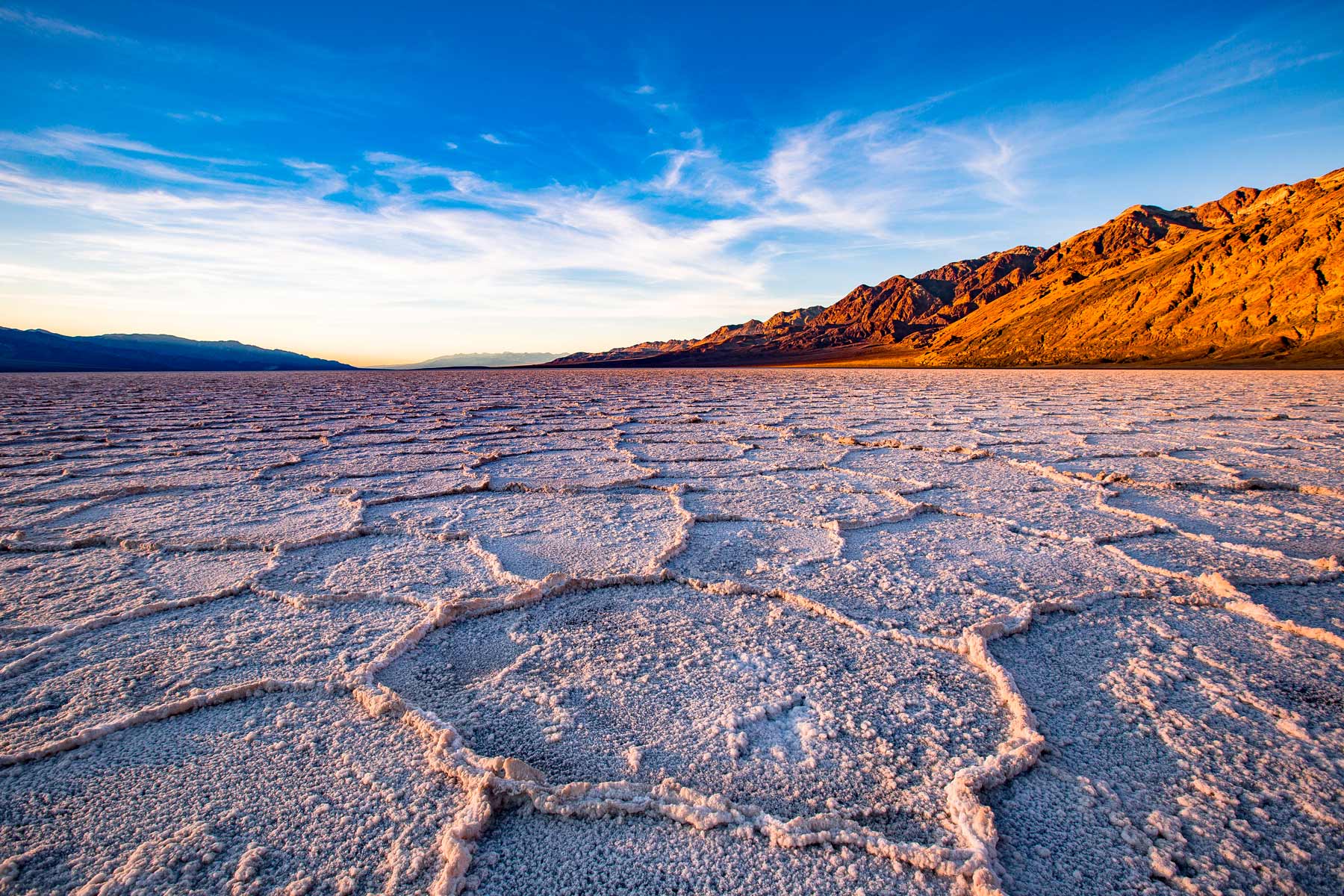
Badwater Basin sits at -282 feet below sea level, the lowest point in North America. The vast salt flat stretches for miles in every direction, and in winter you can walk out onto it for 20, 30, even 45 minutes without the brutal sun driving you back. The hexagonal salt patterns are best photographed in early morning when the light skims across the surface.
Zabriskie Point is the park’s most famous viewpoint, and for good reason. The eroded mudstone badlands glow gold and amber in the winter sunrise. I’ve stood up here in January when the temperature was 38 degrees at dawn, watching the light slowly fill the folds of the landscape. Worth every shiver.

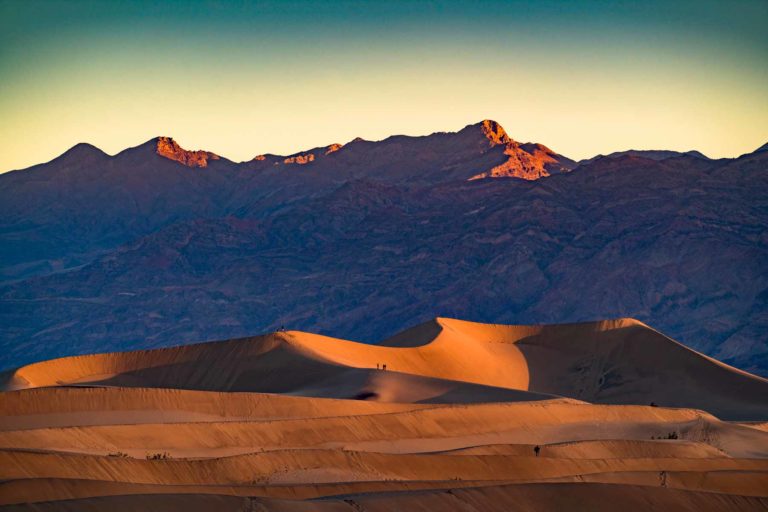
Mesquite Flat Sand Dunes are the most accessible dunes in the park, sitting right off Highway 190 near Stovepipe Wells. Winter light across these dunes is honestly some of the best photography I’ve ever experienced in a national park. The shadows carve deep lines along the ridges, and the low sun turns the sand a deep orange. Sunrise and sunset are both exceptional.

Dante’s View sits at 5,476 feet and gives you a panoramic look at the entire valley floor with the Panamint Range beyond it. On a clear winter day, you can see Badwater Basin directly below and Telescope Peak (11,049 feet) rising above the opposite side. The elevation difference visible from a single viewpoint is staggering.
Artist’s Drive is a one-way, 9-mile scenic loop through hills painted in reds, purples, greens, and yellows from volcanic mineral deposits. Winter’s softer light actually brings out these colors better than the harsh overhead summer sun. Check out my full guide to Artist’s Palette for more details.
For the complete rundown of everything worth seeing, take a look at our 25 things to do in Death Valley guide.
Winter Hiking in Death Valley
Summer hiking in Death Valley ranges from inadvisable to genuinely dangerous. Winter hiking is a completely different story. The cooler temperatures make trails that are off-limits in summer not only accessible but genuinely enjoyable.
Golden Canyon is a 3-mile out-and-back (or a 6.5-mile loop if you connect through Gower Gulch) that winds through narrow, golden-walled canyons. It’s one of the most popular hikes in the park, and in winter you can do the full loop without turning yourself into beef jerky.
Mosaic Canyon is a 4-mile round trip that takes you through smooth, polished marble narrows. The walls feel almost sculpted. It’s flat enough for most fitness levels but interesting enough to hold your attention the entire way.
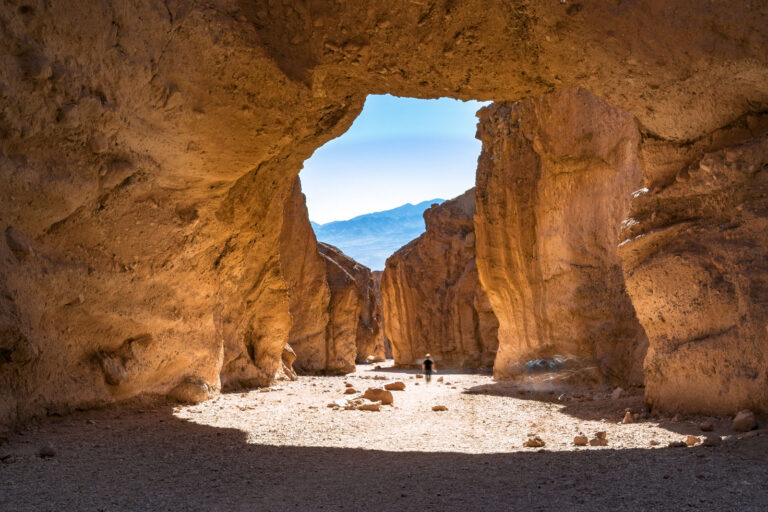
Natural Bridge is a short, 1-mile out-and-back to a 50-foot-high rock bridge spanning a narrow canyon. Quick, easy, and worth the stop. I covered it in more detail in our Natural Bridge guide.
Telescope Peak is the big one. At 11,049 feet, it’s the highest point in the park, and the 14-mile round trip gains about 3,000 feet of elevation from the Mahogany Flat trailhead. In winter, expect snow and ice near the summit. Bring microspikes and check conditions before heading up. Standing on the summit and looking down at Badwater Basin, 11,331 feet below, is one of those perspective-altering experiences.
Photography in Winter
I keep coming back to this because it genuinely matters. Death Valley’s landscape is defined by textures, by the ripples in sand dunes, the folds in eroded badlands, the cracked geometry of salt flats. And textures only reveal themselves through shadow.
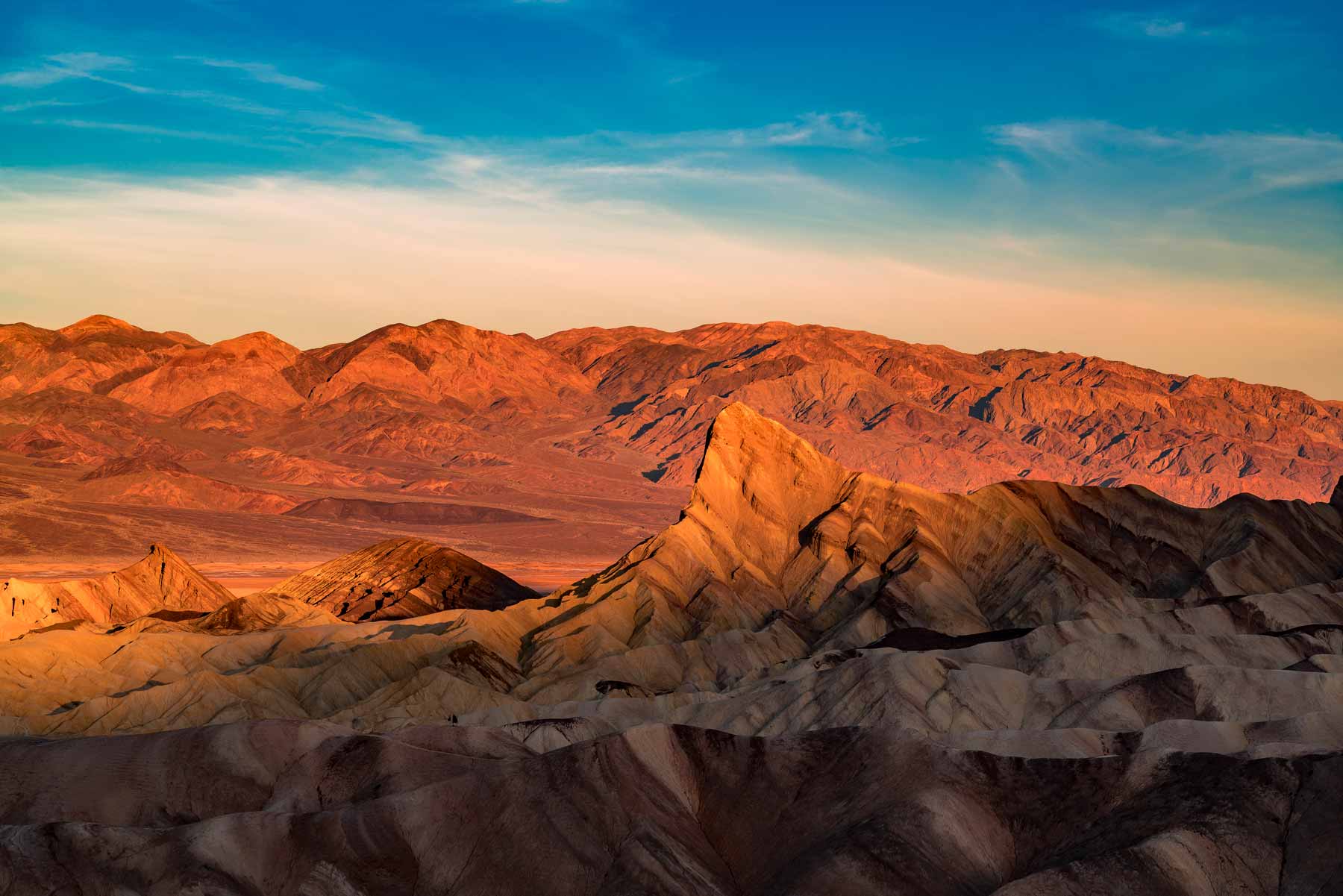
In summer, the sun is nearly overhead by 9 AM, flattening everything. In winter, the sun tracks low across the southern sky from rise to set. That means deep, raking shadows all day long. I’ve shot at Zabriskie Point at 2 PM in January and gotten images that look like golden hour. That just doesn’t happen in July.
The dunes at Mesquite Flat are the crown jewel for winter photography. Every ridge, every ripple throws a crisp shadow line. If there’s been any wind the night before, you get fresh textures that no footprints have touched.
Wildflower Season and the Superbloom
Winter rains in Death Valley set the stage for one of nature’s most spectacular events. If the right amount of rain falls between October and February (generally 1-2 inches spread across multiple storms), the desert floor erupts with wildflowers in late February through March.

A full superbloom happens roughly once a decade, and when it does, it draws visitors from around the world. The last major one in 2026 turned barren valleys into carpets of desert gold and purple notch-leaf phacelia. Even in non-superbloom years, you’ll often find scattered wildflowers in the lower canyons and near water sources.
For more on the transition from winter into the wildflower season, our Death Valley in spring guide covers what to expect.
The Racetrack Playa
The Racetrack is one of the most mysterious places in any national park. Rocks weighing hundreds of pounds leave long trails across the flat playa surface, seemingly moving on their own (scientists figured out it’s a combination of ice sheets and light winds, but it’s still eerie to see in person).

Winter is the better season to visit the Racetrack because occasional rain actually fills the playa with a thin layer of water, which is exactly the condition that allows the stones to sail. Even without water, the playa surface is harder and smoother in winter, making the stone trails more visible.
Getting there requires a 27-mile drive on a rough dirt road (Racetrack Valley Road) from Ubehebe Crater. High clearance is recommended, and you should carry extra water and a spare tire. Cell service is nonexistent.
Night Skies
Death Valley has some of the darkest skies in the contiguous United States. With a Bortle class 2 rating, the Milky Way isn’t just visible here, it’s overwhelming. You can see it with your naked eye in a way that’s impossible anywhere near a city.

Winter nights are longer, which means more hours of true darkness for stargazing. The park designates Harmony Borax Works and Mesquite Flat Dunes as prime stargazing locations. Bring a headlamp with a red filter and a warm jacket because those 30-degree nights hit different when you’re standing still in the desert.
Practical Information for a Winter Visit
Entrance fee is $30 per vehicle, valid for 7 days. An America the Beautiful pass ($80 a year for US residents, $250 for nonresidents) covers it.
Lodging options are limited. Furnace Creek offers The Inn at Death Valley (upscale, book months ahead for winter) and The Ranch at Death Valley (more reasonable). Stovepipe Wells Village is a no-frills option with a restaurant, gas station, and surprisingly decent rooms. Panamint Springs Resort on the western edge is another solid choice.
For camping, our Death Valley campgrounds guide breaks down all 9 options. Furnace Creek Campground takes reservations (and fills up in winter), while most backcountry sites are first-come, first-served.
Gas is expensive in the park. I’m talking $6-7 per gallon expensive. Fill up in Pahrump, Beatty, or Lone Pine before entering.
Water is non-negotiable, even in winter. The air is bone-dry, and you’ll dehydrate faster than you realize. Carry at least one gallon per person per day, more if you’re hiking.
Cell service is spotty at best. You’ll get a signal at Furnace Creek and sometimes at Stovepipe Wells, but most of the park is a dead zone. Download offline maps before you arrive.
For a day-by-day plan, our Death Valley itinerary covers 1-day, 2-day, and 3-day options. And for the quick-hit facts, our 15 Death Valley facts post has you covered.
Is Death Valley Worth Visiting in Winter?
Without question, yes. Death Valley in winter is one of the best park experiences in the entire system. The weather is perfect for hiking, the light is perfect for photography, the crowds are manageable, and the landscape is every bit as dramatic as it is in the scorching heat (just without the part where you might actually die).
If I had to pick one season to visit Death Valley, winter every time. Pack layers, bring water, and give yourself at least two full days. This place deserves your time.
What to Bring to Death Valley
Gear we recommend for Death Valley. Affiliate links support our work at no cost to you.
More Than Just Parks may earn a small commission from purchases made through these links, at no extra cost to you. We only recommend gear we would actually use.
Affiliate disclosure: Some links on this page earn us a small commission at no extra cost to you. We only recommend gear we actually use.
More Than Just Parks Film Watch our film of Death Valley We spent weeks in Death Valley, one of our favorite public lands destinations, capturing it the way it deserves. Take a few minutes and see it for yourself.