

Everglades National Park protects 1.5 million acres of slow-moving freshwater, sawgrass prairie, mangrove coast, and pine rockland at the southern tip of Florida. It is the largest tropical wilderness in the United States and the only place where alligators and American crocodiles share the same water. Most first-time visitors expect a single overlook and a boardwalk. What they get instead is a system the size of a small state, split across three entrances that do not connect inside the park.
That layout is the single most important thing to understand before you go. The main Homestead entrance leads to the long road down to Flamingo on Florida Bay. The Shark Valley entrance, an hour northwest along Tamiami Trail, has the tram loop and observation tower. Gulf Coast at Everglades City is the gateway to the Ten Thousand Islands. You cannot drive between them inside the park, so pick your section by what you want to do and how much time you have. Below are 20 things worth doing, grouped roughly by area, with the logistics that actually decide whether a plan works.
20 Things to Do in Everglades National Park
1. Walk the Anhinga Trail at Royal Palm

If you do only one thing in the park, do this one. The Anhinga Trail is a 0.8-mile paved loop and boardwalk a few minutes inside the Homestead entrance at Royal Palm. In the dry season it concentrates wildlife better than any other short walk in South Florida. You will see alligators at arm’s length below the boardwalk, anhingas drying their wings, herons, egrets, and turtles, often within the first ten minutes. Go early or late for the best light and fewer people. Bring a hat and water because there is almost no shade.
2. Climb the Shark Valley Observation Tower
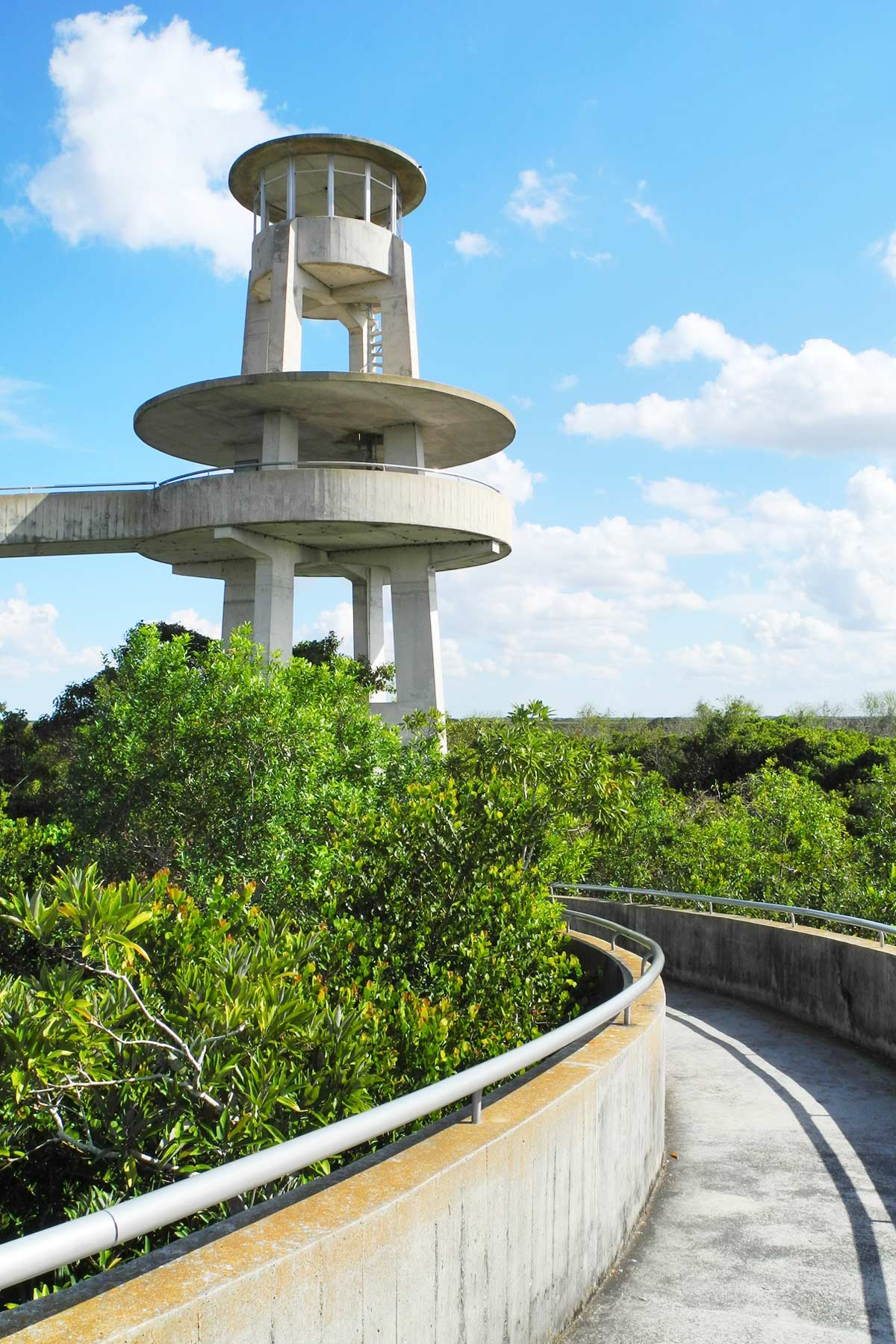
The Shark Valley tower sits at the far end of a 15-mile paved loop and gives you a 360-degree view across the river of grass. You reach it three ways: the two-hour narrated tram tour, a rented bicycle, or on foot. The full loop is 15 miles round trip, so most people who walk only go partway. Cyclists should budget two to three hours and start early because there is no shade and alligators often sun themselves directly on the path. Shark Valley has its own entrance off Tamiami Trail and does not connect to the Homestead road.
Love Everglades? It's one of 117 threatened public lands destinations we're tracking. Get the free briefing.
3. Take an airboat tour along Tamiami Trail

Airboats are the classic Everglades ride, and the park authorizes three concessioners along Tamiami Trail just outside the Shark Valley area. Tours run 30 to 60 minutes and skim across open sawgrass marsh where you can spot alligators, wading birds, and the occasional turtle. Note the catch: the National Park Service only permits these three operators inside park boundaries, so the many private airboat businesses you pass on US-41 operate outside the park. Both can be good, but if you want the official park experience, book one of the three authorized companies.
4. Drive the road to Flamingo
The 38-mile road from the Homestead entrance to Flamingo is a destination in itself. It crosses every major habitat in the park, from pine rockland to dwarf cypress to coastal prairie, with pullouts and short trails the whole way. Plan a full day if you want to stop. The road dead-ends at Flamingo on Florida Bay, the southernmost point you can drive to in mainland Florida, where the Guy Bradley Visitor Center, a marina, and a campground sit at the edge of the water.
5. Spot crocodiles and manatees at Flamingo Marina
Flamingo Marina is one of the few places in North America where you have a realistic shot at seeing American crocodiles, which are saltwater specialists and rarer than alligators. They often haul out near the marina basin. Manatees drift through in the cooler months, and you can launch a boat tour into Florida Bay or up the Buttonwood Canal from here. The new Flamingo Lodge, run by the park concessioner, reopened with eco-tents and rooms, so this is once again a place you can sleep at the end of the road.
6. Kayak the mangrove wilderness

Paddling is the best way to feel the scale of the place. Near Flamingo, the Nine Mile Pond loop and the Hells Bay canoe trail wind through marked mangrove tunnels and open ponds. You can rent kayaks and canoes at the Flamingo marina or bring your own. Check the tides and wind before you go, carry more water than you think you need, and tell someone your plan. The mangroves all look alike once you are inside them, so the marked trails matter.
7. Paddle or boat the Ten Thousand Islands

From the Gulf Coast entrance at Everglades City, the Ten Thousand Islands spread west into the Gulf in a maze of mangrove keys. The Gulf Coast Visitor Center is the launch point for boat tours that look for dolphins and manatees and for multi-day paddling trips. This is the northern end of the Wilderness Waterway, a 99-mile paddling route that runs all the way to Flamingo for experienced backcountry travelers.
8. Try slough slogging on a ranger walk
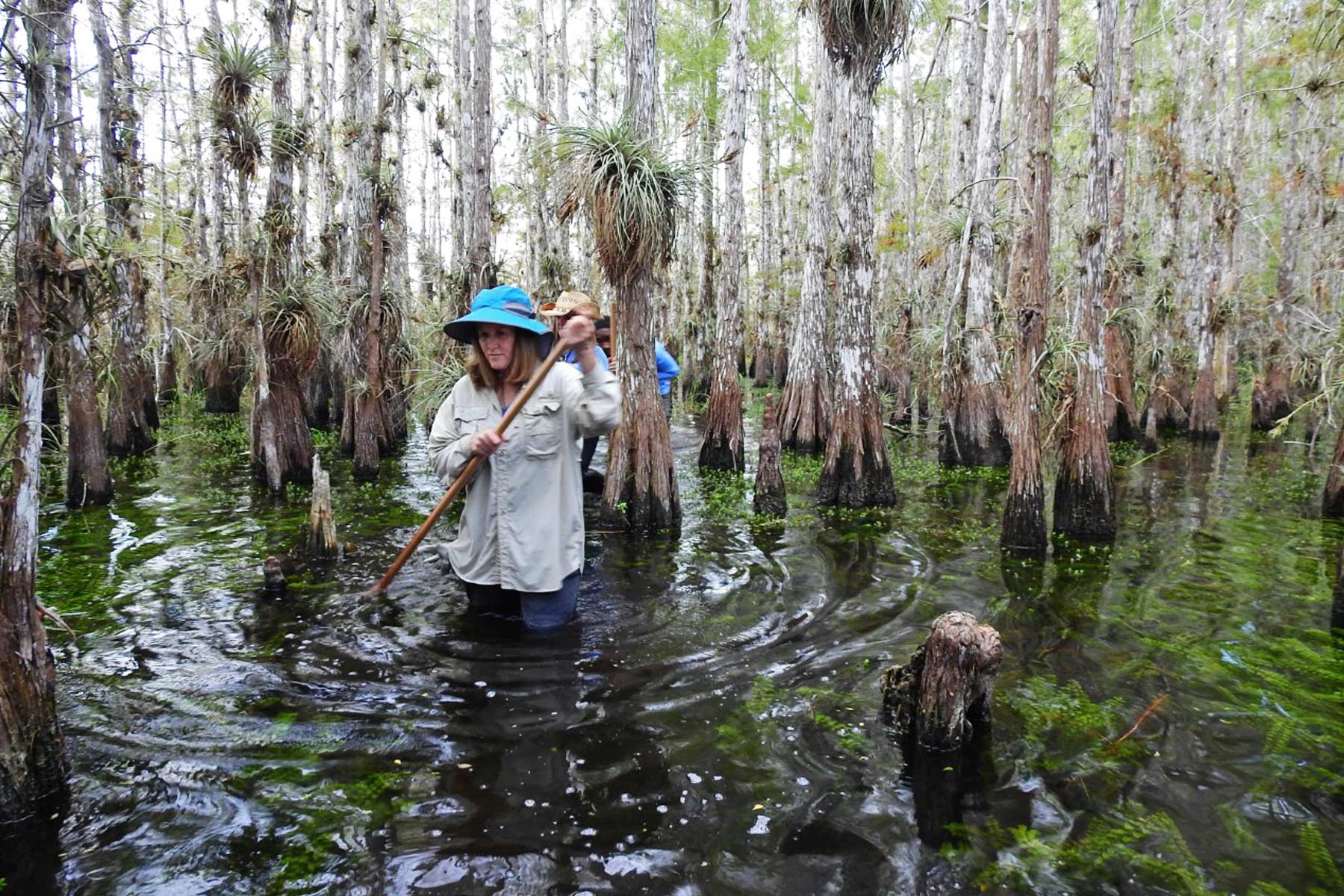
Slough slogging means wading off-trail through a cypress dome or sawgrass slough, usually on a ranger-led program in the winter season. It is the closest you get to the living interior of the Everglades, knee to waist deep in clear water surrounded by cypress. Wear closed-toe shoes you do not mind soaking and long pants. Programs are limited and seasonal, so check the schedule at a visitor center when you arrive.
9. Walk the Pa-hay-okee Overlook
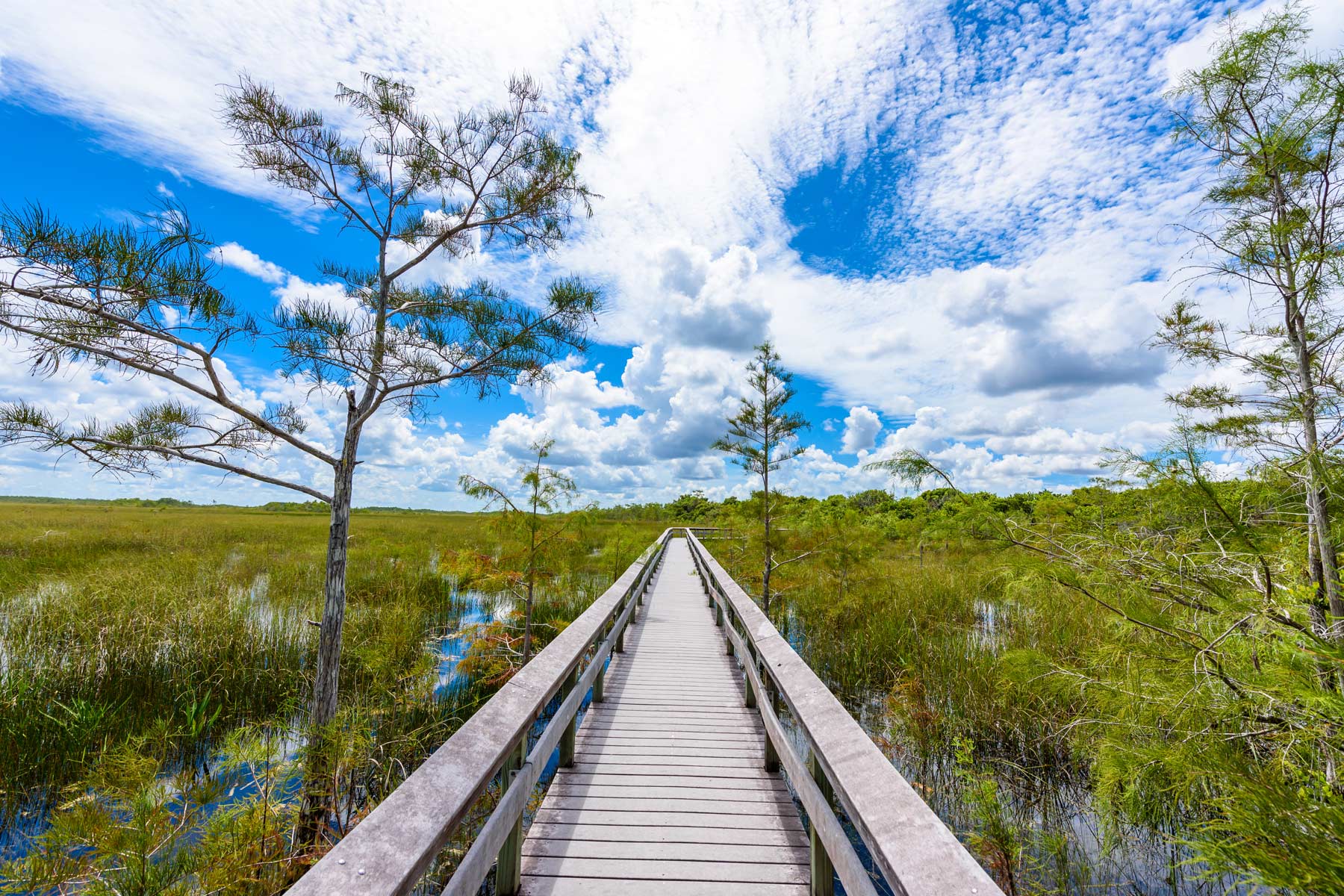
Pa-hay-okee is a short boardwalk and elevated platform off the main road that gives you the classic river of grass view, an endless sawgrass plain broken by tree islands. It is the spot that explains the name Everglades better than any sign. Sunrise and sunset turn the whole prairie gold. The walk takes ten minutes, which makes it an easy add-on between the entrance and Flamingo.
10. Explore Mahogany Hammock
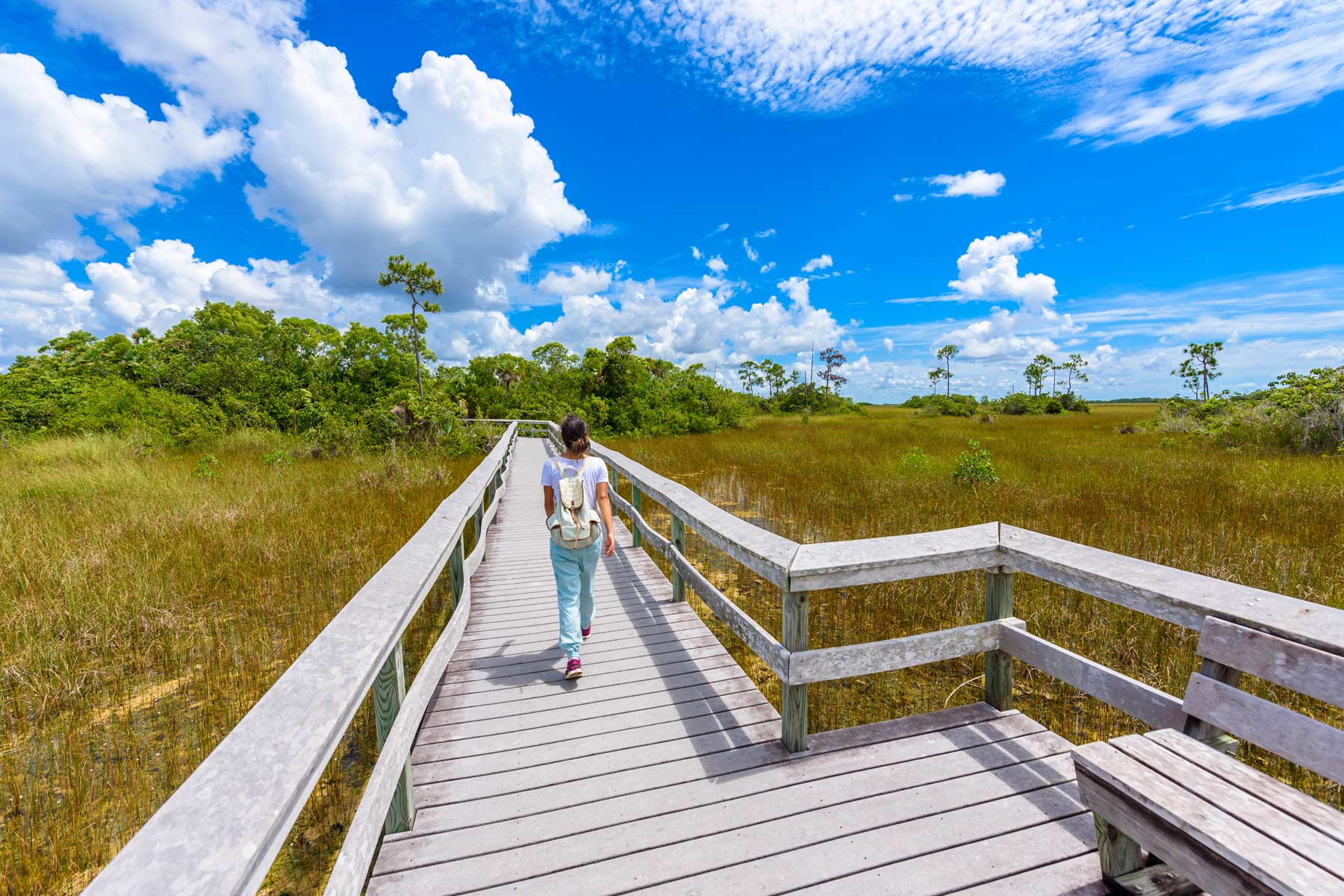
Mahogany Hammock is a 0.4-mile boardwalk loop into a dense tropical hardwood island that includes the largest living mahogany tree in the United States. Hammocks sit a few inches higher than the surrounding marsh, which is enough to keep them dry and let hardwoods grow. The change from open prairie to shaded jungle in a few steps shows how much elevation matters here, where a foot of height changes everything.
11. Tour the Nike Missile Site HM-69

HM-69 is a preserved Cold War Nike Hercules missile base built after the Cuban Missile Crisis to defend South Florida. It is one of the most unexpected sites in any national park. Ranger-led tours run during the winter season and walk you through the barns, the assembly building, and a restored missile. The site is near the main park road south of the entrance. Tour days are limited, so confirm the schedule before you count on it.
12. Bike the Shark Valley loop at dawn
Renting a bike at Shark Valley and riding the 15-mile loop before the tram crowds arrive is one of the quieter wildlife experiences in the park. You ride at eye level with alligators and wading birds, with the tower as your turnaround. Bikes are first come, first served at the concession, and the loop is flat the entire way. Start at opening, carry water, and give basking alligators a wide berth on the path.
13. Camp at Flamingo or Long Pine Key

The park has two drive-up campgrounds. Flamingo, at the end of the road, has tent and RV sites, some with electric hookups, plus walk-in sites and the eco-tents at the lodge. Long Pine Key, near the entrance, has a quieter wooded loop. Both are reserved through the park concessioner, and the winter season fills up, so book ahead. Bring serious bug protection no matter the date.
14. Sleep on a backcountry chickee
For experienced paddlers, the park maintains backcountry campsites including chickees, raised wooden platforms over the water, plus beach sites and ground sites scattered through the wilderness. You need a wilderness permit, reserved on Recreation.gov, with a permit fee plus a small per-person nightly fee. These trips require real navigation skill, tide planning, and self-sufficiency. They also deliver the most remote night you can have in the eastern United States.
15. Take a Florida Bay or backcountry boat tour
From the Flamingo marina, concession boat tours head out into Florida Bay or up the Buttonwood Canal into the backcountry. The bay tour looks for crocodiles, dolphins, sea turtles, and shorebirds across shallow turquoise flats. The backcountry tour pushes into the mangrove rivers. Both are a low-effort way to reach water you could otherwise only see by kayak, and they run year round, weather permitting.
16. Watch for birds in the dry season
The Everglades is one of the great birding destinations in North America. As the dry season draws water into shrinking pools from roughly December through March, wading birds concentrate to feed: roseate spoonbills, wood storks, great blue herons, white ibis, and many more. The Anhinga Trail, Eco Pond near Flamingo, and Mrazek Pond are reliable spots. Early morning is best. A pair of binoculars changes the whole experience.
17. Paddle Nine Mile Pond
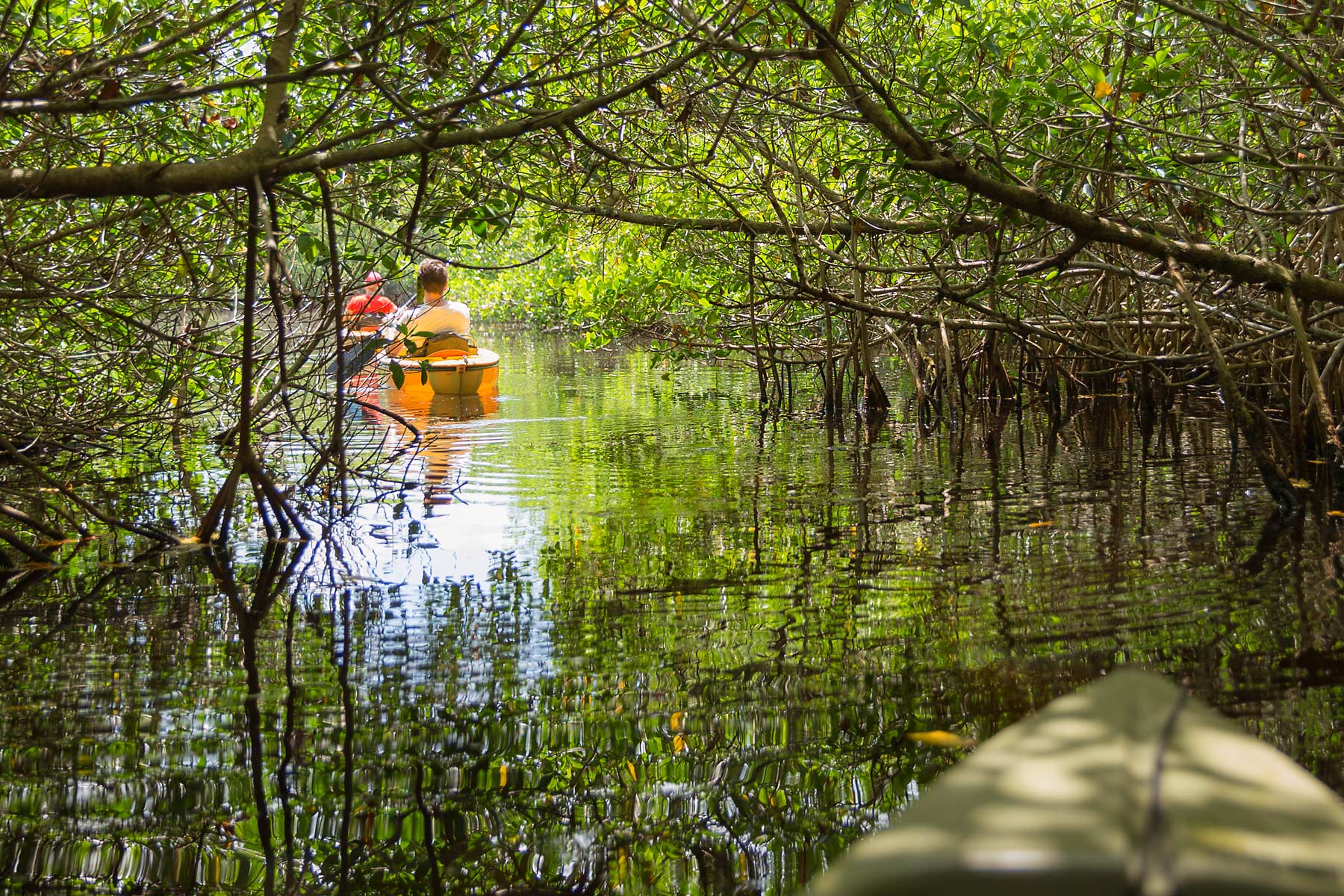
The Nine Mile Pond canoe trail is a marked 5.2-mile loop near Flamingo that mixes open pond, sawgrass passages, and small mangrove islands. It is a manageable half-day paddle for fit beginners who follow the numbered markers carefully. Bring a map, watch the wind on the open water, and start early to beat the heat. Alligators and wading birds are common, and the solitude once you are a few markers in is the whole point.
18. Stop at the visitor centers

The park has several visitor centers, and each anchors a different section. The Ernest F. Coe Visitor Center is the main hub at the Homestead entrance with exhibits and the schedule of ranger programs. The Guy Bradley Visitor Center at Flamingo covers the coastal end. Shark Valley and Gulf Coast each have their own. Start at whichever one fits your entrance to grab the current program schedule, water conditions, and any closures, because these change with the season.
19. Go stargazing over the prairie
The southern end of the park, away from Miami’s glow, holds some of the darkest skies in the eastern United States. On a clear, moonless night the Milky Way stands out over the sawgrass. Pa-hay-okee and the road near Flamingo work well. The park runs astronomy programs in the cooler months. Bring bug spray, a red flashlight to protect your night vision, and patience while your eyes adjust.
20. Add a day at Big Cypress next door

Big Cypress National Preserve sits directly north of the park along Tamiami Trail and shares the same watershed. It is one of the most reliable places anywhere to see wild alligators from the car along the Loop Road and the Tamiami Trail canal. Big Cypress also offers its own scenic drives, boardwalks, and a strong chance at spotting wading birds. If you are coming from the Shark Valley or Gulf Coast side, it pairs naturally with an Everglades day.
Everglades at a Glance
| Detail | What to know |
|---|---|
| Entrance fee | $35 per vehicle, valid 7 days at all entrances. Covered by the America the Beautiful pass. |
| Nonresident surcharge | International visitors age 16+ pay an extra $100 per person unless they hold an annual or America the Beautiful pass. |
| Three entrances | Homestead (main road to Flamingo), Shark Valley (Tamiami Trail tram and tower), Gulf Coast (Everglades City). They do not connect inside the park. |
| Best season | December through April, the dry season, for wildlife, comfortable weather, and fewer mosquitoes. |
| Lodging | Flamingo Lodge eco-tents and rooms at the end of the road, plus Flamingo and Long Pine Key campgrounds. Gateway towns Homestead, Florida City, and Everglades City have hotels. |
| Reservations | Campgrounds and wilderness permits book through the concessioner and Recreation.gov; backcountry permits open 90 days out. |
| Don’t forget | Bug protection, sun protection, and far more water than you expect. Shade is scarce. |
Planning Your Everglades Visit in 2026
The honest 2026 reality is that the Everglades rewards a plan and punishes improvisation. Because the three entrances do not connect, a one-day trip should commit to a single section. With one day from Miami, the Homestead side gives you the Anhinga Trail, Pa-hay-okee, and the drive to Flamingo. With two or more days, add Shark Valley and consider the Gulf Coast for paddling.
Season matters more here than at almost any other park. The dry winter season concentrates wildlife, drops the mosquito pressure, and brings the most comfortable temperatures, which is why December through April is peak. Summer is hot, buggy, and prone to afternoon storms, though it has its own quiet appeal if you come prepared. Whenever you go, carry insect repellent, sun protection, and extra water, and check at a visitor center for current ranger programs, water levels, and seasonal closures.
For more on planning a trip to Florida’s parks and how the Everglades fits with Biscayne and Dry Tortugas, see our guide to the national parks in Florida. You can also compare it to other eastern parks in our roundups of the East Coast national parks and the full list of national parks ranked.
What to Bring to Everglades
Gear we recommend for Everglades. Affiliate links support our work at no cost to you.
More Than Just Parks may earn a small commission from purchases made through these links, at no extra cost to you. We only recommend gear we would actually use.
Affiliate disclosure: Some links on this page earn us a small commission at no extra cost to you. We only recommend gear we actually use.