

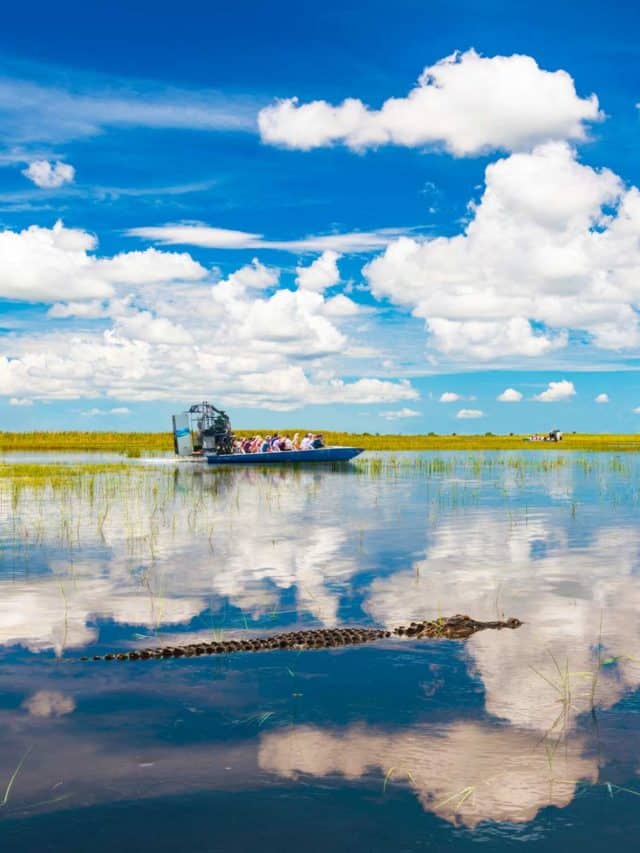
Everglades National Park facts. Marjory Stoneman Douglas called it a river of grass, and the name fits: the Everglades is a vast, slow-moving sheet of water flowing across the southern tip of Florida. The park protects 1.5 million acres of it, the largest subtropical wilderness in the United States.
I taught history for a career before I started visiting these parks, and the Everglades is as much a human story as a natural one: the architect who fought to save it, the backcountry “Gladesmen,” the drinking water it supplies to millions, and the python invasion now reshaping it. For planning and conditions, start with our guide to the Everglades. Below are 11 facts about Everglades National Park, each one checked against the record.

Basic Facts About The Everglades
- Location: Southern Florida
- Size: About 1.5 million acres
- Elevation: Mostly 0 to 8 feet above sea level, with a Calusa-built shell mound on the Gulf Coast rising about 20 feet
- Established: Authorized by Congress in 1934 and dedicated by President Harry Truman on December 6, 1947, the first national park created mainly to protect biodiversity.

READ MORE: Florida National Parks Ranked
1. A Landscape Architect Almost Single-Handedly Created The Park
The Everglades owes its existence largely to one man: a landscape architect named Ernest Coe. Exploring the region, he was alarmed by the slaughter of rare birds for their plumes and the stripping of wild orchids, and he became convinced Florida had to protect its tropical wilderness before it was gone.
Love Everglades? It's one of 117 threatened public lands destinations we're tracking. Get the free briefing.
In 1928 he founded the Tropical Everglades National Park Association and wrote to Stephen Mather, the first director of the National Park Service, proposing a park. Legislation authorizing it passed in 1934, but it took another thirteen years to assemble the land. President Harry Truman finally dedicated the park in 1947. Along the way, the writer Marjory Stoneman Douglas joined the cause; her book The Everglades: River of Grass became the defining work on the wetland and its rescue.

2. It Protects One Of The Largest Wetlands In The World
The park protects one of the largest wetland systems anywhere. Within it, visitors move through several distinct habitats, from pine rocklands and sawgrass marshes to coastal mangroves and marine waters, each home to its own web of life.
Wetlands do more than shelter wildlife. They filter pollutants, absorb excess nutrients, recharge aquifers, and buffer the coast against flooding, which is part of why the health of the Everglades matters far beyond its boundaries.

3. A Beloved TV Bear Was Set In The Everglades
One of the more unexpected entries on this list involves a television bear. Gentle Ben began as a 1965 novel by Walt Morey, then became a CBS television series in 1967 that ran 58 episodes over two seasons, set in the Florida Everglades.
The show followed a boy named Mark (played by a young Clint Howard), his wildlife-officer father (Dennis Weaver), and their bear. Several trained black bears shared the role depending on the scene, with one named Bruno doing most of the on-screen work, traveling the wetlands by airboat and jeep.

4. It Is The Largest Subtropical Wilderness In The United States
Everglades National Park is the largest subtropical wilderness in the United States, 1.5 million acres of sawgrass marsh, mangrove forest, and hardwood hammock. It is the kind of place federal wilderness rules are written for, where the goal is to leave the land and its ecosystem as undisturbed as possible.
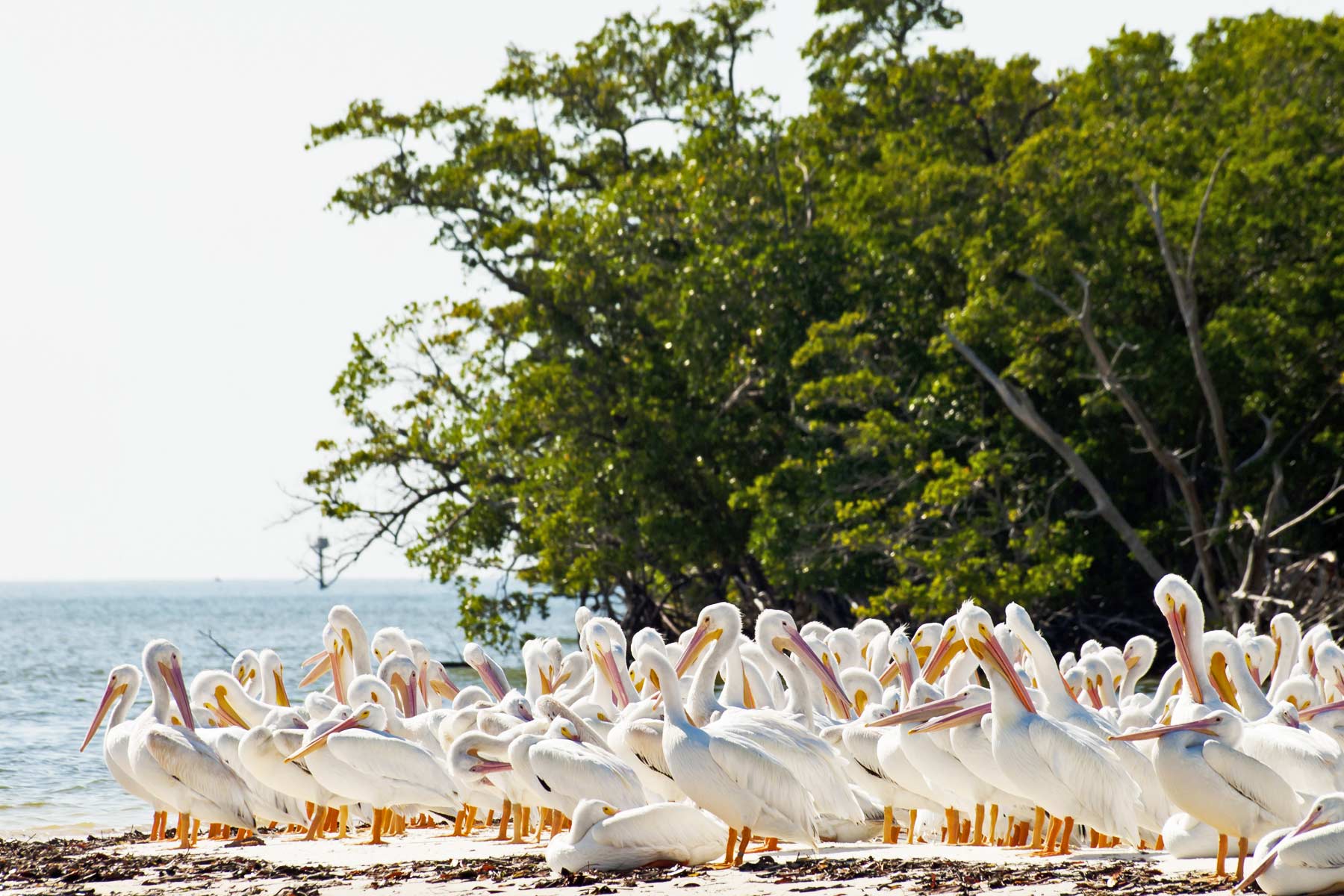
That wilderness shelters some of North America’s rarest animals, including the West Indian manatee, the American crocodile, and the elusive Florida panther, and it draws birders, anglers, and paddlers from around the world.

5. It Shelters Rare Species, Including The Ghost Orchid
The Everglades is a refuge for rare and endangered species. Among them are the leatherback turtle, the Florida panther, and the West Indian manatee, alongside abundant reptiles and amphibians such as the American alligator, the American crocodile, and the Florida softshell turtle.
Among the plants, the prize is the ghost orchid, famous for its long, pure-white petals and for blooming without any visible leaves. It is one of the rarest plants in South Florida and a near-mythical sight for those who go looking for it.
6. The Backcountry Was Home To The “Gladesmen”
Long before the park, a hardy group of frontier people called the Gladesmen made their living in the wetland. They built small homes and narrow, flat-bottomed boats called “glade skiffs,” typically about two feet wide and 16 to 18 feet long, to slip through the shallow waterways.
Standing at the stern and pushing with a long pole, a Gladesman could move through water just inches deep, hunting and fishing for alligators, deer, turkey, fish, and frogs to sell back in town. The Ingraham Highway, completed in 1916, made the wilderness more accessible to Gladesmen, scientists, and tourists alike.

7. The Park Is Fighting A Python Invasion
One of the most serious threats facing the Everglades today is the Burmese python. Established in the park through the release of captive pet snakes, these large constrictors have multiplied across the wetland.
The pythons eat a wide range of native animals, and research points to them as a leading reason that mammal populations have crashed in parts of the park. The good news for visitors is that the snakes are secretive, and most people never see one.

8. It Holds The Largest Protected Mangroves In The Northern Hemisphere
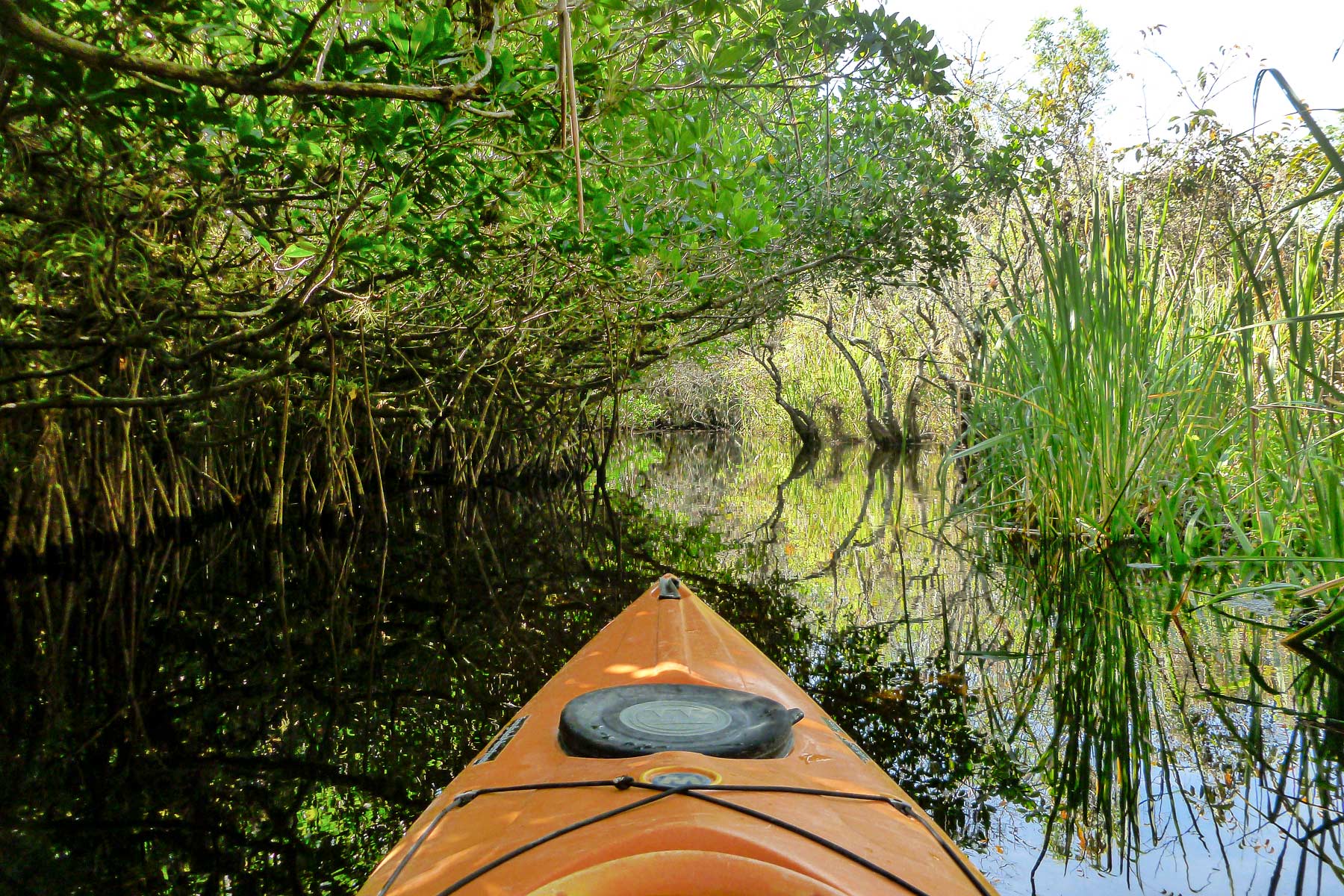
Mangrove forests line the coastal channels and winding rivers around the southern tip of Florida, and the Everglades contains the largest contiguous stand of protected mangroves in the Northern Hemisphere.
“Mangrove” is not a single species but a label for several kinds of salt-tolerant trees that thrive in the harsh, shifting conditions where land meets sea. Their tangled roots anchor the coastline, shelter young fish, and blunt the force of storms.

9. The Wildlife List Runs Long
The Everglades supports an extraordinary range of animals: roughly 300 species of fish, more than 360 species of birds, around 40 mammals, and some 50 kinds of reptiles, along with countless insects.
The headliner is the Florida panther, the last subspecies of puma still found in the eastern United States. It came perilously close to extinction, with only a few dozen left in the wild, and the Everglades remains one of the best places to find this endangered cat.

10. It Is The Only Place Alligators And Crocodiles Coexist
The Everglades is the only place on Earth where American alligators and American crocodiles live side by side. Alligators stick to fresh water, since they cannot handle salt for long, while crocodiles tolerate both fresh and salt water. The park’s mix of freshwater marsh and coastal estuary gives both what they need.
You can tell them apart with a little practice. The American crocodile has a narrow, tapered snout and a grayish-green back, and the larger males can exceed 15 feet in length. The alligator is darker, with a broader, rounded snout. Both are best admired from a respectful distance.
11. One In Three Floridians Depends On It For Drinking Water
The Everglades is not just scenery; it is a water supply. One in three Floridians, more than eight million people, draws drinking water from the Biscayne Aquifer, which lies just a few feet below the southeastern Everglades.
The wetland ecosystem acts as a natural filter, removing excess nutrients and helping hold back seawater intrusion. Protect the Everglades, in other words, and you protect the tap water of a third of the state.

11 Everglades National Park Facts At A Glance
- A landscape architect almost single-handedly created the park
- It protects one of the largest wetlands in the world
- A beloved TV bear was set in the Everglades
- It is the largest subtropical wilderness in the United States
- It shelters rare species, including the ghost orchid
- The backcountry was home to the “Gladesmen”
- The park is fighting a python invasion
- It holds the largest protected mangroves in the Northern Hemisphere
- The wildlife list runs long
- It is the only place alligators and crocodiles coexist
- One in three Floridians depends on it for drinking water

Related Links
- Everglades National Park hub
- Things To Do In Everglades National Park
- Florida National Parks Ranked
- All 63 National Parks Ranked By Experts
- More Than Just Parks Films
What to Bring to Everglades
Gear we recommend for Everglades. Affiliate links support our work at no cost to you.
More Than Just Parks may earn a small commission from purchases made through these links, at no extra cost to you. We only recommend gear we would actually use.
Affiliate disclosure: Some links on this page earn us a small commission at no extra cost to you. We only recommend gear we actually use.