

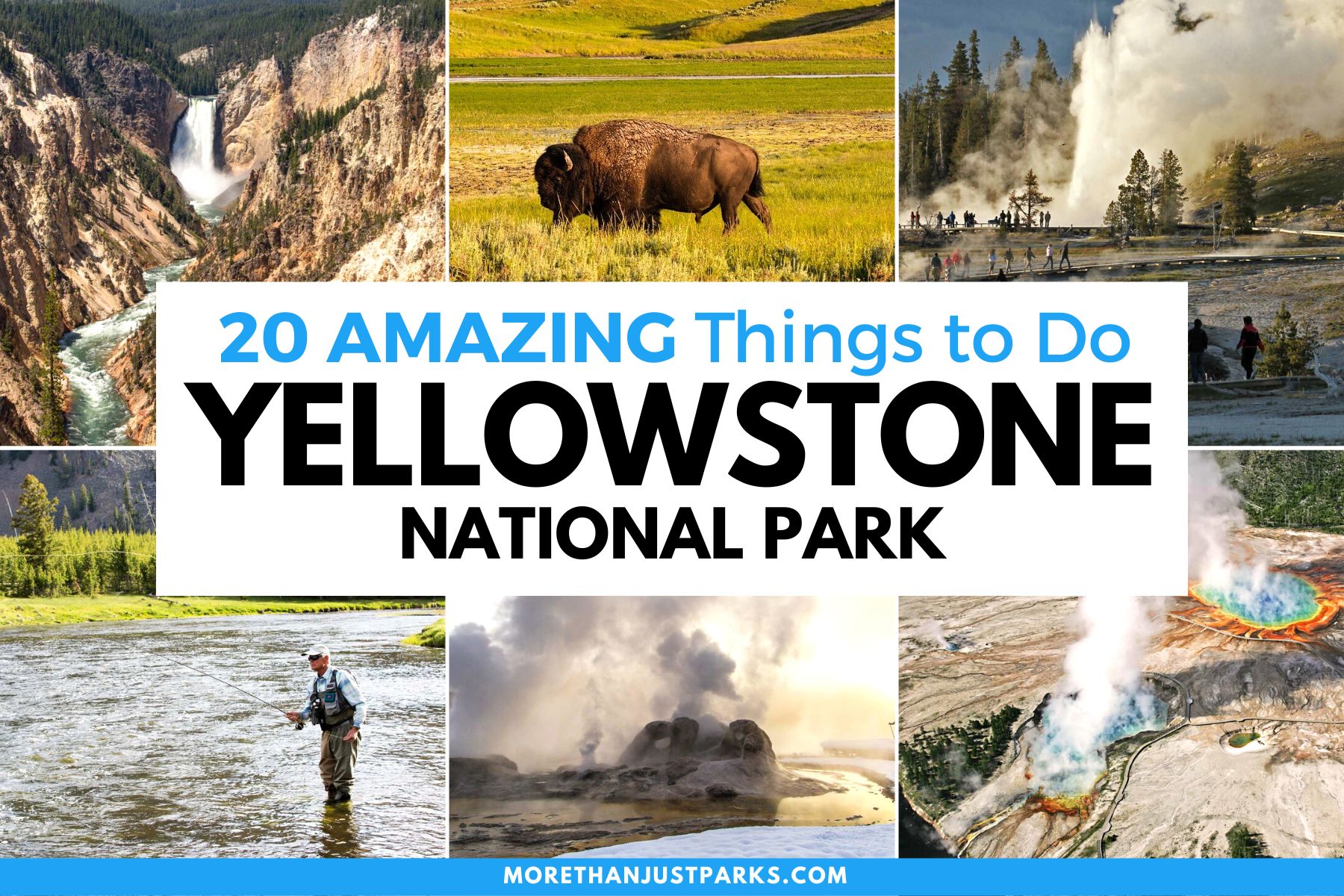
Yellowstone is the granddaddy of them all. The world’s first national park spans 2.2 million acres across Wyoming, Montana, and Idaho, and it holds more geothermal features than anywhere else on Earth. We’ve spent years filming here in every season. This is everything worth doing, ranked in the order we’d recommend it.
First, get the shape of the park in your head. The Grand Loop Road is a figure-8 of roughly 140 miles, an Upper Loop and a Lower Loop joined in the middle, with five entrances feeding into it. North at Gardiner, Northeast at Cooke City, East from Cody, South from Grand Teton and Jackson, West at West Yellowstone. The speed limit tops out at 45, bison jams are a daily fact of life, and driving the full figure-8 without stopping eats the better part of a day. Most of the items below sit on the Lower Loop. Lamar Valley, Mammoth, and Tower live on the Upper Loop, and crossing from one to the other takes longer than the map suggests.
Some links below are affiliate links. If you book a stay or buy a recommended map or guidebook through them, we may earn a small commission at no extra cost to you. It helps keep our park coverage free.
Where to stay near Yellowstone National Park: Most visitors base themselves in West Yellowstone, Montana, the closest gateway with a real range of options. You can compare hotels and lodges near Yellowstone National Park to find dates that still have availability, since the best places book out months ahead in peak season.
Love Yellowstone? It's one of 117 threatened public lands destinations we're tracking. Get the free briefing.
It is also worth carrying a paper map and a good guidebook, because cell service is spotty across most of the park. We use the National Geographic Trails Illustrated map for Yellowstone National Park for trail planning, paired with a detailed Yellowstone National Park guidebook for trip ideas and logistics.
- Entrance fee: $35 per vehicle or $20 per person, good for 7 days. An America the Beautiful pass ($80/year) covers it. Non-US residents 16 and older now pay an additional $100 non-resident surcharge (effective January 1, 2026), waived for pass holders.
- Cell service: Spotty to nonexistent. Bring a guidebook and a paper map.
- Closest airports: Jackson Hole (JAC) is the best option. Bozeman (BZN) is a close second. Here’s our full guide to the best airports near Yellowstone.
- Best time to visit: Late September into October. July 2025 brought 975,109 visits. October 2025 brought about 314,000. Same park, a third of the people. More seasonal planning on our Yellowstone hub.
2026 Update: The park’s spring roads opened April 17 (West Entrance, Mammoth, Norris, Old Faithful, Canyon segments), May 1 (East Entrance to Fishing Bridge, Canyon to Bridge Bay), May 8 (South Entrance to West Thumb), and May 22 (Dunraven Pass and the Beartooth Highway). Most roads close to cars the first Monday of November. Biscuit Basin remains closed following the July 2024 hydrothermal explosion, and the Firehole River swim area is closed for the 2026 season. Norris and Pebble Creek campgrounds are also closed this year. There is still no timed entry or entrance reservation at Yellowstone.
Drive Lamar Valley before sunrise. Be in position by 6 AM for the best wolf and grizzly sightings. Bring binoculars or a spotting scope because wolves are nearly impossible to see with the naked eye at distance. Camping at Slough Creek (16 sites, open June 15 to October 12 in 2026) cuts out the early drive, but book the moment your six-month window opens. Pebble Creek, the only other campground in the northeast corner, is closed again this year for flood recovery, so those 16 sites are the only beds in wolf country.
Live layers
The 20 Best Things to Do in Yellowstone Compared
| Thing to Do | Type | Time Needed | Reservation / Permit |
|---|---|---|---|
| 1. Lower Yellowstone Falls | Viewpoint | 1-2 hrs | None |
| 2. Old Faithful | Geyser | 1-2 hrs | None |
| 3. Grand Prismatic Spring | Hot spring | 1-2 hrs | None |
| 4. Lamar Valley | Wildlife | Half day | None |
| 5. Hayden Valley | Wildlife | 1-2 hrs | None |
| 6. Mammoth Hot Springs | Thermal terraces | 1-2 hrs | None |
| 7. Fountain Paint Pot & Firehole Lake Drive | Thermal area | 1-1.5 hrs | None |
| 8. Upper Geyser Basin | Geyser boardwalks | 2-3 hrs | None |
| 9. Norris Geyser Basin | Thermal area | 1-2 hrs | None |
| 10. West Thumb Geyser Basin | Thermal area | 45-60 min | None |
| 11. Wolf watching | Wildlife | Half day | None |
| 12. Historic lodges | Lodging / history | Overnight (or 30 min visit) | Rooms open 13 months out |
| 13. Roosevelt Arch | Historic site | 15-30 min | None |
| 14. Mount Washburn | Strenuous hike | 3-5 hrs | None |
| 15. Tower Fall | Waterfall | 30-60 min | None |
| 16. Fly fishing | Activity | Half day+ | Park fishing permit ($18/3 days) |
| 17. Black Sand Basin | Thermal area | 30 min | None |
| 18. Beartooth Highway | Scenic drive | Half day | None (open late May to mid-Oct) |
| 19. Yellowstone Lake paddling | Activity | Half day | Boating permit required |
| 20. Junior Ranger Program | Family | 2-4 hrs | None |
If You Only Do One Thing: Stand at Artist Point at first light and watch the Lower Falls thunder into the Grand Canyon of the Yellowstone. Old Faithful is the famous one, but this is the view that made us fall for the park.
1. See Lower Yellowstone Falls
There are plenty of things to do in Yellowstone, but our personal favorite is taking in the Grand Canyon of the Yellowstone and Lower Yellowstone Falls.
The best spot to see Lower Yellowstone Falls is Artist Point. The name is a bit of a misnomer, since Thomas Moran painted his famous Yellowstone canvases from what’s now called Lookout Point, but Artist Point delivers the best single vantage of the canyon and falls anywhere on either rim.
The Yellowstone River drops 108 feet at the Upper Falls, then 308 feet at the Lower Falls, nearly twice the height of Niagara. The canyon walls glow yellow and pink from hydrothermally altered rock, which is where the park got its name.
Time your visit for early morning, when sun angle and mist conspire to hang a rainbow below the falls. If you’re up for more, the North Rim Trail strings together the canyon’s greatest hits, and the Brink of the Lower Falls spur puts you directly on top of the drop. Both made our list of the 15 best hikes in Yellowstone.
2. Admire Old Faithful
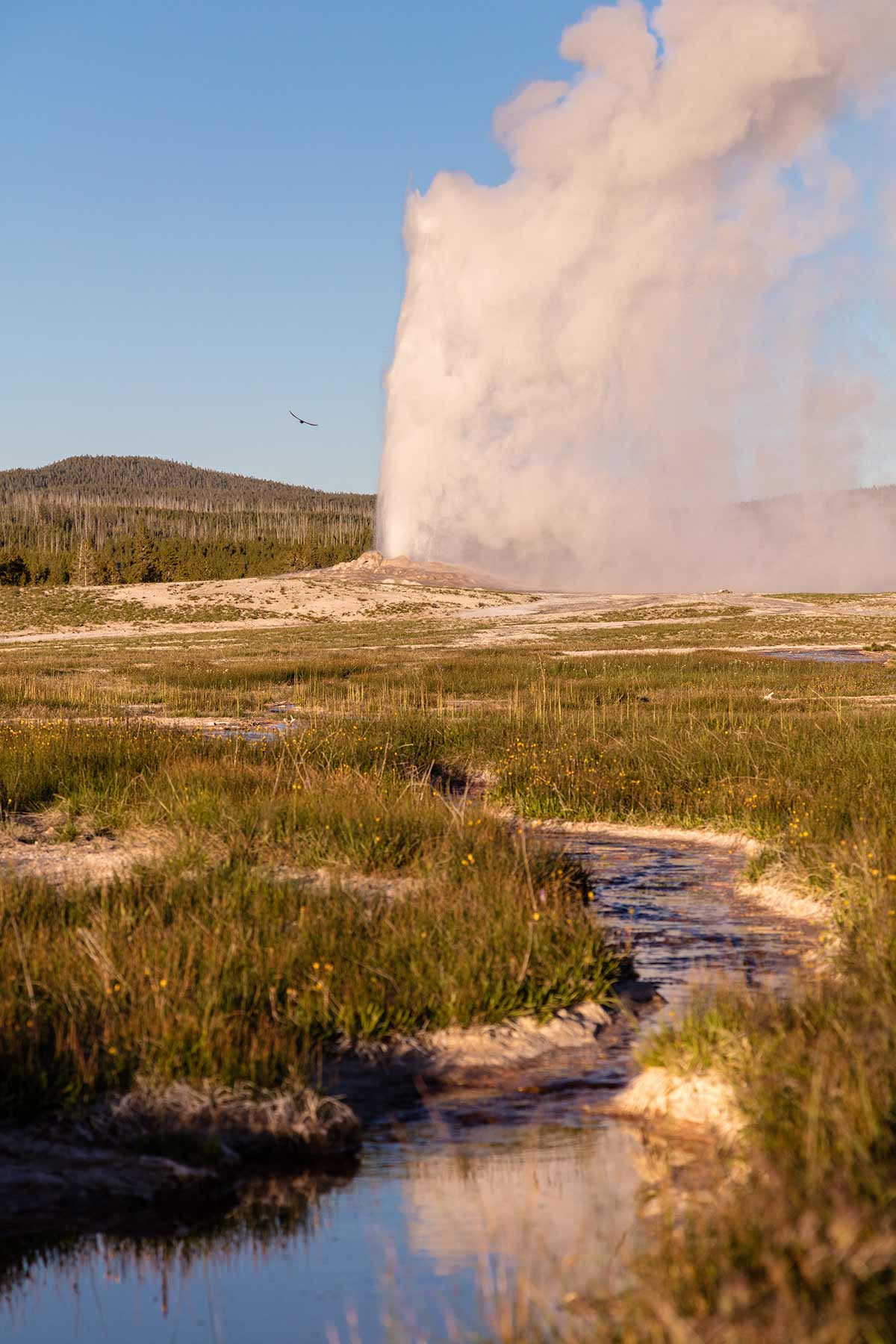
You can’t go to Yellowstone and not see Old Faithful. It erupts roughly every 90 minutes, and rangers predict each eruption within a 10-minute window, so check the time at the visitor center, grab a bite at the Old Faithful Inn, and saunter over. Go at sunrise for the smallest crowds (there will still be people). By 9 AM the benches are slammed.
A photographer’s note. The classic bench view faces the geyser head-on, but walking the boardwalk a quarter turn left or right puts the morning sun behind the water column and lights the steam from inside. Same geyser, far better picture.
It spouted at regular intervals nine times during our stay, the columns of boiling water being thrown from ninety to one hundred and twenty-five feet at each discharge, which lasted from fifteen to twenty minutes. We gave it the name of “Old Faithful.”
— Nathaniel P. Langford, 1871

3. Explore Grand Prismatic Spring
The largest hot spring in the United States, and in our opinion the most beautiful on the planet. Walk the Midway boardwalk to stand at its steaming edge, then earn the view that actually explains the place. From ground level you see steam and color at your feet. From the overlook you see the whole rainbow at once.
Park at the Fairy Falls Trailhead and walk the short overlook spur, 1.2 miles round trip with about 100 feet of climbing. Midday is actually best here, since morning steam can hide the colors. And no, you cannot fly a drone over it. It’s illegal in the park, and it’s also how somebody sank a drone into the spring in 2014.

4. Wildlife Spotting in Lamar Valley
Lamar Valley is one of the best places in the park (and the world) to watch wildlife. Bison by the hundreds, pronghorn, elk, coyotes, grizzlies, and the park’s wolf packs all work this valley. Sunrise and sunset are the windows that matter. Midday in Lamar is mostly bison and scenery, which is still not a bad consolation.
Be patient, use the pullouts, and keep a respectful distance from everything with hooves or claws. The road through Lamar stays open year-round, which makes it the one world-class thing you can do in Yellowstone in any month. Our complete Lamar Valley guide covers the specific pullouts we use.

5. Discover Hayden Valley
Lamar gets the wolf headlines, but Hayden Valley often delivers more reliable bison and elk viewing, and grizzlies cross it regularly in spring and early summer. The hour before sunset is the move here. Find a pullout, set up, and watch the golden light sweep through while you scan for movement.
Hayden sits right on the main road between Canyon Village and the lake, so it’s the easy sunset excursion if you’re staying at Canyon. Expect bison jams in summer. The animals own the road and they know it.


6. Marvel at Mammoth Hot Springs
Mammoth is a different kind of thermal area. Instead of geysers, hot water loaded with dissolved limestone builds sculpted travertine terraces that grow and shift year to year. What you see this trip will not be exactly what you see next trip, which is half the fun.
The Lower Terraces boardwalks give you the best walking and viewing, with interpretive signs explaining what’s happening under your feet. Crowds here are manageable compared to Old Faithful and Grand Prismatic, making this a good afternoon stop. Bonus, elk hang around the Mammoth lawns like they pay rent, especially during the September rut. Give them room.
7. Fountain Paint Pot and Firehole Lake Drive
The Fountain Paint Pot boardwalk is the single best geology lesson in the park. In about half a mile you pass all four kinds of thermal features Yellowstone has, a geyser, a hot spring, a fumarole, and the gurgling pink-gray mudpots the area is named for. Kids are mesmerized by the mudpots. So are we.
Pair it with Firehole Lake Drive, a one-way side road just down the highway, where Great Fountain Geyser erupts in tiered bursts over its reflecting pools. Eruption predictions are posted, and catching one near sunset is one of the park’s quiet masterpieces with a fraction of the Old Faithful crowd.
Note: We previously recommended Biscuit Basin in this slot. It remains closed following the July 2024 hydrothermal explosion at Black Diamond Pool, so we’re sending you here instead. Honestly, the mudpots were always underrated.

8. Explore the Upper Geyser Basin
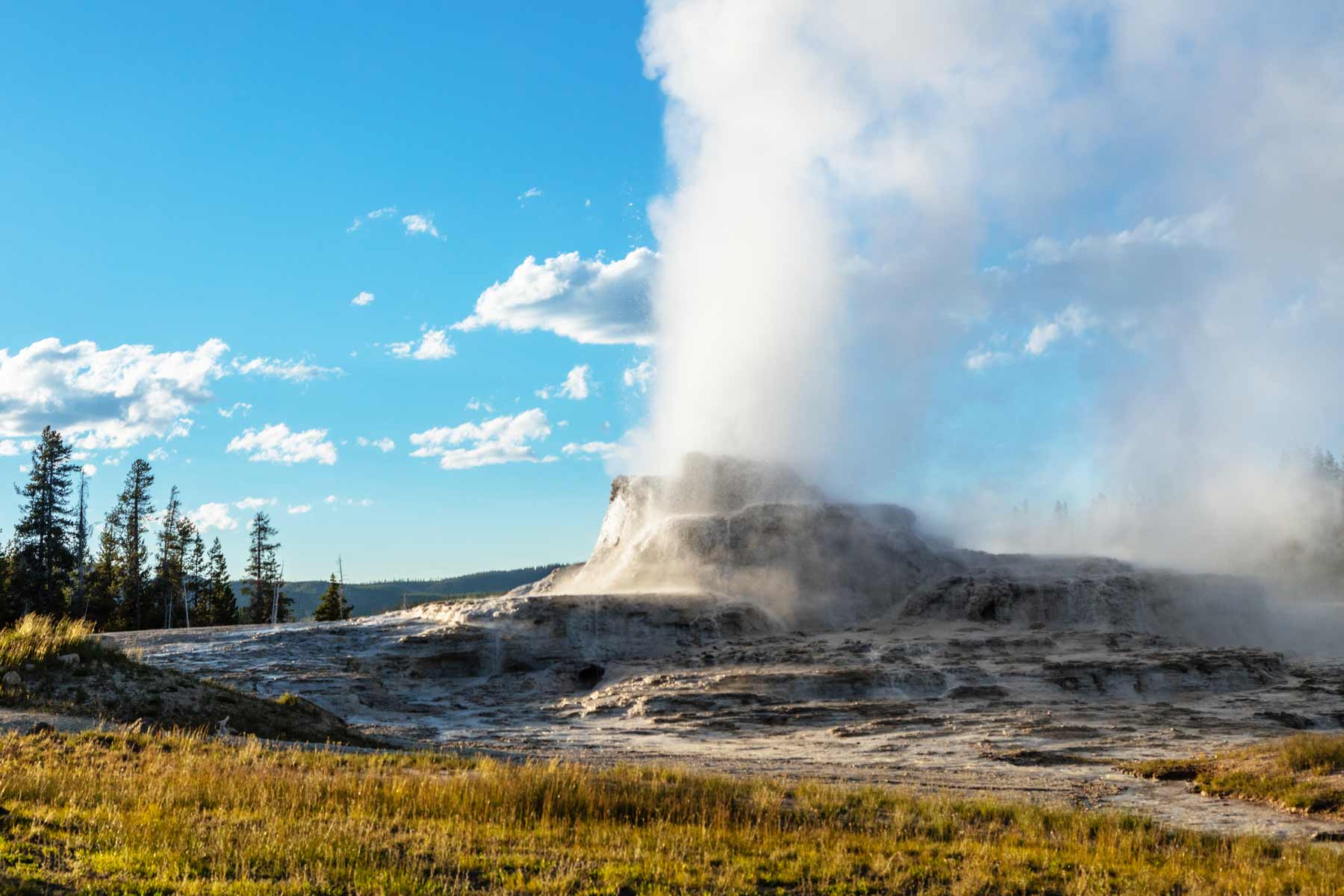
Old Faithful is just the doorman. The Upper Geyser Basin behind it holds the densest concentration of geysers on Earth, and the boardwalks let you wander among Castle, Grand, Grotto, and dozens more, all the way out to Morning Glory Pool.
Grand Geyser is the one to plan around. It’s taller than Old Faithful and erupts in wild bursts, and the prediction board at the visitor center tells you when to be there. The full walk out to Morning Glory and back runs about 3 miles of flat boardwalk and made our best hikes in Yellowstone list. Go at dawn and you’ll share the world’s strangest landscape with a handful of people and a lot of steam.
9. Check Out Norris Geyser Basin
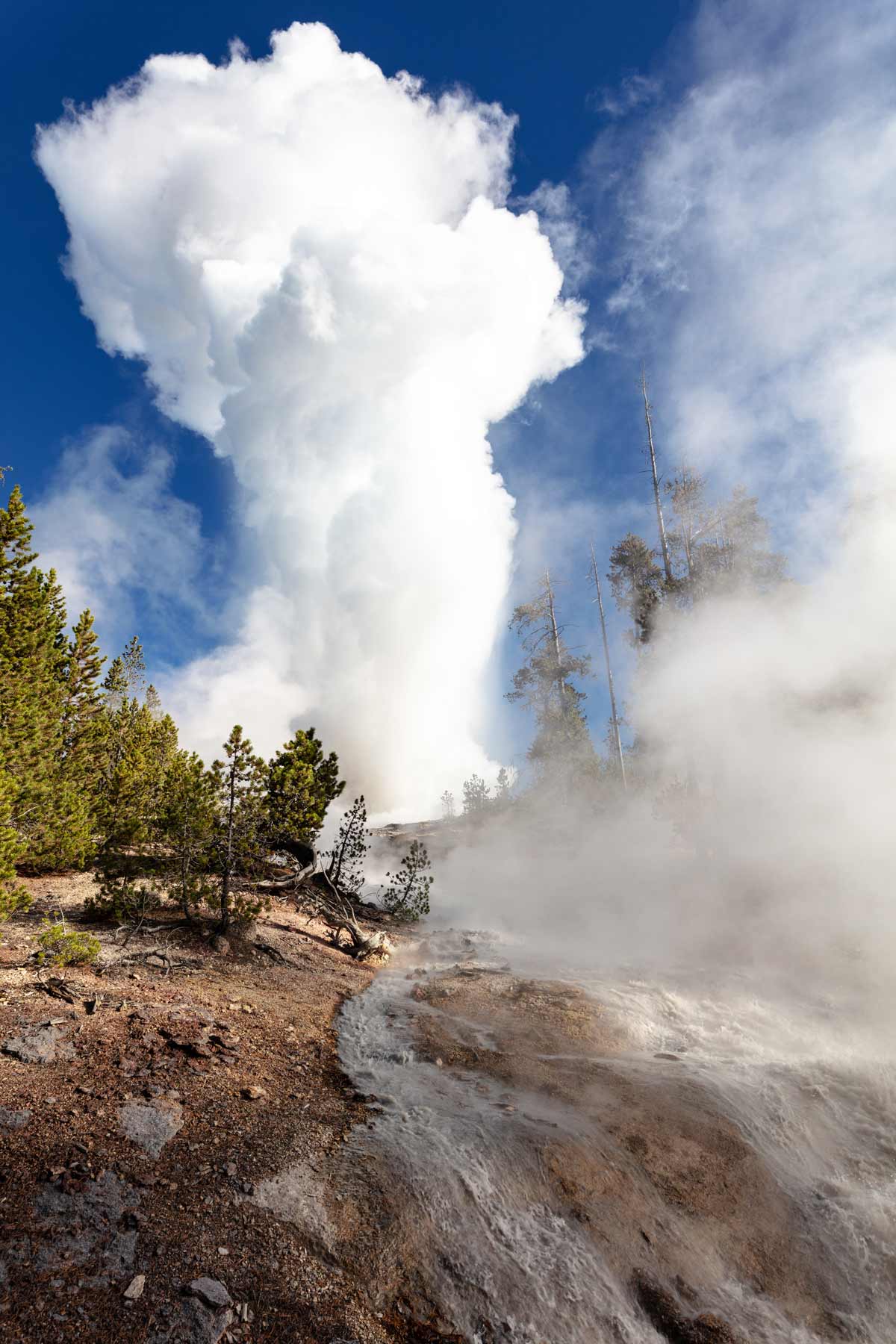
Norris is the hottest and most volatile of Yellowstone’s thermal areas, and it looks the part. Porcelain Basin is a barren, hissing, white-and-orange moonscape, while Back Basin threads through the trees past Steamboat Geyser, the tallest active geyser in the world. Steamboat’s major eruptions top 300 feet, and they are gloriously unpredictable, so consider any eruption you catch a lottery win.
Stay on the boardwalks here, no exceptions. The ground at Norris is thin crust over scalding water, and people have died leaving the trail in this park’s thermal areas.
Work the Upper Loop first. Most folks beeline to Old Faithful on the Lower Loop. Start your trip at Mammoth Hot Springs and work clockwise through Tower-Roosevelt and Canyon Village. You will hit the big viewpoints with far fewer people.
10. Head Over to West Thumb Geyser Basin
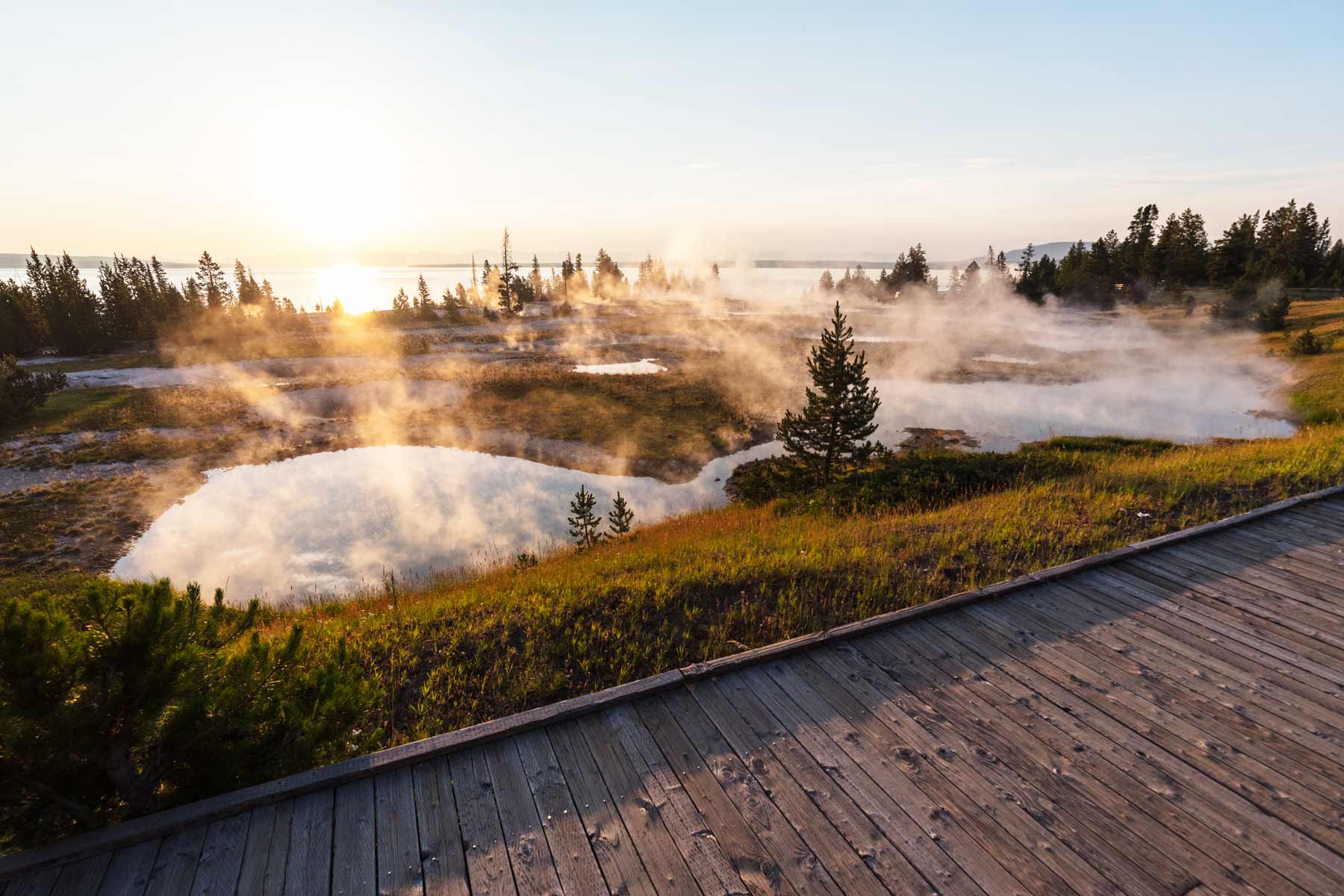
West Thumb is smaller than the famous basins and punches far above its weight, because its hot springs sit right at the edge of Yellowstone Lake, the largest high-elevation lake in North America. Geothermal blue against lake blue, with the Absarokas across the water.
Check out Abyss Pool, one of the deepest springs in the park, and Fishing Cone, the lakebound geyser where folks in the park’s early days famously cooked their catch in the vent. The area once held a gas station, cabins, and a campground, all removed in the 1980s to let the basin recover. Late afternoon light here, with steam drifting across the lake, is one of our favorite quiet scenes in the park.


11. Go Wolf Watching
Seeing a wild wolf is hard almost everywhere on Earth. Yellowstone’s northern range is the great exception, the most reliable place on the planet to watch wolves being wolves. We waited years for our first wild wolf, and when a sighting in Lamar finally delivered, no wildlife encounter since has topped it.
The formula is simple. Lamar Valley, first light or last light, and optics. Wolves at half a mile are gray specks to the naked eye and a drama through a spotting scope. Watch for clusters of parked cars and tripods, the unofficial wolf-watcher signal. The regulars who work those pullouts know where the packs den and are often happy to share a scope view.
12. Stay at a Historic Lodge
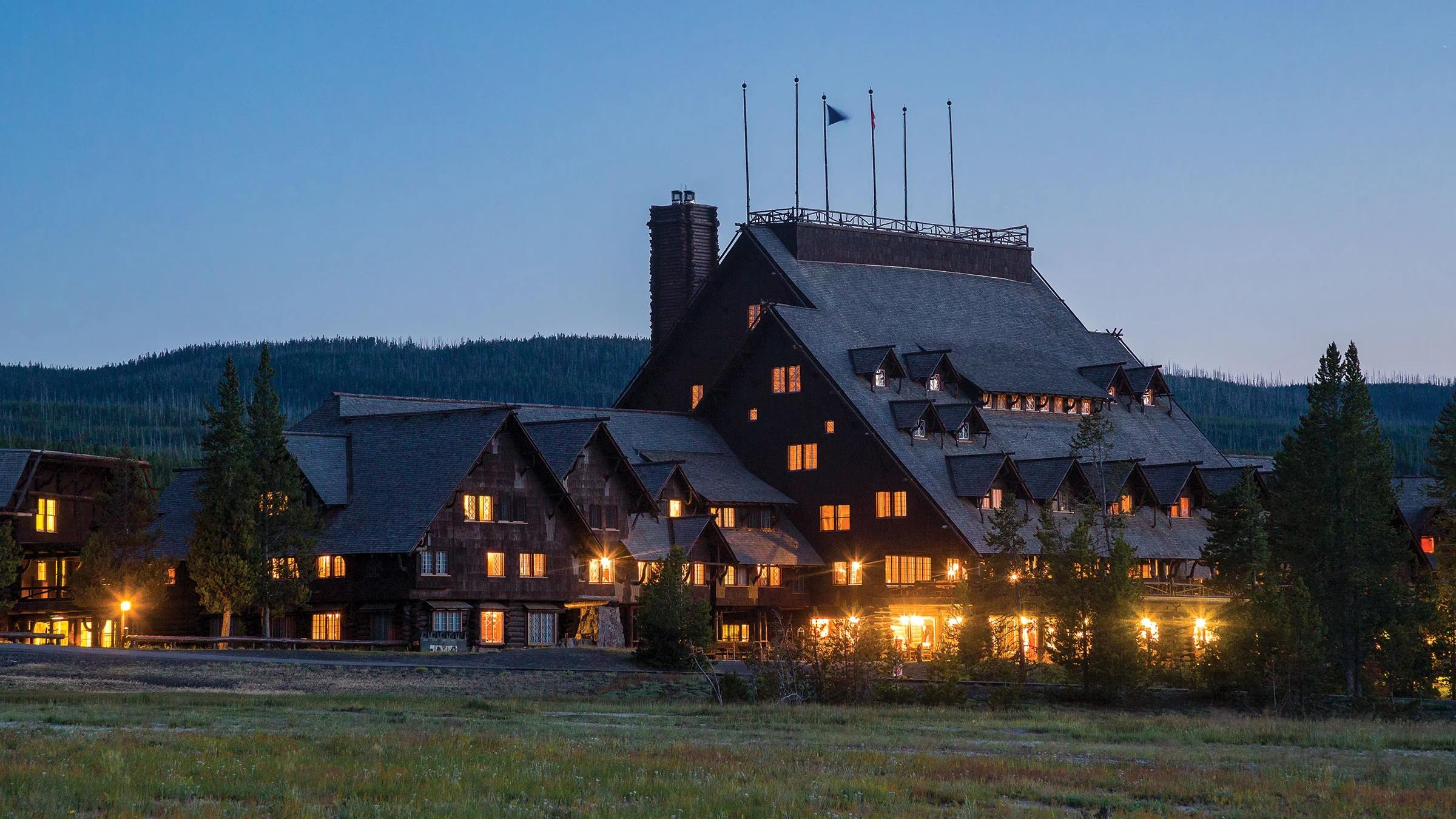
Yellowstone’s nine in-park lodges are all run by Yellowstone National Park Lodges, and the standout is the Old Faithful Inn, with its towering log lobby and massive stone fireplace. In 2026 the Inn runs May 1 through October 12, Lake Yellowstone Hotel May 15 through October 11, and Roosevelt Lodge June 5 through September 7.
Booking opens 13 months out, on the 5th of each month, online at midnight Mountain time. Summer dates at the Inn vanish fast. Even if you sleep elsewhere, walk the lobby and take a drink up to the mezzanine. It costs nothing and it’s one of the great rooms in America.
HELPFUL: Our full guide to where to stay in Yellowstone covers every lodge, campground, and gateway town with 2026 dates and booking strategy.

13. See the Roosevelt Arch
For national park connoisseurs this is a must. Theodore Roosevelt laid the cornerstone of this archway to America’s first national park in 1903. The inscription reads “For the benefit and enjoyment of the people,” which remains the best mission statement any country ever carved in stone.
The arch stands 50 feet tall, built from native columnar basalt, and it cost about $10,000 at the time, roughly $340,000 in today’s dollars. Original designs called for gardens, ponds, and a waterfall around it. Those never happened, which feels right. The landscape didn’t need the help.
14. Hike Mount Washburn
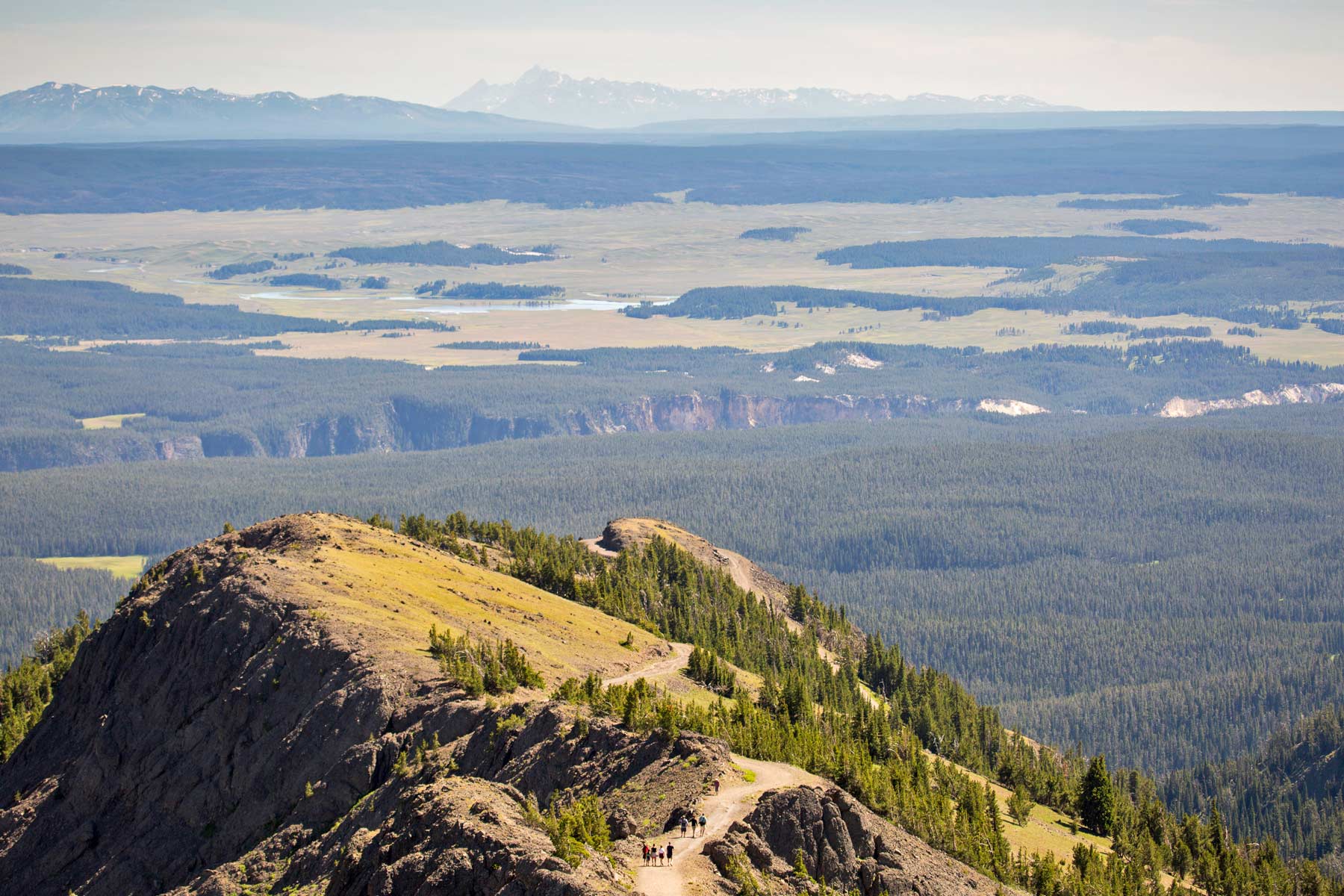
The best view in Yellowstone, full stop. From the fire lookout on the 10,219-foot summit you can see the Tetons, Yellowstone Lake, the Grand Canyon of the Yellowstone, and on clear days a horizon 50 miles out. The grade stays steady because the trail follows an old stagecoach road, and the July wildflowers up here are absurd.
Two warnings. You’re above treeline for the back half, so start early and bail if thunderheads build. And grizzlies feed heavily on this mountain in fall, which is why the park recommends groups of three or more with bear spray. Dunraven Pass opened May 22 this year, and early-season hikers should expect lingering snow up top.
Looking for more hikes? Read the 15 Best Hikes in Yellowstone National Park.
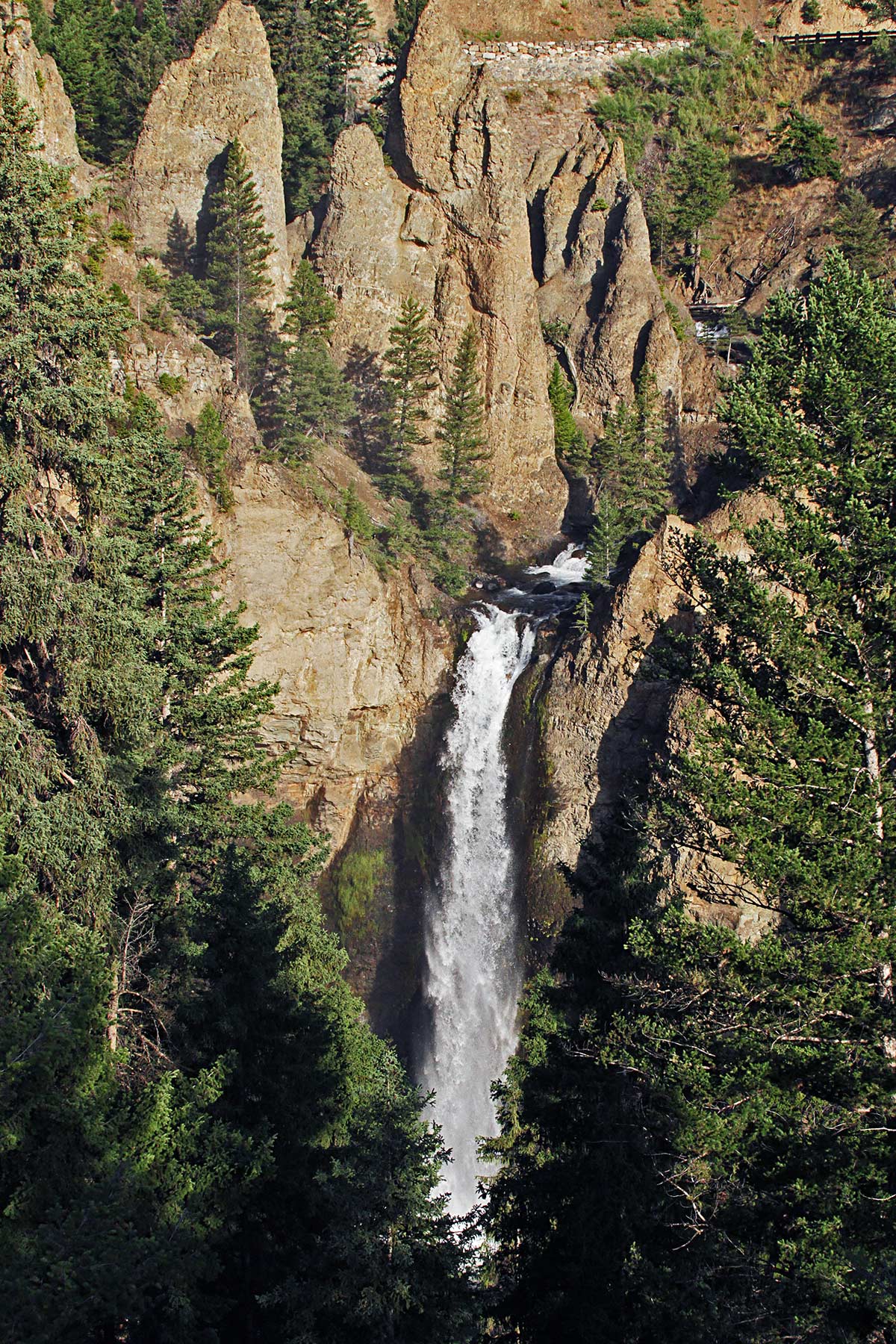
15. Visit Tower Fall
Tower Fall drops 132 feet between volcanic rock pinnacles, the towers that named it, before joining the Yellowstone River. The overlook is a short walk from the parking area next to the general store, which makes this the easiest big payoff on the northern loop.
Note that the old trail down to the base of the falls remains closed, so the overlook is the show. Come in the morning when the light reaches into the gorge, grab an ice cream at the store, and watch for bighorn sheep on the canyon walls across the road.

16. Fly Fish World-Class Water
If you fly fish, Yellowstone is one of the sport’s holy lands. Native cutthroat in the Lamar drainage, browns and rainbows in the Madison, and the surreal experience of casting the Firehole while geysers steam on the banks.
The practical notes, briefly:
- Where: The Firehole and Gibbon near Madison Junction, the Lamar River and Soda Butte Creek in the northeast, and the Yellowstone itself. Each fishes differently, which is the fun of it.
- When: The geyser-warmed Firehole fishes best early in the season and gets too warm for trout by midsummer. The Lamar and Soda Butte come into their own from July on, hatch-dependent.
- Season and permit: The park season opens Memorial Day weekend and runs through the first Sunday in November, sunrise to sunset. You need a Yellowstone fishing permit (not a state license), $18 for three days, sold at ranger stations, visitor centers, and park general stores. Anglers under 16 fish free with a permitted adult.
- Closures: Sections close for spawning, heat, and bears. Check current regulations when you buy the permit.
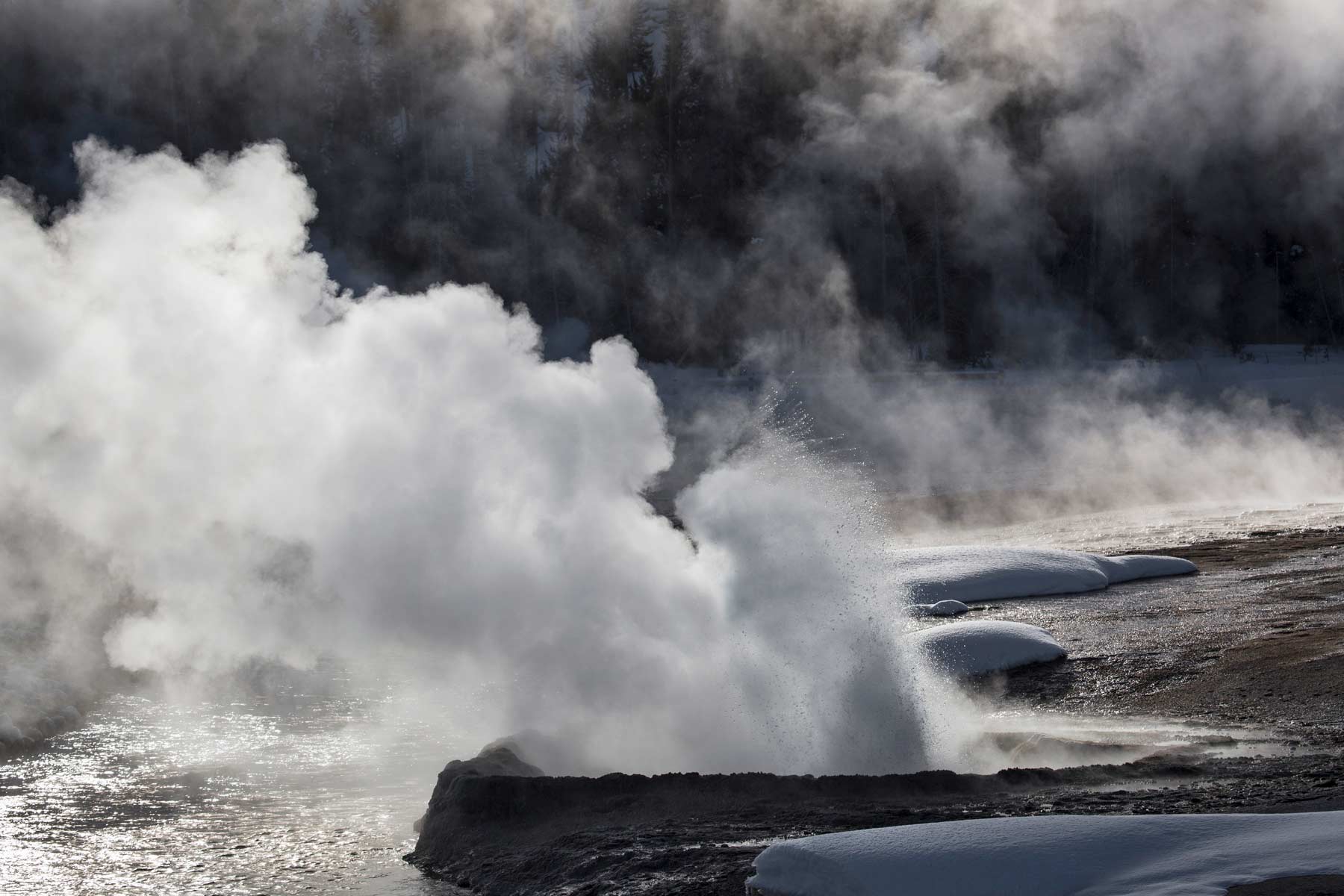
17. See Black Sand Basin
Black Sand Basin sits a mile from Old Faithful and gets a fraction of its traffic. The short boardwalk passes Emerald Pool, whose deep green is unlike anything else in the area, and Cliff Geyser, which erupts frequently right on the bank of Iron Spring Creek.
This is our go-to recommendation for folks with 30 spare minutes near Old Faithful. The obsidian sand that names the basin glitters in afternoon light, and you can usually photograph Cliff Geyser erupting with nobody in your frame.
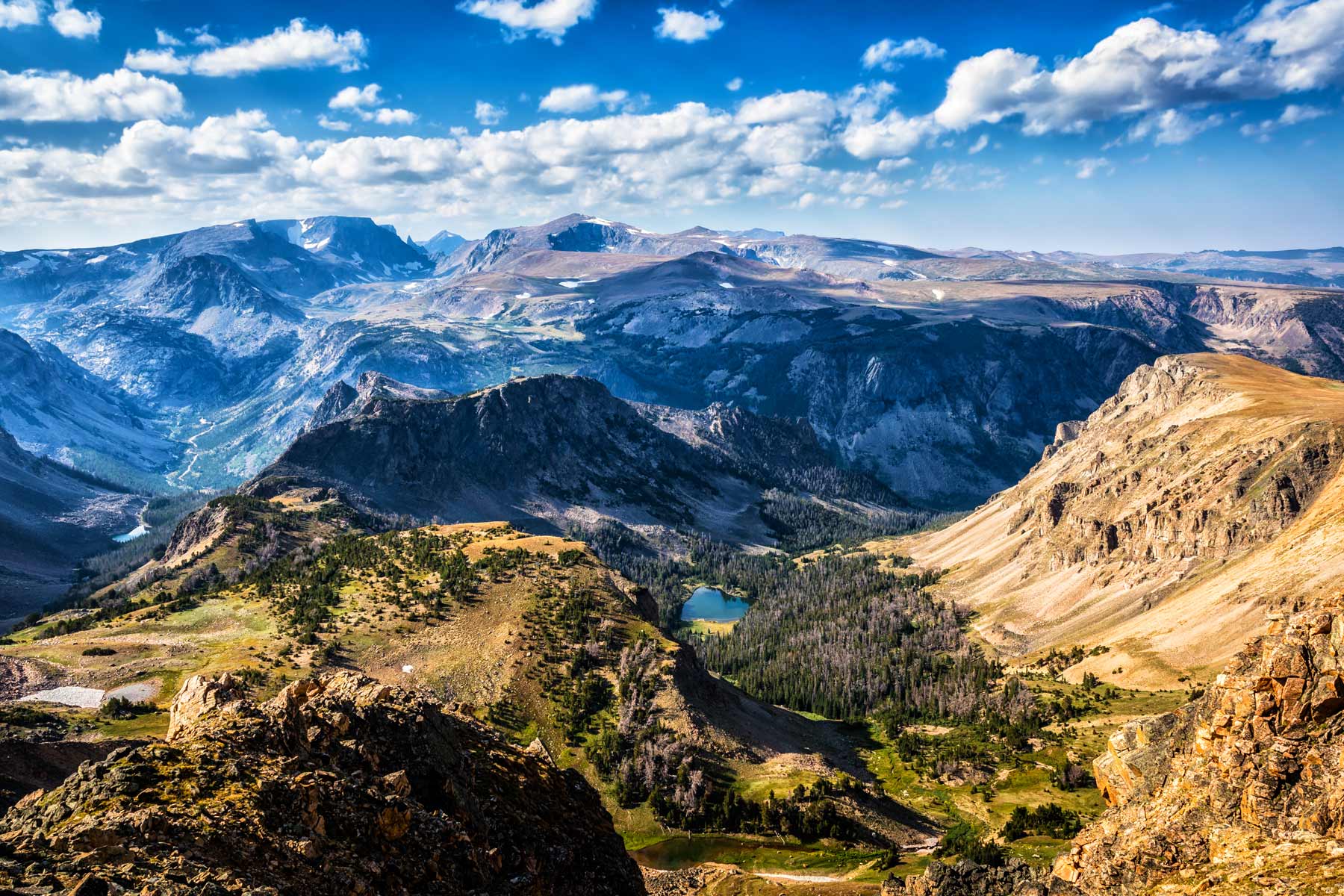
18. Drive the Beartooth Highway
Technically the Beartooth Highway starts where Yellowstone ends, climbing out of the Northeast Entrance through Cooke City and switchbacking up to nearly 11,000 feet at Beartooth Pass. Charles Kuralt famously called it the most beautiful drive in America, and we’re not going to argue with him.
Above treeline you get alpine lakes, summer snowfields, and views across the Absaroka-Beartooth wilderness that belong in Alaska. Pair it with a morning in Lamar Valley, since you’re already at that end of the park. It opened May 22 this year and typically closes by mid-October, and it can snow up there in any month, which is half the charm.
Note: The Firehole River swim area used to occupy this spot on our list. It’s closed for the 2026 season, and the Boiling River soak near Mammoth has been closed since the 2022 flood. When the park reopens a swim area, we’ll put it back.
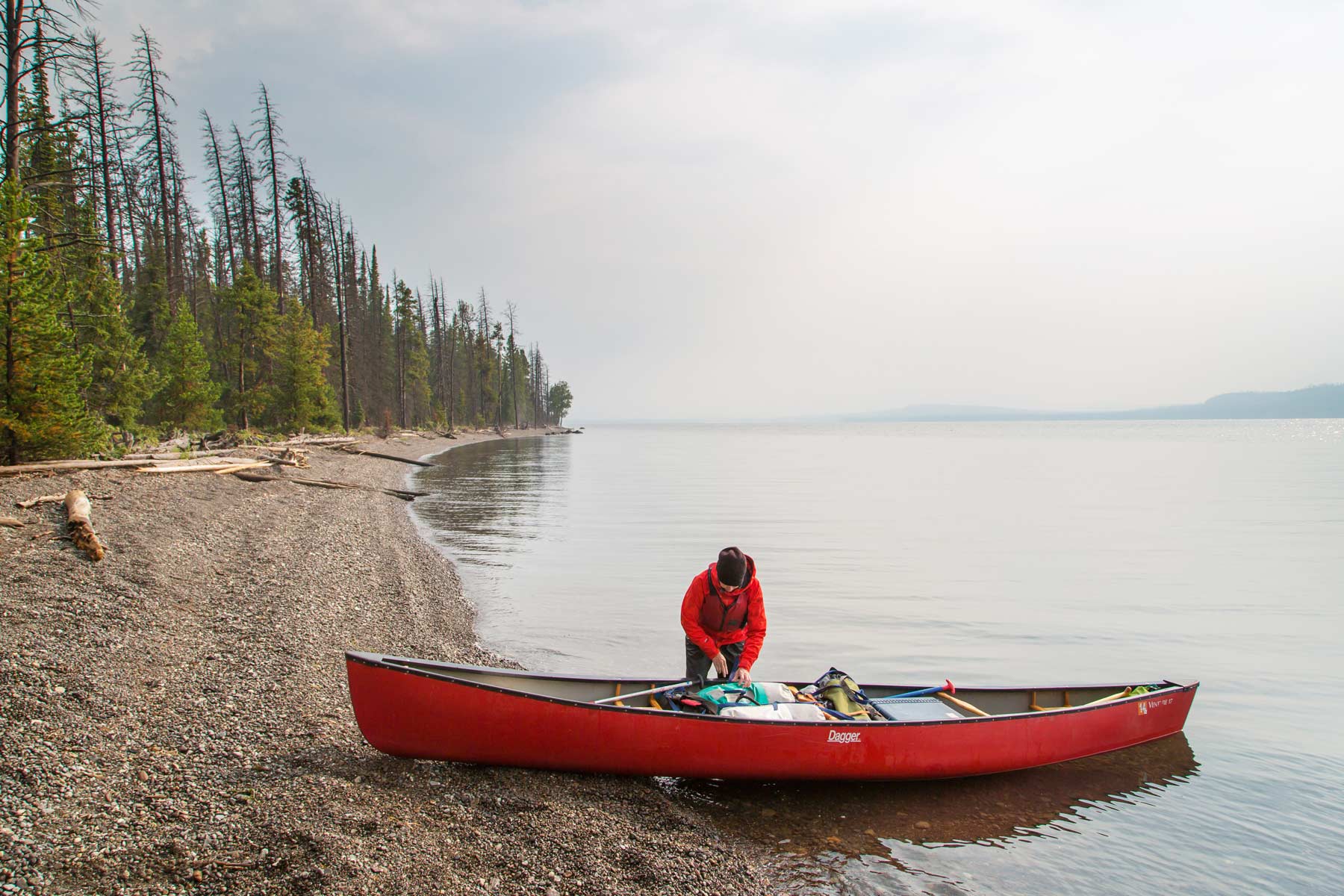
19. Paddle Yellowstone Lake
Yellowstone Lake is the largest body of water in the park, and paddling it is the quietest experience on this list. A kayak puts you below the noise, watching steam rise off distant thermal areas with the Absarokas stacked behind.
July and August are the windows, when the weather is most stable and the water least likely to ambush you with an afternoon storm. Rentals and guided trips run out of Bridge Bay. Respect this lake. The water stays dangerously cold all year, sudden winds build real waves, and every boat including kayaks needs a park permit and an aquatic invasive species inspection.
20. Sign the Kids Up for the Junior Ranger Program
The Junior Ranger Program is one of the best things the National Park Service does anywhere, and Yellowstone’s version is the gold standard. Pick up the activity booklet at any visitor center, work through it as you explore, and a ranger swears the kids in at the end.
It sounds small. It isn’t. The booklet has a way of dragging the whole family to one more geyser basin, and that’s conservation working as intended.
Yellowstone with Kids
Yellowstone might be the best kids’ park in the entire system, because the whole place gurgles, hisses, and smells faintly of rotten eggs. Our kid-pick is Fountain Paint Pot (#7 above). The boardwalk runs about half a mile, it passes all four kinds of thermal features before short legs give out, and the plopping pink-gray mudpots hold a six-year-old’s attention better than any geyser prediction ever will. Old Faithful comes second, because the prediction board turns the wait into a countdown. Round it out with the Junior Ranger booklet from item 20 and stick to boardwalk basins under a mile, Fountain Paint Pot, Black Sand Basin, and West Thumb, saving the long walks for the trip when everyone’s legs are longer.
One safety note that matters more with kids than anyone else. The boardwalks are not decorative. The ground beside them is thin crust over scalding water, and people have died leaving them. Hold small hands in every thermal basin, no running, and keep the 25-yard wildlife distance even when a bison looks like a lawn ornament. It isn’t one.
Fill your gas tank every time you pass a station. Gas stations in the park are few and far between, with 30 to 60 miles between them. Running low on a summer afternoon with no cell service is a bad situation.
Planning Your Yellowstone Trip
Weather by Season
- Summer (Jun-Aug): Highs 70-80F, lows 30-40F. Afternoon thunderstorms are common. This is peak season.
- Fall (Sep-Oct): Highs 40-60F, lows teens to 20s. Fewer crowds, elk rut in September, first snow possible by October.
- Winter (Nov-Mar): Highs 0-20F, heavy snow. Most roads close. Snowcoach and snowmobile access only, except the year-round Gardiner to Cooke City road.
- Spring (Apr-May): Highs 40-60F, unpredictable. In 2026 the first roads opened April 17, the East Entrance May 1, and the South Entrance May 8. Wildlife is very active.
Where to Stay
- Inside the park: Old Faithful Inn, Lake Yellowstone Hotel, Canyon Lodge, Roosevelt Lodge, Mammoth Hotel. Booking opens 13 months ahead on the 5th of each month.
- Camping: About 2,000 sites across 10 open campgrounds (Norris and Pebble Creek are closed in 2026). Five book through Yellowstone National Park Lodges, the rest on recreation.gov six months out.
- Gateway towns: West Yellowstone (west), Gardiner (north), Cooke City (northeast), Jackson (south via Grand Teton).
What to Pack
- Layers for 50-degree temperature swings in a single day
- Rain jacket and waterproof hiking boots
- Binoculars or spotting scope for wildlife
- Bear spray (rentals available in gateway towns)
- Paper map and guidebook (no cell service)
- Sunscreen and hat (7,000+ ft elevation)
Getting There
- Jackson Hole (JAC): South of the park via Grand Teton. Best option.
- Bozeman (BZN): About 90 miles north of the north entrance.
- West Yellowstone (WYS): Seasonal flights, right at the west entrance.
- Gas: A handful of stations inside the park. Fill up before entering anyway.
Sample 3-Day Itinerary
This is the compressed version. Our full Yellowstone itinerary guide covers 1 to 5 days with lodging, fees, and 2026 road dates baked in.
Day 1, North Loop
- Morning: Explore Mammoth Hot Springs while the terraces are still uncrowded.
- Afternoon: Head to Lamar Valley for a picnic and wildlife watching. Bison, wolves, and bears are most active late in the day.
- Evening: Tower Fall, then stargazing if the sky cooperates.
Day 2, Canyon and Hayden
- Morning: Grand Canyon of the Yellowstone. Hike the rim trails and see Lower Yellowstone Falls from Artist Point.
- Afternoon: Hayden Valley for wildlife.
- Evening: West Thumb Geyser Basin at sunset.
Day 3, Geyser Country
- Morning: Old Faithful area at dawn. Walk the Upper Geyser Basin while waiting for the next eruption.
- Afternoon: Grand Prismatic Spring, including the overlook trail, plus Fountain Paint Pot.
- Evening: Wind down at Yellowstone Lake.
If You Truly Have One Day
Plenty of folks pass through Yellowstone in a single day between Jackson and Glacier, and pretending otherwise helps nobody. If one day is what you have, drive the Lower Loop and nothing else. Enter early (the West Entrance is the most direct shot at geyser country), do Old Faithful and a stretch of the Upper Geyser Basin first thing, hit the Grand Prismatic overlook from the Fairy Falls lot before midday, cross to Canyon for Artist Point and Lower Falls in the afternoon, and let Hayden Valley send you out at golden hour.
Here’s what that plan costs you. Lamar Valley, Mammoth Hot Springs, Tower Fall, and Mount Washburn, the entire Upper Loop, gone. That’s the honest price of one day in a park this size, and it’s still a better day than most folks ever get. The one exception is anyone sleeping in Gardiner or Cooke City, who should spend dawn in Lamar before doing anything else and accept seeing less geyser country. Don’t try to bolt Lamar onto a one-day loop from the south or west. The wolves will still be there next trip.
Three days is the comfortable trip and two is the workable minimum. The park is massive and the top stops sit far apart, so every extra day means less of your trip spent driving. If a single day is genuinely all you have, it can still be a great one. See the one-day plan above.
Yes, if you commit to the Lower Loop and nothing else. Enter at the West Entrance early, do Old Faithful and the Upper Geyser Basin first, the Grand Prismatic overlook before midday, Artist Point and Lower Falls in the afternoon, and Hayden Valley at golden hour. You will skip Lamar Valley, Mammoth, and the entire Upper Loop, which is the honest cost of one day in a 2.2-million-acre park.
Fountain Paint Pot is our kid-pick, a half-mile boardwalk passing all four kinds of thermal features with gurgling mudpots that hold any kid’s attention. Add Old Faithful, where the prediction board turns the wait into a countdown, and the Junior Ranger booklet from any visitor center. Stick to boardwalk basins under a mile, hold small hands in every thermal area, and stay on the boardwalks without exception.
The best things to do in Yellowstone are Lower Yellowstone Falls from Artist Point, Old Faithful, Grand Prismatic Spring, Lamar Valley, and Hayden Valley.
No. Yellowstone has no timed entry or entrance reservation system in 2026. You only need the entrance fee or a park pass, plus reservations for lodging and camping.
Related: Grand Teton is just south of Yellowstone and absolutely worth adding to your trip. Can’t decide? Here’s our honest take on Yellowstone vs Grand Teton.

Why Listen to Us About Yellowstone?
We’re Will and Jim Pattiz, the Parks Brothers. We’ve spent our adult lives filming America’s national parks, including Yellowstone in every season, and we’ve worked with the National Park Service, the Department of Interior, and the U.S. Forest Service creating films on important places and issues. This list comes from years of boots-on-the-ground trips, cross-checked against current NPS data.
Related Guides
- Yellowstone Itinerary, 1 to 5 Day Planning Guide
- 15 Best Hikes in Yellowstone National Park
- Where to Stay in Yellowstone 2026
- Lamar Valley, Yellowstone’s Best Wildlife Viewing Spot
- Lamar Valley: Yellowstone’s Best Wildlife Viewing
- Visiting Yellowstone in the Fall
- Yellowstone in September, A Planning Guide
- 18 Yellowstone National Park Facts
- Best Airports Near Yellowstone National Park
- Wyoming National Parks Ranked
- Things to Do in Grand Teton National Park
Affiliate disclosure: Some links on this page earn us a small commission at no extra cost to you. We only recommend gear we actually use.


