

Having spent extensive time filming and exploring in Yellowstone, we can tell you the park rewards people who get up early and stay out late. The wildlife shows up on its own schedule. The geysers don’t care about your itinerary. And September in Yellowstone is a different animal than the summer crush that most folks know. The elk are bugling, the aspens are turning, and roughly 850,000 people still show up thinking they’ve found a secret. Here’s our planning guide.
September is the month when the park shifts gears, sometimes week by week. You need to know exactly what that means for your visit, so let’s get into it.
Table Of Contents: Yellowstone in September
5 Quick Things to Know About Yellowstone National Park in September
- Entrance fees for Yellowstone National Park start at $20 per person (walking or biking in) and $35 per private vehicle. Reservations are not required, but buying your pass ahead of time keeps the line moving. International folks 16 and older now pay an additional $100 non-resident surcharge per person, effective January 1, 2026, collected at the gate. Yellowstone is one of 11 parks where the surcharge applies.
- It makes more sense to purchase an interagency park pass for $80, especially if Grand Teton is on your route. Both parks charge $35 per vehicle, so you’d spend $70 anyway, and the pass covers more than 2,000 public lands for a full year. For international folks, the $250 non-resident annual pass covers both entrance fees and the $100 surcharge at all 11 affected parks, including for three additional adults in your party. If you’re visiting more than one of those parks, the math isn’t close.
- All roads plan to stay open through September, weather permitting, but the amenities don’t. Campgrounds, lodges, and services wind down on staggered schedules all month. We break down the exact dates below.
- Yellowstone in September still gets crowds. Big ones. In September 2023 the park recorded 838,458 visits, about 97% of August’s total. The myth that kids going back to school empties the park is exactly that. Expect the heaviest traffic in the first two weeks, with things finally thinning in the last week of the month.
- September is still wildfire season. We’ve included the road and conditions tools below so you can check before and during your trip.
Early September vs Late September
This is the single most important distinction for planning. Early September and late September at Yellowstone feel like two different parks.
Early September (September 1-14) still feels like summer in many ways. Daytime highs average 70-77 degrees F. Most campgrounds and lodges are still open. Crowds are heavy, especially on weekends and around Labor Day. The elk rut is just getting started, with bulls polishing antlers and testing their bugles. Foliage is green at lower elevations, with the first hints of gold at the highest points.
Love Yellowstone? It's one of 117 threatened public lands destinations we're tracking. Get the free briefing.
Late September (September 15-30) is where the transformation happens. Highs drop to the 58-67 degree F range. Overnight lows regularly dip below freezing. The elk rut is in full swing. Aspens and cottonwoods are turning gold along the Gardner River corridor and at Mammoth Hot Springs. Several campgrounds have already closed. The last week of the month is when you’ll finally notice fewer cars at pullouts and shorter waits at Old Faithful. Snow at higher elevations becomes a real possibility.
If you want the most amenities and the warmest weather, aim for early September. If you want fall color, peak elk rut, and slightly thinner crowds, go late September and plan around the closures.
Access to Yellowstone in September
Depending on where you’re from, September might still seem like a month when everything stays open. In Yellowstone, the park starts packing up around you. An early September visit buys more amenities. A late September visit buys smaller crowds and better wildlife.

Let’s start with getting into Yellowstone National Park in September.
Yellowstone Entrances
All five entrances to Yellowstone National Park plan to be open throughout the month of September. The entrances are as follows.

- West Entrance at West Yellowstone, MT
- South Entrance, to and from Grand Teton
- East Entrance, closest town is Cody, WY
- Northeast Entrance at Cooke City, MT
- North Entrance at Gardiner, MT
Yellowstone Airports. Pair your preferred entrance with the best airport nearby. We’ve put together this list of airports near Yellowstone for you.
The major caveat comes with the northeast entrance, because reaching it from outside the park requires the Beartooth Highway. For those who tell you it’s so unlikely Beartooth will close in September, the record says otherwise.
Beartooth Highway was closed for part of or the entire month of September in 2017, 2014, and 2005. If that happens during your trip, you’re looking at a 3 to 4 hour detour through the East Entrance or Gardiner.
A 2026 update on the northeast entrance. The Yellowstone River Bridge replacement project wraps up its final phase this year. The new bridge is more than twice as long as the old one at 1,285 feet and is already carrying traffic. Crews will still be working on overlooks and removing the old bridge through fall 2026, so expect some delays in that corridor.
Yellowstone Roads in September
All major park roads plan to stay open through September, including Dunraven Pass between Canyon Village and Tower Fall, which sits at one of the higher elevations and is the first road to close when winter arrives. Dunraven is scheduled to stay open through the end of October. But scheduled and actual are two different things in Yellowstone. A heavy early storm can shut down higher-elevation roads with little warning.
Text 82190 to 888-777 for mobile alerts on road closures. You can also call (307) 344-2117 for recorded conditions, updated multiple times daily during the operating season.
Yellowstone National Park Camping in September
If you’re after the bug-free bliss of September camping in Yellowstone, pay close attention to the dates. Campgrounds are among the first things to wind down. Here’s the 2026 September campground closure schedule.
- Bridge Bay closes September 14
- Indian Creek closes September 14
- Canyon closes September 20
- Grant Village closes September 27
- Tower Fall closes September 27
The campgrounds that stay open into October include Madison (closes October 18), Fishing Bridge RV Park (October 18), Lewis Lake (October 11), and Slough Creek (October 12). Mammoth is open year-round.
Pebble Creek Campground remains closed for the 2026 season entirely, still undergoing recovery from the 2022 flood damage. Norris Campground is also closed for 2026.
If you’re camping in late September, your best bets are Madison or Mammoth. Both keep you well positioned for wildlife and geyser basins, and you won’t be scrambling to find a spot that’s still open.
Yellowstone Hotels and Lodging in September
If you’re just here to compare Yellowstone hotels and lodging, check out our review of Where to Stay in Yellowstone, with the pros and cons of each region.
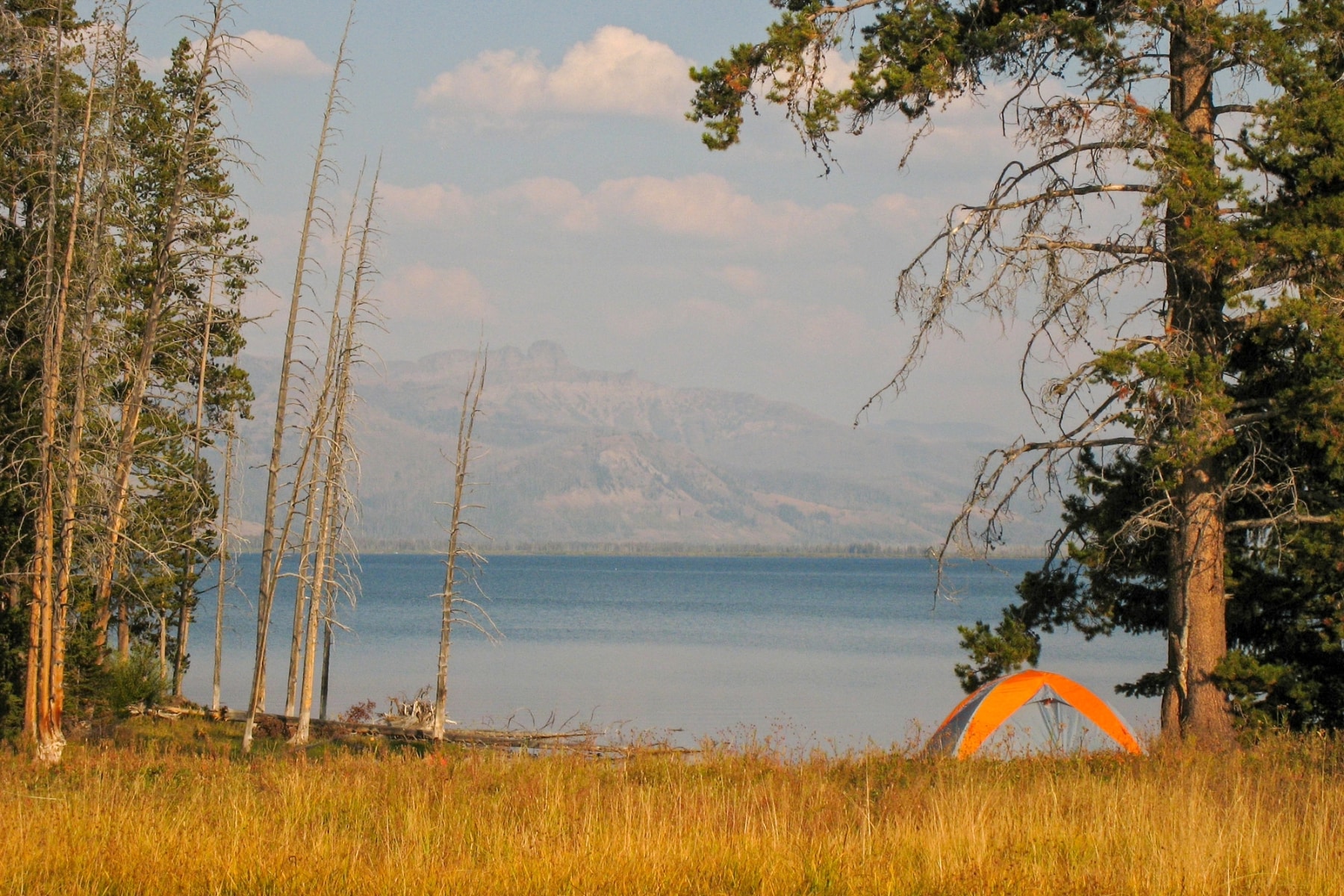
Almost all lodges and hotels inside the park stay open through September and well into October. The one exception is Roosevelt Lodge Cabins, which closes on September 7, 2026. Every other property, from Old Faithful Inn to Lake Yellowstone Hotel to Canyon Lodge, remains open into at least early October.
In Wyoming and Montana, prepare to pay 11% to 12% in resort, lodging, and sales taxes on top of the room price. For mid-week September stays, a room outside the park isn’t a bad idea since traffic won’t be as bad as on weekends or holidays.
During busy weekends and holidays, either get up well before sunrise to beat the crowds or book a room inside the park, preferably closest to the area you want to explore most.
September Weather in Yellowstone National Park
The books say Yellowstone averages a high of 62 degrees F in September and a low of 31 degrees F. What that really means is the high will land anywhere between 80 and 40. Maybe even 90 and 30. A high of 85 one day and 44 the next isn’t an anomaly. That’s just September in Yellowstone.
Here’s the week-by-week breakdown so you can plan properly.
Early September (1st-10th) brings highs around 70-77 degrees F and lows around 37-44 degrees F. This is the warmest window. You can still get away with shorts during the day, though you’ll want layers for mornings and evenings.
Mid September (11th-20th) sees highs drop to the 65-72 degree F range, with lows around 33-40 degrees F. This is when overnight freezing starts becoming more common, especially at higher elevations.
Late September (21st-30th) averages highs of 58-68 degrees F and lows of 28-36 degrees F. Hard freezes happen at night. Morning ice on the windshield is normal. The cold, clear mornings also create the best conditions for steam rising off the geysers and hot springs, which is genuinely one of the most photogenic things about this time of year.
Those patterns grow more pronounced the higher you go. A Yellowstone trip already starts at about 6,200 feet (Mammoth) to 7,800 feet (most of the central park), and roads and trails climb thousands of feet higher from there.
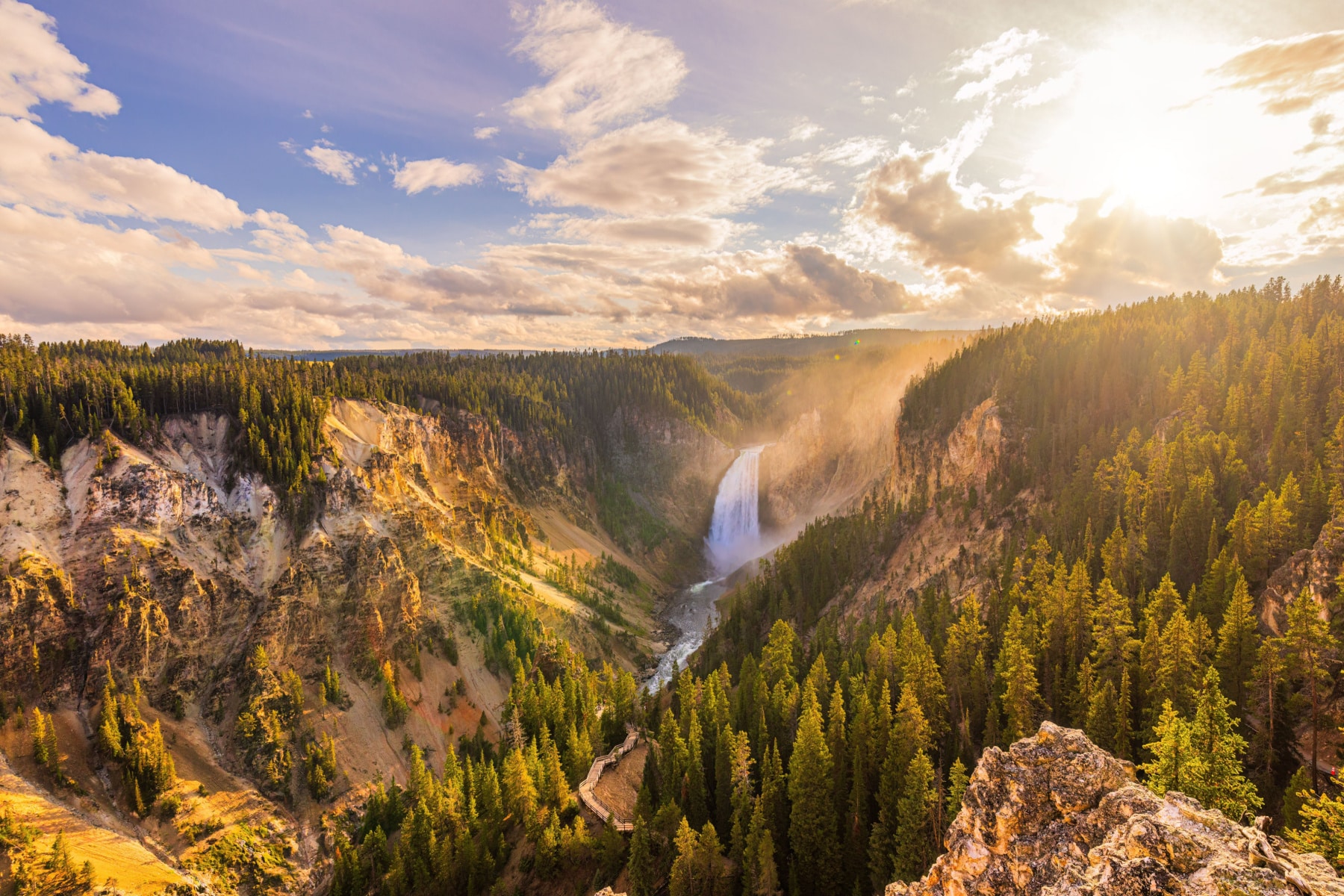
September snow in Yellowstone can run anywhere from one to eight or more inches, usually at higher elevations like Sylvan Pass. Here you can see late September snow in 2021 reaching all the way to the Grand Canyon of the Yellowstone.
At Mammoth Hot Springs, the September average is less than 1.5 inches of snow. Pack shorts and your winter coat, and enjoy the whiplash.
September Wildlife in Yellowstone
September might be the single best month for wildlife in Yellowstone. That’s a big claim for a park where bison cause traffic jams year-round, but the case is strong. The elk rut is happening. Bears are in hyperphagia, eating upwards of 20,000 calories a day before winter. Wolves are more active. And the cooler temperatures keep animals moving during daylight hours instead of bedding down mid-morning like they do in July and August.
The Elk Rut
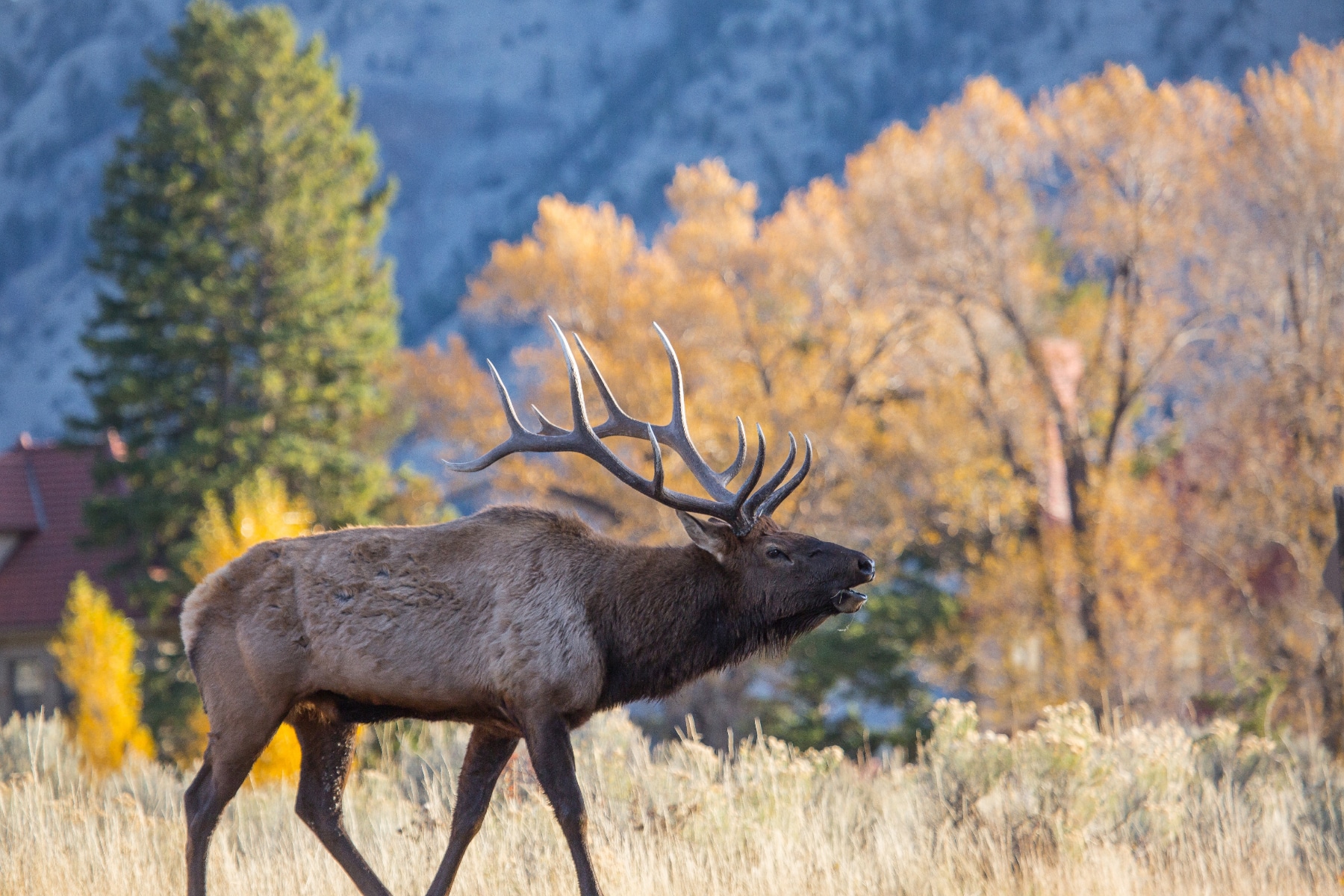
The signature sound of early fall in Yellowstone is the loud, piercing cry of the bugling elk.
The rut picks up in the first week of September and peaks mid-to-late month. Bull elk round up harems of cows and defend them against rivals. The bugling is otherworldly. A high-pitched whistle that drops into a guttural grunt. You hear it before you see the animal, often in the predawn darkness.
Where to see it. Mammoth Hot Springs is ground zero for the elk rut. Bulls and their harems spread across the lawns, between buildings, and right along the road. It’s also one of the most dangerous situations in the park. Bull elk can and will charge people who get too close. The park requires staying at least 25 yards away. Madison River between Madison Junction and West Yellowstone is the other prime spot, with elk across the meadows on both sides of the road at dawn and dusk.

Wolves in Lamar Valley
September is one of the best months for wolf watching in Lamar Valley. The cooler temperatures and active elk herds bring wolves out of the backcountry and into viewable range more often. Lamar Valley is wide open, well supplied with paved pullouts, and home to a dedicated community of wolf watchers who are usually happy to share their spotting scopes.
Get there before sunrise. That’s not a suggestion. Be in position 45 to 60 minutes before first light. Look for clusters of cars and people with tripods, because they’ve already found something. A good spotting scope or binoculars in the 10×42 range will make or break the experience. With the naked eye, wolves are dots. With glass, they’re hunting, playing, and howling.
Plan more than one morning if seeing wolves matters to you. Some days they don’t show. Come back the next day and they might be everywhere.
Bears and Other Wildlife
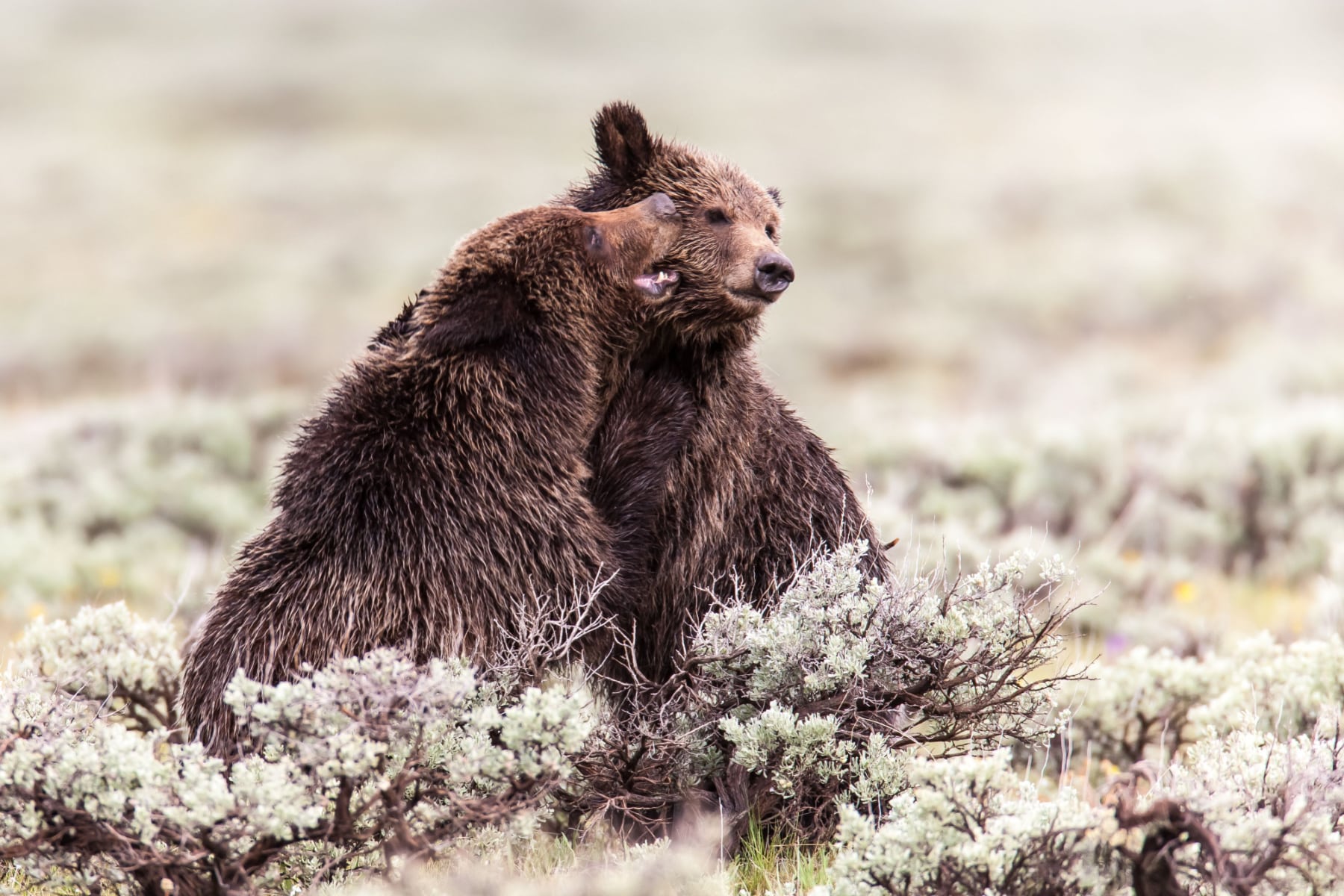
Both grizzly and black bears are in hyperphagia mode in September, eating everything they can find before winter. They wander down to lower elevations like Hayden and Lamar Valleys looking for fattening food. Whitebark pine nuts, berries, ground squirrels. This makes them more visible from roads, and also more unpredictable.
Eagles and hawks start migrating this time of year, so look up now and then. Bison are everywhere, as always, and in early September you might catch the tail end of their rut, with bulls still sparring in Hayden Valley.
Old Faithful and Geyser Basins in September
Old Faithful and the Upper Geyser Basin are fully accessible throughout September. Old Faithful erupts roughly every 90 minutes, give or take 10, and the visitor center posts predicted eruption times.
Here’s what changes in September. The crowds at Old Faithful thin noticeably after mid-month, especially on weekday mornings. In July you’re fighting for a spot on the benches. In late September you can show up 10 minutes before an eruption and still get a front-row seat.
The best time to watch Old Faithful in September is early morning or late afternoon. The low-angle light turns the steam gold, and if temperatures dropped overnight, which they usually have, the contrast between hot steam and cold air makes the eruptions look twice as dramatic. This is when you get the massive plume photos.
Grand Prismatic Spring is equally accessible, and the cooler September air produces thicker steam columns that rise straight up on still mornings. The Fairy Falls overlook trail gives you the classic elevated view.
Fishing in Yellowstone in September
The general fishing season in Yellowstone runs from the Saturday of Memorial Day weekend through October 31. September falls right in the sweet spot. The summer crowds on the rivers thin out, water temperatures cool, and the fish get aggressive.
September and October offer some of the best fly fishing of the year in Yellowstone, particularly for brown trout during the fall spawn. The Firehole, Gibbon, Madison, Gardner, and Yellowstone rivers are all fishable through the end of October.
Fishing hours are sunrise to sunset. You’ll need a Yellowstone fishing permit, which runs $40 for 3 days, $55 for 7 days, or $75 for the season in 2026. No state license is required inside the park, but all native fish, including cutthroat trout, are catch and release.
Fall Foliage at Yellowstone in September
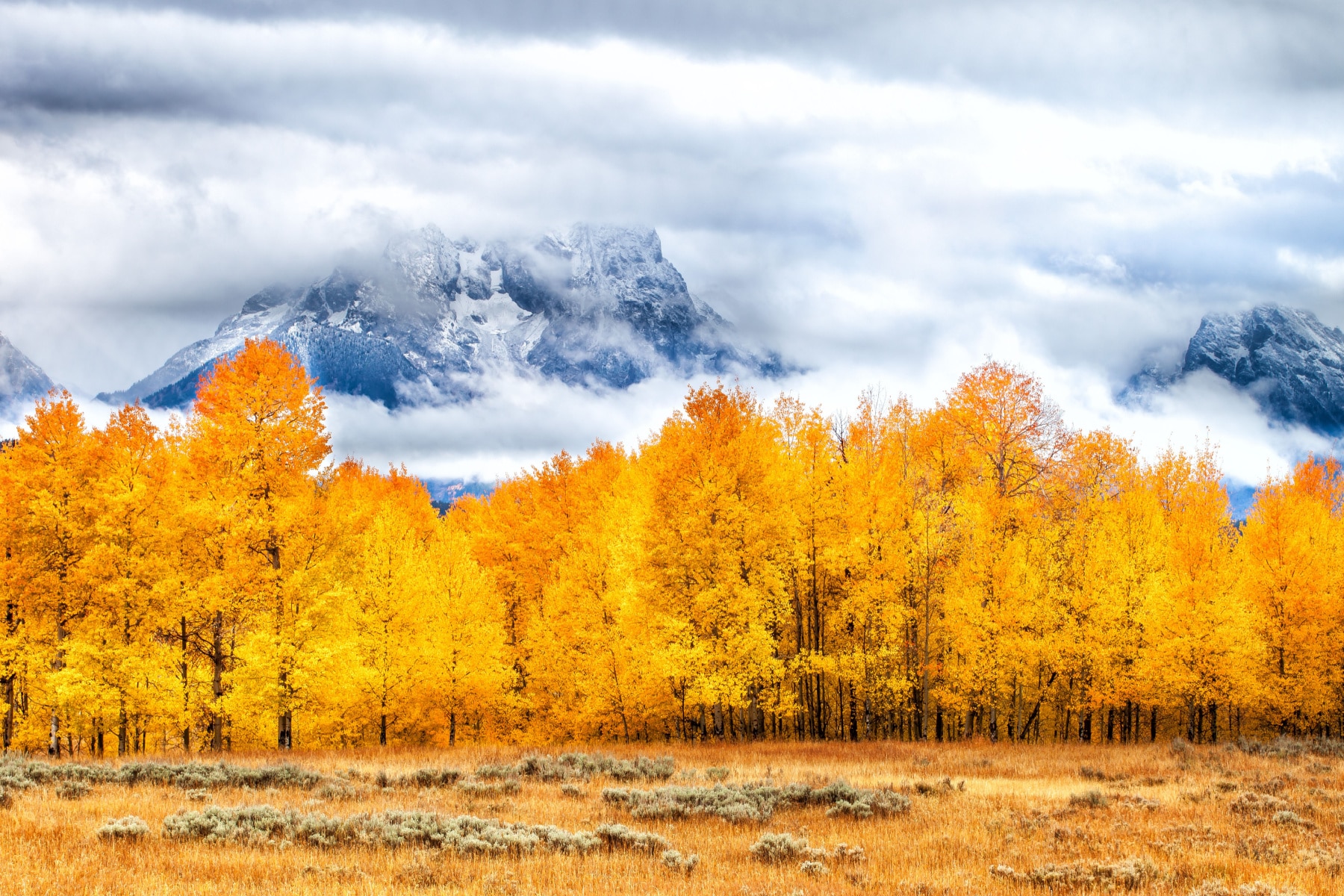
Fall color begins at higher elevations in early September, with the park peaking somewhere between mid-September and early October depending on the year. An early frost speeds everything up. A warm, dry September can push peak color into the first week of October.
The Gardner River corridor and the rolling hills around Mammoth Hot Springs hold the park’s best concentrations of cottonwoods and aspens, and they go gold in September. Because Mammoth sits at a lower elevation, around 6,200 feet, the color lingers there longer than in the high country.
Here are the best spots for fall color in Yellowstone, roughly ordered by when they peak.
- Dunraven Pass (8,859 ft) peaks first, often in mid-September. The aspens along the road between Canyon and Tower are some of the most photogenic in the park.
- West Thumb Geyser Basin (7,792 ft) offers a quiet lakeside setting with aspens showing gold by mid-to-late September.
- Grand Canyon of the Yellowstone (7,800 ft) gets golden aspens framing the waterfalls by late September. Yellow leaves, rust-colored canyon walls, blue sky. Hard to beat.
- Old Faithful and the geyser basins (7,349 ft) are surrounded by aspen and cottonwood that turn late September into early October.
- Lamar Valley (6,400 ft) shifts to warm tones across meadows and forest edges, typically late September through mid-October.
- Mammoth Hot Springs (6,200 ft) peaks last, often holding color into early October thanks to the lower elevation.
If you take nothing else away from this article, heed this warning. Think hard before hiking Mount Washburn in September. Hungry grizzlies work this mountain hard while stocking up for winter. At minimum, talk to a ranger about recent bear activity and travel in as large and noisy a group as you can manage. It’s frustrating, because September is one of the few months Washburn isn’t buried in snow.
What to Pack for Yellowstone in September
September in Yellowstone is a layering game. You might start the morning at 25 degrees F, be in a t-shirt by noon, and back in a jacket by 4 pm. Here’s what actually works.
- Base layers for early morning wildlife watching (merino wool, not cotton)
- Insulating mid-layer like a fleece or lightweight down jacket
- Waterproof outer shell for surprise rain or snow
- Shorts and a t-shirt for those early September days that hit 75+ degrees F
- Warm hat and gloves for predawn wolf watching or geyser viewing
- Binoculars or spotting scope (10×42 binoculars are the standard for Lamar Valley)
- Bear spray if you’re hiking. September bears are focused on food and less predictable than summer bears.
- Windshield scraper. You’ll laugh until you need it at 6 am in late September.
Final Thoughts About Yellowstone in September
We’d take a September Yellowstone trip over a July one without hesitation. The unpredictability is the point. And if any of it feels beyond your comfort level, the park has a long list of tour options whose guides know where the wildlife is and watch the weather and fire conditions far more closely than you will.
September in Yellowstone isn’t the shoulder season it used to be. The park recorded 838,458 visits in September 2023, a 48% jump from September 2022, and 2025 finished at 4.76 million visits for the year, the park’s busiest in a decade outside of 2021. The secret is out. But even with those numbers, September still gives you something July and August can’t. The light changes. The air smells different. The elk are screaming. The first snow dusts the peaks. Time it right, and late September rewards you with golden aspens, thinner crowds, and one of the most dynamic wildlife seasons in the Lower 48.
If you have more questions about Yellowstone in September, drop them in the comments below.

Map of September in Yellowstone

Pin Yellowstone in September

Helpful Related Articles
- Yellowstone guide: start with the full Yellowstone National Park guide.
- Things to do: the best things to do in Yellowstone.
- Yellowstone facts: 10 Yellowstone National Park facts.
- Another season: compare with our guide to Yellowstone in May.
- Getting there: the best airports near Yellowstone.
- Wyoming parks: the Wyoming national parks guide.
- Nearby: things to do in Grand Teton National Park.
What to Bring to Yellowstone
Gear we recommend for Yellowstone. Affiliate links support our work at no cost to you.
More Than Just Parks may earn a small commission from purchases made through these links, at no extra cost to you. We only recommend gear we would actually use.
Affiliate disclosure: Some links on this page earn us a small commission at no extra cost to you. We only recommend gear we actually use.


