


The honest answer to “what are the best airports near Yellowstone” is that it depends on three things you have to weigh against each other: which park entrance you actually want, how far you’re willing to drive, and how much you’re willing to pay for a plane ticket. There is no single right airport. The one that is physically closest is also the smallest, most expensive, and only open part of the year. The one with the cheapest flights is a five-hour drive away.
We’ve flown into most of these on trips to film Yellowstone and neighboring Grand Teton, so this guide gives you the real drive math, the entrance each airport actually serves, and the catch for each one. Yellowstone has five entrances spread across two states, and the park is roughly the size of Rhode Island and Delaware combined. Picking the wrong airport can add a half day of driving to your trip.
Below is a quick comparison of the five airports worth flying into, then a ranked breakdown of each with the trade-offs spelled out. Short version: Bozeman (BZN) is the usual best all-around choice, Yellowstone Airport (WYS) is closest but seasonal and pricey, Salt Lake City (SLC) is the budget option with a long drive, Jackson Hole (JAC) pairs best with the Tetons, and Cody (COD) is the play for the east side.
Airports Near Yellowstone At A Glance
| Airport (Code) | Nearest Entrance | Drive Time | Best For |
|---|---|---|---|
| Yellowstone Airport (WYS) | West | 5 min (3 mi) | Closest, if it’s summer and price is no object |
| Bozeman Yellowstone Intl (BZN) | North / West | 1 hr 20 min (North) to 2 hr (West) | Best all-around: most flights, year-round, fair prices |
| Jackson Hole (JAC) | South | About 1 hr | Pairing Yellowstone with Grand Teton |
| Yellowstone Regional (COD) | East | About 1 hr (53 mi) | The east side, in summer only |
| Salt Lake City Intl (SLC) | West | About 5 hr (320 mi) | Cheapest flights, biggest hub, long drive |
The Best Airports Near Yellowstone, Ranked
1. Bozeman Yellowstone International Airport (BZN): The Best All-Around Choice
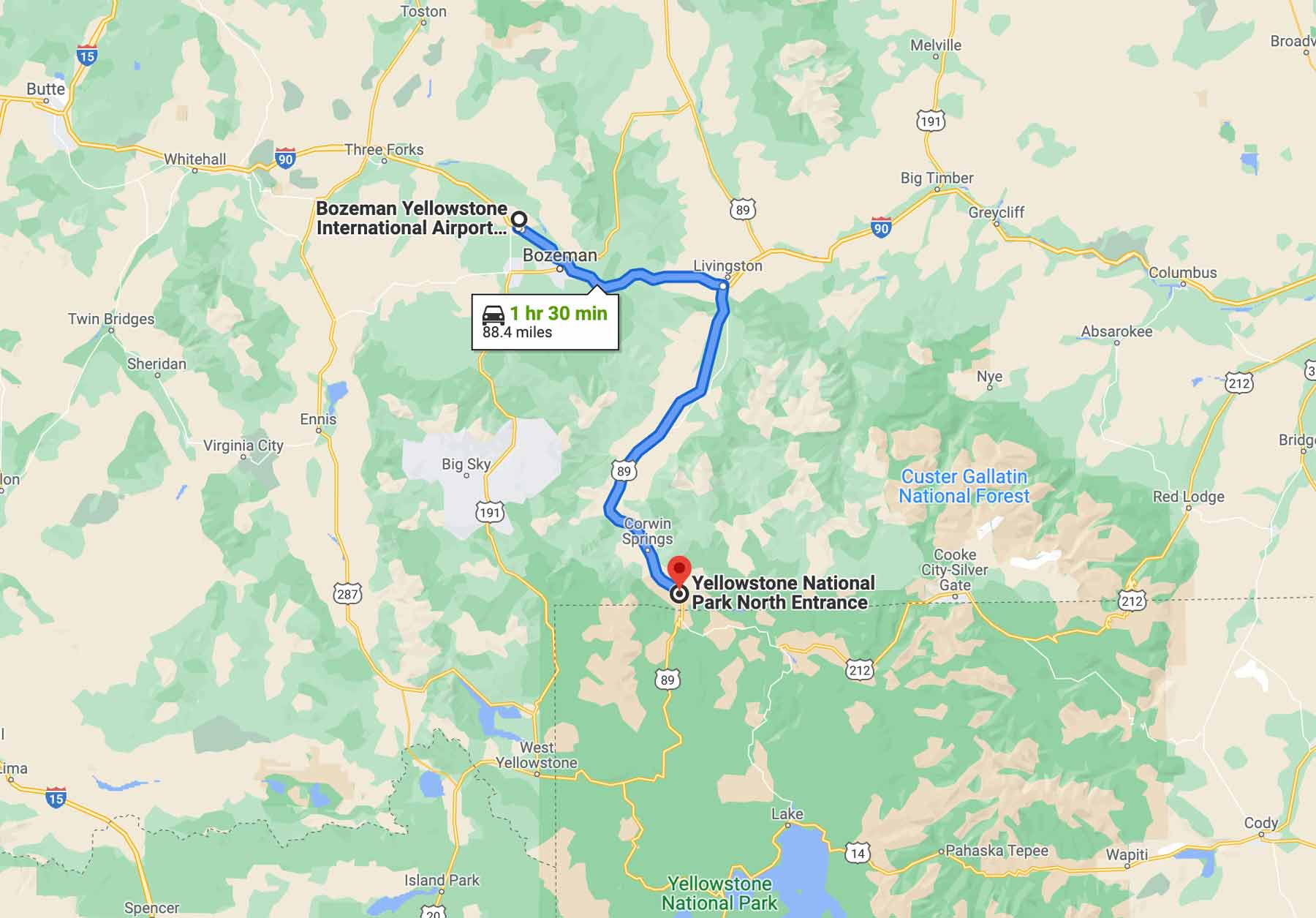
For most travelers, Bozeman is the airport that makes the trip work. It’s Montana’s busiest airport, with nine airlines flying nonstop to two dozen U.S. cities, and it’s the only airport that runs year-round service convenient to two of Yellowstone’s entrances. More flights and more competition usually means better fares and a deeper bench of rental cars than the small regional fields.
Love Yellowstone? It's one of 117 threatened public lands destinations we're tracking. Get the free briefing.
- Location: Bozeman / Belgrade, Montana
- Nearest entrance: North (Gardiner) and West (West Yellowstone)
- Drive time: About 1 hour 20 minutes to the North Entrance (78 miles); about 2 hours to the West Entrance (97 miles)
- Airlines: Alaska, Allegiant, American, Delta, Frontier, JetBlue, Southwest, Sun Country, United
- Rental cars: All major brands on site
- Price: Moderate
The honest caveat is the drive. The “1 hour 20 minutes” figure is to the North Entrance at Gardiner. If you’re headed for the West Entrance and the Old Faithful side, plan on about two hours, and book your rental car early because demand outruns supply here in July and August. Even so, Bozeman gives you year-round access and the most options, which is why it’s our default recommendation.
2. Yellowstone Airport (WYS): The Closest, With Real Strings Attached
Yellowstone Airport sits in West Yellowstone, Montana, about three miles from the West Entrance, which makes it the closest airport to the park by a wide margin. You can be at the entrance gate five minutes after you collect your bag. If you can get a flight that fits your dates and budget, nothing else comes close on convenience.

- Location: West Yellowstone, Montana
- Nearest entrance: West (about 3 miles)
- Drive time: About 5 minutes
- Airlines: Delta Connection (SkyWest), seasonal nonstop to and from Salt Lake City only
- Rental cars: Limited on-site selection
- Price: Typically the most expensive option
Here’s the catch, and it’s a big one. This is a seasonal airport. Heavy snow shuts down flight operations in winter, and the airport runs roughly mid-May through mid-October, so it’s useless for a winter or early-spring trip. Service is also thin: a single seasonal route flown by Delta Connection to and from Salt Lake City, which means you’re almost always connecting through SLC and paying for the privilege. Economy fares routinely run from the mid-$400s into four figures.
One bit of good news: a new terminal opened in June 2025, replacing the old 1960s building, so the experience on the ground is much improved. Watch for seasonal fare deals, but go in knowing this airport trades convenience for cost and a short operating window.
3. Jackson Hole Airport (JAC): Best If You’re Doing the Tetons Too
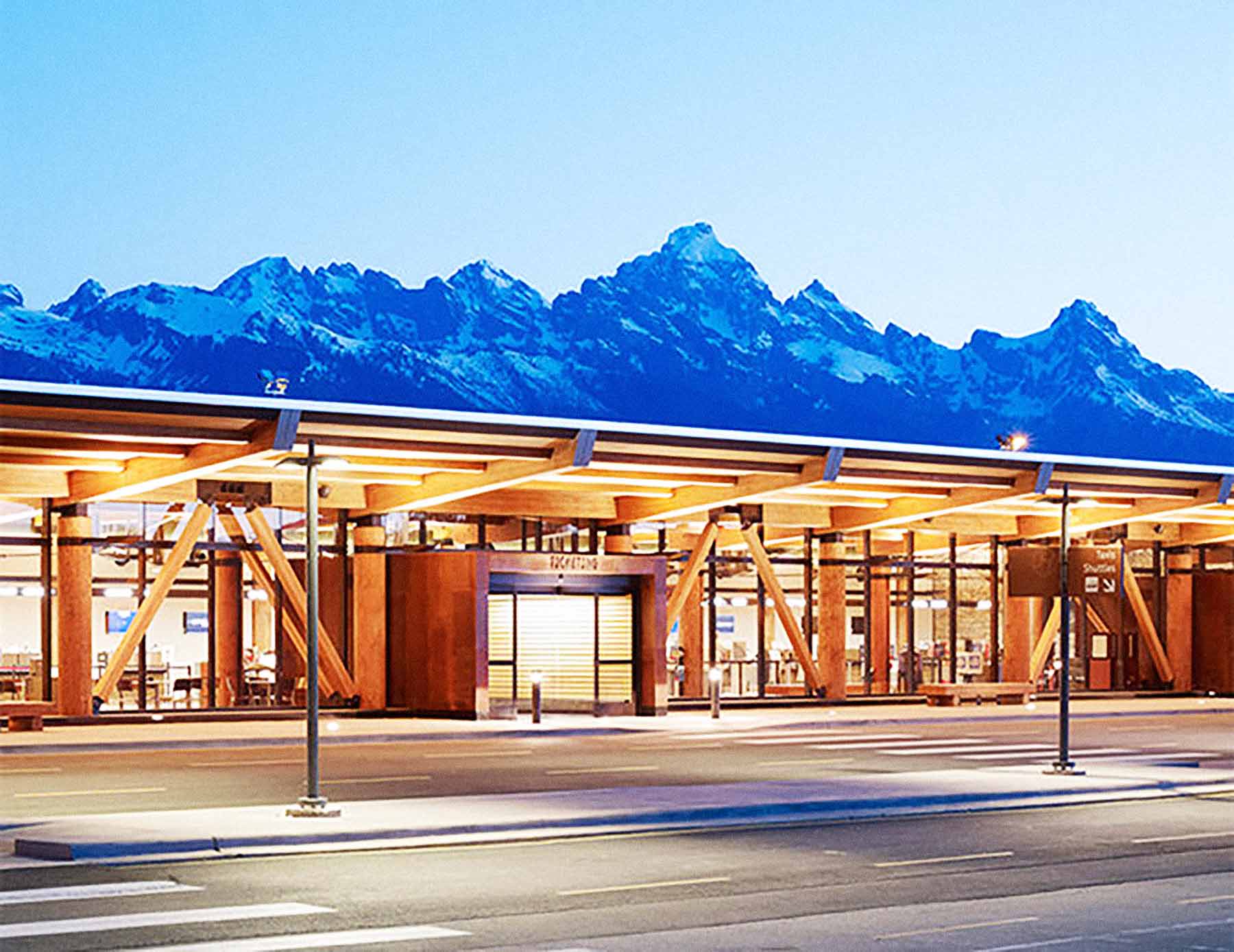
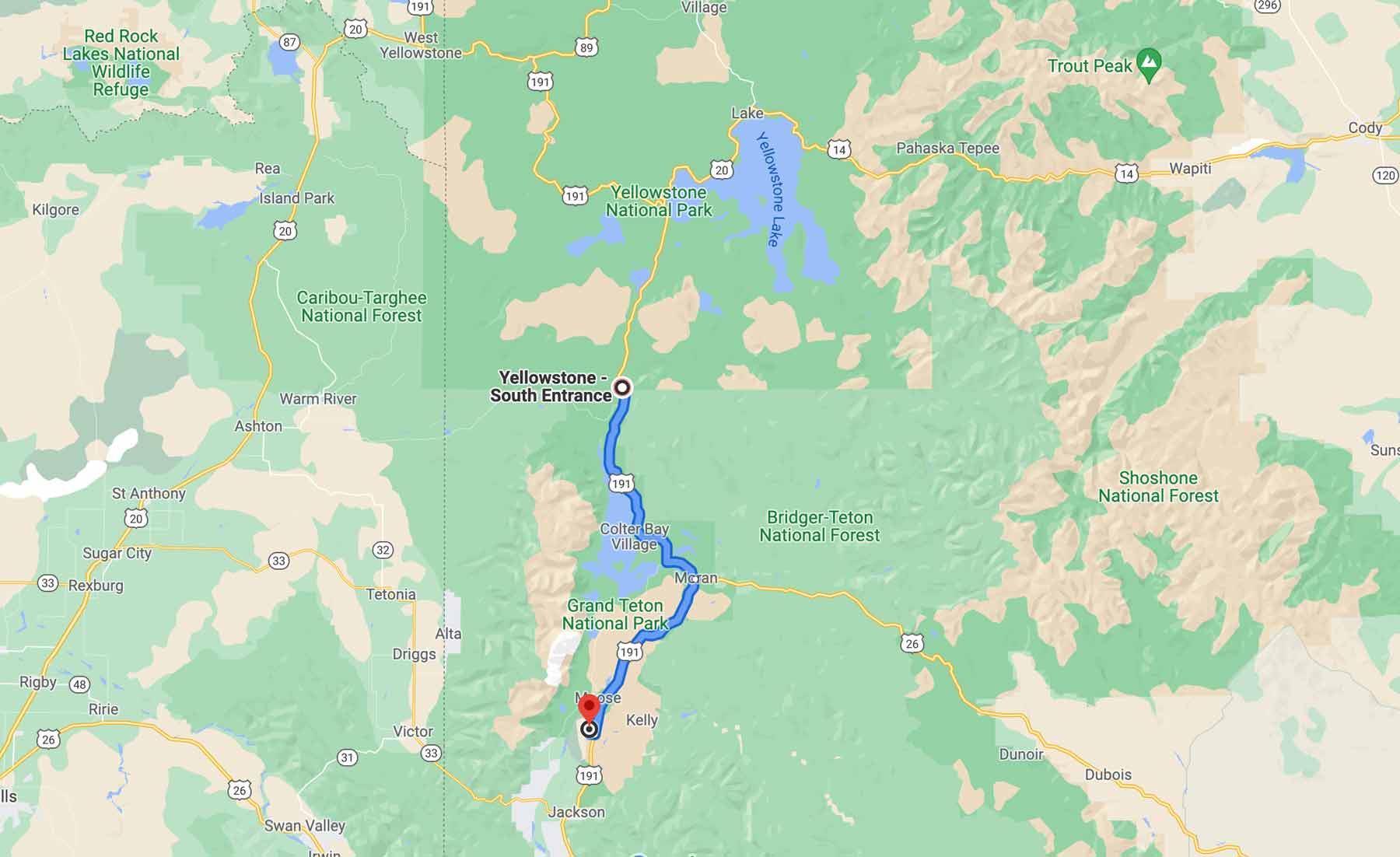
Jackson Hole Airport has a distinction no other airport on this list can claim: it’s the only commercial airport located inside a U.S. national park. It sits within Grand Teton National Park, so your drive to the park gate is about five minutes and your first views are the Teton range. From the airport it’s roughly an hour north to Yellowstone’s South Entrance.
- Location: Jackson, Wyoming (inside Grand Teton National Park)
- Nearest entrance: South (about 1 hour)
- Drive time: About 1 hour to the South Entrance
- Airlines: Year-round Alaska, American, Delta, United; seasonal Sun Country
- Rental cars: National, Alamo, Enterprise and others on site
- Price: On the higher end
The trade-off is price. Jackson is a resort town, and fares track accordingly, often from the mid-$400s up. It only makes sense as your Yellowstone airport if you’re also spending time in Grand Teton, which honestly you should, since the South Entrance road runs straight through it. If the Tetons aren’t on your itinerary, Bozeman usually wins on both flights and overall drive math. For broader trip planning across the region, our Wyoming national parks guide covers what’s worth your time.
4. Yellowstone Regional Airport (COD): The East Side Specialist
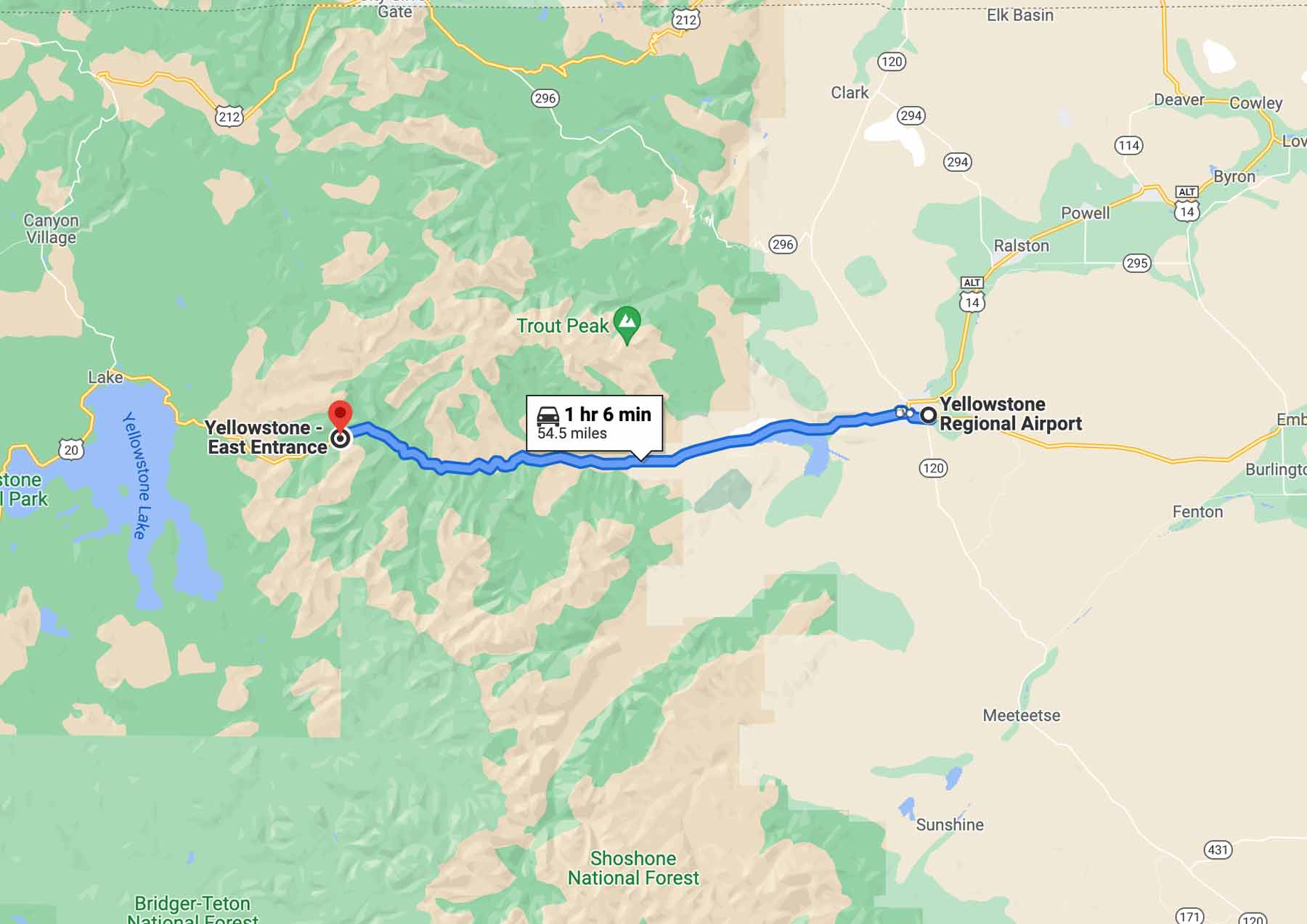
If your trip centers on the east side of the park, Yellowstone Regional Airport in Cody, Wyoming is the closest option. It’s about 53 miles and roughly an hour to the East Entrance, and Cody itself, founded by Buffalo Bill, is a worthwhile stop with a strong Western history museum.
- Location: Cody, Wyoming
- Nearest entrance: East (about 53 miles)
- Drive time: About 1 hour
- Airlines: United Express year-round to Denver; seasonal weekend service to Chicago in summer
- Rental cars: Hertz, Avis, Budget, Thrifty on site
- Price: On the higher end
The real caveat here is the road, not the airport. The East Entrance and Sylvan Pass are seasonal. The pass typically opens around May 1 and closes October 31, and it’s the entrance most often delayed by late snow. If you fly into Cody outside that window, the East Entrance will be shut and you’ll have to loop hours around the park to get in another way. Service is also limited, mainly United Express connecting through Denver, so build your itinerary around a Denver connection.
5. Salt Lake City International Airport (SLC): The Budget Long-Haul
Salt Lake City is the wildcard, and it comes down to one thing: price. SLC is a full major hub with the most flights and the cheapest fares of anything in range, plus the deepest and most affordable rental car market. For a family, the savings on airfare and a car can run into the hundreds or more compared to the small regional airports.
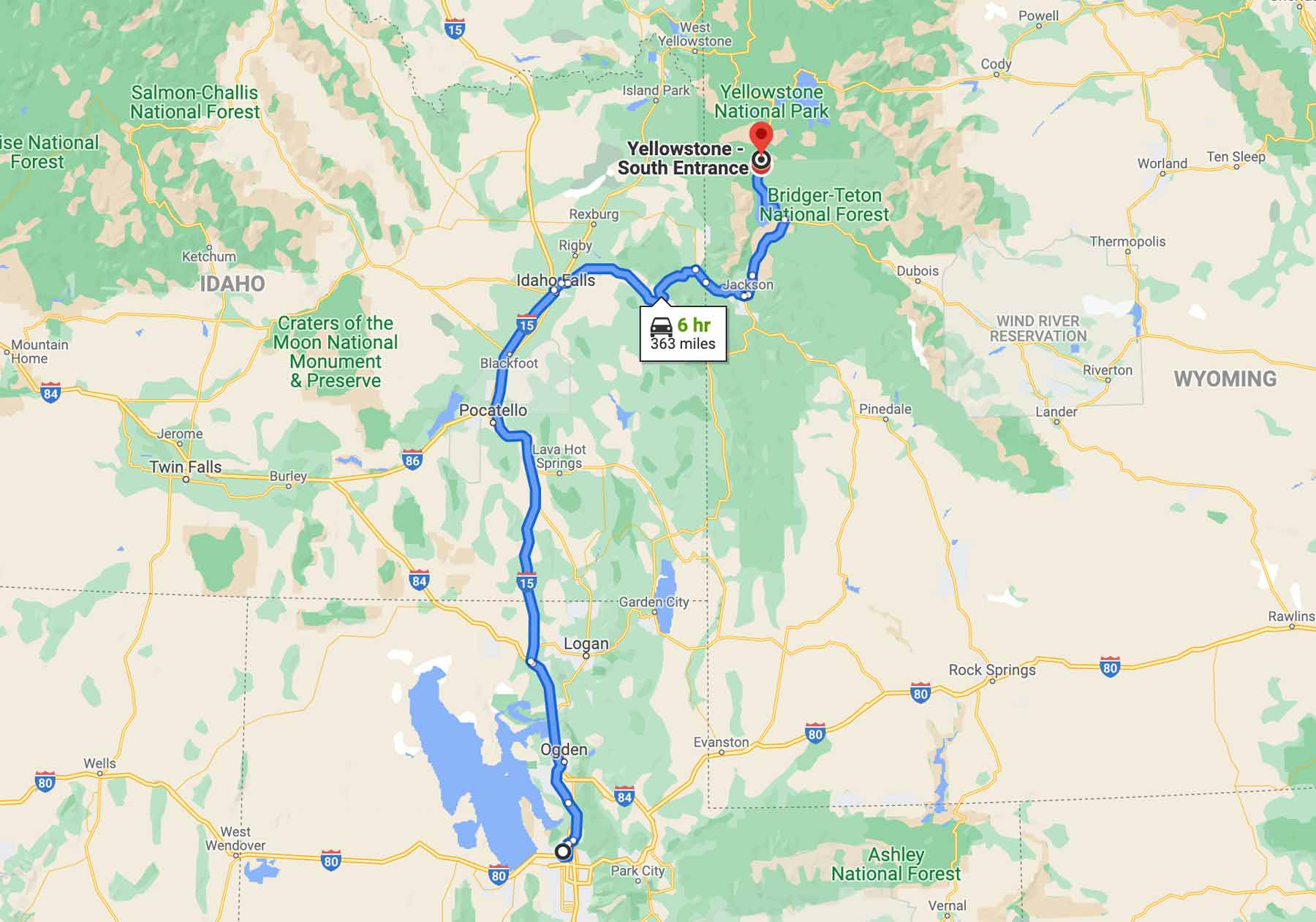
- Location: Salt Lake City, Utah
- Nearest entrance: West (about 320 miles)
- Drive time: About 5 hours to the West Entrance
- Airlines: Delta hub, plus Alaska, American, Frontier, JetBlue, Southwest, Spirit and more
- Rental cars: All major brands on site
- Price: Cheapest of the group
The honest catch is the drive: about five hours each way, which effectively adds a travel day to each end of your trip. That said, the route up through Idaho’s Island Park corridor is pleasant, and you can break it up. SLC works best if you’re traveling on a budget, you have time to spare, or you want to string Yellowstone together with stops in Utah’s national parks on a longer western loop. If the drive sounds like too much, fly into Bozeman instead.
How To Choose The Right Airport
Start with your entrance and your season, then let price break the tie. A quick decision guide:
- Want the simplest, most flexible trip: Fly Bozeman (BZN). Year-round, the most flights, reasonable drive to the North and West entrances.
- Visiting in summer and want to be at the gate fast: Yellowstone Airport (WYS), if you can stomach the fare and you’re not traveling outside the mid-May to mid-October window.
- Doing Grand Teton too: Jackson Hole (JAC) for the South Entrance.
- Focused on the east side in summer: Cody (COD), as long as Sylvan Pass is open.
- On a budget or pairing with Utah: Salt Lake City (SLC), and plan for the long drive.
Getting Around, Rental Cars, And Seasonal Road Access
You’ll want a rental car. Yellowstone has very little public transit, the distances between sights are large, and most of the best wildlife viewing happens at dawn and dusk on your own schedule. Reserve your car well ahead of time, especially at Bozeman and the smaller regional airports, where the fleet sells out in peak summer.
The bigger planning factor is seasonal road access. Most of Yellowstone’s interior roads are closed to regular vehicles from early November into late April or May, and they reopen on a staggered schedule. The North Entrance at Gardiner is the only entrance open to cars year-round. Sylvan Pass at the East Entrance is one of the last to open, typically around May 1. Always check the National Park Service road status page before you finalize an airport, because the wrong combination of entrance and date can leave you stuck.
For timing your trip, spring and fall bring smaller crowds and active wildlife, while summer is busiest. Our guides to visiting Yellowstone in the fall and our full Yellowstone itinerary walk through what to expect by season and how to route your days once you land.
A Little About Yellowstone Before You Book

Yellowstone is the national park that started it all, established in 1872 as the first national park in the world. The landscape is a working geothermal system: more than half the planet’s active geysers sit here, alongside bison herds, one of the lower 48’s healthiest wolf populations, and a stretch of the American West that still feels wide open.
Before it was a park, the people who explored it came back with stories no one believed. In 1869, C.W. Cook submitted an account of the geysers to Lippincott’s magazine and got a flat reply: “Thank you, but we do not print fiction.” It took the 1870 Washburn expedition, which mapped the region, climbed Mount Washburn, and named Old Faithful, to convince a skeptical public the place was real.

You can read more in our roundup of Yellowstone facts if you want the backstory before your trip.
Helpful Articles For Planning Your Yellowstone Trip
- Things to do: Best things to do in Yellowstone National Park
- Plan your days: Yellowstone itinerary and planning guide
- Fall trips: Visiting Yellowstone in the fall
- Park facts: Yellowstone National Park facts
- Pair with the Tetons: Things to do in Grand Teton National Park
- Wider region: Wyoming national parks and the Utah national parks
We’re Jim and Will Pattiz, the filmmaking brothers behind More Than Just Parks. We’ve spent our adult lives exploring and filming America’s national parks and public lands, working with the National Park Service, the Department of the Interior, and the U.S. Forest Service. We hope this guide gets you to Yellowstone with the shortest drive and the smallest dent in your wallet.
What to Bring to Yellowstone
Gear we recommend for Yellowstone. Affiliate links support our work at no cost to you.
More Than Just Parks may earn a small commission from purchases made through these links, at no extra cost to you. We only recommend gear we would actually use.
Affiliate disclosure: Some links on this page earn us a small commission at no extra cost to you. We only recommend gear we actually use.


