


I’ve hiked some of the most talked-about trails in the national park system. Angels Landing. Half Dome. The Chains at Canyonlands. But the one that made me grip iron the hardest, think the most about my foot placement, and genuinely question whether I’d made a good decision? That was Precipice Trail in Acadia National Park.
At just 1 mile to the summit of Champlain Mountain (2.5 miles for the full loop), it doesn’t look like much on paper. Don’t let the short distance fool you. You’ll gain over 1,000 feet of elevation in less than a mile, much of it on iron rungs bolted into granite cliff faces with nothing between you and the ground but air.
So is it really that dangerous? Here’s what I found after hiking it myself, digging through NPS incident reports, and talking to folks who’ve done it in every condition imaginable.
6 Quick Things to Know Before Hiking Precipice Trail
The section known as “The Eliminator” shows up just 0.1 miles in. It’s a short climb on iron rungs that tests whether you can handle what’s coming. If you struggle here, turn around. It only gets harder.
Love Acadia? It's one of 117 threatened public lands destinations we're tracking. Get the free briefing.
- $35 per vehicle, $20 per person, but you’ll get more value from the America the Beautiful Pass to access all public lands for just $80 a year.
- Pack to be hands-free during the entire ascent. Your arms and legs will be working the whole time. Leave the trekking poles in the car. Wear hiking boots with aggressive grip and bring gloves if it’s cool out, because cold hands on iron rungs is not a situation you want.
- Do NOT attempt if you have a fear of heights. This is not the trail to “work through” your fear. Some ledges are less than 18 inches wide with 200-foot drops.
- Wet granite and iron rungs are a death trap. If it rained in the last 12 hours, if there’s morning dew, if the forecast calls for anything other than dry, pick a different hike.
- The trail is closed more often than it’s open. Peregrine falcon nesting shuts it down from roughly mid-March through mid-August every year. Snow and ice close it from late October through April. That leaves you a window of about 8 to 10 weeks.
- Here’s my favorite guidebook, map, bug spray (DEET OPTION), and sunscreen.
Precipice Trail in Acadia National Park, Step by Step

Distance: 2.5 miles (full loop)
Elevation Gain: 1,060 feet
Time: 2-3 hours
Difficulty: Extreme
Summit: Champlain Mountain (1,058 feet)
Precipice Trail is intimidating before you take a single step. The trailhead has a sign that says, “Falls on this mountain have resulted in serious injury or death.” The National Park Service put that sign there for a reason.
This is what you’re getting into, section by section.
“The Eliminator” (0.0 to 0.1 Miles)

The trail starts with a granite staircase that lulls you into thinking this might be manageable. Then you hit The Eliminator about 530 feet in.
It’s a boulder outcropping with two awkwardly placed iron rungs. The spacing between them is uneven, and if you’re under about 5’6″, reaching from one to the next requires commitment. It’s called The Eliminator for a reason. If this section makes you pause, take the hint. Everything after this is harder.
HEADS UP: As a 6′ tall person, I was able to grip the rungs easily, but some of my shorter hiking friends had real trouble grabbing two rungs at once. Height matters here.
The Boulder Field and First Cliff Walk (0.1 to 0.3 Miles)
Past The Eliminator, you enter a boulder field that demands constant attention. You’re scrambling up, over, and through massive rocks, following blue blazes painted on the granite. Some boulders you climb over. Others, you literally crawl under. One of them is bigger than a car, and the gap beneath it is the only way forward.
Scattered stone stairways give your arms a break, but they don’t last long. Iron bars appear sporadically along the route, bolted into the rock to help with balance on the steeper pitches.
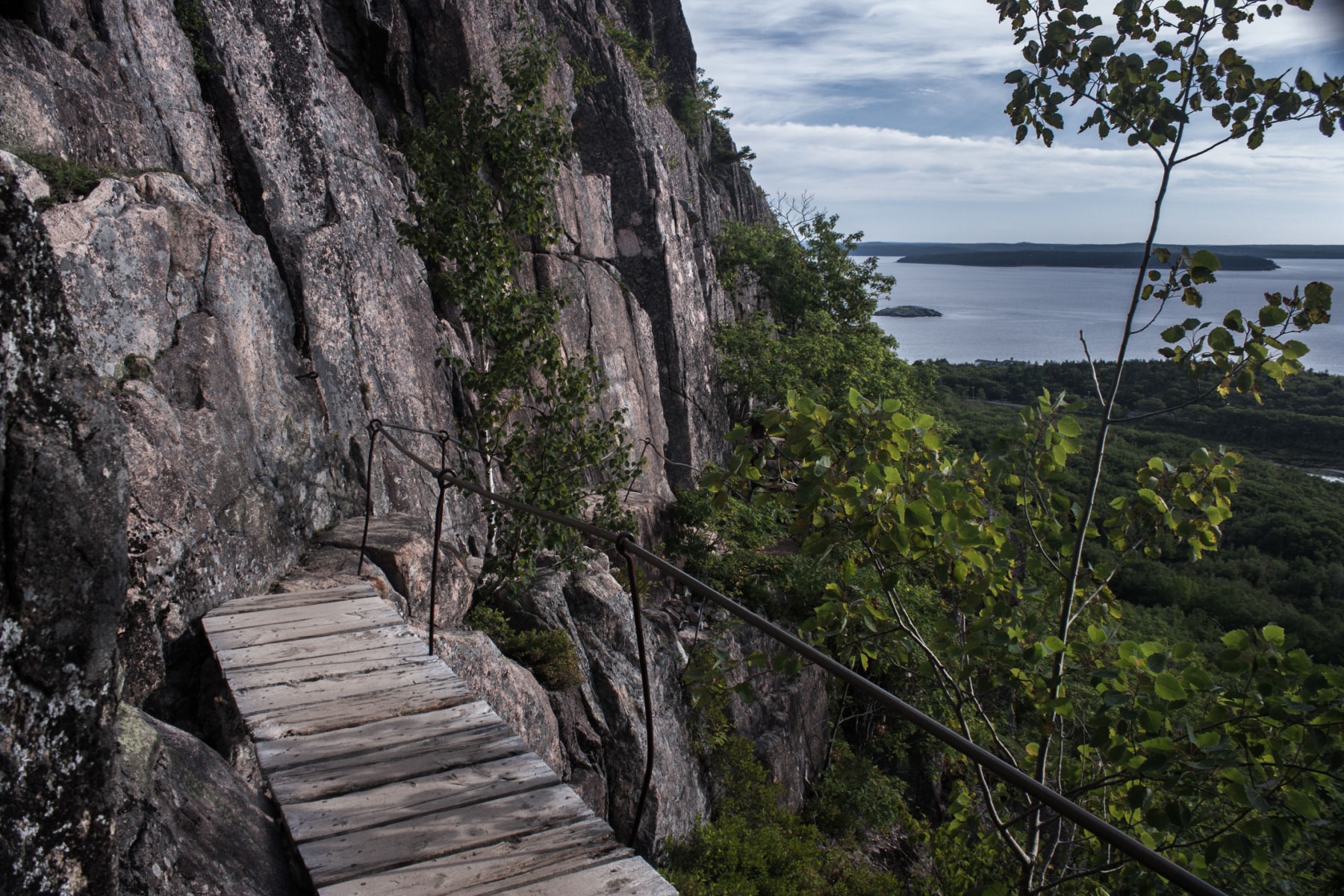
Then comes the first cliff walk after you cross a short wooden bridge. This is where the trail shows you what it really is. You’re on a narrow ledge with iron railings that have a wavy, almost roller-coaster quality to them. The exposure isn’t maxed out yet, but you can see what’s coming.
The Point of No Return (0.3 Miles)
Right around the 0.3-mile mark, you’ll see a sign for the Orange and Black Trail. It leads safely back down to Park Loop Road.
I’d be lying if I said I didn’t look at that sign for a long moment. At this point, you’ve already scrambled through boulders, used iron ladders, and walked the edge of a cliff. The Orange and Black Trail is your absolute last chance to bail.
Past this junction, the NPS does not recommend descending via Precipice. The iron rungs and ladders are designed for upward travel. Going down them with exposure below you is significantly more dangerous. If you go past the Orange and Black junction, you’re committing to the summit.
The Upper Cliff Bands and Summit Push (0.3 to 1.0 Miles)
This is where the trail earns its reputation.
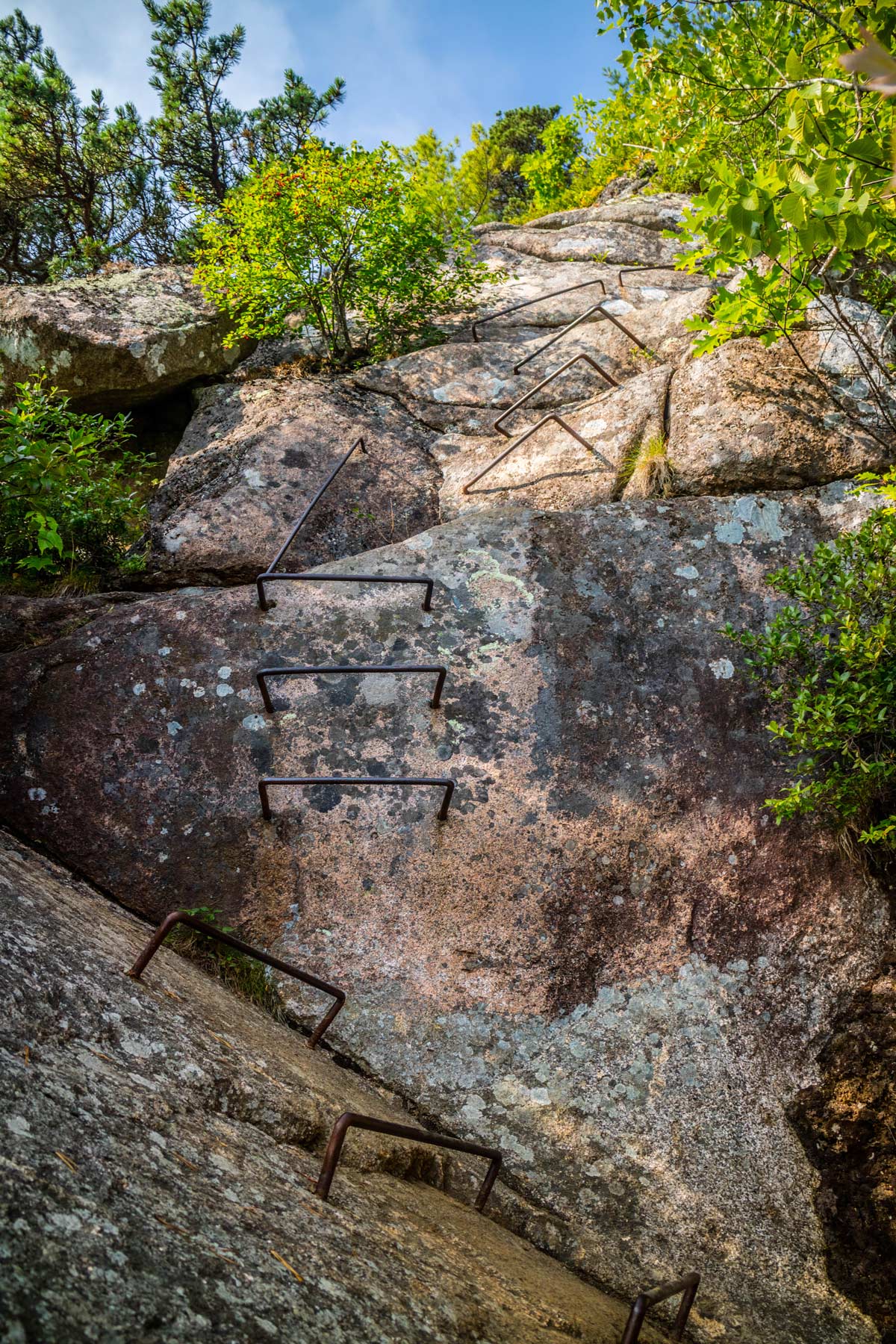
After the point of no return, the iron rungs become more frequent and the exposure becomes serious. You’ll climb a series of iron rung ladders bolted directly into flat granite faces with nothing but a sheer drop to your right. One memorable section has an iron rung ladder going straight up a vertical slab of granite. Don’t look down unless you want a reality check.
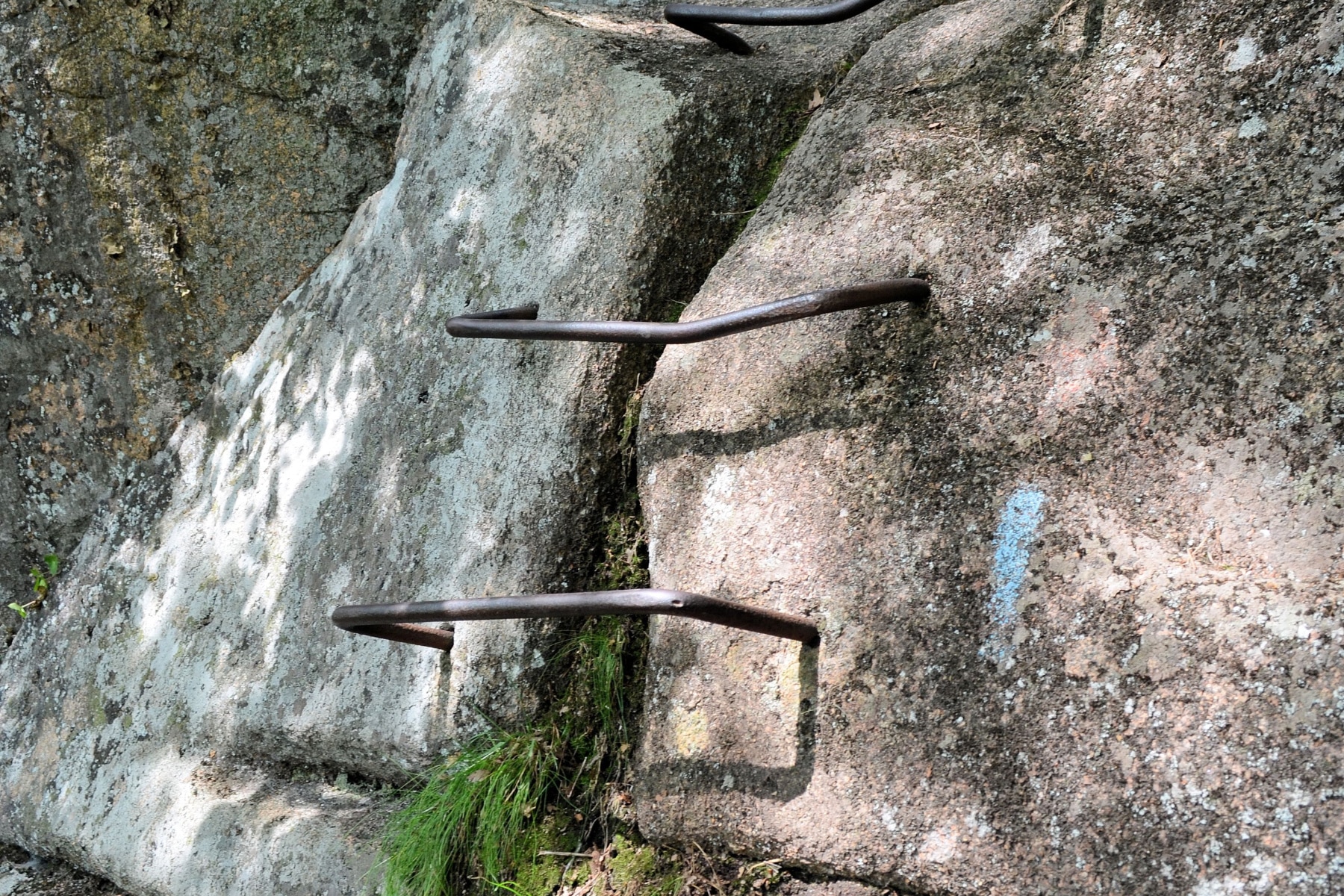
Here’s what you need to know about the iron hardware along the way.
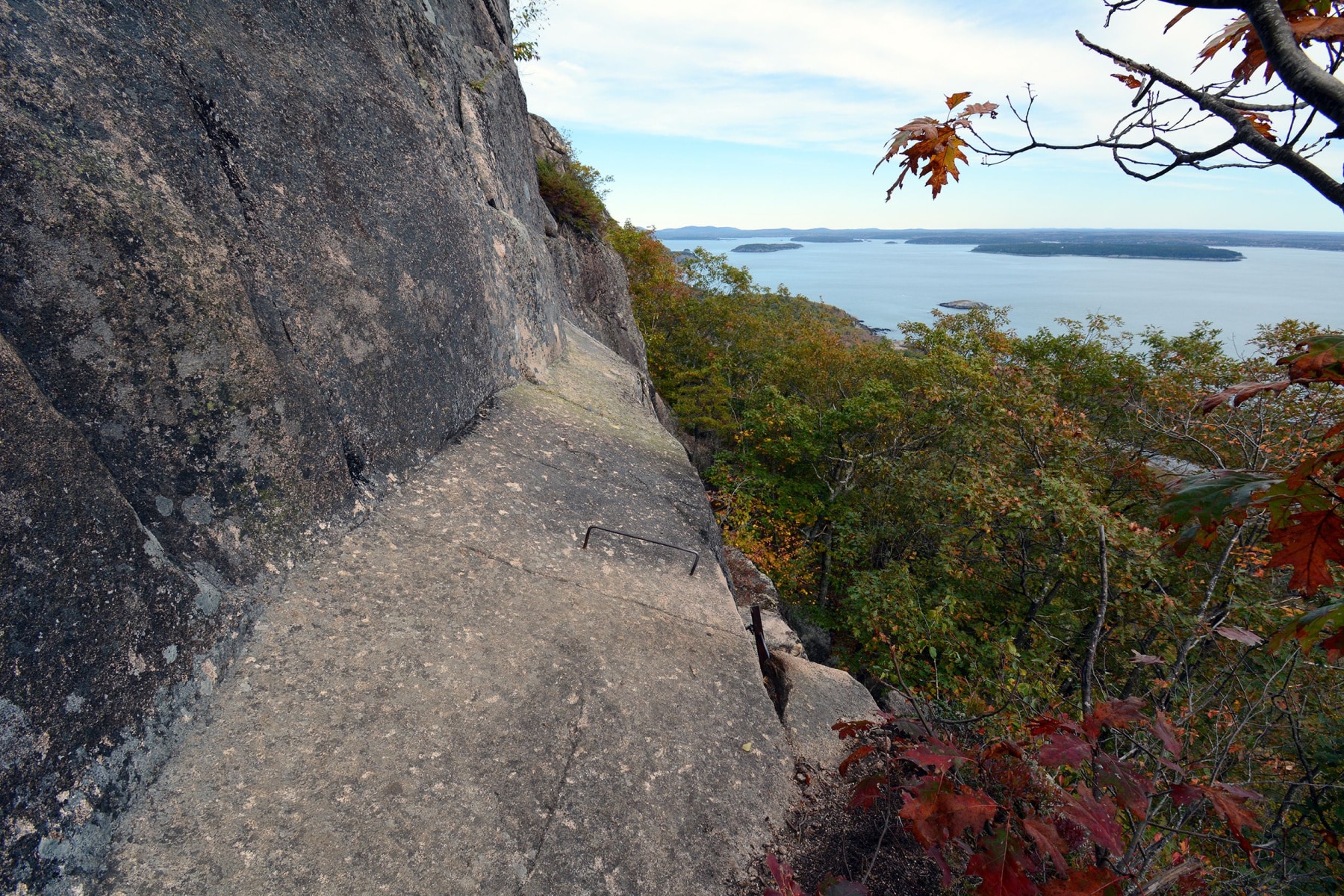
- Metal guardrails are placed along some of the worst cliff drops. In some spots they’re at waist level. In others, they’re giant staples barely above ankle height. Do not assume they’ll catch you.
- Iron rungs are drilled into the vertical rock face for hand and foot holds. They’re spaced for climbing, not for comfort.
- The ladder rungs aren’t always even or orderly. Some are haphazardly placed, but they’re intentionally positioned at the spots where you need help the most.
- Near the summit, you’ll encounter an outward-leaning catwalk with handrails. It’s as exhilarating as it sounds.
The cliff-edge paths can be narrow, with the pathway slanting downward toward the drop. In several spots, you take blind corners around rock outcroppings where you can’t see who’s coming the other direction. These become congestion points where you wait for folks to pass, which means standing on a narrow ledge with significant exposure while someone else works their way toward you.
WATCH: The most exhilarating spots of the Precipice Trail hike
Summiting Champlain Mountain
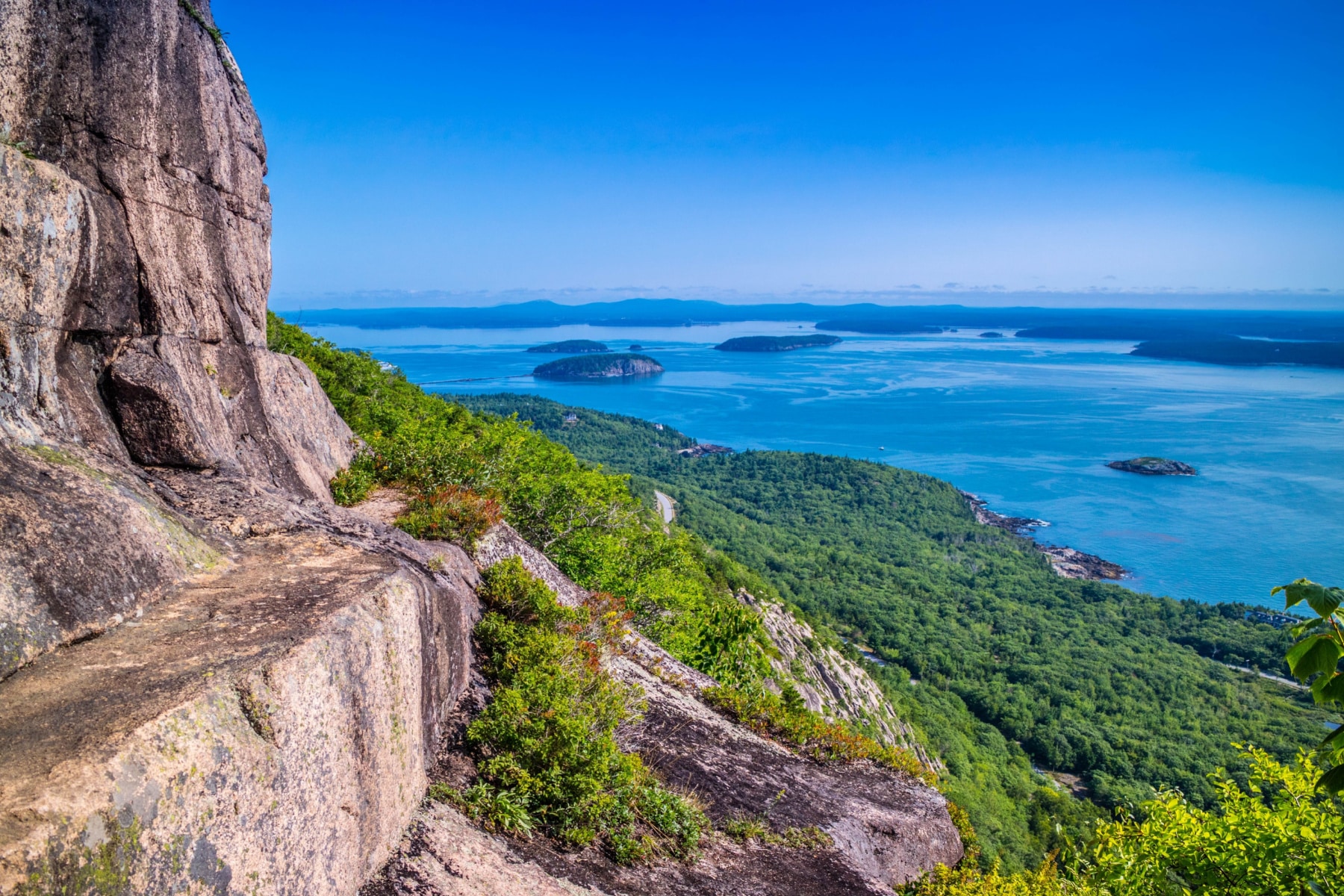
When the iron rungs stop and the trail levels out, you’re at the top of Champlain Mountain at 1,058 feet. The views hit you all at once. Frenchman Bay spreads out below, the Porcupine Islands dot the water, and on a clear day you can see all the way to Schoodic Peninsula.
After what you just climbed, the summit feels earned in a way that most trail summits don’t. Take your time up here. Eat something. Let your hands stop shaking.
Precipice Trail Descent
Do not descend via Precipice Trail. The NPS specifically discourages it, and for good reason. Climbing down iron rungs while staring at a 200-foot drop is exponentially more dangerous than climbing up them. The route is designed as a one-way ascent.
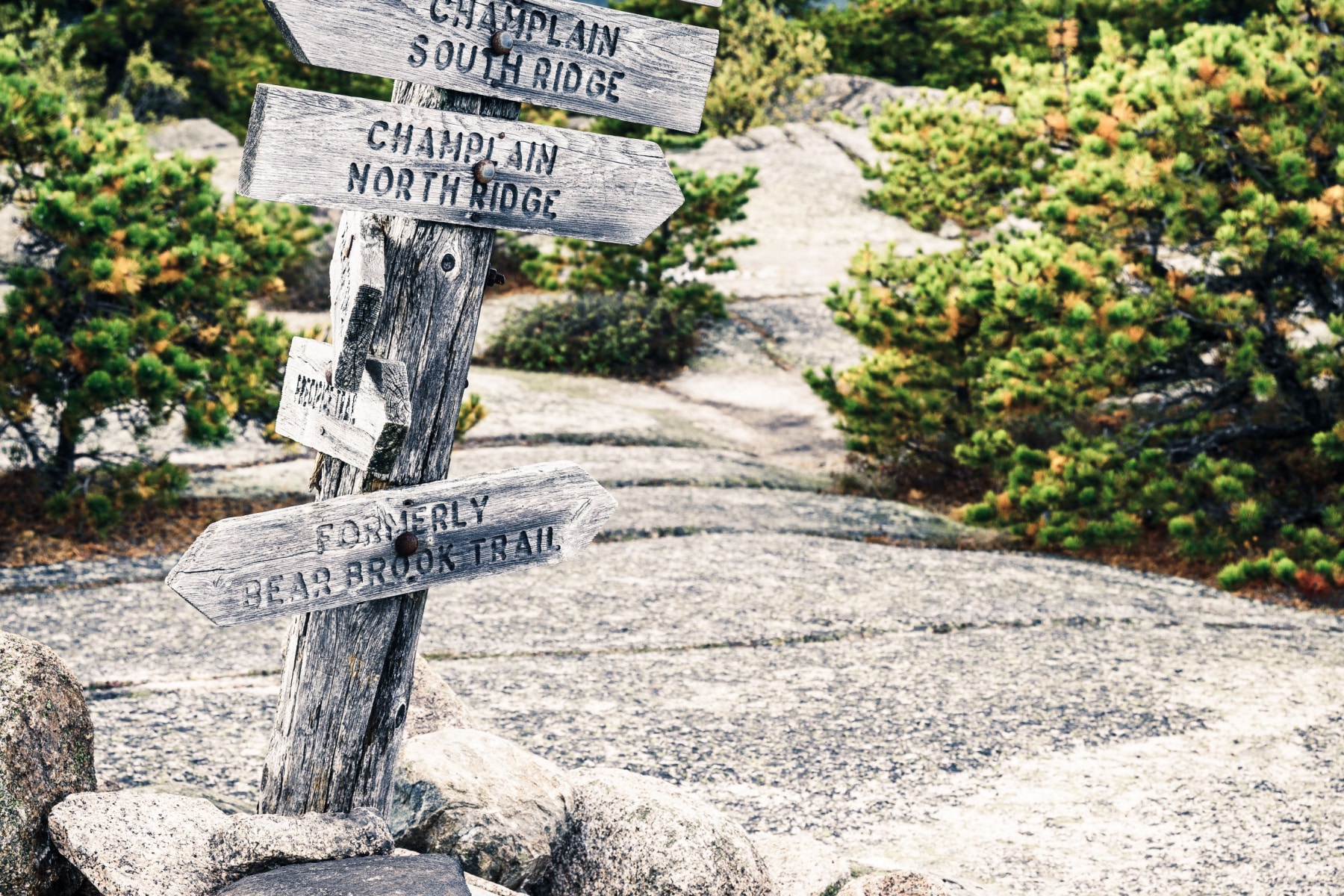
Instead, take the Champlain North Ridge Trail from the summit for 0.6 miles. It’s a moderate descent over rocky terrain with a few steep sections, but nothing like what you just did. When you hit the junction with the Orange and Black Path, take it for 0.25 miles back down to Park Loop Road.
From there, it’s an easy half-mile walk along the road back to the Precipice Trail parking lot. The full loop comes in at about 2.5 miles.

How Dangerous Is Precipice Trail, Really?
Let’s talk numbers.
The most recent death on Precipice Trail was in July 2012, when a 22-year-old University of Maine student fell approximately 60 feet on the upper section of the trail. Thirty-nine responders spent five and a half hours on the rescue. She was airlifted to Eastern Maine Medical Center but did not survive.
Before that, the previous fatality on Precipice was in 1985. That’s 27 years between deaths on the same trail.
In July 2018, a 26-year-old reached up to grab a rock that gave way, and he fell roughly 60 feet, somersaulting down the cliff. He survived with broken bones and lacerations. Thirty-six responders spent four hours carrying him out through the fog because the helicopter couldn’t fly. They used six belay stations and a tensioned guide rope to get the litter down the mountain.
In March 2021, a 26-year-old from Belfast, Maine, slipped on ice on the Precipice and spent four hours clinging to a tree on the cliff face before an Army National Guard helicopter pulled him off. He had minor injuries. He also had no business being on that trail in icy conditions, and the park made that clear.
In July 2024, three hikers (ages 19, 20, and 22) were caught hiking the trail during the peregrine falcon closure. They were charged with a Class B misdemeanor for violating the superintendent’s closure.
The honest answer is this. Precipice Trail is dangerous, but it’s not a death sentence. The fatalities are rare. The injuries happen mostly when people attempt it in wet or icy conditions, or when they push past their ability level. If you’re in reasonable shape, you respect the conditions, and you don’t have a fear of heights, the trail’s iron rung system is solid and well-maintained.
But the margin for error is zero. One slip on wet granite, one moment of panic on a ledge, one loose handhold, and you’re looking at a multi-hour rescue involving dozens of responders. Or worse.
Who Should (and Shouldn’t) Hike Precipice Trail
Do it if: You’re comfortable with heights, you have solid upper body strength, you can grip iron rungs with confidence, and you’ve done exposed scrambling before. If you’ve hiked Angels Landing in Zion or the Beehive Trail in Acadia and felt good about it, Precipice is the next level up.
Skip it if: You have any fear of heights, you’re hiking with small children or dogs, you haven’t done any scrambling or via ferrata-style trails before, or the conditions are anything less than bone dry. Also skip it if you’re not comfortable with the idea that some ledges are 18 inches wide with 200-foot drops and the “guardrails” are ankle-high iron staples.
There’s no shame in choosing a different trail. Acadia has plenty of excellent hikes that won’t put you in a rescue helicopter.
When to Hike the Precipice Trail in Acadia
The trail is closed more than half the year. That’s not an exaggeration. Between peregrine falcon nesting closures (mid-March through mid-August) and winter conditions (late October through April), the window to hike Precipice is roughly late August through mid-October in most years.
In 2025, the NPS closed Precipice on March 1 for falcon nesting, along with Valley Cove and Jordan Cliffs trails. In 2026, the closure came on March 2. The closures last “until further notice,” which typically means mid-August at the earliest. In some years, if the falcons don’t produce eggs, the trail reopens sooner.
The best months to attempt Precipice Trail are September and October. The falcon closures are over, the weather is dry and cool, the summer crowds have thinned, and you get the bonus of Maine’s fall foliage painting the landscape around you.
Late August can work too, but check the NPS conditions page before you drive to the trailhead. The closure date varies year to year depending on the falcons.
Why Peregrine Falcons Close the Precipice Trail
Peregrine falcons are the fastest animals on the planet, capable of diving at over 240 mph. They nearly went extinct in the eastern United States due to DDT poisoning, and reintroducing them to Acadia has been a decades-long effort. Since 1991, at least one pair of peregrines has successfully bred on the cliffs of Mount Desert Island every year.
One of their preferred nesting sites is on the east-facing cliffs of Champlain Mountain, which is exactly where Precipice Trail runs. The birds mate for life and typically return to the same nest year after year. Having hikers climbing past their nesting ledges during breeding season would disrupt the process and potentially cause the adults to abandon their eggs.
In 2025, three breeding pairs nested on Acadia’s cliffs. The pair near Precipice produced two chicks that survived to fledging. The other two nests failed, possibly due to human disturbance. That’s why the park takes enforcement seriously.
Even during the closure, you can stop by the Precipice Trail parking lot where park rangers host “Falcon Watch” programs with spotting scopes aimed at the nesting cliffs. It’s actually a great experience, and watching a peregrine dive is worth the trip on its own.
Precipice Trail Parking and Logistics
The Precipice Trail parking lot is on Park Loop Road, about 2 miles from the Sieur de Monts entrance. It holds roughly 20 cars. That’s it.
Here’s the critical detail most guides skip. Park Loop Road is one-way. If you miss the Precipice parking turnoff, you have to complete the entire 27-mile loop to get back. That’s not a typo. You will drive 27 miles through Acadia to correct a missed turn. Pay attention when you’re approaching the lot, which comes before the Sand Beach entrance station.
Arrive by 7:00 AM in peak season (September weekends especially). By 8:00, the lot is usually full. There is some roadside overflow parking available, but it adds walking distance.
A sunrise start has another advantage beyond parking. The east-facing cliffs of Champlain Mountain catch morning light, and the trail is less crowded early. Congestion on the narrow ledges in the upper sections is a real problem by mid-morning, and waiting on exposed cliff edges for other hikers to pass is not ideal.
What to Bring and Wear
You don’t need special climbing gear. No harness, no ropes, no carabiners. The iron rung system is essentially a built-in via ferrata without clip-in points. But what you wear and carry matters more than on most trails.
- Hiking boots with aggressive tread. Not trail runners. Not sandals. You need grip on smooth granite.
- A small daypack that won’t shift. Anything that swings or moves while you’re on a rung ladder is a hazard.
- At least 1 liter of water per person. There’s no shade on the upper sections, and the climb is strenuous.
- Sunscreen. You’re exposed for the vast majority of the hike.
- Grippy gloves if it’s cool. Cold hands on iron rungs are slippery hands.
- No trekking poles. You need both hands free for the entire ascent. Poles are dead weight here.
- Leave the selfie stick in the car. I’ve seen folks try to film on the ledges. It goes exactly as well as you’d expect.
Alternatives to Precipice Trail
If you decide Precipice isn’t for you, or if it’s closed for falcon nesting, Acadia has other trails that deliver the iron rung experience with less commitment.
Is Precipice Trail Harder than the Beehive?
Yes. Significantly.
The Beehive Trail climbs 520 feet over 0.8 miles, roughly half the elevation gain of Precipice in a shorter distance. It has iron rungs and ladders, and the exposure is real, but the sections are shorter and the overall commitment level is lower. The Beehive also has iron bridges spanning gaps in the rock, which Precipice doesn’t offer.
If you’ve never done an iron rung trail before, start with the Beehive. It’s the single most popular day hike in Acadia for a reason. It gives you a genuine taste of what Precipice offers without the same consequences if you freeze up.

Jordan Cliffs Trail
Jordan Cliffs is the middle ground between Beehive and Precipice. It has iron rungs and some genuine exposure, but the sections are shorter and less sustained. It’s also often closed for falcon nesting during the same window as Precipice, so check the NPS website before planning around it.
Beech Cliffs Trail
This one flies under the radar. Beech Cliffs, near Southwest Harbor on the quieter side of the island, offers excellent views without the iron rung intensity or the crowds. If you want the views without the adrenaline, this is a solid pick.

What Makes the Precipice Trail So Special
Part of what makes Precipice Trail unique is how hard it is to actually hike it. Between the falcon closures, the weather requirements, the tiny parking lot, and the physical demands, everything has to line up. You need the right week in the right month with the right weather on the right morning. That scarcity is part of the appeal.
And the trail itself delivers something you can’t get anywhere else in the eastern United States. There’s no other maintained trail east of the Rockies that puts you on iron rungs bolted into 800-foot cliffs above the Atlantic Ocean. The combination of technical climbing, genuine exposure, and coastal views is unique to this one trail on this one mountain in this one park.

Whether you love the adrenaline rush of heights or want to see Maine from a vantage point usually reserved for peregrine falcons, this trail will satisfy your thirst for something real. Just make sure you’re ready for it.
Precipice Trail in Acadia Map
Acadia National Park sits just four miles from downtown Bar Harbor. The Precipice Trail has its own parking lot on Park Loop Road, before the Sand Beach entrance station. Do not miss the turnout for the parking area since Park Loop Road is a one-way street. You will have to complete the 27-mile loop to get back to the parking area.

Helpful Related Links
Acadia National Park Guide: Our full guide to planning a trip to Acadia.
Best Hikes in Acadia: All 15 of our favorite Acadia trails, ranked.
Maine National Parks: The national park sites worth visiting across Maine.
Acadia in Winter: What the park is like in the off-season.
What to Bring to Acadia
Gear we recommend for Acadia. Affiliate links support our work at no cost to you.
More Than Just Parks may earn a small commission from purchases made through these links, at no extra cost to you. We only recommend gear we would actually use.
Affiliate disclosure: Some links on this page earn us a small commission at no extra cost to you. We only recommend gear we actually use.
More Than Just Parks Film Watch our 4K film of Acadia We spent weeks in Acadia, one of our favorite public lands destinations, capturing it the way it deserves. Take a few minutes and see it for yourself.


