

If you think Texas is all flat plains and desert scrub, we’ve got a spectacular surprise for you.
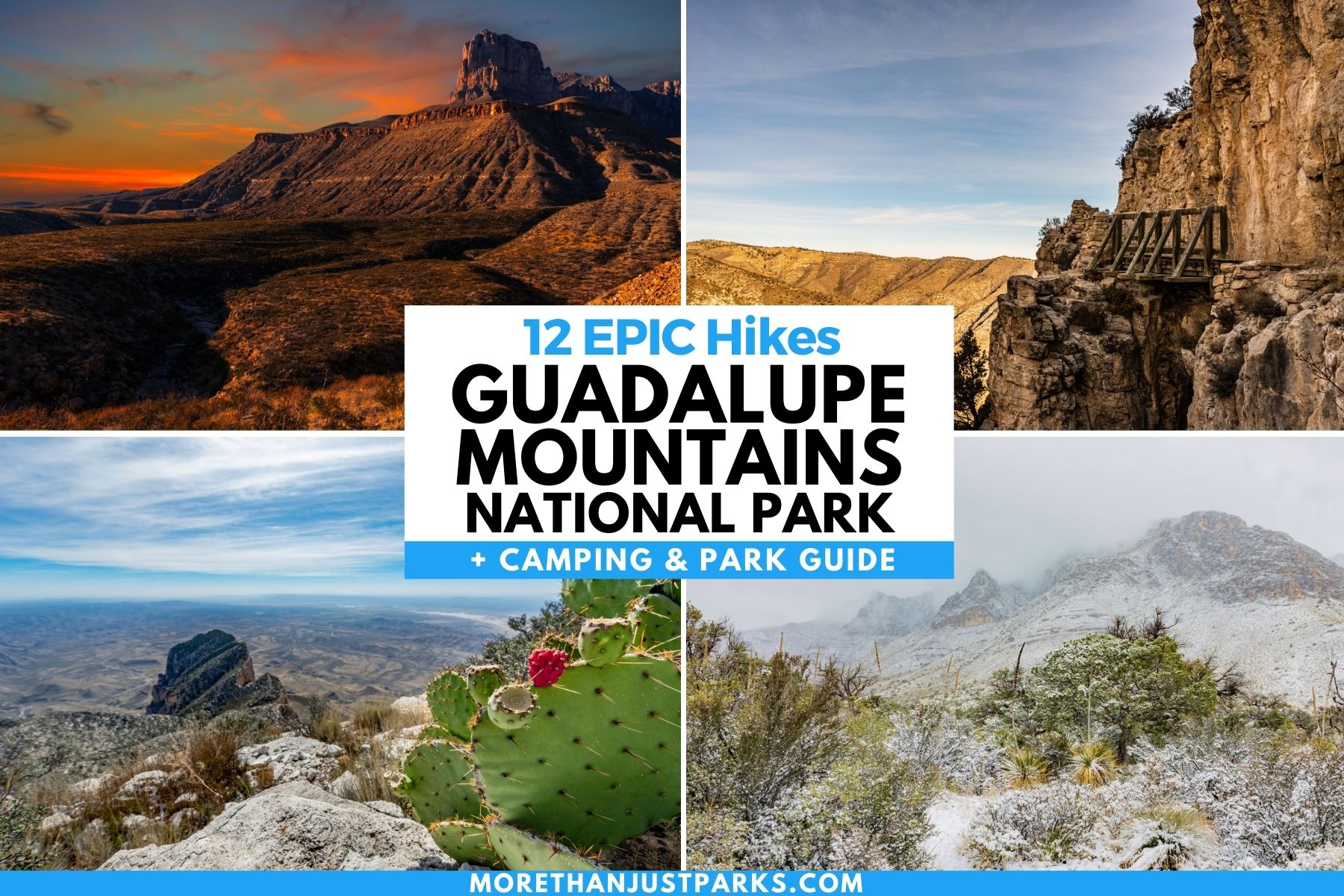
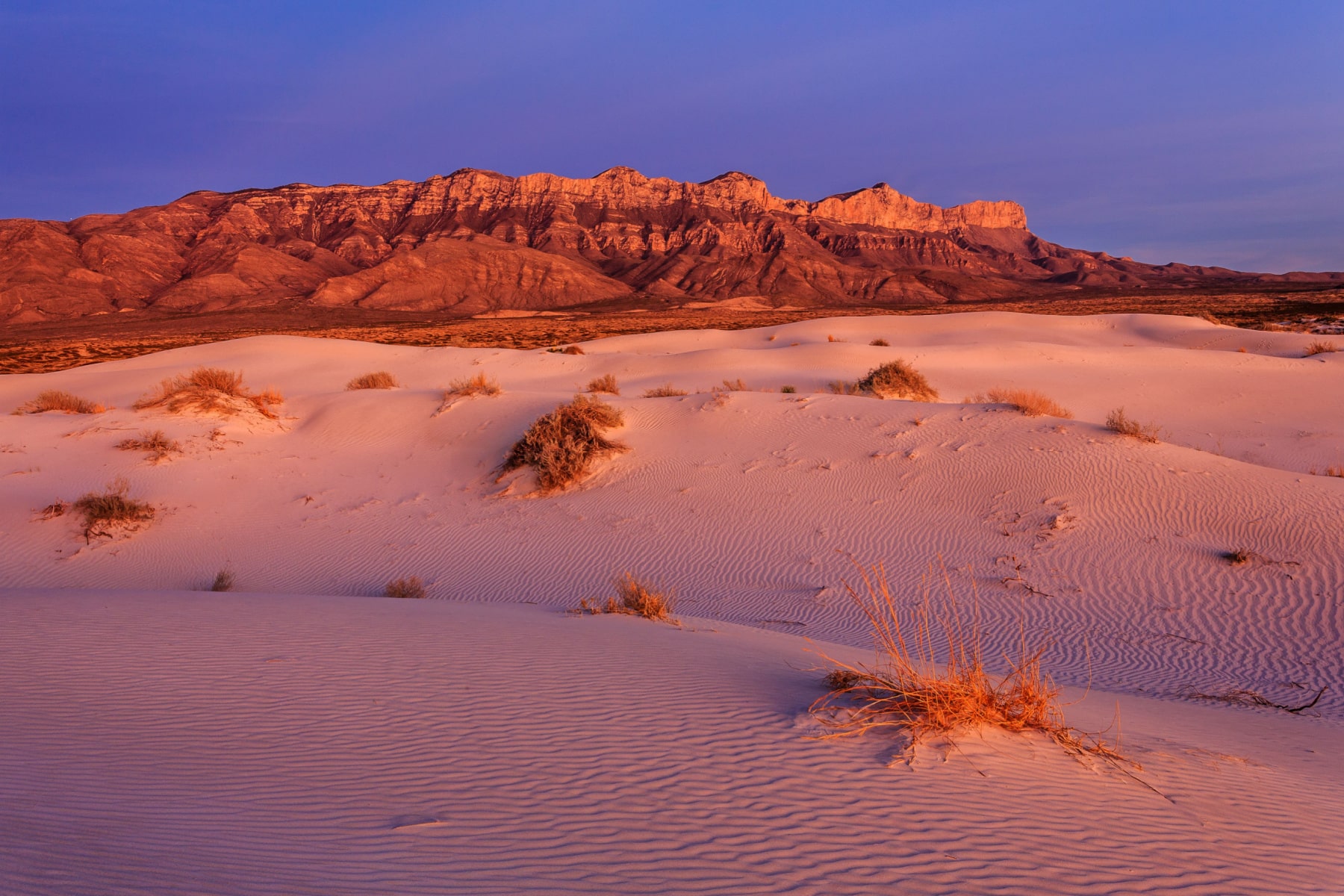
Tucked away in the far western corner of the Lone Star State, Guadalupe Mountains National Park is one of the most underrated national parks in the entire system. We’re talking about a place where the highest point in Texas rises 8,749 feet into the sky, where an ancient fossil reef from a 265-million-year-old sea sits exposed for all to see, and where one canyon turns so brilliant in fall that people drive hundreds of miles just to see it.
And yet, fewer than 250,000 people visit each year. For context, that’s about what Great Smoky Mountains gets in a single busy weekend.
We think that’s a shame. But honestly? It’s also part of the magic. When you hike here, you’ll have the trails mostly to yourself. When you camp here, you’ll see more stars than you thought existed. And when you stand on top of Guadalupe Peak, surveying the vast Chihuahuan Desert stretching to the horizon in every direction, you’ll understand why we consider this one of Texas’s most extraordinary national parks.
Love Guadalupe Mountains? It's one of 117 threatened public lands destinations we're tracking. Get the free briefing.
Here’s everything you need to know to plan a sensational trip to Guadalupe Mountains National Park.
What Makes Guadalupe Mountains So Special
Let’s start with the geology, because it’s truly extraordinary. The mountains you see today are actually the remains of a massive Permian-age fossil reef, the most extensive exposed fossil reef on Earth. About 265 million years ago, this entire area was submerged beneath a tropical sea. Over millions of years, sponges, algae, and other marine organisms built up a massive reef system. When the sea eventually evaporated, the reef was buried. Then, roughly 20 million years ago, tectonic forces pushed it back up to the surface.
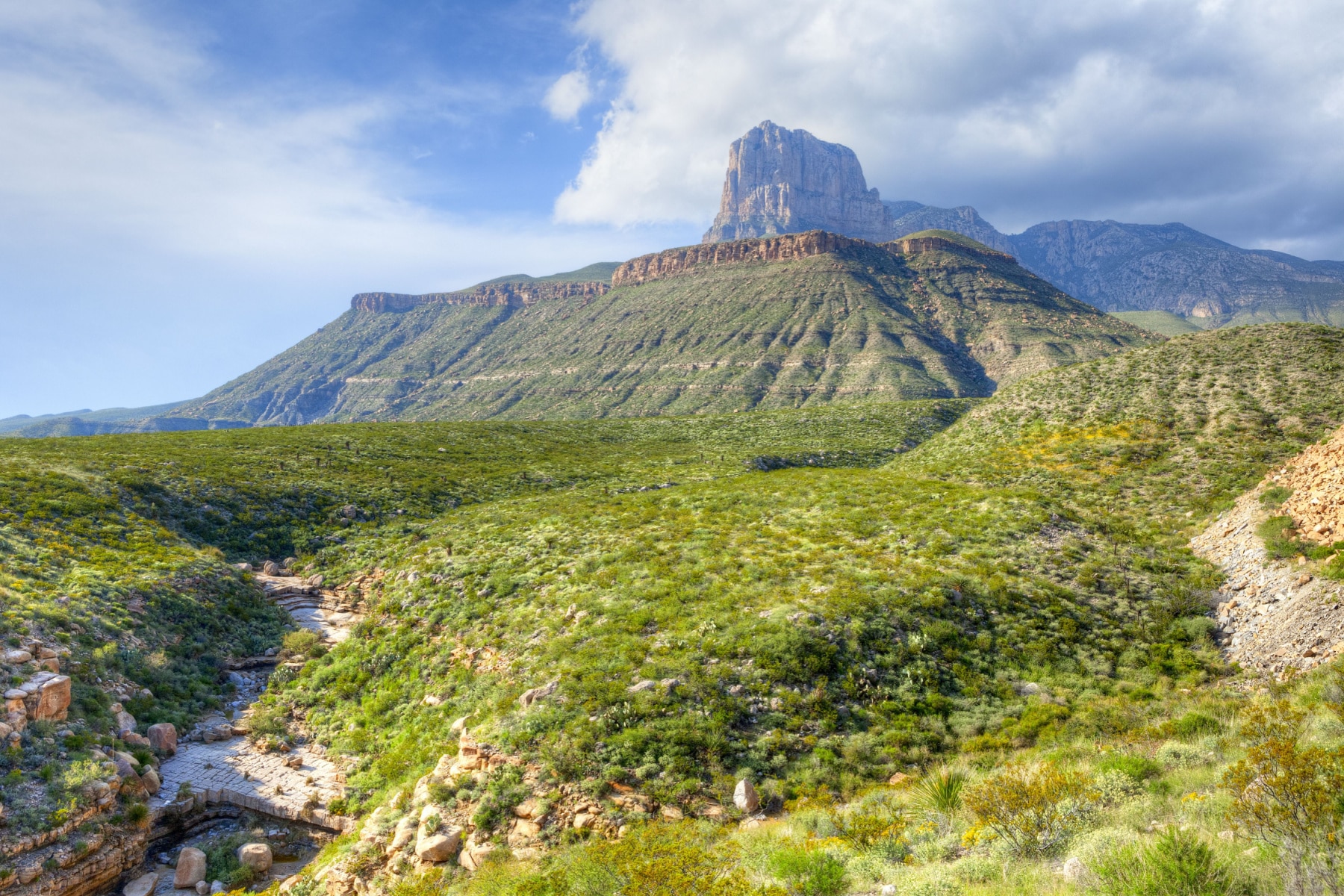
What you’re looking at when you gaze up at El Capitan, that iconic 1,000-foot limestone cliff that serves as the park’s signature landmark, is literally an ancient sea bed thrust into the sky. If that doesn’t blow your mind, we don’t know what will.
But the park isn’t just a geology lesson. The Guadalupe Mountains sit at a biological crossroads where the Chihuahuan Desert, the Rocky Mountains, and the Great Plains all converge. That overlap produces an incredible range of habitats, from baking desert lowlands to cool, forested highlands with Douglas fir and ponderosa pine. It’s a place where you can start a hike surrounded by prickly pear cactus and finish it standing among conifers in a mountaintop forest.
Best Hikes in Guadalupe Mountains National Park
Hiking is the main event here, and the trails are absolutely sensational. For a deeper look at every trail option, check out our full guide to the best hikes in Guadalupe Mountains National Park. But here are the ones we think you absolutely cannot miss.
Guadalupe Peak Trail
Distance: 8.4 miles round trip | Elevation Gain: 3,000 feet | Difficulty: Strenuous
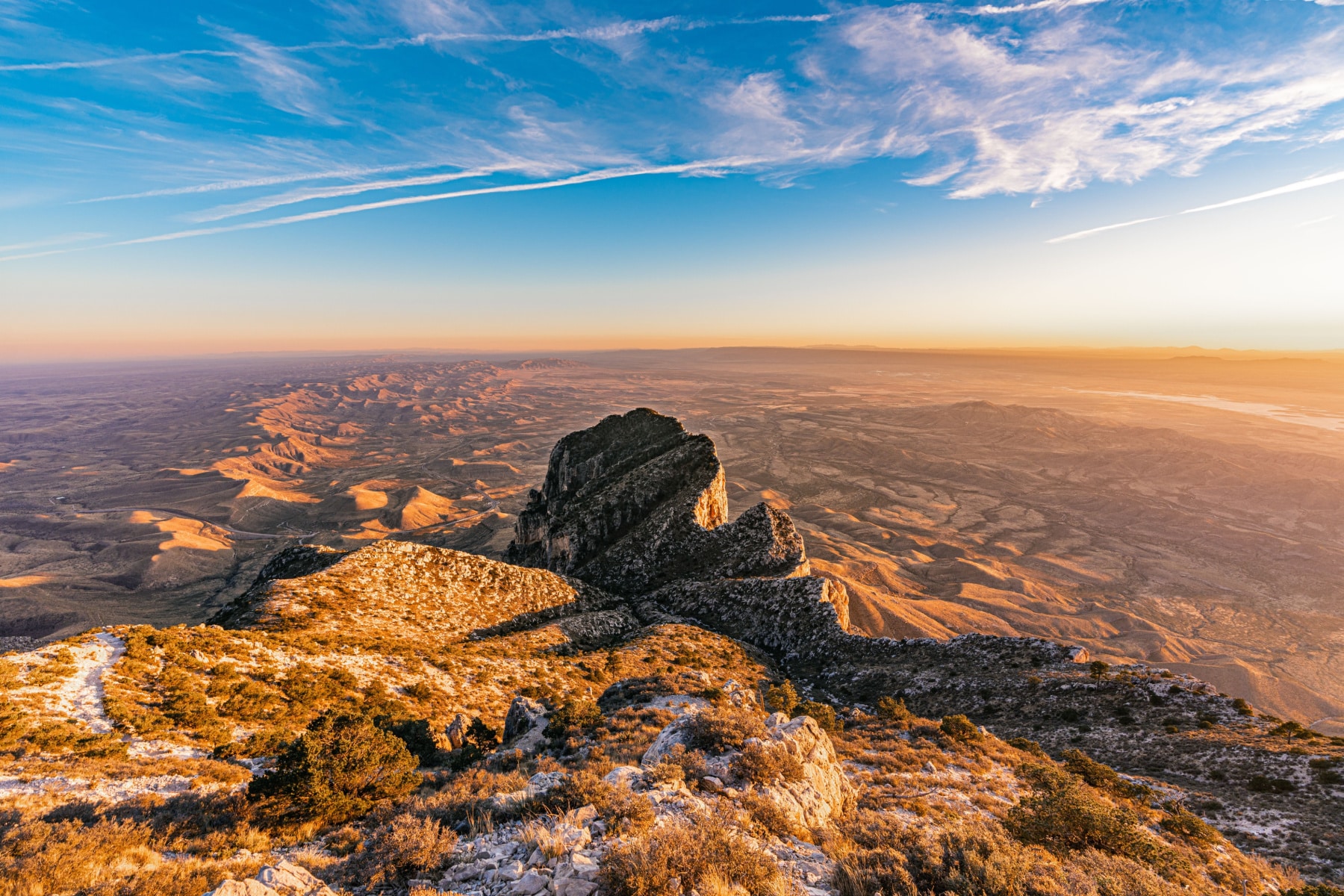
This is the big one. The Guadalupe Peak Trail takes you to the summit of the highest point in Texas at 8,749 feet, and the views from the top are worth every switchback. On a clear day, you can see over 100 miles in every direction across the desert floor. The trail is steep and relentless, gaining 3,000 feet over just 4.2 miles, but it’s well-maintained with switchbacks the entire way. Plan on 6 to 8 hours for the round trip, start early in the morning, and bring plenty of water. At least 2 liters per person, ideally 3.
McKittrick Canyon Trail
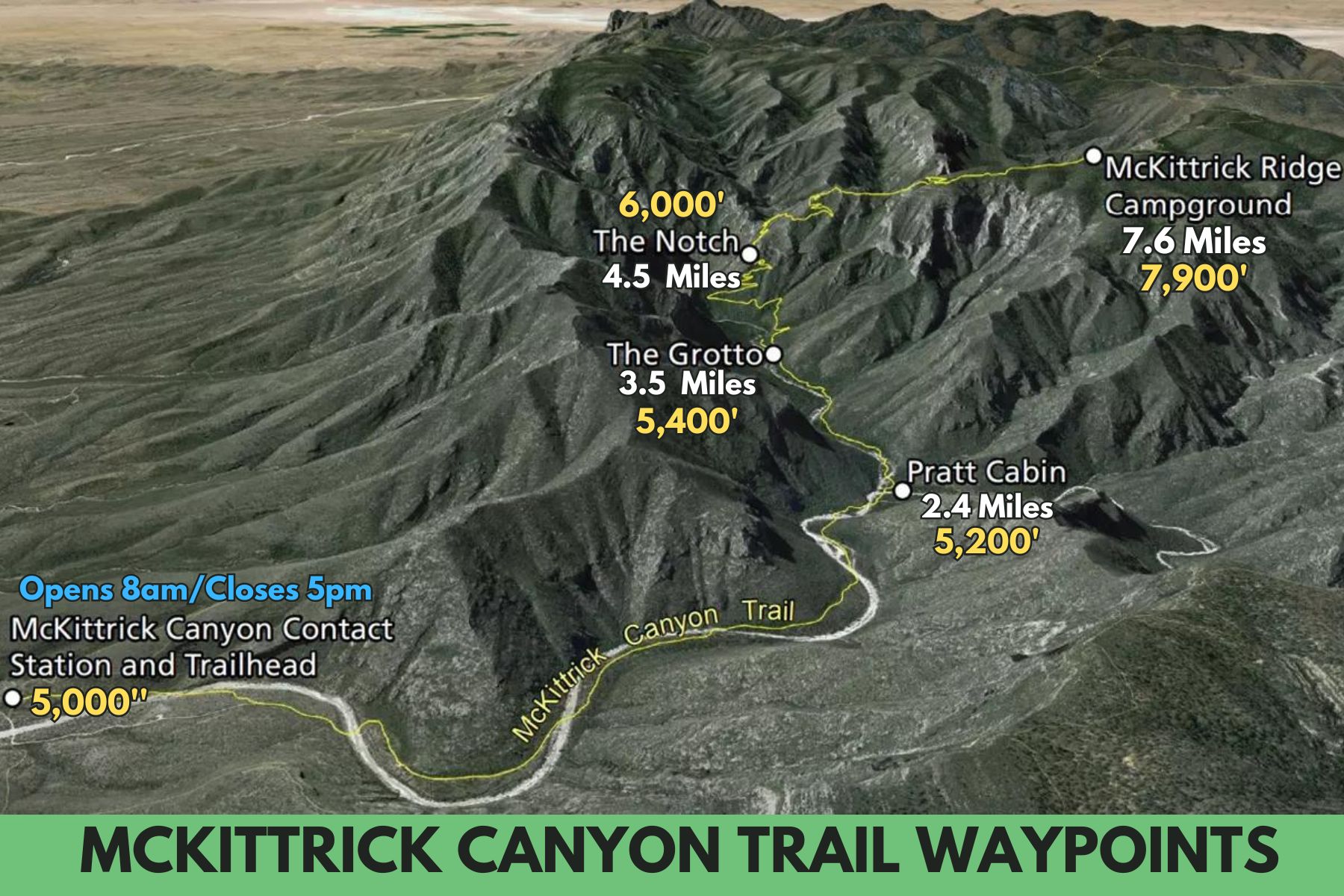
Distance: Up to 6.8 miles round trip (to the Grotto) | Elevation Gain: 600-1,500 feet | Difficulty: Easy to Moderate
We’ll say it plainly. McKittrick Canyon might be the most beautiful place in all of Texas. During late October and early November, the canyon explodes with fall foliage as bigtooth maples turn brilliant shades of orange, red, and gold against the limestone canyon walls. It’s spectacular in a way that rivals anything you’d find in New England, and we’re not exaggerating.
Even outside of fall, McKittrick Canyon is sensational. The trail follows a clear, spring-fed stream through a lush riparian corridor that feels completely out of place in the desert. You can hike as far as you’d like. The Pratt Cabin at 2.4 miles makes a great turnaround for families, while the Grotto at 3.4 miles offers the most dramatic canyon scenery. Note that the canyon access road closes at sunset, so plan accordingly.
Devil’s Hall Trail
Distance: 4.2 miles round trip | Elevation Gain: 560 feet | Difficulty: Moderate
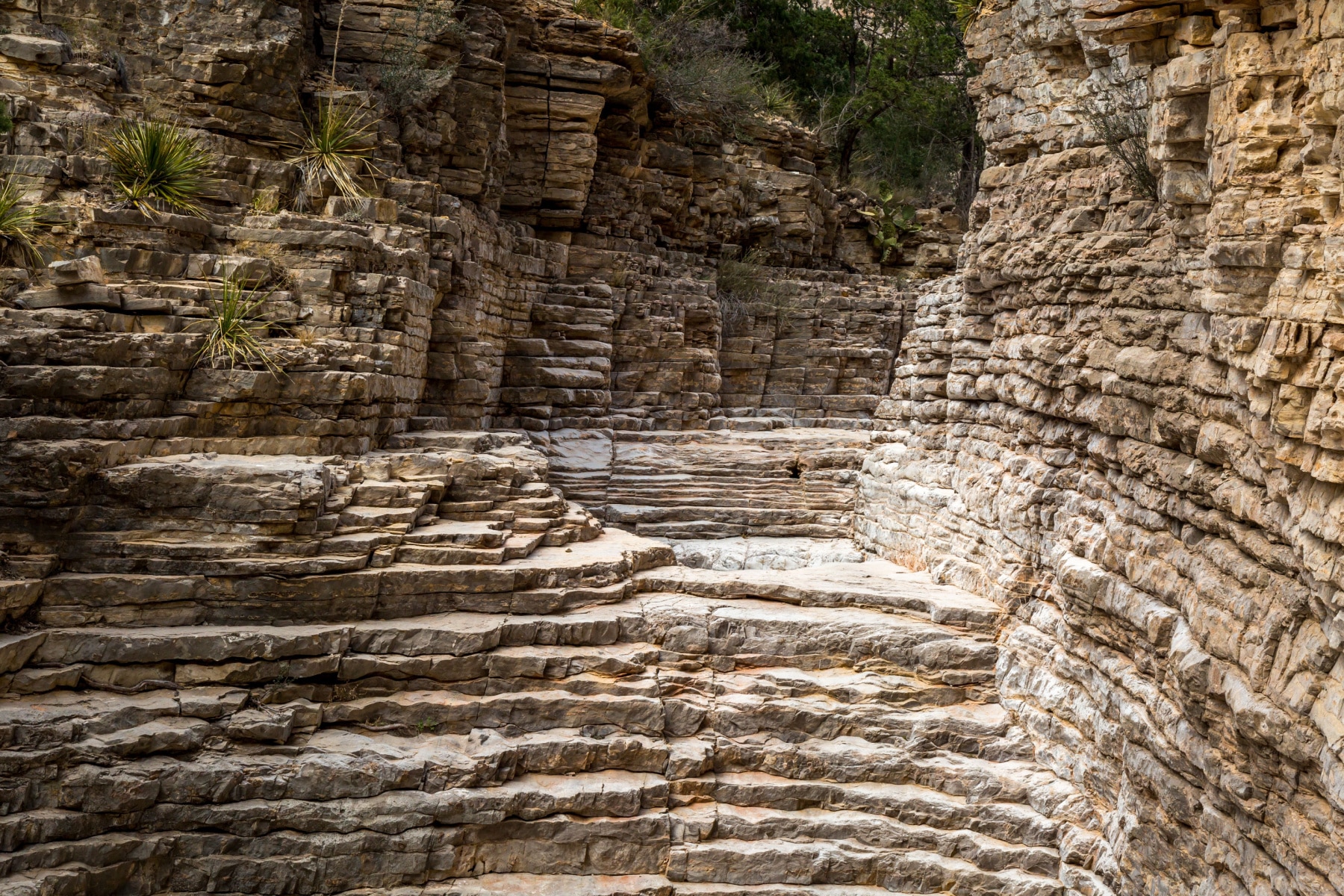
Devil’s Hall is one of our favorite short hikes in the park. The trail follows a dry wash through Pine Spring Canyon before narrowing dramatically into a natural rock corridor with towering limestone walls on both sides. The “hall” itself is a narrow slot canyon formation with a natural stone “staircase” that feels like something out of an adventure film. This is a fantastic option if you don’t have a full day for the Guadalupe Peak summit but still want something memorable.
El Capitan Trail
Distance: 11.3 miles round trip | Elevation Gain: 1,500 feet | Difficulty: Moderate to Strenuous
This trail wraps around the base of the park’s most iconic landmark, the massive El Capitan limestone cliff that has served as a navigation beacon for travelers for centuries. The Butterfield Overland Mail stagecoach route ran right past it in the 1850s. The trail traverses open desert with very little shade, so it’s best done in cooler months. But the views of El Capitan’s sheer 1,000-foot face up close are extraordinary.
Wildlife in Guadalupe Mountains
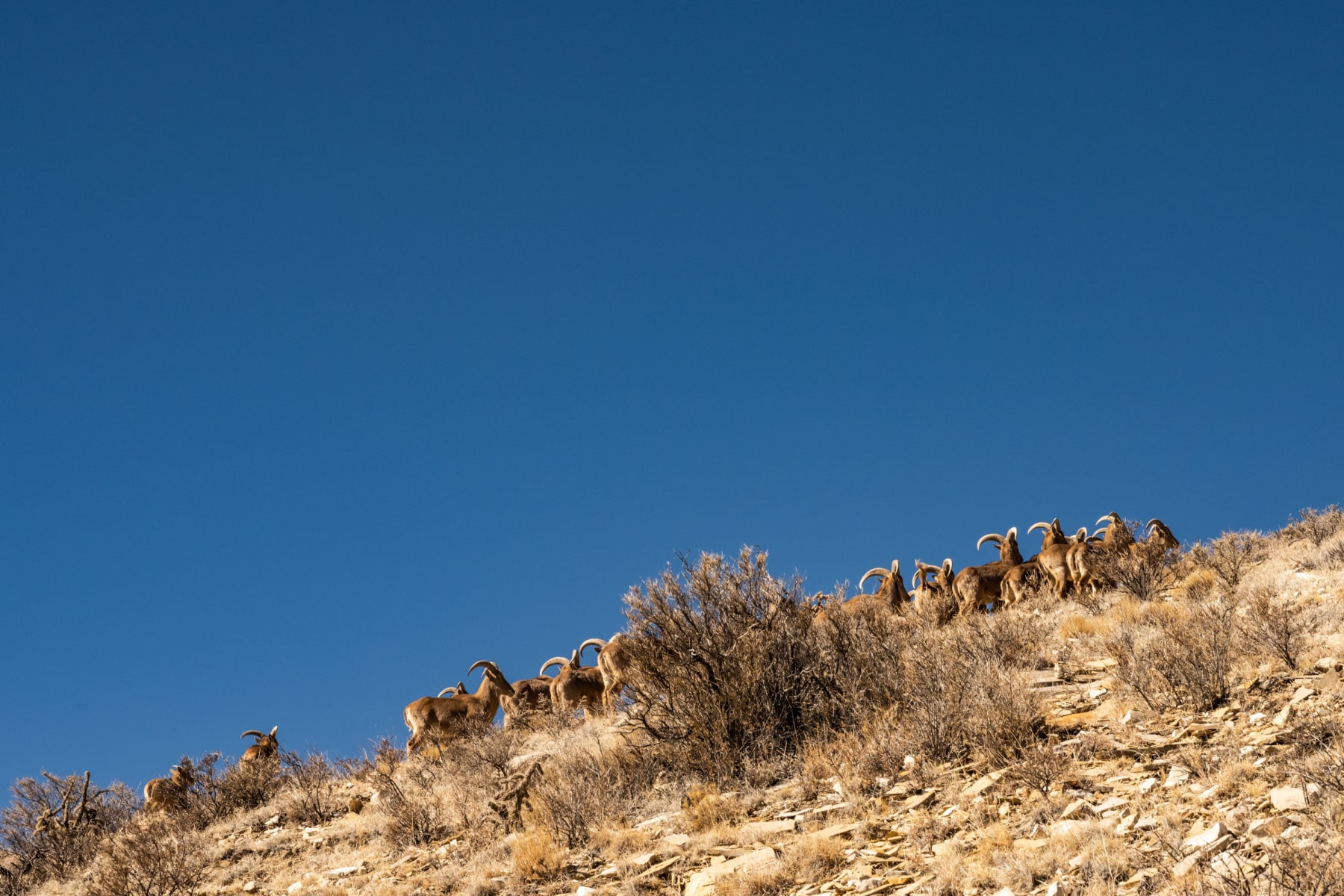
For a park that most people don’t think about, the wildlife here is surprisingly impressive. Elk were reintroduced to the Guadalupe Mountains in the 1920s after being hunted to local extinction, and today a healthy herd roams the high country. You’ll often hear them bugling during the fall rut if you’re camping at Dog Canyon. Mule deer are everywhere and practically guaranteed on any hike.
The park is also home to mountain lions, though sightings are rare. More visible are the golden eagles that soar above the ridgelines and the Montezuma quail that scuttle through the underbrush. Birders will be thrilled to know that over 300 species have been documented here, thanks to that convergence of ecosystems we mentioned earlier. Keep your eyes on the sky, and you might also spot zone-tailed hawks, peregrine falcons, or Scott’s orioles.
Best Time to Visit Guadalupe Mountains
We recommend visiting in spring (March through May) or fall (October through November). Spring brings wildflowers and comfortable temperatures, while fall delivers that legendary McKittrick Canyon foliage and the elk rut.
Summer can be brutally hot at lower elevations, with temperatures regularly hitting 100 degrees or more in the desert. The higher elevations stay cooler, but afternoon thunderstorms are common. Winter is hit or miss. Lower elevations are pleasant, but the peaks can see snow, ice, and bitter cold. We’ve been caught in conditions at the summit that felt more like Colorado than Texas.
And here’s something that catches almost every first-time visitor off guard. The wind. Guadalupe Mountains is one of the windiest places in the United States. Sustained winds of 40 to 60 mph are common, especially in spring, and gusts can exceed 80 mph. This isn’t a gentle breeze. This is the kind of wind that will knock you sideways on an exposed ridge and flatten your tent if it isn’t properly staked. Check the forecast before you commit to a summit hike, and always bring wind-resistant layers.

Practical Information for Your Visit
Entrance Fees
The entrance fee is $10 per person, valid for 7 days. There is no vehicle fee here like at most national parks. Children 15 and under are free. Your America the Beautiful annual pass ($80) covers entrance as well.
Camping
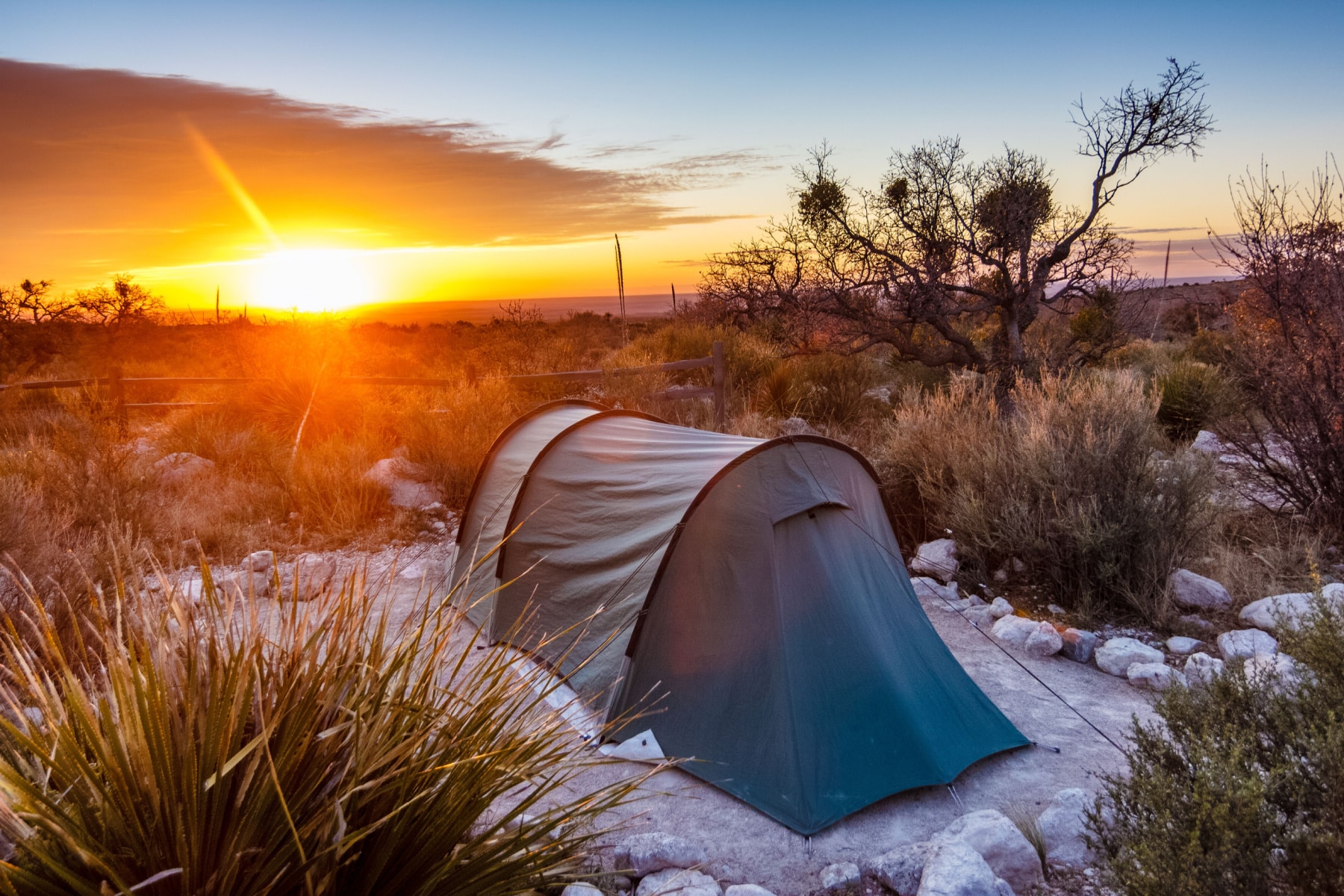
The park has two developed campgrounds. Pine Springs Campground (20 tent sites, 19 RV sites) sits near the main visitor center and trailheads for Guadalupe Peak and Devil’s Hall. Dog Canyon Campground (9 tent sites, 4 RV sites) is on the north side of the park and requires a long drive around through New Mexico to reach. Both are first-come, first-served and cost $15 per night. There are no hookups at either campground.
The park also has a network of 10 backcountry campsites for backpackers. Free permits are required and available at the Pine Springs Visitor Center.
Services and Supplies
This is critically important. There are no services inside the park. No gas stations, no restaurants, no stores, no showers. You need to arrive fully supplied with everything you’ll need for your visit, including all food, water, and fuel.
The closest town is Salt Flat, Texas, about 30 minutes west, which has limited services. Your best bet for full amenities is Carlsbad, New Mexico, about 55 miles to the northeast. If you’re coming from that direction, we’d suggest pairing your trip with a visit to Carlsbad Caverns National Park, which is only 40 miles away and makes for an extraordinary one-two punch.
Getting There
Guadalupe Mountains National Park is remote by any measure. The closest major airport is El Paso International, about 110 miles (roughly 2 hours) to the west. The park sits right along US Highway 62/180, so it’s easy to find once you’re in the area. Just know that you’ll be driving through some beautifully empty country to get here.
Our Top Tips for Guadalupe Mountains
- Start summit hikes before 8 AM. Afternoon thunderstorms and intensifying wind make late starts risky.
- Bring more water than you think you need. There is no water available on any trail in the park. We recommend a minimum of 3 liters per person for Guadalupe Peak.
- Pack wind layers for every hike. Even on calm days at the trailhead, the ridgelines and summit can be brutally windy.
- Time your visit to McKittrick Canyon carefully. Peak fall foliage typically hits in the last week of October through the first week of November. Call the visitor center for current conditions.
- Fill your gas tank before entering the park. The nearest gas stations are in White’s City or Carlsbad (NM) to the north, or Dell City to the west.
- Don’t skip the Permian Reef Geology Trail if you have time and strong legs. It’s a strenuous 8.4-mile round trip, but it takes you directly through the ancient reef with interpretive signs explaining what you’re seeing.
For more fascinating details about this park, be sure to check out our 10 facts about Guadalupe Mountains National Park.
Final Thoughts on Guadalupe Mountains National Park
Guadalupe Mountains National Park isn’t the easiest park to get to, and it doesn’t offer the creature comforts you’ll find at places like Yellowstone or Zion. But that’s exactly what makes it so special. This is a park for people who want to earn their views, who want to feel the rawness of the desert and the mountain wind, and who appreciate the extraordinary story written in 265-million-year-old stone.
Whether you’re standing on the summit of Guadalupe Peak looking out over the vastness of west Texas, watching bigtooth maples blaze with color in McKittrick Canyon, or simply sitting at your campsite as the Milky Way arcs overhead in some of the darkest skies you’ve ever seen, this park will leave an impression on you that lasts.
We think it’s one of Texas’s greatest natural treasures, and we’re fairly certain that once you visit, you’ll agree.
That’s a wrap folks!
What to Bring to Guadalupe Mountains
Gear we recommend for Guadalupe Mountains. Affiliate links support our work at no cost to you.
More Than Just Parks may earn a small commission from purchases made through these links, at no extra cost to you. We only recommend gear we would actually use.
Affiliate disclosure: Some links on this page earn us a small commission at no extra cost to you. We only recommend gear we actually use.


