


Gateway Arch National Park is 91 acres. That makes it the smallest national park in America by a wide margin. And yet this narrow strip of Mississippi riverfront in downtown St. Louis, Missouri packs more into its footprint than parks 50 times its size. A 630-foot stainless steel catenary arch. An underground museum that cost $380 million to renovate. A federal courthouse where one of the most important legal cases in American history was tried. All of it walkable in an afternoon.
I’ll be honest. When Gateway Arch was redesignated from a national monument to a national park in 2018, I thought it was a stretch. A man-made structure in the middle of a city? But after spending time here, riding the tram to the top, and watching the light change over the Mississippi from the observation windows, I changed my mind. This place earns its title.
The Arch Itself
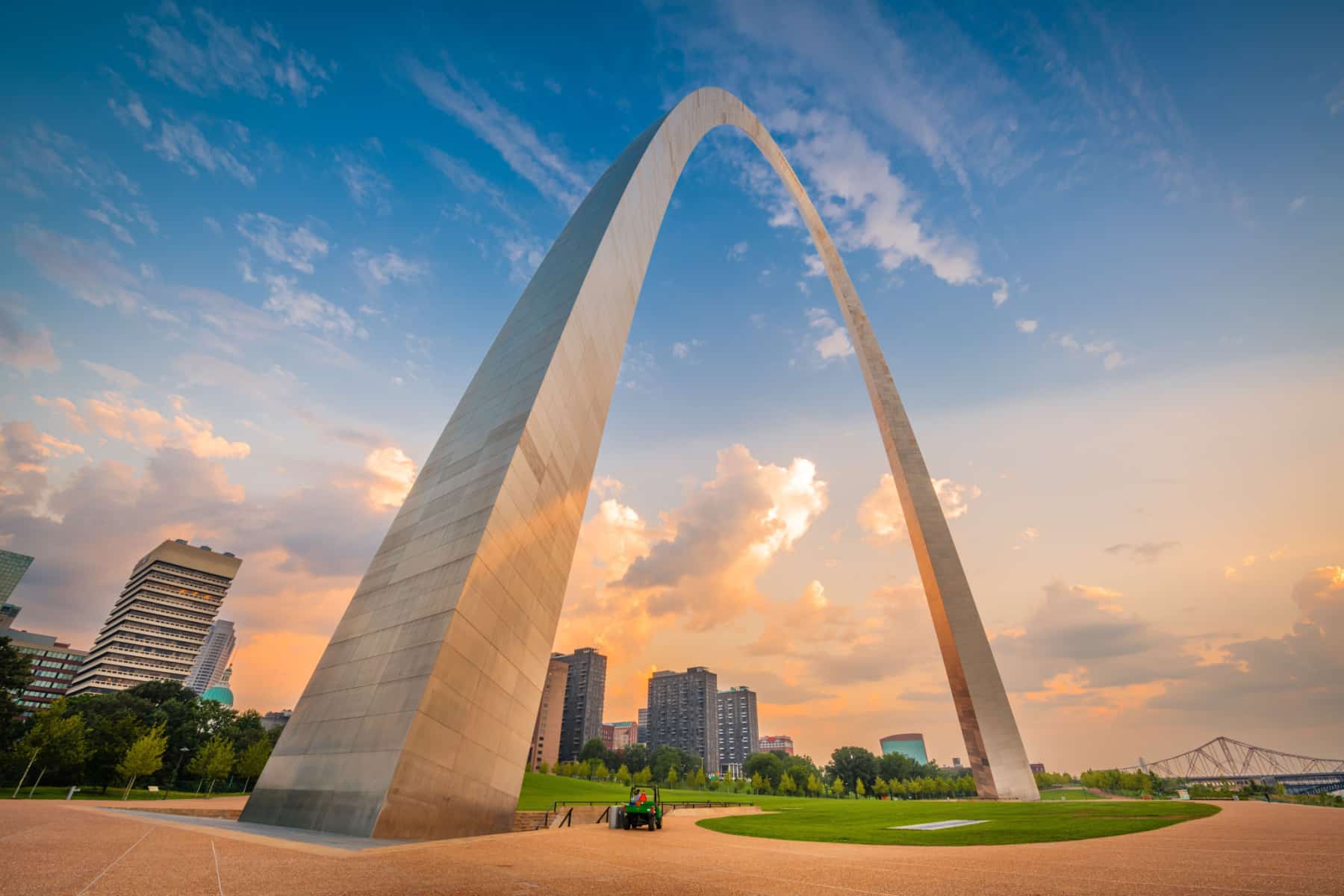
Finnish-American architect Eero Saarinen designed the Gateway Arch in 1947. He beat out 171 other entries in a national competition. Construction started in 1963 and the final piece was set in place on October 28, 1965. The whole structure is a weighted catenary curve, meaning it’s the same shape a chain makes when you hold both ends and let it hang. Flip that upside down and you’ve got the Arch.
Some numbers worth knowing. The Arch stands 630 feet tall and 630 feet wide at its base. It’s clad in stainless steel, which is why it shifts color throughout the day. Morning light turns it warm silver. Midday sun makes it almost white. And at sunset it glows amber against the sky. The legs are equilateral triangles at the base (54 feet per side) that taper to 17 feet at the top.
Love Gateway Arch? It's one of 117 threatened public lands destinations we're tracking. Get the free briefing.
Stand underneath it and look straight up. It’s disorienting in the best way. The curve plays tricks on your depth perception and makes the whole thing feel like it shouldn’t be standing. But it’s been standing for over 60 years now, through every storm the Mississippi Valley can throw at it.
Riding the Tram to the Top
This is the main event, and you need to plan for it. Tram tickets are timed entry and they sell out, especially between May and September. Book them as soon as you know your dates. Adult tickets run $12 to $16 depending on the season. Kids under 15 get in free with a paying adult. You can buy tickets through the Gateway Arch website or the NPS concessioner site.
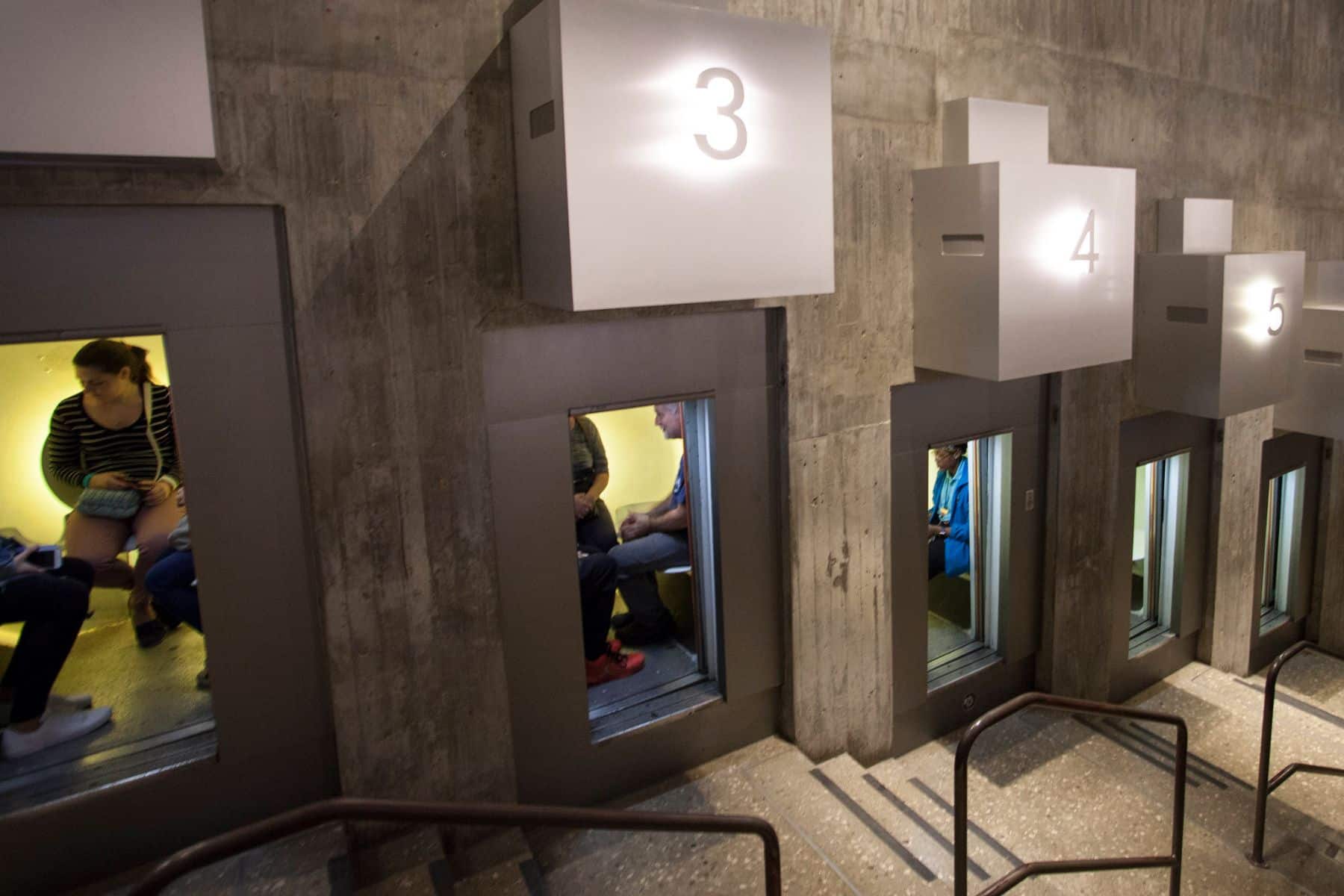
The tram ride itself is an experience. You climb into a small egg-shaped capsule that seats five people. These pods were designed in the 1960s and they feel like it. They’re essentially modified Ferris wheel cars that rotate inside the legs of the Arch as it curves. Each capsule is about 5 feet tall and 7 feet wide. If you’re claustrophobic, this will test you. The ride takes 4 minutes going up and 3 minutes coming down.
At the top, you step out into a narrow observation deck with small rectangular windows on both sides. East-facing windows look over the Mississippi River into Illinois. West-facing windows give you the St. Louis skyline, Busch Stadium, and the city stretching out to the horizon. On a clear day you can see 30 miles in either direction.
They give you about 10 minutes at the top before loading you back into a capsule for the ride down. That’s plenty of time to take in the view and grab some photos, though the windows are small and scratched from decades of tourist fingers. Not ideal for photography, but the view itself is worth the ticket.

Book the first tram slot of the day. The 9 AM or 10 AM windows have the shortest security lines and the fewest people at the top. The observation deck is narrow, and with a full tram load it gets cramped. Early morning also gives you the best eastward light through the windows.
Museum at the Gateway Arch
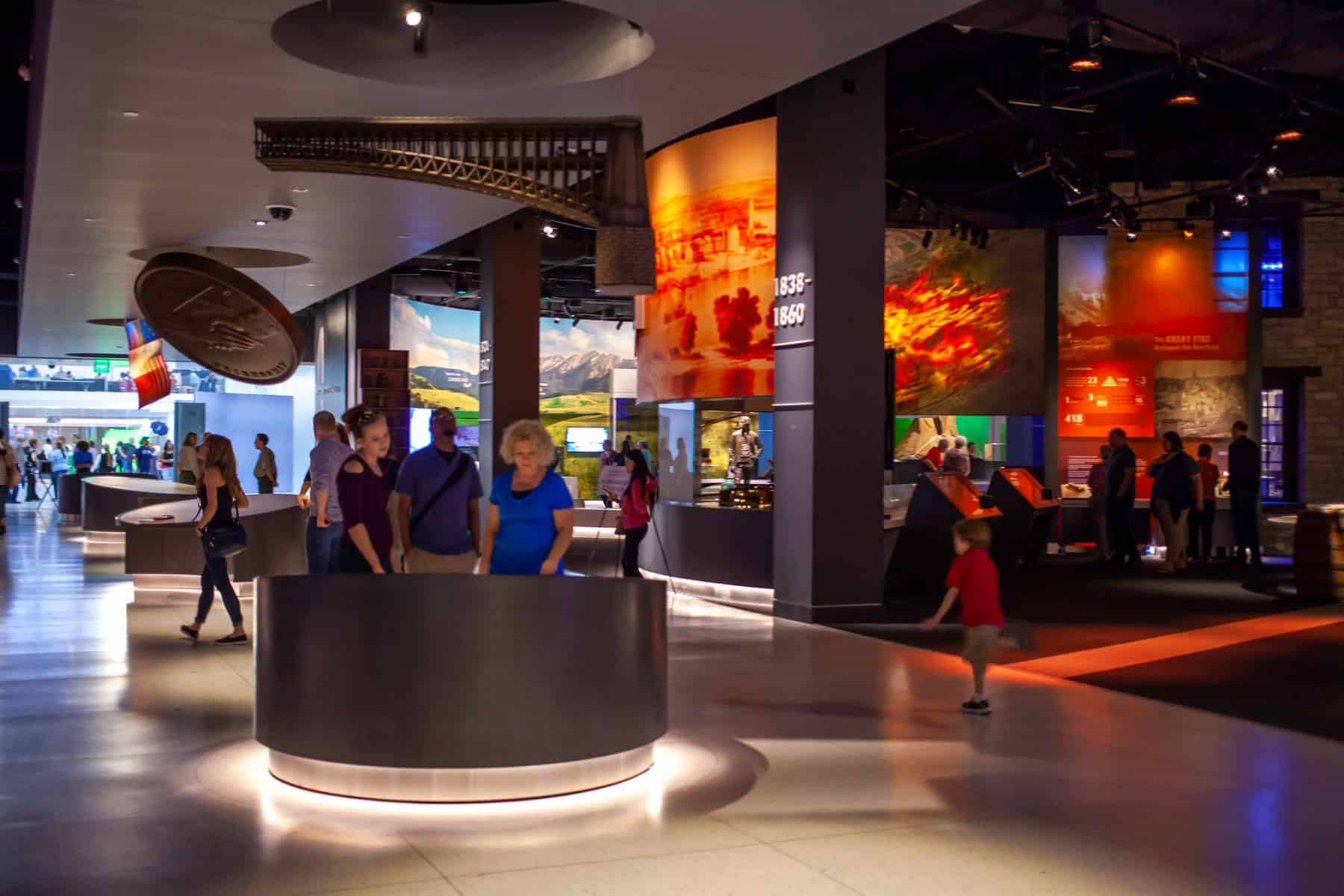
The museum sits underground, directly beneath the Arch. It was completely rebuilt and reopened in 2018 as part of a $380 million renovation of the entire park (called CityArchRiver). The old Museum of Westward Expansion was fine but dated. The new version is genuinely excellent.
Six exhibit galleries walk you through the story of westward expansion, the construction of the Arch, Native American history in the region, and the complex (and often ugly) realities of Manifest Destiny. It’s more honest than you’d expect from a museum that sits inside a monument to westward expansion. They don’t shy away from the displacement and violence that came with it.
The construction exhibit is the highlight. Original photos and film footage show workers hundreds of feet in the air on scaffolding that looks like it was held together with optimism. No one died during the Arch’s construction, which seems impossible when you see the conditions they worked in.
Museum admission is free. You’ll go through airport-style security to enter (allow 15-30 minutes during peak season), but once you’re inside you can spend as long as you want. Budget about 45 minutes to an hour.
Old Courthouse
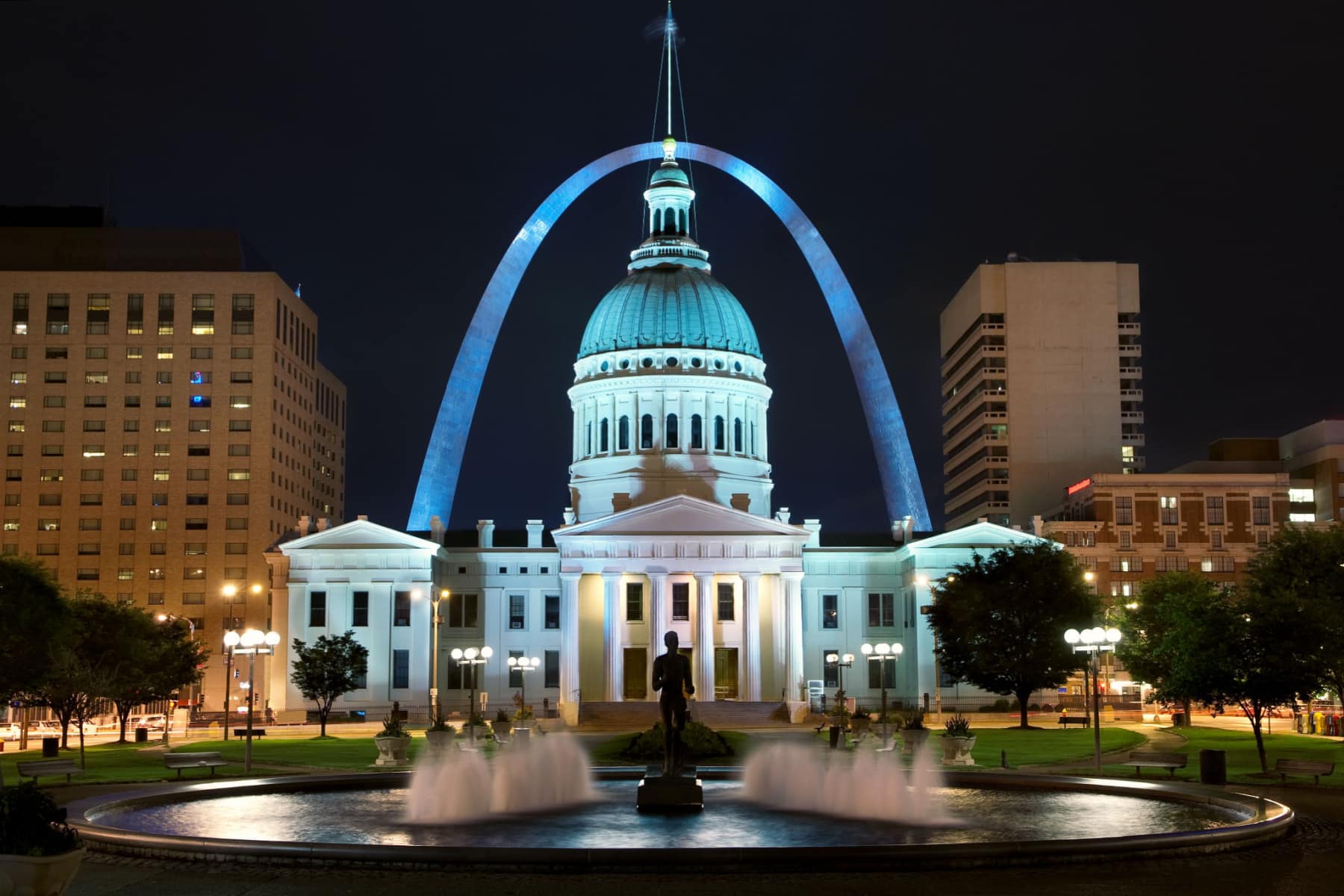
Two blocks west of the Arch, the Old Courthouse is part of Gateway Arch National Park and it’s completely free to visit. This is where Dred Scott and his wife Harriet sued for their freedom in 1846 and 1847. The case eventually reached the Supreme Court, which ruled against them in 1857 in one of the most infamous decisions in American legal history. That ruling helped push the country toward the Civil War.
The building itself is beautiful. Restored courtrooms on the upper floors look exactly as they did in the 1850s, down to the wallpaper and gas light fixtures. The rotunda dome is painted with murals depicting St. Louis history. It’s one of the best free historic sites in Missouri and most visitors walk right past it to get to the Arch.
The Riverfront and Mississippi River
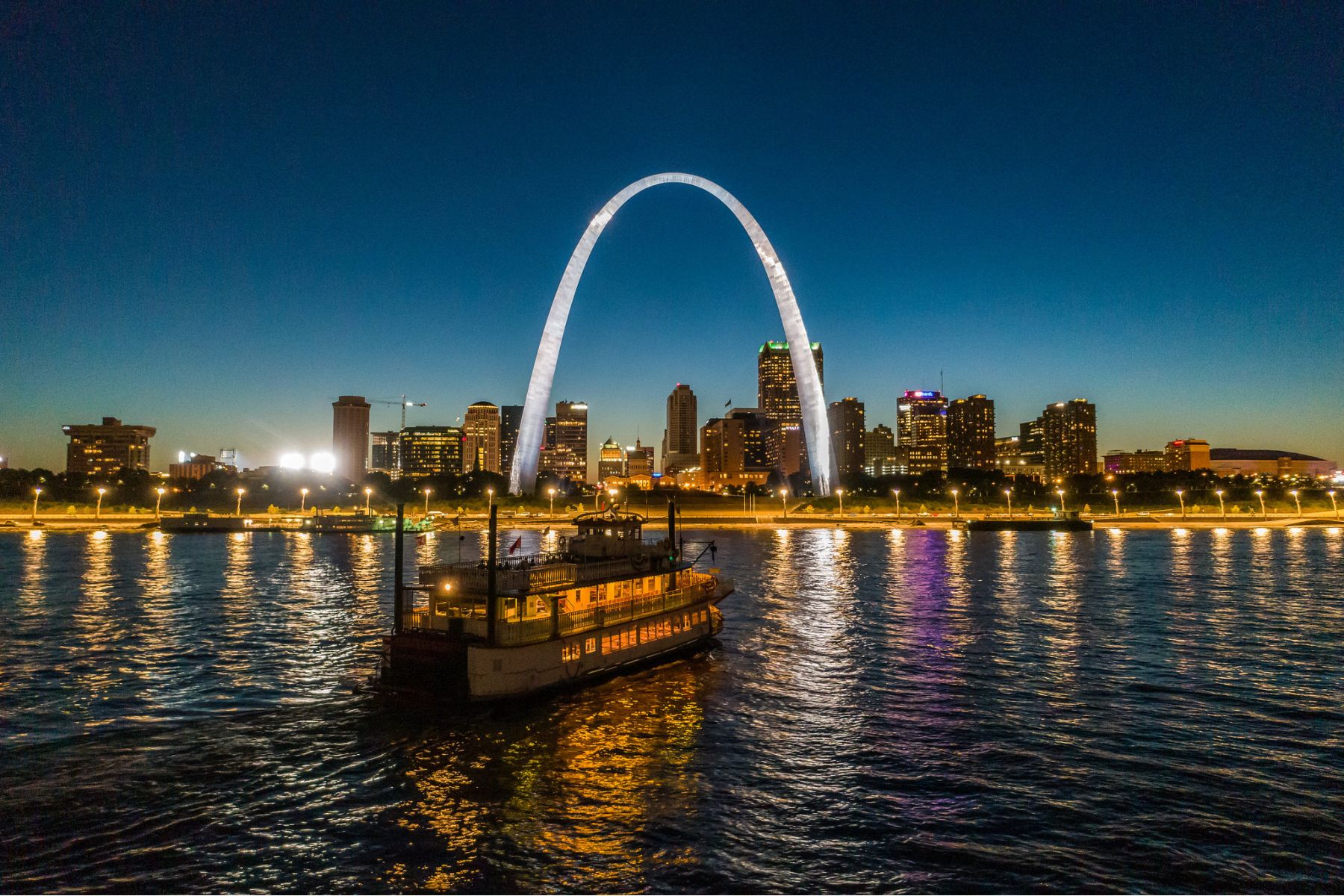
The park’s east side sits right on the Mississippi River, and the riverfront walkways were completely rebuilt during the 2018 renovation. Wide stone steps lead down to the water. Riverboat cruises run from March through November (tickets are separate from tram tickets, around $20-25 for adults). Even if you skip the cruise, walking the riverfront is one of the better things to do here.
The scale of the Mississippi hits differently when you’re standing right next to it. This is not some gentle creek. Barges the length of football fields push through the current, and the river itself is over half a mile wide at this point. Watching it move while the Arch towers behind you is the kind of scene that makes you understand why they put a 630-foot monument here.
Photography Tips
The best photograph of the Gateway Arch is not taken from inside the park. It’s taken from across the river on the East St. Louis side, at Malcolm W. Martin Memorial Park in Illinois. From there you get the full Arch framed against the St. Louis skyline with the river in the foreground. Sunrise is the money shot. The Arch faces east-west, so morning light hits the eastern face directly and the reflection off the stainless steel is extraordinary.
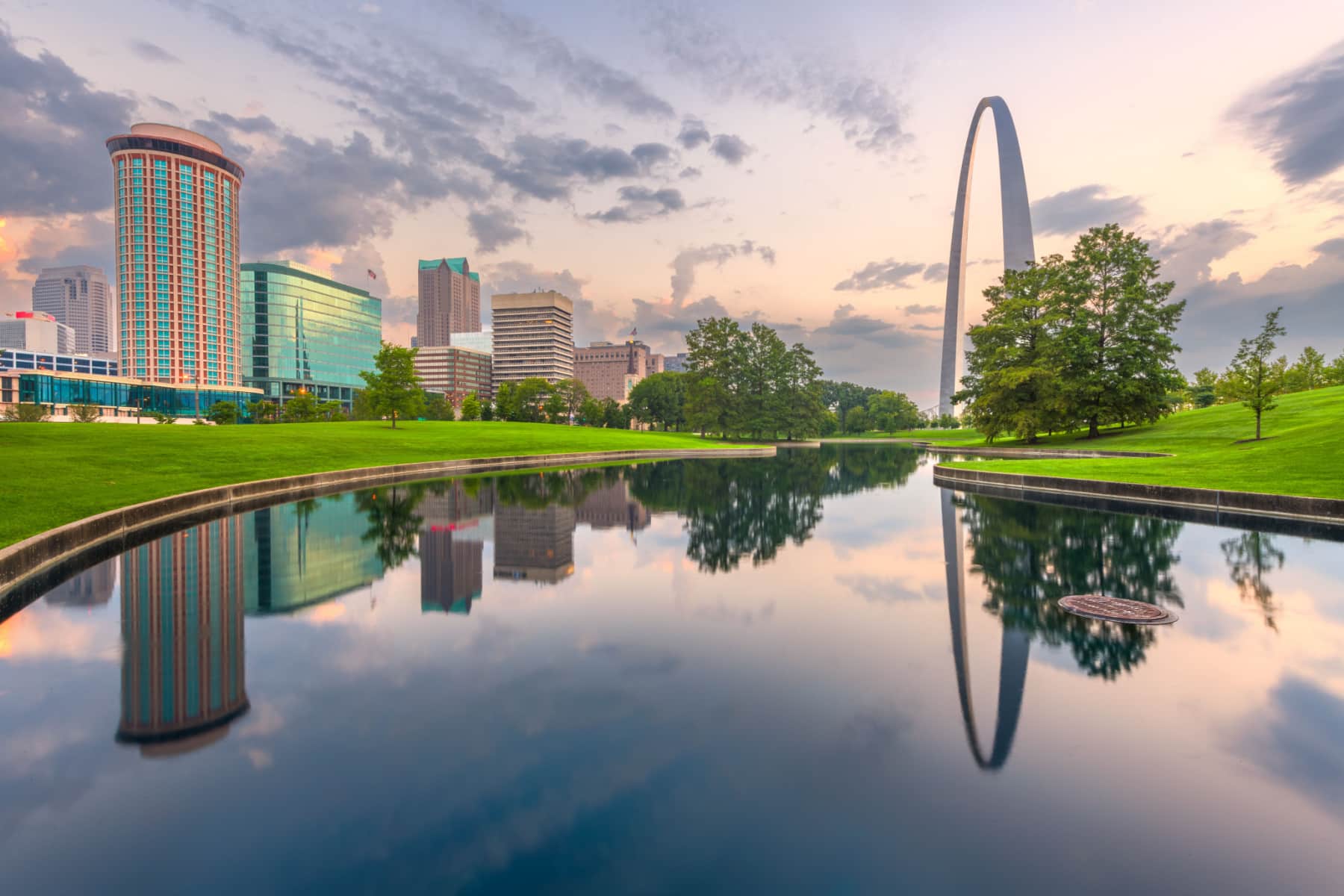
For reflection shots, the park’s north and south reflection ponds are your best bet. Go early morning when there’s no wind. A wide-angle lens at ground level with the Arch reflected in the water is one of the most iconic compositions you can get here. Sunset works too, but the ponds are on the west side of the Arch, so you’ll be shooting into the light.
From inside the park, shoot from directly underneath looking straight up. Use the widest lens you have. The symmetry of the curve against the sky is striking, and it’s a perspective most people don’t think to capture. The Eads Bridge (just north of the park) also gives a solid angle, especially at blue hour when the Arch and bridge are both lit.
Skip the observation deck windows for serious photography. They’re small, scratched, and reflective. Your phone will do fine for a memory up there, but don’t plan on getting a portfolio shot through those windows.
How Long to Spend at Gateway Arch National Park
Half a day. That’s all you need to see everything in the park. Here’s what a solid visit looks like.
Arrive early for a 9 or 10 AM tram ride. Go through security (15-30 minutes), ride to the top (4 minutes up, 3 minutes down, 10 minutes at the summit). Walk through the museum (45-60 minutes). Head to the Old Courthouse (30 minutes). Walk the riverfront and grounds (30 minutes). You’re done by early afternoon with time to spare.
That leaves you the rest of the day for St. Louis itself, which is an underrated city. The City Museum (a giant art installation disguised as a children’s museum, and not part of the national park) is a 10-minute walk north. Forest Park has the free St. Louis Zoo, the St. Louis Art Museum, and the Missouri History Museum. The Hill neighborhood has some of the best Italian food between New York and Chicago. And if you’re a baseball fan, Busch Stadium is literally across the street from the park.
If you’re building a larger trip around this, Gateway Arch pairs well with a drive through the Missouri national parks circuit. You could combine it with the historic sites across the state for a solid 3-4 day Missouri trip.
Practical Information
Cost. The park grounds, museum, and Old Courthouse are all free. Tram ride tickets are $12-16 for adults depending on season. Kids under 15 ride free with a paying adult. Riverboat cruises are $20-25 for adults. Your America the Beautiful Pass gets you a discount on the tram.
Parking. The NPS does not operate a parking lot. The closest option is the 200 S. Broadway parking garage, which is shared with the public and Busch Stadium event traffic. On game days, prices spike and availability drops. Book parking in advance through iPark. Street parking in downtown St. Louis is hit or miss, but doable on weekday mornings.
Best time to visit. Spring (April-May) and fall (September-October) are ideal. Summer is hot and humid with temperatures regularly hitting the mid-90s, and tram tickets sell out faster. Winter is cold but uncrowded, and tram tickets are cheaper. The park grounds are open year-round.
Hours. Summer hours (Memorial Day to Labor Day) are 9 AM to 10 PM for the grounds, with the last tram ride at 6 PM. Winter hours are 9 AM to 6 PM with the last tram at 5 PM. The Old Courthouse keeps its own hours, typically 8 AM to 4:30 PM.
Security. You’ll go through TSA-style security to enter the underground museum and tram loading area. No weapons, no large bags. Leave the oversized backpack in your car.
Is Gateway Arch National Park Worth Visiting?
Yes. I know the instinct is to dismiss it. It’s 91 acres, it’s in a city, and the centerpiece is a man-made structure. It doesn’t have the scale of the big western parks. But that’s not really the point.
The Gateway Arch is one of the most striking pieces of architecture in the United States. The museum is legitimately excellent. The Old Courthouse carries genuine historical weight. And standing on the riverfront watching the Mississippi roll past while a 630-foot steel curve towers above you is a moment that sticks with you.
If you’re in St. Louis, there’s no reason to skip it. If you’re not in St. Louis, this park alone probably won’t justify the trip. But combine it with a few days exploring the city and the surrounding region, and you’ve got something special. The facts behind the Arch are as impressive as the structure itself. Don’t sleep on it.
What to Bring to Gateway Arch
Gear we recommend for Gateway Arch. Affiliate links support our work at no cost to you.
More Than Just Parks may earn a small commission from purchases made through these links, at no extra cost to you. We only recommend gear we would actually use.
Affiliate disclosure: Some links on this page earn us a small commission at no extra cost to you. We only recommend gear we actually use.


