
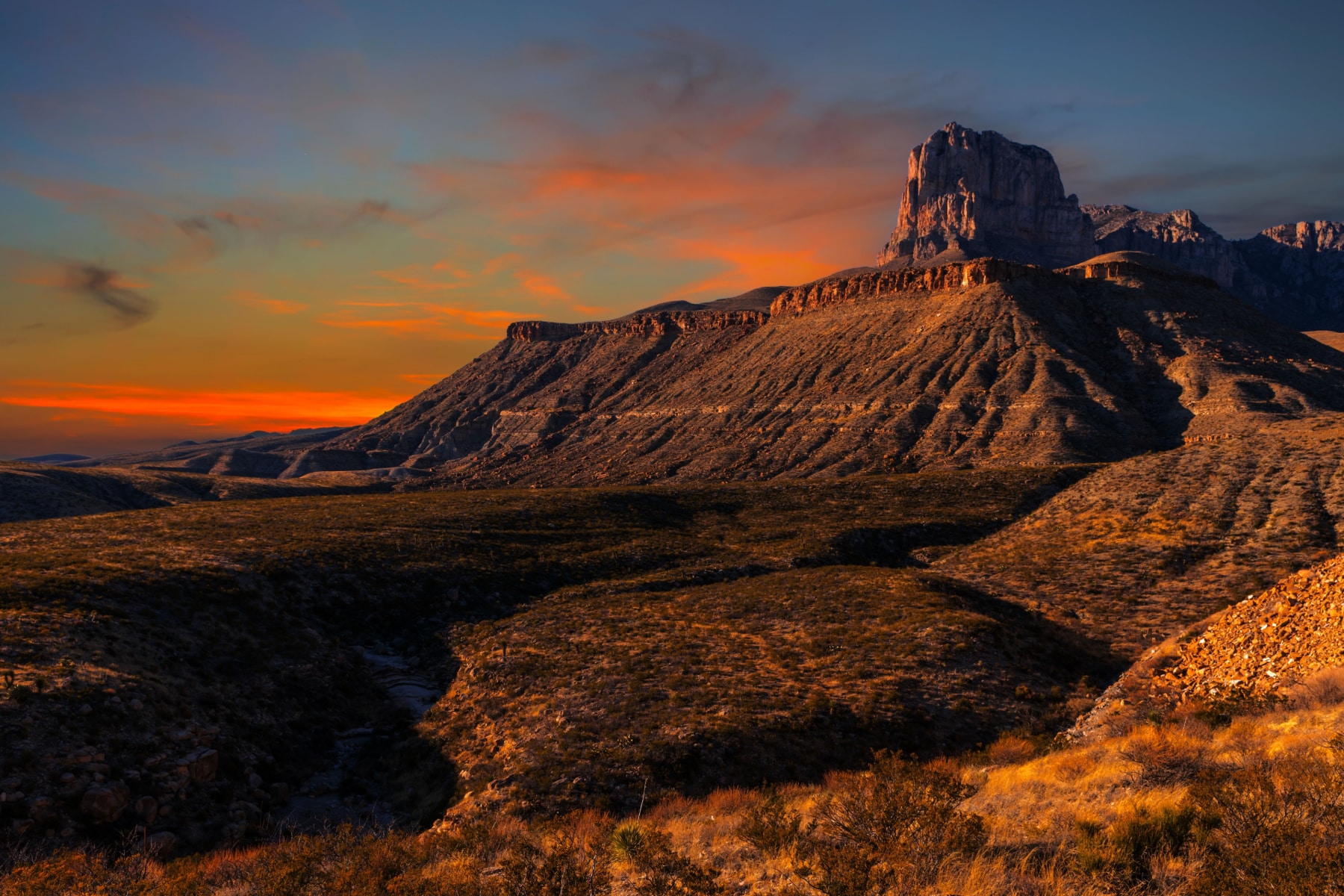


Guadalupe Mountains National Park is one of the wildest, least-crowded parks in the country, a rugged stretch of West Texas built on a 250-million-year-old fossil reef. It holds the highest point in Texas, the deepest fall color in the desert at McKittrick Canyon, and more than 80 miles of trail across mountains, canyons, and dunes. We have hiked it and we keep recommending it to anyone who wants solitude and a real challenge. This guide ranks 12 of the best hikes in Guadalupe Mountains National Park, with real stats for each, an at-a-glance table, and the planning details that matter most out here.

Before You Go: Planning Tips for Guadalupe
- Wind is the real hazard: Trails here are windy, especially from late fall through March. Exposed routes get much harder above 40 mph, and you should not hike in winds over 55 mph.
- The park does not connect by road: Entrances lead to different sections that do not link inside the park, with up to 100 miles of driving between some of them. There is no shuttle, so choose your trailhead ahead of time.
- McKittrick Canyon gates: The McKittrick Canyon gate opens at 8 a.m. and closes at 5 p.m. Mountain Time. Time your hike to be back before the gate closes.
- Carry water: This is high desert. Bring far more water than you think you need, sun protection, and trekking poles for the loose, steep descents.
The 12 Best Hikes at a Glance
| Hike | Distance | Difficulty |
| 1. Guadalupe Peak | 8.4 mi RT | Strenuous |
| 2. Devil’s Hall | 4.2 mi RT | Strenuous |
| 3. El Capitan | 9 mi out and back | Moderate |
| 4. McKittrick Canyon | Up to 21 mi RT | Easy to strenuous |
| 5. Salt Basin Dunes | Up to 4 mi | Moderate |
| 6. Permian Reef | 9.4 mi RT | Strenuous |
| 7. Tejas Trail | 12 mi | Strenuous |
| 8. The Bowl | 2 mi loop (plus access miles) | Strenuous to reach |
| 9. Bush Mountain | 13 to 20 mi | Strenuous |
| 10. Hunter Peak | 8.7 mi loop | Strenuous |
| 11. Smith Spring Loop | 2.5 mi RT | Easy |
| 12. Pinery Trail | Under 1 mi | Easy |
1. Guadalupe Peak
Trailhead: Pine Springs | Distance: 8.4 miles round trip | Elevation gain: about 3,000 feet | Difficulty: Strenuous
Love Guadalupe Mountains? It's one of 117 threatened public lands destinations we're tracking. Get the free briefing.
Reaching the highest point in Texas, at 8,751 feet, takes as much care going down the loose rock as it does climbing up. Even a breeze at the trailhead can feel like a gale on the exposed upper sections, and the last half mile is the steepest. Plan on five to six hours and start early. A stock trail adds about a mile but eases the grade, which is a good option for the descent if your knees are feeling it.
2. Devil’s Hall Trail
Trailhead: Pine Springs | Distance: 4.2 miles out and back | Elevation gain: about 550 feet | Difficulty: Strenuous
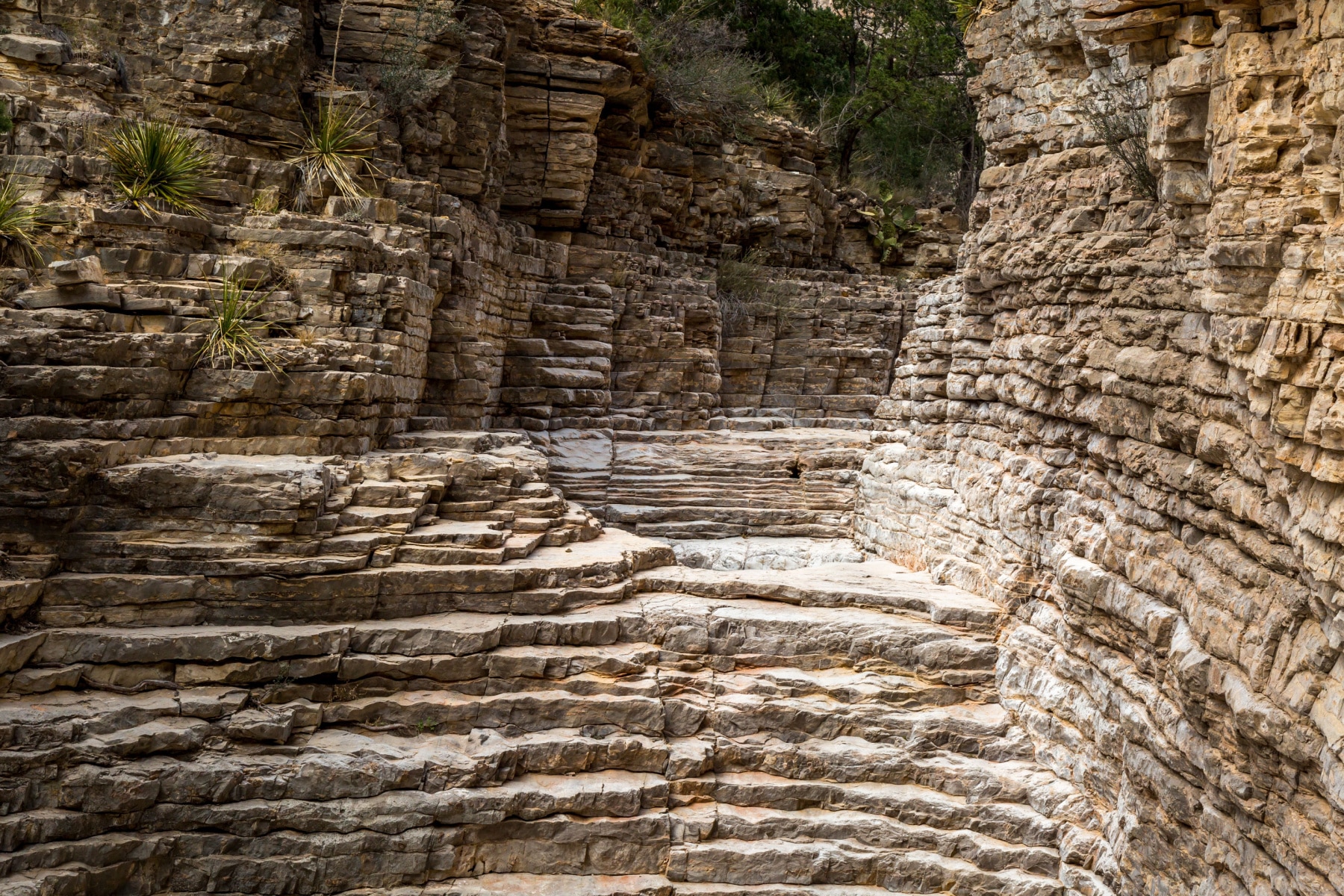
The numbers undersell this one. Of the four-plus miles, you only really walk about a mile, and the rest is picking through a rocky wash, scrambling, and stair-stepping up natural rock layers to a narrow slot between towering canyon walls. The reward is the quiet, walled passage of Devil’s Hall itself. Heed the park’s warnings and stay out if storms threaten, since this is no place to be in a flash flood.
3. El Capitan Trail
Trailhead: Pine Springs | Distance: 9 miles out and back | Elevation gain: about 1,650 feet | Difficulty: Moderate
This is the trail beneath El Capitan, the sheer prow that looms over US 62/180 and stands as one of the signature sights of West Texas. At 8,085 feet, it is the seventh-highest peak in the state. The trail circles the western edge of the mountains, the only route on that side, so you get plenty of solitude. The elevation chart shows constant ups and downs that make the day feel longer than the total gain suggests. You can add the Salt Basin Overlook spur for a longer loop. It is fully exposed, so skip it on hot or windy days.
4. McKittrick Canyon Trail
Trailhead: McKittrick Canyon | Distance: up to 21 miles round trip | Elevation gain: about 2,820 feet | Difficulty: Easy to strenuous, depending how far you go
McKittrick Canyon is famous for fall color, a rare burst of red and gold maples in the desert, usually peaking from late October into November. The first three to four miles are nearly flat with stream crossings, then it climbs hard. Pick your turnaround based on time and fitness:
- Pratt Cabin (5 miles round trip): A 1930s stone home built for an oil geologist, now an interpretive site and a fine picnic spot.
- The Grotto (8 miles round trip): A shaded limestone alcove and the ideal turnaround for most hikers.
- The Notch (10 miles round trip): Past the Grotto the trail turns strenuous with a steep series of switchbacks.
- McKittrick Ridge (14 miles round trip): A long, demanding push best done as an overnight at the wilderness campground.
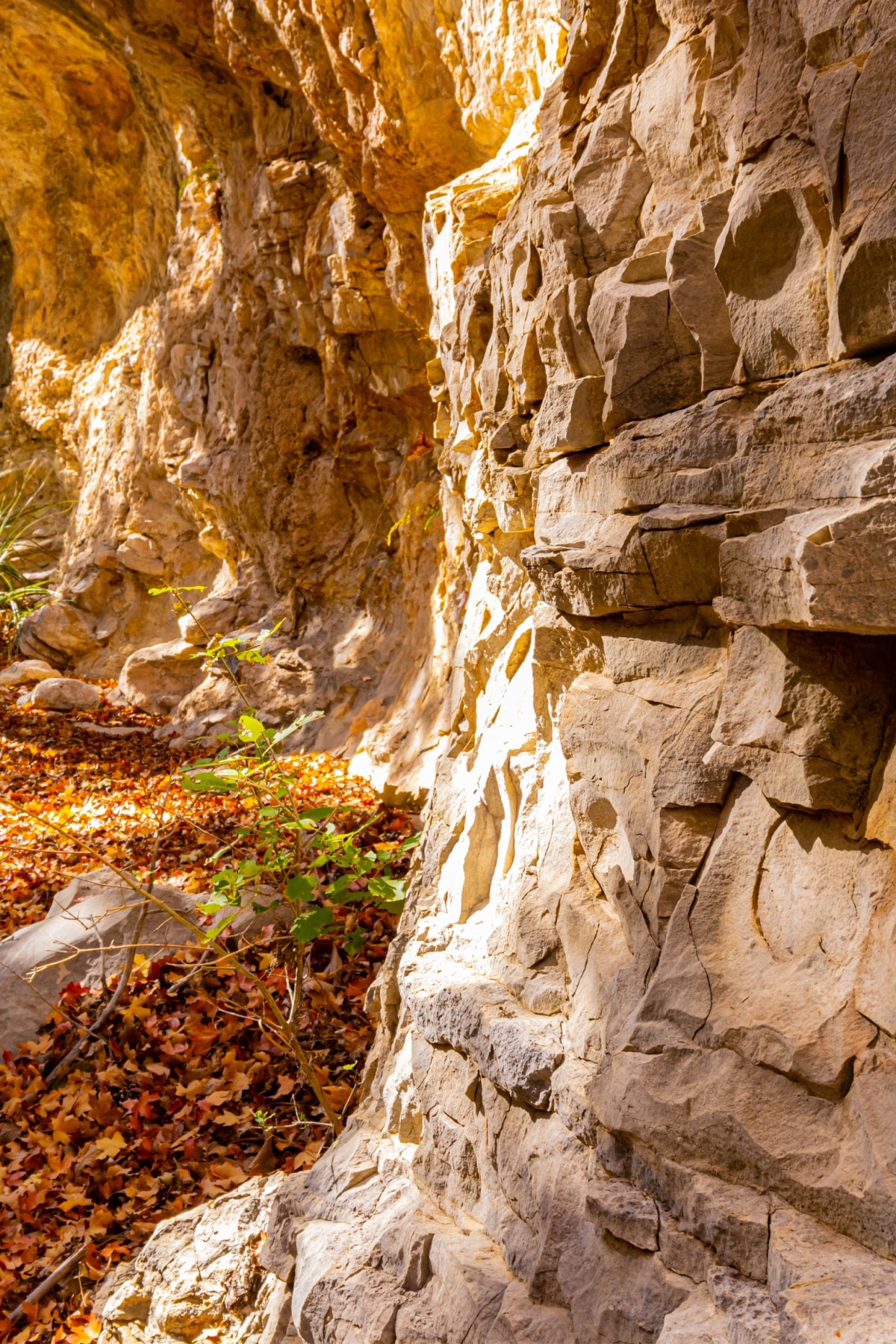
Remember the McKittrick gate hours: open 8 a.m., closed 5 p.m. Mountain Time. If you can only do one big hike here and you are not chasing the high point, many hikers pick the canyon over Guadalupe Peak.
5. Salt Basin Dunes Trail
Trailhead: Salt Basin Dunes | Distance: up to 4 miles | Elevation change: rolling, with dunes up to 60 feet | Difficulty: Moderate
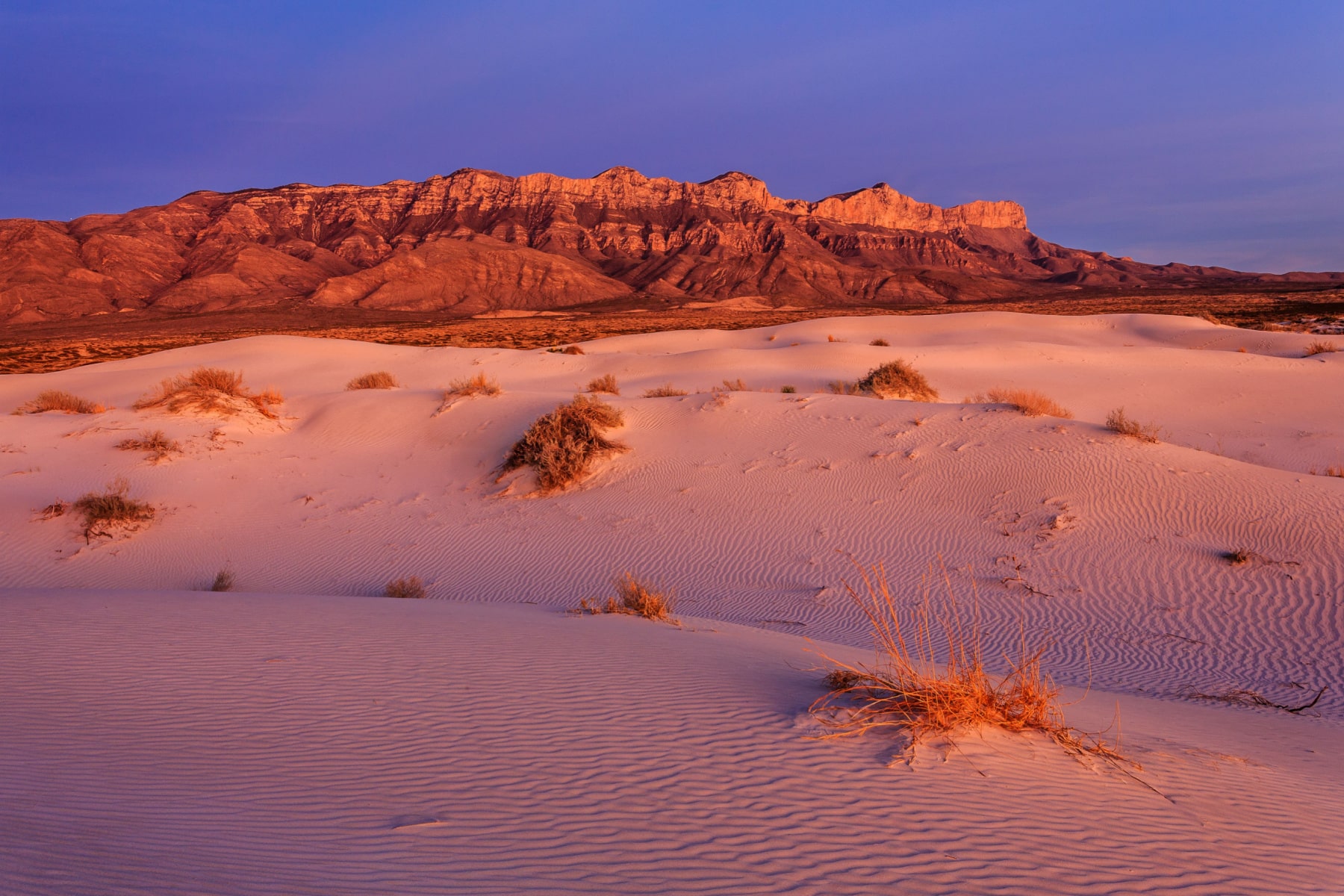
The Salt Basin Dunes are a field of bright white gypsum sand pooled against the western escarpment, with the look of White Sands or the salt flats of the West. The drive from Pine Springs takes 45 minutes to an hour, and the last stretch needs a high-clearance or four-wheel-drive vehicle. Avoid it after rain, when the clay road turns treacherous. From the lot it is a flat mile to the sand, then the dunes are as hard or as easy as you make them. Go at sunrise or sunset, since the open, reflective sand is brutal in midday sun.
6. Permian Reef Trail
Trailhead: McKittrick Canyon | Distance: 9.4 miles round trip | Elevation gain: about 2,380 feet | Difficulty: Strenuous
This is the crowd-free pick. The Permian Reef Trail climbs the exposed face of the ancient reef, and it is one of the best places in the park to see marine fossils from a world that existed before the great extinction at the end of the Permian. Make it at least four miles to the top of the ridge. The trail eventually crosses into Lincoln National Forest, but the best of it is inside the park. Wear long pants for the overgrown, thorny sections, bring trekking poles for the loose descent, and skip it in summer heat.
7. Tejas Trail
Trailhead: Pine Springs or Dog Canyon | Distance: 12 miles | Elevation gain: about 3,000 feet | Difficulty: Strenuous
The Tejas Trail is the central artery of the park, connecting Pine Springs to Dog Canyon through the high country. You can push it in one very long day, but it is better as a multi-day trip so you can branch off to The Bowl or McKittrick Canyon. The south side climbs through switchbacks to forested high-country paths, then descends gradually toward the quieter Dog Canyon side. High winds and cold nights can take the shine off, so watch the forecast.
8. The Bowl Trail
Trailhead: Wilderness, accessed from Pine Springs or Dog Canyon | The Bowl loop: 2 miles, about 270 feet of gain | Difficulty: The loop is easy; reaching it is strenuous
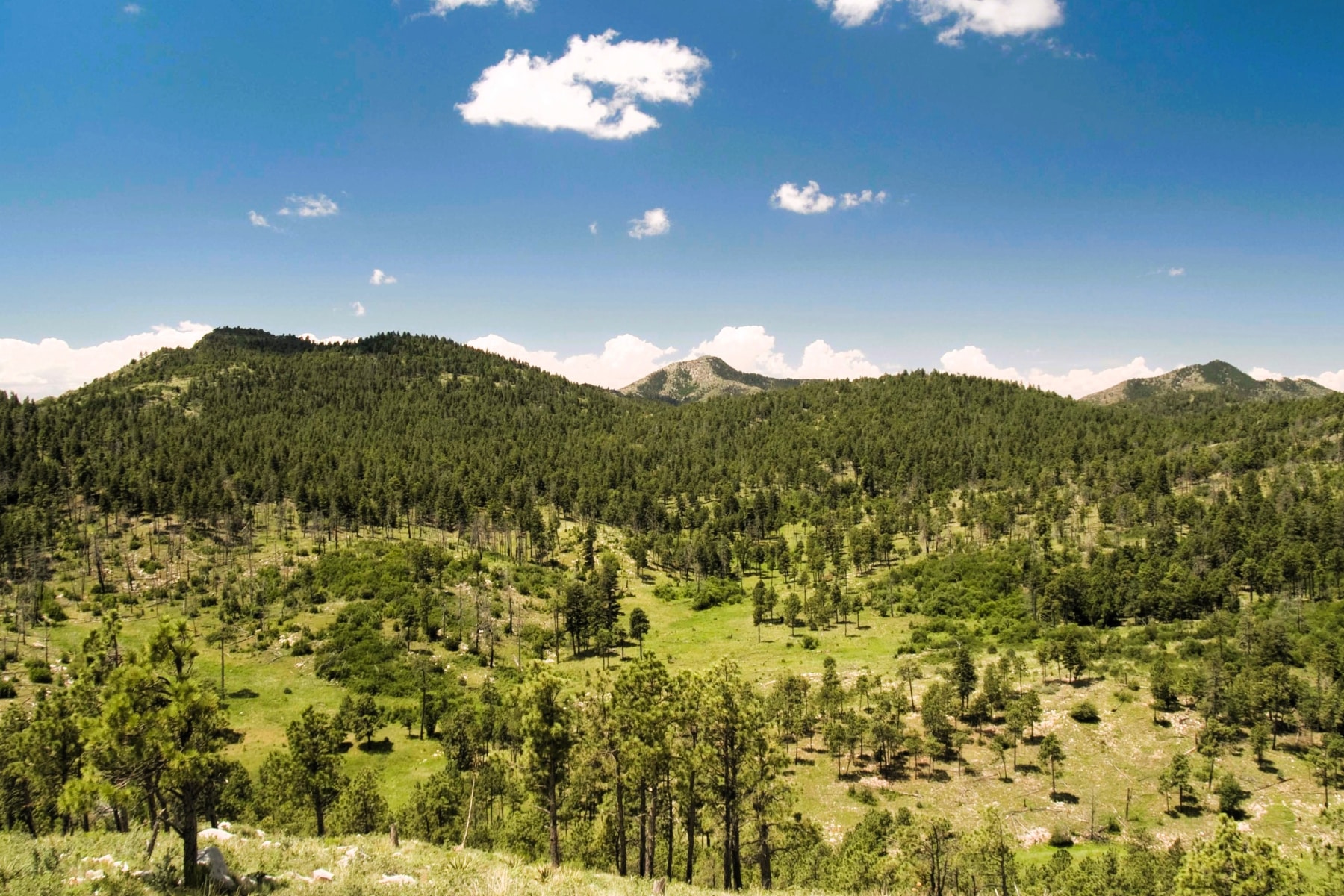
The Bowl is a high, forested basin that feels like a slice of the Rockies dropped into West Texas. The loop itself is short, but you have to earn it: about four extra miles via Bear Canyon from Pine Springs, five via the Tejas access, or nine from Dog Canyon. Once you are up there, you get cool conifer forest, canyon views, wildlife, and access to the Hunter Peak vistas.
9. Bush Mountain Trail
Trailhead: Pine Springs or Dog Canyon | Distance: 13 to 20 miles | Elevation gain: about 2,770 feet | Difficulty: Strenuous
Bush Mountain is for strong day hikers and backpackers only. It rewards the effort with wide views and varied terrain, but it is long and demanding, with several route options from opposite sides of the park. The shortest version is an out-and-back from Pine Springs at just over 13 miles. A lollipop linking the Tejas, Blue Ridge, and Bush Mountain trails runs about 16 miles. Plan water and time carefully.
10. Hunter Peak
Trailhead: Pine Springs | Distance: 8.7 mile loop | Elevation gain: about 2,700 feet | Difficulty: Strenuous
Hunter Peak, at 8,376 feet, is the sixth-highest summit in Texas, and unless you are set on bagging the high point it deserves a spot in your top three day hikes here. The whole loop is an adventure, from the Bear Canyon climb that gains 2,000 feet in under two miles to the views that open at every switchback. Go counterclockwise to take steep Bear Canyon on the way up rather than picking your way down it. You can add the two-mile Bowl loop for more high country with fewer people than Guadalupe Peak.
11. Smith Spring Trail Loop
Trailhead: Frijole Ranch | Distance: 2.5 miles round trip | Elevation gain: about 400 feet | Difficulty: Easy
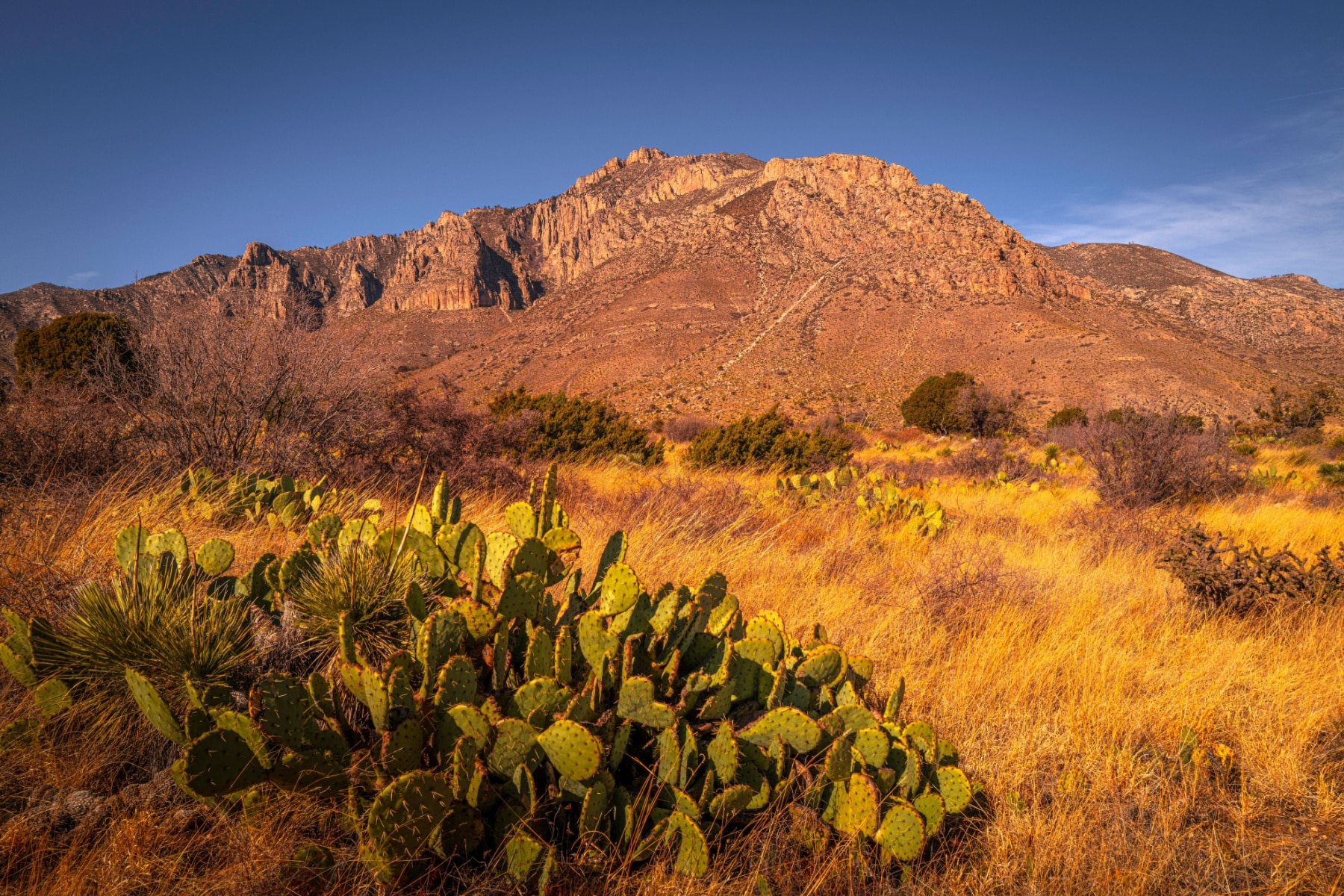
This loop looks gentle and mostly is, with a little spunk where it climbs rocky stretches and slopes. The path passes Manzanita Spring and the shaded oasis of Smith Spring, a green pocket that draws wildlife. It is a good family hike for anyone comfortable outdoors and a nice contrast to the big exposed climbs elsewhere in the park.
12. Pinery Trail
Trailhead: Pine Springs Visitor Center | Distance: under 1 mile | Elevation change: no more than 50 feet | Difficulty: Easy
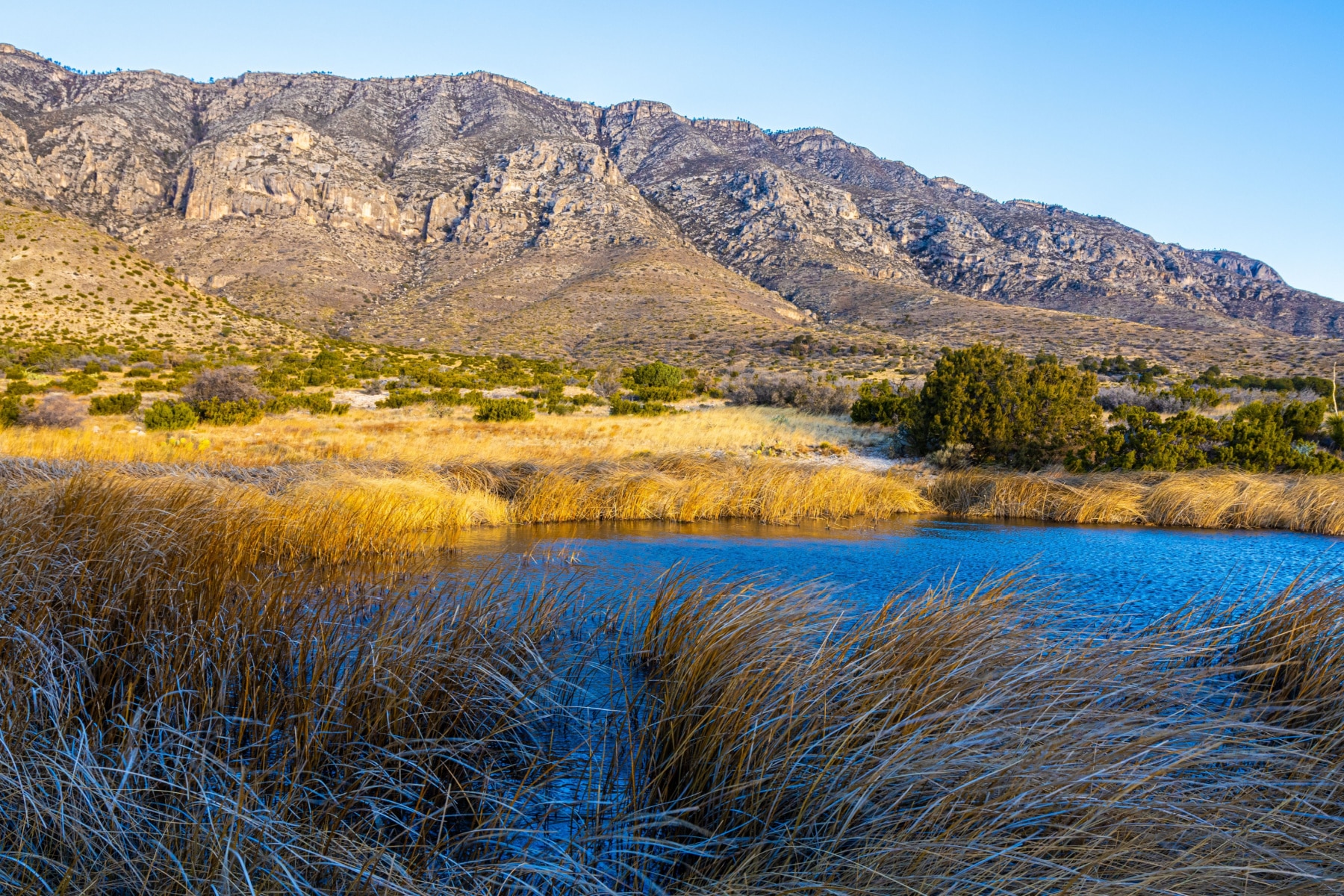
The Pinery Trail is a short, paved walk from the Pine Springs Visitor Center to the ruins of the Pinery Station, a stop on the Butterfield Overland Mail route that carried mail and passengers across the southern United States in the late 1850s. The crumbling stone walls mean the most to those who know the history. This is also the only trail in the park where dogs are allowed.
When to Go and Weather
October is one of the best months to visit, with calmer weather, daytime temperatures in the upper 60s to low 70s, and McKittrick Canyon’s fall color. Spring is also excellent, with comfortable 70s by day and chilly nights. The windy season runs roughly November through March, and a monsoon pattern brings fast-building storms from May into October. Winter brings sunny 50s by day but freezing nights, and higher elevations can see snow, ice, and freezing fog, so carry traction if you head up high in the cold months.
Plan the Rest of Your Trip
These 12 hikes are the heart of the park, but there is more to plan, from camping and stargazing to nearby parks like Carlsbad Caverns and White Sands. For the full picture, see our complete Guadalupe Mountains National Park guide.
Guadalupe Mountains Hikes FAQ
What is the best hike in Guadalupe Mountains?
For the classic, Guadalupe Peak takes you to the highest point in Texas at 8,751 feet. For scenery without the high-point grind, McKittrick Canyon in the fall and Hunter Peak are both outstanding.
When is the best time to hike here?
October for fall color and calm weather, and spring for comfortable temperatures. Avoid the worst of the windy season from November through March on exposed routes, and never hike in winds over 55 mph.
Can I drive between the sections of the park?
Not directly. The park’s entrances do not connect by road inside the park, and some are up to 100 miles apart with no shuttle. Choose your trailhead and section before you go.
Are dogs allowed on the trails?
Only on the Pinery Trail near the Pine Springs Visitor Center. Dogs are not allowed on any other trails in the park.
What to Bring to Guadalupe Mountains
Gear we recommend for Guadalupe Mountains. Affiliate links support our work at no cost to you.
More Than Just Parks may earn a small commission from purchases made through these links, at no extra cost to you. We only recommend gear we would actually use.
Affiliate disclosure: Some links on this page earn us a small commission at no extra cost to you. We only recommend gear we actually use.


