Guadalupe Mountains National Park Facts! In this article, we provide you with 10 amazing facts about one of America’s most magnificent national parks.
Guadalupe Mountains National Park Map
Interactive park map — click a pin to learn more
Guadalupe Mountains National Park at a Glance
3 alertsMore Than Just Parks is your one-stop-shop for learning everything you’ll need to know about America’s national parks. We’ve got expert guides, beautiful photos, helpful tips, breathtaking films and so much more.
I’ve been to so many of these amazing places since retiring from teaching in 2018. Did I mention that I taught history? I spent a lifetime teaching about the history behind some of these natural wonders. Then I got to see them firsthand. And now I’m sharing some of the incredible stories about these beautiful places with you. It doesn’t get any better than that!
Love Guadalupe Mountains? It's one of 109 threatened public lands we're tracking. Get the free weekly briefing.
More Than Just Parks takes a deeper dive with its national park facts. We’ve done our homework so that you’ll get more than you bargained for.
let’s get started.
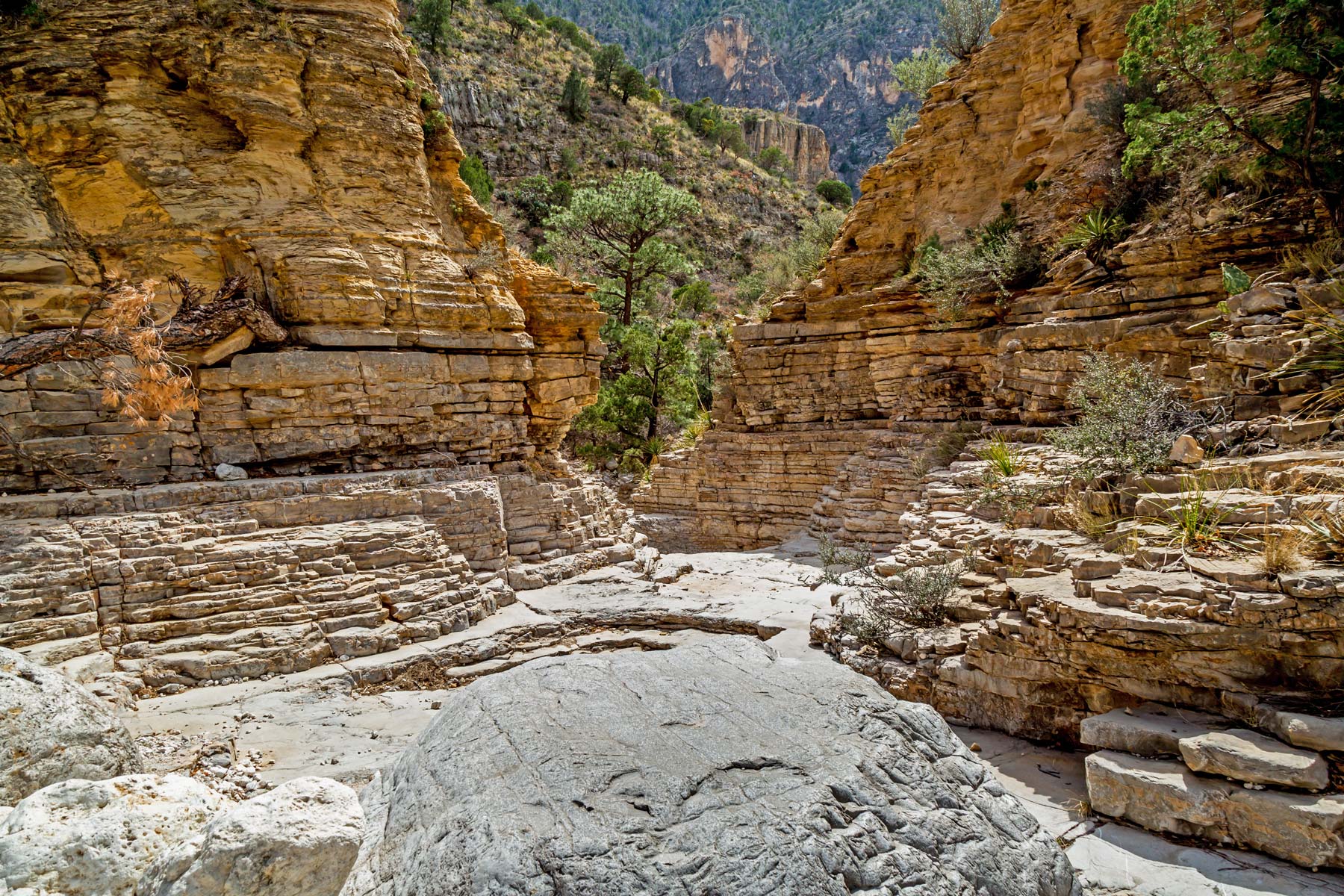
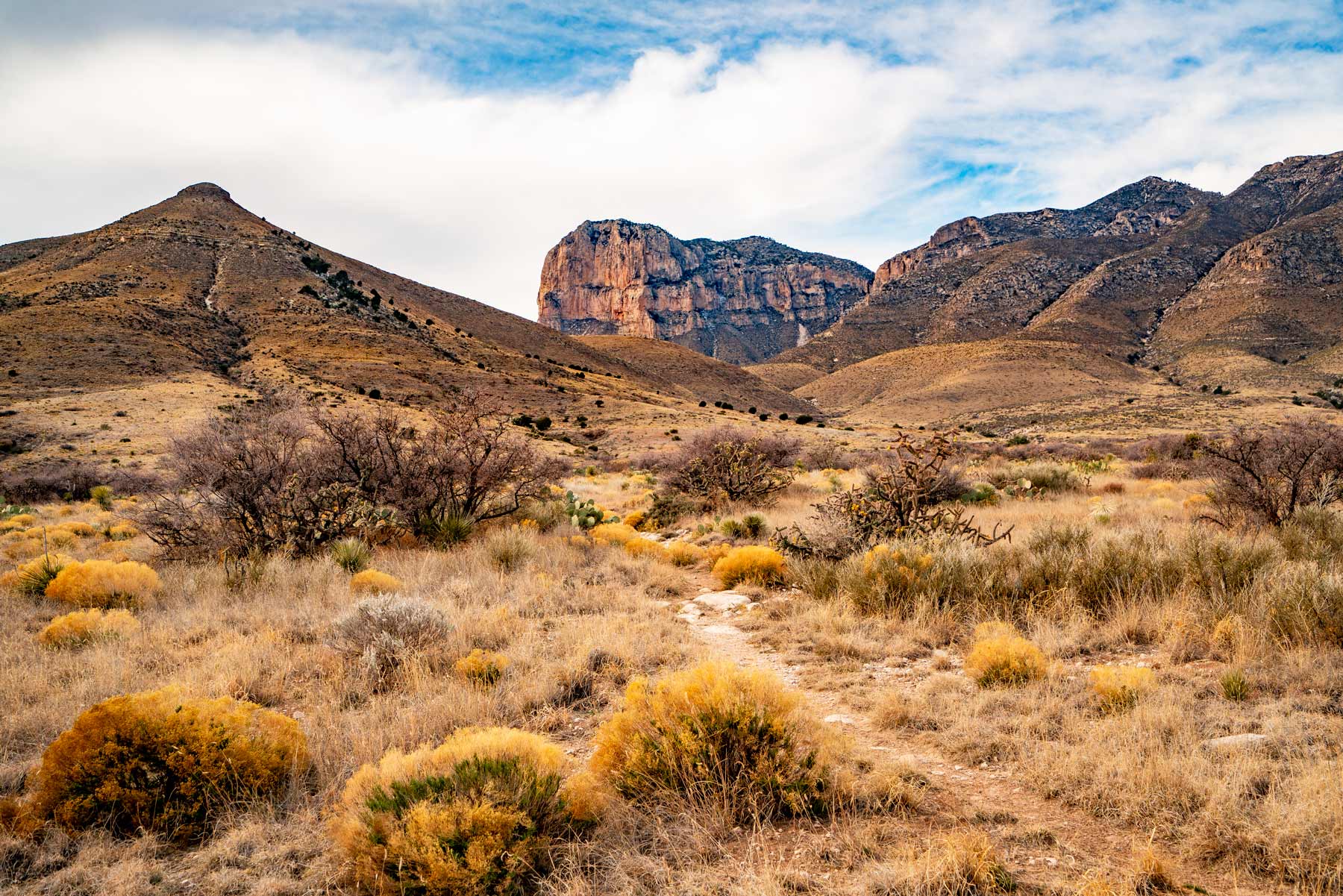
Guadalupe Mountains National Park is a beautiful and rugged park located in Texas. The park covers over 86,000 acres of land and is home to a wide variety of plant and animal life, as well as several unique geological features.
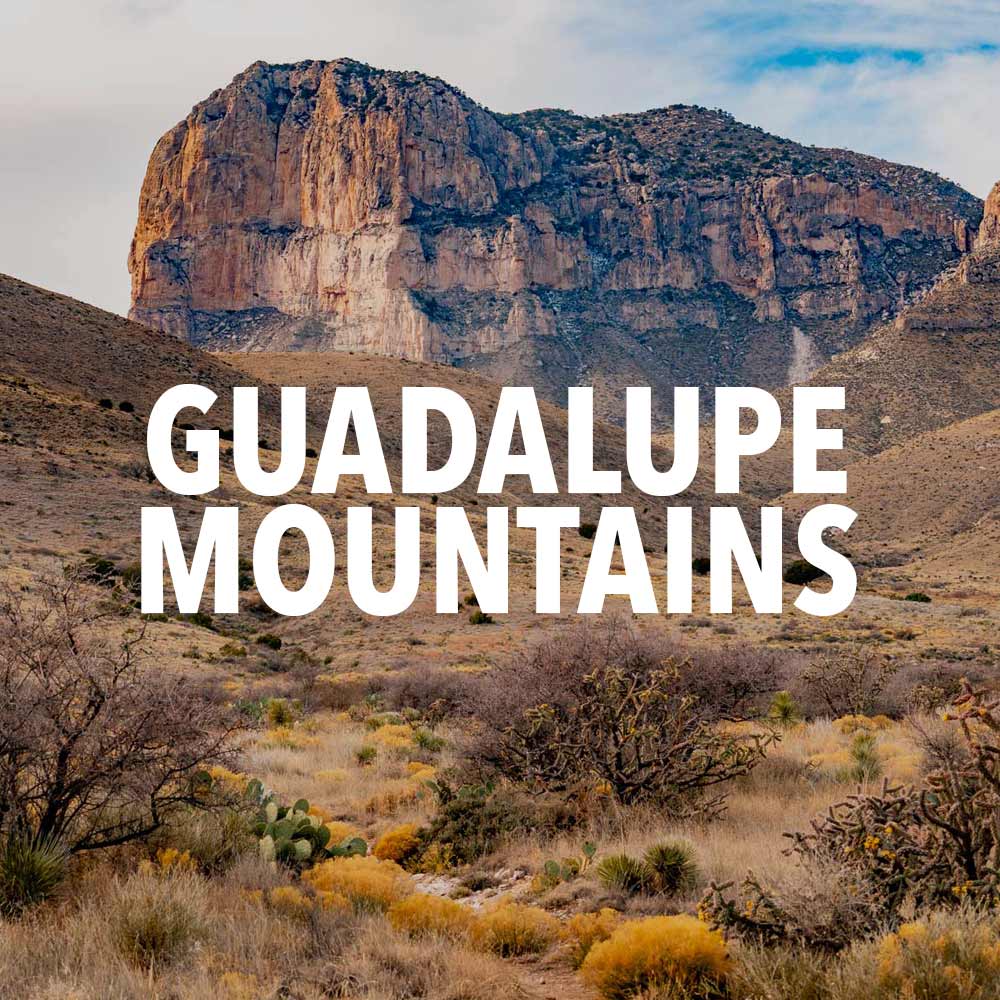
One of the most notable features of the park is Guadalupe Peak, which stands at an elevation of 8,751 feet and is the highest point in Texas. The park is also home to several other towering peaks, including El Capitan and Hunter Peak, as well as deep canyons and rugged cliffs.
The park’s landscape is diverse, with forests of pine and oak trees, grasslands, and wetlands. The park is also home to a wide variety of plant and animal life, including mule deer, bighorn sheep, and mountain lions.
There are many ways to explore and enjoy Guadalupe Mountains National Park. Visitors can go hiking or biking on the park’s trails, go rock climbing or horseback riding, or even go stargazing in the park’s dark skies. There are also several campgrounds located within the park, providing comfortable accommodations for visitors.
Guadalupe Mountains National Park is a beautiful and rugged place, offering visitors the opportunity to experience the beauty and majesty of the natural world in a truly special setting. It is a great destination for park lovers, with plenty of opportunities for hiking, camping, and other outdoor activities.

Here Are Some Basic Facts About Guadalupe Mountains
Location: Texas
Acreage: The park comprises 76,293 acres of mountain and desert land in West Texas.
Visitation: Guadalupe Mountains National Park drew a record 243,000 recreational visits during 2021.
Highest Elevation: Guadalupe Peak is the highest point in Texas, reaching 8,751 feet.
Lowest Elevation: The lowest elevation in the park is 3,640 feet in the Salt Basin Dunes.
When Did Guadalupe Mountains Become A National Park? September 30, 1972.
16 Magnificent Texas National Parks
1. The Guadalupes Was A Sanctuary For Mescalero Apaches
The first of our Guadalupe Mountains National Parks Facts pertains to the early history of the area. It involves a group of Native Americans.
No one knows exactly when the first people came to the Guadalupes, but archaeological evidence dates back over 10,000 years ago.
The earliest inhabitants were hunter-gathers who followed available game and ripening vegetation. They lived in and among the many caves and alcoves common throughout the range.
Scattered evidence of their existence, including projectile points, baskets, pottery, and rock art has been found throughout the park.
The First Indigenous Group
The first indigenous group that historians were able to identify were the bands of Apaches who roamed freely over much of southern New Mexico, west Texas, and northern Mexico.
The Guadalupe Mountains were home to the Mescalero Apaches prior to the mid-1800s.
The Mescalero Apaches were nomadic people who followed game for food and also harvested the agave plant (or mescal) for food and fiber.
The Spanish gave them the name Mescalero, which means “mescal-maker” due to their use of the agave plant.
The Guadalupes were an unchallenged sanctuary for the Mescalero Apaches, providing them with a safe haven for hunting and gathering.
This changed in the mid-1800s when American settlers began to move into the area, leading to conflicts with the Mescalero Apaches and eventually their forced removal from the region.

Facts About Arches National Park
2. The Story Of The Guadalupe Mountains Includes A History Of Conflict
As a retired history teacher and a lifelong history buff, I am fascinated by origin stories regarding America’s national parks.
In the case of Guadalupe Mountain National Park, it’s history has had more than its share of conflict. And, for me, this is one of the more interesting of the Guadalupe Mountains National Park Facts.
The Guadalupe Mountains have witnessed a constant stream of human history, which includes bloody conflicts between Mescalero Apaches (discussed above) and the Buffalo Soldiers (discussed below).
How The Buffalo Soldiers Earned Their Name
In 1866, Congress established six all-black regiments (consolidated to four shortly after) to help rebuild the country after the Civil War and to fight on the Western frontier during the Plains Wars.
It was from one of these regiments, the 10th Cavalry, that the nickname Buffalo Soldier was born.
American Plains Indians who fought against these soldiers referred to the black cavalry troops as “buffalo soldiers” because of their dark, curly hair, which resembled a buffalo’s coat and because of their fierce nature of fighting.
10 BEST Civil War Sites In America
The Buffalo Soldiers Halted The Indian Raids
According to the National Park Service, several cavalry troops, including the Buffalo Soldiers, were intermittently ordered in and out of the area to halt Indian raids and secure settlements along the stage route.
In the winter of 1869, troops lead by Lt. H.B. Cushing penetrated the Guadalupes and destroyed two primary Apache camps.
These aggressive actions were devastating to the Mescaleros who were already facing food shortages within their increasingly limited land base.
They were eventually driven out of the Guadalupes, and by the late 1800’s, nearly all of the surviving Mescalero Apaches in the U.S. were living on reservations.

The First National Park Service Rangers
Another role played by the Buffalo Soldiers, before the creation of the National Park Service in 1916, was that they served as some of the first national park rangers when the U.S. Army served as the official administrator of Yosemite and Sequoia National Parks between 1891 and 1913.
They protected the parks from illegal grazing, poachers, timber thieves and wildfires.
If You’re Interested In Learning More About The Role That The Military Played In Policing The National Parks Then Check Out: A Brief (& Informative) History Of America’s National Park Rangers

If you’re interested in learning more about the Buffalo Soldiers then I recommend: The Buffalo Soldiers: A Narrative of the Black Cavalry in the West by William H. & Shirley A. Leckie.
National Parks don’t happen without the support of people whom most of us have never heard of. These unsung heroes dedicate their time, energy and efforts to cause which is larger than themselves. They do so not for monetary gain, but to help create a thing of beauty which can be enjoyed by countless generations.
For me, one of the greatest thrills about researching and writing these articles comes from learning about who these folks were and why they matter.
One of the lesser known of the Guadalupe Mountains National Park Facts related to one of these unsung heroes.
Wallace Everette Pratt was a geologist by training. From 1909 to 1914, Pratt lived and worked in the Philippines, where he became the chief of the Division of Mines.
In 1916, Pratt was employed by the Texas Company and moved to Houston, Texas.
Pratt was hired in 1918 as the first geologist for the Humble Oil Company, which would later be incorporated into Exxon.
He was promoted several times and eventually became the vice president of Humble’s parent company, Standard Oil Co.

Facts About Big Bend National Parks
Pratt Donates His Land For A National Park
Pratt was introduced to the Guadalupe Mountains by an associate, Judge Drane, while on a business trip to Pecos, Texas, in 1921.
After Drane mentioned that there was land for sale, Pratt and three colleagues bought ranch property in the area.
By 1930, Pratt had purchased the rest of his original partners’ land holdings and continued to expand his ownership, which included the lower portion and mouth of McKittrick Canyon.

By the 1960s, Pratt and his family donated their land holdings to the National Park Service as part of what would become Guadalupe Mountains National Park.
Wallace Pratt advocated for responsible and efficient methods of extracting, transporting and refining oil.
His deep appreciation of the natural world was a catalyst for the preservation of what is largely considered one of the most beautiful areas in Texas and now makes up the core of the Guadalupe Mountains National Park.

Facts About Bryce Canyon National Park
If Wallace Pratt was one of the lesser known champions of the Guadalupe Mountains National Park then one of its better known champions was William O. Douglas.
After graduating from Columbia Law School, William O. Douglas began his distinguished career as a faculty member of the Yale Law School.
Douglas was then appointed by President Franklin Delano Roosevelt to the Securities and Exchange Commission.
In 1939, Justice Louis D. Brandeis retired from the United States Supreme Court.
Roosevelt nominated Douglas as his replacement on March 20. In fact, Douglas was Brandeis’s personal choice as a successor.
Douglas was sworn into office on April 17, 1939.

Douglas Becomes A Champion Of America’s Public Lands
Douglas became known for his interest in and advocacy for environmentalism.
In his dissenting opinion in the landmark environmental law case Sierra Club v. Morton (1972), Douglas argued that “inanimate objects” should have standing to sue in court. This ruling would give places, such as national parks, legal standing in our nation’s courts.
Douglas went on to serve as a champion of America’s public lands. He played an important part in conserving and promoting several locations that became units of the National Park System including Guadalupe Mountains National Park.
In December of 1964, Justice Douglas visited the Guadalupe Mountains. His visit only further confirmed his belief that the mountains should be open for all Americans to enjoy.
Greatly helping to raise the profile of the proposed park, the Guadalupe Mountains were featured in two chapters of William O. Douglas 1967 book Farewell To Texas, writing that “Texas has no more important shrine than the towering Guadalupes.”
To learn more about this extraordinary American, I recommend: Citizen Justice: The Environmental Legacy of William O. Douglas―Public Advocate and Conservation Champion by H. Margaret McKeown.

“Those who oppose wilderness values today may have sons and daughters who will honor wilderness values tomorrow. Our responsibility as life tenants is to make certain that there are wilderness values to honor after we have gone.”
– Supreme Court Justice William O. Douglas
Facts About Canyonlands National Park
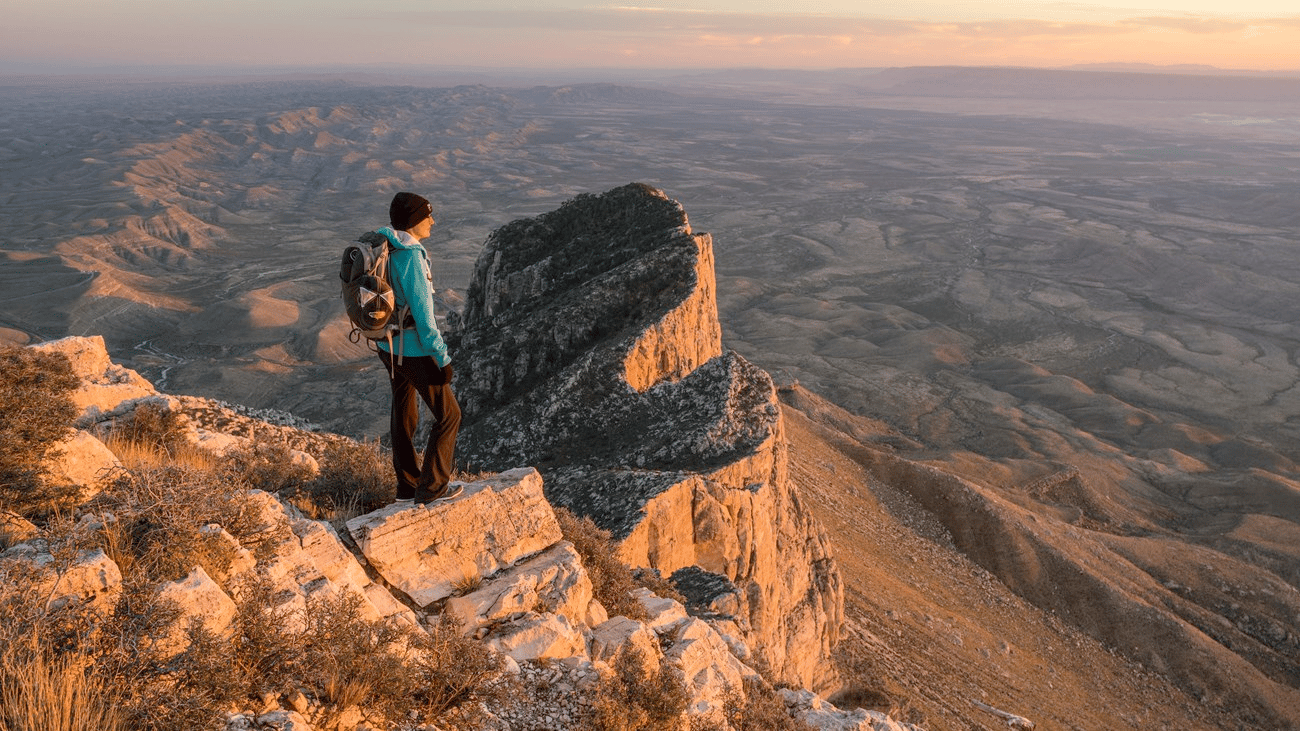
One of my favorite Guadalupe Mountains National Parks facts concerns the highest point in Texas.
Guadalupe Peak, the highest point in Texas, offers hikers a challenging and rewarding experience with an 8.5-mile round trip hike and a 3,000-foot elevation gain.
The hike takes hikers through different ecosystems, including the high desert and high elevation forests.
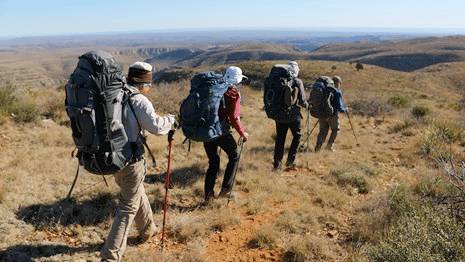
On a clear day, hikers are rewarded with stunning views of the surrounding mountains and desert. It is a challenging hike that will take 6-8 hours to complete, so hikers should be prepared for the physical exertion and bring enough water and snacks. It is important to be aware of the weather conditions, as the trail can be dangerous in extreme heat or cold.
The view from the summit is well worth the effort, so hikers should take time to enjoy it before starting their descent.

If you do make the trek then be sure you are prepared for the hike with the Eleven Essential items.
Why stop with just one peak however. There’s also: Bush Mountain at 8,631 feet, Shumard Peak at 8,615 feet and Bartlett Peak at 8,508 feet.
Facts About Capitol Reef National Park
6. Three Paraplegic Climbers Ascended Guadalupe Peak
Perhaps the most amazing of the Guadalupe Mountains National Park Facts is that, in 1982, three paraplegic climbers whooped and hollered and doused themselves with champagne to celebrate their historic five-day climb to the top of Guadalupe Peak, the highest point in Texas.
What’s even more amazing is that the trio abandoned their wheelchairs for the last few hundred feet and crawled across sharp rocks and cactus to reach the summit. What incredible determination!
The men were: Dave Kiley of Claremont, California, Donnie Rodgers of Dallas, Texas and Joe Moss of Lancaster, Texas.
‘It took me five days to get to the top of the mountain,’ Rodgers said. ‘Now I can do anything I want for the rest of my life.’
Moss, a double amputee, said, ‘It’s been 13 years since I’ve worked with a team like this, and if everybody would work together like this, the world would be a better place.’

16+ Fascinating Grand Canyon Facts
7. There’s Gold In The Guadalupe Mountains
One of the more intriguing of the Guadalupe Mountains National Park Facts pertains to the stories of gold that is reported to be in the mountains.
According to the National Gold Prospecting Association there are many accounts of gold in the Guadalupe Mountains.
Rumors of gold in the Guadalupes go back to the 1600s, when the Spaniards were supposedly shown a gold mine by local Indians, who later killed their European visitors. Perhaps they knew that “dead men tell no tales.”
During the 1800s, Geronimo is reported to have claimed that the richest gold mine in the western world was located in the Guadalupes.
And reports of Apaches having gold were actually documented.

The Incredible Story Of Ben Sublett
The most interesting gold story however, may be that of a poor man named Ben Sublett. Sublett had spent time doing odd jobs around the west to make ends meet after his wife died in the 1870s.
As legend has it, Sublett spent a great deal of his time prospecting in the Lone Star State, hoping to strike it rich one day. He was well known in Odessa, Texas as a down-on-his-luck prospector.
That’s until one day, after an extended absence from the small community, he showed up at the bar with a pouch of gold, buying drinks for the whole town.
He Never Had To Work Again
Ben had gold to spend and stories to tell. In fact, he never had to work again.
Many local folk suspected that he had discovered a mine deep in the Guadalupes. They maintained that when his supply ran low, he simply headed back to his mountain mine to retrieve more.
This story became so widespread, in fact, that numerous people secretly tried to follow him into the mountains, in hopes that he would unknowingly lead them to his private mine.
No one ever managed to maintain his trail once he entered the rugged mountains. Old Ben may have been smarter than the local townsfolk realized.
One Of The Richest Mines In The Southwest?
In 1892, Ben Sublett passed away in Odessa. He had become a fairly rich man.
At his death, however, most of his fortune was gone and there was little left. But Ben left a treasure legacy of a very rich mine that still waits finding.
Treasure hunter and writer W.C. Jameson says he left a history of one of the richest lost mines of gold in the great southwest.
To learn more check out: Legend and Lore of the Guadalupe Mountains by W. C. Jameson.
8. A Stunning Home Is Featured In Guadalupe
Remember Wallace Pratt? He’s one of the unsung heroes of our Guadalupe Mountains National Park Facts. Well, it turns out that Mr. Pratt figures prominently in another fascinating fact.
The Ship on the Desert is a significant early modernist house designed by the architecture firm of Milliken & Bevin in 1941. It was commissioned by none other than Wallace Pratt.
It is located in a remote and dramatic high desert landscape and incorporates locally-quarried stone and large expanses of glass to blend into the surroundings.
The structure is oriented to provide optimal air, light and views, and in addition to the residence, a number of landscape features were also constructed during the Pratt era, including an entrance drive, stone entry gate, access drive to an airstrip, horse corral and tack room, greenhouse, powerhouse, garden areas, stone garbage incinerator, irrigation system, water tanks, underground cistern, metal clothesline, and numerous small-scale stone features.
The cultural landscape is an outstanding example of early 20th-century high-style modernism in the Trans-Pecos region and is notable for its architecture.

If you’re someone who loves watching wildlife then you’ll love our next Guadalupe Mountains National Park Fact. The park features some amazing wildlife.
According to the National Park Service, desert animals are often difficult to view since many of them are nocturnal.
Many desert animals adapt to the hot, dry environment by coming out after dark, when temperatures are much cooler and conditions are not quite so dry.
Nocturnal desert animals include: kit fox, coyote, mountain lion, bobcat, badger, Texas banded gecko, and about 16 species of bats.
Mule deer, javelinas, and black-tailed jackrabbits are also seen early in the morning or late in the evening when the temperatures are cooler.

Just when you thought we couldn’t come up with any more unbelievable Guadalupe Mountains National Park Facts we’ve come up with another one.
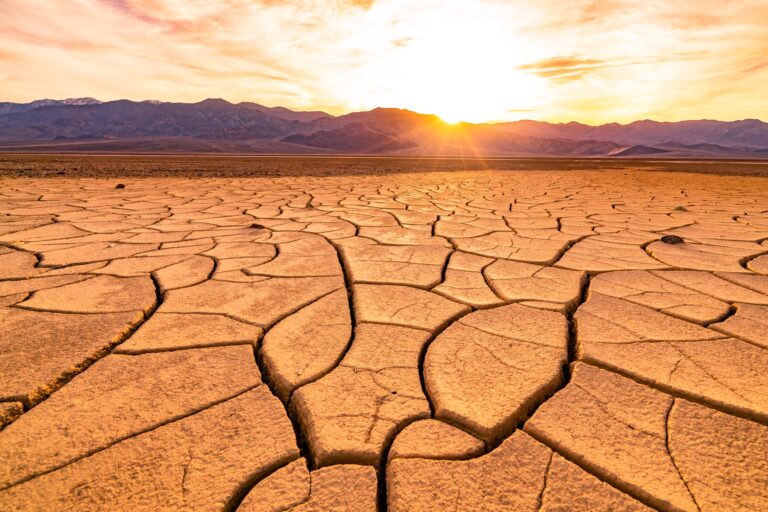
The Salt Flats located near the Guadalupe Mountains are a remnant of an ancient lake that existed during the Pleistocene Epoch, about 1.8 million years ago.
The lake dried up at the end of the last ice age, about 10,000 years ago, as the climate became more arid. The salt deposits left behind were formed as streams drained mineral-laden water into the basin.
These salt deposits became a valuable resource for the people in the El Paso area.
Visitors to the area can witness this barren landscape of ancient salt flats as they approach the Guadalupe Mountains from the west.

You should probably know that we don’t just make this stuff up out of thin air. We’ve spent our entire adult lives exploring and filming America’s national parks and public lands.
We’ve worked with the National Park Service, the Department of Interior, USDA, and the U.S. Forest Service for years creating films on important places and issues. Our work has been featured in leading publications all over the world and even some people outside of our immediate family call us experts on the national parks.
- The Guadalupes Was A Sanctuary For Mescalero Apaches
- The Story Of The Guadalupe Mountains Includes A History Of Conflict
- A Geologist Was Instrumental In The Creation Of Guadalupe Mountains National Park
- A Supreme Court Justice Championed Guadalupe Mountains National Park
- The Highest Point In Texas Is Guadalupe Peak
- Three Paraplegic Climbers Ascended Guadalupe Peak
- There’s Gold In The Guadalupe Mountains
- A Stunning Home Is Featured In Guadalupe
- Guadalupe Mountains National Park Features Some Amazing Wildlife
- The Park Is Known For Its Salt Flats

Helpful Related Articles: Texas National Parks
16 Magnificent Texas National Parks
National Parks Near Austin You'll Love
10 Must-See Historic Sites In Texas
National Parks Near Houston You'll Love
National Parks Near San Antonio You'll Love
National Parks Near El Paso You'll Love
National Parks Near Dallas You'll Love
What to Bring to Guadalupe Mountains
Gear we recommend for Guadalupe Mountains. Affiliate links support our work at no cost to you.
Affiliate disclosure: Some links on this page earn us a small commission at no extra cost to you. We only recommend gear we actually use.