Zion National Park at a Glance

5 alerts
Large vehicle restrictions come into effect on June 7, 2026
Angels Landing Pilot Permit Program
Location
Utah
Established
1919
Size
147,242 acres
Annual Visitors
4,692,417
Entrance Fee
$35 per vehicle (or $80 annual pass)
Best Time to Visit
March - May, September - November
Monthly Crowds (based on NPS visitor data)
Jan
Feb
Mar
Apr
May
Jun
Jul
Aug
Sep
Oct
Nov
Dec
LowModerateHighPeak

I’ve been to Zion National Park in every month of the year. Shot it in 115F heat. Shot it in fresh January snow. I’ve waited 40 minutes for a shuttle in July and had the entire canyon floor to myself in February.

So when folks ask me the best time to visit Zion, my honest answer is fall. September and October specifically. But the real answer depends on what you want out of the trip. Every season in this park delivers something different, and none of them are bad. Some are just more comfortable than others.

Here’s what each one actually looks like on the ground.

Spring in Zion (March Through May)

Spring is when the canyon wakes up. The Virgin River is running hard with snowmelt, wildflowers start popping in late March, and the cottonwoods push out that electric green that photographs like nothing else. Highs range from 65F in March to 84F by late May. Nights stay cool, low 40s to low 50s. Perfect hiking weather.

The wildflower bloom peaks from late March through mid-April, and it is genuinely worth planning a trip around. You’ll see desert marigold, Indian paintbrush, and sacred datura scattered across the canyon walls and along the Pa’rus Trail. The light this time of year is clean and directional. Golden hour lasts longer because the sun sits lower, which means the red sandstone glows for a solid 45 minutes before sunset instead of the 20 you get in summer.

One thing to know. Spring break, roughly mid-March through mid-April, is nearly as crowded as summer. Families flood in, and the most popular areas get packed. If you can swing late April or early May before Memorial Day weekend, you’ll hit the sweet spot of warm temps and lighter crowds.

The Narrows is typically not hikeable in early spring. The Virgin River runs too high and too cold from snowmelt. Water temperatures need to be above 46F and flow rates below 150 cubic feet per second for safe passage. That usually doesn’t happen until late May or early June. Don’t plan your whole trip around The Narrows in April. You’ll likely be disappointed.

The shuttle system starts running on March 7 in 2026 and continues through November 28, with an additional holiday window from December 26 through January 2. When the shuttle is running, private vehicles are not allowed on the Zion Canyon Scenic Drive. Before the shuttle starts, you can drive your own vehicle up the canyon, which is actually a nice perk of early spring.

Waterfalls are the other spring bonus. The snowmelt that makes The Narrows impassable also feeds seasonal waterfalls that don’t exist the rest of the year. You’ll see cascades pouring off the canyon walls near Weeping Rock and along the Emerald Pools trail. Some years in peak runoff they’re genuinely impressive. Bring a rain jacket for the spray.

The Angels Landing permit lottery is the other piece to plan around. Permits are required year-round, distributed through a seasonal lottery and a day-before lottery on recreation.gov. For spring hike dates from March 1 through May 31, the seasonal lottery runs February 13 through February 25. Applications cost $6, and if you’re selected, you’ll pay an additional $3 per person. If you miss the seasonal window, you can always try the day-before lottery, where applications open at 12:01 AM and close at 3 PM Mountain Time the day before your intended hike. Fall has better odds than spring or summer simply because fewer folks apply.

Summer in Zion (June Through August)

I’ll be straight with you. Summer in Zion is brutal. The canyon floor routinely hits 105F by early afternoon. I’ve recorded 113F on my pack thermometer near the Riverside Walk trailhead in mid-July. The sandstone radiates heat back at you, so it feels even hotter than the number suggests.

This is also when 4.5 million annual folks try to cram themselves into a 15-mile canyon. The shuttle line at the visitor center can stretch 30 to 45 minutes by 9 AM. The trails are shoulder to shoulder before lunch.

But summer has its advantages, and they’re real ones.

The Narrows is in prime condition from June through September. Water temps are comfortable, flows are manageable, and wading through that slot canyon with 1,500-foot walls rising above you is one of the best experiences in any national park. Period. If The Narrows is your reason for coming to Zion, summer is your season.

The key to summer in Zion is time management. Hike at dawn. Be on the trail by 6 AM, off by 11. Spend the scorching midday hours at the lodge or in Springdale grabbing lunch. Then head back out after 5 PM when the light gets good again and the temps drop into the 90s. The long summer days give you from 5:30 AM to 8:30 PM of usable daylight, so even with a midday break you can get a full day of exploring in.

Afternoon thunderstorms roll through in July and August, usually between 2 and 5 PM. They’re dramatic, they cool things down by 15 degrees, and they make for incredible photography if you’re in the right position. Stay out of slot canyons and The Narrows when storms are in the forecast. Flash floods are real and they are fast.

The east side of the park, the Zion-Mt. Carmel Highway, sits higher in elevation and runs about 10 degrees cooler than the canyon floor. Worth a drive any time of year but especially welcome in summer. The Canyon Overlook Trail on the east side is a 1-mile round trip with one of the best viewpoints in the park, and because it’s outside the shuttle zone you can drive directly to the trailhead. In summer it’s a smart play when the main canyon feels overwhelmed.

One more summer tip. Hydration is not optional here. Carry at least 1 liter of water per hour of hiking. The dry desert air pulls moisture out of you faster than you realize, and by the time you feel thirsty you’re already behind. I’ve seen rangers carrying IV bags to the shuttle stops in July. Don’t be that person.

Fall in Zion (September Through November)

This is my pick. No contest.

September still feels like summer temperature-wise, highs near 90F, but the crowds thin out dramatically after Labor Day. I’ve hiked the entire Canyon Overlook Trail in mid-September without passing another person. That doesn’t happen the other 8 months the shuttle runs.

The Observation Point trail via the East Mesa route is a fall favorite. It’s 7 miles round trip from the east side trailhead, avoiding the steep switchbacks of the traditional route, and it ends at the highest overlook in the main canyon at 6,521 feet. From up there you look straight down on Angels Landing and across the entire length of Zion Canyon. In September and October the air is clear enough to see every layer of sandstone from the Navajo at the top to the Kayenta below. It’s the best viewpoint in the park, and on a fall weekday morning you might share it with three or four other folks.

October is the real goldmine. Highs in the upper 70s, lows in the upper 40s. The light gets lower and warmer as the weeks go on. You can hike comfortably all day without the dawn-or-die schedule that summer demands.

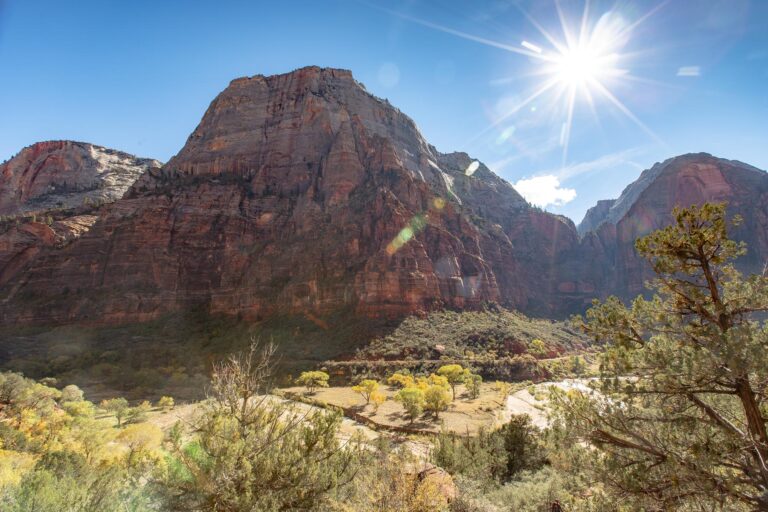
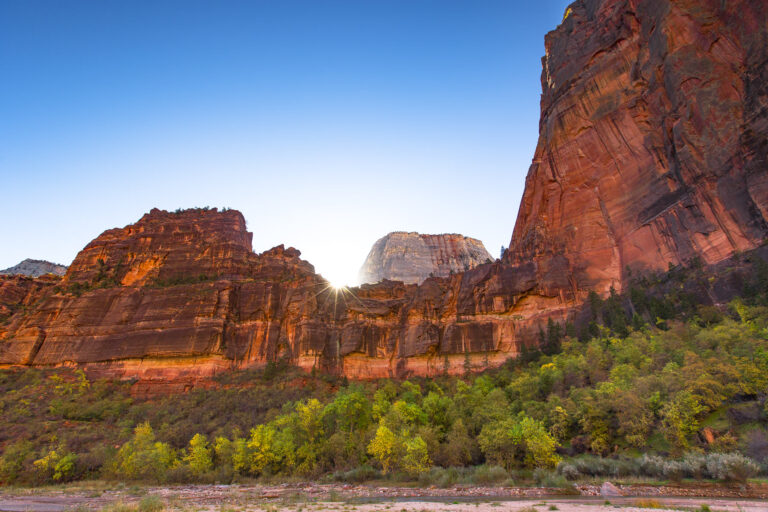
Then late October into November brings the fall colors, and Zion’s fall colors are criminally underrated. The cottonwoods along the Virgin River turn a deep gold that catches the late afternoon light and just burns against the red canyon walls. I spent nearly a month filming in the canyon during peak fall color for our Zion film, and those cottonwood corridors were the shots I kept coming back to. The contrast is unreal. You don’t need to go to New England for fall foliage when you can get gold leaves framed by 2,000-foot red sandstone cliffs.

The Narrows stays hikeable well into October most years, water temps depending. The Angels Landing lottery runs year-round, but fall has better odds than summer simply because fewer folks apply. The fall seasonal lottery for hike dates from September 1 through November 30 runs July 1 through July 20. The shuttle typically runs through late November, with the 2026 season ending November 28.

November gets colder, highs in the low 60s, and you’ll want layers for morning starts. But the park is noticeably quieter, and you’ll often get that perfect combination of cool air, warm light, and empty trails that makes you wonder why everyone comes in July instead.

Their loss.

Winter in Zion (December Through February)

Winter Zion is the contrarian’s choice. And I love it for that.

Daytime highs sit between 40F and 55F. Overnight lows dip into the high 20s to low 30s, rarely below 20F. It snows a few times each winter, usually light dustings that melt off the canyon floor by midday but cling to the upper rim and north-facing walls. The visual effect is extraordinary. Snow-capped red rock against a blue winter sky is some of the most dramatic scenery I’ve ever photographed.

The shuttle doesn’t run in winter (except for a holiday window from December 26 through January 2), which means you can drive your own vehicle up the Zion Canyon Scenic Drive. No waiting in line. No crowds. Pull over where you want, stay as long as you want. I once spent 90 minutes at the Big Bend pullout in January waiting for the light to hit the Great White Throne just right. In summer I’d have been circling for a parking spot.

The Angels Landing lottery odds are dramatically better in winter. Fewer applicants means a much higher chance of snagging a permit. The winter seasonal lottery for hike dates from December 1 through February 28 runs October 1 through October 20. The trail can be icy near the top, so bring microspikes, but the experience of standing on that fin with the canyon spread below you and nobody else around is worth the cold hands.

Some trails close or become treacherous with ice. The upper portions of Angels Landing, the West Rim, and Hidden Canyon can be sketchy without traction devices. But the lower canyon trails like Pa’rus, Riverside Walk, and Watchman remain accessible and pleasant year-round.

If you’re a photographer, winter might actually be the best season. The low sun angle means dramatic sidelight on the canyon walls for most of the day. You’re not racing a narrow golden hour window because the whole day has that quality of light. Add snow and you’ve got images that look nothing like the standard Zion postcard.

The Kolob Canyons section on the north end of the park is another winter option that deserves more attention. It’s a separate entrance off I-15, about 40 minutes from the main canyon, and it sees a fraction of the traffic. The 5-mile scenic drive ends at a viewpoint overlooking the Finger Canyons, and the Timber Creek Overlook trail at the end of the road is a quick 1-mile round trip with panoramic views. In winter with snow on the higher terrain, the red and white rock layers are stunning. Most folks don’t even know this section of Zion exists.

Lodging is also significantly cheaper in winter. Springdale hotel rates drop by 30 to 50 percent compared to summer peaks, and you can usually book campgrounds at Watchman or South with just a couple weeks’ notice instead of the months-ahead scramble that June through September requires. If you’re flexible on dates, winter is the most affordable way to experience Zion.

Entrance Fees and the Non-Resident Surcharge

Zion’s entrance fee is $35 per private vehicle for seven consecutive days. Motorcycles pay $30 for up to two bikes and four riders. Children 15 and under enter free.

Starting in 2026, Zion is one of 11 national parks that charge a $100 per-person surcharge for non-U.S. residents aged 16 and older. This is on top of the standard entrance fee. So for an international family of four with two adults and two children over 16, that’s an additional $400 just to enter the park. Non-residents can also purchase the $250 Non-Resident America the Beautiful Annual Pass, which covers entry to all national parks for a year and waives the surcharge. If you’re visiting more than two of the 11 surcharge parks, that pass is the better deal.

The Zion Canyon Shuttle is free beyond your entrance pass. No tickets, no reservations, no additional cost. It runs a loop through the main canyon with nine stops, and the full loop takes about 45 minutes one way.

The Worst Time to Visit

The Fourth of July weekend. Triple-digit heat, maximum crowds, and shuttle waits that can push past 45 minutes. I’ve been here for it. The canyon felt less like a national park and more like a theme park queue. If your schedule only allows a summer holiday weekend, start at the east side of the park on the Zion-Mt. Carmel Highway where you can drive yourself, and save the canyon shuttle for the early morning hours before 8 AM.

Memorial Day and Labor Day weekends are nearly as bad. The Watchman Campground and South Campground both sell out months in advance for those weekends, and the town of Springdale, which has about 600 permanent residents, swells to many times that number.

The other time I’d caution against is late February through early March if The Narrows is your primary goal. The river is still running cold, flows are unpredictable, and there’s a real chance the park will close the route due to high water or ice. I’ve seen folks show up with rental dry suits and canyoneering gear only to find the Narrows closed at the Riverside Walk gate. Have a backup plan.

The park doesn’t have the infrastructure for the volume of people that shows up on those weekends, and the experience suffers. If you can shift your trip by even three or four days in either direction, you’ll see a completely different park.

Month-by-Month Quick Reference

January. Avg high 53F, low 30F. Minimal crowds. Snow possible. No shuttle, drive yourself. Angels Landing lottery odds at their best. Great photography month.

February. Avg high 58F, low 33F. Still quiet. Occasional snow. Earliest wildflowers start in the low desert areas late in the month. A sleeper pick for a peaceful visit.

March. Avg high 65F, low 38F. Wildflower season begins. Crowds ramp up mid-month for spring break. Shuttle starts March 7. Virgin River running high from snowmelt. Beautiful but increasingly busy.

April. Avg high 73F, low 43F. Peak wildflowers. Shuttle running. Spring break crowds through mid-month, then a brief lull before May. Great hiking temps.

May. Avg high 84F, low 52F. Getting warm. Memorial Day weekend is packed. The Narrows may become hikeable late in the month depending on snowpack and river conditions.

June. Avg high 95F, low 62F. Summer heat arrives. The Narrows opens for the season. Crowds heavy. Hike early or late, avoid midday.

July. Avg high 100F, low 69F. Peak heat, peak crowds. Afternoon monsoon thunderstorms. The Narrows at its best but watch flash flood warnings. The hottest and busiest month.

August. Avg high 98F, low 68F. Still very hot. Monsoon storms continue. Crowds start to ease slightly toward month’s end as school resumes.

September. Avg high 90F, low 60F. Crowds drop sharply after Labor Day. Still warm enough for The Narrows. One of the best months overall for balancing weather, crowds, and access.

October. Avg high 78F, low 49F. My single favorite month in Zion. Comfortable temps, thinning crowds, late-month fall color beginning. The Narrows still accessible most years.

November. Avg high 63F, low 37F. Peak cottonwood fall color early in the month. Shuttle winds down November 28. Layers needed. Noticeably quieter.

December. Avg high 53F, low 29F. Winter quiet settles in. Snow possible. No shuttle except the holiday window December 26 through January 2. Excellent for photography. The park feels like it belongs to you.

Planning Your Trip

No matter when you go, the Zion-Mt. Carmel Highway on the east side of the park is spectacular. The checkerboard sandstone patterns and the tunnel carved through the mountain are worth the drive in any season. I’d argue the east side is the most underappreciated part of Zion.

For a full breakdown of everything to do, check out our guide to 20 things to do in Zion National Park. If you’re planning your day-by-day schedule, our Zion itinerary walks through exactly how to make the most of your time. And for trail-specific beta, our guide to 16 of the best hikes in Zion covers everything from the Riverside Walk to the West Rim.

For the full picture, start with our complete guide to Zion National Park.

I keep coming back to one specific memory when I think about timing a Zion trip. Late October, maybe 5:30 PM, standing on the bridge near Canyon Junction. The cottonwoods along the river had just turned. The Watchman was catching the last direct light, this deep orange that shifted to purple in the shadows. Two mule deer walked across the road behind me. There was no one else there. Just the river, the light, and 2,000 feet of sandstone going pink above me.

That’s the Zion I’d want you to see.

What to Bring to Zion

Gear we recommend for Zion. Affiliate links support our work at no cost to you.

Affiliate disclosure: Some links on this page earn us a small commission at no extra cost to you. We only recommend gear we actually use.