

Yellowstone is the size of two Rhode Islands, and that single fact wrecks more itineraries than weather, crowds, and bear jams combined. People try to commute across it daily and spend the trip in the car. The fix is to plan by region and move your base as you go. Below is a day-by-day framework for one to five days, plus the 2026 logistics that actually decide whether your trip works: road opening dates, the 13-month lodging window, fees, and where to sleep. The park rewards people who get up early and stay out late, because the wildlife keeps its own schedule and the geysers do not care about yours.
2026 at a glance: The North and Northeast roads stay open year-round. Most interior roads open in stages between April 17 and May 22. There is no timed entry, but lodging and campgrounds book out fast on a 13-month window. International visitors age 16 and older now pay a $100 per-person surcharge on top of the entrance fee. Details on all of this are further down.
Some links below are affiliate links. If you book a stay or buy a recommended map or guidebook through them, we may earn a small commission at no extra cost to you. It helps keep our park coverage free.
Where to stay near Yellowstone National Park: Most visitors base themselves in West Yellowstone, Montana, the closest gateway with a real range of options. You can compare hotels and lodges near Yellowstone National Park to find dates that still have availability, since the best places book out months ahead in peak season.
Love Yellowstone? It's one of 117 threatened public lands destinations we're tracking. Get the free briefing.
It is also worth carrying a paper map and a good guidebook, because cell service is spotty across most of the park. We use the National Geographic Trails Illustrated map for Yellowstone National Park for trail planning, paired with a detailed Yellowstone National Park guidebook for trip ideas and logistics.

How to Use This Yellowstone Itinerary
This plan covers June through October, when the full loop is open and campgrounds are running. In winter, only the road between the North and Northeast entrances stays open to cars, so a cold-season trip looks completely different. Warmer months bring bigger crowds, with the heaviest visitation from June through August. Yellowstone was the first national park and remains one of the most visited, so plan around the crowd, not against it.
The single biggest planning fact is size. Yellowstone covers roughly 3,471 square miles, and drive time eats itineraries alive. For any trip of three days or longer, plan to move your base between regions rather than commuting back and forth across the park each day.
Yellowstone’s Regions
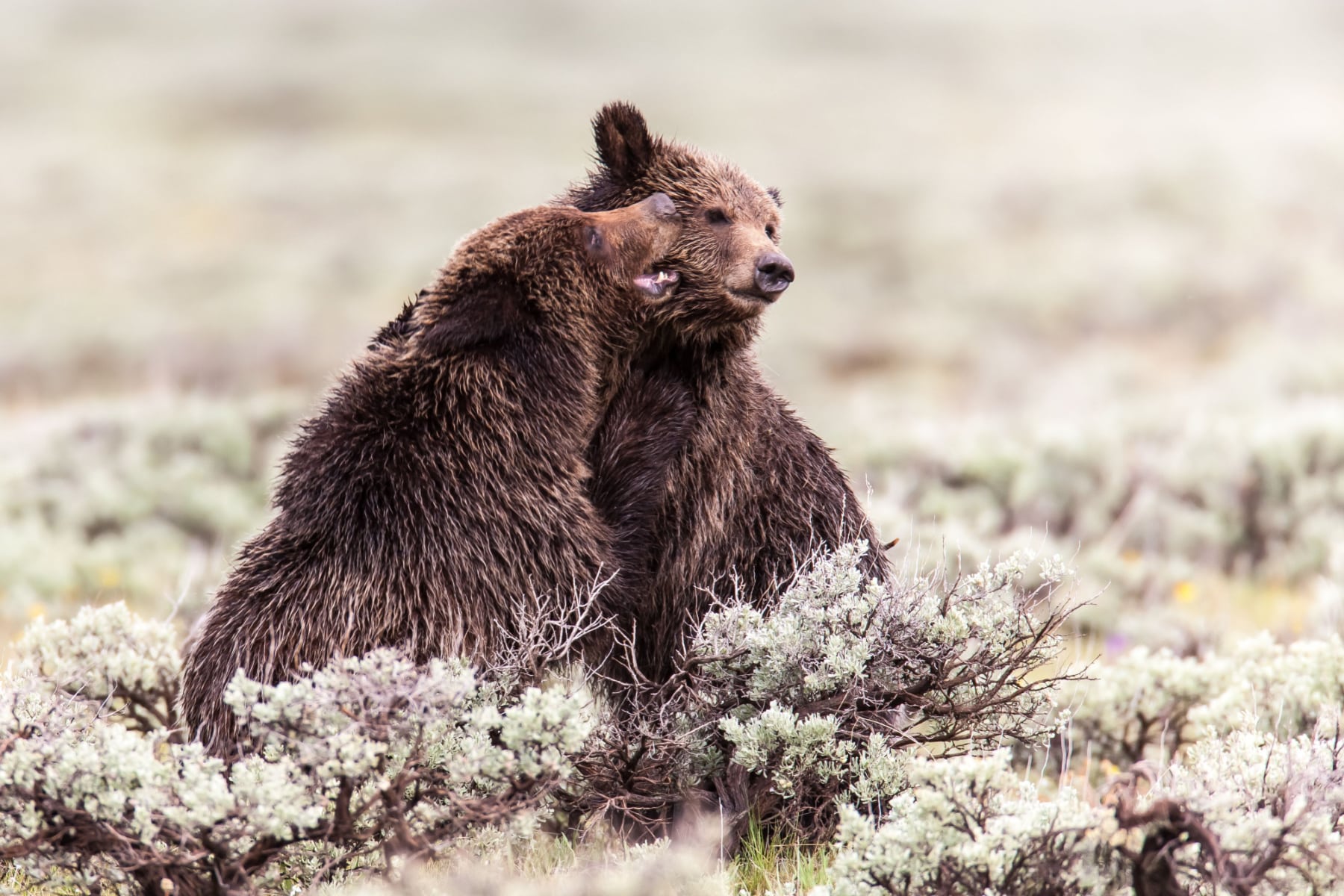
Yellowstone is home to more than 500 geysers, including the most famous in the world, Old Faithful, along with thousands of other thermal features, waterfalls, and wide wildlife valleys. Five entrances feed into it from the north, northeast, east, south, and west. Most of the park sits in Wyoming, but it spills into Montana and Idaho. Here are the regions you will be choosing between.
- Old Faithful and the Upper Geyser Basin: The densest concentration of geysers on Earth, anchored by Old Faithful itself. Boardwalks loop past dozens of named geysers and hot springs.
- Midway Geyser Basin: Home to Grand Prismatic Spring, the largest hot spring in the United States. The overlook trail above it is the photograph you came for.
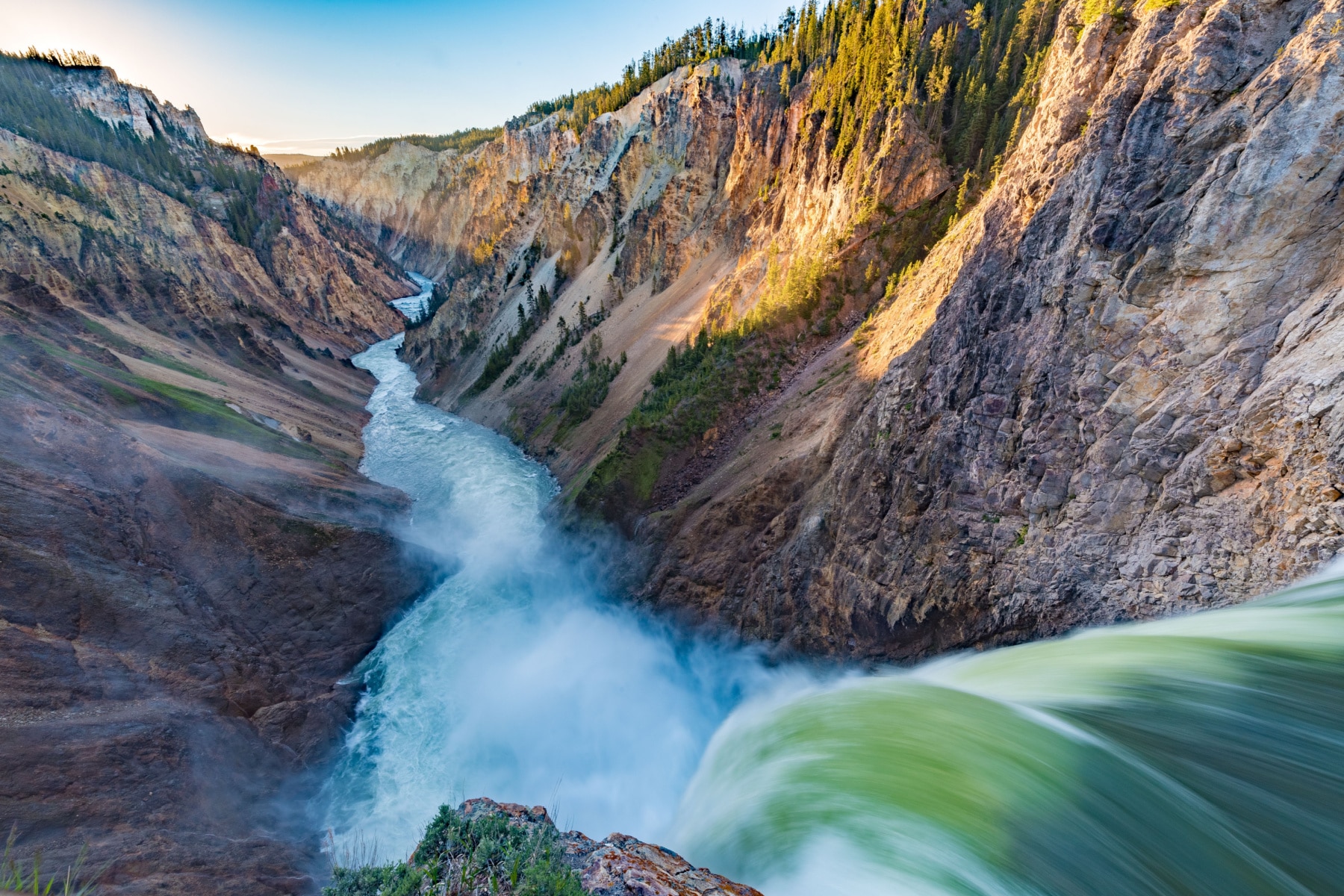
- Canyon Village and the Grand Canyon of the Yellowstone: Vivid yellow canyon walls and two big waterfalls, with overlooks at Artist Point, Lookout Point, and Inspiration Point.
- Hayden Valley and Lake Village: Central wildlife country along the Yellowstone River, plus Yellowstone Lake, one of the largest high-elevation lakes in North America.
- Lamar Valley and Tower-Roosevelt: The best wildlife watching in the park, often called the Serengeti of North America. Wolves, grizzlies, bison, and elk, especially at dawn and dusk.
- Mammoth Hot Springs and Norris: Travertine terraces in the north and, just south, the hottest and most changeable thermal area in the park at Norris.
Map of Regions and Entrances
Here is a map pairing each entrance with the nearest region, so you can match your gateway town to the part of the park you most want to see.
Live layers
How Long Should You Spend in Yellowstone?
You will not fit the highlights into less than three days. The park is simply too big, and you never know when you will lose an hour behind a bison crossing or a bear jam. One day is a teaser. Two days lets you choose a couple of regions. Three days is the realistic minimum to see the main attractions, and four to five days is what we recommend if you want to actually slow down and watch wildlife rather than just drive past it.
Yellowstone Drive Times at a Glance
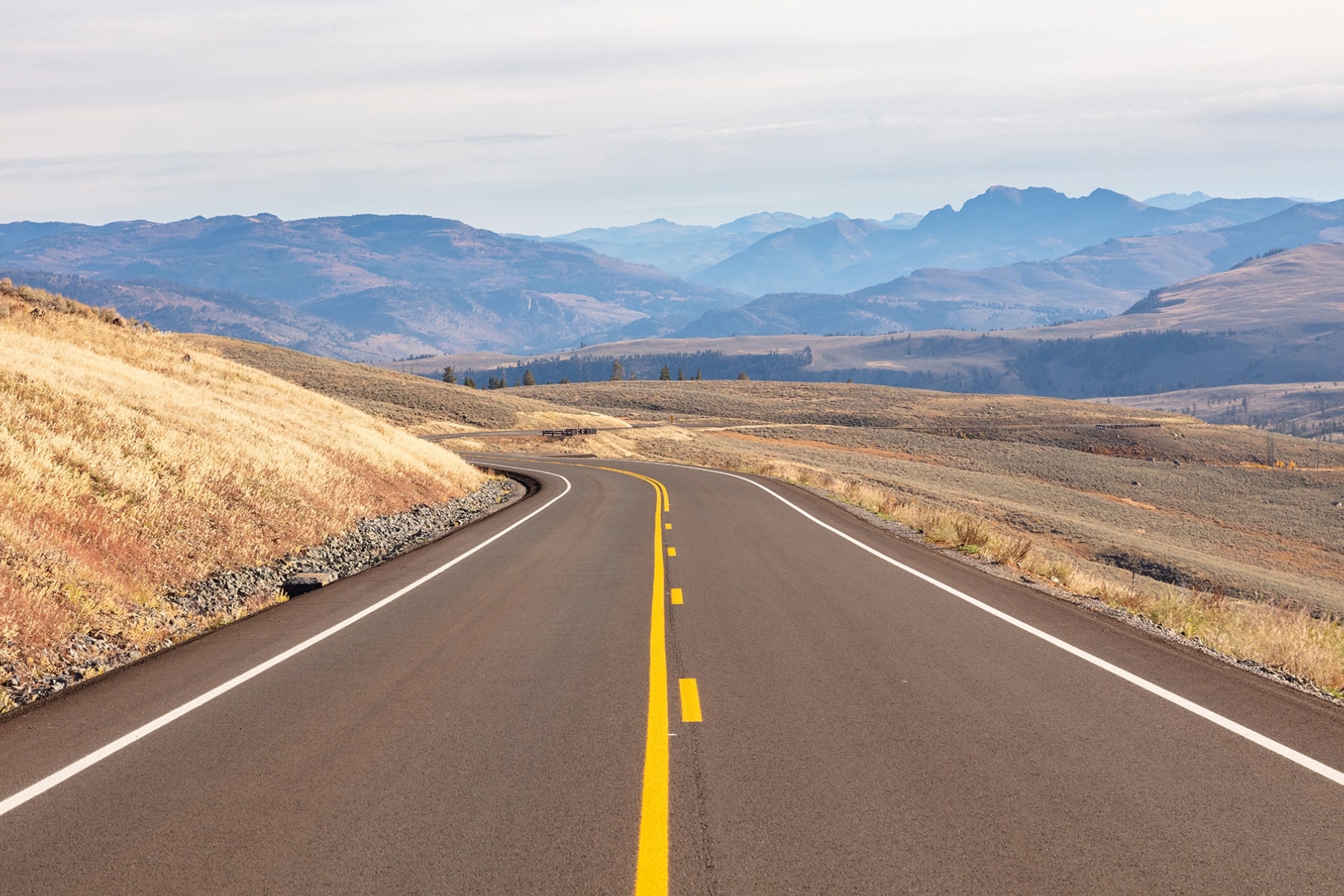
Yellowstone is a driving park with no shuttle, and the distances are the thing that breaks itineraries. The Grand Loop alone is 142 miles. Here are the drives between the major stops so you can plan a realistic day. Add time for wildlife jams, construction delays, and the fact that you will want to stop constantly.
| From | To | Distance | Drive time (no stops) |
|---|---|---|---|
| West Entrance | Old Faithful | 30 mi | 45 min |
| Old Faithful | Grand Prismatic (Midway Geyser Basin) | 7 mi | 15 min |
| Old Faithful | West Thumb | 17 mi | 30 min |
| West Thumb | Grand Canyon of the Yellowstone (Canyon Village) | 37 mi | 1 hr |
| Canyon Village | Norris Geyser Basin | 12 mi | 25 min |
| Norris | Mammoth Hot Springs | 21 mi | 40 min |
| Canyon Village | Lamar Valley (via Dunraven Pass) | 43 mi | 1.5 hrs (Dunraven opens May 22) |
| Mammoth | Lamar Valley | 29 mi | 50 min |
| South Entrance (from Grand Teton) | Old Faithful | 57 mi | 1.5 hrs |
1 Day Yellowstone Itinerary
With a single day, drive the easy figure-eight pattern around the park, about 170 miles of road plus the mileage from your entrance. Realistically that is up to seven hours of driving before you factor in stops, so pick three highlights and accept that you are sampling, not seeing it all. First-timers should not miss Old Faithful, Grand Prismatic Spring, and the Grand Canyon of the Yellowstone. Driving up from Grand Teton is the most popular one-day approach. Check live road status before you commit to a route.
Old Faithful, Hayden Valley, and Grand Canyon of the Yellowstone
Overnight: West YellowstoneMorning: Drive in from West Yellowstone or Grand Teton. Old Faithful sits 30 miles from the West Entrance and 40 miles from the South Entrance, and the drive up through Grand Teton from Jackson runs about two and a half hours. Wake early, catch the light, and beat the traffic. Walk the Upper and Lower Geyser Basins around an Old Faithful eruption.
Afternoon: Hayden Valley and the Grand Canyon of the Yellowstone. Lamar Valley is too far north to add today, but Hayden Valley delivers herds of bison and good odds at fox, wolf, or bear from a safe distance. Finish at Artist Point for the canyon and the Lower Falls.
Evening: Time your last stop for sunset, then settle in at West Yellowstone.
2 Day Yellowstone Itinerary
Two days lets you slow down across two regions. Day one stays in the geyser country in the west, and day two crosses to the canyon and the central thermal areas.
Old Faithful, Grand Prismatic, and the Geyser Basins
Overnight: West YellowstoneMorning: Old Faithful and the Upper Geyser Basin. With a full day in the area you can wait out an eruption and then walk the boardwalk loop past the largest concentration of geysers in the world.
Midday: Grand Prismatic Spring and Midway Geyser Basin. Two of the largest hot springs in the world sit along one short boardwalk. Climb the overlook trail for the color.
Afternoon: Nearby basins. If you have time, Biscuit Basin, Black Sand Basin, and the Lone Star Geyser trail are all close to the Upper and Midway basins.
West Thumb, the Grand Canyon, and Norris Geyser Basin
Overnight: Canyon VillageMorning: West Thumb Geyser Basin and Hayden Valley. West Thumb gets overlooked next to the bigger basins, but its springs sit right on the edge of Yellowstone Lake. Drive north through Hayden Valley for wildlife on the way to the canyon.
Midday: The Grand Canyon of the Yellowstone. A full day gives you both rims. The best views are at Artist Point, Red Rock Point, Inspiration Point, and Lookout Point.
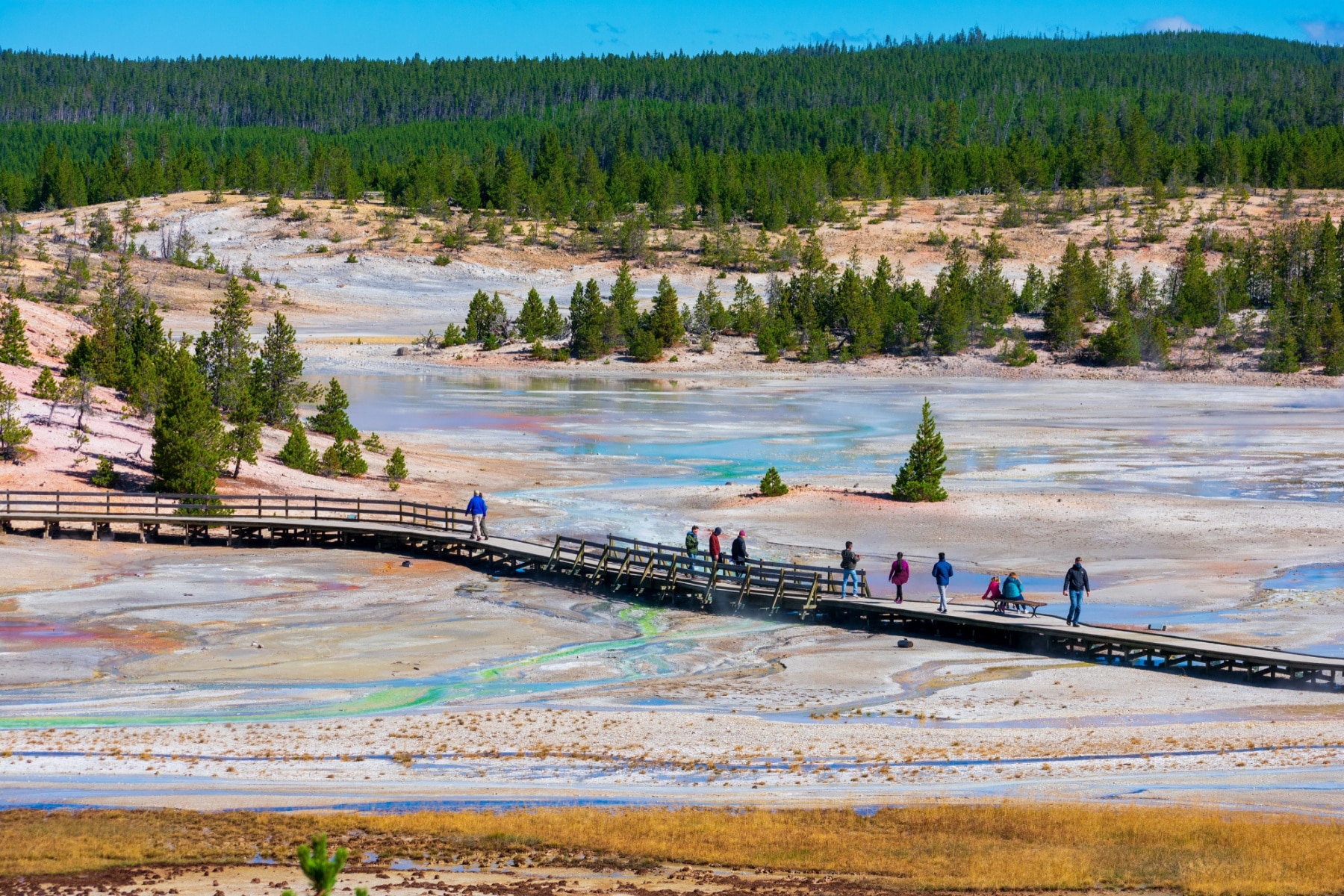
Afternoon: Norris Geyser Basin. The hottest and most active basin in the park, where Porcelain Basin glows with blue thermal pools and steaming fumaroles.
3 Day Yellowstone Itinerary
Three days is our recommended minimum. It covers the geyser country, the canyon, and the wildlife and travertine of the north, with one base change partway through.
Old Faithful, Grand Prismatic, and the Geyser Basins
Overnight: West YellowstoneMorning: Old Faithful and the Upper Geyser Basin.
Midday: Grand Prismatic Spring and Midway Geyser Basin.
Afternoon: Surrounding basins and short trails.
West Thumb, the Grand Canyon, and Norris Geyser Basin
Overnight: Canyon VillageMorning: West Thumb Geyser Basin and Hayden Valley.
Midday: Grand Canyon of the Yellowstone, both rims.
Afternoon: Norris Geyser Basin and nearby sights such as Monument Geyser Basin, Beryl Spring, and Artists Paintpots.
Add-On: Night Skies
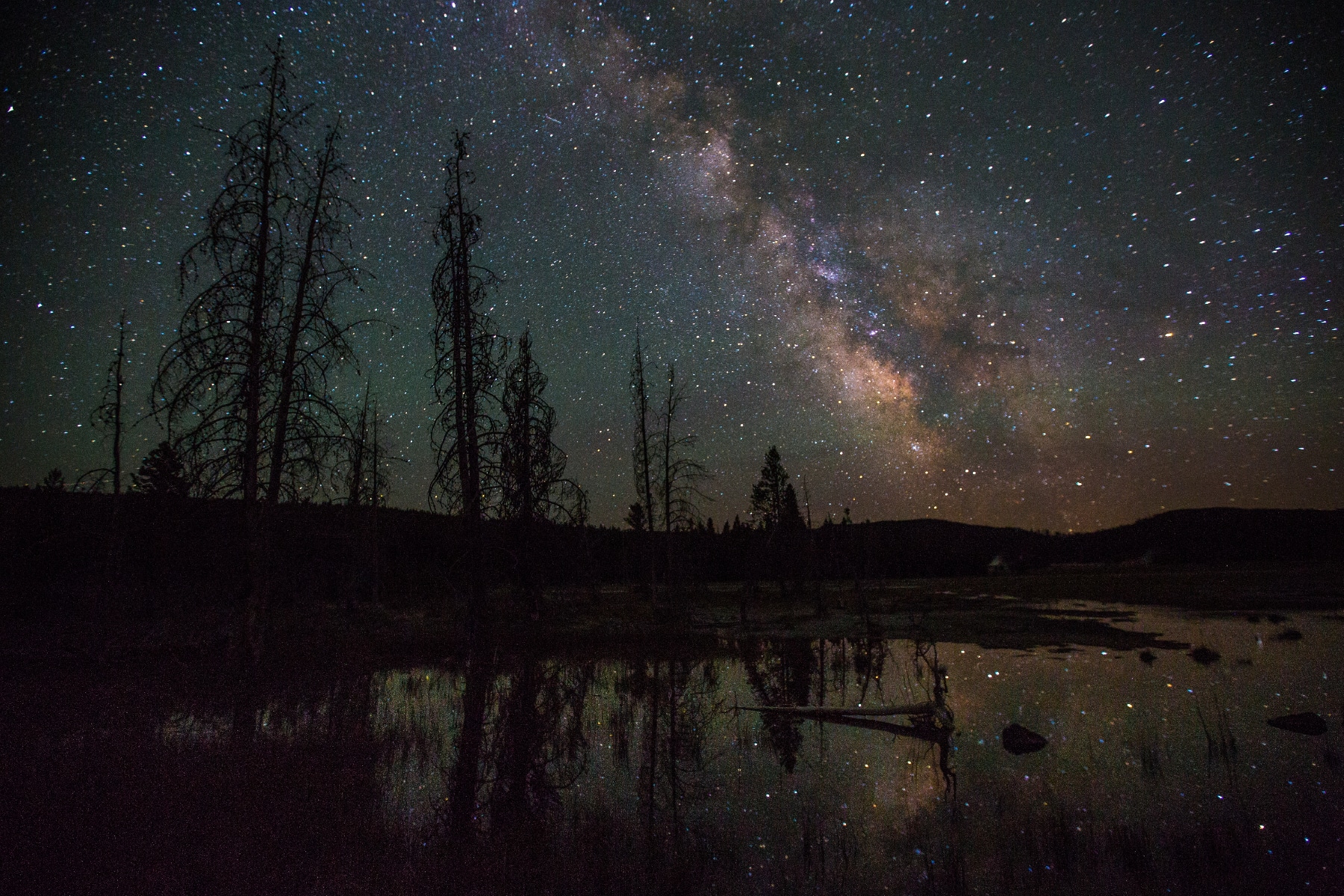
If your evening is free between April and October, the dark skies here are exceptional.
The boardwalks near Old Faithful and Mammoth Hot Springs make easy stargazing platforms.
Lamar Valley and Mammoth Hot Springs
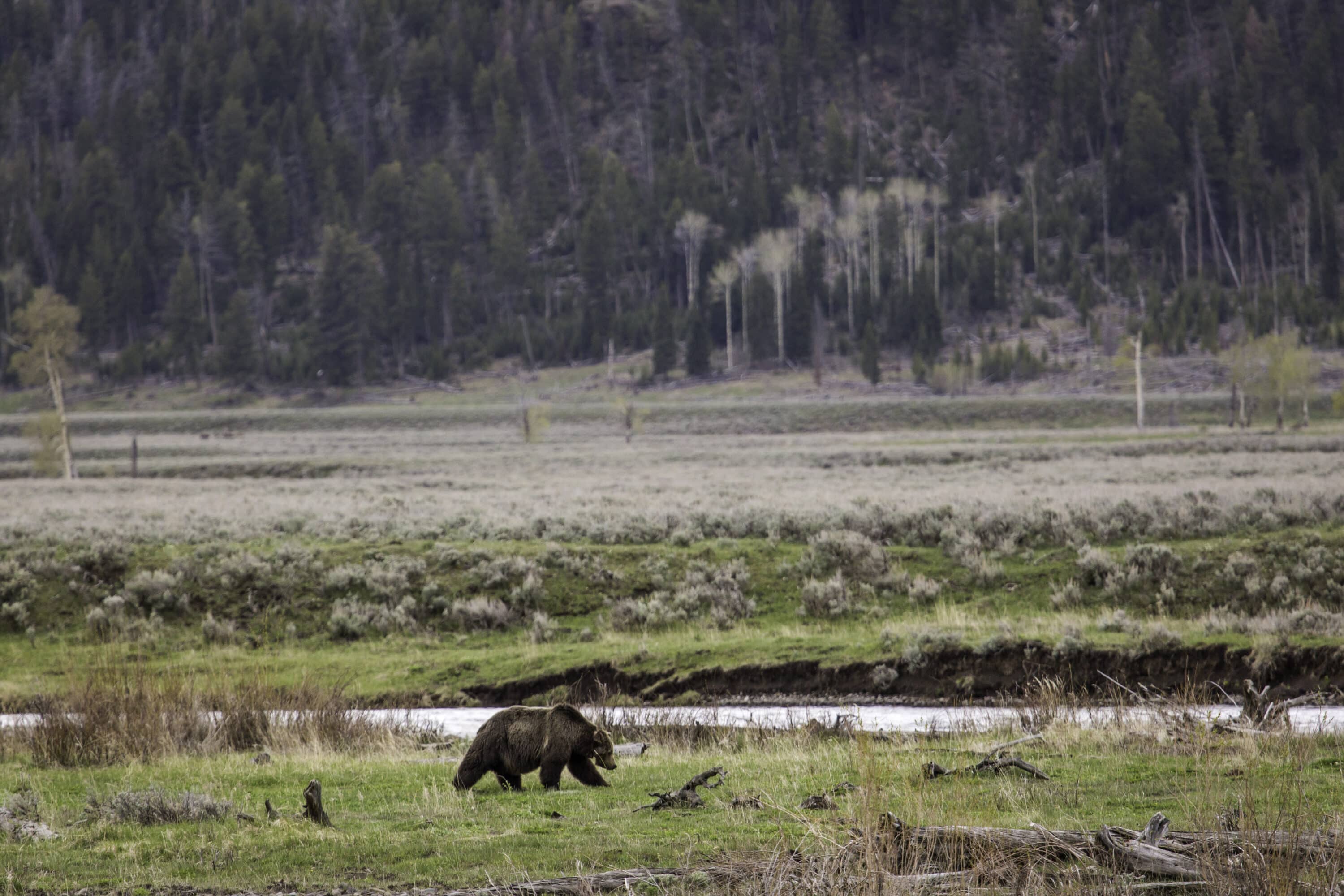
Overnight: Mammoth Hot SpringsMorning: Lamar Valley. The best place in the park to see wildlife. The grasslands hold bison, elk, deer, and the wolves and grizzlies that draw photographers at first light. Go early or late.
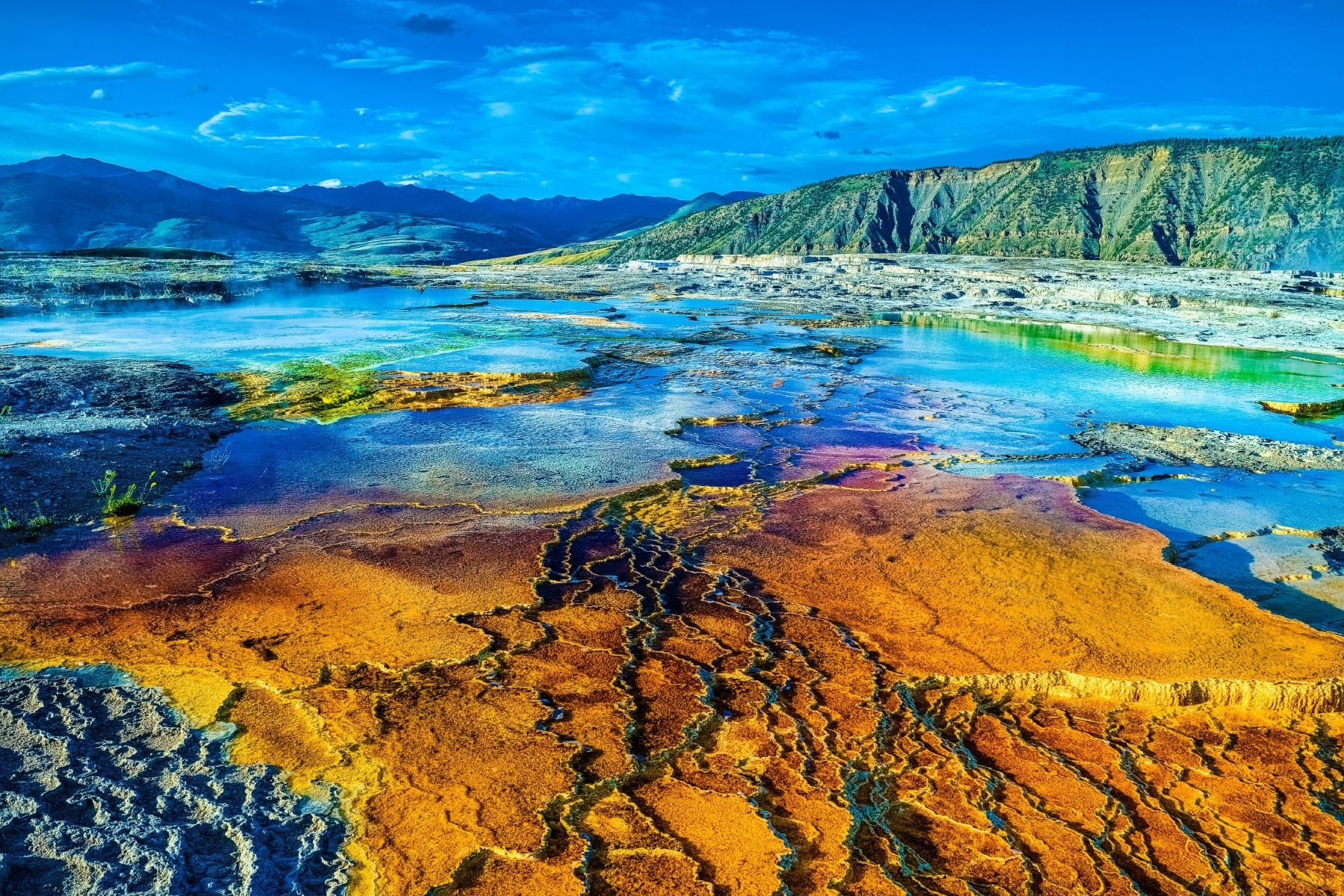
Midday: Mammoth Hot Springs. More than 50 hot springs feed the upper and lower travertine terraces, which grow faster here than typical sinter formations and look like a cave turned inside out.
Afternoon: Mammoth and its trails. Grab a meal at the Mammoth dining options and walk an easy or harder terrace trail rather than backtracking the five-plus hours to the south end of the park.

4 Day Yellowstone Itinerary
A fourth day lets you either explore a region more thoroughly or add a hike. This version spreads the three-day plan over four days and works in two of the park’s best signature walks.
Beating the crowds: Most traffic builds between 10 a.m. and 4 p.m. in the busy months. Hit the marquee stops at dawn or near dusk and you will have whole boardwalks nearly to yourself.
Old Faithful, Grand Prismatic, and the Geyser Basins
Overnight: West YellowstoneMorning: Old Faithful and the Upper Geyser Basin.
Midday: Grand Prismatic Spring and the overlook trail. Midday is the right time here, because the cooler morning air throws up steam that hides the color. Add the short walk on to Fairy Falls, a 200-foot drop, and you pass a couple more geysers along the way.
Afternoon: Surrounding basins, including Biscuit Basin, Black Sand Basin, and the Lone Star Geyser trail. Check the park’s geyser predictions to time your walk.
West Thumb, the Grand Canyon, and Canyon Village
Overnight: Canyon VillageMorning: West Thumb, Hayden Valley, and Mud Volcano. With the extra time, add Mud Volcano next to Hayden Valley, where Dragon’s Mouth Spring belches steam and water out of a small cave.
Midday: Grand Canyon of the Yellowstone, plus Mount Washburn. For strong hikers, the Mount Washburn climb earns panoramic views from a 10,219-foot summit. It is one of the harder day hikes in the park, just over six miles round trip with steep, sustained climbing.
Afternoon: Dinner in Canyon Village, the largest developed area in the park, with restaurants, a store, and other services.
Norris Geyser Basin and Mammoth Hot Springs
Overnight: Mammoth Hot SpringsMorning: Norris Geyser Basin.
Midday: Relax at a restaurant or your lodge.
Afternoon: Mammoth Hot Springs terraces.

Lamar Valley and Roosevelt Lodge
Overnight: Lamar ValleyMorning: Drive through Lamar Valley at first light for the best wildlife of the trip.
Midday: Eat at Tower-Roosevelt. Roosevelt Lodge, built in the 1920s on the north side, has a barbecue restaurant and bar, with Tower Fall nearby.
Afternoon: Walk part of the Lamar River Trail. The trail runs along the Lamar River and Soda Butte Creek in the heart of wildlife country, so carry bear spray and keep your distance from grizzlies.
5 Day Yellowstone Itinerary
Choose Your Own Adventure
A fifth day buys you freedom. The four-day plan covers the highlights, so day five is for one thing you would not otherwise reach. Use it to dig deeper into a region you loved, or add an activity most visitors skip.
- Go horseback riding from one of the park concessions.
- Kayak, canoe, or fish on Yellowstone Lake.
- Take a one- or two-day backpacking trip with a backcountry permit.
- Hike one of the dozens of trails you did not have time for, from our list of the best Yellowstone hikes.
Want someone else to do the planning? Park-sanctioned outfitters run guided trips that range from a single activity to a fully planned multi-day itinerary. It costs more, but it takes the logistics off your plate. Book only through vendors authorized by the park.
How to Get to Yellowstone
With five entrances, your starting point depends on where you are flying from. Match your arrival airport to the region you want to see first, and account for the drive. Here are the main airports, their distance from the park, and rough drive times.
- Yellowstone Airport, West Yellowstone: 3 miles, 10 minutes (seasonal, limited flights)
- Yellowstone Regional Airport, Cody, Wyoming: 55 miles, 1.25 hours
- Jackson Hole Airport, Wyoming: 70 miles, 1.5 hours
- Bozeman Yellowstone International Airport, Montana: 80 miles, 1.5 hours
- Idaho Falls Regional Airport, Idaho: 110 miles, 2 hours
- Salt Lake City International Airport, Utah: 325 miles, 5 hours
- Rapid City Regional Airport, South Dakota: 440 miles, 7.5 hours
The two small regional fields, West Yellowstone and Cody, are convenient but lightly served. Most travelers do better flying into Bozeman, Jackson, or Idaho Falls and matching that gateway to their first region. For a full breakdown, see our guide to the best airports near Yellowstone.

Build It Your Way
The right itinerary depends on what you came for. If you are short on time, do not let anyone, us included, talk you out of the version of Yellowstone you actually want. Some people would rather spend every hour watching wildlife and climbing ridgelines, with a single geyser thrown in. Others want to walk every thermal boardwalk and chase waterfalls between them. Use the modules below to swap pieces in and out and build the trip around your own priorities.
Wildlife Lovers
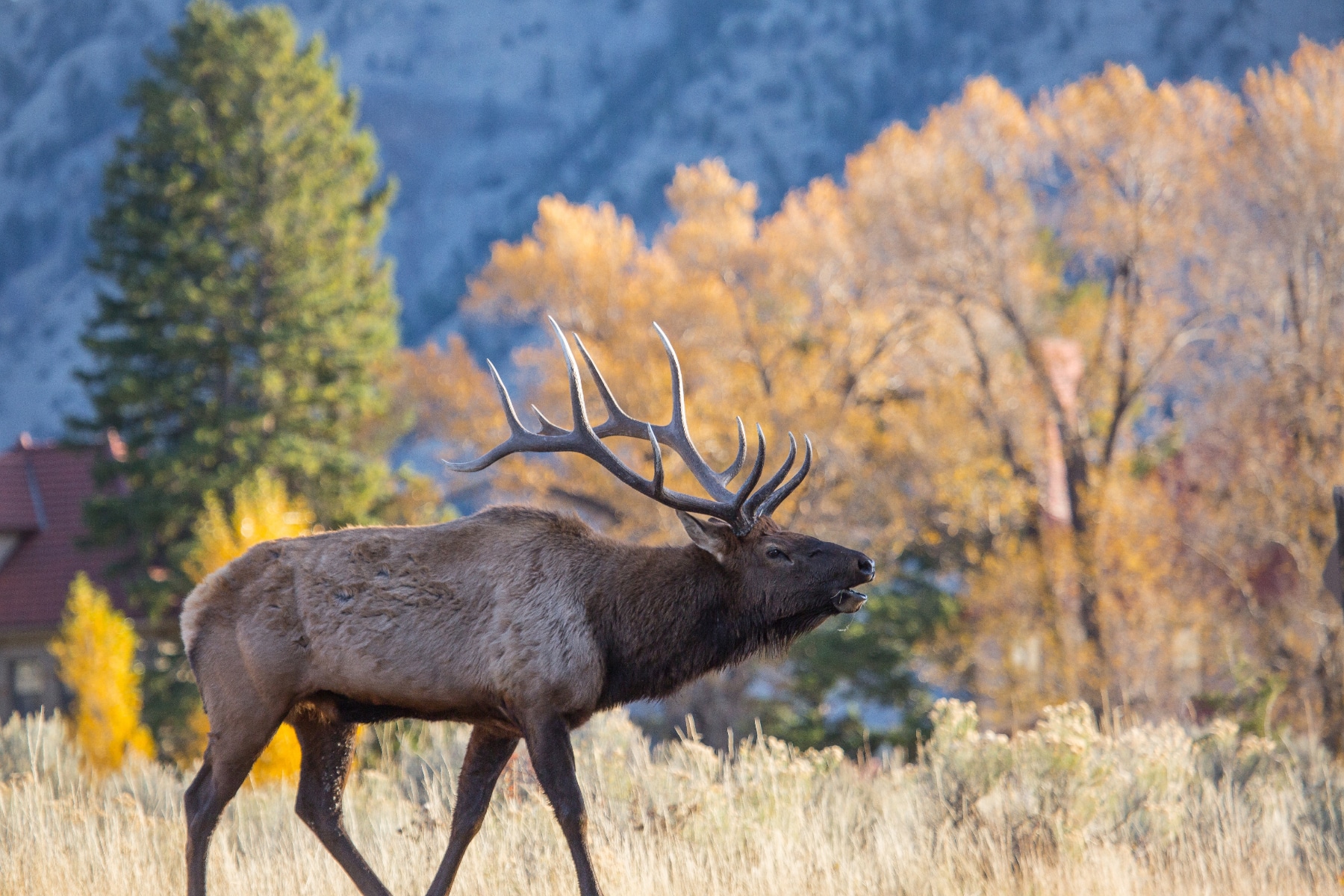
Hayden Valley and Lamar Valley hold the best wildlife trails and sightings in the park.
Visit in fall for smaller crowds and the elk rut, when the bugling carries across the valleys.
Waterfall Chasers
The Grand Canyon of the Yellowstone has the biggest waterfalls, but most regions hold their own cascades.
Pair waterfall trails with the Upper and Lower Geyser Basins, or visit Tower Fall over in Tower-Roosevelt.


Geyser Go-Getters
With more than 500 geysers and over 10,000 thermal features, you are spoiled from the Lower Geyser Basin north to Mammoth.
Even Yellowstone Lake’s West Thumb is a hot, steaming hub of activity.
Strong Hikers
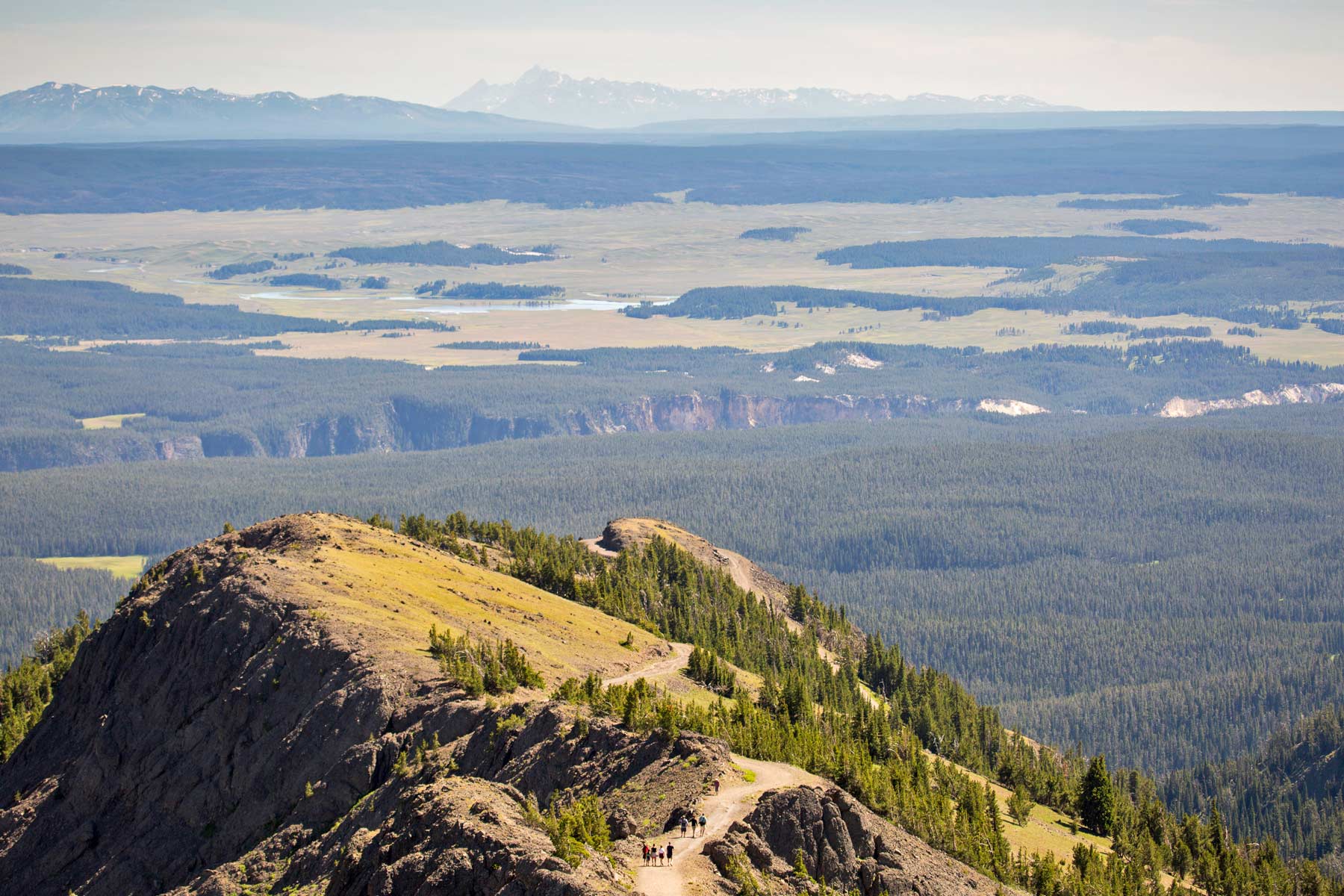
The east side of the Grand Loop holds the toughest hikes in the park, including Mount Washburn, Seven Mile Hole, and Avalanche Peak.
Several of them combine prime wildlife viewing with thermal features along the way.

Lake Lovers
Yellowstone Lake is your region, with fishing and boating from spring through fall and the Fishing Bridge for anglers.
Nearby trails include access to Mud Volcano, though be ready for the sulfur smell.
Things to Know Before You Visit Yellowstone National Park
Entrance Fees
Yellowstone charges by the vehicle, not the person, and your pass is good for 7 days. We have paid this fee more times than we can count and it remains one of the great bargains in American travel. Thirty-five dollars gets a carload of people a week inside 2.2 million acres of the wildest country in the Lower 48.
| Pass Type | 2026 Price | Good For |
|---|---|---|
| Private vehicle | $35 | 7 days, everyone in the car |
| Motorcycle | $30 | 7 days |
| Per person (foot, bike, ski) | $20 | 7 days, ages 16 and up |
| Yellowstone Annual Pass | $70 | 1 year, Yellowstone only |
| America the Beautiful Pass (US residents) | $80 | 1 year, every national park and federal fee site |
| America the Beautiful Pass (non-US residents) | $250 | 1 year, every national park and federal fee site |
| Senior Annual Pass (62+) | $20 | 1 year |
| Military, Access, and 4th Grade Passes | Free | 1 year |
Our advice on the math. If your trip includes Grand Teton next door, and it should, the parks share a border and Grand Teton charges its own separate $35 vehicle fee, the $80 America the Beautiful Pass pays for itself before you finish your first week. Buy it at the entrance station or online ahead of time.
The New $100 International Visitor Surcharge
This one is new for 2026 and it catches a lot of people off guard at the gate.
As of January 1, 2026, visitors who are not US residents pay a $100 per-person surcharge on top of the standard entrance fee at Yellowstone and 10 other flagship parks, including Grand Teton, Glacier, Yosemite, and Grand Canyon. It applies to anyone age 16 and older from outside the US arriving by personal vehicle, commercial bus, or on foot.
The workaround is the $250 non-resident America the Beautiful Pass, which covers the surcharge entirely. For an international family of four spending a week across Yellowstone and Grand Teton, the pass saves hundreds of dollars. Do that math before you reach the entrance booth, because the line behind you will not be patient while you do it there.
Roads, Reservations, and Timing Your 2026 Trip
Yellowstone does not open all at once. It wakes up in stages between mid-April and late May, and it shuts back down in stages through October and early November. We have shown up in mid-May expecting the full park and found a third of it still behind snowplows. Learn from us.
2026 Road Opening Dates
| Opens | Road Segments |
|---|---|
| Year-round | North Entrance (Gardiner) through Mammoth to Northeast Entrance (Cooke City) |
| April 17 | West Entrance to Madison, Madison to Old Faithful, Madison to Norris, Mammoth to Norris, Norris to Canyon Village |
| May 1 | East Entrance to Fishing Bridge, Canyon Village to Bridge Bay |
| May 8 | South Entrance to West Thumb and connecting segments |
| May 22 | Canyon Village to Tower Fall over Dunraven Pass, plus the Beartooth Highway |
What this means in practice: before April 17, you can only drive the northern road between Gardiner and Cooke City. Before May 22, you cannot drive directly from Canyon to Lamar Valley over Dunraven Pass and have to loop the long way through Norris and Mammoth. Every itinerary below assumes the full loop is open, so a visit before Memorial Day weekend needs rerouting.
In fall it runs in reverse. Dunraven Pass and the high roads close in mid-October, most park roads close to regular vehicles at the start of November, and the Beartooth Highway shuts around mid-October. Only the Gardiner to Cooke City road stays open to cars all winter.
The Beartooth Highway deserves its own sentence. It is, in our opinion, the most spectacular drive in America, topping out at 10,947 feet, and it only exists as a driving option from late May to mid-October. If you are entering or leaving through the Northeast Entrance in that window, take it.
2026 Construction
Two projects will slow you down this year. The Gardner River High Bridge work means a single lane of traffic with delays up to 15 minutes, around the clock, from April 13 through late October 2026. Parkwide chip-sealing crews can add delays up to 30 minutes wherever they are working. Build slack into any day that crosses the northern range.
There Is No Timed Entry, But Read This
Unlike Glacier, Arches, and a growing list of parks, Yellowstone has no timed entry and no entrance reservation system in 2026. You can show up at any gate, any day, pay your $35, and drive in. Good.
What actually books out is everything else. Here is the honest list, in order of how fast it disappears.
Summer rooms at Old Faithful Inn and Lake Hotel. Gone within days of the 13-month window opening. More on that below.
In-park campgrounds. Every site in the park is reservation-only except Mammoth in the off season. There are two booking systems and they work differently, which trips people up every single year.
| Campground | Book Through | 2026 Season | Nightly Fee | Sites |
|---|---|---|---|---|
| Madison | Yellowstone NP Lodges | May 1 to Oct 17 | $38 | 276 |
| Bridge Bay | Yellowstone NP Lodges | May 15 to Sep 13 | $38 | 431 |
| Canyon | Yellowstone NP Lodges | May 29 to Sep 19 | $45 | 272 |
| Grant Village | Yellowstone NP Lodges | Jun 26 to Sep 26 | $45 | 429 |
| Fishing Bridge RV Park | Yellowstone NP Lodges | May 8 to Oct 17 | $94 | 310 |
| Tower Fall | Recreation.gov | May 22 to Sep 27 | $20 | 31 |
| Indian Creek | Recreation.gov | Jun 12 to Sep 14 | $20 | 70 |
| Lewis Lake | Recreation.gov | Jun 15 to Oct 11 | $20 | 84 |
| Slough Creek | Recreation.gov | Jun 15 to Oct 12 | $20 | 16 |
| Mammoth | Recreation.gov | Year-round, first come first served Oct 15 to Apr 1 | $25 | 82 |
Recreation.gov campgrounds open on a rolling 6-month window, so a July 15 arrival books on January 15 at 8 a.m. Mountain time, and Slough Creek’s 16 sites vanish the moment they appear. The five concessionaire campgrounds follow the lodging system through Yellowstone National Park Lodges.
Two closures to know. Norris Campground has been closed for five years and stays closed in 2026 with no reopening timeline. Pebble Creek remains closed for flood recovery from the June 2022 flood. If an older guide sends you to either one, that guide is out of date.
Dinner at the Old Faithful Inn Dining Room. Reservations are required and they book far ahead through the same Xanterra system. Decide at booking time, not when you are hungry.
The 13-Month Booking Window Explained
One more time, because it is the single most important booking fact in this article. Lodging inside Yellowstone opens 13 months ahead. On the 5th of each month, the entire matching month of the following year goes on sale, online at midnight Mountain time and by phone (307-344-7311) at 7 a.m.
Planning a July 2027 trip? Your booking date is July 5, 2026. Put it on the calendar now. Then keep checking back for cancellations if you miss it, because people cancel daily and the system shows it instantly.
A Few 2026 Conditions Worth Knowing
There is no park shuttle. Yellowstone is a driving park, full stop, so wildlife jams are your traffic and patience is your toll.
The two famous swim spots are both closed. Boiling River has not reopened since the 2022 flood, and the Firehole River swim area is closed for the 2026 season. Soaking happens in Gardiner at Yellowstone Hot Springs or not at all.
Bear rules are not suggestions. Stay 100 yards from bears and wolves, 25 yards from bison and elk, and carry bear spray on every trail, where it belongs on your hip and not buried in your pack. People are gored by bison here every summer because they treat a 2,000-pound animal like a petting-zoo exhibit. Just because they are friend-shaped does not mean they are friends.
Where to Stay in Yellowstone National Park
We have stayed all over this park across years of filming trips. Historic hotel rooms, canvas-walled budget cabins, gateway motels in every direction. Where you stay shapes your whole trip, because Yellowstone is enormous and drive times eat itineraries alive.
You have two real options. Stay inside the park at one of the nine lodges run by Yellowstone National Park Lodges (the concessionaire, operated by Xanterra), or base yourself in a gateway town and drive in each morning. Both work. They work differently.
The In-Park Lodges
All nine properties are booked through one operator at yellowstonenationalparklodges.com or by phone at 307-344-7311. There is no Marriott in Yellowstone. There is no Airbnb in Yellowstone. If a third-party site claims to have an “inside the park” property that is not on this list, close the tab.
| Lodge | 2026 Season | Price Tier | Our Take |
|---|---|---|---|
| Old Faithful Inn | May 1 to Oct 12 | $$$ | The one worth fighting for |
| Old Faithful Lodge Cabins | May 8 to Oct 4 | $ | Budget beds steps from the geyser |
| Old Faithful Snow Lodge & Cabins | Apr 24 to Oct 25, plus winter | $$ | The modern option at Old Faithful |
| Lake Yellowstone Hotel & Cabins | May 15 to Oct 11 | $$$ | Best porch in the park system |
| Lake Lodge Cabins | Jun 10 to Oct 4 | $ | Same lake views, fewer dollars |
| Canyon Lodge & Cabins | May 15 to Oct 25 | $$$ | Most central, most rooms, least charm |
| Grant Village | May 29 to Oct 11 | $$ | Fine. That is the review |
| Mammoth Hot Springs Hotel & Cabins | Apr 24, 2026 to Mar 8, 2027 | $$ | The shoulder-season and winter play |
| Roosevelt Lodge Cabins | Jun 5 to Sep 7 | $ | The sleeper pick for wolf watchers |
Old Faithful Inn is the most famous lodge in any national park and it earns the reputation. The 1904 log lobby alone is worth the booking war. Standard rooms run roughly $284 to $868 a night, and the cheaper Old House rooms share hallway bathrooms. We think the shared bathroom is a fair trade for sleeping inside a building this good.
Roosevelt Lodge is the one nobody tells you about. Roughrider cabins start around $139 a night, they are heated by wood stove, and you are 20 minutes from Lamar Valley at dawn when the wolves are out. For wildlife filming mornings, no base in the park beats it.
Lake Yellowstone Hotel is where you go to feel like it is 1925. String quartet in the sunroom, yellow colonial facade, the whole bit. Splurge territory.
Canyon Lodge has more than 500 rooms and the personality of a conference center, but it sits in the geographic middle of the park, and that location does real work on a 3- to 5-day itinerary. Rooms ran $267 to $1,225 in 2025.
Grant Village works if everything else is full. Mammoth is your move for April, October, and winter, when it is one of only two lodges open.
Gateway Towns
If the lodges are booked or you want a hot tub and a real grocery store, the gateway towns deliver. Pick your town based on which corner of the park you are prioritizing, not on price alone.
West Yellowstone, Montana is the workhorse. The West Entrance sits at the edge of town, Madison Junction is 14 miles in, and Old Faithful is about an hour door to door. Biggest selection of hotels and restaurants of any gateway. If you are only booking one base for a first visit, this is it.
Browse West Yellowstone hotels and rates
Gardiner, Montana sits at the North Entrance under the Roosevelt Arch, 5 miles from Mammoth Hot Springs. This is the only entrance open to cars year-round, which makes Gardiner the winter base and the best jumping-off point for Lamar Valley wildlife mornings, about an hour away.
Browse Gardiner hotels and rates
Cooke City and Silver Gate, Montana are tiny, and we mean two-streets tiny. But they sit at the Northeast Entrance about 20 minutes from Lamar Valley. Serious wolf watchers and photographers stay here. Everyone else drives past.
Browse Cooke City hotels and rates
Cody, Wyoming is 53 miles from the East Entrance, call it two hours to Yellowstone Lake. Too far for a daily commute in our opinion, but a great first or last night paired with the Buffalo Bill Center of the West.
Jackson, Wyoming is 57 miles from the South Entrance and roughly two and a half hours from Old Faithful. Stay in Jackson for Grand Teton. Use it for Yellowstone only if you are doing both parks in one trip, which, again, you should.
Browse Jackson hotels and rates
One warning from experience. Gateway-town prices in July and August rival the in-park lodges, and the good properties book months out too. “We’ll figure out lodging later” is not a Yellowstone strategy. It is a 90-minute commute from Idaho.

Yellowstone Contingency Plan: When the Plan Falls Apart
Every itinerary above assumes the full Grand Loop is open and the weather cooperates. Often it does not. Here is what to do when the three most common Yellowstone problems hit.
If you visit before the roads fully open (April to late May)
This is the most common shoulder-season trap. Dunraven Pass between Canyon and Tower does not open until May 22 in 2026, and several segments open in stages from mid-April. A pre-Memorial-Day trip cannot drive the full loop, so plan around what is actually open:
- Go north and west. The Gardiner-to-Cooke City road is open year-round, and the West Entrance corridor to Old Faithful, Norris, and Canyon opens April 17. That covers the geysers, Grand Prismatic, and the Grand Canyon of the Yellowstone, the headline sights.
- Reach Lamar Valley the long way. If Dunraven is still closed, loop through Norris and Mammoth to get to Lamar rather than the direct Canyon-to-Tower route. It is the best wildlife valley in the park and worth the detour.
- Embrace it as wildlife season. Late spring is prime time for bears, wolves, and newborn bison in Lamar and Hayden, often the best wildlife viewing of the whole year, exactly when the high roads are still closed.
If a thermal area or trail is suddenly closed
Yellowstone is alive, and it closes parts of itself with no notice. The Biscuit Basin boardwalk has been closed since the July 2024 hydrothermal explosion, and bear activity routinely shuts trails like Mystic Falls for a season. When your planned stop is closed:
- Swap to the next basin over. If Biscuit Basin is closed, the Upper, Midway (Grand Prismatic), and Lower Geyser Basins are all within a few miles and deliver the same otherworldly thermal payoff.
- Respect bear closures absolutely. A closed trail in grizzly country is closed for a reason. Pick another hike from our best hikes in Yellowstone guide rather than risking it.
- Check the park alerts each morning. Thermal and wildlife closures change daily. The NPS app and the park’s current conditions page are the source of truth, not last year’s blog post.
If the in-park lodges are booked out
Old Faithful Inn and Lake Hotel sell out within days of the 13-month window opening. If you missed it, you still have good options:
- Stalk cancellations. People cancel daily and the Yellowstone National Park Lodges system shows openings instantly. Check yellowstonenationalparklodges.com daily as your trip nears. We have landed Old Faithful Inn rooms a week out this way.
- Base in a gateway town and drive in. West Yellowstone, Gardiner, and Cody all put you within striking distance, and they have far more rooms than the park. The trade is an earlier alarm to beat the gate traffic.
- Consider a campground. The Recreation.gov campgrounds open on a rolling 6-month window, a shorter lead time than the lodges, so a site may still be available when the hotels are long gone.
Helpful Related Links
- Yellowstone park hub: Yellowstone National Park guide and trip planner
- Things to do: Best things to do in Yellowstone National Park
- Best hikes: The best hikes in Yellowstone
- Yellowstone facts: Fascinating Yellowstone National Park facts
- Airports: The best airports near Yellowstone
- Mount Rushmore to Yellowstone: The Mount Rushmore to Yellowstone road trip
- Grand Teton next door: Grand Teton National Park guide and things to do in Grand Teton
- Grand Teton hikes: The best Grand Teton hikes
- More Wyoming parks: The national parks of Wyoming
What to Bring to Yellowstone
Gear we recommend for Yellowstone. Affiliate links support our work at no cost to you.
More Than Just Parks may earn a small commission from purchases made through these links, at no extra cost to you. We only recommend gear we would actually use.
Affiliate disclosure: Some links on this page earn us a small commission at no extra cost to you. We only recommend gear we actually use.


