White Sands Things To Do Wide 1

Article Overview: Things to Do in White Sands National Park

White Sands National Park at a Glance

LocationNew Mexico
Size146,344 acres

We’ve been to White Sands National Park and hiked through the gypsum dune fields at sunset when the light turns the white sand gold and pink. It’s one of the most otherworldly landscapes in the national park system. Having spent time there, we put together this guide to help you plan the best possible visit.

As you traverse the shifting dunes, enjoy panoramic views of the endless white expanse, surrounded by towering dunes up to 60 feet tall. Halfway through, you’ll reach Alkali Flat itself, where unexploded munitions lay just beneath the surface. It should go without saying, but obey all warning signs here and do not go off-trail.


14. Go Sand Sledding

Without question, one of the highlights of White Sands is the opportunity to go sledding down the dunes. This thrilling, unique experience involves flying down the powdery gypsum on a wax-coated sled. There are several places to sled throughout the park, and it’ll be obvious which dunes are the most popular. To get away from the crowds, go further into the dune field (away from the road). This freedom to explore just about anywhere you can walk is one of the best things to do in White Sands National Park!

Because gypsum isn’t slippery like snow, sledding takes some getting used to, and you can’t use any ol’ sled. The best thing to do is buy one from the park visitor center, which costs around $25. You can also bring your own, but make sure it’s the round saucer-style. We still recommend purchasing wax at the visitor center. 


13. Explore the Interdune Boardwalk

Take a leisurely stroll along the Interdune Boardwalk, a raised path winding through the desert. There are several interpretive signs along the 0.4-mile trail, highlighting the area’s unique biodiversity. At the end of the trail, there’s a viewpoint over the sand dunes stretching toward the Sacramento Mountains. 

Because of its short length and easy-going nature, this is one of the best things to do in White Sands National Park for all ages and visitors who are short on time. It’s also wheelchair-accessible and stroller-friendly. 

Things to do in white sands national park
The boardwalk of White Sands National Park. (Shutterstock/Zack Frank)

12. Take the ‘Sunset Stroll’

Offered every day year-round, barring severe weather or missile testing, the free  Sunset Stroll is by far one of the most popular things to do in White Sands National Park. This ranger-led walk is held nightly as the sun dips below the horizon, showcasing the park’s beautiful transformation.

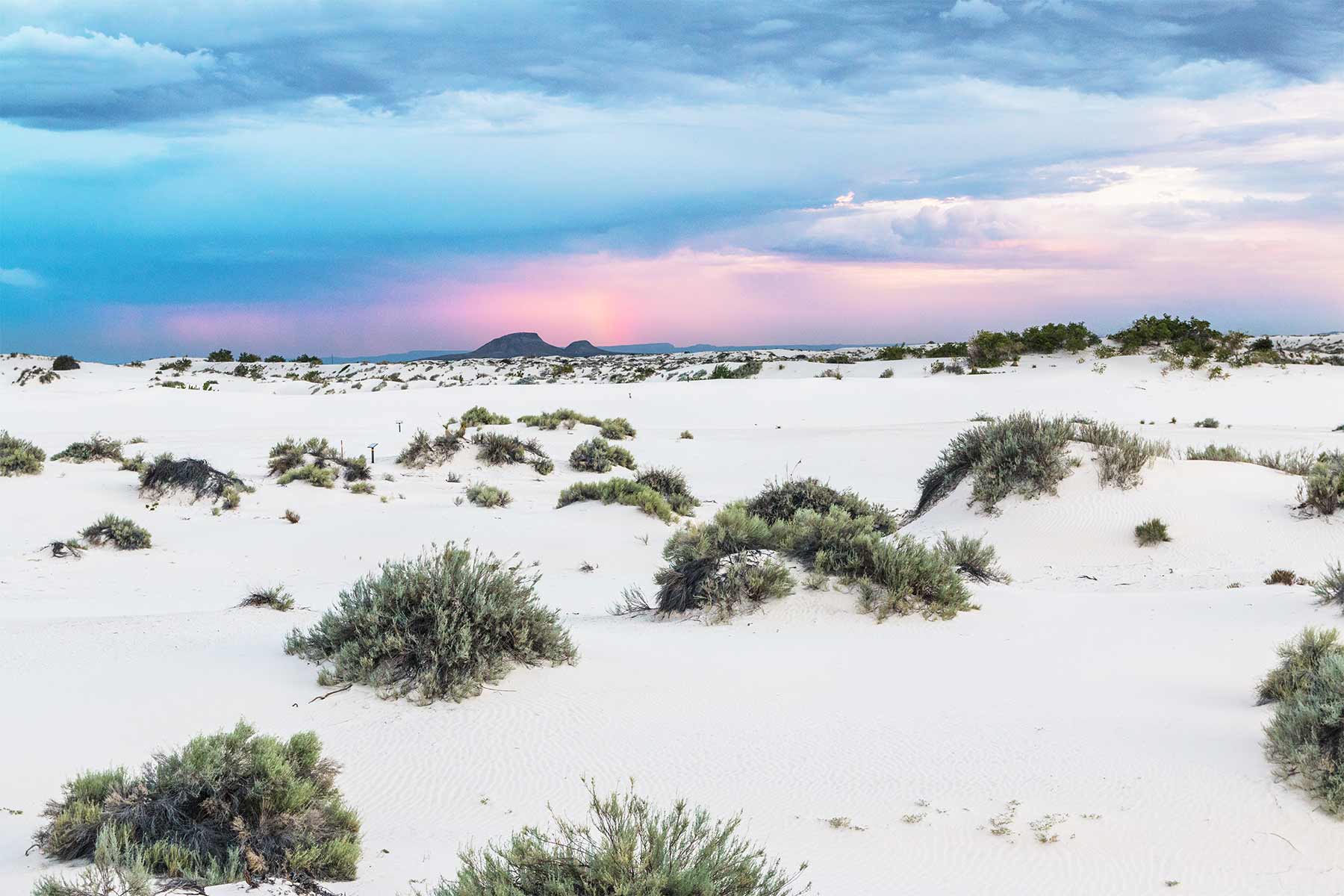
Listen to fascinating stories about the park’s history, geology, and wildlife while experiencing the tranquility of the desert at dusk as everything is bathed in a warm golden-pink glow.  

Start times vary depending on the time of year and are timed perfectly to end on top of a dune just as the sun sets.

white sands national park new mexico

11. Catch Sunrise From the Top of a Sand Dune

Sunrise over the dunes is especially magical. Aside from the colors of the sand and sky being simply, there are far fewer people in the park. That’s because you’re required to get an Early Entry or Stay Late Pass.

If you’re hoping for some solitude, and to experience the dunes with those perfect wind-blown lines in them rather than covered in footprints, getting up for sunrise is one of the top things to do in White Sands National Park. 

Pack a thermos of coffee, hike up your chosen sand dune, and sit back to soak in the peacefulness of the desert, waking up to a new day.

Sunrise at White Sands National Park.
Get permission to enter the park early and watch the sunrise for one of the best things to do in White Sands National Park. (Shutterstock/Andriy Blokhin)

10. Cruise Scenic Dunes Drive

White Sands is one of the easier parks to explore and experience because of its size and the fact that there’s only one park road.

The aptly named Dunes Drive spans eight miles, starting at the park entrance. Not only is it one of the best things to do in White Sands National Park, but it’s also the starting point for doing just about everything.

Driving all the way to the end of the road takes just 45 minutes or so without stops, so include it in your White Sands itinerary even if you have a very short time in the park. The road is paved until the last three miles, where it becomes gypsum. It’s hard-packed, so it’s suitable for just about any vehicle. 

TRAVEL TIP: You can also ride a bicycle on Dunes Drive to extend this unique experience.

White Stands Road covered in white sand
The road blends in with the dunes at White Sands National Park. (Shutterstock/Anna Westman)

9. Explore the White Sands National Monument Historic District

It’s not too often I can put the visitor center and surrounding maintenance buildings on a “best of” list, but one of the best things to do in White Sands National Park is visit the White Sands National Monument. It just happens to include the visitors’ center with a museum, displays, and a park video.

The White Sands Historic District preserves Pueblo Revival architecture and New Deal projects. No detail is missed, from the stucco structures that withstand the brutal desert climate to the tin and glass accents that are a throwback to the Santa Fe Trail trade.

The district’s Pueblo Revival buildings were designed by Lyle Bennett, who also went on to create structures in this unique style at the Petrified Forest National Park and Bandelier National Monument.

This is the only place to get fresh water in the park too.

White Sands National Monument Historic District
White Sands National Monument Historic District is one of the best things to do in White Sands National Park. (NPS Photo)

8. Pack an Otherworldly Picnic

First of all, picnicking might not sound all that exciting, but the landscape of the picnic places in White Sands National Park makes it out of this world. Three picnic areas are available in the park, each with carriage-shaped picnic tables to protect you from the sun and make for the most Instagrammable meal you’ll eat that day.

Even Smithsonian Magazine calls these picnic areas iconic and beautifully sums up the architecture as “evoking a timelessness, both retro and futuristic simultaneously.” Other publications have called them “Aliens-have-landed” looking and “Star Wars-inspired.”

All of the picnic tables face north, offering great sunrise and sunset views while getting maximum shade during the day.


7. Hike the Playa Trail

When you’ve been around as long as I have, you hear the word “playa,” and your mind goes right to Burning Man in Nevada’s Black Rock Desert. However, White Sands National Park has its own playa, and it is where those Ice Age footprints were found, along with bear-sized sloth prints and some wooly mammoths.

For the average tourist, a dried lake bed is known as a playa. This is an ephemeral environment. The Playa Trail truly showcases the delicacy of the dunes by showing what happens when you “just add water” to gypsum. The hit-or-miss water access brings resilient wildlife and plants, and this trail is never the same experience twice because of its transitional nature.

There are a handful of interpretive signs that detail the changes that occur in this area with rain and different seasons.

Things to do in white sands national park
The playa of White Sands National Park isn’t very pretty, but it is pretty fascinating. (NPS Photo)

6. Explore the Backcountry

How many places in life can you not only sleep under the stars but do so on the top of a white sand dune? That’s exactly why backcountry camping is one of the must-experience things to do in White Sands National Park!

Even while the campsites are undergoing renovations, the two-mile loop of the White Sands Backcountry is one of the best things to do in White Sands National Park for a strenuous hike. The sunset reviews at this location are plentiful.

Those 50-foot dunes feel like a mountain summit, so don’t let the elevation fool you.

SAFETY ALERT: Bring a map and know how to use a compass. The trail markers here can be knocked down, covered in sand, or blown away. It is easy to lose your bearings in a sea of white sand with seemingly endless hills. Your footprints will be covered or blown away within minutes. Even Park Rangers warn, “If you cannot see the next trail marker because of blowing sand or because the trail marker is knocked down, do not proceed, return to your car. Strong winds can reduce visibility to a few feet, making it easy to become lost.”

White Sands Things to Do
The undulating dunes of White Sands National Park stand in stark contract to the mountains beyond. (NPS Photo)

5. Take a Ranger-led Tour of Lake Lucero

Offered just once a month and by reservation only, the opportunity to tour Lake Lucero is one of the most fascinating things to do in White Sands National Park.

Lake Lucero is the birthplace of the dunes, and the rangers do a great job of explaining why. You’ll walk through the lake bed and see stacks of selenite crystals. It’s those very formations that are subjected to wind and sun and then transition to replenish the sand dunes.

On the 3-hour tour, you’ll learn all about this process as you hike about 1.5 miles over rugged terrain. Because of the proximity to White Sands Missile Range, Lake Lucero is not available as a self-guided hike.


4. Walk the Dune Life Nature Trail

The Dune Life Nature Trail offers a fantastic intro to the dunes themselves. If you want to explore them on an official trail without venturing too far on your own, this is one of the top things to do in White Sands National Park. The fairly easy 1.1-mile loop should take you about 30-40 minutes, taking you over some sand dunes. There’s quite a bit of plant life here, including iconic yucca plants, desert cottontails, and in the spring, colorful wildflowers.

White Sands National Park Plant Pedestal
Exploring the adaptive plant life is one of the best things to do in White Sands National Park. (NPS Photo)

3. Search for White Critters

I’ve been running from house mice my entire life, so imagine my surprise when I found myself squinting and crawling on the white sand, trying to find an Apache Pocket Mouse. One of the best things to do in White Sands National Park actually has you looking for rodents and spiders!

Much like the squirrels of the Grand Canyon adapted to the north and south rim over thousands of years, many animals here had to “lighten up” to survive.

Keep an eye out for the following:

  • Apache Pocket Mouse: These rodents blend in during the day but prefer to only come out at night. They have excellent kidney function that allows them to go without water for months.
  • Bleached Earless Lizard: They can hear but don’t have ears. They can change color when the sand darkens in the rain.
  • Sand-Treader Camel Cricket: These creatures adapted to life on the sand, including the skill of digging like dogs.
  • Sand Wolf Spider: These light spiders sit on the dunes and wait for prey, but don’t worry, they don’t have venomous bites.
  • White Moths: 40 endemic species of moths live here, yet another “only place on Earth” you can find here at White Sand National Park.
Things to do at White Sands National Park.
The white critters of White Sands National Park. (NPS Photo)

2. White Sands Balloon Invitational 

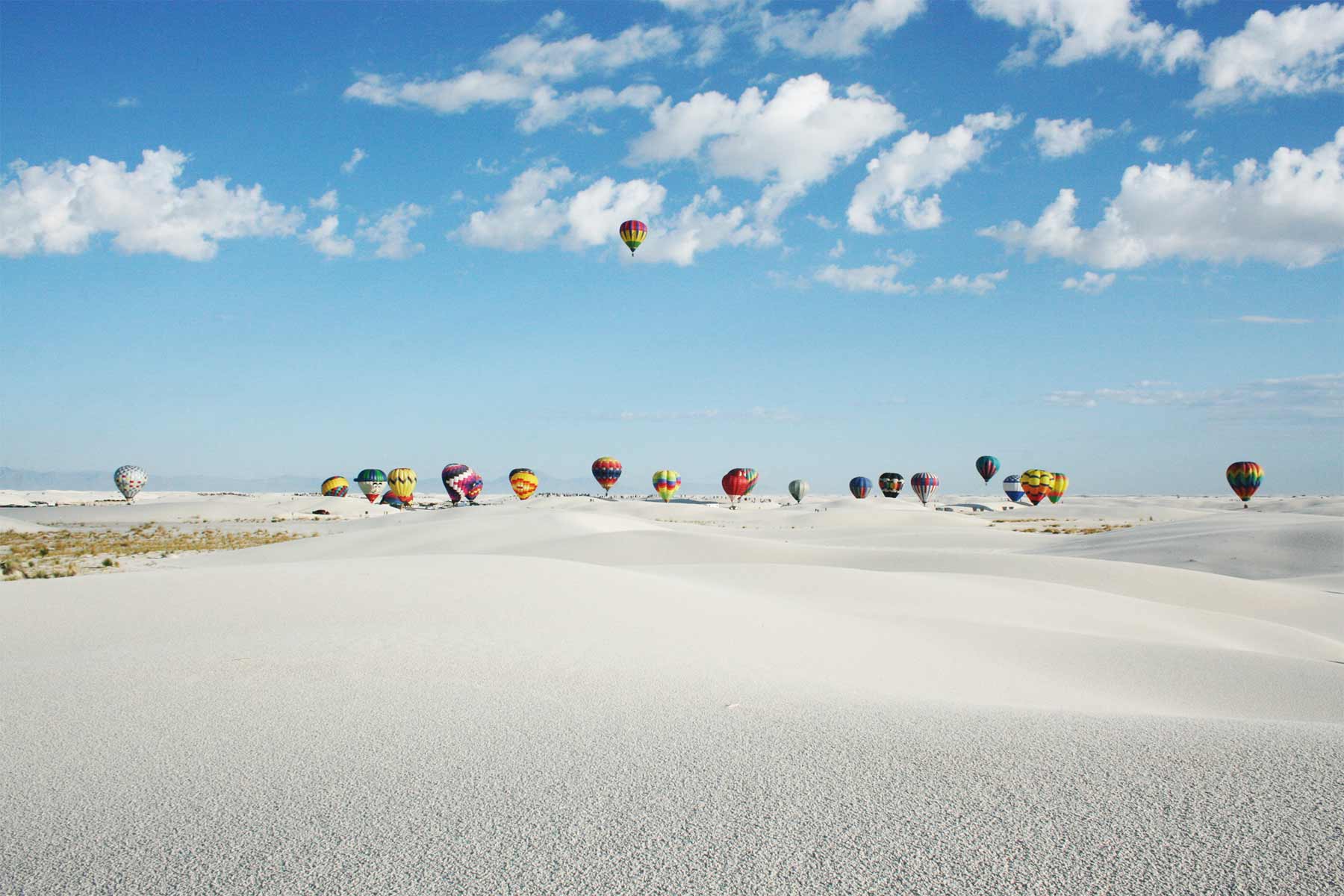
In a state known for its hot-air balloon festivals, the White Sands Balloon Invitational is really spectacular. For more than 30 years now, this event has been adding splashes of color to the white landscape with dozens of balloon take-offs and an evening Balloon Glow Spectacular.

Part of this event is at White Sands National Park, and then the fun spills over into the town of Alamogordo. This only happens once a year in September, so starting to make plans now.

Balloon Festival White Sands
One of the best things to do in White Sands National Park is plan your trip around the hot-air balloon festival. (NPS Photo)

1. Join a Full Moon Hike

Once a month, from March through November, park visitors can experience the magic of White Sands under the enchanting glow of a full moon. Participate in a guided Full Moon Hike to witness the dunes bathed in ethereal silvery light and hear fascinating stories about the park’s geology and history. The combination of the moonlight and the white of the dunes is almost otherworldly, making this one of the most memorable things to do in White Sands National Park. 

The hike is one mile up and down sand dunes, and advance registration is required. Full Moon Hikes do sell out, so we recommend registering as soon as possible.

Look for Full Moon Night events where the park stays open two hours later, embracing the full moon celebrations of New Mexico’s culture.

Full moon over White Sands
The full moon view is one of the best things to do in White Sands National Park. (Shutterstock/Galyna Andrushko)

Things to Know Before You Visit White Sands National Park

Entrance Fees

$25 per vehicle OR if you plan to visit more National Parks within the next 12 months, I suggest you go ahead and purchase the America the Beautiful Pass(which can be found at the entrance gates to most national parks). This pass gets you into all National Parks, Forests, Monuments, and more, including 2,000 sites for free after a one-time $79 fee.

Sunscreen

Use it. Lots of it. Especially this one, which I never leave the house without because it plays nice with our dear friend, Earth 🙂

Insect Repellent

If you’re looking for a good insect repellent that plays nice with our good friend Earth, we recommend this one or this one if you’re a DEET person.

The Best Guide Book for White Sands National Park is this one which we’ve marked up and highlighted quite a bit.

National Parks Checklist Map: Indeed, this beautiful National Parks Checklist Map can be ordered to your house.

Framed National Parks Map: We’re a sucker for maps; this framed national parks map is the best.

Where to Stay

Undeniably, this is our favorite hotel in/around White Sands National Park.


Getting to White Sands National Park

Many of the 705,000+ people enjoying the things to do in White Sands National Park will also parlay that into a trip to other southern New Mexico locations.

Therefore, here are some important distances to know for your trip:

  • Albuquerque: 224 miles
  • Carlsbad Caverns National Park: 181 miles
  • Roswell: 133 miles
  • Truth or Consequences: 121 miles

However, the only large airport anywhere near White Sands is the Albuquerque International Sunport(ABQ). The Roswell Air Center(ROW) has limited flights to Dallas (DFW).

White Sands National Park is flanked by the Sacramento Mountains to the east and the San Andres Mountains to the west.

The park is in the center of the two in the Tularosa Basin. White Sands Missile Range shares a border with the park to the north.

From ABQ, you can take the eastern route and visit the mountain town of Ruidoso.

Taking the San Andres route would have you pass through the unique town of Truth or Consequences.

Alamogordo is the anchor town for White Sands National Park and is just 15 miles away.


Important Access Information for White Sands National Park

Timing matters when it comes to the best things to do in White Sands National Park. The park is open daily year-round, but it’s not a 24/7 park. Hours change by the season. The gates usually open at 7:00 a.m. and close at either 6:00 p.m. 7:00 p.m. or 8:00 p.m.

Only one entrance takes you in or out of the park. Check the NM Roads website for road conditions if you’re traveling in winter or during other types of severe weather. If you are approaching the park from the east, you’ll have to go through a Border Patrol checkpoint.

White Sands National Park and White Sands Missile Range are neighbors but do not share entrances. None of the things to do in White Sands National Park involve anything about the nuclear test site. Even the Trinity Site, where the first atomic bomb went off, is not part of the park.

Missile Test Road Closures

White Sands Missle Range is still active, and testing is done about twice a week.

White Sands National Park officials get anywhere from two weeks to 24 hours’ notice of tests, which can lead to road and park closures for up to three hours.

You won’t stumble upon a missile test. Gates will close, and signs like this one will be posted.

Missile Testing

“To access the latest roadblock information, call the phone number below. The information is usually updated each weekday in the afternoon for the following day. Since the actual firings can slide due to any number of circumstances like weather or equipment problems, travelers should also check the recording right before leaving to ensure nothing has changed.”

WHITE SANDS MISSILE RANGE WEBSITE NOTICE

Here are some other ways to check road closures for missile testing:

WARNING: Another key point is that sometimes debris from missiles makes its way into the national park. These items are property of the military and could contain unexploded ordnances. Never touch debris, but do take a photo, note the location, and report it to park rangers. Obey all boundary signs as you could be walking right into a minefield.

Also important to note is that park activities will come to a stop when the missile testing is being done if it requires Dunes Drive to be closed. That includes hiking, sledding, and driving.

Missile Testing BlueBarronPhoto
Missle testing as seen from White Sands National Park. (Shutterstock/BlueBarronPhoto)

How Weather Impacts Things to Do in White Sands National Park

White Sands National Park is part of the Chihuahuan Desert. As a result, it gets the extremes of a desert climate. Let’s do a quick summary of each season.

Spring, aka “Wind Season”

The desert also has a season that you might call spring, but we desert dwellers call it the season of wind.

From March through May, the “windy season” brings wonderful temperatures with highs in the mid-70s and lows around 40°F. At the same time, windstorms can bring gusts that are slightly annoying and leave you with a mouthful of sand to sustained winds near 50 miles per hour and white-out conditions.

Aerial view of a sandstorm at White Sands National Park.

The windstorms of White Sands National Park not only reshape the dunes but are also so intense that the International Space Station can see them.

Use this National Weather Service link to get information about potential severe weather, indeed.

Obviously, do not go hiking in a windstorm or when one is in the forecast.

Sand storm at White Sands.
Ground-level view of sand storm at White Sands National Park. (NPS Photo)

Summer in White Sands

Of course, desert summers radiate heat. From June through August, the average high in White Sands National Park is near triple digits. June is the hottest month of the year. In fact, park rangers advise never to start a hike if the temperature is 85°F or higher.

Of all the things to do in White Sands National Park, worrying about burning the bottom of your feet on hot sand isn’t one of them. The gypsum sand doesn’t get hot like the dark beach sand you’ve likely hopscotched across.

Why is gypsum sand not hot? Gypsum sand has a high albedo, which means it reflects a significant amount of sunlight rather than absorbing it. When sunlight hits the gypsum grains, they bounce back a good portion of the solar radiation, preventing the sand from heating up as much as other darker sands would. Darker sands, like those made of basalt, seashells, or rocks, tend to absorb more sunlight and heat up faster.

The arid climate of the desert causes sweat to be absorbed before you realize it. Dehydration can set in quickly. Carry at least a gallon of water with you. Water is only available at White Sands National Park’s Visitors Center, not at the picnic areas or trailheads.

Edge Of Sand Dune White Sands Nps

Monsoon Season

Monsoon season overlaps with summer and fall. This weather pattern brings afternoon and evening thunderstorms that build quickly, dump most of the annual rainfall at the park, and then the skies clear. These storms can happen daily.

If you see clouds building during a summer visit to White Sands, go back to your car. I’ve seen dozens of monsoon storms in my lifetime, and I am always amazed at how fast it goes from one little cloud to a downpour. Dangerous lighting can happen even without rain or if rain falls from a cloud but doesn’t touch the ground (Virga).

Lightning Rocks

When lightning strikes the gypsum sand, fulgurite is created. This natural phenomenon happens when the intense heat generated by the lightning bolt fuses the sand particles together, creating intricate, glass-like tubes known as fulgurites.

These delicate formations capture the moment of immense energy transfer and stand as tangible records of lightning’s power.

Do not touch or take fulgurite. Leave No Trace.

Fulgurite Lightning White Sands NPS

Fall’s Perfect Weather

September through November brings the best time of year to enjoy the things to do at White Sands National Park. Highs get between 65°F and 80°F, with lows in the 40s or 50s. Low winds and minimal rain offer plenty of wonderful days and nights to enjoy the dunes.

White sand dunes with fall foliage in the background.
Fall colors in White Sands National Park. (NPS Photo)

Winter at White Sands

This season really messes with your mind as the snow looks like sand, but the temperatures are still reaching daytime highs in the 50s and 60s. Those winter nights regularly get below freezing, and temperatures drop quickly.

You’ll need layers of clothing to peel off and add on. You’ll still need sunscreen as the sun reflects intensely off the sand.

white sands national park new mexico

The Geology of White Sands National Park

Enjoying the things to do in White Sands National Park is all the more entrancing when you understand how this gypsum sandbox ended up here. In simplest terms, I use the example of when I wash my dog after playing in the mud. I will put her in the bathtub (a basin), clean her up, and then drain the water. After the tub is dry, there’s a layer of sediment that remains.

White Sands National Park was formed by two key factors–water and wind.

Water’s Influence on Sand Dune Creation

Here’s a simple timeline of the formation being created:

  • 250 Million Years Ago: An ancient seabed covered this land, layers with gypsum at the bottom.
  • 70 Million Years Ago: The surrounding mountains were created by the same tectonic forces that designed the Rocky Mountains.
  • 20 Million Years Ago: Lake Otero covers the basins of the then-wet climate. Rains coming down the mountains scraped more gypsum into the lake. This goes on for 10,000 years.
Wind Influence on Sand Dune Creation

As the climate shifted from wet and humid to dry and arid, Lake Otero disappeared. That left gypsum crystals and layers on the ground but no sand dunes. The winds, relentless and persistent, broke apart the crystals into platelets, then pebbles, and eventually grinding it down to the sand that is there today.

We’ll let our friend Ranger Ibarra from White Sands National Park explain it in what might be the funniest video you’ll watch today.

NOTE: All White Sands Na tional Park YouTube videos that reference White Sands National Monument were filmed before the new designation in 2019.

The Ancient Footprints Discovery at White Sands

One of the things to do in White Sands National Park actually happens before you leave and is totally optional. However, the discovery of human and animal footprints in 2021 could change everything we know about when humans arrived in North America. Or it could be nothing more than a mistaken scientific assumption.

Remember how gypsum is used in drywall? The same characteristics made it a great molding mechanism. In fact, your dentist might have used a gypsum mold if you’ve needed restorative dental work. The footprints were molded and then sealed under layers of hardened gypsum known as selenite.

On the one hand, the scientists who made the discovery called it “definitive evidence of human occupation of North America.”Until this unveiling, no evidence existed that humans were in North America until after the last Ice Age. Now, it’s believed that humans were here during the Ice Age, a full 7,000 years earlier.

Without going into the weeds and getting closer to the things to do in White Sands National Park, there’s now more research that questions the validity of the age assumption.

To get a better understanding of what lies beneath White Sands National Park, watch this 54-minute documentary before your visit.


Summary of the 15 Best Things to Do in White Sands National Park

  1. Join a Full Moon Hike
  2. White Sands Balloon Invitational
  3. Search for White Critters
  4. Walk the Dune Life Nature Trail
  5. Take a Ranger-led Tour of Lake Lucero
  6. Explore the Backcountry
  7. Hike the Playa Trail
  8. Pack an Otherworldly Picnic
  9. Explore the White Sands National Monument Historic District
  10. Cruise Scenic Dunes Drive
  11. Catch Sunrise From the Top of a Sand Dune
  12. Take the ‘Sunset Stroll’
  13. Explore the Interdune Boardwalk
  14. Go Sand Sledding
  15. Hike the Alkali Flat Trail

Map of Things to Do in White Sands National Park


Pin Things to Do in White Sands National Park

White Sands Narrow 1 Things To Do
White Sands Narrow Things To Do 2

New Mexico National Parks:  20 SURPRISING New Mexico National Parks

Albuquerque:  10 Epic National Parks Near Albuquerque You’ll Love

Santa Fe:  10 Epic National Parks Near Santa Fe You’ll Love

El Paso: 5 EPIC National Parks Near El Paso You’ll Love 

Historic Sites:  10 Must-See Historic Sites In New Mexico

Saguaro National Park:  10 Incredible Saguaro National Park Hikes

Saguaro National Park Jaw Dropping Things To Do In Saguaro National Park

National Parks:  All 63 National Parks Ranked By Experts

Pro Tip

The park closes temporarily for missile testing at nearby White Sands Missile Range. These closures can last 1 to 3 hours with little advance notice. Call the park at (575) 479-6124 the morning of your visit or check the NPS website. Do not build a tight itinerary around a single window.

Pro Tip

Bring a sled or a saucer disc and wax it. Sledding the gypsum dunes is one of the best things you can do here. Buy a cheap plastic saucer at Walmart in Alamogordo before you arrive and grab a block of Gulf Wax. The wax is the key. Without it you will not slide.

Pro Tip

Dunes Drive closes at sunset (time varies seasonally). If you want sunset photos deep in the dunes, drive to the end of Dunes Drive and be in position well before golden hour. Rangers sweep everyone out after the gate closes.

Frequently Asked Questions

How much does it cost to enter White Sands?

A 7-day vehicle pass costs $25. Walk-in or bicycle entry is $15 per person, and motorcycles pay $20. The annual White Sands pass is $45. The $80 America the Beautiful pass is accepted. Children 15 and under are free.

What is the best time to visit White Sands?

October and November are ideal when the summer heat breaks, the light turns golden, and crowds thin. April and May are the other strong window with wildflowers and comfortable temps in the 70s. Winter (December through February) is surprisingly pleasant in the 50s and 60s.

Does White Sands close for missile testing?

Yes. The park closes temporarily for missile testing at nearby White Sands Missile Range. These closures can last 1 to 3 hours with little advance notice. Call the park at (575) 479-6124 the morning of your visit or check the NPS website for that day's schedule.

How many days do you need at White Sands?

A half day covers Dunes Drive, the Alkali Flat Trail, and sunset. A full day lets you do a morning hike, take a midday break in Alamogordo (the sand gets brutally hot and bright midday), and return for golden hour.

How do I get to White Sands?

The nearest major airport is El Paso International (ELP) in Texas, about 1 hour 30 minutes north on US-54 to US-70. The park entrance is directly off US-70 between Alamogordo and Las Cruces.