Lava Point is the best-kept secret in Zion National Park, and I am not exaggerating. While 4.5 million people per year cram into Zion Canyon, ride the shuttle, and fight for a spot on the Angels Landing trail, Lava Point sits at 7,890 feet with a 360-degree panoramic view of the entire park and hardly anyone around.
No hike required. You park your car, walk 50 feet, and you are standing at one of the most expansive viewpoints in southern Utah. From up here, you can see the Kolob Fingers, the West Temple, the Towers of the Virgin, and on a clear day, the Kaibab Plateau near the North Rim of the Grand Canyon. That is roughly 100 miles of visible landscape.
I would argue that Lava Point is the single best sunset spot in Zion. And the fact that fewer than 5% of the park’s annual visitors ever make it up here is either a tragedy or a gift, depending on how you look at it.
Why Lava Point Matters
Zion National Park has a crowding problem. During peak season, the canyon feels more like a theme park than a national park. The shuttle lines can hit 90 minutes. Parking at the Springdale gateway fills by 8am. Angels Landing now requires a permit lottery just to hike it.
Love Zion? It's one of 109 threatened public lands destinations we're tracking. Get the free weekly briefing.
Lava Point exists in a completely different universe. I have been here a dozen times over the years and I have never seen more than three other cars in the parking lot. Most visits, I have had the overlook entirely to myself. The silence up here is so complete that you can hear the wind moving through Zion Canyon 4,000 feet below you.
This is not some consolation prize. The view from Lava Point is legitimately one of the finest in the park. It just happens to require a 45-minute drive on a road that most people do not know exists.
How to Get to Lava Point
Lava Point is accessed via Kolob Terrace Road, which branches north from Highway 9 in the small town of Virgin, about 14 miles west of Springdale. If you are coming from the Zion Canyon area, drive west on Highway 9 through Rockville and Virgin. The turn onto Kolob Terrace Road is signed.
From Virgin, it is roughly 21 miles and 45 minutes to the Lava Point parking area. The road is paved the entire way but narrow with no guardrails in spots. It climbs from about 3,500 feet at Virgin to nearly 7,900 feet at Lava Point, gaining over 4,000 feet of elevation. The drive itself is scenic, passing through pinyon-juniper woodland, ponderosa pine forest, and aspen groves as you climb.
One thing to know. Vehicles longer than 19 feet are not permitted on the road to Lava Point. If you are driving an RV or towing a trailer, this is not your road. The turns are tight and there is nowhere to turn around up top.
There is no entrance fee station on Kolob Terrace Road, but you still need a valid park pass. Keep your receipt from the main entrance or bring your America the Beautiful pass. If you are a non-U.S. resident, the $100 per-person surcharge that took effect January 1, 2026 applies park-wide, including this section.
The parking area at Lava Point holds about 10 cars. I have never seen it full. That tells you everything you need to know about how few people come here.
The Drive Up Kolob Terrace Road
Most guides treat the drive as a means to an end. That is a mistake. The 45-minute ascent from Virgin to Lava Point is one of the most underrated scenic drives in southern Utah, and it deserves its own section.
You start in the desert. Red rock, sagebrush, and heat shimmer. Within the first 10 minutes, you are climbing through pinyon-juniper woodland, and the temperature starts to drop. By the halfway point, you are in ponderosa pine forest, and the air smells completely different. The final stretch passes through groves of quaking aspen that turn electric gold in late September and early October.
The ecological transition is dramatic. You are crossing multiple life zones in 21 miles, from Lower Sonoran desert to Canadian-zone forest. I have driven this road in 100-degree heat at the bottom and needed a jacket 45 minutes later at the top. That 4,000-foot elevation gain translates to roughly a 20 to 30 degree temperature drop, which is something worth keeping in mind when you pack for the day.
There are a few pullouts along the way with views back south toward the Virgin River valley and the town of Rockville. The road also passes near the trailheads for the Hop Valley Trail and the Wildcat Canyon Trail, both of which are backcountry routes into the park’s interior. Most folks blow past these without stopping. If you are a backpacker, take note.
What to Expect at Lava Point
The landscape at Lava Point is completely different from the red rock canyon that defines Zion for most people. Up here, you are surrounded by ponderosa pine and aspen forest. The air is cooler, often 20 to 30 degrees cooler than the canyon floor. In October, the aspens turn gold and the contrast against the red rock formations below is stunning.
From the parking area, walk south about 50 feet and the world drops away. The overlook faces south and west, giving you a sweeping view that includes some of Zion’s most iconic formations.
To the south, you can pick out the West Temple (7,810 feet), one of the most massive sandstone monoliths in the world. To the southeast, the Towers of the Virgin line up in a row. To the southwest, Wildcat Canyon and the Great West Canyon stretch into the distance. To the west, the Kolob Fingers reach toward the horizon. And on exceptionally clear days, you can see all the way to the North Rim of the Grand Canyon, roughly 80 miles to the south. You can also make out the White Cliffs above the Zion Narrows to the southeast.
There is a small metal railing at the viewpoint. No interpretive signs. No gift shop. No cell service. Just you and one of the biggest views in the Southwest.
Best Time to Visit Lava Point
Sunset. Period. The overlook faces south and west, which means the last light of day hits every major formation in front of you. The West Temple and the Towers of the Virgin turn from white and tan to orange to deep red to purple over the course of about 45 minutes. It is the best light show in Zion and you will share it with maybe four other people.
I have watched sunset from Lava Point in every month that the road is open. June and July offer the latest sunsets and the warmest evenings. September and October bring earlier sunsets but the combination of fall color in the aspens and low-angle autumn light is hard to beat. Check our guide on the best time to visit Zion for more seasonal detail.
Midday visits are fine but unspectacular. The high sun washes out the formations and the view is flat. If you can only come at noon, it is still worth the drive. But if you can time it for the last two hours of daylight, the difference is night and day. Literally.
Wildflower Season
June and July bring wildflowers to the meadows and forest clearings around Lava Point. At 7,890 feet, the bloom happens weeks later than it does on the canyon floor. You will find lupine, Indian paintbrush, and penstemon scattered through the ponderosa understory. It is not a showy carpet-of-flowers display like you might see in a subalpine meadow, but the splashes of color against the dark green forest and red rock backdrop are worth noticing. The West Rim Trail in particular passes through some beautiful wildflower areas in early summer.
Seasonal Access
This is the critical detail that catches people off guard. Kolob Terrace Road typically opens in late May or early June and closes with the first significant snowfall, usually in November. The exact dates vary year to year depending on snowpack. At nearly 8,000 feet, snow lingers here well after it has melted from the canyon floor. From fall through spring, the road usually closes for several months, with the closure beginning at Maloney Hill, about one mile east of the Hop Valley Trailhead.
That gives you a window of roughly five to six months per year. Plan accordingly.
Always check the NPS Zion conditions page before making the drive. There is nothing worse than spending 45 minutes on a narrow mountain road only to find a locked gate at the top. I have made that mistake exactly once.
The road can also close temporarily after heavy rain or if a storm is moving through. Lightning at 7,890 feet is no joke. If you see storms building, get off the exposed overlook and back to your car.
Lava Point Campground
Right next to the overlook is Lava Point Campground, and it is my favorite campground in all of Zion National Park. Six sites. Primitive. No water. And as of 2025, a reservation system has replaced the old first-come, first-served arrangement.
Here is what changed. Lava Point Campground now requires advance reservations through Recreation.gov at $25 per night. Reservations open 14 days in advance. With only six sites and a 14-day booking window, availability moves fast. If you want a specific weekend in September or October, set a reminder and book the moment it opens. There is no cell service at Lava Point, so you cannot make a reservation on-site.
I will be honest, I miss the free, first-come days. Showing up at 2pm and grabbing an open site felt like a reward for being in the know. The reservation system makes sense given the demand, but it changes the character of the experience slightly. That said, $25 a night for a campsite at 7,890 feet with a sunset view that would cost you $400 at a lodge in Springdale is still an absurdly good deal.
The sites are primitive, with a fire ring, a picnic table, and a trash receptacle at each one. Restroom facilities are pit toilets. You need to bring your own water and pack out all your trash. There are no hookups, no showers, and no potable water anywhere at Lava Point.
One important restriction. Lava Point Campground cannot be included in the itinerary of any wilderness backpacking trip. It is for vehicle camping only. If you are doing the West Rim Trail as a backpacking trip, you need a separate wilderness permit and designated backcountry campsites along the route.
If you want to combine the sunset at the overlook with a night of camping under some of the darkest skies in Zion, this is the play.
West Rim Trail Access from Lava Point
The West Rim Trail is one of the best hikes in Zion, and Lava Point is the typical starting point for the top-down route. The trailhead is about a half-mile southeast of the Lava Point parking area.
The full route covers roughly 14 miles one-way, descending about 3,600 feet from the Lava Point area to the Grotto in Zion Canyon. Most folks do it as a point-to-point hike with a shuttle arranged at one end. Several outfitters in Springdale run shuttle services to Lava Point, which typically means getting dropped off at the top in the morning and hiking down to the canyon where your car is parked.
The trail follows the top of Horse Pasture Plateau, skirting close to the rims with views into the canyons and across to the monoliths to the west. The upper portions near Lava Point pass through forest and meadow, and you will have those sections largely to yourself. As you descend, the landscape opens up and the views get progressively more dramatic. The final descent into Zion Canyon is steep and exposed, with some of the most spectacular vantage points in the park.
Spring and fall are the best seasons for this hike. You will enjoy wildflowers in spring and gorgeous foliage in fall. Summer works but the lower portions get brutally hot by afternoon, so an early start is essential. Most hikers take 6 to 9 hours for the full route depending on pace and how long they spend at the viewpoints. I have done it in 7 hours with frequent photo stops, but I was not moving slowly.
For a full breakdown of the trail, check out our guide to the best hikes in Zion.
Photography Tips
I have spent a lot of hours with a camera at this overlook. Here is what works.
A 24-70mm lens is the workhorse here. Wide enough for the panoramic sweep, long enough to isolate the West Temple or the Towers of the Virgin. If you have a 70-200mm, bring it for detail shots of individual formations during golden hour.
Bring a tripod. The last 20 minutes before sunset and the blue hour after are the most dramatic, and the light drops fast up here. You will want long exposures for the final shots.
If you catch a thunderstorm building over the canyon below, stay safe but keep your camera ready. Watching lightning illuminate Zion Canyon from 4,000 feet above is something you will never forget. Shoot from the safety of your car if necessary.
One tip that most people miss. Turn around. The view to the north and east from the parking area includes the pink cliffs and aspen groves that catch the last light beautifully. Some of my best Lava Point images face away from the main viewpoint.
What Most People Get Wrong
The biggest mistake people make in Zion is never leaving the main canyon. Millions of people visit every year, and almost all of them spend their entire trip on the canyon floor shuttle route. They wait in line for the shuttle. They wait in line for Angels Landing permits. They wait in line at the Narrows trailhead. And they never discover that 45 minutes away, there is a viewpoint that offers the best vista in the entire park with no crowd and no effort required.
The other common mistake is timing. People who do make it to Lava Point often arrive at noon, look at the view for five minutes, and leave. At noon, the overhead sun flattens the formations and the view is washed out. It looks fine. Come back at 7pm in June and the same view is transcendent. The formations glow. The shadows deepen. The distant canyons turn purple. It is a completely different experience, and it only happens in the last 90 minutes before the sun goes down.
Finally, a lot of people do not realize Lava Point exists at all. It does not appear on the simplified maps handed out at the entrance stations. The Kolob Terrace Road is not mentioned by the shuttle drivers. Unless you do your homework before arriving, you would never know this place was here. Consider this your homework.
What to Bring
Lava Point is easy to reach but remote. Plan accordingly.
- Water. At least 2 liters per person. There is no water at Lava Point and the nearest source is 45 minutes down the mountain.
- Layers. At nearly 8,000 feet, temperatures drop fast after sunset. Even in summer, I bring a fleece for evening. In September and October, a real jacket is necessary.
- Food. There are no services, no vending machines, nothing. Pack dinner if you are staying for sunset.
- A headlamp. If you stay for sunset (and you should), you will be driving a narrow mountain road in the dark on the way back. A headlamp is useful if you need to check your tires or navigate the parking area.
- A full tank of gas. The round trip from Springdale is about 70 miles, and the nearest gas is in Virgin or La Verkin.
Nearby Hikes and Destinations
West Rim Trail. The trailhead for the West Rim Trail is at Lava Point. This is a strenuous 14-mile one-way hike that descends from Lava Point all the way down to the Grotto in Zion Canyon, dropping about 3,600 feet. Many backpackers start at Lava Point and hike down, arranging a shuttle or pickup at the bottom. It is one of the best hikes in Zion and you will have the upper portions largely to yourself.
Kolob Canyons. This is Zion’s other hidden gem, accessible from I-15 about 40 miles north of Springdale. The 5-mile Kolob Canyons Scenic Drive ends at a viewpoint with red rock finger canyons that rival anything in the main canyon. If you are already making the effort to visit Lava Point, adding Kolob Canyons to your trip makes sense.
The Narrows. Back down in Zion Canyon, the Narrows is the park’s most iconic hike. Wading through the Virgin River between 1,000-foot sandstone walls is unlike anything else in the national park system. It is a completely different experience from Lava Point, but together they show you the two faces of Zion.
Where to Stay Near Zion
Springdale is the main gateway town for Zion, sitting right at the park’s south entrance. Hotels here range from budget motels to upscale boutique lodges. Prices spike in summer and during October fall color season. Book early if you are visiting between May and October.
Inside the park, Zion Lodge is the only hotel option and it books up months in advance. Watchman Campground and South Campground are both near the south entrance and offer reservable sites.
If you are planning to camp at Lava Point, bring everything you need. There are no services of any kind at the top of Kolob Terrace Road. The nearest gas, food, and water are back down in Virgin or Springdale, 45 minutes away. And remember, you now need a reservation through Recreation.gov. Showing up and hoping for a spot will not work anymore.
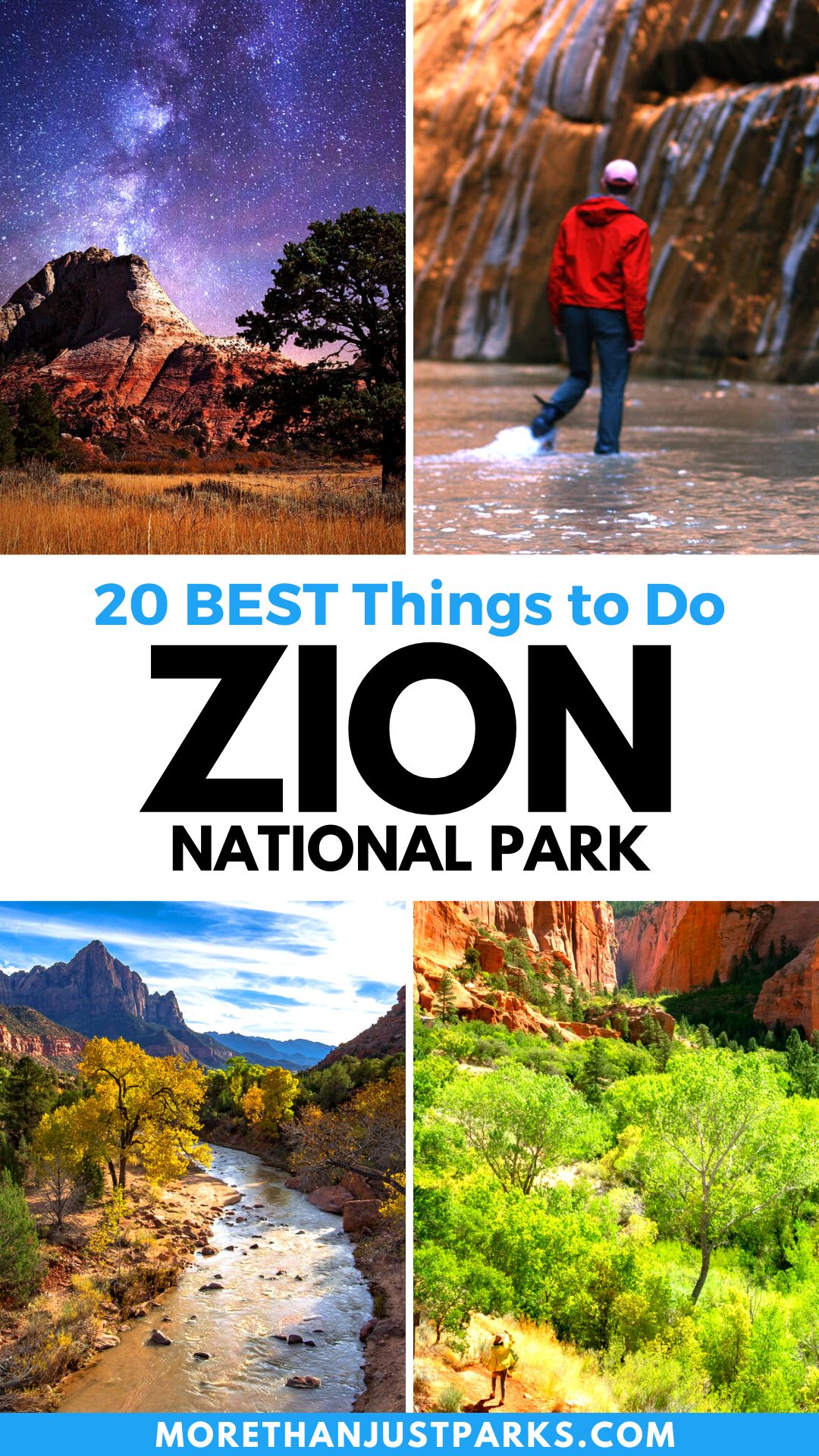
Experience Zion in 8K
ZION is the culmination of nearly a month spent exploring Zion National Park during peak fall color. Filmed primarily in stunning UHD 8K.