

Fall is the national parks’ best-kept secret, and the secret is barely a secret anymore. The summer crowds thin out, the air sharpens, the elk start bugling, and the hardwood forests and aspen groves catch fire in red and gold. We have filmed in the parks through every season, and autumn is the one we keep clearing our calendars for. This is our ranking of the ten best national parks to visit in the fall, with the specifics on when each one peaks and what to do once you are there.
A quick word on timing: fall color is a moving target that runs roughly from mid-September in the high country and the far north down through late October and even early November in the desert Southwest. We note the rough peak window for each park, but a cold snap or a warm spell can shift it by a week or two, so check current conditions before you commit.

Best National Parks for Fall at a Glance
| Rank | Park | State | Peak Color Window |
|---|---|---|---|
| 1 | Great Smoky Mountains | TN / NC | Mid-to-late October |
| 2 | Rocky Mountain | Colorado | Mid-to-late September |
| 3 | Acadia | Maine | Mid-October |
| 4 | Voyageurs | Minnesota | Late September |
| 5 | Grand Teton | Wyoming | Late September |
| 6 | Shenandoah | Virginia | Mid-to-late October |
| 7 | Great Basin | Nevada | Late September to early October |
| 8 | Glacier | Montana | Late September to early October |
| 9 | Zion | Utah | Late October to early November |
| 10 | Yosemite | California | Mid-to-late October |
1. Great Smoky Mountains National Park

No park puts on a better fall show than the Smokies. Home to the last great old-growth forests of the southern Appalachians, the park holds an absurd diversity of oaks, maples, birch, and beech, and when they turn in mid-to-late October the ridges look like they are on fire. Color climbs down the mountains over several weeks, so timing is forgiving. Drive to Kuwohi (Clingmans Dome) for a 360-degree view, stop at Newfound Gap, and walk a stretch of the hardwood trails. It is also the most visited national park in the country, so go early and on weekdays. See our best hikes and our full Great Smoky Mountains guide.
2. Rocky Mountain National Park

Autumn in Rocky Mountain means two things: golden aspen and bugling elk. In mid-to-late September the vast aspen stands turn brilliant yellow, and the elk rut fills the valleys with the eerie, carrying bugle of bulls challenging each other for the herd. Moraine Park and Horseshoe Park are prime elk-viewing meadows at dawn and dusk. The timed-entry reservation system that governs summer usually winds down by fall, so access loosens just as the color peaks. Plan with our Rocky Mountain hikes guide.
117 public lands destinations are under threat. Get the free briefing that 27,000+ people use to stay informed and take action.

3. Acadia National Park

New England does fall better than anywhere, and Acadia is New England’s only national park. By mid-October the dense hardwoods around Jordan Pond and along the carriage roads blaze against the granite and the Atlantic. Cadillac Mountain, the tallest point on the eastern seaboard, is one of the first places in the country to catch the sunrise; in fall the view down over the color-soaked island is the reason to set the early alarm. Bass Harbor Head Light, built in 1858, anchors the rugged coast. See our things to do in Acadia.

4. Voyageurs National Park

On the Canadian border in far northern Minnesota, Voyageurs is a water park in the literal sense, an interconnected web of lakes and forested islands reached mostly by boat. In late September the shorelines turn red and gold, the summer crowds and the bugs are both gone, and the still water mirrors the color and the sky. By night the northern lights often dance overhead. Check the Ellsworth Rock Gardens on Lake Kabetogama and watch for moose along the Gold Portage. See our things to do in Voyageurs.

5. Grand Teton National Park

By late September the summer tourists have mostly left the Tetons, the peaks get their first dusting of snow, and the cottonwoods and aspens around Jenny and Phelps lakes turn brilliant yellow against the gray granite. The Snake River Overlook, the view Ansel Adams made famous, is at its best with golden willows lining the river. It is one of the most photogenic autumn scenes in the country. Plan with our things to do in Grand Teton.

6. Shenandoah National Park

Shenandoah is built for a fall drive. Skyline Drive runs 105 miles along the crest of the Blue Ridge with more than 70 overlooks, and in mid-to-late October the Appalachian hardwoods below light up in every shade. Pull off for the climb up Old Rag for a panoramic view, or step onto the Appalachian Trail, which runs the length of the park, for a mile or two. Lodges at Skyland and Big Meadows make it an easy overnight from Washington, D.C. See our things to do in Shenandoah.
7. Great Basin National Park

Tucked into the remote desert of central Nevada, Great Basin is the sleeper on this list, an alpine island rising out of the sagebrush sea. In late September and early October the aspen groves below 13,063-foot Wheeler Peak turn gold, and the bristlecone pines along the trail near its base are among the oldest living things on Earth, some over 4,000 years old. It is one of the least crowded parks in the country, and the dark skies at night are extraordinary.
8. Glacier National Park

Glacier in fall trades summer’s chaos for golden larches and aspen and a real sense of solitude. In late September and early October the western larch turn buttery yellow before dropping their needles, lining the slopes around Lake McDonald. Going-to-the-Sun Road is still typically open in early fall before snow closes the high section, so you can drive the alpine spine with the color spread out below. Plan with our things to do in Glacier and our Glacier itinerary.
9. Zion National Park

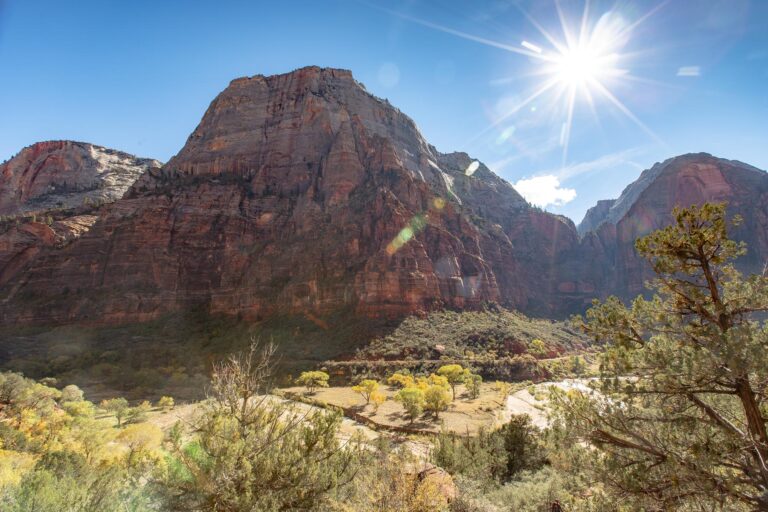
Most people think of Zion as a summer park, which is exactly why fall is the time to go. The infamous crowds taper off, and because the canyon sits low and warm, the color arrives late, with cottonwoods turning brilliant yellow and scattered maples deep red into late October and early November. The Canyon Overlook trail gives you a big view of the canyon for modest effort, a fine alternative to the permit-only crowds on Angels Landing. See our best things to do in Zion.
10. Yosemite National Park

Yosemite in summer is wall-to-wall people; in fall the valley empties out and becomes the place John Muir wrote about. Mid-to-late October brings golden oaks and cottonwoods across the valley floor, the light goes long and warm, and the weather stays mild. Tunnel View and Taft Point deliver the classic vistas, and the Mariposa Grove of giant sequoias is glorious with a quieter trail. See our things to do in Yosemite and our guide to visiting Yosemite in the fall.
Planning a Fall Parks Trip
Chase the color north to south. Color peaks earliest in the far north and the high country (Rocky Mountain, Voyageurs, Grand Teton, Glacier in September) and latest in the warm Southwest (Zion into November). If your timing is flexible, you can follow the wave.
Crowds and reservations ease. Many of the summer timed-entry and shuttle systems wind down in fall, which is part of the appeal, but always confirm, since some run into October.
More seasonal guides. See our picks for October and November, plus our national parks ranked and least visited national parks for crowd-free ideas.

We are Will and Jim Pattiz, the filmmakers behind More Than Just Parks. We have filmed in these parks across every season, and our films have been featured by the National Park Service, the Department of the Interior, and outlets across the country. If you can only travel once a year, make it fall. The parks are never better.