
Open for comment · closes November 19
Support updated protections for ACE Basin, Elkhorn Slough, and Weeks Bay reserves
National Oceanic and Atmospheric Administration · ACE Basin National Estuarine Research Reserve, Elkhorn Slough National Estuarine Research Reserve
- What
- Public comments now shape how three coastal estuarine reserves are managed and bounded for years ahead.
- Where
- ACE Basin National Estuarine Research Reserve, Elkhorn Slough National Estuarine Research Reserve, Weeks Bay National Estuarine Research Reserve, AL, CA, SC
- How much
- Clean water, wildlife habitat, and climate resilience at three federally protected estuaries depend on strong management plans.
- By when
- Comments to National Oceanic and Atmospheric Administration by November 19, 2026.Date from Federal Register ↗, read October 20, 2026.
What to ask forAll 4 points →
I support revising the management plans for the ACE Basin, Elkhorn Slough, and Weeks Bay National Estuarine Research Reserves, as these updated plans will set the direction for each reserve's programs and replace outdated plans approved as far back as 2007.
Where these four lines come from
- WhatOur plain-English read of the Federal Register 2026-21418 ↗. Check it against the agency’s own words under Case.
- WhereThe places and states the notice names, as PLAN read them.
- How muchThe first sentence of our What’s at risk read of the notice; the whole read is under Case.
- By whenNovember 19, 2026, from Federal Register, the document’s comment close date (federalregister.gov) ↗. Read October 20, 2026.
- Read from PLAN’s record October 20, 2026.
Two ways to be heard on this, and both count. Comment for the legal record, then call the members who answer to you.
Comment nowWhat to say
Make these points, in your own words
- I support revising the management plans for the ACE Basin, Elkhorn Slough, and Weeks Bay National Estuarine Research Reserves, as these updated plans will set the direction for each reserve's programs and replace outdated plans approved as far back as 2007.
- Approve boundary changes that expand protected areas at ACE Basin in South Carolina, Elkhorn Slough in California, and Weeks Bay in Alabama to strengthen long-term estuary conservation.
- These management plans guide programmatic evaluations and track progress toward reserve goals, so revising them now ensures each reserve has a current, effective framework for protecting these coastal ecosystems.
- Support simultaneous review of both the management plan revisions and the proposed boundary changes so NOAA can make coordinated, comprehensive decisions about all three reserves at once.
Say something only you can say. The law requires the agency to consider and respond to substantive comments, and specifics are what make a comment substantive.
Protective action worth supporting
Public comments now shape how three coastal estuarine reserves are managed and bounded for years ahead.
What’s at risk
If we stay silent
Our plain-English read of the official notice ↗. Check it against the agency’s own words below.
The agency’s case, tested
What the agency argues, and whether its own record backs it
- 4
- Not backed yet
The National Oceanic and Atmospheric Administration wants to replace the management plans for three estuarine research reserves in South Carolina, California and Alabama, which date from 2011, 2007 and 2017. It says the plans must be revised at least every five years, and it's also considering state requests to add land the states have acquired to each reserve's boundary.
“These draft revised management plans are intended to replace the ACE Basin Research Reserve, Elkhorn Slough Research Reserve, and Weeks Bay Research Reserve management plans, which were approved in 2011, 2007, and 2017, respectively.”
Summary
Each Ask below goes into your letter when you write it with PLAN on this page, matched to what you tell it about how this land reaches you.
Purpose and needNot backed yetThe three reserves need new plans because plans must be revised at least every five years, and the current plans date from 2011, 2007 and 2017.
The Summary and the Supplementary Information section agree that each state agency must revise its plan at least every five years. Both give the current plans as approved in 2011, 2007 and 2017, so all three are more than five years old as of this October 2026 notice. The notice doesn't explain why the 2007 and 2011 plans stayed in place so long, but that doesn't weaken the need to replace them.
The agency’s words, the record +Hide the words
The agency says
“Management plan revisions are required at least every five years.”
Summary
Elsewhere in the same document
“These draft revised management plans are intended to replace the ACE Basin Research Reserve, Elkhorn Slough Research Reserve, and Weeks Bay Research Reserve management plans, which were approved in 2011, 2007, and 2017, respectively.”
Summary
AuthorityNot backed yetThe agency has the power to approve these reserve boundary changes and may require public notice and comment before it does.
The Supplementary Information section cites a specific federal rule, title 15 of the Code of Federal Regulations, section 921.33(a), and describes it as covering the agency's approval of a boundary change and its option to require public notice first. The notice also lists its authority as title 16 of the United States Code, section 1451 and following, and section 921.33 of that same rule title. It says the agency will weigh comments in deciding whether to approve each boundary change in whole or in part. That backs the claim as written. The notice doesn't spell out what standards a boundary change has to meet, but the claim doesn't say it does.
AskExplain what standards the agency uses to approve a reserve boundary change, and show how each of the three proposed additions meets them.
The agency’s words +Hide the words
The agency says
“Pursuant to 15 CFR 921.33(a), NOAA may require public notice, including notice in the Federal Register and an opportunity for public comment, before approving a boundary change.”
Supplementary Information
ScienceNot backed yetSince its 2017 plan, Weeks Bay has made its monitoring more resilient, expanded training that uses reserve data and acquired adjacent lands.
The land part is backed, since the notice names 11 acquired parcels. The rest isn't measured. The notice gives no figures showing how monitoring became more resilient or how far training grew. Any detail would be in the draft plan, which isn't in this text.
AskGive figures showing how monitoring resilience improved and how much training grew since 2017, so the public can judge the new goals against them.
The agency’s words and the law +Hide the words
The agency says
“Since the last management plan, Weeks Bay has engaged with new audiences and partners, improved the resilience of their environmental monitoring capabilities, expanded training programs that incorporate reserve data, and successfully acquired lands adjacent to the reserve's boundary.”
Supplementary Information
The law
“ensure the professional integrity, including scientific integrity, of the discussion and analysis in an environmental document; (E) make use of reliable data and resources in carrying out this chapter;” National Environmental Policy Act, 42 U.S.C. 4332(2)(D)-(E) ↗
Show 1 more claim +Show fewer
ProcessNot backed yetThe agency analyzes the environmental impacts of approving the plans and the boundary changes, as NEPA requires.
The Supplementary Information section says the analysis is being done. It doesn't say what form the analysis takes, where to read it or what it found. The sentence also refers to one management plan and one boundary change, even though three plans and three boundary proposals are open for comment.
AskPublish the NEPA analysis for each plan and each boundary change, and say what kind of review it is, before the comment period closes.
The agency’s words +Hide the words
The agency says
“NOAA's Office for Coastal Management analyzes the environmental impacts of the proposed approval of this management plan, as well as the proposed boundary change, as required by the National Environmental Policy Act of 1969 (NEPA), as amended, 42 U.S.C. 4321 et seq.”
Supplementary Information
How this was read
Read from the agency’s own notice ↗, the notice that opens this window; the full analysis comes later, so what it leaves unsupported is what to ask it to show. Every quote is checked word for word against it, a claim marked contradicted stands on a quote from the same document, and a second reading argued the agency’s side of every verdict before it was published. The verdicts are our reading; the quotes are the agency’s. A court can set aside agency action it finds “arbitrary, capricious, an abuse of discretion, or otherwise not in accordance with law” (5 U.S.C. 706(2)(A) ↗), which is why these gaps are worth putting in the record.
In the agency’s own words
The National Oceanic and Atmospheric Administration (NOAA) is soliciting comments from the public regarding a proposed revision of the management plans for the Ashepoo[hyphen]Combahee[hyphen]Edisto Basin (ACE Basin) National Estuarine Research Reserve in South Carolina, Elkhorn Slough National Estuarine Research Reserve in California, and Weeks Bay National Estuarine Research Reserve in Alabama. A management plan provides a framework to guide a reserve's programs, track progress toward meeting its goals, and identify potential opportunities or changes in direction. It is also used to guide programmatic evaluation…
The groups on this fight
3 groups predicted likely to care in Alabama and California
Predicted likely to care is a guess from the group's sourced work in Alabama and California, with no link to this decision. Give straight to them; nothing routes through us.
- California Wilderness Coalition
Predicted likely to care · a guess
Chuckwalla National Monument, California: Spent years building the designation campaign with Tribal nations and now defends the monument as an intervenor in federal court.
- Los Padres ForestWatch
Predicted likely to care · a guess
Los Padres National Forest, California: Has led opposition to oil drilling in the Los Padres region for two decades and is fighting the plan to reopen 400,000 acres to leasing.
- Southern Environmental Law Center
Predicted likely to care · a guess
Works Alabama: 1 live federal case across all their work.
Every group above is on STAND for Public Lands, with its court record, its filings and who backs it.
Who signs it
The notice names no signer PLAN could read. PLAN names a decision-maker only when the document names one.
The ground
This fight isn’t bound to a map place in PLAN’s record yet. The notice names ACE Basin National Estuarine Research Reserve, Elkhorn Slough National Estuarine Research Reserve, Weeks Bay National Estuarine Research Reserve (AL, CA, SC); none is a unit on the threatened lands map, so there’s no place page to open or watch.
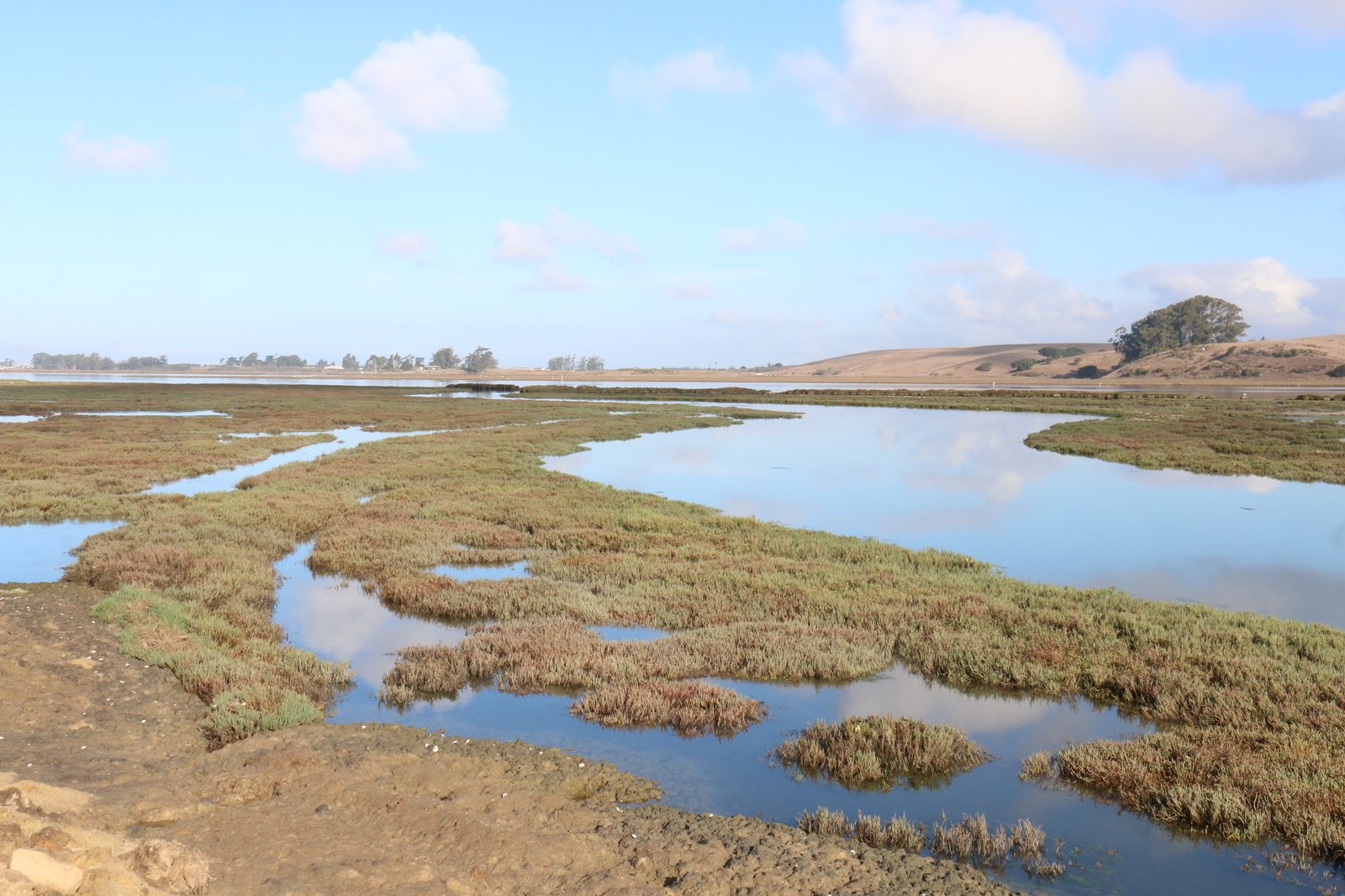
The photograph on this page: Tidal marsh channels at Elkhorn Slough, California (U.S. Fish and Wildlife Service photo). More Than Just Parks.
Who holds the vote
PLAN’s record doesn’t tie a member of Congress to this fight yet. The scorecard grades the votes and bills that decide public lands; nothing joins a vote or a bill to this decision, so there’s no member to name here without guessing.
See how your members vote ↗Calling your two senators and your representative is the Call door on this page.
Know an open comment period we are missing, or spotted a wrong deadline? .
More fights that need you
Go deeper, free
See how your members of Congress vote on public lands
Every representative, graded on the votes that decide the fate of parks, forests, and refuges.
Open ↗The mapSee the places under active threat
A live map of the parks, monuments, and wild country in the crosshairs right now.
Open ↗A wrong fact, a dead link, a form that wouldn’t take your letter: one tap and it comes to the people who build PLAN, with this fight attached.