Pinnacles National Park | Pinnacles National Park Facts

Pinnacles National Park Facts! In this article, we provide you with 10 surprising facts about one of America’s most magnificent national parks.

Pinnacles National Park Map

Interactive park map — click a pin to learn more

Attraction Trail Viewpoint

Pinnacles National Park at a Glance

4 alerts
Hot Conditions
Bear Gulch Cave Closed
Location
California
Established
2013
Size
26,686 acres
Annual Visitors
348,857
Entrance Fee
$35 per vehicle (or $80 annual pass)
Best Time to Visit
February - May

More Than Just Parks is your one-stop-shop for learning everything you’ll need to know about America’s national parks. We’ve got expert guides, beautiful photos, helpful tips, breathtaking films and so much more.

I’ve been to so many of these amazing places since retiring from teaching in 2018. Did I mention that I taught history? I spent a lifetime teaching about the history behind some of these natural wonders. Then I got to see them firsthand.

And now I’m sharing some of the incredible stories about these beautiful places with you. It doesn’t get any better than that!

More Than Just Parks takes a deeper dive with its national park facts. We’ve done our homework so that you’ll get more than you bargained for.

let’s get started.

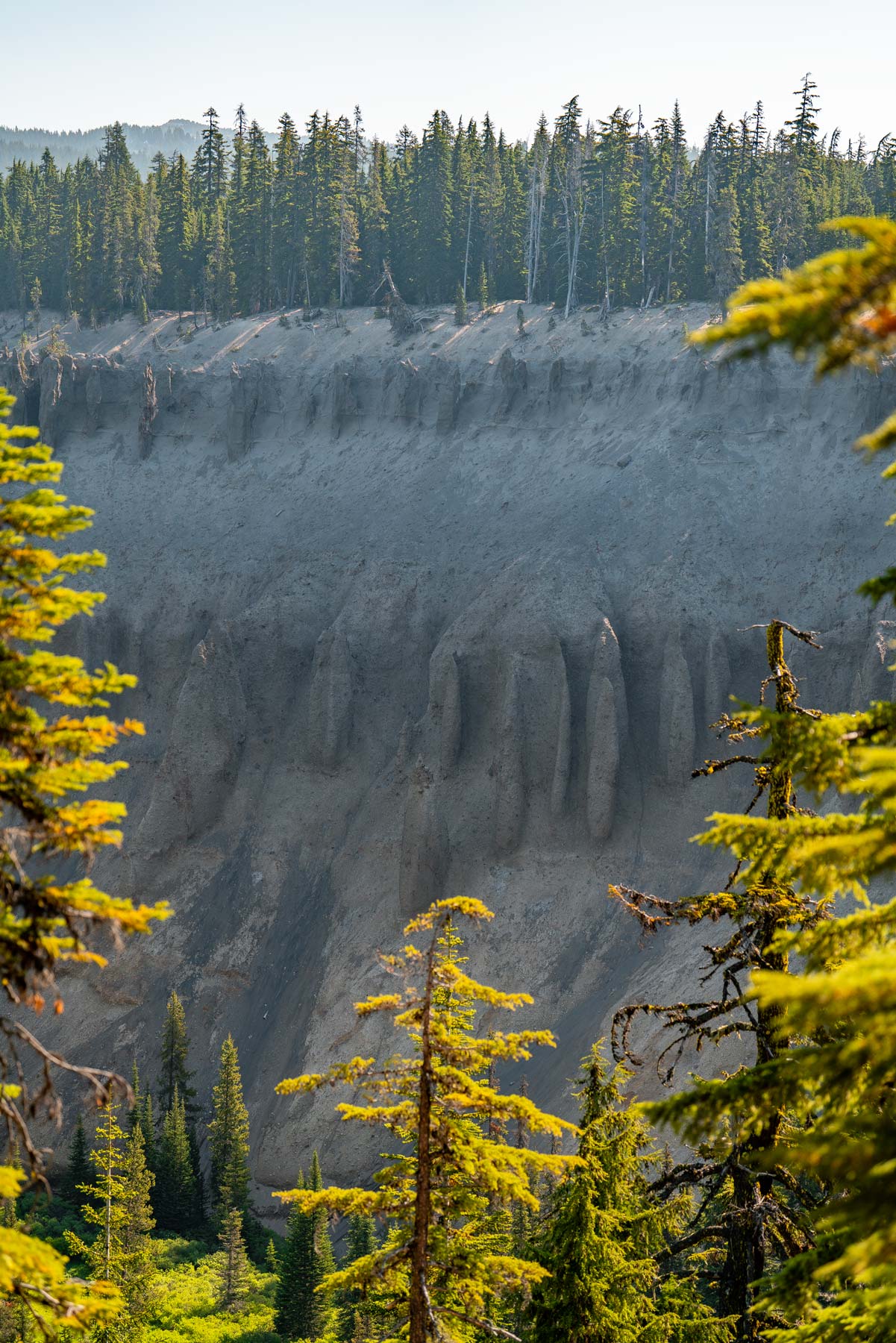
pinnacles trail at crater lake national park

Table Of Contents

Pinnacles National Park is a national park in central California. The park is located about 120 miles south of San Francisco and about 220 miles north of Los Angeles.

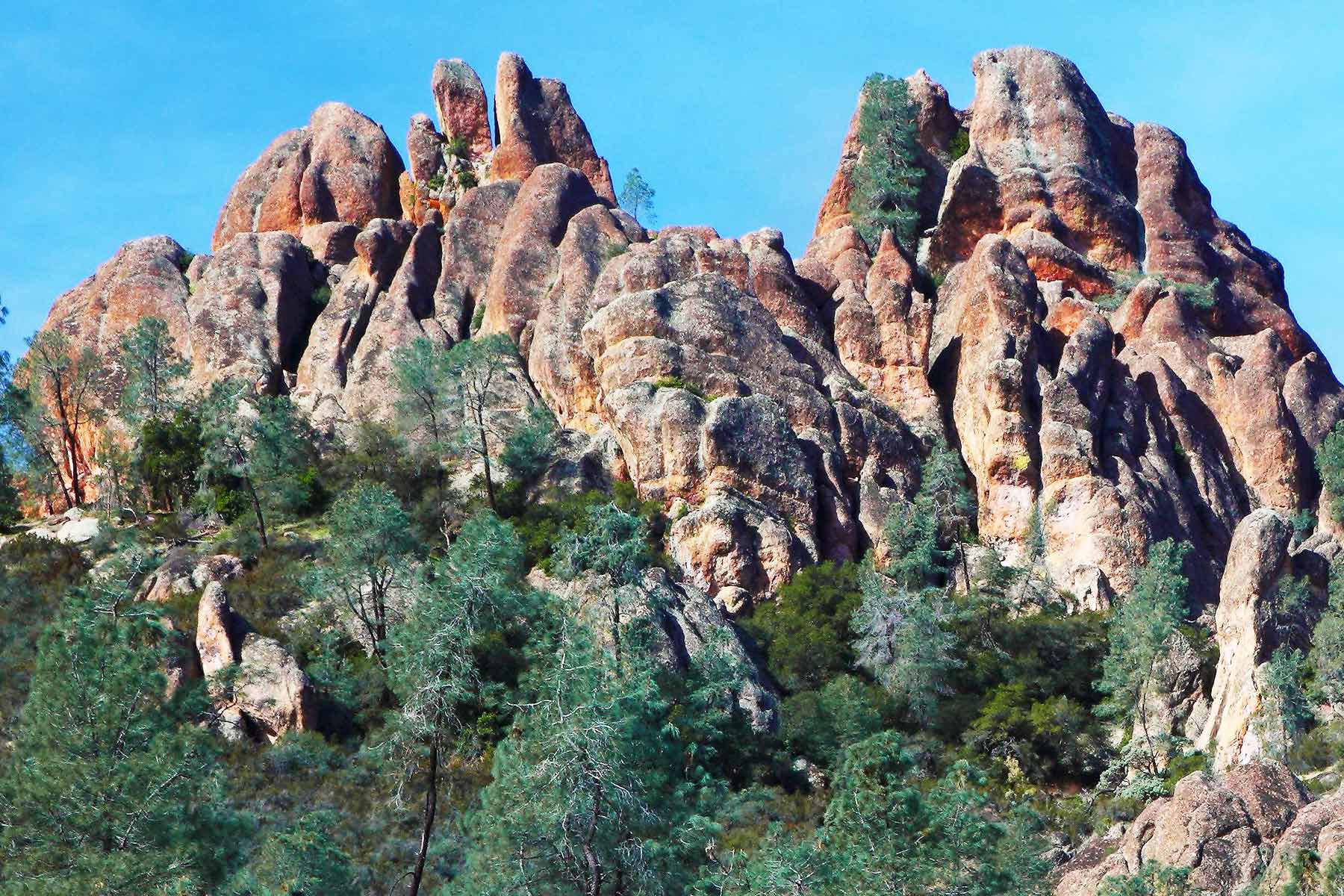
It encompasses more than 26,000 acres and features a unique landscape with towering rock spires, deep canyons, and lush vegetation. The park’s distinctive geology is the result of an ancient volcanic eruption that created massive monoliths and rock formations.

It’s home to a diverse array of wildlife, including California condors, golden eagles, and the endangered San Joaquin kit fox.

The park offers a variety of recreational opportunities, including hiking, rock climbing, and wildlife viewing. It also offer camping and picnicking areas, visitor center and a museum.

pinnacles national park california

Here Are Some Of The Basic Facts

  • Location: California
  • Acreage: It includes over 26,000 acres, much of which is designated wilderness.
  • Visitation: In 2021, about 348,000 people visited Pinnacles National Park, one of the least visited parks in the National Park Service system and California’s newest, incorporated from a national monument in 2012.
  • Climate: The climate of Pinnacles is typical of the Mediterranean climate of California, with cool wet winters and hot dry summers. Average rainfall is 16 inches per year, falling mostly from January through March.
  • When Did It Become A National Park? Since 1908, Pinnacles National Monument has increased in bits and pieces to its present size of about 26,000 acres. On January 10, 2013 President Barack Obama signed legislation passed by Congress that re-designated the monument as a National Park.
best things to do pinnacles national park

1. Indigenous Peoples Have Lived Near Pinnacles

As someone who spent his professional life teaching history and who has maintained a lifelong love of the subject, one of my favorite Pinnacles National Park Facts has to do with its earliest peoples.

According to the National Park Service, for time immeorial, indigenous people have lived around Pinnacles.

For Native Americans, it represented a place where they harvested useful plant and animal resources, but no archaeological evidence has been found to suggest a village existed within the park boundaries.

best things to do pinnacles national park

Acorns Were A Major Food Source For These Native Peoples

For the Chalon, Mutsun and many other California Native American tribes, acorns were a major food source.

According to the National Park Service, acorns were gathered in baskets and dried in the sun, then some were ground into meal and the rest stored in granaries.

Wildflower seeds, like those that come from chia (Salvia columbariae), and red maids (Calandrinia ciliata) were gathered in great quantities and some seeds were replanted to ensure future harvests.

Rabbits were hunted for food and the skins were cut into strips and woven into blankets and capes. Deer, elk, antelope, and possibly fish from the Salinas Valley were also major food sources.

best things to do pinnacles national park

2. Condors Played A Major Role In The Mythology Of Local Native American Tribes

Another of the fascinating Pinnacles National Park Facts is the role played by condors in the mythology of the native peoples.

California condors held a special place in the lives and ceremonies of California natives. They were a revered creature, a master of the spirit, who gave power to humans for a variety of world renewal and cosmic purposes.

It was associated with death and mourning as well as rebirth and renewal. Indigenous peoples of North America have great respect for the California condor and see it as a symbol of power, often referred to as the “thunderbird” because of its large wings and powerful flight.

The condor was believed to escort the spirits of deceased relatives to the next world across the sea. A condor ceremony was traditionally held approximately every two years to honor and communicate with the dead.

The Amah Mutsun conducted a ceremony in 2011 to celebrate the return of the condor to Pinnacles National Park and work towards the conservation and recovery of all threatened and endangered species.

best things to do pinnacles national park

3. The Spanish Influence Impacted Native Americans Around Pinnacles

When researching the history of the earliest inhabitants of the California national parks, it’s impossible to discount the influence of the Spanish.

The Spanish established 21 religious missions in California between 1769 and 1823, known as El Camino Real, stretching from San Diego to Sonoma.

The mission closest to Pinnacles National Park was built in Soledad in 1791. The Spanish sought to establish a route from Mexico or New Spain up to northern California, where they believed they had a God-given right to claim land for Christ and the King of Spain.

The Native Americans living in the area, including the Chalon and Amah Mutsun people, were greatly affected by the mission way of life.

Many died from diseases brought by the Spaniards and their culture was severely damaged.

pinnacles national park california
The wildflowers of Pinnacles National Park

4. The “Father of Pinnacles” Helped To Promote The Area

National Parks don’t just happen. Their creation represents the tireless efforts and energies of people who have largely been lost to history. One of the things I enjoy most about researching and writing these articles for More Than Just Parks is bringing the stories of these unsung heroes back to life.

One of the most interesting Pinnacles National Park Facts has to do with the man who became known as the “Father of Pinnacles.”

Schuyler Hain was a homesteader who arrived in the Pinnacles area in 1891. He initially didn’t think much of the area, but as local newspaper reporters began praising its beauty, Hain realized that Pinnacles was unique and could draw visitors.

Over the next twenty years, Hain became known as the “Father of Pinnacles,” leading tours and writing articles to promote the preservation of the area.

His efforts were successful and Pinnacles was established as a 2500 acre national monument in 1908 by President Theodore Roosevelt.

best things to do pinnacles national park

Elected in 1932 to combat an economic depression, Franklin Delano Roosevelt also became the first president to use the power of the federal government to combat climate change.

Roosevelt used a voluntary public works relief program, the Civilian Conservation Corps, to tackle a climate emergency.

By the mid 1930s, what became known as the Dust Bowl had ravaged much of the Midwest. It destroyed thousands upon thousands of farms while forcing families to flee for their lives.

Lower Bear Gulch | Pinnacles National Park Facts
Lower Bear Gulch | Pinnacles National Park

I propose to create the Civilian Conservation Corps to be used in complex work, not interfering with abnormal employment, and confining itself to forestry, the prevention of soil erosion, flood control and similar projects.
I call your attention to the fact that this type of work is of definite, practical value, not only through the prevention of great present financial loss, but also as a means of creating future national wealth.

-President Franklin Roosevelt

The Work Of The CCC Had An Impact On Pinnacles

In 1933, the Civilian Conservation Corps (CCC) began work at Pinnacles National Monument, which included the construction of buildings in Bear Gulch, hiking trails, a fire lookout on Chalone Peak, and a bathroom on top of Scout Peak.

The famous “Steep and Narrow” trail, known for its distinctive steps carved into stone, was also constructed by the CCC. Work on the park continued through 1942.

The CCC workers lived in a camp called Camp Pinnacles, which was located where the NPS maintenance yard and residential area now exist next to Chalone Creek.

The residents had a strict schedule of rising early and working from 7:45 AM to 4 PM. The meals were reported to be excellent.

The camp was originally occupied year-round but due to the heat, the work crews went to General Grant National Park in the summer and returned to Pinnacles when it was too snowy to work in the Sierras.

Nearly 100 years later, people still visit the park to recreate using the trails, roads and buildings constructed by the CCC workers.

best things to do in pinnacles national park

CHECK OUT: The First Green New Deal Happened Nearly One Hundred Years Ago – What Happened?


6. The Park Sits On The San Andreas Fault

Another of the amazing Pinnacles National Park Facts has to do with the location of the park. It sits on the San Andreas Fault.

The San Andreas Fault is the boundary between the Pacific Plate and the North American Plate. It slices California in two from Cape Mendocino to the Mexican border. San Diego, Los Angeles and Big Sur are on the Pacific Plate while San Francisco, Sacramento and the Sierra Nevada are on the North American Plate.

Located near the boundary of the Pacific Plate and the North American Plate, Pinnacles National Park is an excellent example of tectonic plate movement.

The Pinnacles Rocks are believed to have originated in the Neenach Volcano, near present-day Lancaster, California.

The unique breccias of Pinnacles are only found elsewhere in the Neenach Formation, some 195 miles southeast.

The displacement of the Pinnacles from its point of origin is proof of the longevity and importance of the San Andreas Fault, which once split the original volcano. The right lateral movement of this giant transform fault has carried the Pinnacles north at a rate of approximately 0.59 inches per year.

best things to do pinnacles national park

7. The Caves In Pinnacles Support Many Bat Species

Another of the amazing Pinnacles National Park Facts pertains to the park’s caves and the important role they play for bat species.

Bats at Pinnacles find refuge in the caves, cliffs, and trees. There is currently a colony of Townsend’s Big-eared Bats in the Bear Gulch Cave and a colony of the Western Mastiff bat in the Balconies cave area.

Out of the 23 species of bats in California, 14 species are known to occur within Pinnacles National Park.

All of the 14 species at Pinnacles and 41 of the 44 North American bats eat insects, spiders, and their kin. Three species eat fruit or nectar.

There are only three species of vampire bats. They live in South America and feed on birds and mammals.

pinnacles overlook, things to do crater lake national park oregon

8. The Park Supports A Diverse Array Of Wildlife

Just when you thought we couldn’t come up with another Pinnacles National Park Fact, we surprise you. The park supports a diverse array of wildlife.

Over forty-eight mammalian species, aside from humans, are known to occur within Pinnacles National Park.

Those often seen and enjoyed by visitors and staff include: black-tailed deer, bobcat, gray fox, raccoon, jackrabbit, brush rabbit, ground squirrel, chipmunk, and several kinds of bat.

These animals are reported regularly because they are either easy to see or charismatic.

Badgers, coyotes, a wide variety of rodents, and mountain lions inhabit the Park, but are not commonly seen.

pinnacles national park

9. Pinnacles Has A Diverse Array Of Plant Communities

Pinnacles National Park offers its visitors a wide variation of plant communities.

From arid sandy washes to deep canyons with permanent water, it’s a land of extremes.

san jose to pinnacles national park map

Five Major Habitat Types

Vegetation at Pinnacles National Park may be broadly grouped into five major habitat types or vegetation associations. They include:

  1. Chaparral: The most widespread plant community, chaparral, occurs just about everywhere you look. Found on shallow or deep soils, north- or south-facing slopes, moist canyon bottoms or exposed upper ridges, 82% of the park is covered by some type of chaparral.
  2. Woodlands: Woodlands, the second most common association in the park, occur from lower riparian areas to upper exposed slopes of North Chalone Peak, and are characterized by trees with annual grasses and forbs in the understory. The main woodland association at Pinnacles is the blue oak woodland, comprising 10 percent of the total vegetation cover in the Park.
  3. Riparian: This habitat type is restricted to the valley bottoms and sheltered, moist canyons of the Park. The species are deep-rooted and require more water than any of the other vegetation associations. Large deciduous and evergreen species dominate, such as sycamore, cottonwood, and California buckeye, often growing directly in small creeks and streams.
  4. Grasslands: Found in most of the same areas as the rock and scree association described below, and closely related, grasslands have shallow soils that prevent the establishment of deep-rooted species. Dominant species include introduced grasses such as brome; native and non-native annuals including fiddleneck and filaree; and a variety of mostly native herbaceous perennials like lomatiums.
  5. Rock and Scree: Though the rock and scree habitat type is the least common in the Park, its dramatic spires and rock faces inspired the establishment of Pinnacles National Park. Named for its predominant substrate, the association is characterized by having little or no soil. (Source: NPS)
san francisco to pinnacles national park map

10. Pinnacles Is Home To A California Condor Recovery Program

Our final Pinnacles National Park Fact has to do with the magnificent California Condor which inhabits the park.

Pinnacles National Park joined the California Condor Recovery Program as a release and management site in 2003.

The park co-manages all of the wild condors in central California along with the Ventana Wildlife Society.

California Condor
Condor in flight | Courtesy of NPS

The Only NPS Unit That Manages A Release Site For The California Condor

Pinnacles National Park is the only National Park Service unit that manages a release site for captive-bred California condors.

Juvenile condors are transferred to Pinnacles from captive breeding facilities when they are around 1.5 years old, and are placed in a flight pen for acclimation for at least 2 months.

Park biologists closely monitor the juveniles’ behavior and outfit them with radio transmitters and ID tags before release.

After release, the park biologists continue to closely monitor the juveniles to ensure they find appropriate roost and feeding sites.


We’re Jim Pattiz and Will Pattiz, collectively known as the Pattiz Brothers (and sometimes the Parks Brothers) and we absolutely LOVE the national parks.

You should probably know that we don’t just make this stuff up out of thin air. We’ve spent our entire adult lives exploring and filming America’s national parks and public lands.

We’ve worked with the National Park Service, the Department of Interior, USDA, and the U.S. Forest Service for years creating films on important places and issues. Our work has been featured in leading publications all over the world and even some people outside of our immediate family call us experts on the national parks.


Meet The Parks Brothers


The Pattiz Brothers are regular contributors to The Weather Channel

  1. Indigenous Peoples Have Lived Near Pinnacles
  2. Condors Played A Major Role In The Mythology Of Local Native American Tribes
  3. The Spanish Influence Impacted Native Americans Around Pinnacles
  4. The “Father of Pinnacles” Helped To Promote The Area
  5. The Civilian Conservation Corps Helped To Establish Pinnacles National Park
  6. The Park Sits On The San Andreas Fault
  7. The Caves In Pinnacles Support Many Bat Species
  8. The Park Supports A Diverse Array Of Wildlife
  9. Pinnacles Has A Diverse Array Of Plant Communities
  10. Pinnacles Is Home To A California Condor Recovery Program

We Hope You’ll Follow Our Journey


Pattiz Brothers
The Pattiz Brothers

Our goal here at More Than Just Parks is to share the beauty of America’s national parks and public lands through stunning short films in an effort to get Americans and the world to see the true value in land conservation.

We hope you’ll follow our journey through the parks and help us to keep them the incredible places that they are. If you’re interested joining the adventure, sign up below!


California: 20 BEST California National Parks Ranked

Los Angeles: National Parks Near Lost Angeles You'll Love

Parks Near San Diego: National Parks Near San Diego

San Francisco: 8 Best National Parks Near San Francisco

Parks Near San Jose: 7 Best National Parks Near San Jose

Redwood: Redwood National Park

Death Valley: Death Valley National Park

Historic Sites: 15 Must-See Historic Sites In California

What to Bring to Pinnacles

Gear we recommend for Pinnacles. Affiliate links support our work at no cost to you.

Affiliate disclosure: Some links on this page earn us a small commission at no extra cost to you. We only recommend gear we actually use.