We’ve walked through Petrified Forest National Park and watched the ancient logs glow in the late afternoon light. It’s a quieter, stranger park than most, and it pairs beautifully with a drive through the Painted Desert. If you’re on Route 66 or crossing northern Arizona on I-40, this stop is worth your time.
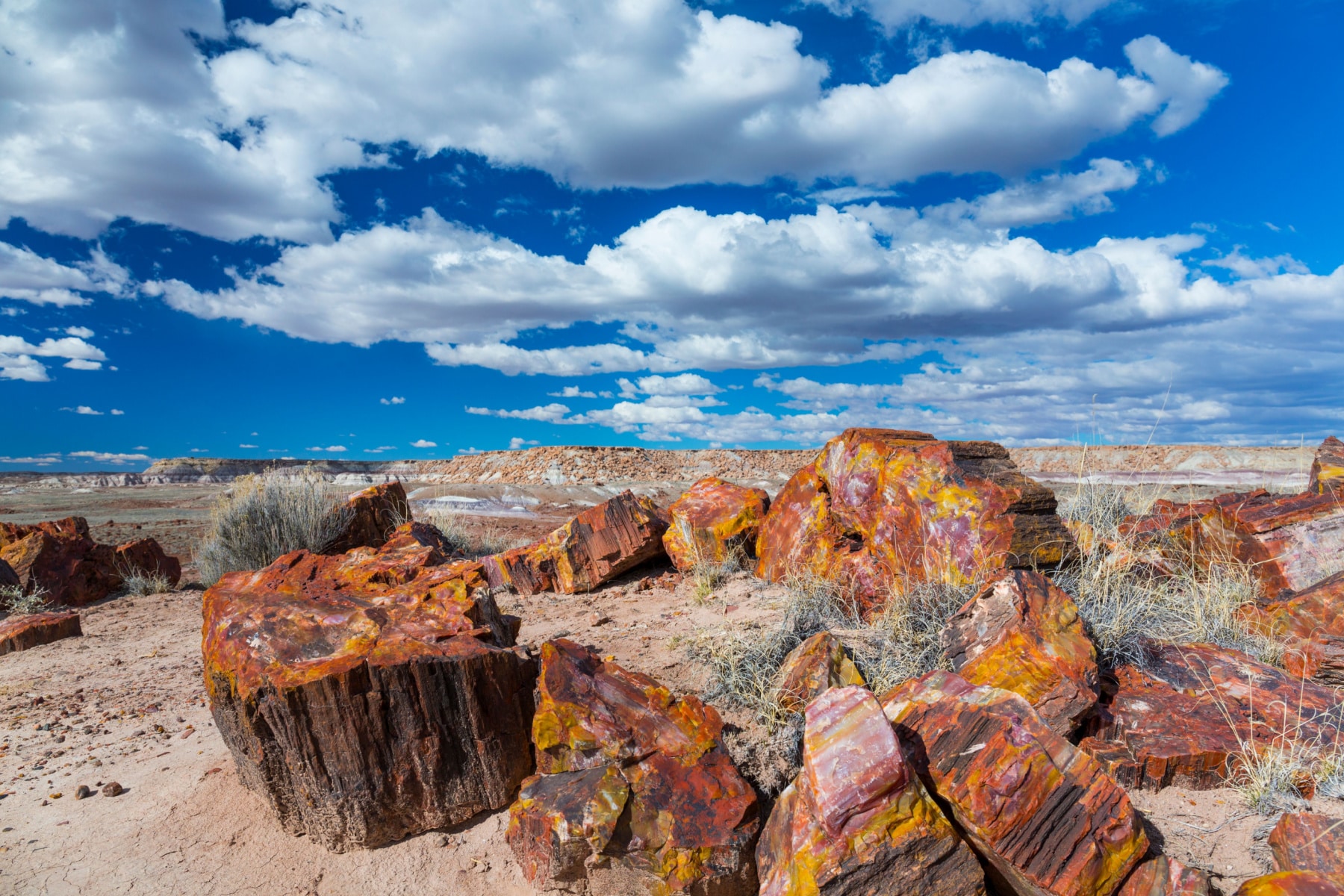
Don’t let the word “petrified” worry you. These trees are more sparkly than sinister. Petrified wood forms when trees buried under sand and volcanic ash have their decaying tissue replaced by minerals over millions of years. Something once living turned to stone, and the word later got borrowed to mean frozen with fear.
This guide works whether you have one hour or a full day. We’ll also show you the workaround for getting into the park after dark, because the stargazing here is some of the best in Arizona.
Table Of Contents: Things to Do in Petrified Forest National Park
5 Quick Petrified Forest National Park Things to Know
- Entrance fees are $25 per vehicle, $20 per motorcycle, or $15 per person on foot or bike. The America the Beautiful pass works here too. It costs $80 and covers more than 2,000 public lands for a year. The park does not accept cash.
- Petrified Forest is one of the most dog-friendly parks in the entire system. Leashed pets are allowed on all roads, trails, and backcountry areas. Your dog can even become a B.A.R.K. Ranger.
- The park is not open 24/7. Hours run 8 am to 5 pm daily, closed only on Thanksgiving and Christmas. Arizona skips Daylight Saving Time, so in summer the park runs on California time and in winter on New Mexico time.
- It’s against federal law to take any rocks, minerals, or petrified wood from the park. The gift shops at both entrances sell legally sourced wood from private land. Buy it there.
- The nearest hotels sit in Holbrook, Arizona, about 20 minutes from both park entrances. The La Quinta in Holbrook is the closest.
Petrified Forest Arizona Map and Easy Directions
The best way in and out depends entirely on which direction you’re traveling on I-40.
Love Petrified Forest? It's one of 109 threatened public lands destinations we're tracking. Get the free weekly briefing.
Petrified Forest Road runs about 28 miles between I-40 and Highway 180. It’s a two-way road, not a loop.
- Heading west on I-40, exit at Mile Marker 311, drive south through the park, then take Highway 180 to Holbrook and rejoin the interstate.
- Heading east, exit at Mile Marker 285 in Holbrook, take Highway 180 to the south entrance, and drive north. Both entrances have amenities and gift shops.
Treat this list as a buffet, not a countdown. What you can do at Petrified Forest depends on how much time you have, the weather, and the time of day. The park closes at 5 pm, so budget accordingly.
10. Drive Petrified Forest Road
No matter which entrance you use, the 28-mile road strings together viewpoints with a few spur roads leading to more. If you only have an hour or two on a road trip, this is your move.
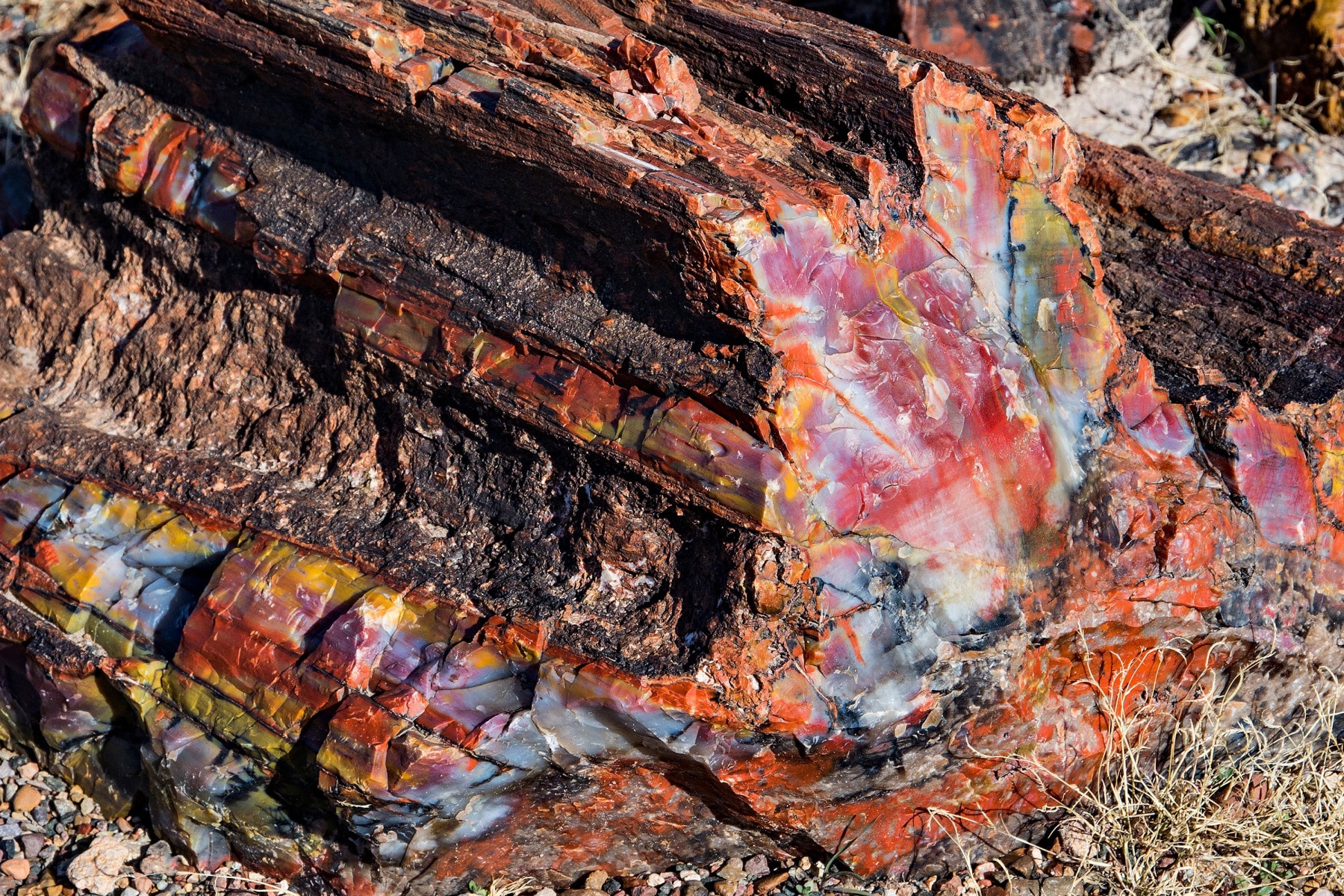
The road curves but never scares. No vertical drops, no white knuckles. Speed limits run 25 to 45 miles per hour, and cyclists love this route for good reason.
Summer monsoon season puts on a show out here. Rain shafts drift across the horizon and lightning stretches the sky while you watch from open road. Just don’t be the tallest thing standing on a mesa when it arrives.
Pit Stop. Is That a Rusted Studebaker?
Yes, it is. The old Studebaker in Petrified Forest National Park is an icon. You’ll find it six miles from the north entrance with its own pull-out. The location isn’t an accident. This marks the spot where Route 66 once crossed the park during its transcontinental heyday. The car was placed there in 2006.
9. Pause for the Painted Desert
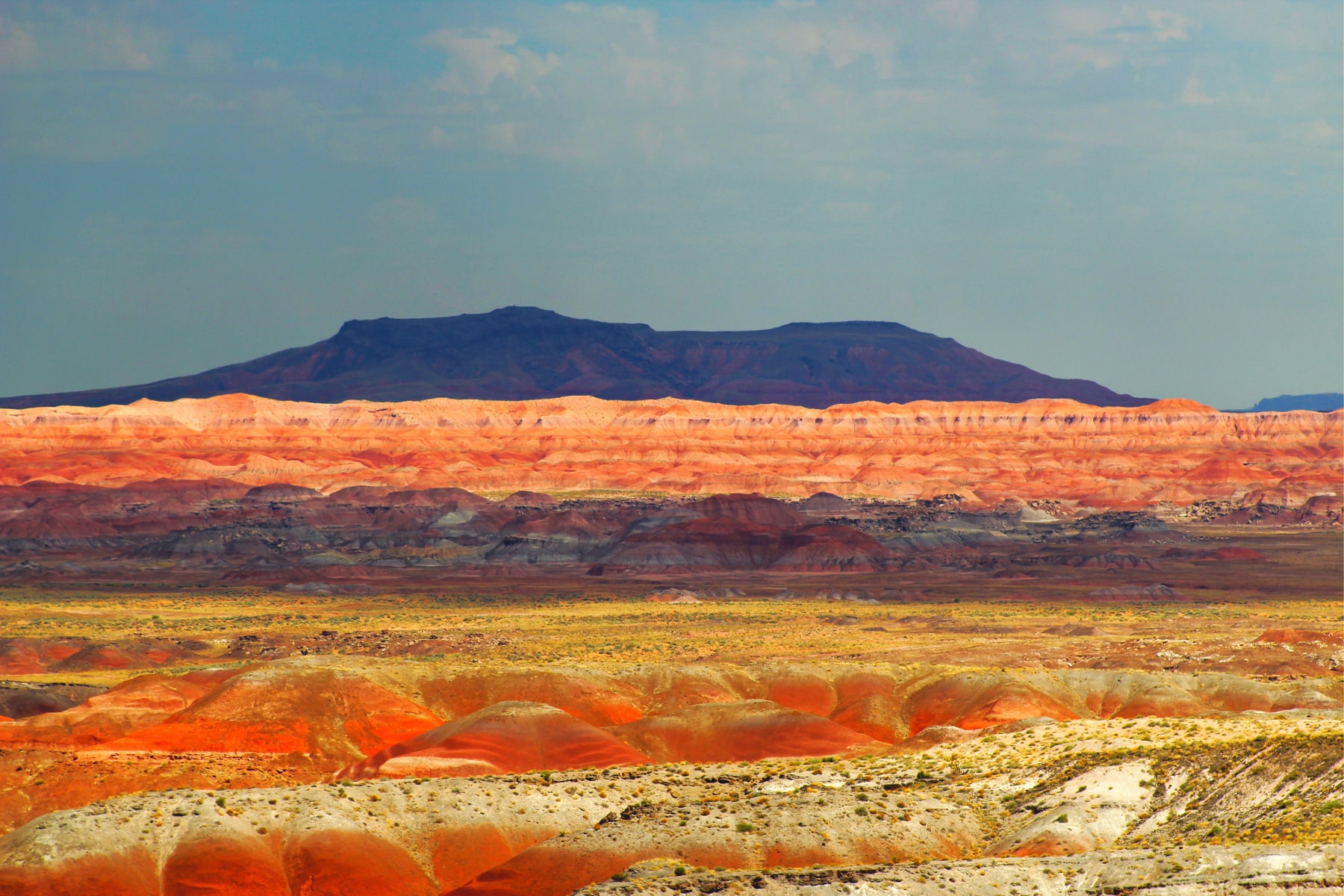
The Painted Desert’s banded badlands wait on the northern edge of the park. Stop by the Painted Desert Inn first for a history lesson and a look at one of the great surviving Route 66 buildings.

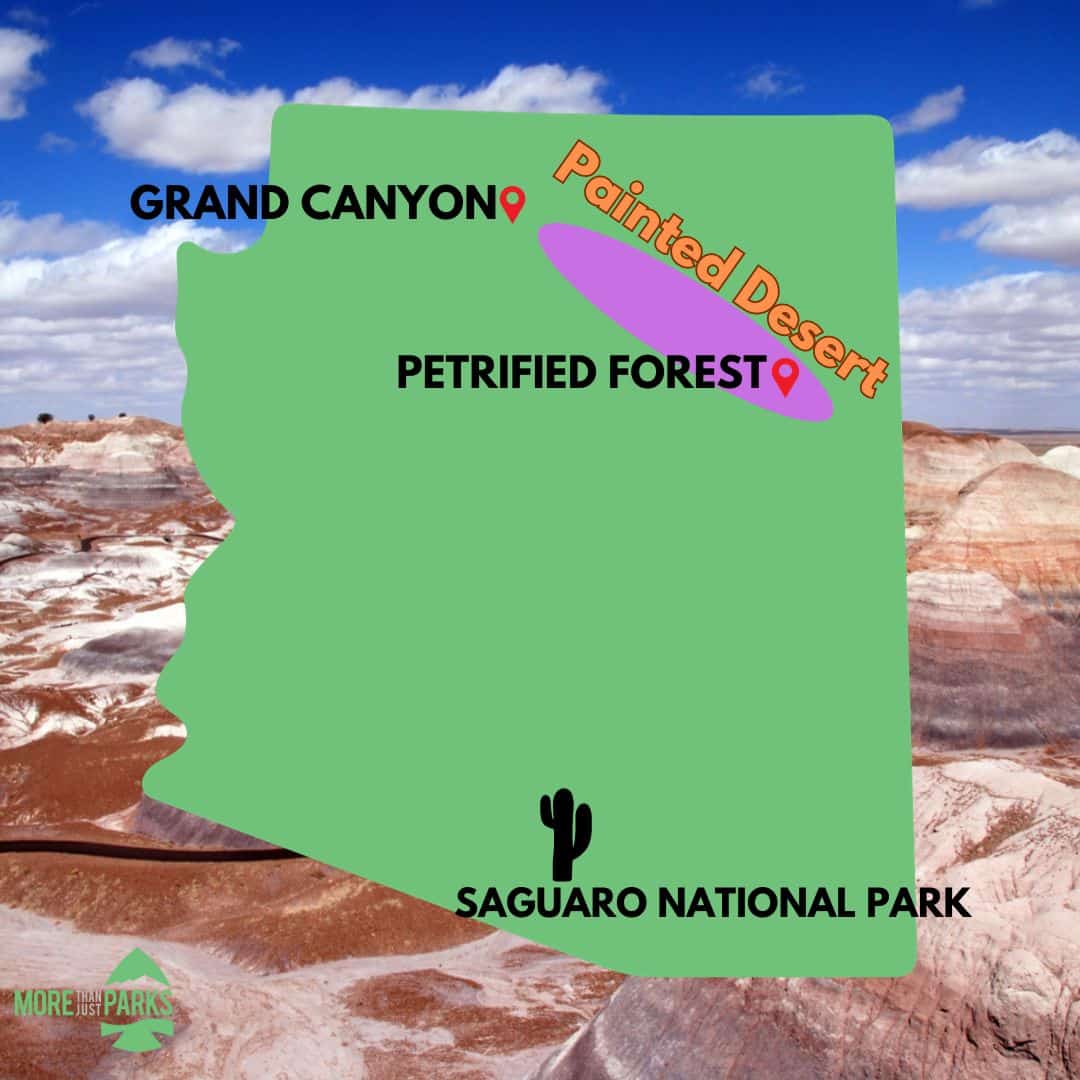
People use Painted Desert and Petrified Forest interchangeably. They aren’t the same thing.
The Painted Desert stretches about 150 miles from the Grand Canyon’s southeastern corner, slashing southeast across northern Arizona. Most of it sits on Navajo Nation land.
The northern portion of Petrified Forest National Park gives you the easiest public access to it, with sweeping views into the colorful badlands of the Petrified Forest National Wilderness Area.
Painted Desert Viewpoints
Since the Painted Desert wraps around the park’s northern section, you get four solid viewing areas, each with information kiosks.
- Tawa Point: Ripples of colorful rock unfold for miles in front of you.
- Kachina Point: Faces northeast, right behind the Painted Desert Inn.
- Chinde Point: Picnic tables with views, less than 3 miles from the interstate.
- Pintado Point: Faces the bulk of the Painted Desert with several landmarks on the horizon.
Painted Desert Rim Trail
Stretch your legs on this one-mile walk between Tawa Point and Kachina Point. The trail could have just been part of the road. Instead it weaves along the rim’s edge, which buys you solitude, no passing cars, and bigger views of the Painted Desert.
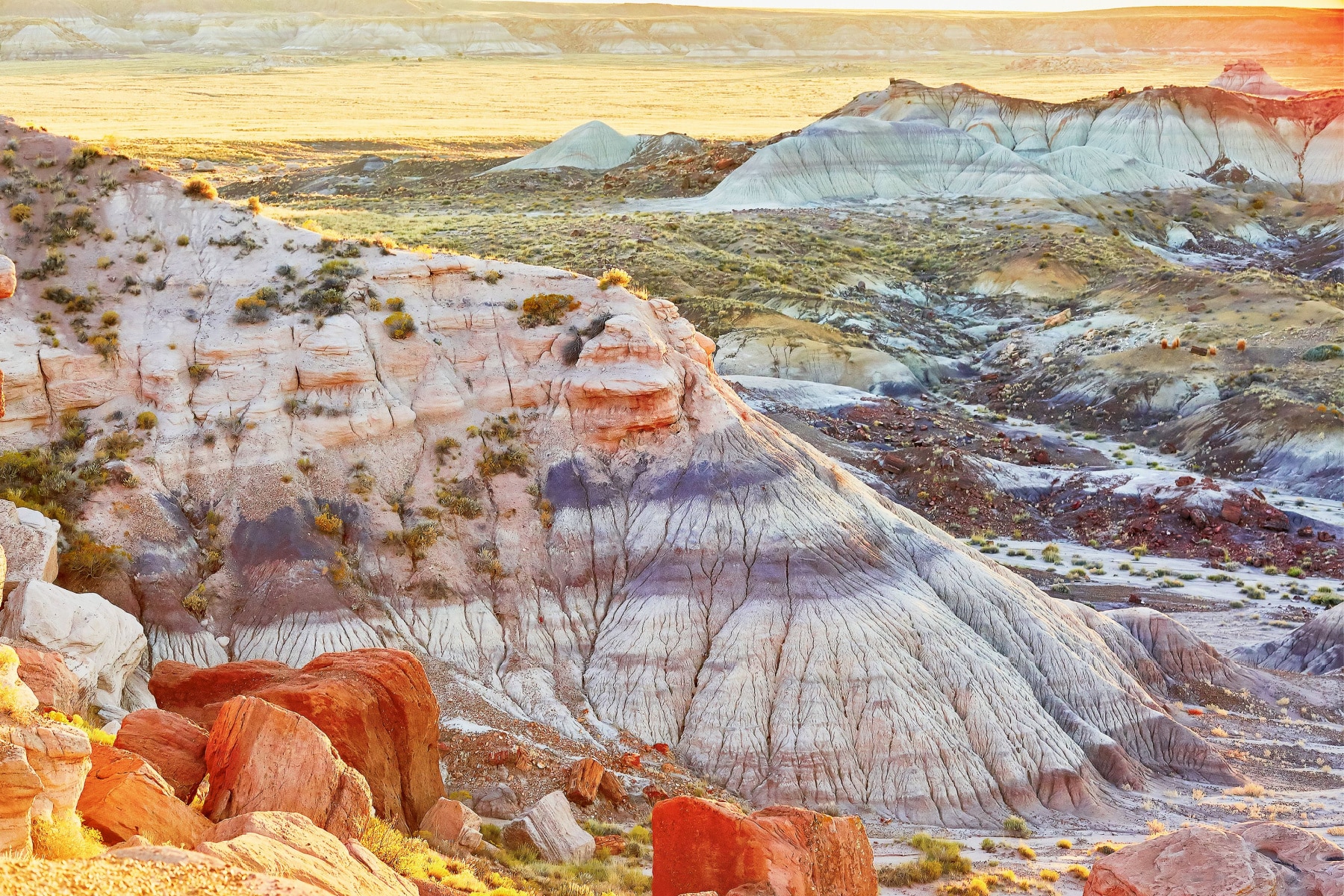
It’s an easy walk, though unpaved, and you’ll see more people here than on the trails deeper in the park.
8. Short Hikes in Petrified Forest (Under 3 Miles)
With the park closing at 5 pm, short hikes are how you see the most ground for your time.
This is one of the park’s quiet advantages. You can’t realistically hike five trails in the Grand Canyon or Zion in a day. Here, it’s entirely doable.
Giant Logs Trail and Rainbow Forest Museum
This two-for-one near the southern entrance earns a stop even on a short visit. The Giant Logs Trail is one of three trails starting from the parking lot of the Rainbow Forest Museum.
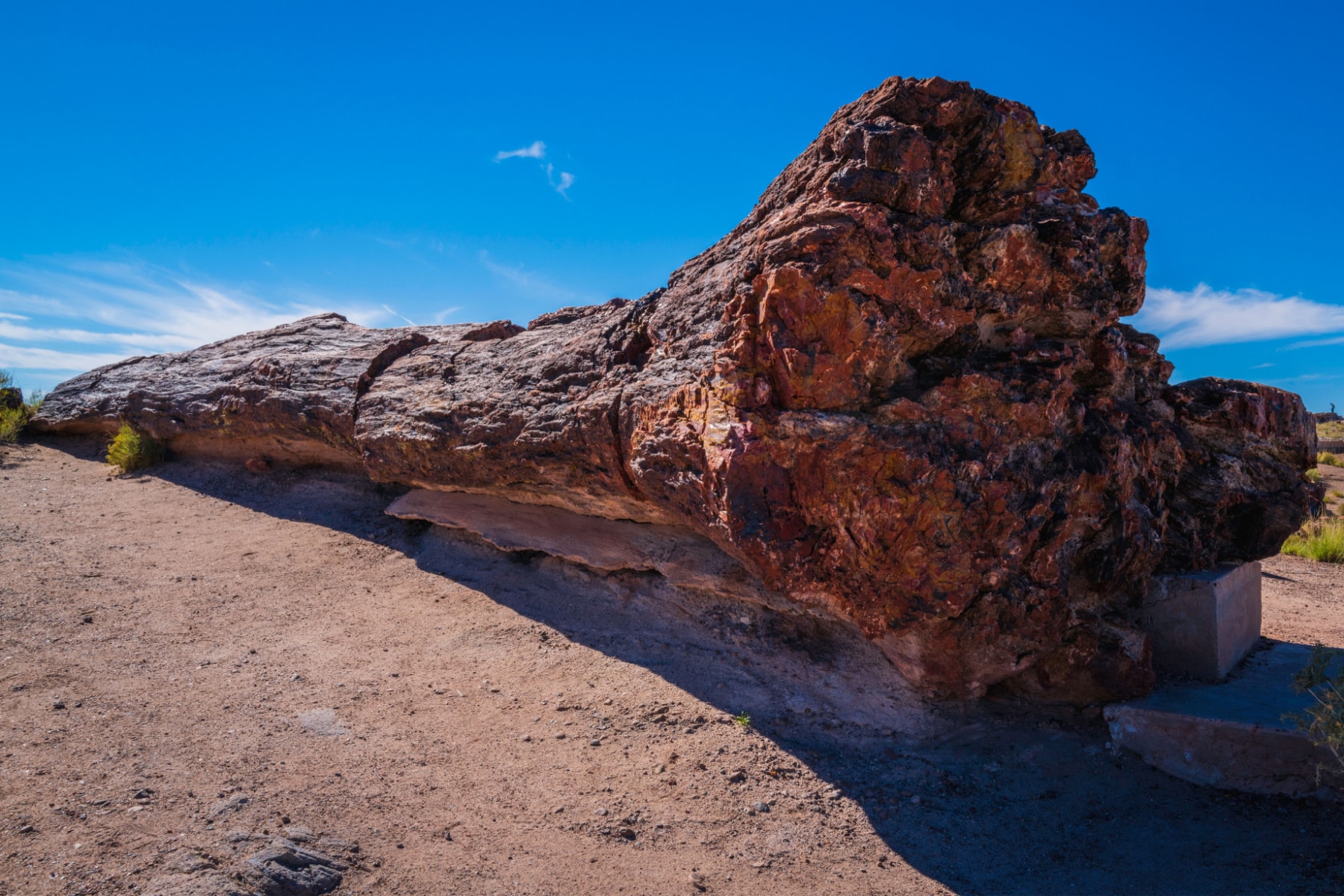
The trail spans less than half a mile, but take your time among the massive downed trees. At the top sits Old Faithful, the tree version, with a base almost 10 feet wide and a trunk 35 feet long.
Look closely at the slices in the trunk. A lightning strike in the 1960s blew the tree into several pieces, and park staff put it back together with concrete.
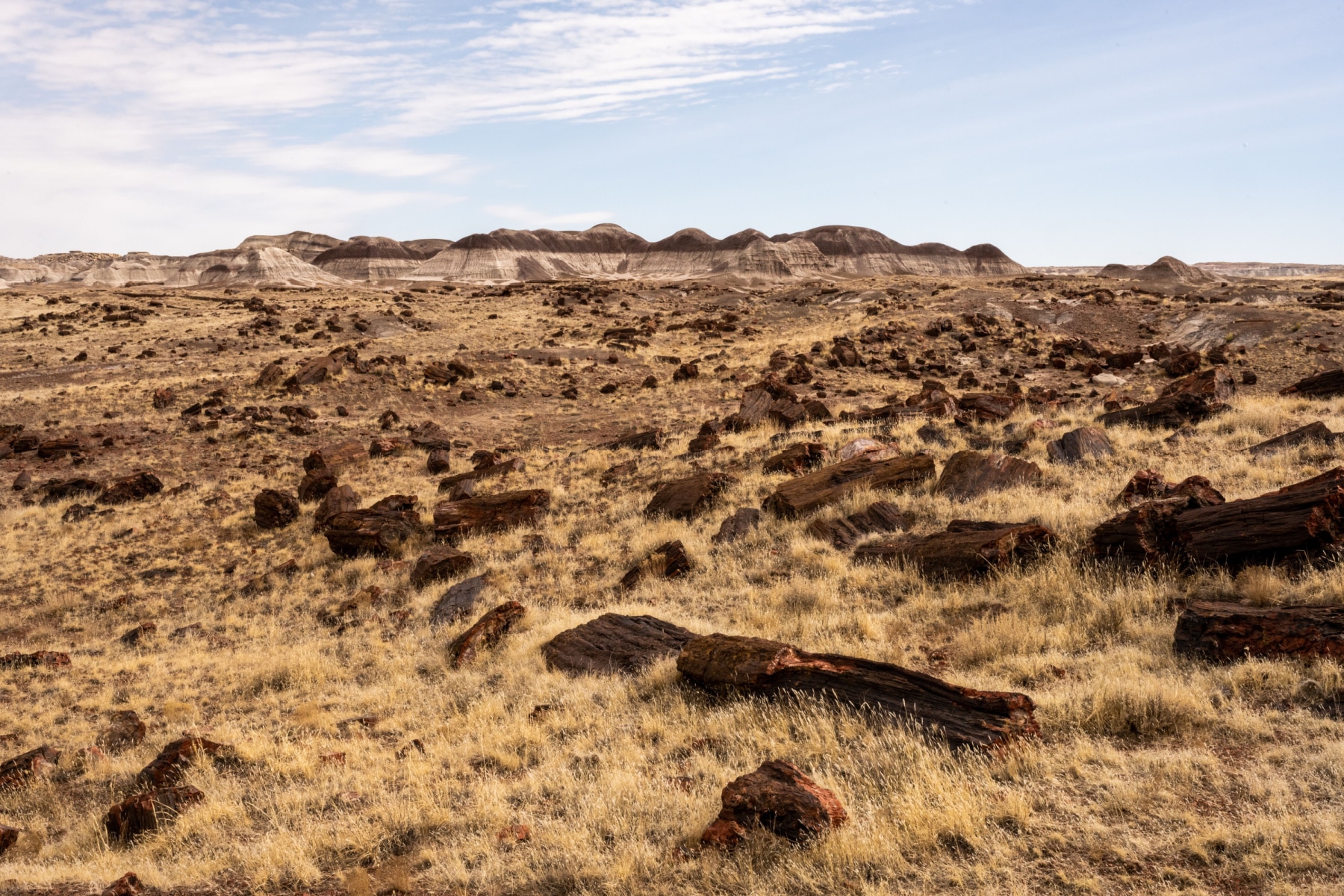
The whole trail is littered with logs and fragments. It looks like giants left their kindling behind after a campfire.
Long Logs
From the same Rainbow Forest Museum parking area, the 1.6-mile Long Logs Trail covers one of the densest concentrations of petrified wood anywhere in the park. The name does not lie. The trees here are long.
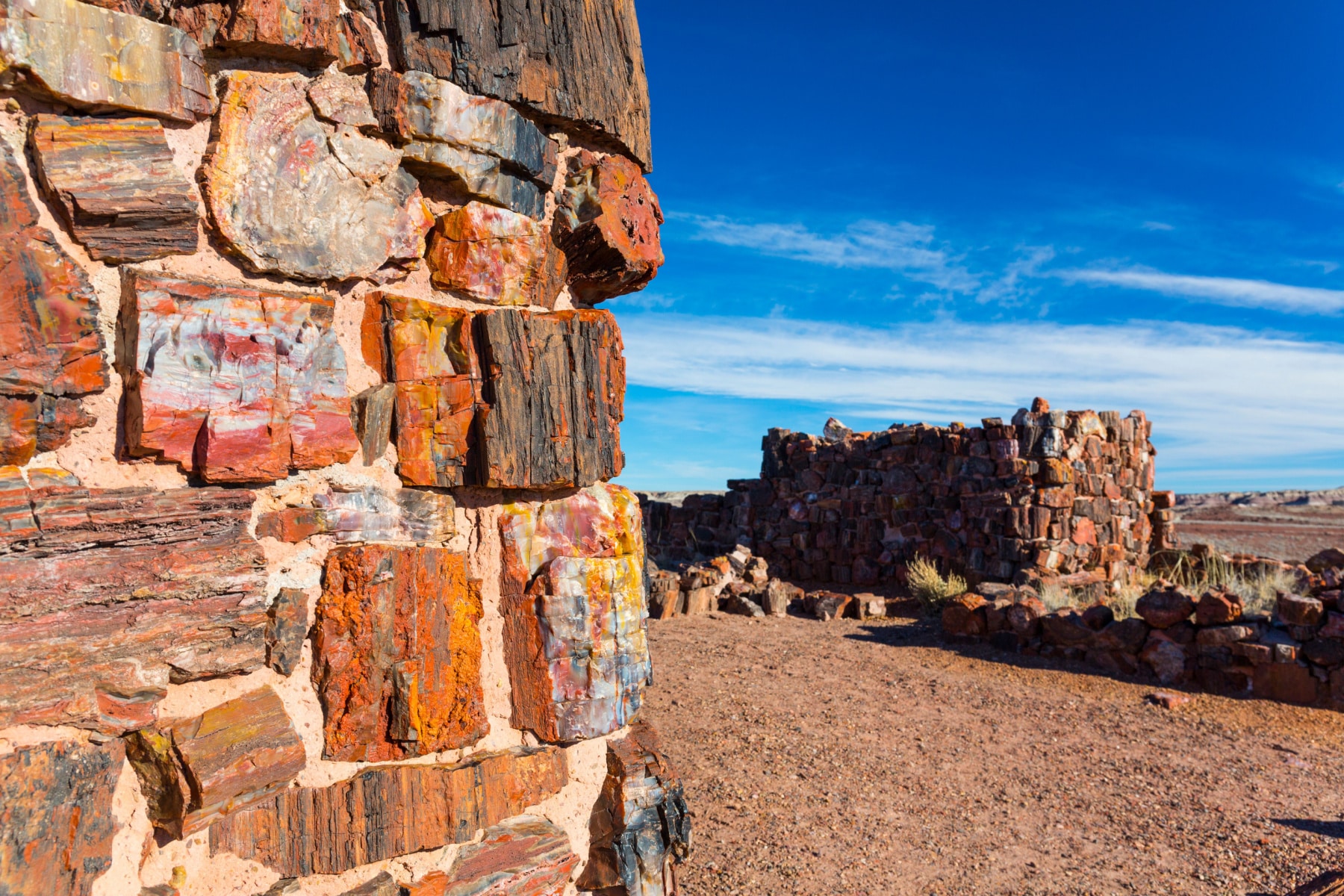
Add the Agate House Trail for another half mile. Petrified wood turns out to be sturdy building material. Agate House is an ancestral Puebloan structure rebuilt from chunks of it, stacked like a Jenga game, and from a distance you’d swear it was ordinary stone.
Travel tip. Long Logs and Giant Logs sit across the street from each other. If you’re entering from the south with a full park ahead of you, pick one.
Blue Mesa
Blue Mesa sits smack in the middle of the park road, equally reachable from either entrance. If you take just one hike in Petrified Forest, make it this one or the Blue Forest Trail.
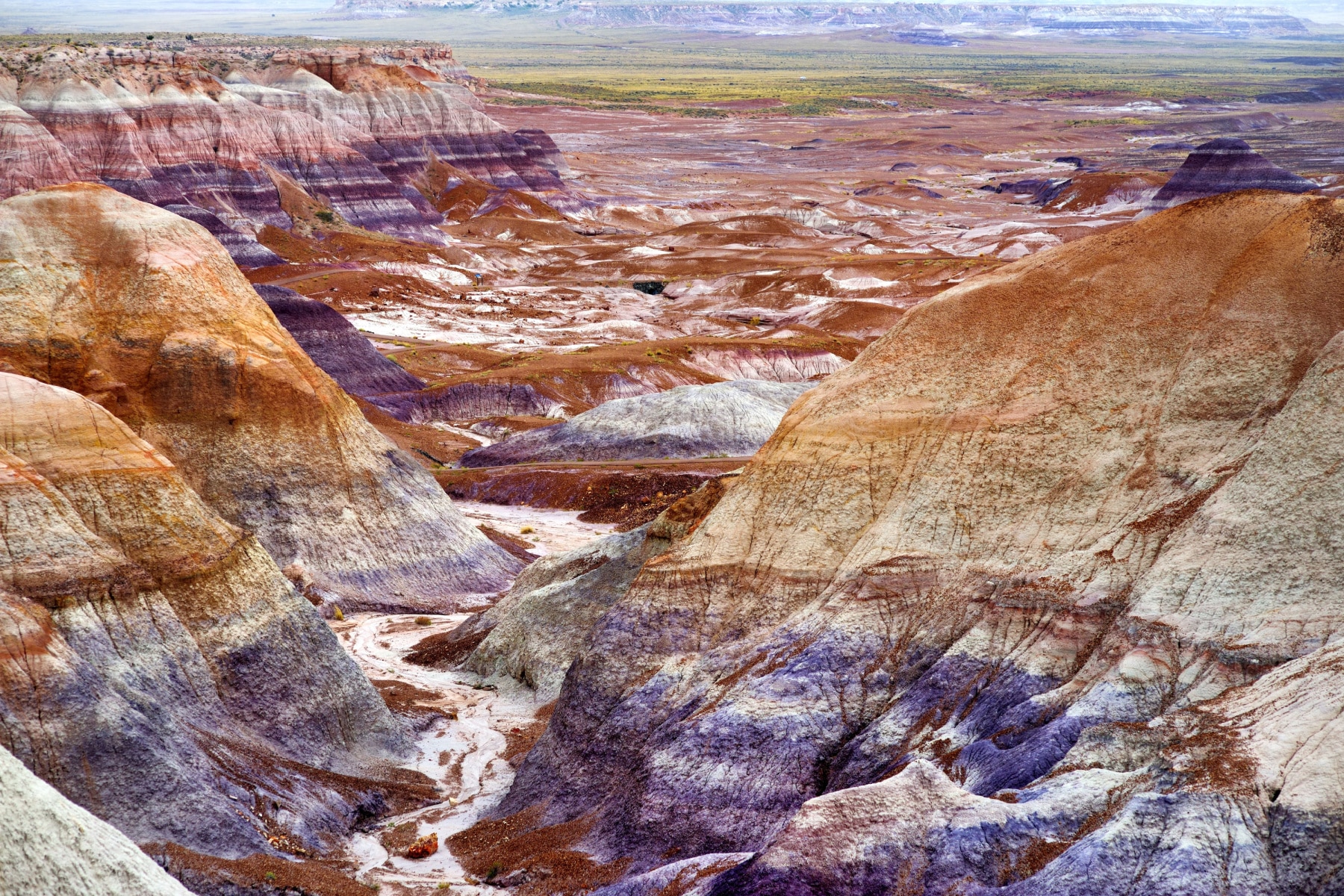
Hoodoos, petrified wood fragments, and banded badland mounds all share one short loop here.
The scenic viewpoint makes an easy stop, but get out of the car for this one mile. The trail rides above the mounds before dropping to base level. No photo we’ve seen captures the colors honestly. Yes, that’s blue. And purple. And a chocolate brown you didn’t know rock could do.
Kiosks along the way explain how erosion keeps unearthing fossils here. From the loop you can also take the longer Billings Gap wilderness route, three miles around the edge of the mesa.
Crystal Forest
Crystal Forest holds the most dramatic examples of sparkling petrified wood, and the 0.75-mile loop puts a lot of it within arm’s reach. It’s another contender for the one-trail visit, though the panoramic views don’t match Blue Mesa.
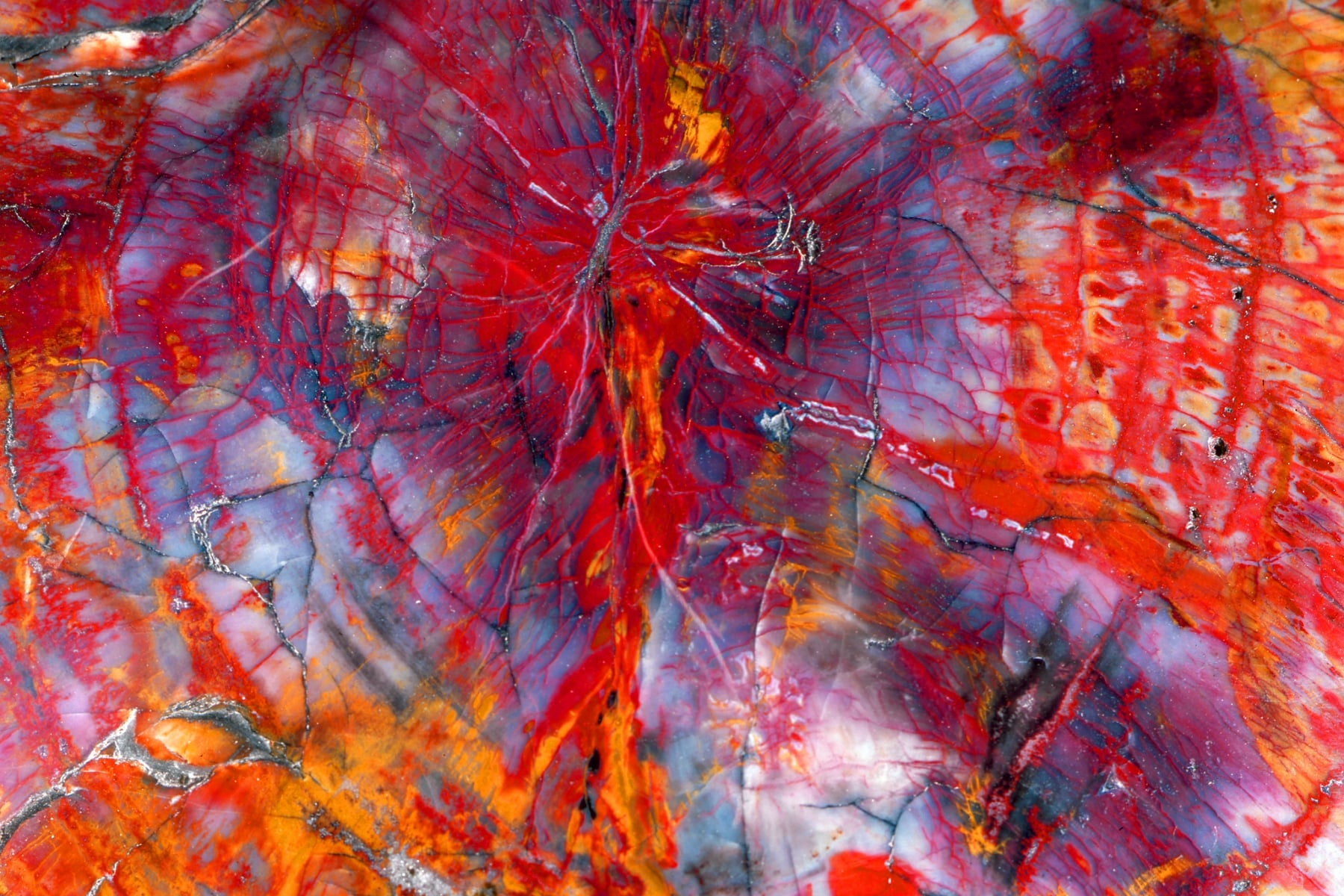
Skip the spur road if you won’t walk the trail. The whole point here is the up-close look, and several long logs line the path if you had to miss Long Logs.
More crystals to come. Despite the name, Crystal Forest isn’t the only trail with petrified sparkle. Miss it and you’ll still see plenty elsewhere.
Jasper Forest or First Forest
Both routes start at the Jasper Forest parking lot. Each ends at a different vantage point, but the real attraction is the wood still embedded in the rock, waiting its turn to erode out.
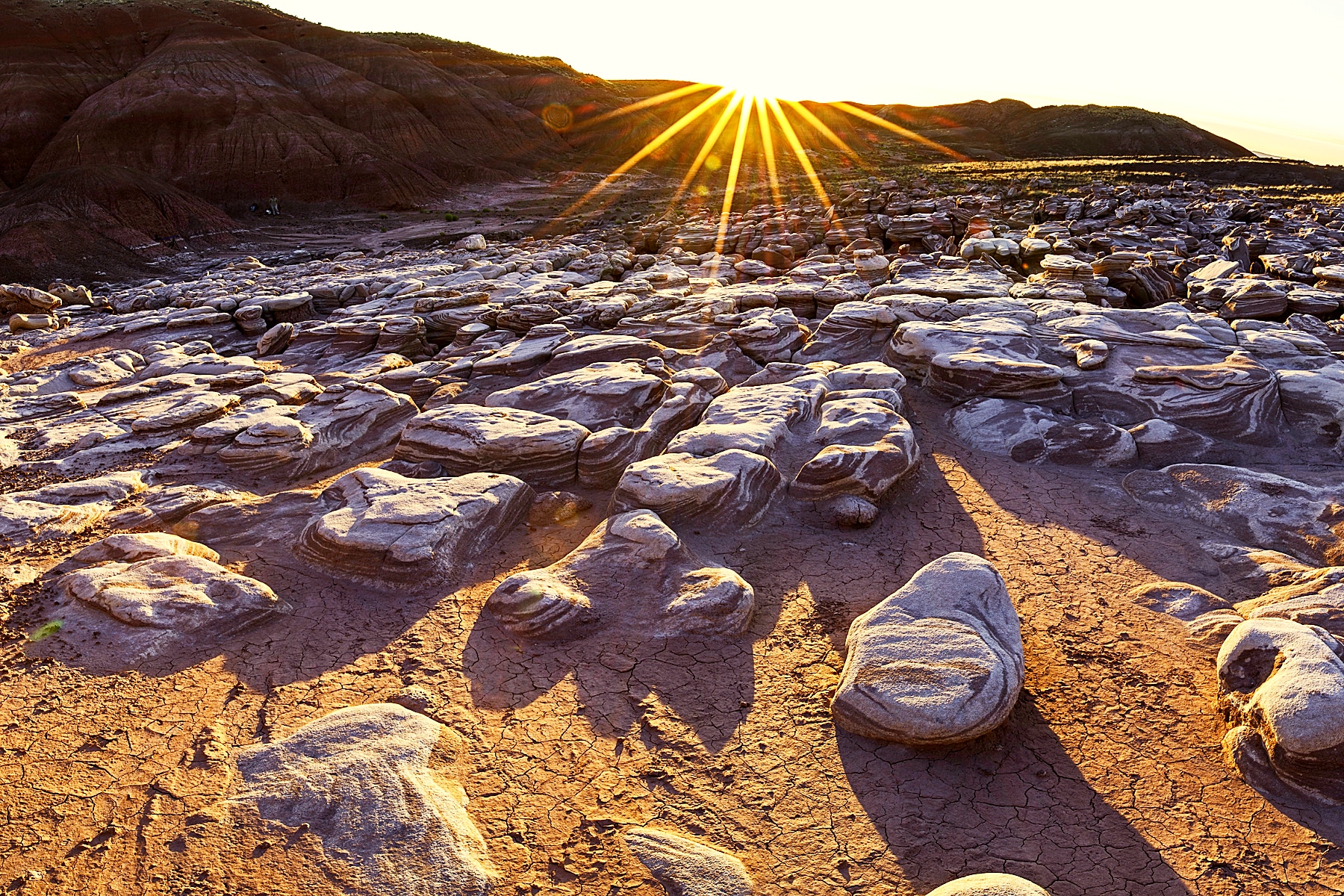
A word about these “trails.” The park publishes route guides, attached below, but these are essentially short backcountry hikes with no built trail.
And know this. Any water turns the ground here into a clay and sediment mess. Getting caught in a storm out here can be dangerous or deadly.
Explore Jasper Forest
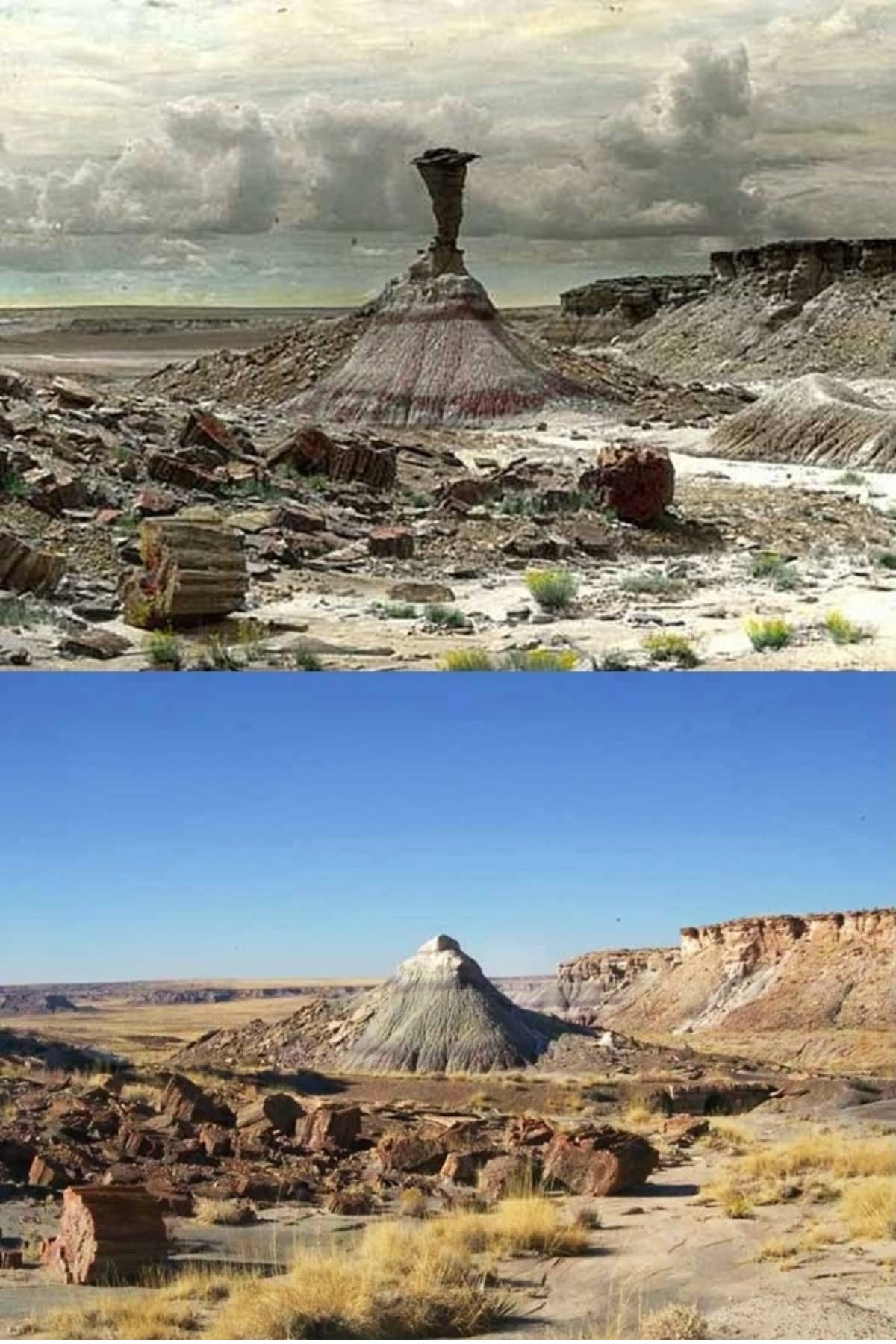
Jasper Forest’s 2.5 miles wander through more huge fields of petrified wood. Another spot where the giants had a campfire.
The route threads between mesas until you reach what was once Eagles Nest, the park’s old symbolic icon. Erosion won. The formation crumbled during a wicked January storm in 1941.
In those days this area was called First Forest, which is exactly why the two trail names confuse people today. The arches at Arches National Park face the same fate eventually. Geology doesn’t do permanence.
The route is out and back, so retrace your steps to the parking area.
Hike to First Forest Point
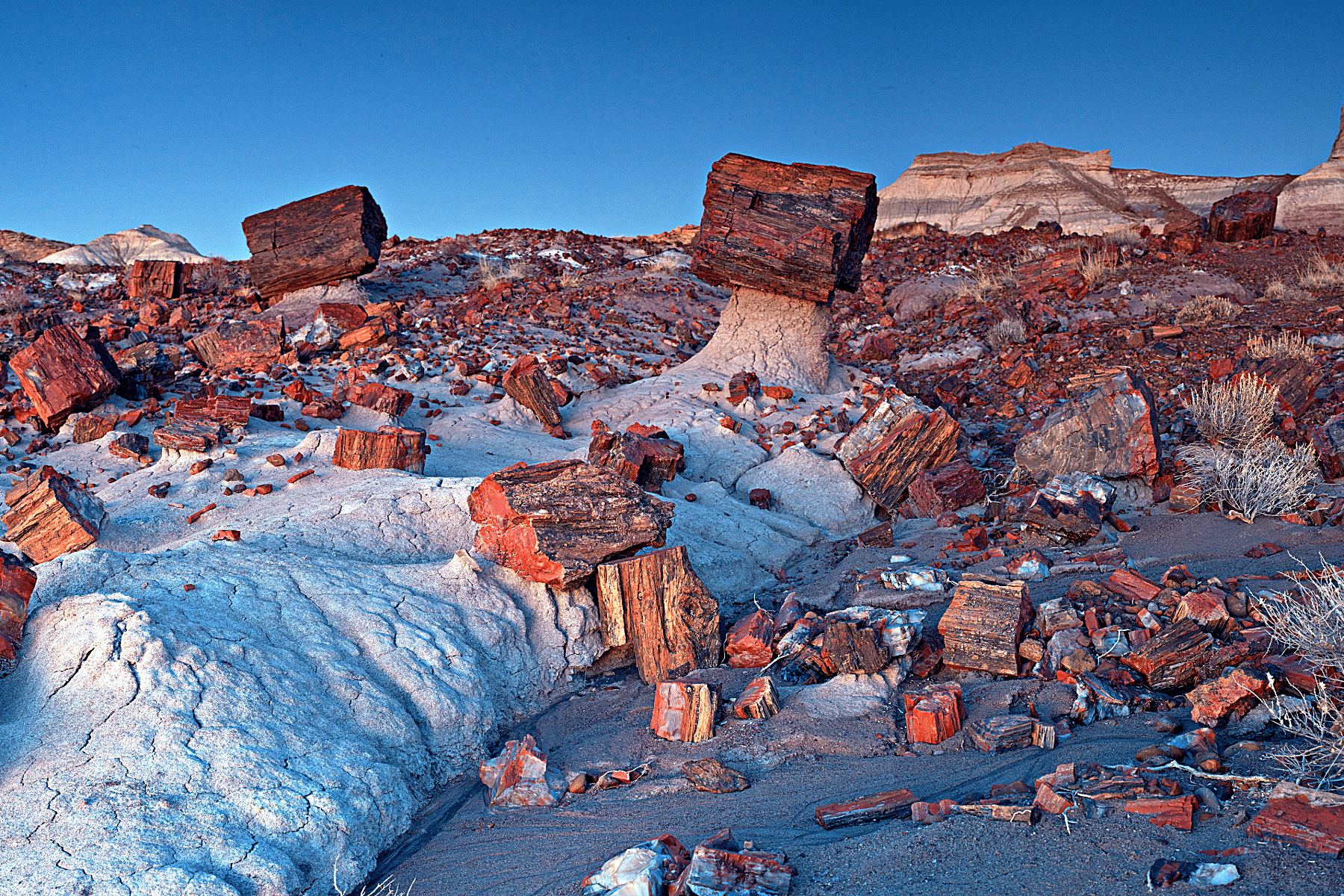
Only attempt this one on dry ground because the route follows a wash, heading the opposite direction from Jasper Forest. It runs straight out and back, so getting turned around is hard.
The wash holds more petrified wood and massive boulders carried by Arizona’s torrential summer rains.
After about a mile, you scramble up the side of a mesa for a sweeping view from the top. Return the way you came for a 2.1-mile round trip.
7. See Martha’s Butte
Martha’s Butte is the place for petroglyphs in Petrified Forest. It’s another route without a built trail. Follow the park’s suggested line or wander toward the butte, which stays in view the whole way.
Take time around the base. Some petroglyphs are small or hide in shadow depending on the hour. On the south side you’ll find Walker’s Stump, a log that lodged nearly upright in an ancient river and stands half entombed in rock today.
6. Longer Hikes in Petrified Forest (5+ Miles)
Wilderness Loop
Painted Desert fans who want a longer, harder day should consider the Wilderness Loop’s seven miles of desert badlands. No permit needed unless you stay overnight.
The loop starts at the Painted Desert Inn and circles through the Black Forest area of the wilderness. You get petrified wood going back 210 million years plus formations that don’t show up in other parts of the park.
Stops along the way include the following.
- Angel’s Garden: Another large collection of petrified wood.
- Onyx Bridge: A long petrified log that once spanned an arroyo. It collapsed from its bridge position in 2020, but the remains are still there.
- Lithodendron Wash: The water here runs an unsettling orange-red. The color comes from clay in the nearby hills, not anything biblical.
- Devil’s Playground: An ominous and intriguing collection of rock formations. Jump to the Devil’s Playground section for the permit details.
Blue Forest Trail
The name sounds like Blue Mesa, but this is a separate option in the same area. The Blue Forest Trail actually closed for years after the Blue Mesa Loop opened, then came back by popular demand.
Instead of taking Blue Mesa Loop Road, park near the Teepee formations. You can connect this hike to the Blue Mesa Loop Trail if you want more.
Every mesa you round opens a new view, and you can descend lower to meet the Blue Mesa Loop. As an out and back, it runs three miles.
Devil’s Playground
Welcome to the only part of Petrified Forest that requires a permit for day hiking. This corner of the desert joined the wilderness area in 2014, and only a handful of people see it each week.
Devil’s Playground blends everything good about this park into one expanse that somehow feels intimate. Boulders, scrambling, small caves hidden among the mesas, and badlands banded gray, purple, and blue.
The route runs about eight miles on paper. The park’s map references landmarks like “a bush” and “the wash,” so plan on covering more ground than that and budget time for rock scrambling. It is, after all, a playground.
Nothing devilish lives out here beyond rock formations that don’t seem to respect gravity. The solitude is total. Given the route finding involved, we’d recommend not hiking it alone.
Travel tip. Call ahead to check permit availability. Permits are only issued at the Painted Desert Visitor Center and can’t be reserved. The number is (928) 524-6228, extension 236.
5. Watch Paleontologists at Work
Fossils found in the park get collected by paleontologists and brought to the Museum Demonstration Lab at the Painted Desert Visitor Center at the north entrance.
You can watch the experts work on 200-million-year-old finds before they’re cataloged or displayed anywhere. Few parks let you stand this close to the actual science.
4. Take a Tour
If a trail-less wilderness hike sounds daunting solo, check the park’s calendar for ranger-guided options. Devil’s Playground tours run throughout the year.
The Petrified Forest Field Institute also runs customized tours worth checking on.
3. Red Basin Clam Beds
The Red Basin route packs two oddities into an 8.5-mile trek across relatively flat ground.
First, prehistoric clams. Thousands of them, baked into the rock. Keep looking down, because some have eroded out and mixed in with the loose stones.
Second, the loop takes you past the Sandcastles, one of the strangest formations in the park, before dropping you into the Red Basin itself.
The longer mileage also reaches some of the bigger logs deep in the wilderness area.
2. Camping in Petrified Forest Wilderness
Only a few people a night get to sleep inside Petrified Forest National Park, and all of them are backpackers.
Camping requires a backpacking wilderness permit, which means the only campsites are in the wilderness area. Pick one up at a visitor center. They can’t be reserved ahead of time.
You’ll choose a wilderness zone for camping, and rangers will help you pick. Groups max out at eight people.
1. Stargazing in Petrified Forest
The best thing in this park happens after the gates close, and almost nobody knows about it. Since the park shuts at 5 pm, folks assume stargazing is off the table. The park issues two free Dark Sky Viewing Permits per day, each good for one vehicle, first come, first served.
The permit comes with a list of approved viewing spots, and wilderness campers can watch from their zone. Permits are issued only at the Painted Desert Visitor Center between 8 am and 4:30 pm and can’t be reserved. Petrified Forest has been a certified International Dark Sky Park since 2018, and two cars a night get it essentially to themselves. We can’t think of a better stargazing ratio anywhere in the system.
Is Visiting Petrified Forest Worth It?
Petrified Forest is worth visiting for 210 million reasons. We’d call it one of the most underrated parks in the system, and it’s an easy stop on the way to or from the Grand Canyon.
Nowhere else on earth concentrates this much petrified wood in one place. And while most parks rightly keep you on the trail, the wilderness areas here have no trails at all. You plot your own route through the badlands.
Pictures undersell it. Even your eyes don’t take in the full complexity of the wood until you’re crouched a foot away, and the colors shift with the sun every hour.
The downside is the 5 pm close. It makes sense, though. With this many fossils lying in the open, the gates are what keep the looters out.
Travel tip. Take the two-hour drive to Canyon de Chelly National Monument, a canyon grand in its own right.
List of Things to Do in Petrified Forest National Park
- Stargazing in Petrified Forest National Park
- Camping in Petrified Forest Wilderness
- Red Basin Clam Beds
- Take a Tour
- Watch Paleontologists at Work
- Longer Hikes (5+ Miles)
- See Martha’s Butte
- Short Hikes (Under 3 Miles)
- Pause for the Painted Desert
- Drive Petrified Forest Road
Map of Things to Do in Petrified Forest National Park
Pin Things to Do in Petrified Forest
Helpful Related Links
Facts About Petrified Forest: 10 Amazing Facts About Petrified Forest National Park
Grand Canyon Viewpoints: 20 Best Views of the Grand Canyon (National Park)
Grand Canyon South Rim Things to Do: 15 Amazing Things to Do at the Grand Canyon South Rim
Things to Do at the Grand Canyon: 20 Best Things to Do at Grand Canyon National Park
Closest Cities to the Grand Canyon: 10 Closest Cities Near the Grand Canyon
Grand Canyon Facts: 15 Fascinating Grand Canyon National Park Facts
Desert View Watchtower: Explore the Historic Desert View Watchtower (Grand Canyon)
Grand Canyon in Winter: Visiting the Grand Canyon in December (Winter Guide)
Arizona National Parks: 24 Epic Arizona National Parks to Visit (Photos + Guide)
Things to Do Saguaro NP: 15 Best Things to Do Saguaro National Park
Things to Do Zion NP: 18 Epic Things to Do at Zion National Park
Best Hikes Saguaro NP: 10 Best Saguaro National Park Hikes
National Parks Near Tucson: 10 Best National Parks Near Tucson
National Parks Near Phoenix: 10 Best National Parks Near Phoenix
What to Bring to Petrified Forest
Gear we recommend for Petrified Forest. Affiliate links support our work at no cost to you.
Affiliate disclosure: Some links on this page earn us a small commission at no extra cost to you. We only recommend gear we actually use.