
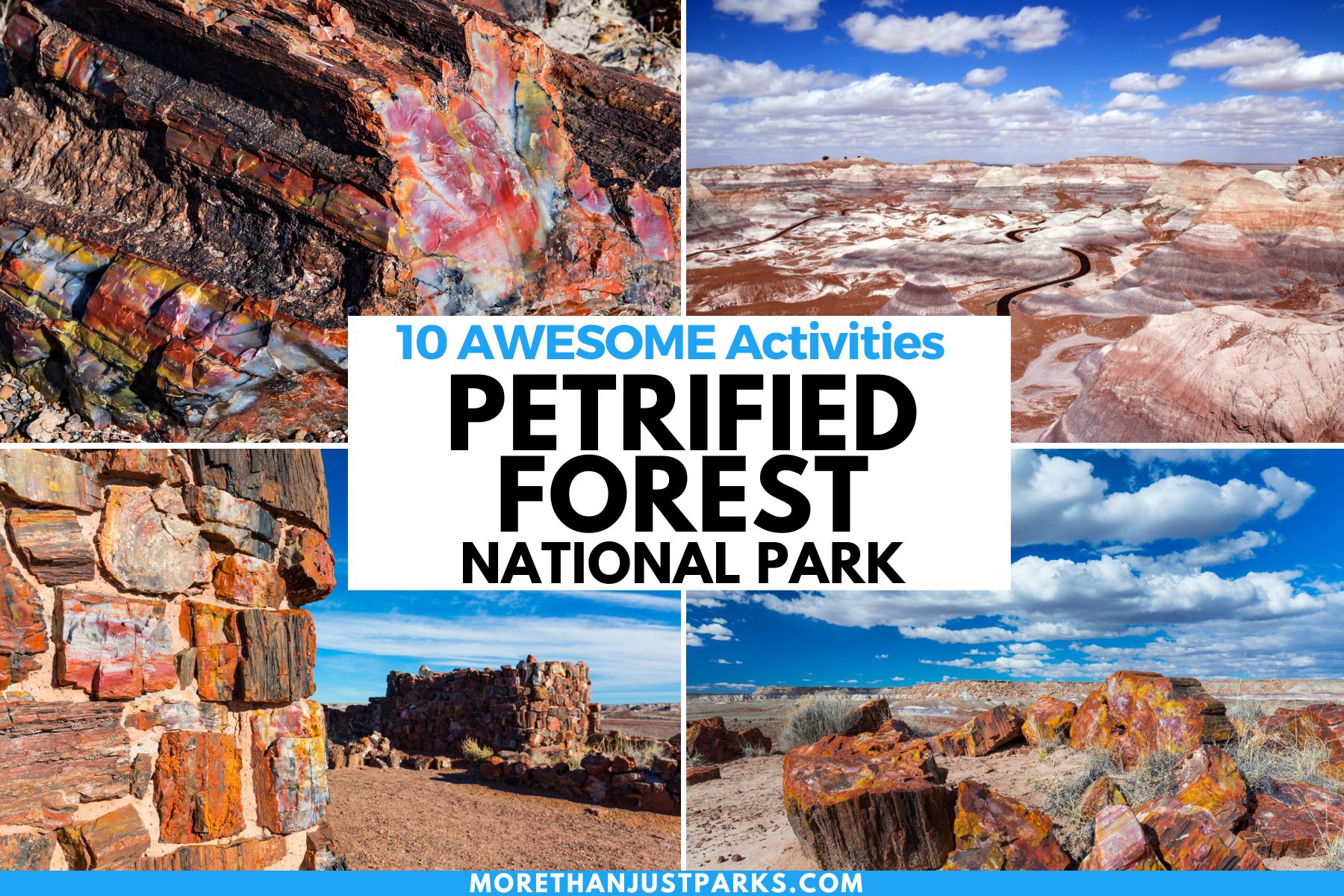


I’ve been to 63 national parks, and Petrified Forest is the one I have the hardest time explaining to people. “It’s a forest,” I say, “but the trees are stone. They’ve been stone for 225 million years.” Most people nod politely and change the subject. But then you stand in the middle of Crystal Forest at golden hour and watch quartz logs throw light in every direction, and you realize no explanation was ever going to do the job. You have to see it.
Petrified Forest National Park sits in northeastern Arizona, 221,390 acres of ancient wood, painted badlands, and ancestral Puebloan history split clean in half by Interstate 40. The northern section is the Painted Desert. The southern section holds the petrified wood. A 28-mile scenic drive connects the two, running from I-40 down to Highway 180. You can cover the drive in an hour if you don’t stop, but stopping is the whole point.
This guide covers everything you need to plan a trip to one of Arizona’s most underrated parks.
The Petrified Wood
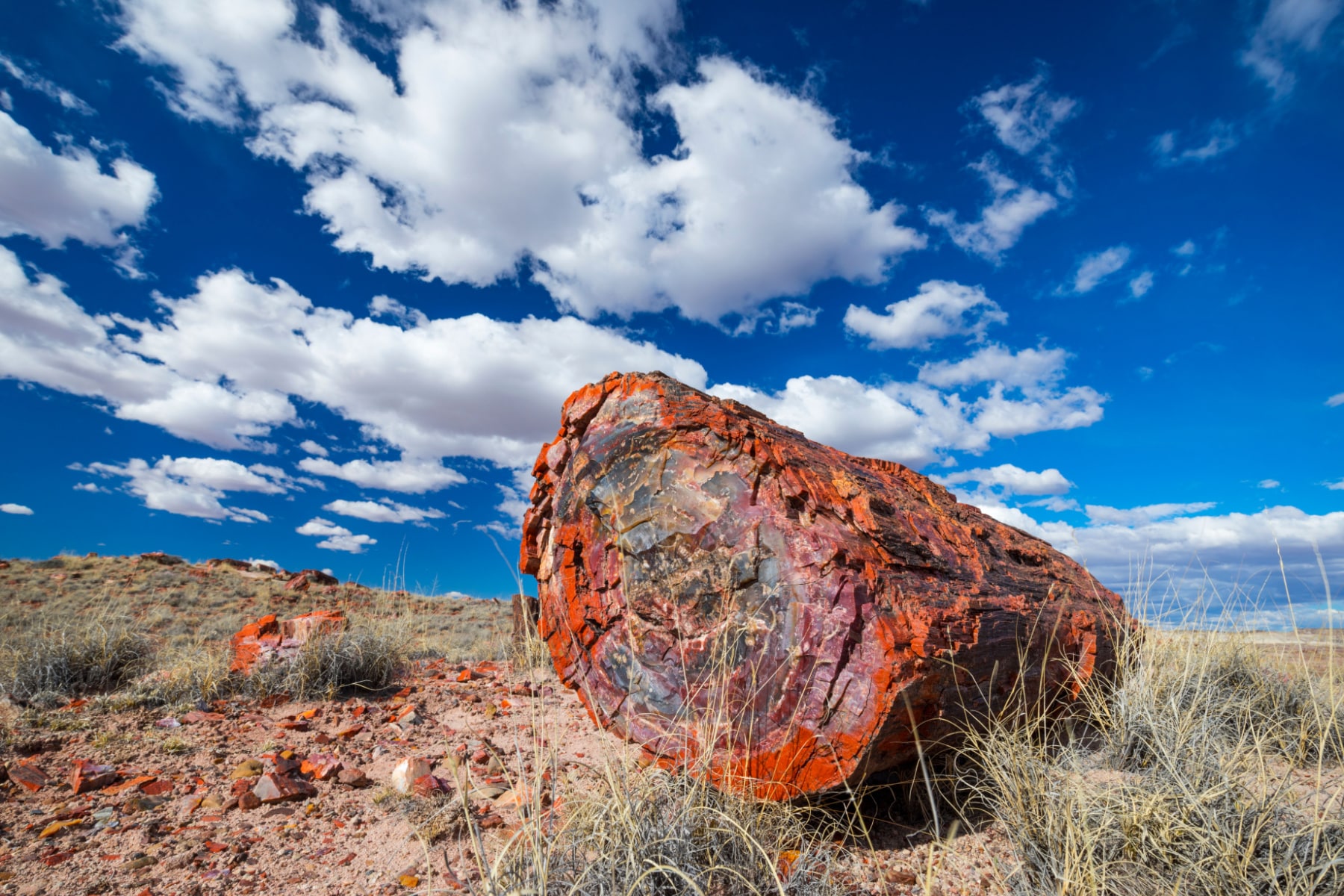
Here’s what happened. About 225 million years ago, during the Late Triassic, this part of Arizona was a lush tropical floodplain. Massive conifers grew along rivers and streams. When the trees fell, they were buried under volcanic ash and sediment before they could decompose. Silica-rich groundwater seeped through the wood over millions of years, replacing the organic material cell by cell with quartz crystals. Iron, manganese, and other minerals added the colors. The result is fossilized wood that looks like it was painted by someone with an impractical number of pigments.
Love Petrified Forest? It's one of 117 threatened public lands destinations we're tracking. Get the free briefing.
The colors are genuinely unbelievable. Red and orange from iron oxide. Purple and black from manganese. Yellow from iron hydroxide. Some logs show solid bands of blue and white agate. Others are shot through with clear quartz crystals that catch sunlight like stained glass. I’ve photographed a lot of rocks in my life (occupational hazard) and these are among the most photogenic on the planet.
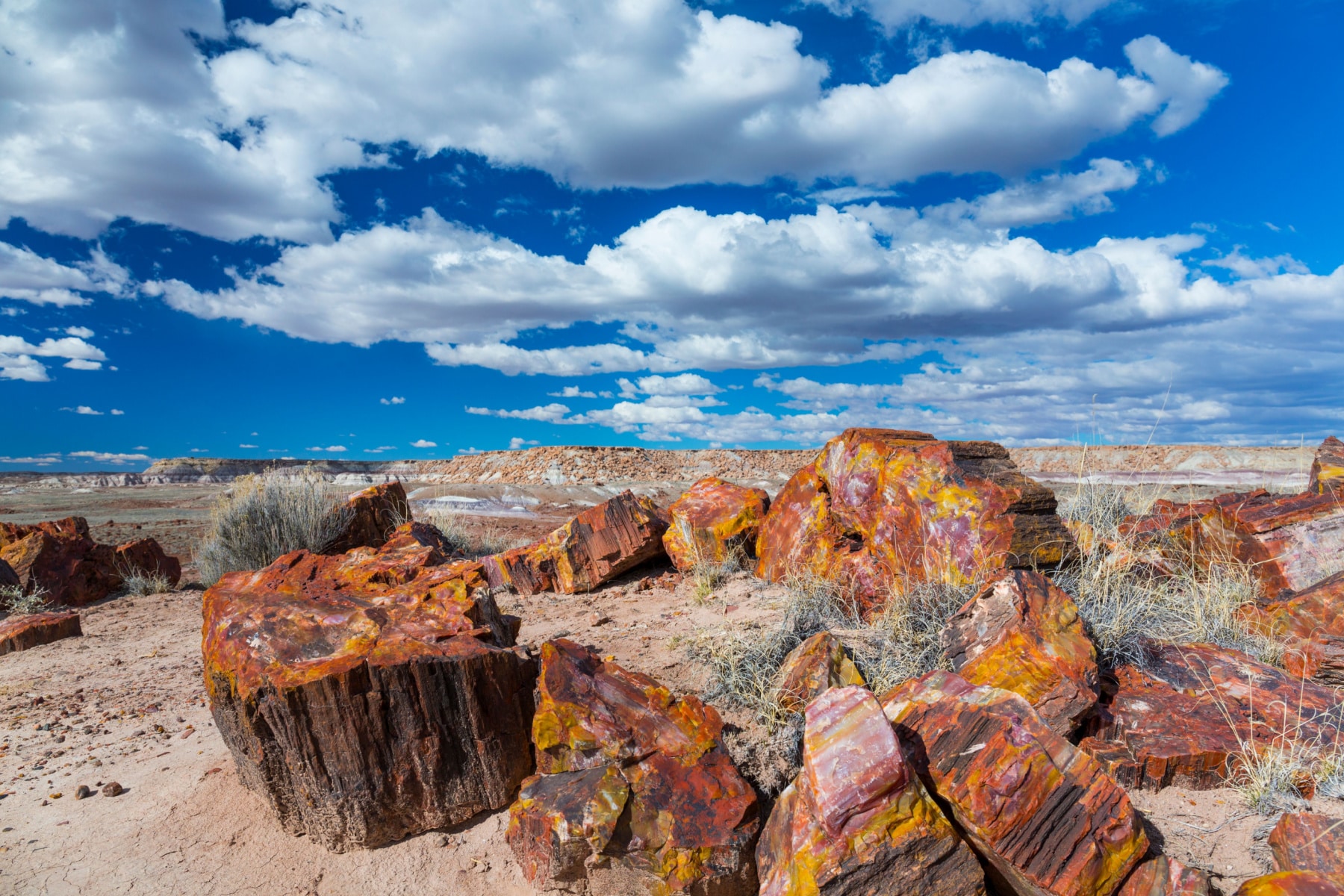
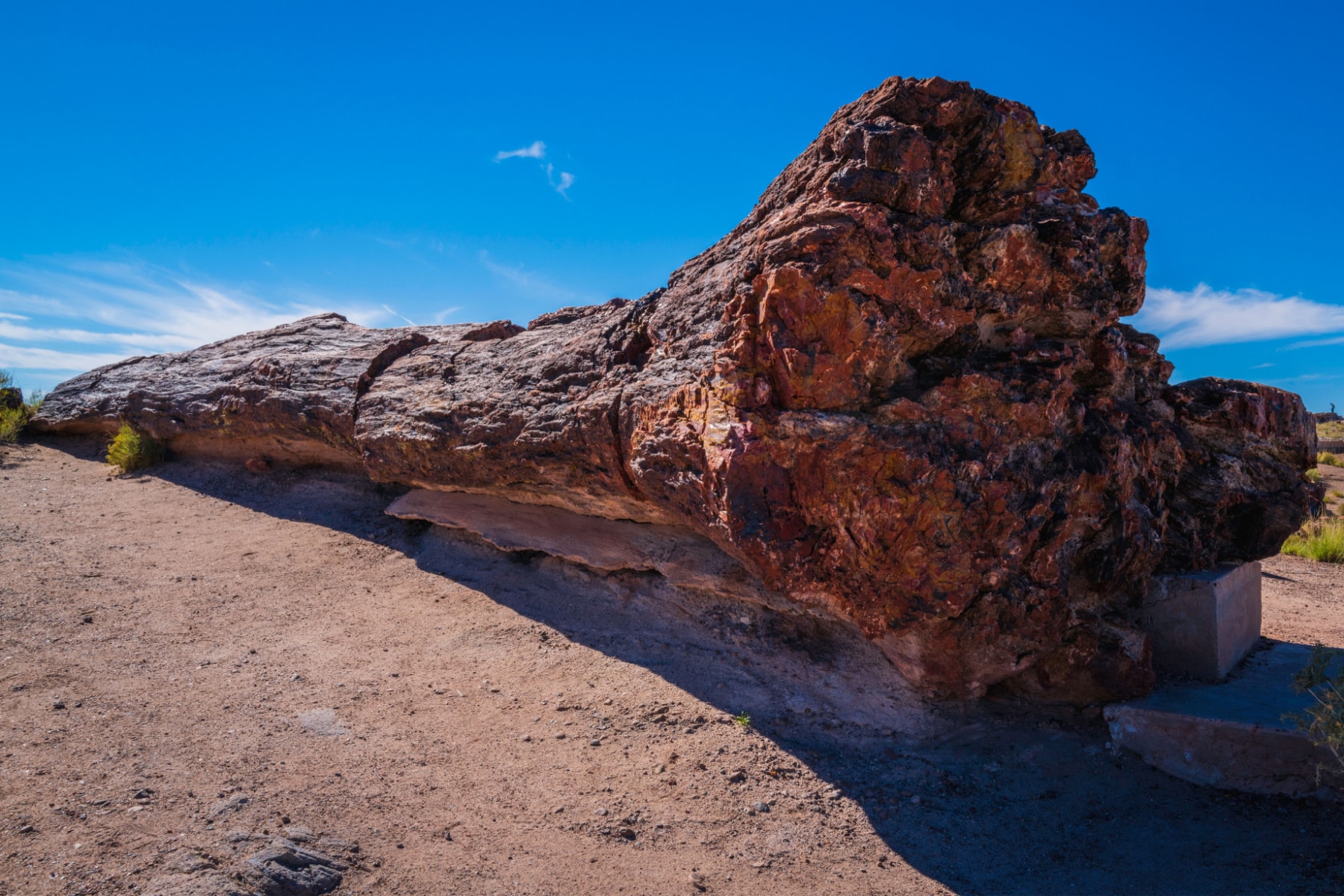
The petrified logs range from small fragments to massive trunks over 10 feet in diameter. Some weigh several tons. The largest concentration sits along the southern trails, but you’ll find pieces scattered across the landscape throughout the park. The Giant Logs Trail behind the Rainbow Forest Museum has some of the biggest specimens, including “Old Faithful,” a log nearly 10 feet wide at the base.
The Painted Desert
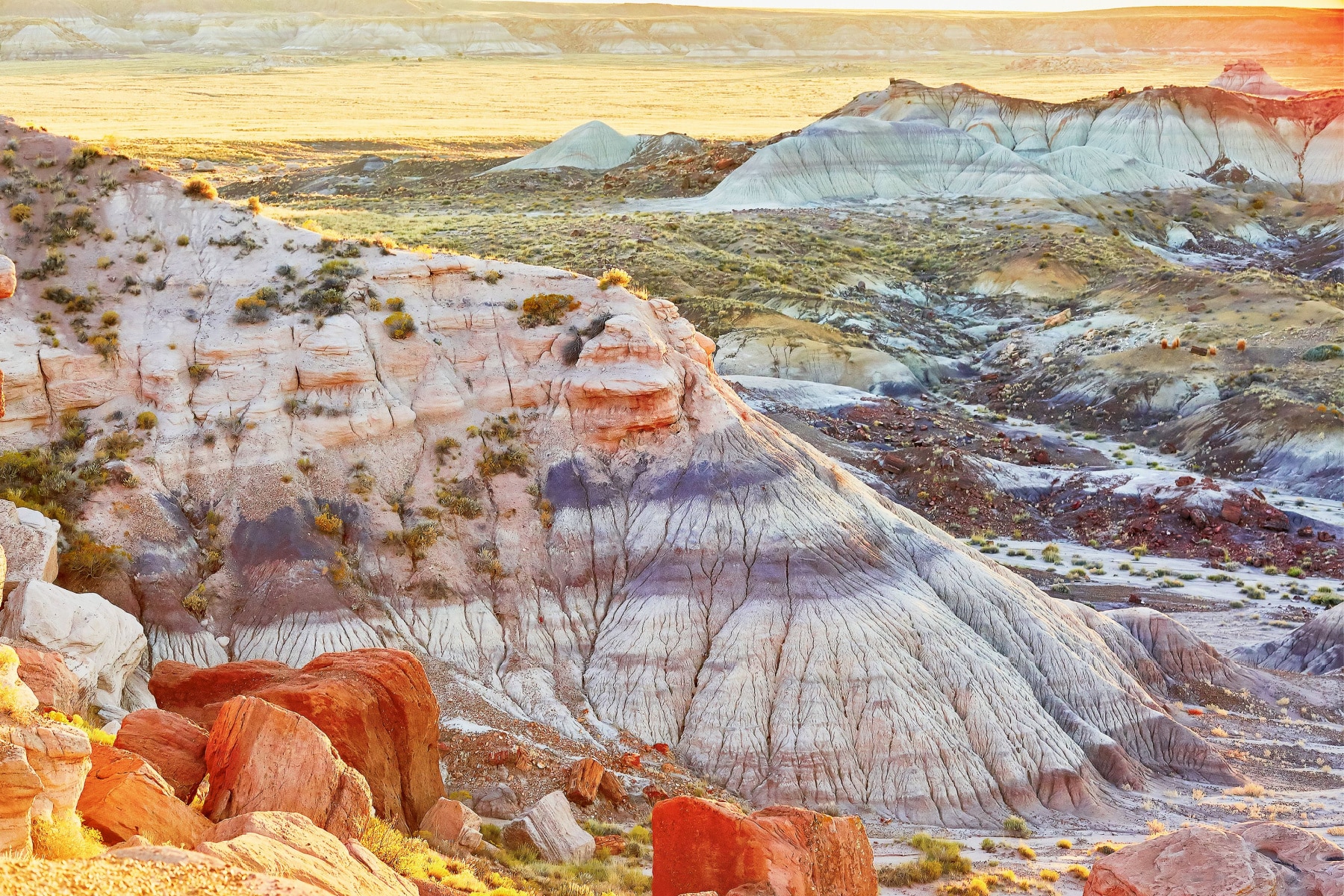
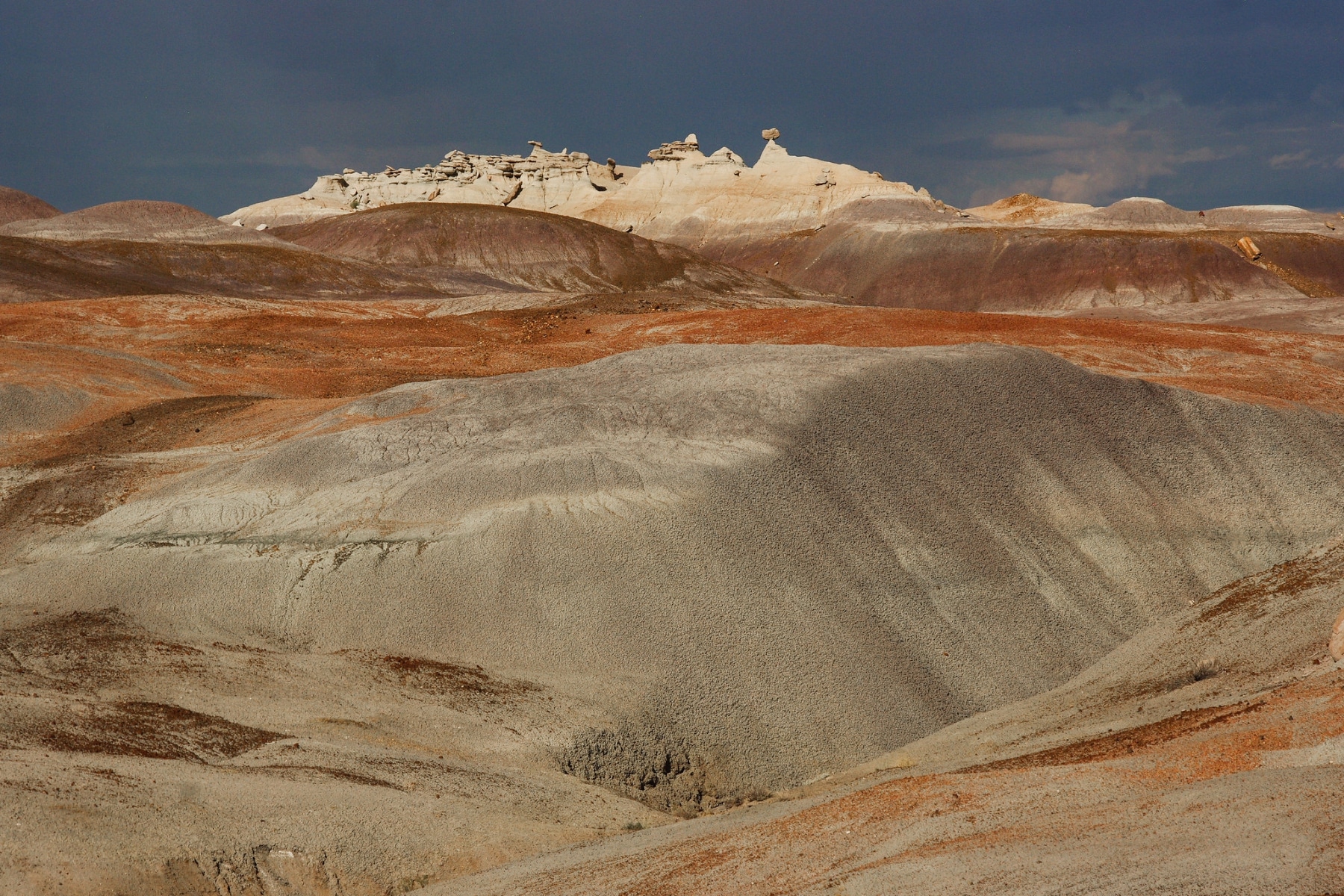
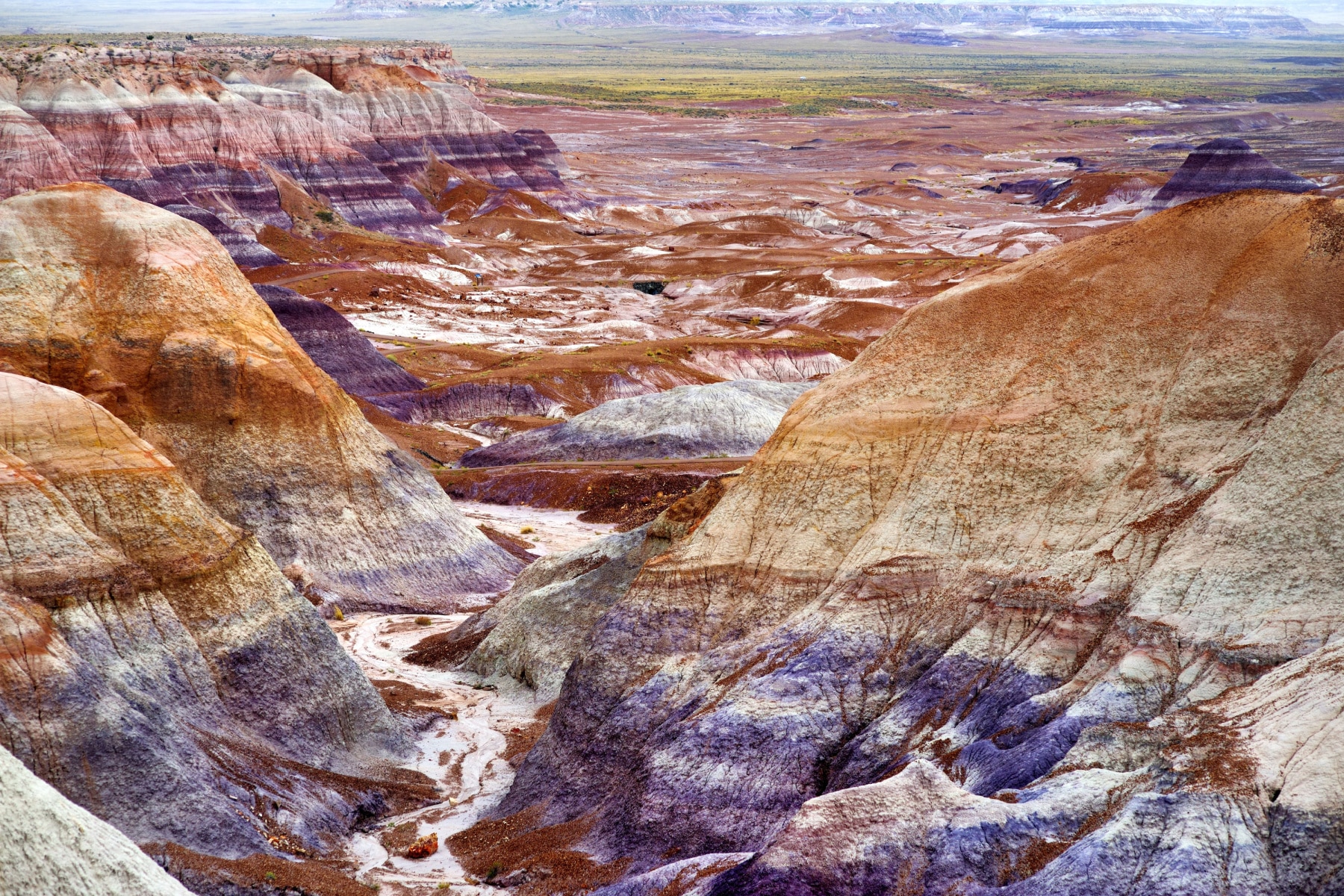
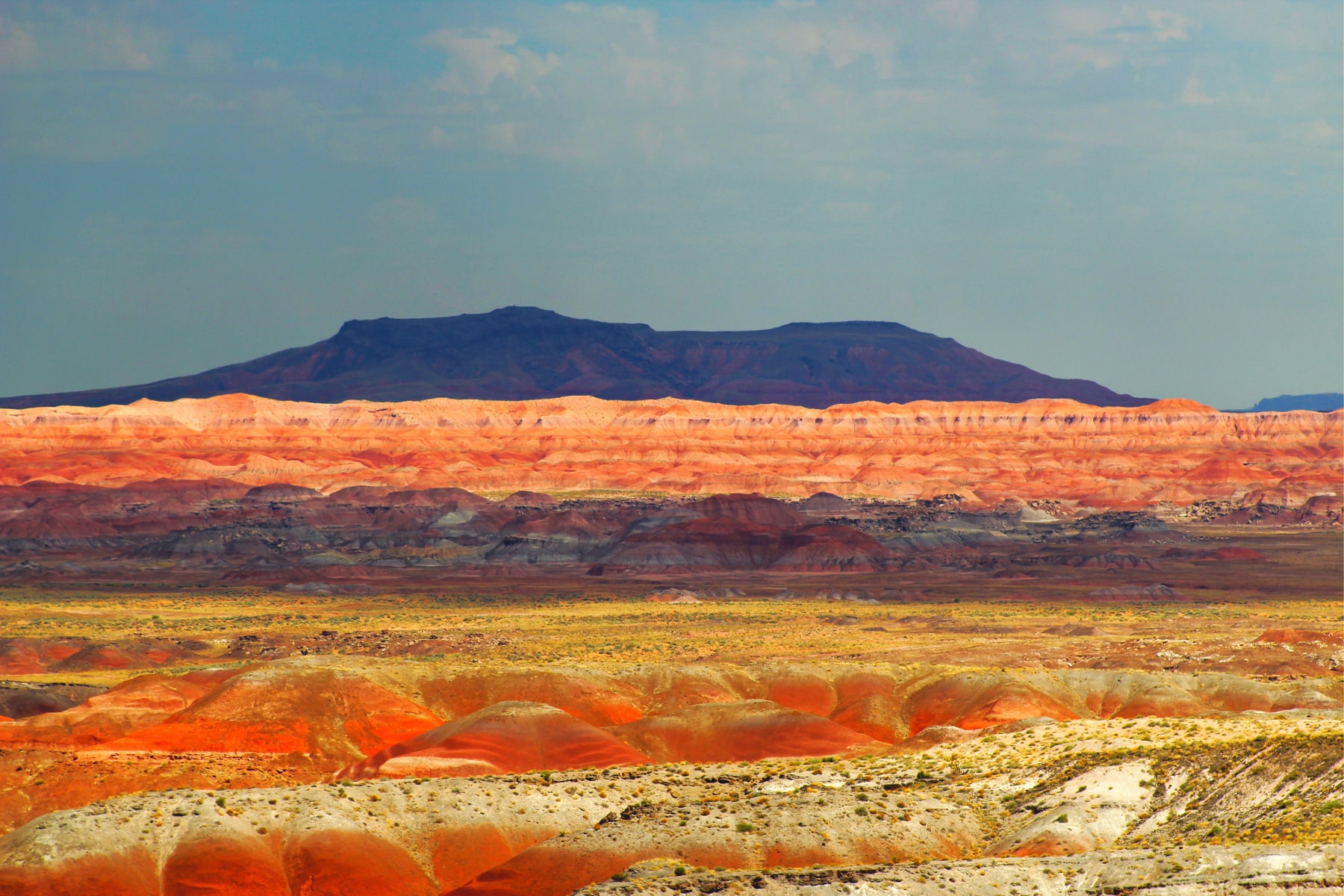
The northern third of the park is the Painted Desert, and it is one of the most visually arresting landscapes in the American West. These are badlands formed from layers of ancient sediment, each layer a different color depending on what minerals were present when it was deposited. Reds, purples, grays, blues, whites, and oranges stack on top of each other like geological layer cake.
The best viewpoints line the first 8 miles of the scenic drive south from the I-40 entrance. Tiponi Point, Tawa Point, Kachina Point, and Pintado Point all offer different angles on the same vast expanse. Early morning and late afternoon light turns the badlands into something that doesn’t look real. I’ve shot the Painted Desert at sunrise and the colors were so saturated I had to desaturate my images in post-processing so people would believe them. That’s not a problem I usually have.
The Painted Desert Inn, a National Historic Landmark near Kachina Point, is worth a stop. Built in the 1920s and renovated by the Civilian Conservation Corps in the 1930s, it now serves as a museum with murals by Hopi artist Fred Kabotie. No food, no lodging. Just history and one of the best viewpoints in the park.
Best Trails in Petrified Forest
Crystal Forest Trail
This is the trail most people come for, and rightfully so. The Crystal Forest Trail is a 0.75-mile paved loop through the densest concentration of petrified logs in the park. The wood here is especially rich in quartz and amethyst crystals (that’s where the name comes from). In the right light, the ground sparkles. I am not exaggerating.
The trail is flat and fully accessible. Budget 30 to 45 minutes and try to time it for late afternoon when the low sun angle makes the crystal inclusions light up. It is a photographer’s playground.
Blue Mesa Trail
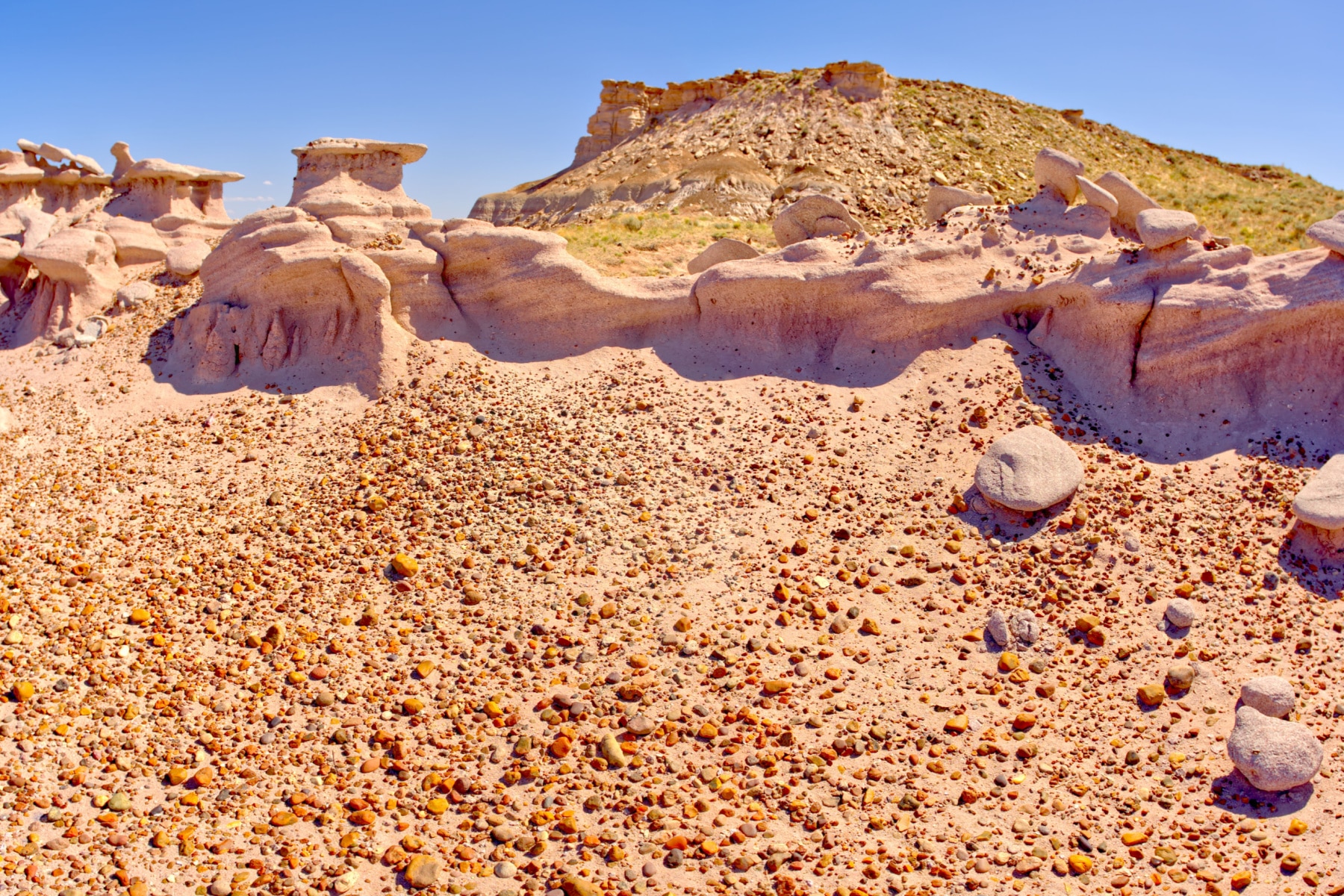
Blue Mesa is my personal favorite trail in the park. It’s a 1-mile loop that descends into blue-and-white striped badlands that look like they belong on another planet. The bentonite clay formations erode into shapes that shift and change with every rainstorm. Petrified logs sit perched on pedestals of clay, balanced there as the softer material washes away beneath them.
The trail drops about 100 feet in elevation, so you will climb back up at the end. It’s not strenuous by any measure, but bring water. There’s zero shade out here, and in summer the reflected light off the pale clay is blinding.
Long Logs and Giant Logs Trails
These two trails sit at the southern end of the park near the Rainbow Forest Museum. Long Logs is a 1.6-mile loop through the park’s longest concentration of petrified trees, some stretching over 100 feet. Giant Logs is a shorter 0.4-mile loop behind the museum with the park’s largest specimens. Between the two, you’ll spend about an hour and see some of the most impressive individual logs in the park.
History and Human Heritage
Puerco Pueblo
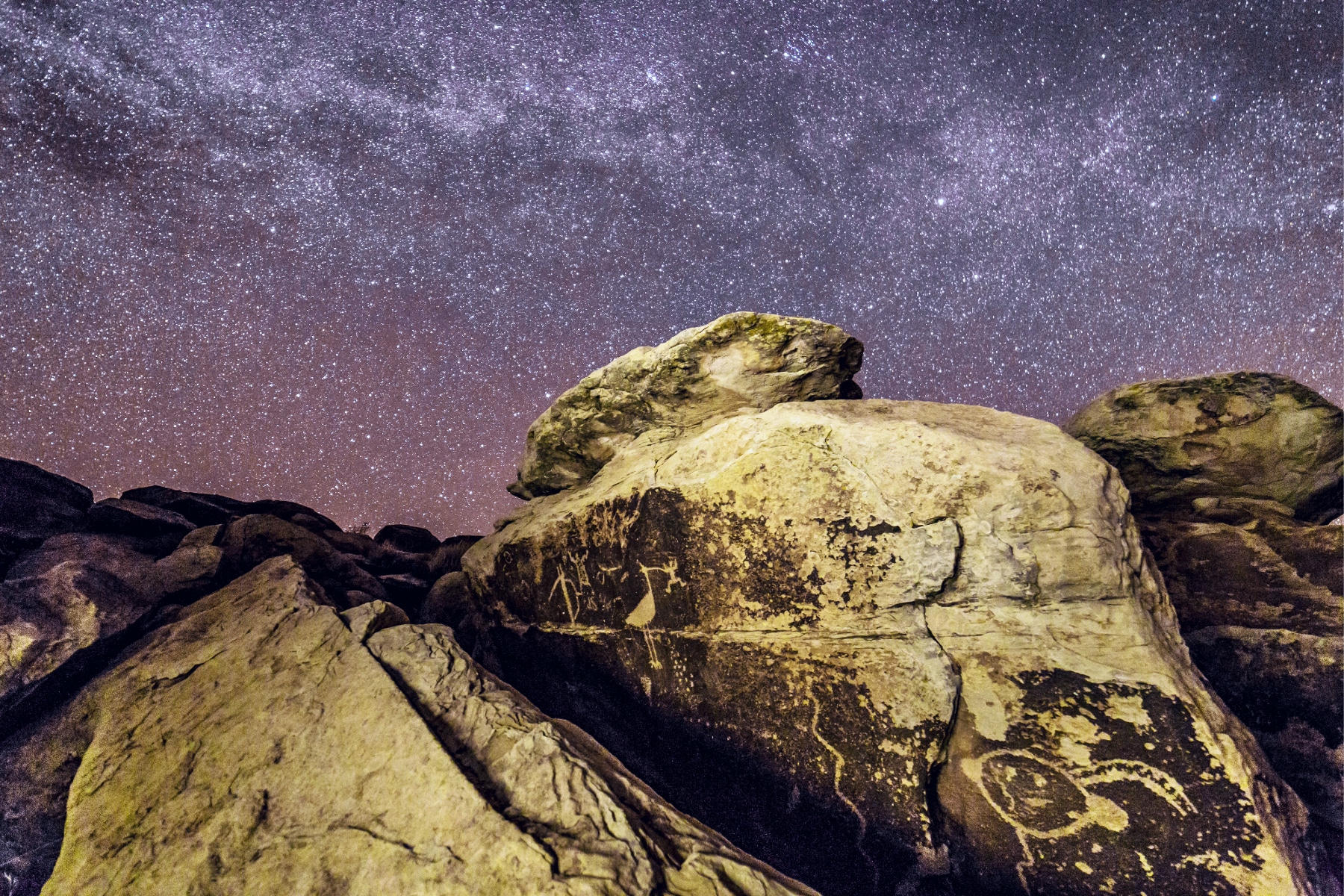
People lived here long before this was a national park. Puerco Pueblo is a 100-room ancestral Puebloan village that was occupied from roughly 1250 to 1380 CE. You can see the excavated walls from a short paved loop trail, and the petroglyphs on the boulders below the pueblo are among the best in the park. On the summer solstice, a petroglyph near the pueblo acts as a solar marker, with a beam of light passing through a crack in the rocks to illuminate a specific carved spiral. It is the kind of thing that makes you reconsider everything you thought you knew about “ancient” civilizations.
Newspaper Rock
Newspaper Rock is a large boulder face covered in over 650 individual petroglyphs carved by multiple groups over hundreds of years. The name comes from the idea that it was a kind of ancient bulletin board, though the actual purpose of the carvings is debated. You view it from a distance at the overlook (bring binoculars or a telephoto lens), and even from there the density of images is staggering. Animals, human figures, geometric patterns, and symbols cover nearly every inch of available rock surface.
Agate House
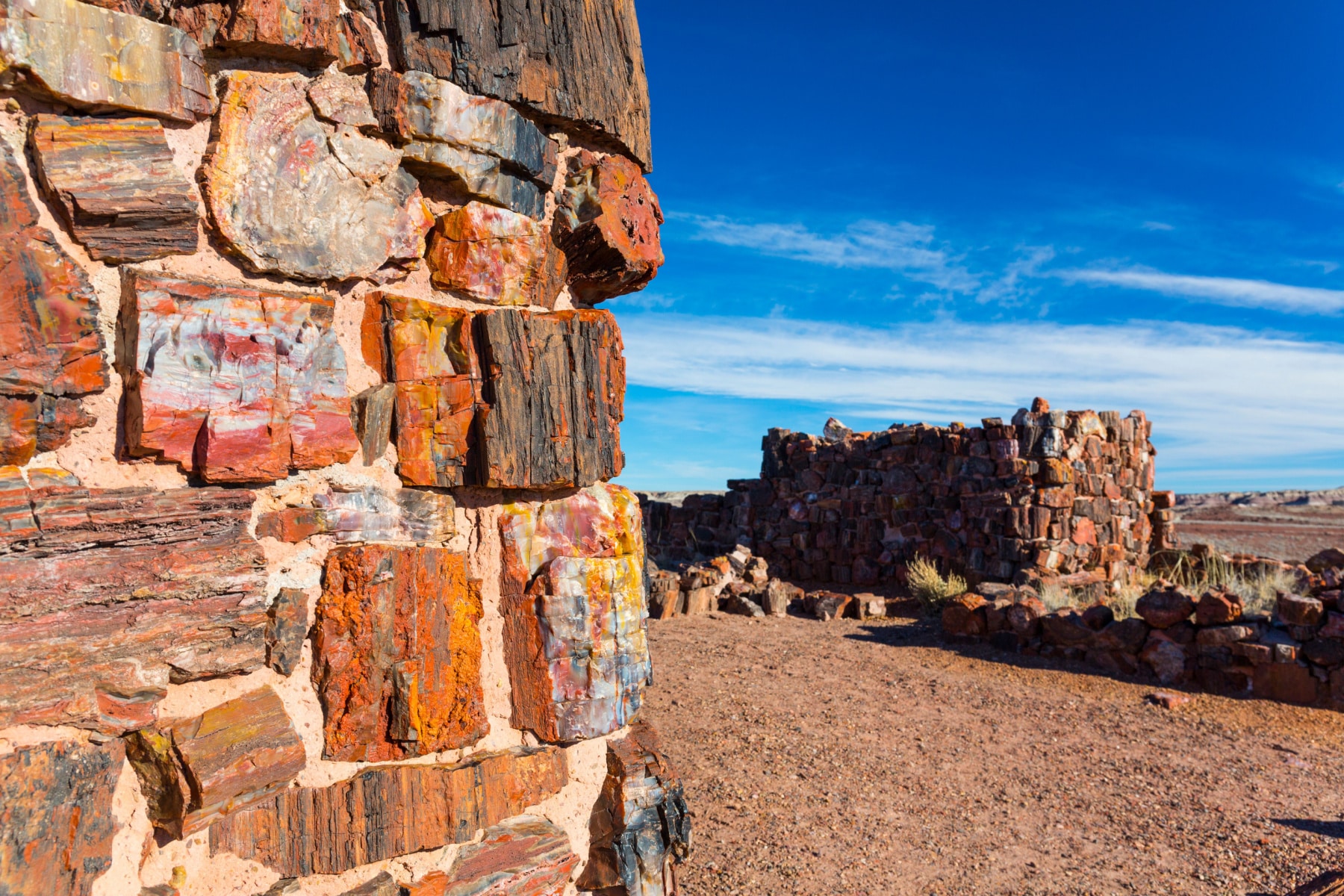
This might be the single strangest structure I’ve ever seen in a national park. Agate House is a partially rebuilt pueblo made almost entirely from petrified wood. Ancestral Puebloan people built it roughly 900 years ago, stacking colorful chunks of fossilized tree into walls. It’s a 2-mile round trip from the Long Logs trailhead, and it sits on a small mesa with views of the surrounding grasslands. The fact that people looked at these ancient stone logs and thought “building material” is both practical and somehow hilarious to me.
The Scenic Drive
The 28-mile park road is one of the best scenic drives in Arizona’s national park system. It runs north to south (or south to north, depending on which end you enter), connecting I-40 at the northern Painted Desert Visitor Center to Highway 180 near the Rainbow Forest Museum in the south. Every major stop in the park sits along this road or a short spur off of it.
There are no gas stations, no restaurants, and no lodging inside the park. The road is not a loop. You enter one end and exit the other, which means you’ll need to drive back around on I-40 or Highway 180 to return to where you started. Plan accordingly.
I recommend entering from the north (I-40) and driving south. This way you start with the Painted Desert overlooks in the morning light and finish with the petrified wood trails in the afternoon, when the low sun makes the crystals come alive. Budget at least 3 to 4 hours for the full drive with stops. If you want to hike Blue Mesa and Crystal Forest and spend time at the pueblos, plan for a full day.
Don’t Take the Petrified Wood
I shouldn’t have to say this, but I do. It is illegal to remove petrified wood, rocks, fossils, or any natural or cultural objects from Petrified Forest National Park. Fines start at $325 and can go much higher. The park loses an estimated 12 tons of petrified wood per year to theft, which is genuinely depressing math.
Rangers check vehicles at the exit. The Painted Desert Visitor Center has a “conscience pile” of wood mailed back by guilty visitors, many of whom include letters describing the bad luck they experienced after taking it. (Whether you believe in a petrified wood curse is your business. The letters are entertaining either way.)
If you want petrified wood to take home, buy it legally outside the park. Shops in Holbrook sell it by the pound, all sourced from private land. Leave No Trace principles apply here as everywhere.
Planning Your Visit
Entrance Fees and Hours
Entrance is $25 per vehicle, $20 per motorcycle, or $15 per person on foot or bicycle. Your America the Beautiful Pass ($80/year) covers entry. The park is open daily, but the road gates close at specific times that shift seasonally. In summer, gates are open from 7 AM to 7 PM. In winter, it’s roughly 8 AM to 5 PM. Check the NPS website for current hours before you go, because they will lock you in if you’re still on the road at closing.
Best Time to Visit
Spring (March through May) and fall (September through November) are ideal. Temperatures sit in the 60s and 70s, the light is outstanding, and the crowds are manageable. Summer works too, but expect highs in the upper 90s and the kind of sun that makes you regret not bringing a hat. Winter brings cold nights and occasional snow, which actually makes for incredible photography on the petrified logs.
Camping
There are no developed campgrounds inside Petrified Forest National Park. Zero. If you want to camp in the park, you’ll need a free backcountry permit from the visitor center, and you’ll need to hike at least 1 mile from any road or developed area. The backcountry camping is actually quite good (no light pollution, enormous skies), but it requires planning and self-sufficiency.
For developed camping, Holbrook is your best bet. It’s about 25 miles west on I-40 and has several RV parks and basic campgrounds. If you’re doing a broader Arizona road trip, you can easily pair Petrified Forest with a night in Holbrook or Winslow.
Visitor Centers
The park has two visitor centers, one at each end of the scenic drive. The Painted Desert Visitor Center sits at the northern I-40 entrance and has the park film, a bookstore, and ranger programs. The Rainbow Forest Museum at the southern entrance has fossil exhibits and sits right next to the Giant Logs Trail. Both are worth a quick stop.
Is Petrified Forest Worth Visiting?
Here’s the thing. Petrified Forest doesn’t have the vertical drama of the Grand Canyon or the red rock towers of Monument Valley. It sits low and wide and subtle. But what it has is something I think about more than almost any other park. The idea that you’re walking through a 225-million-year-old forest, that these stone logs were living trees when dinosaurs first appeared on Earth, that the colors in the rock are the result of processes that took millions of years to complete. It recalibrates your sense of time in a way that’s hard to shake.
If you’re driving I-40 across Arizona, it is a 3-to-4-hour detour that I think is absolutely worth it. If you’re building a bigger Arizona parks itinerary, Petrified Forest belongs on the list. It’s one of the 63, and it earned its spot.
For more on this park, check out our 10 amazing facts about Petrified Forest and our full guide to activities in Petrified Forest and the Painted Desert.
What to Bring to Petrified Forest
Gear we recommend for Petrified Forest. Affiliate links support our work at no cost to you.
More Than Just Parks may earn a small commission from purchases made through these links, at no extra cost to you. We only recommend gear we would actually use.
Affiliate disclosure: Some links on this page earn us a small commission at no extra cost to you. We only recommend gear we actually use.


