

Let me give you the honest geography before you start planning. Lexington sits in the heart of the Bluegrass, and that puts you within reach of one genuine national park headliner, a cluster of historic sites you can knock out in an afternoon, and a couple of bigger destinations down in Tennessee that are real road trips, not day outings. I am going to tell you exactly which is which so you do not drive four hours expecting to be home for dinner.
I have spent years filming public lands across the country, and Mammoth Cave is the marquee near park here, the longest cave system on earth and an easy day trip at a little over two hours. Camp Nelson, Lincoln’s birthplace, and Mill Springs are all close enough for half-day or single-day visits. Cumberland Gap and Big South Fork sit at the two-hour-plus mark, where an overnight starts to make sense, and the Great Smokies and Fort Donelson are full road trips. Here is how the eight shake out, ranked by what you get back for the miles you put in.
National Parks Near Lexington At A Glance
One quick note on wording. People ask why a “national parks near Lexington” list mixes in monuments, battlefields, and historical parks. Every entry below is a full unit of the National Park Service, but only a handful are genuinely close, and only one is a capital-N National Park. The table sorts the honest math out at a glance.
| Park/Site | Drive From Lexington (one-way) | Designation | Day Trip? | Fee |
|---|---|---|---|---|
| Mammoth Cave National Park | ~2 hr 15 min | National Park | Yes | Park entry free; cave tours ticketed |
| Camp Nelson National Monument | ~30 min | National Monument | Yes | Free |
| Abraham Lincoln Birthplace National Historical Park | ~1 hr 30 min | National Historical Park | Yes | Free |
| Mill Springs Battlefield National Monument | ~1 hr 30 min | National Monument | Yes | Free |
| Cumberland Gap National Historical Park | ~2 hr | National Historical Park | Long day or overnight | Free |
| Big South Fork National River & Recreation Area | ~2 hr 30 min | National River & Recreation Area | Overnight | Free entry; fees for camping |
| Great Smoky Mountains National Park | ~4 hr 25 min | National Park | Separate trip | Free entry; $5/day parking tag |
| Fort Donelson National Battlefield | ~3 hr 50 min | National Battlefield | Separate trip | Free |
1. Mammoth Cave National Park
Drive from Lexington: About 2 hours 15 minutes via the Bluegrass Parkway and I-65 S. Fee: Park entry is free, but cave tours are ticketed and reserved on Recreation.gov.
109 public lands destinations are under threat. Get the free weekly briefing that 25,000+ people use to stay informed and take action.
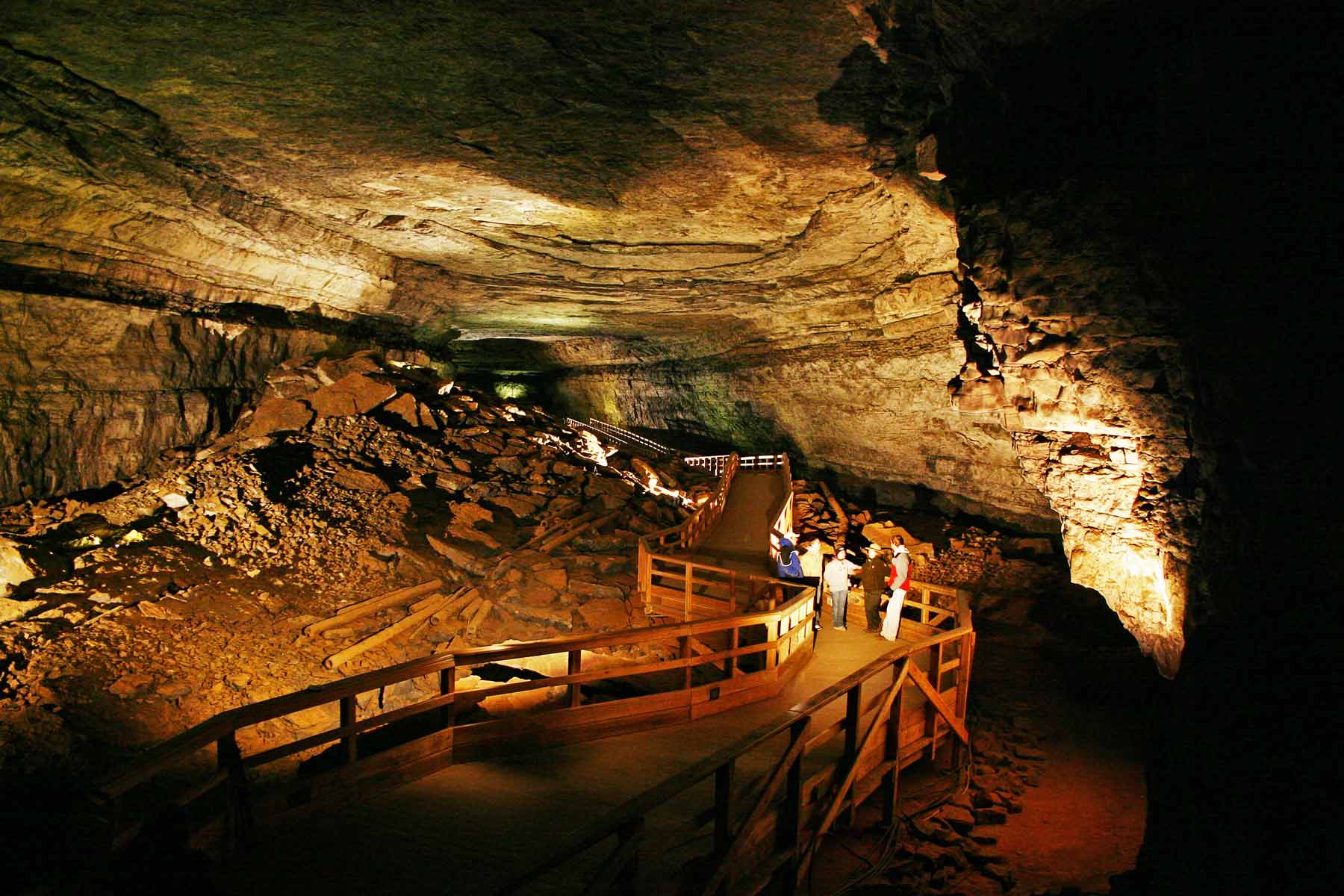
This is the headliner and the only capital-N National Park you can fold into a single day from Lexington. Mammoth Cave protects the longest known cave system on earth, with more than 400 miles surveyed and counting. Established as a national park in 1941 and named a UNESCO World Heritage Site in 1981, it runs guided tours that range from an easy walk to a multi-hour crawl. Above ground there is a quieter park most people skip, with the Green River, hardwood forest, and a 9-mile rail-trail for hiking and biking.

Honest caveat: The surface park is free, but you cannot see the cave without a ticket, and the popular tours sell out, especially on summer weekends and holidays. Book on Recreation.gov before you leave Lexington rather than gambling on a walk-up spot. Tour difficulty varies a lot, so read the description and match it to your group before you reserve, since the longer routes involve stairs, tight passages, and a couple of hours underground.
2. Camp Nelson National Monument
Drive from Lexington: About 30 minutes via Nicholasville Road and US-27 S. Fee: Free.
This is the closest unit on the list and the easiest yes. Camp Nelson became the 418th unit of the National Park Service in 2018. During the Civil War it served as a Union supply depot and one of the largest recruitment and training centers in the country for African American soldiers, and a refuge for thousands of freedom seekers and their families. The visitor center sets the stage with exhibits and a short film, and the grounds hold the restored Oliver Perry “White House,” a reconstructed barracks, and original earthworks you can walk.

Honest caveat: This is a quiet, history-first site, not a scenic outing, so come for the story rather than the views. The grounds are open daily, but the visitor center keeps shorter hours and the barracks tours run on a limited schedule, so check the day’s hours before you drive out.
3. Abraham Lincoln Birthplace National Historical Park
Drive from Lexington: About 1 hour 30 minutes via the Bluegrass Parkway toward Hodgenville. Fee: Free.
This one is a comfortable day trip and a worthwhile stop for anyone curious about where Lincoln got his start. The park marks the site where the 16th president was born in 1809, and the early memorial building, finished in 1911, enshrines a symbolic birthplace cabin behind a flight of granite steps. Established in 1916, it is one of the oldest sites in the park system. The nearby Knob Creek unit protects the farm where Lincoln spent his earliest boyhood, and the grounds carry quiet trails through the Kentucky hill country that shaped him.
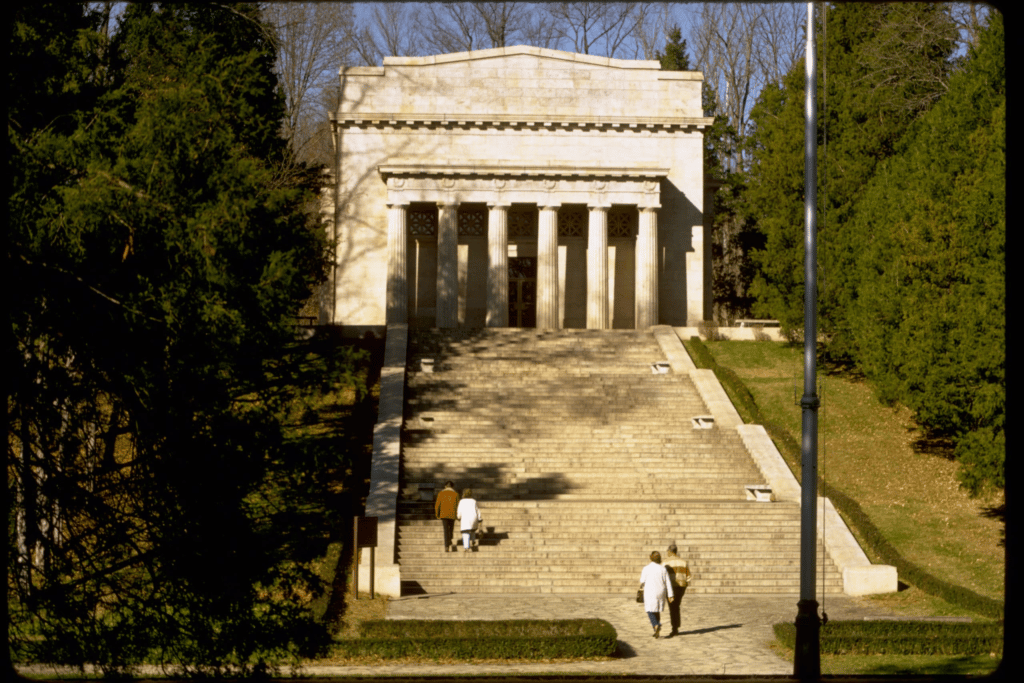
Honest caveat: The visit is short, often an hour or two, so it pairs well with a stop in Bardstown or with Mill Springs to make a fuller day. The Knob Creek unit sits a few miles up the road from the birthplace and keeps its own seasonal hours, so confirm both are open before you build the day around them.
4. Mill Springs Battlefield National Monument
Drive from Lexington: About 1 hour 30 minutes via US-27 S toward Nancy. Fee: Free.
One of the newest units in the system, Mill Springs became a national monument in 2020. The Battle of Mill Springs, fought on January 19, 1862, was an early Union victory that cracked the Confederate defensive line across Kentucky and helped keep this border state in the Union. Confederate General Felix Zollicoffer was killed when he rode up to a Union officer by mistake, and the loss of their commander broke the Confederate advance. The visitor center runs a film and museum, and a 10-stop driving tour traces the ground.
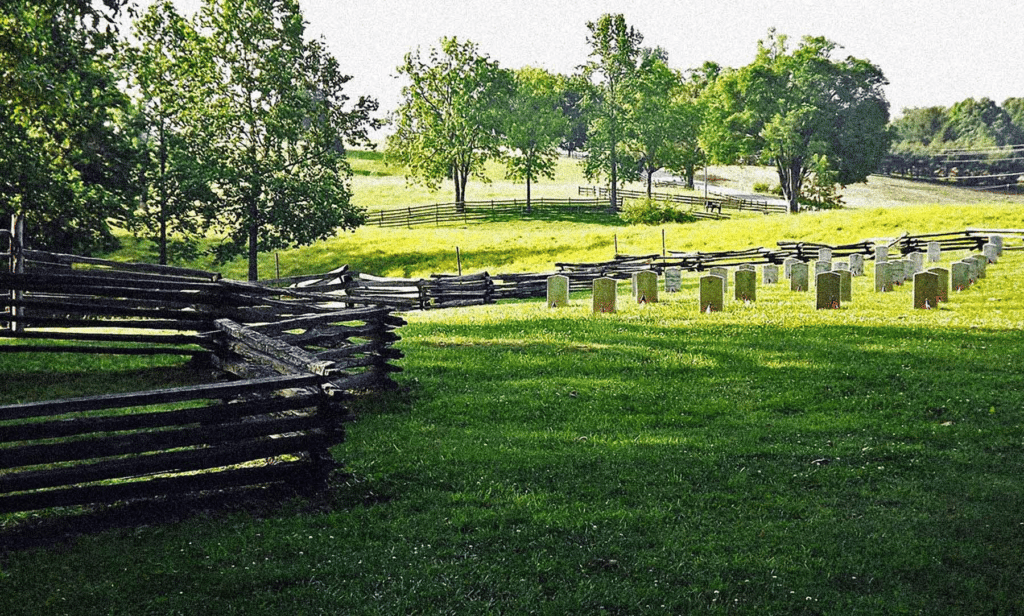
Honest caveat: Much of the field is read from pull-offs and roadways, so this is a drive-and-walk visit more than a hike. If you want to stretch your legs, Zollicoffer Park and the antebellum Brown-Lanier House give you a reason to get out of the car, and the whole thing pairs neatly with Lincoln’s birthplace since both sit south of Lexington.
5. Cumberland Gap National Historical Park
Drive from Lexington: About 2 hours via I-75 S and US-25E toward Middlesboro. Fee: Free.
Now we move from quick visits to a place that rewards more time. Cumberland Gap is the natural pass through the Appalachians that Daniel Boone helped blaze, the route hundreds of thousands of settlers walked into Kentucky. The park spreads across more than 20,000 acres where Kentucky, Tennessee, and Virginia meet, with the Pinnacle Overlook delivering a long view over three states. Beyond the overlook there are more than 80 miles of trails, the ranger-led Gap Cave tour, and the restored Hensley Settlement on the mountain’s crest.

Honest caveat: Two hours each way is doable in a day if you stick to the overlook and a short trail, but the Gap Cave tour and the drive out to Hensley Settlement eat hours, so a night in Middlesboro turns a rushed visit into a relaxed one. Gap Cave tours run on a seasonal schedule and need a reservation, so book ahead rather than counting on a same-day spot.
6. Big South Fork National River & Recreation Area
Drive from Lexington: About 2 hours 30 minutes via I-75 S, straddling the Kentucky-Tennessee line. Fee: Free to enter, with fees for camping.
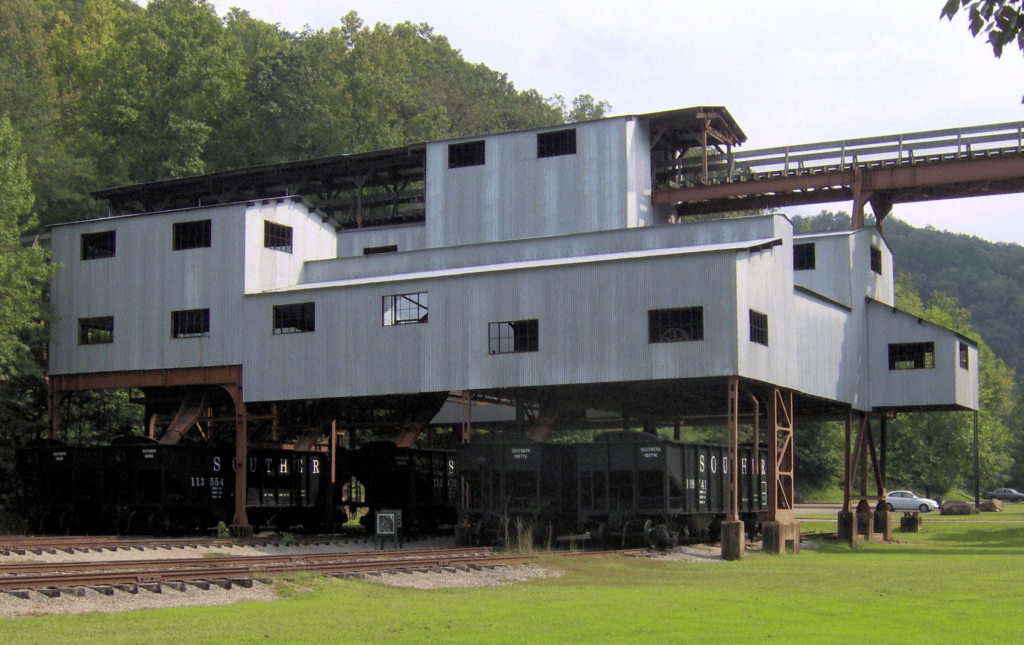
Established in 1974 and managed by the National Park Service, Big South Fork protects more than 125,000 acres of the Cumberland Plateau around the free-flowing Big South Fork of the Cumberland River. This is the outdoor heavyweight of the bunch close to Lexington, with sandstone gorges, natural arches, and more than 300 miles of trail for hikers, horseback riders, and mountain bikers. The Sheltowee Trace runs through it, the whitewater draws paddlers, and the restored Blue Heron Mining Community tells the coal-camp story that shaped the plateau.
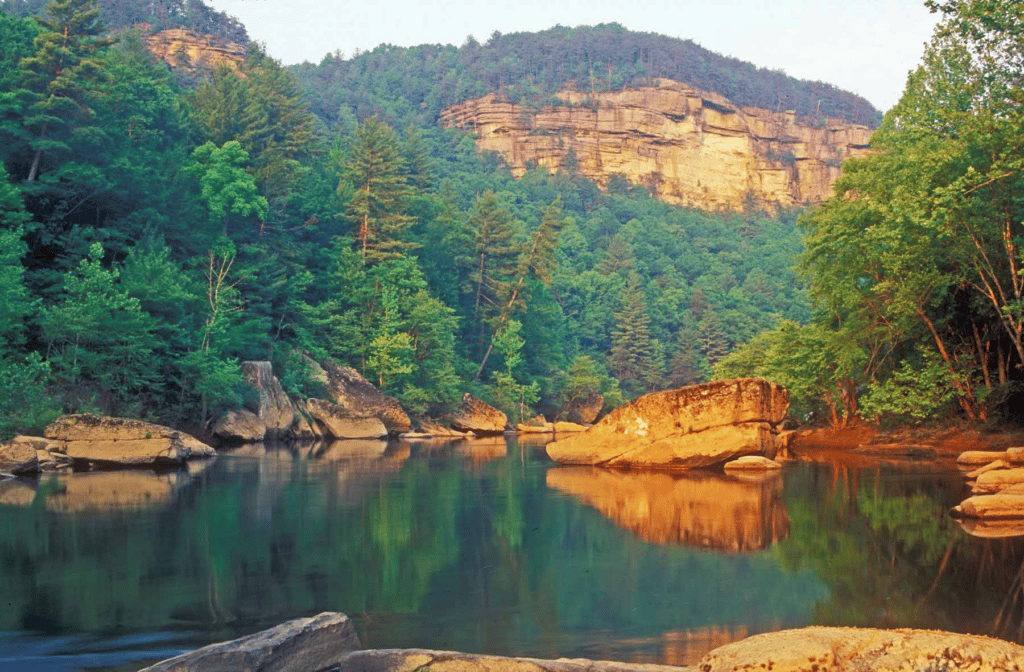
Honest caveat: The area is big and spread out, with the main sights split between the Kentucky and Tennessee sides and connected by slow back roads, so one day barely scratches it. Plan an overnight at Bandy Creek or one of the backcountry sites and pick a side rather than trying to see all of it. Cell service is thin out there, so download your maps before you lose signal.
7. Great Smoky Mountains National Park
Drive from Lexington: About 4 hours 25 minutes via I-75 S toward Gatlinburg. Fee: Free to enter, but a parking tag is required to park.
This is the second true National Park within reach, and the most visited one in the country. Great Smoky Mountains straddles the Tennessee-North Carolina line with more than 800 square miles of layered blue ridges, old-growth forest, and some of the richest biodiversity in any temperate park on earth. Newfound Gap Road climbs the spine of the range, Clingmans Dome tops out at 6,643 feet, and Cades Cove serves up the wildlife and the rural history. There is no entrance fee, which is rare for a park this size.

Honest caveat: At nearly four and a half hours, calling the Smokies “near Lexington” is a stretch, so treat it as a long weekend rather than a day out. The park is free to enter, but since 2023 the Park It Forward program requires a paid parking tag for any vehicle parked more than 15 minutes, running $5 a day or $40 for the year. Buy it ahead on Recreation.gov or at a visitor center, and expect heavy summer and fall traffic around Gatlinburg.
8. Fort Donelson National Battlefield
Drive from Lexington: About 3 hours 50 minutes via the Western Kentucky Parkway toward Dover, Tennessee. Fee: Free.
The farthest history site on the list, Fort Donelson preserves the ground where Ulysses S. Grant won one of the Union’s first major victories in February 1862. Grant’s demand for “unconditional surrender” of the Confederate fort on the Cumberland River made his reputation and helped open Tennessee to Union forces. The park, a national battlefield since 1928, holds the river batteries, Confederate earthworks, the Dover Hotel where the surrender was signed, and the Fort Donelson National Cemetery.
Honest caveat: At nearly four hours each way, this is a separate trip, not a Lexington day out. It makes the most sense paired with the Land Between the Lakes recreation area next door or as part of a western Kentucky and Tennessee loop. Start at the visitor center film, then drive the 6-mile, 11-stop tour road to make sense of the ground.
More Things To Do Near Lexington
If you only have a day, anchor the trip on Mammoth Cave or stack the close-in historic sites, and treat the Smokies and Big South Fork as future weekends. Closer to home, Lexington and the Bluegrass give you plenty to fill the rest of a visit:
- Kentucky Horse Park sits right outside Lexington and earns the city’s “horse capital of the world” tag, with working barns, riding demonstrations, and two museums.
- Red River Gorge in the Daniel Boone National Forest is about an hour east, with natural sandstone arches, cliff-line trails, and some of the best rock climbing in the country.
- Cumberland Falls State Resort Park near Corbin, roughly two hours south, protects the “Niagara of the South” and is one of the few places on earth where you can catch a moonbow on a clear full-moon night.
- The Kentucky Bourbon Trail threads through the countryside between Lexington and Bardstown, an easy add-on to a Lincoln Birthplace or Mammoth Cave drive.
Camp Nelson National Monument is the closest National Park Service unit at about 30 minutes south of Lexington. If you mean a full capital-N National Park, Mammoth Cave National Park is the nearest at about 2 hours 15 minutes, and it is the only one you can comfortably visit as a day trip.
Entering the park and using the surface trails is free, but you cannot see the cave without a tour ticket. Cave tours are reserved on Recreation.gov and regularly sell out on summer weekends and holidays, so book before you drive from Lexington rather than counting on a walk-up spot.
Cumberland Gap and Big South Fork are at the two-hour-plus mark and reward a night nearby, since one day barely covers them. Great Smoky Mountains National Park, at about four and a half hours, and Fort Donelson, at nearly four, are full road trips rather than day outings. Note that the Smokies require a paid parking tag of $5 a day or $40 a year.
You should know that we do not make this stuff up out of thin air. We have spent our adult lives exploring and filming America’s national parks and public lands destinations. We have worked with the National Park Service, the Department of the Interior, the USDA, and the U.S. Forest Service for years creating films on important places and issues. Our work has been featured in leading publications around the world, and even a few people outside our immediate family call us experts on the national parks.