

John Muir is the closest thing the United States has to a patron saint of wild places. He is the man who convinced a president to protect Yosemite, who founded the Sierra Club, and who taught a young country to see its mountains as something more than timber and ore. But the real Muir is more interesting, and more complicated, than the granite-jawed prophet on the postage stamp. He was a runaway, an inventor, a near-blind factory hand, a glacial theorist who turned out to be right, and a writer whose words still move people to defend the wilderness more than a century after his death.
Here are the John Muir facts worth actually knowing, the ones that explain how a Scottish immigrant became the most influential preservationist in American history, told honestly, including the parts of his legacy we have learned to reckon with.
1. He Was Born in Scotland, Not California
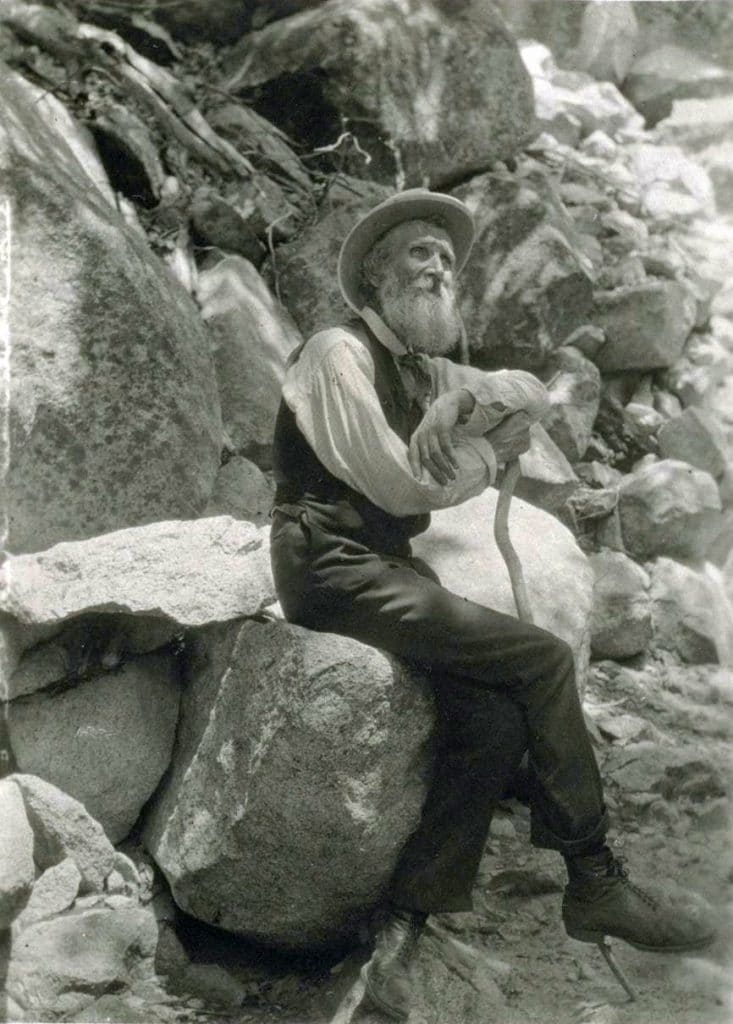
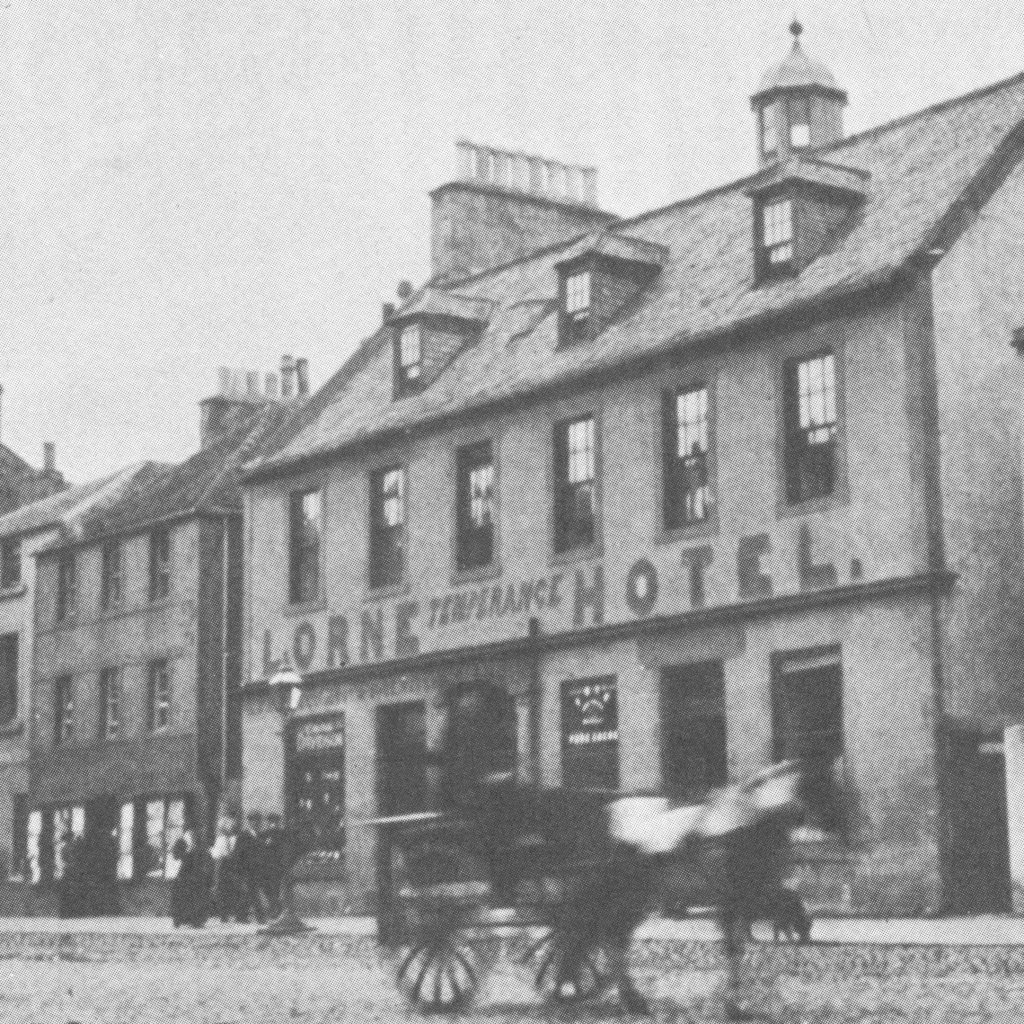
For all that his name is bound to the Sierra Nevada, Muir was born on April 21, 1838, in the seaside town of Dunbar, Scotland. He spent his boyhood roaming the Scottish coast and countryside, and that early hunger for the outdoors never left him. His family emigrated to the United States in 1849, settling on a frontier farm in Wisconsin, where Muir’s restless curiosity ran straight into his father’s stern demands.
2. He Was a Gifted Inventor Before He Was a Naturalist
Long before he was famous for studying nature, Muir was known for building things. As a young man he devised an array of ingenious wooden contraptions, including clocks, a thermometer, and a desk that mechanically fed his books to him on a schedule. He showed these inventions at a Wisconsin state fair and briefly seemed headed for a career in industry. The mechanical mind that built those devices never really switched off. It simply turned, later, to understanding how mountains and glaciers worked.
117 public lands destinations are under threat. Get the free briefing that 27,000+ people use to stay informed and take action.
3. A Factory Accident Almost Blinded Him and Changed His Life
In 1867, while working at a carriage parts factory, a tool slipped and pierced one of Muir’s eyes. The other soon failed in sympathy, and for a time he was completely blind, confined to a darkened room and uncertain whether he would ever see again. His sight gradually returned, and the experience reordered his priorities entirely. He resolved to stop spending his life on machines and devote it instead to what he called the inventions of God. The accident is the hinge of his whole biography.
4. He Walked a Thousand Miles to the Gulf of Mexico
His sight recovered, Muir set out in 1867 on one of the great walks in American letters, a roughly thousand-mile trek from Indiana to the Gulf of Mexico, recorded in the journal later published as A Thousand-Mile Walk to the Gulf. He traveled with little money, sleeping outdoors and botanizing as he went. The journey confirmed his vocation as a wanderer and observer of the natural world, and it pointed him, eventually, toward the mountains that would define him.
5. Yosemite Was the Love of His Life
Muir first arrived in California in 1868 and made his way to the Yosemite Valley, and he was never the same. He worked as a shepherd and sawmill hand to stay in the high country, filling notebooks with observations and writing prose about the Sierra Nevada that reads like devotion. He called the range the Range of Light. For Muir, Yosemite was not scenery. It was home, teacher, and church all at once.
6. He Was Right About the Glaciers When the Experts Were Wrong
One of Muir’s most important and least appreciated contributions was scientific. The leading geologist of the day, Josiah Whitney of the California Geological Survey, argued that Yosemite Valley had been formed by a catastrophic collapse of its floor. Muir, the self-taught naturalist, insisted instead that the valley had been slowly carved by ancient glaciers. Whitney dismissed him as an ignorant amateur. Muir turned out to be essentially correct, and modern geology vindicated the shepherd over the professor.
7. He Founded the Sierra Club
In 1892, Muir co-founded the Sierra Club and served as its first president, a post he held until his death. He intended it as an organization that would explore the mountains and, just as importantly, defend them. More than a century later it remains one of the most influential environmental organizations in the country, an enduring institutional legacy from a man who was happiest alone in the backcountry.
8. He Took a President Camping and Changed History
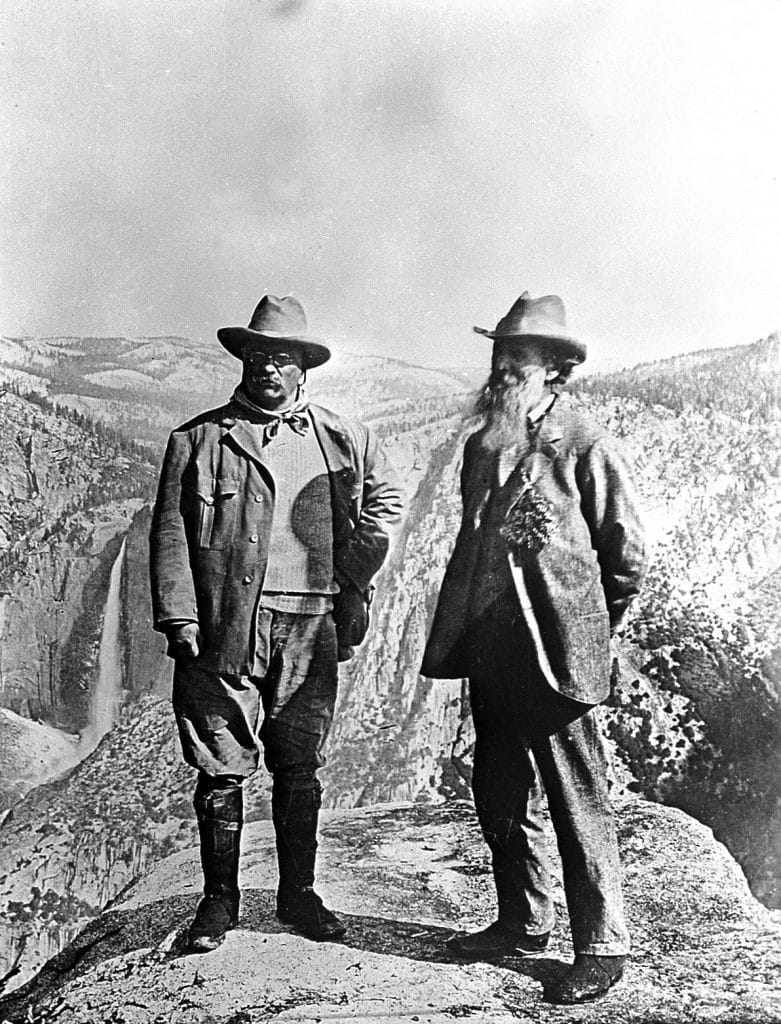
In 1903, President Theodore Roosevelt asked Muir to show him Yosemite, and the two men slipped away from the official entourage to camp together in the wilderness for three nights. They talked conservation around the fire and woke under a dusting of snow. The trip is one of the most consequential camping expeditions in American history. Roosevelt left more committed than ever to protecting wild land, and his administration went on to safeguard millions of acres of forests, parks, and monuments.
9. His Greatest Battle Was a Heartbreaking Defeat
Not every Muir story ends in triumph. The defining fight of his later life was his effort to stop San Francisco from damming the Hetch Hetchy Valley inside Yosemite, a battle that set him against his former friend Gifford Pinchot and the doctrine of wise use. Muir lost. Congress authorized the dam in 1913, and Muir died on December 24, 1914, with the valley about to disappear beneath a reservoir. Many believed the loss hastened his end. We tell that wrenching story in full in our account of the battle over Hetch Hetchy.
10. His Words Still Drive the Conservation Movement
Muir was an extraordinary writer, and his books and essays did as much to protect wild places as any law. He had a gift for making readers who would never visit the Sierra feel that they had a stake in it. Lines like his observation that when we try to pick out anything by itself we find it hitched to everything else in the universe anticipated the science of ecology by generations. His prose remains some of the most effective conservation advocacy ever written.

11. His Legacy Is Genuine, and Genuinely Complicated
Any honest account of Muir has to include this. In recent years the Sierra Club, the very organization he founded, has publicly acknowledged that Muir made disparaging remarks about Black people and Native Americans in some of his writings, reflecting prejudices common among white Americans of his era. His vision of pristine, empty wilderness also tended to erase the Indigenous peoples who had lived in and shaped places like Yosemite for thousands of years before his arrival.
Naming this does not cancel Muir’s contributions, and pretending it away does not honor them. It is possible, and necessary, to hold both truths at once: that Muir helped save irreplaceable American landscapes and gave the conservation movement its moral voice, and that his idea of wilderness carried blind spots we are still working to correct. A mature conservation movement learns from its founders without worshipping them.
The Range of Light, Still Standing
John Muir’s deepest legacy is not a single park or organization. It is a way of seeing. He insisted that wild places have worth beyond what they can be cut, dammed, or dug into, and he persuaded a young, hungry nation to leave some of its most extraordinary country alone. To grasp how that idea collided with the rival philosophy of his time, read about Gifford Pinchot and the doctrine of wise use. The argument between them is still being fought on public land today, and we are still, in large part, living inside John Muir’s answer.