
Higher ground turns first, so the slopes above the road lead the valley by a few days.
No new reports from the ground here this week.
- 3,500–4,000 ftStill greenpeak Oct 188%
- 3,000–3,500 ftStill greenpeak Oct 218%
- 2,500–3,000 ftStill greenpeak Oct 2310%
- 2,000–2,500 ftStill greenpeak Oct 2621%
- 1,500–2,000 ftStill greenpeak Oct 2837%
- 1,000–1,500 ftStill greenpeak Oct 3017%
Height off 3DEP inside the parkway’s own boundary; each band carries the date our model gives that elevation, corrections and all. The percentage is how much of the parkway stands in it.
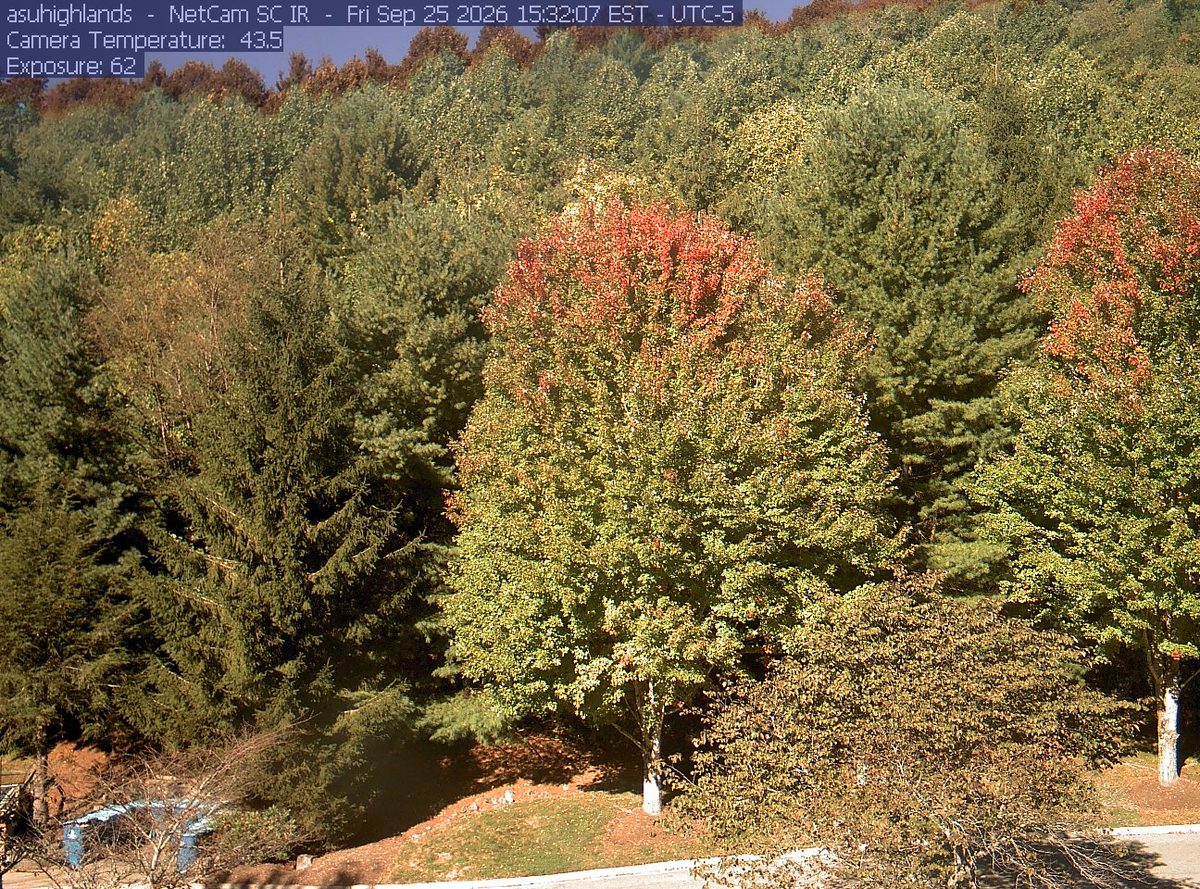
That’s 5 days later than our model alone would say. This September has been running warm, which shifts peak color.
The place
A Blue Ridge Parkway experience is unlike any other: a slow-paced and relaxing drive revealing stunning long-range vistas and close-up views of the rugged mountains and pastoral landscapes of the Appalachian Highlands. The Parkway meanders for 469 miles, protecting a diversity of plants and animals, and providing opportunities for enjoying all that makes this region of the country so special.
Established 1936.
If you can only come on certain days
Set the days you can be here. Everything under them answers for those days, not for peak.
Tuesday 20 October to Wednesday 21 October
You’ll find it nearly peak up high, starting to turn lower down.
Up at 2,500 feet the stands peak around Oct 23; down at 1,500 feet they hold on until about Oct 30. Pick your elevation for the day you come.
- 2,500–3,000 ftNearly peakpeak Oct 23
- 2,000–2,500 ftNearly peakpeak Oct 26
- 1,500–2,000 ftNearly peakpeak Oct 28
- 1,000–1,500 ftStarting to turnpeak Oct 30
- Where to drive
- Blue Ridge Parkway (NC Section), about 74 miles · Route 39 (Goshen Pass), about 137 miles · Highland Scenic Highway (Route 150), about 139 miles
- What turns
- northern red oak, red maple, white oak, shagbark hickory, sugar maple
What turns, and when
- northern red oak27%
- red maple23%
- white oak18%
- shagbark hickory13%
- sugar maple9%
- blackgum5%
Also named across North Carolina, outside what the canopy read measures here: Tulip Poplar, Sourwood.
Sourwoods turn deep crimson before anything else, tulip poplars go clear gold, hickories fade to bronze, and the layered ridgelines of the Blue Ridge create that famous smoky depth of warm color.
This forecast is built from the species that stand here, their elevation and this September’s weather, and corrected in season by cameras, foresters and our own crew. We score it here against 16 long-running forest cameras: two dates in three land within 7 days of the camera’s own peak. How this map is made