


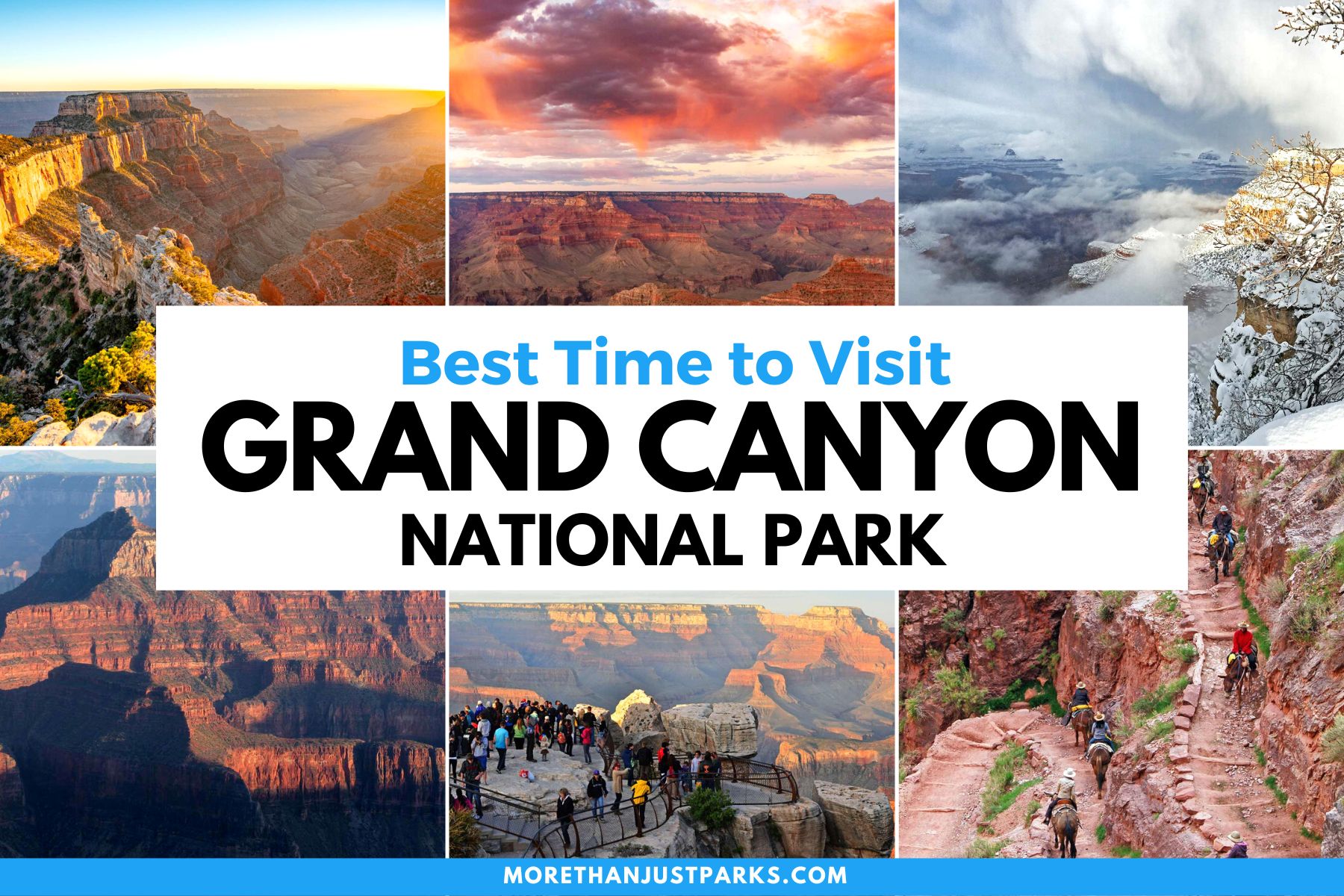
The best time to visit the Grand Canyon’s South Rim is the shoulder seasons, roughly late March through May and September through November, when the rim is mild, the crowds are thinner than the summer peak, and conditions below the rim are safe enough to actually hike. The South Rim is open every day of the year, so the rest comes down to what you are after. Spring and fall give you the best all-around weather. Summer brings long days, full services, the biggest crowds, and dangerous heat down in the canyon. Winter trades cold and icy trails for solitude, low rates, and snow on the red rock that few visitors ever see.
Below is a month-by-month breakdown of weather, crowds, and what each season offers, plus the practical details on getting there. One important 2026 note up front: the North Rim is on a limited day-use season this year, so most of what follows focuses on the year-round South Rim.
The Best Time to Visit the Grand Canyon: Quick Answer
| If you want… | Go in… |
|---|---|
| The best balance of weather and smaller crowds | Late March to May, or September to early November |
| Warm, long days and full services | June to August (also the busiest and hottest) |
| Quiet, low rates, and a chance of snow on the rim | December to February |
| Comfortable hiking below the rim | Spring and fall; avoid hiking deep in summer heat |
| The North Rim | Mid-May to mid-October only, and on a limited day-use basis in 2026 |
Grand Canyon Weather by Month
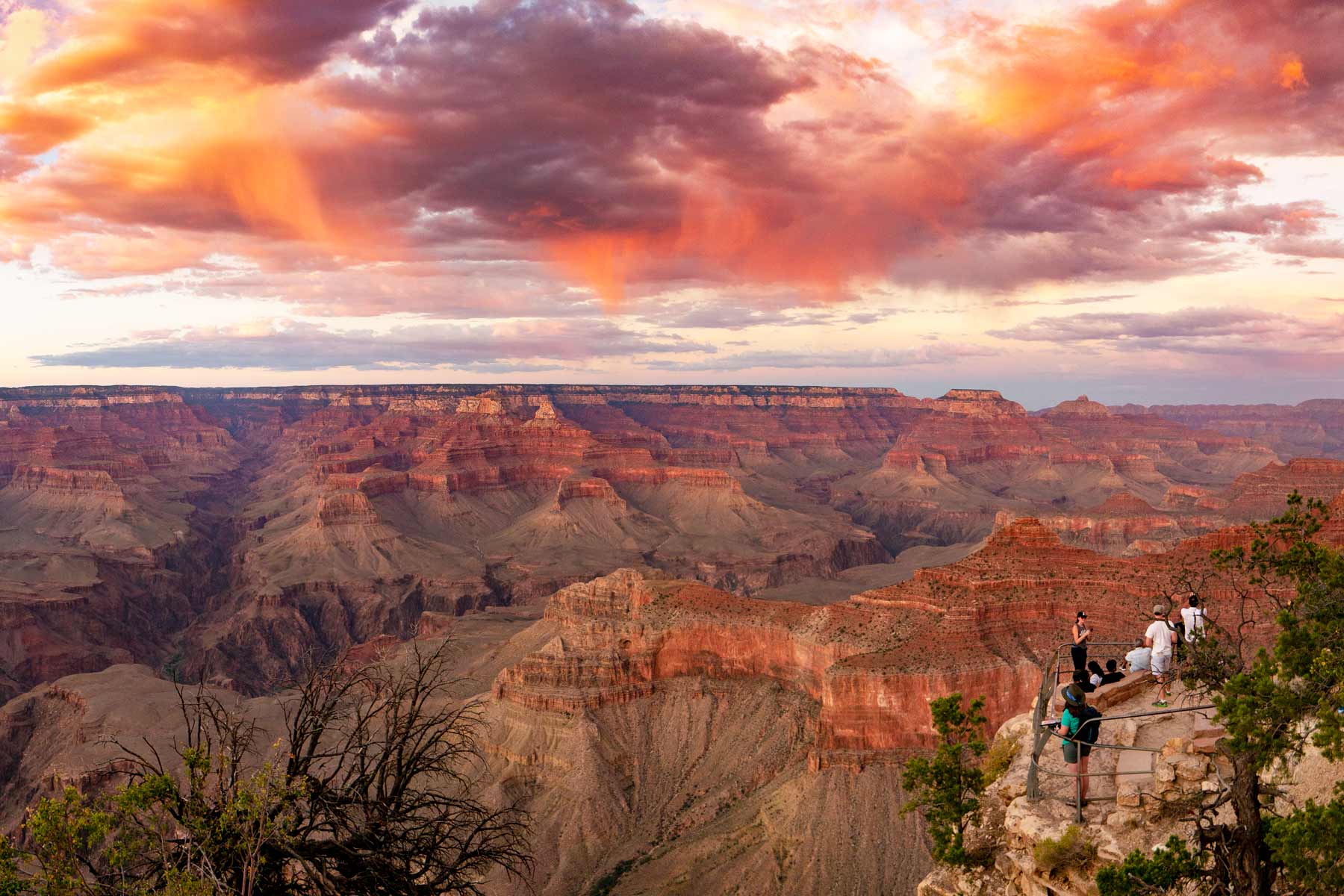
South Rim weather is shaped by elevation. The rim sits at about 7,000 feet, so it is far cooler than the desert below and can get snow in winter. The figures below are typical averages for the South Rim; remember that it grows dramatically hotter as you descend toward the river.
| Month | South Rim weather | Crowds |
|---|---|---|
| December to February | Cold, highs in the 40s F, lows below freezing, possible snow and icy trails | Lowest of the year |
| March | Cool and variable, highs in the 50s, late snow possible | Building, busier around spring break |
| April to May | Mild and pleasant, highs 60s to 70s, cool nights | Moderate, a sweet spot |
| June to August | Warm rim, highs 80s; very hot inner canyon; July to September monsoon storms | Peak, the most crowded months |
| September to October | Mild and clear, highs 60s to 70s, crisp nights | Easing after Labor Day, another sweet spot |
| November | Cool, highs 50s, first snows possible late month | Light |
Average Temperatures Inside the Canyon
This is the detail that catches hikers off guard. As you descend, the temperature climbs roughly 5 degrees Fahrenheit for every 1,000 feet you drop. On a pleasant 70-degree spring day at the rim, the bottom of the canyon at Phantom Ranch can sit in the 90s or hotter. In midsummer, inner-canyon highs regularly exceed 100 and can top 110 degrees, which is why the park urges visitors not to hike to the river and back in a day, and especially not between roughly 10 a.m. and 4 p.m. in summer.
Love Grand Canyon? It's one of 117 threatened public lands destinations we're tracking. Get the free briefing.
The practical takeaway: if your trip includes hiking below the rim, spring and fall are far safer and more comfortable than summer. If you do come in summer, start at dawn, carry and drink plenty of water, eat salty snacks, and turn around early. The rim views are glorious year round, but the canyon’s interior is a desert that demands respect in the hot months.
How to Avoid Crowds at the South Rim

The South Rim draws the bulk of the park’s roughly 5 to 6 million annual visitors, and summer is by far the busiest stretch, with June, July, and August seeing the heaviest numbers. The quietest months are December through February, followed by the shoulder months of late fall and early spring. If you must visit in summer, you can still dodge the worst of the crush.
A few reliable tactics: arrive early in the day, before the mid-morning rush at the entrance station and parking lots; use the free park shuttle instead of fighting for rim parking; visit the viewpoints at sunrise, which are far less crowded than sunset; and explore beyond the main Mather Point and village area, since most visitors never venture far from the busiest overlooks. Walking even a short stretch of the Rim Trail leaves the crowds behind quickly.
Grand Canyon Shoulder Seasons

If there is a single best window, it is the shoulder seasons. Late spring, roughly April and May, brings mild days, cool nights, and wildflowers without the summer heat or the deepest winter cold. Early fall, September into October, offers similar comfort with the bonus of thinning crowds once the summer rush ends after Labor Day, plus often the clearest air of the year. In both windows, hiking below the rim is far more pleasant and safer than in summer, and lodging is easier to book than at the July peak.
The trade-offs are minor. Spring can deliver a surprise late snow or a windy afternoon, and fall nights get cold quickly. But for most travelers chasing the best mix of weather, scenery, and elbow room, the shoulder seasons are tough to beat. They are also when the canyon’s light is often at its most dramatic.
Visiting in Winter
Winter is the secret season on the South Rim. Snow can dust the rim and frost the pinyon and juniper, and a layer of white over the red and tan canyon walls is a sight few visitors ever see. Crowds are at their lowest, and lodging rates often drop. The catch is the cold and the conditions: rim temperatures can fall below freezing, trails get icy, and a pair of microspikes for your boots becomes essential for any hiking below the rim. The South Rim stays open and the core shuttle routes keep running, but services are reduced. For a quiet, contemplative canyon, winter is unmatched, as long as you come prepared.
What About the North Rim in 2026?

The North Rim is a different climate, more than 1,000 feet higher and noticeably cooler, with a forest of pine and aspen. It is only open seasonally, roughly mid-May to mid-October, because snow closes the access road the rest of the year. There is an important 2026 caveat: after the 2025 Dragon Bravo Fire destroyed the historic Grand Canyon Lodge, the North Rim is operating as a limited day-use destination this season, with no in-park lodging or restaurant and reduced services.
If a quieter, cooler rim appeals to you, the North Rim is still worth the trip in its open months, but plan it as a day visit from outside the park or a fully self-supported camping trip, and check the park’s North Rim status page before you go. For the classic, full-service Grand Canyon experience in 2026, the South Rim remains the place to base your visit.
Getting to the Grand Canyon
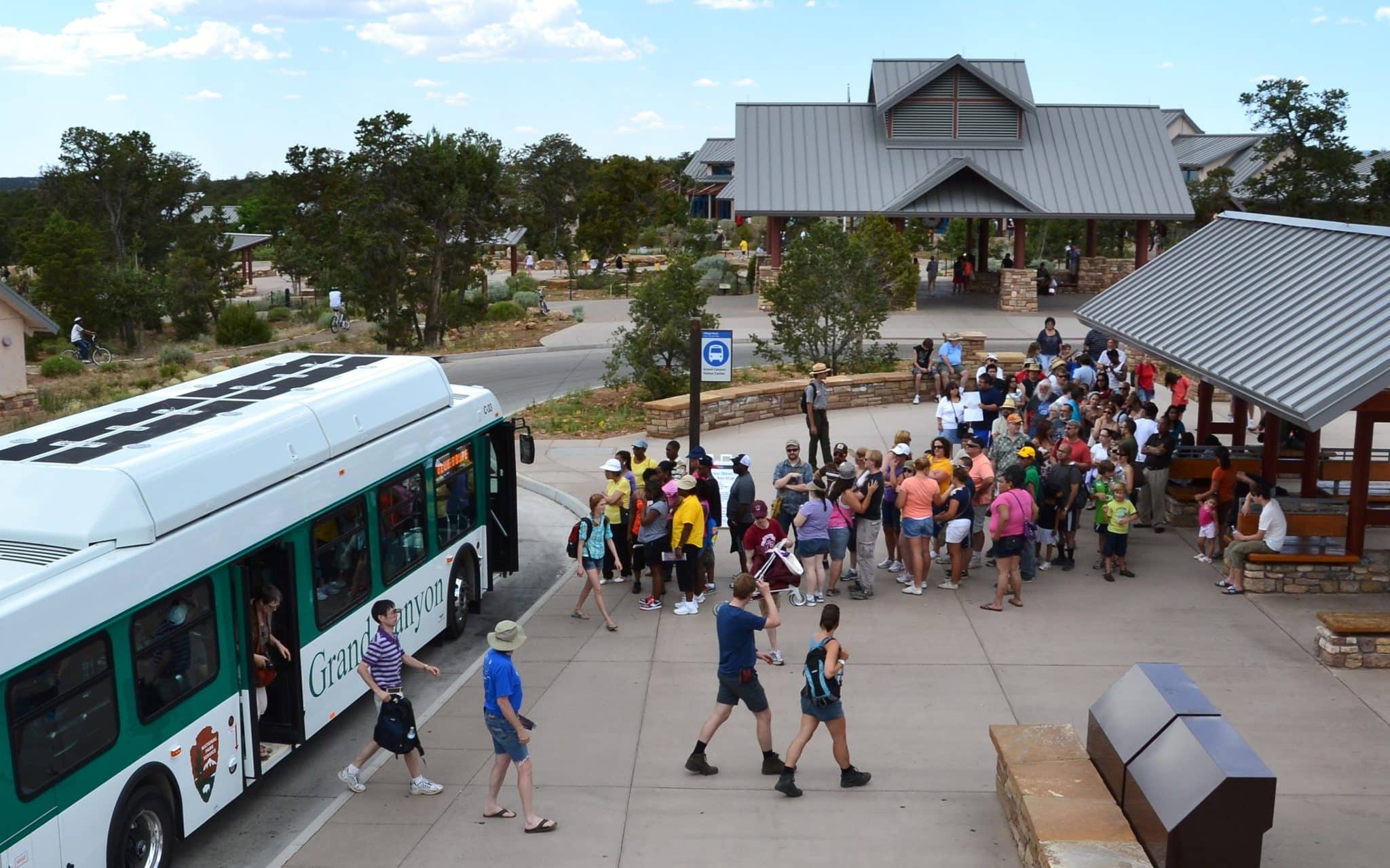
Most people drive to the South Rim. From Flagstaff it is about 1.5 hours, from Phoenix about 3.5 hours, and from Las Vegas about 4.5 hours. The nearest large airports are in Phoenix and Las Vegas, with smaller service into Flagstaff. The entrance fee is $35 per vehicle, valid for 7 days at both rims and covered by the America the Beautiful pass. On busy days the entrance line can be long, so arriving early or parking in the gateway town of Tusayan and riding the seasonal shuttle in can save real time.
Once you are inside and parked, the free shuttle network connects the viewpoints, trailheads, and lodges. For the full breakdown, see our guide to the Grand Canyon shuttle system. You can also plan your basecamp with our roundup of cities near the Grand Canyon and fold the park into a wider Arizona road trip. For the rim viewpoints and the corridor trails below it, the National Geographic Grand Canyon trail map is a reliable backup when the shuttle app and cell service give out.
The Bottom Line
For most visitors, the best time to visit the Grand Canyon is the shoulder season, late March through May or September through November, when the South Rim offers mild weather, manageable crowds, and the safest conditions for hiking below the rim. Summer brings the warmest days and longest hours but also the biggest crowds and dangerous inner-canyon heat, while winter trades cold and ice for solitude, low rates, and the rare beauty of snow on the rim. Whenever you go, the South Rim is open year round, the shuttles are free, and an early start beats the crowds.
What to Bring to Grand Canyon
Gear we recommend for Grand Canyon. Affiliate links support our work at no cost to you.
More Than Just Parks may earn a small commission from purchases made through these links, at no extra cost to you. We only recommend gear we would actually use.
Affiliate disclosure: Some links on this page earn us a small commission at no extra cost to you. We only recommend gear we actually use.


