
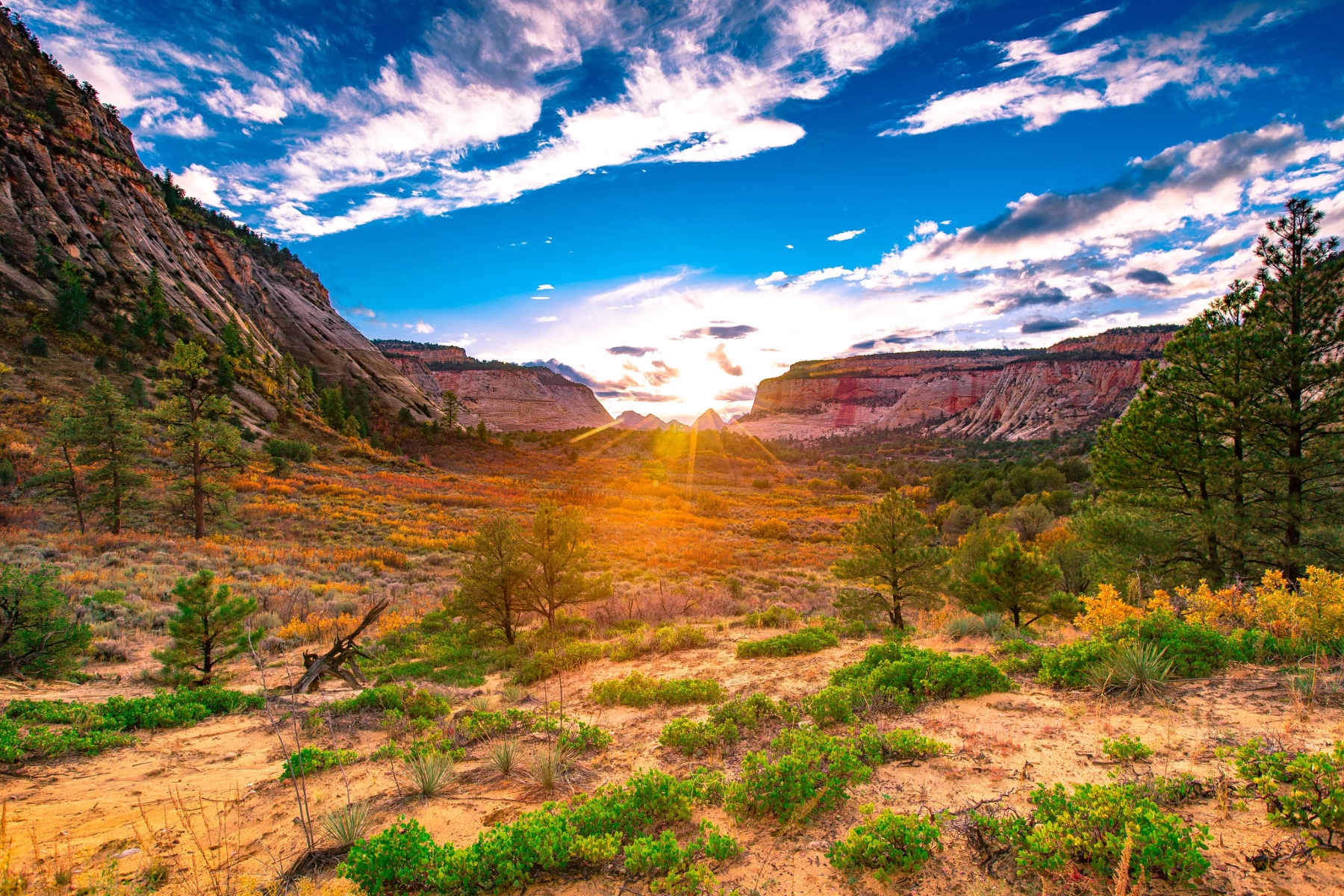


The Quick Verdict
I’ve spent weeks in both Zion and Bryce Canyon. I’ve hiked them in every season, photographed them at every hour, and watched them change across more than a decade of visits. They’re only 80 miles apart. They’re both in Utah. That’s about where the similarities end.
Zion is massive red canyon walls, river hikes, and adrenaline. Bryce Canyon is alien rock formations, vast amphitheaters, and quiet contemplation. They scratch completely different itches.
If you’re picking one, here’s the honest breakdown based on everything I know about both places. If you’re smart, you’ll do both.
At a Glance
| Zion | Bryce Canyon | |
|---|---|---|
| Best for | Adventure, strong hikers, dramatic canyons | Wonder, families, stargazing, easy access |
| Signature draw | The Narrows and Angels Landing | The hoodoo amphitheaters |
| Elevation | ~3,700 ft canyon floor | 8,000 to 9,000 ft |
| Days needed | 2 to 4 | 1 to 2 |
| Hiking | Long, steep, bucket-list trails | Moderate loops among the hoodoos |
| Crowds | ~5M visitors, funneled through one canyon | ~2M visitors, easier to escape |
| Getting around | Mandatory shuttle in season | Optional shuttle, drive yourself |
| Summer weather | Hot, often 100F+ on canyon floor | Mild, 70s to low 80s |
| Entrance fee | $35 per vehicle, 7 days | $35 per vehicle, 7 days |
The quick call: Pick Zion if you want adventure and bucket-list hikes, you’re a strong hiker, and you have three or more days. Pick Bryce if you want wonder over adrenaline, you’re traveling with family, you want world-class stargazing, or you’re short on time. They sit 80 miles apart, so if you can spare a week, do both.
Love Bryce Canyon? It's one of 117 threatened public lands destinations we're tracking. Get the free briefing.
What Makes Zion Special
Zion National Park hits you in the gut. The canyon walls are 2,000 feet tall and they close in on you. The Virgin River carved this place over millions of years and the result is a slot canyon on steroids. Massive sandstone cliffs in every shade of red, orange, and cream tower above you everywhere you look.
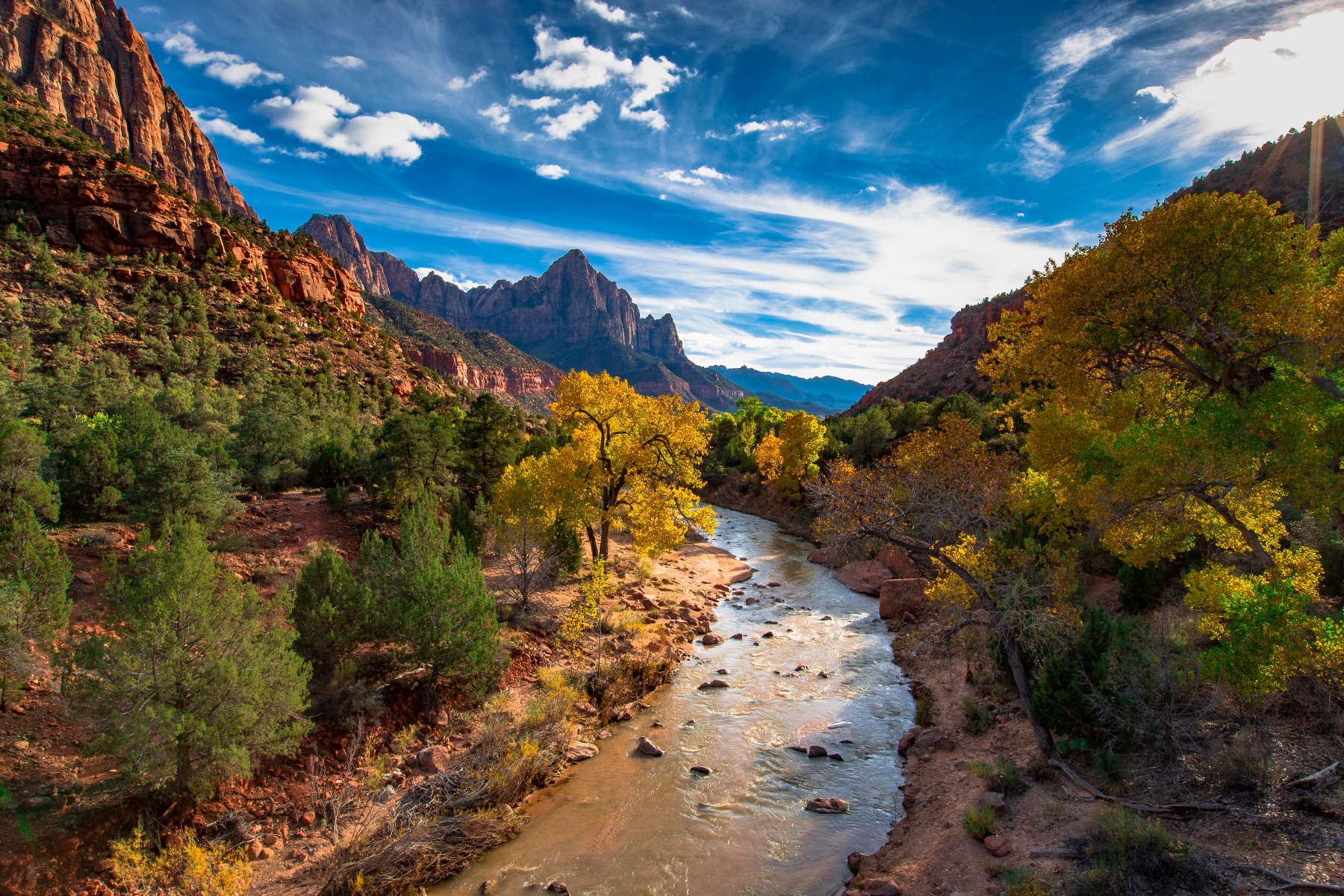
The Narrows is the signature experience. You literally hike up the Virgin River. In the river. Water up to your knees, sometimes your waist. Canyon walls hundreds of feet tall on either side, sometimes only 20 feet apart. There is nothing else like it in the national park system. I’ve hiked thousands of trails across 63 national parks and the Narrows still makes the short list.
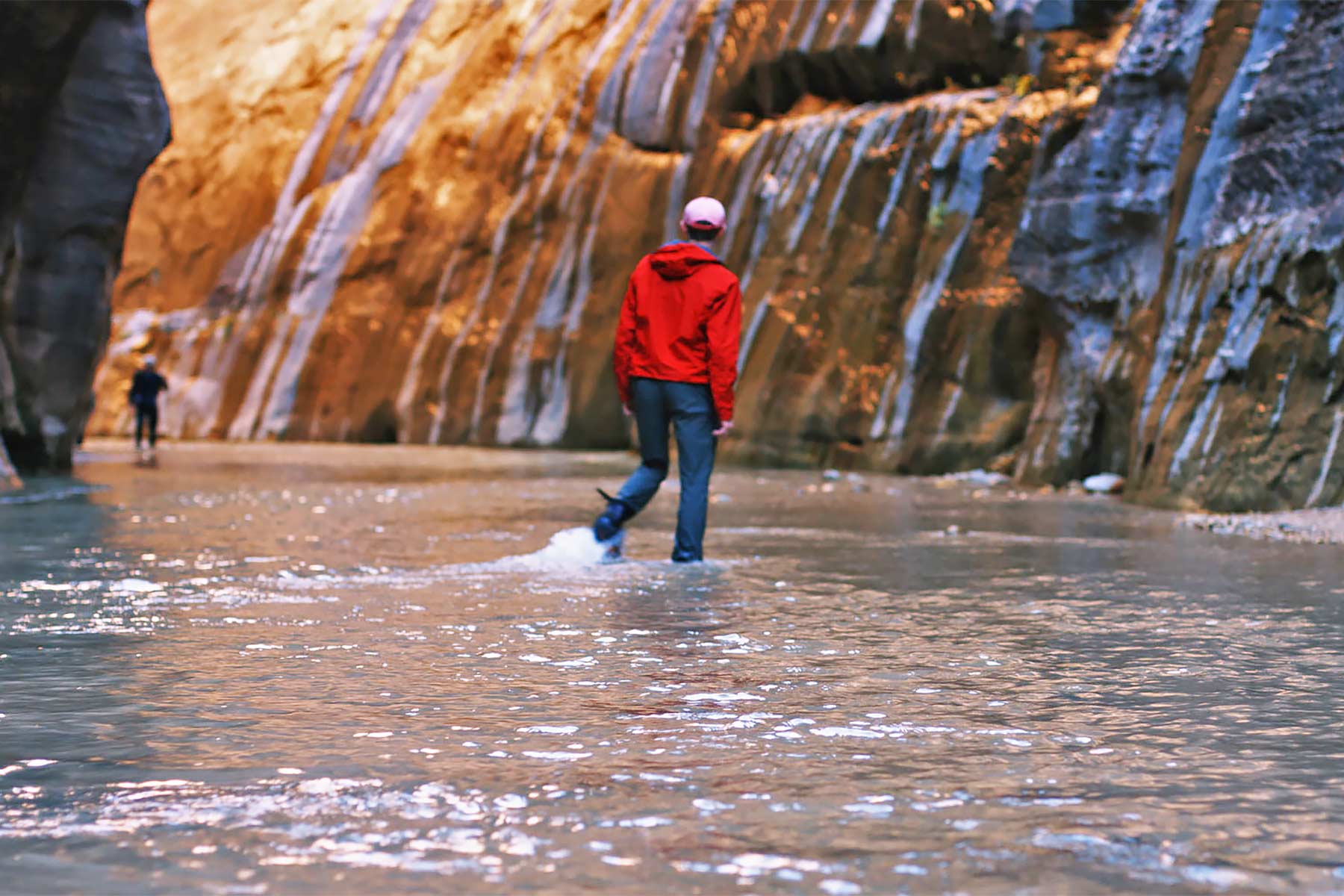
Angels Landing is the other headline attraction. A knife-edge ridge with 1,500-foot drops on both sides, chain handholds, and a trail that makes your palms sweat just looking at it. They require permits now and getting one is like winning a lottery. I have complicated feelings about this hike, which I’ve written about separately, but there’s no denying the experience is singular.
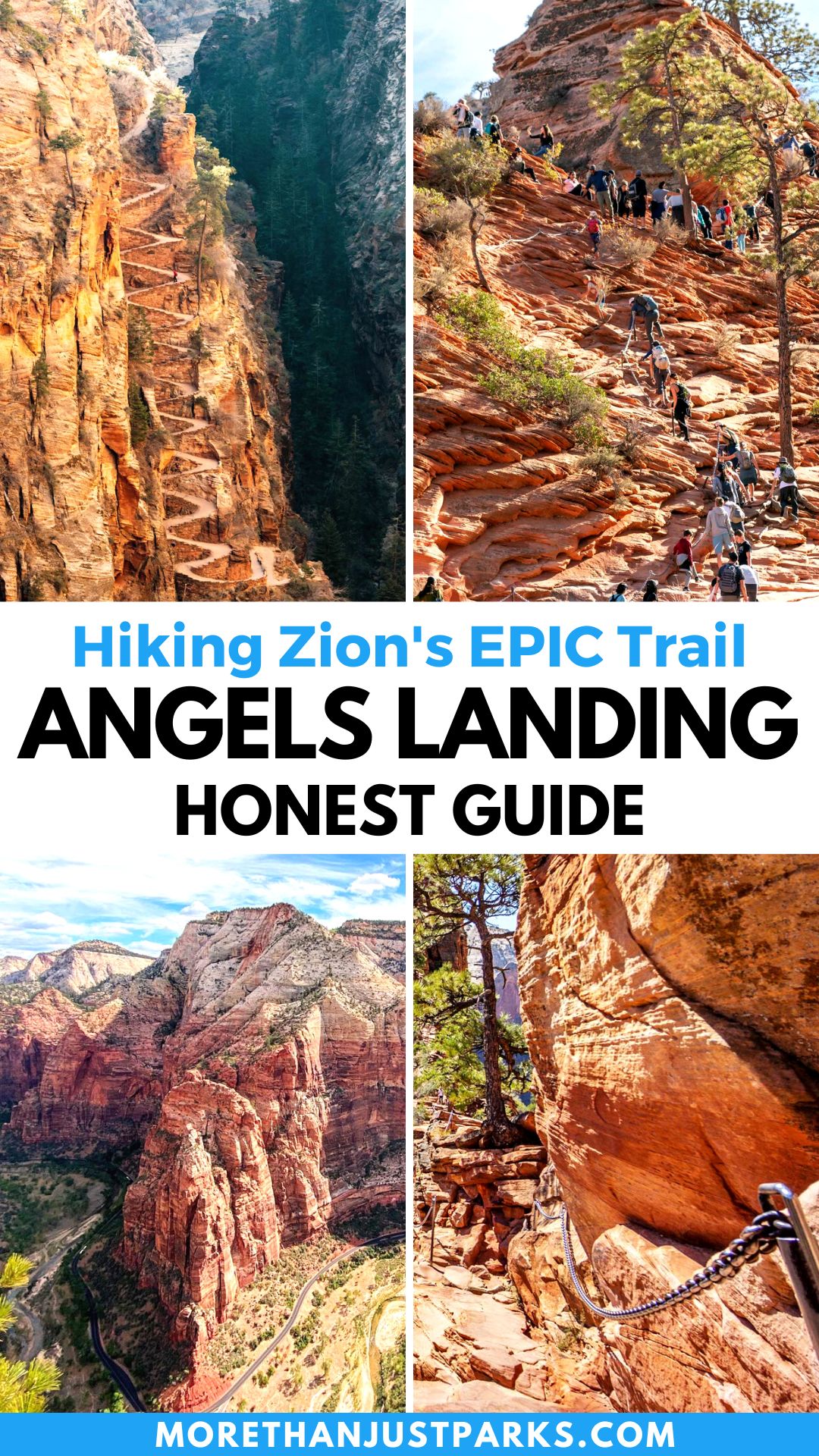
Zion’s shuttle system means you leave your car behind and ride buses through the canyon. The shuttle runs spring through late fall (roughly early March into late November), with buses arriving every few minutes during the day. Check the current schedule on the NPS site before your trip, since dates shift year to year. It’s annoying when you’re trying to get somewhere specific, but it keeps the canyon floor from becoming a parking lot. The Scenic Drive along the Virgin River is spectacular even from a bus window. The light shifts constantly on the sandstone walls. I’ve ridden that shuttle probably 30 times and I still watch.
Beyond the big names, Zion has depth that rewards extra days. The Canyon Overlook Trail is a 1-mile round trip that delivers one of the best views in the park. Observation Point gives you the widest panorama of the canyon, looking down on Angels Landing from 2,000 feet above. The hikes in Zion range from flat riverside strolls to gut-punch ascents, and every fitness level has something worth doing.
Zion feels alive. The river, the deer, the cottonwood trees turning gold in October, the way the light changes on the canyon walls throughout the day. It’s a dynamic, physical place that demands your full attention.
What Makes Bryce Canyon Special
Bryce Canyon National Park is weird. Beautifully, wonderfully weird.
The hoodoos are the star attraction. Thousands of tall, thin rock spires in shades of red, orange, pink, and white packed into amphitheaters carved into the Paunsaugunt Plateau. They look like a city built by aliens who had a very different sense of architecture. I’ve photographed rock formations across the American West for over 15 years and nothing else looks like Bryce.

Standing at Bryce Point or Inspiration Point and looking down into the amphitheater for the first time stops you cold. The scale is hard to process. It looks miniature until you spot a hiker on the trail below and realize those rock spires are 10 stories tall.
The Navajo Loop and Queen’s Garden trails take you down among the hoodoos. Walking between these formations at eye level is surreal. The colors shift with the light. Sunrise and sunset turn the amphitheater into something that doesn’t look real. I shoot in golden hour almost exclusively at Bryce because midday light flattens the formations. In the low-angle light of early morning, every hoodoo casts a shadow that gives the amphitheater three-dimensional depth you can’t see at noon.

Bryce sits at 8,000-9,000 feet elevation. That’s significantly higher than Zion (which bottoms out around 3,700 feet in the canyon) and it affects everything. The air is cooler, the forests are ponderosa pine and spruce-fir instead of desert scrub, and the night sky is extraordinary. Bryce Canyon is one of the best dark sky parks in the country. On a clear night the Milky Way is so bright it casts shadows. I’ve done night photography at a lot of parks and Bryce is in the top three for star shooting in the lower 48.
The park is smaller and less physically demanding than Zion. Most trails are moderate. You can see the highlights in a single day, though I’d argue two days lets you catch both sunrise and sunset light. The 18-mile scenic drive hits all the major viewpoints and you can drive it in an hour without stops, though I’d budget three hours with stops because you’ll want to get out at most of them.
There are plenty of things to do at Bryce Canyon beyond the rim viewpoints. The Peek-a-Boo Loop drops into the amphitheater for 5.5 miles of hoodoo-surrounded hiking. Horseback rides take you through the formations at a pace that lets you actually absorb the strangeness. And the winter season, when the hoodoos wear caps of snow, is one of the most photogenic landscapes I’ve ever seen.
Bryce also runs a free shuttle from spring through mid-fall, with buses every 10 to 15 minutes. Unlike Zion’s shuttle, Bryce’s is optional. You can still drive your own car to every viewpoint. But the shuttle eliminates the parking headache at the popular overlooks during peak season, and five of the 15 stops are outside the park in Bryce Canyon City and Ruby’s Inn, which makes it handy if you’re staying nearby.
Bryce Canyon is contemplative where Zion is physical. It rewards patience and attention to detail. The longer you look at the hoodoos the more you see.
The Practical Stuff
Before we get into the comparison, some logistics that matter for 2026 planning.
The drive between Zion and Bryce is about 85 miles and takes roughly 1 hour and 45 minutes without stops. That’s via UT-9 East through the Zion-Mt. Carmel Tunnel, then north on US-89 and east on UT-12. The tunnel itself can add 15-30 minutes of wait time in peak season because oversized vehicles require traffic control. RVs and trailers get hit hardest by this. If you’re driving a regular car, you’ll move through faster but still plan for some delay between May and September.
Both parks charge $35 per vehicle for a 7-day pass. If you’re visiting both (which you should), buy the $80 America the Beautiful annual pass instead. It covers Zion, Bryce, and every other federal fee area for a full year. Simple math.
Zion’s shuttle is mandatory for the Scenic Drive from March through November. There’s no option to drive your own car on that road during shuttle season. Bryce’s shuttle is optional. You can drive to every viewpoint yourself. That difference matters for how you plan your days. Zion requires building your day around shuttle schedules and stop locations. Bryce gives you total flexibility.
One more logistical note. Both parks sit at very different elevations and the weather gap between them can be significant. I’ve left Zion in 95-degree heat and arrived at Bryce 90 minutes later needing a jacket. The 4,000+ foot elevation difference is real. Pack layers if you’re doing both in the same trip, especially in spring and fall when Bryce can drop below freezing at night while Zion stays comfortable.
Head-to-Head Comparison
Scenery
Both parks deliver 10-out-of-10 scenery, but they’re playing different sports.
Zion is about scale and power. Massive canyon walls that make you feel small. A river that carved through solid rock. Vertical cliffs that seem to touch the sky.
Bryce is about detail and strangeness. Thousands of intricate rock formations that look different from every angle. Colors that shift with the light. An otherworldly landscape that photographs well but hits harder in person.
Edge: Tie. I’ve tried to pick a winner here a dozen times and I can’t do it honestly. They both reset your idea of what rock can do.

Hiking
Zion wins for serious hikers. The Narrows, Angels Landing, Observation Point, the West Rim Trail. These are bucket-list hikes that combine physical challenge with scenery that makes you forget your legs hurt. Zion’s trails are longer, steeper, and more varied. The park has over 90 miles of trails and the backcountry permits open up multi-day routes most folks never see.
Bryce has excellent shorter hikes. Navajo Loop, Queen’s Garden, Peek-a-Boo Loop. They’re moderate in difficulty and put you face to face with the hoodoos. The 23-mile Under-the-Rim Trail is a legitimate backpacking route for folks who want more. But Bryce’s trails lack the adrenaline factor of Zion’s marquee hikes.
Edge: Zion for serious hikers. Bryce for casual hikers and families.
Crowds
Zion pulled roughly 5 million visitors in 2024. That’s a 14% jump from the year before and the park shows no signs of slowing down. Bryce gets about 2 million per year (the park updated its counting methods in 2025, so the official number dropped to 1.97 million, but that’s a methodology change, not an actual decline in foot traffic). The raw math tells the story, but the real difference is how those bodies are distributed.
Zion’s shuttle system means everyone funnels through the same canyon floor. The popular trailheads can feel packed, especially in summer. The Narrows on a July morning looks like a concert crowd wading upriver. I’ve counted 200 people in a single frame at the entrance to Wall Street. Parking at the Springdale lots fills by 8am in peak season.
Bryce feels noticeably less crowded. Even at peak times you can find quiet viewpoints, and the trails below the rim thin out quickly once you’re past the first switchbacks. The amphitheater is massive and absorbs people in a way that Zion’s narrow canyon floor simply can’t.
Edge: Bryce Canyon by a comfortable margin.
Accessibility
Bryce is more accessible to a wider range of folks. The viewpoints along the rim are easy to reach from pullouts. You can see the highlights without any serious physical effort. Folks with mobility limitations can experience 90% of what Bryce offers from the car and the paved rim overlooks. The trails into the amphitheater are moderate and well-maintained.
Zion’s best experiences require effort. The Narrows requires wading through a river in water shoes and potentially a dry suit in colder months. Angels Landing requires a strenuous climb with serious exposure. Even the shuttle system takes getting used to and adds time to every outing.
Edge: Bryce Canyon for families, older folks, and anyone with mobility limitations.
Photography
I’m biased here because I’m a photographer. But this matters to a lot of folks planning these trips.
Zion photographs well at almost any time of day because the canyon walls create their own light. The reflected glow of sunlight bouncing between the sandstone walls produces warm, even illumination that’s forgiving for any camera. The Narrows is particularly photogenic because the narrow canyon acts like a natural softbox.
Bryce is trickier. Midday light washes out the hoodoos. You need golden hour or blue hour to get the depth and color that makes Bryce look like Bryce. But when you hit it right, the results are extraordinary. Sunrise at Bryce Point with fog in the amphitheater is one of the great shots in the American West.
Edge: Tie, but for different reasons. Zion is more forgiving. Bryce has a higher ceiling when the light cooperates.
Unique Factor
Both parks offer something you can’t get anywhere else.
Zion’s Narrows hike is one of a kind. Hiking a river through a slot canyon at this scale is an experience that exists nowhere else in the park system.
Bryce’s hoodoo formations are one of a kind. No other park has this concentration of hoodoos in these colors at this scale. The formations erode about 2-4 feet every century, which means the Bryce Canyon you see today looks different from the one your grandparents saw.
Edge: Tie. Both are genuinely irreplaceable.
Time Needed
Bryce Canyon can be thoroughly experienced in 1-2 days. You can hit every viewpoint and do the signature trails in that time. I’ve met folks who “did Bryce” in 3 hours. They saw it. But they didn’t experience it. Give it at least a full day with sunrise and sunset.
Zion needs 2-4 days to do properly. The Narrows alone takes a full day. Angels Landing takes half a day with the permit process. Add in Observation Point, the Emerald Pools, and Canyon Overlook and you’re looking at 3 days minimum. Read my Zion itinerary guide if you want a day-by-day breakdown.
Edge: Bryce if you’re short on time.
Cost
Entrance fees are identical. Both parks charge $35 per vehicle for a 7-day pass, or $20 per person if you’re walking or biking in. Single-park annual passes differ (Zion’s runs $70, Bryce’s $40), but if you’re hitting both, skip them. The $80 America the Beautiful pass covers both parks and every other federal fee area in the country for a full year.
If you’re visiting from outside the United States, check current entrance fees on the official park pages before you go. Federal fee policy has been in flux, and the NPS posts the live numbers for each park.
Edge: Tie. Identical entrance fees, and the annual pass covers both.
When to Pick Zion
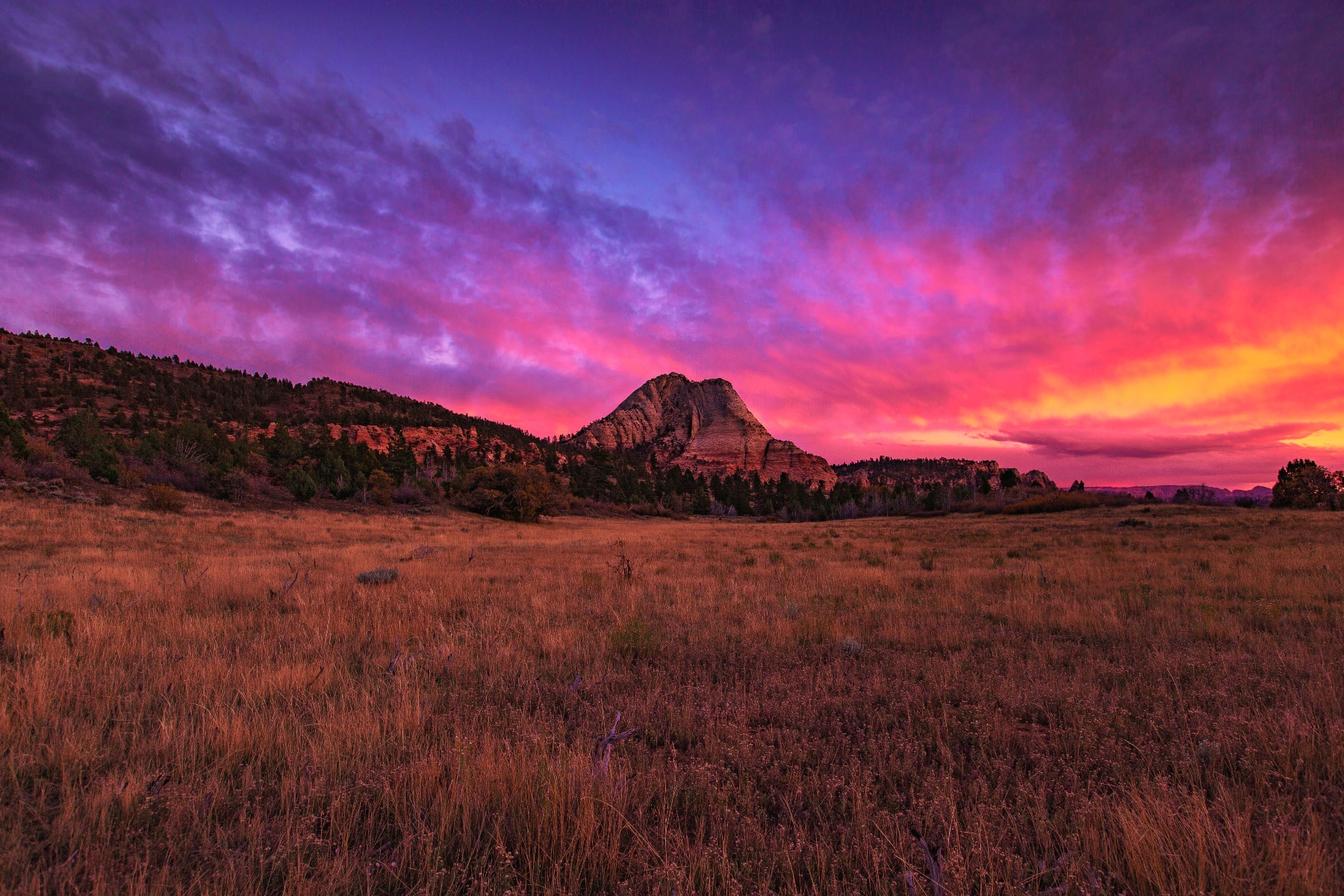
Choose Zion if you want adventure. If you’re a strong hiker looking for bucket-list trails. If you want to wade through a river canyon. If you have 3+ days. If dramatic canyon scenery is your thing.
Zion is the park that gets your heart rate up. It’s the park that makes your legs sore and your eyes wide at the same time. Every visit I’ve had there has included at least one moment where I stopped on a trail, looked up at 2,000-foot walls, and thought about the fact that water did this.
When to Pick Bryce Canyon
Choose Bryce if you want wonder. If you prefer contemplation over adrenaline. If you’re traveling with family or folks who aren’t strong hikers. If you have 1-2 days. If you want some of the best stargazing in the country. If you want to see something that looks like it belongs on another planet.
Bryce is the park that makes you stare. It’s the park where you find yourself at a viewpoint for 45 minutes without realizing it because the light keeps changing and the formations keep revealing new details you missed.

The Best Plan: Do Both
These parks are 80 miles apart. About 1 hour and 45 minutes driving through some of the most scenic terrain in southern Utah, though the Zion-Mt. Carmel Tunnel can add wait time in peak season. If you’re coming all the way to this corner of the state, there’s no reason to pick one if you have the time.
Can you do both in a single day? Technically, yes. Practically, I’d never recommend it. You’d spend nearly four hours round-trip in the car and barely scratch the surface of either park. I’ve seen folks try this and they end up with a handful of viewpoint photos and zero actual experiences. Two parks in one day is a checklist, not a trip.
Here’s the itinerary I recommend after doing this route more times than I can count.
Days 1-3 in Zion. Do the Narrows, Angels Landing if you get a permit, Canyon Overlook, and Observation Point. Stay in Springdale, which is right at the park entrance and has solid restaurants and lodging. Pa’rus Trail on the first evening is a flat, paved riverside walk that eases you into the canyon. The shuttle runs every 5 to 10 minutes during peak season, so don’t stress about timing. Just show up and ride.
Day 4, drive to Bryce Canyon. Take Highway 12, which is one of the most scenic drives in America and that’s not hyperbole. Stop at Red Canyon along the way for a preview of what’s coming. The natural arch over the road is a great photo op. The whole drive from Springdale to Bryce takes under two hours, but budget extra time because you’ll want to pull over constantly on Highway 12.
Days 4-5 in Bryce. Hit the viewpoints, hike Navajo Loop and Queen’s Garden, catch sunrise at Bryce Point, and stay for stargazing. If you have a tripod, set it up after dark. You won’t regret it.
If you only have 3 days total, spend 2 in Zion and 1 in Bryce. It’s tight but doable. And while you’re planning a Utah national parks road trip, consider adding Capitol Reef and Grand Staircase-Escalante to make it a full week.
Best Time to Visit
Both parks are best in spring (April-May) and fall (September-October). Moderate temperatures, manageable crowds, beautiful light.
Summer is hot in Zion. The canyon floor regularly tops 100 degrees and the reflected heat off the sandstone walls makes it feel hotter. The shuttle runs extended evening hours in midsummer, which helps you avoid the worst of the midday heat. Bryce, on the other hand, stays comfortable in summer. Highs in the 70s and low 80s at 8,000 feet make it one of the most pleasant summer parks in the West. If you’re visiting in July or August, Bryce is the more comfortable experience by a wide margin.
Winter is quiet and beautiful in both parks. Bryce with snow on the hoodoos is one of the most photogenic scenes in the national park system. Zion’s canyon is mild even in January, with daytime temperatures in the 50s, but the Narrows isn’t accessible due to high water and cold temperatures. Both parks see far fewer folks from November through March, and that solitude adds something you can’t get in peak season.
For Zion specifically, I prefer late September and October. The shuttle hours scale back after September 12, but the crowds thin out dramatically. The cottonwoods along the Virgin River turn gold and the canyon light gets warmer and lower. It’s the sweet spot between the summer zoo and the winter closures.
For Bryce, I’ll argue for early mornings in any season. The amphitheater faces east, which means sunrise light hits those hoodoos full-on. By 8am the formations are glowing orange and red. By noon the overhead sun has flattened everything. Plan your Bryce days around the first two hours of light and you’ll get the park at its absolute best. The Bryce shuttle runs spring through mid-fall if you want to skip parking logistics, but honestly, morning parking at Bryce is rarely the problem it is at Zion. Most folks aren’t awake yet when the light is best.
Final Verdict
If I absolutely had to pick one, I’d pick Zion. The Narrows is the single most unique hiking experience I’ve ever had and the canyon scenery is emotionally powerful in a way that’s hard to explain until you’re standing in it.
But Bryce Canyon might be the more universally enjoyable park. It’s easier to access, less crowded, and delivers an “I’ve never seen anything like this” moment to every single person who looks into that amphitheater.
You really should do both. They’re 80 miles apart and southern Utah has an embarrassment of riches and these two parks are the crown jewels. Give yourself a week, add in Capitol Reef and the Mighty 5, and you’ll have one of the best road trips in the country.
What to Bring to Bryce Canyon
Gear we recommend for Bryce Canyon. Affiliate links support our work at no cost to you.
More Than Just Parks may earn a small commission from purchases made through these links, at no extra cost to you. We only recommend gear we would actually use.
Affiliate disclosure: Some links on this page earn us a small commission at no extra cost to you. We only recommend gear we actually use.


