
Write before November 30
Object to the Twin Mountain II old-growth sale by November 30
United States Forest Service · Tongass National Forest, Thorne Bay Ranger District
- What
- The Forest Service intends to sign a decision to log up to 26.4 million board feet of old growth on about 1,738 acres of Prince of Wales Island, up from 1,655 in the draft, with about 13 miles of new temporary road and 33 miles of closed road reopened. Its own analysis dates field surveys 2016 through 2020, and 58 of the 92 units it would log carry the same unit numbers as the 2019 sale a federal court stopped. Unit 346, a 16.2-acre grove we walked, shows what that means: its card still dates no exam of the stand since 2019. The objection period is open until November 30. File an objection on what the Forest Service changed after the comment rounds closed, and write the Acting Forest Supervisor, who signs.
- Where
- Tongass National Forest, Thorne Bay Ranger District, Prince of Wales Island, AK
- How much
- 16.2 acres of old growth in Unit 346, 365 thousand board feet, prescribed for clearcutting; Implementation is when the final legacy-tree location gets settled, after the decision is signed
- By when
- Write the Forest Supervisor before November 30, 2026. That’s when the objection period closes. After that, the decision can be signed once any objections are resolved.Date from Forest Service legal notice ↗, read October 18, 2026.
What to ask forAll 6 points →
Ask the Acting Forest Supervisor not to sign the Twin Mountain II decision on a record that dates no field survey after 2020, and to take Unit 346, the grove documented in the project record, out of the sale.
Where these four lines come from
- WhatOur plain-English read of the Forest Service project page ↗. Check it against the agency’s own words under Case.
- WhereThe places and states the project page names, as PLAN read them.
- 16.2 acres“Clearcutting is prescribed for this unit to preclude or minimize the occurrence of potentially adverse impacts from hemlock dwarf mistletoe or other insect or disease infections, logging damage and windthrow, or to rehabilitate poorly stocked timberlands (Forest Plan, p. 4-68).” Draft Record of Decision, Attachment 1, page 181 Open the source ↗
- Implementation“Any operational issues for the final on-the-ground legacy location would be determined during implementation.” Final Environmental Impact Statement, page 25 (page 43 of the PDF) Open the source ↗
- By whenNovember 30, 2026, from Forest Service legal notice, published October 16, 2026 ↗. Read October 18, 2026.
- Read from PLAN’s record October 22, 2026.
Our reportingSee the grove and the full story →
The objection door
File an objection by November 30
The comment rounds on this sale are over. The objection period is open, and an objection is the strongest thing you can file: it goes to the Reviewing Officer, Acting Regional Forester Jacqueline Buchanan, and she has to answer it in writing before the decision can be signed (36 CFR 218). It’s public, it has to be specific, and it rests on your earlier comment or on new information that came out after the comment rounds closed. The Final EIS and draft decision brought plenty of that, listed below, and it reaches the whole Twin Mountain II sale, not just Unit 346.
Who can object
- If you commented before
- You can object. That means you sent the Forest Service a specific written comment in your own name, in the 2020 scoping or in the April 24 to June 8, 2026 comment period on the Draft EIS. An organization’s comment counts for the organization only, so belonging to a group that commented doesn’t make you eligible (36 CFR 218.5(a) and (c)). You can raise what you raised then, and the new information listed below.
- If you didn’t comment
- The Forest Service’s own legal notice, printed October 16, 2026, says people who haven’t commented “may gain limited eligibility to object based on new information,” where that information is “truly new and was not available during the designated public comment opportunity.” The changes listed below came out after the comment rounds closed, and that notice is the basis we’re filing our own objection on. Go in knowing the risk: the regulation says the Reviewing Officer “must set aside and not review” an objection from anyone who didn’t comment (36 CFR 218.10(a)(3)), and the Forest Service’s form replies to readers say only commenters can object, without mentioning its own notice. Either way, you’re owed written reasons, and your objection stays in the record (218.10(b)).
- If you’re not sure whether you commented
- Look before you file. The Forest Service’s comment reading room on the portal lists the comments it received. An objection from someone who didn’t comment is likely to be set aside, so it’s worth the few minutes.
What changed after the comment rounds closed
These are the changes we found by reading the Draft EIS beside the Final EIS and the draft decision. Whether any of them counts as truly new information is the Reviewing Officer’s call, not ours. Quote the page when you use one.
- 1.The Final EIS added new reasons for the sale: a presidential executive order (14225), a USDA Secretary’s memo (1078-006) and a timber target (PTSQ). None of them appear in the Draft EIS. (Final EIS, pages 2 and 4 ↗)
- 2.The draft decision picks Alternative 2, the biggest option, because it “includes the highest volume of old-growth timber and is expected to support the most opportunities for local and regional jobs.” The Final EIS says the smaller Alternative 3, 1,144 acres against 1,738, also “meets the purpose and need.” Alternative 3 still includes Unit 346. (Draft Record of Decision, page 6; Final EIS, Summary page iii and page 17 ↗)
- 3.The draft decision says Alternative 2 “will be more expensive than Alternative 3” once road costs are counted, and still finds the land it takes to be “the minimum necessary” for subsistence law (ANILCA section 810). (Draft Record of Decision, pages 6 and 11 ↗)
- 4.The unit cards issued with the draft decision give no date or method for any exam of the stands after 2019. The draft’s cards already carried that 2019 text; what’s new is Unit 346’s final card, which adds goshawk surveys done in 2026, so survey crews were in the unit this year, and still dates no exam of the stand, its streams or its windthrow risk. (The Final EIS also repeats the Draft EIS’s sentences that field surveys ran 2016 through 2020 and that some units haven’t been completely verified; those aren’t new.) (Draft Record of Decision, Attachment 1, page 181, and Draft EIS, Appendix A, page 229 (the two cards); Final EIS, pages 231 and 232 and Draft EIS, page 213 (same sentences) ↗)
- 5.The Draft EIS said the windfirmness field review “happened during sale layout.” The Final EIS says it “happens as part of implementation.” Unit 346’s card, like 26 others, still says RAW buffers were found unnecessary “after field review by qualified specialists.” (Draft EIS, page 22; Final EIS, page 18; Attachment 1, page 181 ↗)
- 6.Seven new “microsale” units were added after comment, “not previously analyzed,” and the Alternative 2 total grew from 1,655 acres to 1,738. (Final EIS, page 15; the 1,655 acres is the Draft EIS’s figure ↗)
- 7.More Than Just Parks’ August 29, 2026 field record of Unit 346 was sent to the Forest Service on September 10 and saved to the project record, per the project lead on September 11. The Final EIS and draft decision don’t mention it. (project lead’s reply, September 11, 2026 ↗)
What an objection has to contain (36 CFR 218.8(d))
- Your name and address, a phone number if you have one, and your signature (a scanned signature is fine by email). If several people sign, say who the lead objector is.
- The project name (Twin Mountain II Timber Sale), the responsible official (Janelle Crocker, Acting Forest Supervisor) and the forest (Tongass National Forest, Thorne Bay Ranger District).
- Which parts of the project you object to and the specific issues; how you believe the analysis or draft decision breaks a law, regulation or policy; the fix you want; and your reasons.
- How each issue connects to a comment you made, or that it rests on new information that came out after the comment rounds closed.
- Any document you rely on goes in with the objection. The only things you can cite without attaching them are laws and regulations, Forest Service directives and the Forest Plan, documents the Final EIS itself cites, and your own earlier comments, each by date, page and section (218.8(b)). An objection without specific issues and reasons can be set aside (218.10(a)(5)).
- File it on the Forest Service portal or by mail, as .doc, .rtf, .txt or .html, by Monday, November 30, 2026.
Objections are due November 30, 2026. That date came off the agency’s own legal notice, which is the only source the regulation lets an objector rely on (36 CFR 218.6(c)).
On paper: Jacqueline Buchanan, Acting Regional Forester, Alaska Regional Office, ATTN: Twin Mountain II Project, P.O. Box 21628, 709 West 9th Street, Juneau, AK 99802-1628. Fax: 907-586-7840.
Two ways to be heard on this, and both count. Write the Forest Supervisor in your own words, then call the members who answer to you.
Write the Forest SupervisorWhat your letter says
Make these points, in your own words
- Ask the Acting Forest Supervisor not to sign the Twin Mountain II decision on a record that dates no field survey after 2020, and to take Unit 346, the grove documented in the project record, out of the sale.
- 58 of the 92 units in the selected alternative, 61 percent of its acres, carry the same unit numbers as the 2019 Twin Mountain sale a federal court stopped (a comparison of the 2019 and 2026 unit cards), and the Final Environmental Impact Statement dates the project’s field surveys “2016 through 2020” (page 231).
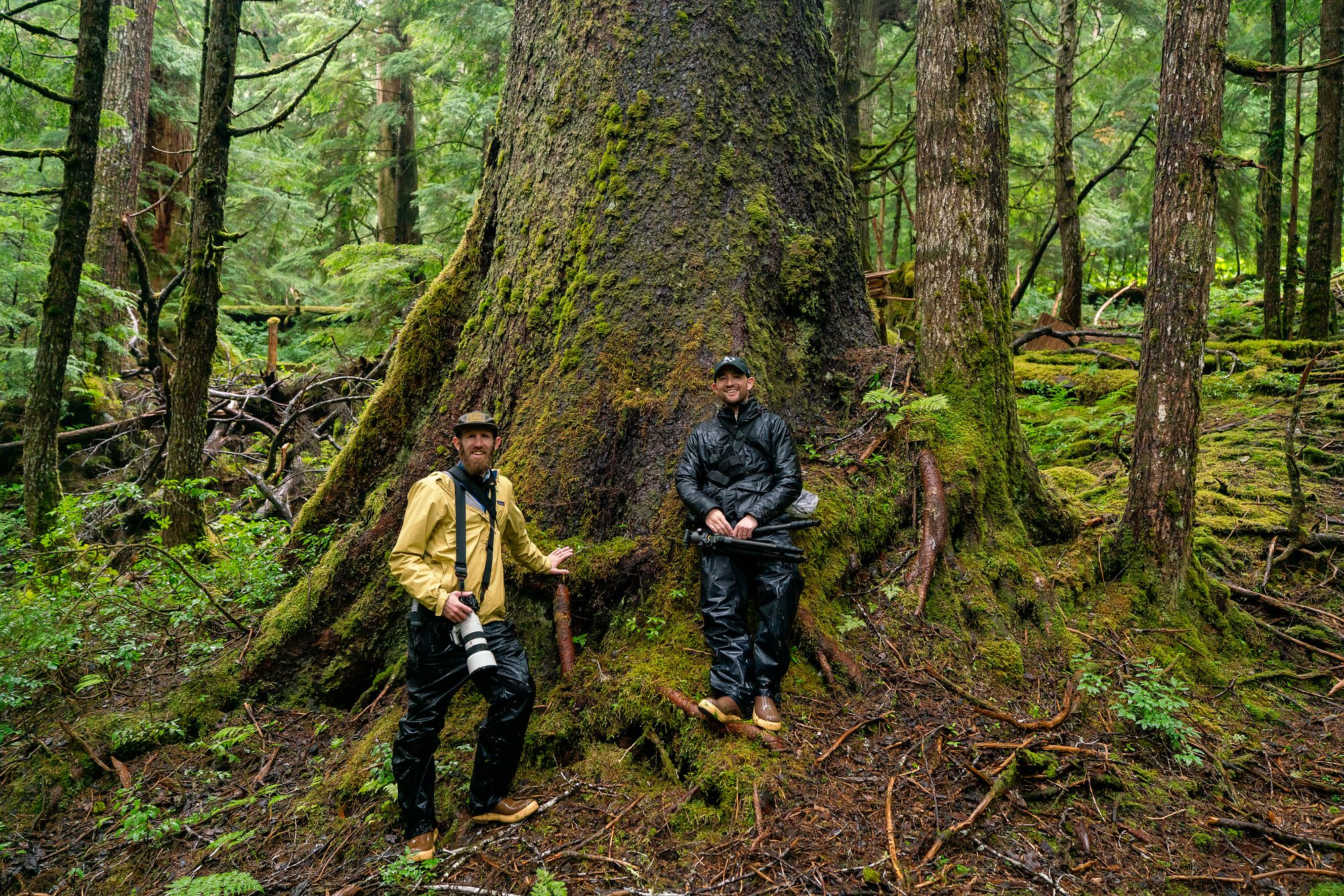
Unit 346 is a 16.2-acre old-growth stand of 365 thousand board feet.Read the point +
Its unit card, on page 181 of the draft Record of Decision’s Attachment 1, says: “Clearcutting is prescribed for this unit to preclude or minimize the occurrence of potentially adverse impacts from hemlock dwarf mistletoe or other insect or disease infections, logging damage and windthrow, or to rehabilitate poorly stocked timberlands (Forest Plan, p. 4-68).”
On September 10, 2026, field documentation of seven denning structures, with a photo appendix, was sent to the Forest Service; on September 11 the project lead replied that it had been saved to the project record and would be shared with the project wildlife biologist and silviculturist.Read the point +
The Final Environmental Impact Statement, posted October 14, does not mention it.
The Final Environmental Impact Statement leaves where the legacy trees stand to implementation, which comes after the decision is signed.Read the point +
On page 25 it says: “Any operational issues for the final on-the-ground legacy location would be determined during implementation.”
- The decision selects Alternative 2: up to 26.4 million board feet of old growth on about 1,738 acres, up from 1,655 in the draft, with about 13 miles of new temporary road and 33 miles of closed road reopened.
Say it in your own words. Where you live, whether you have stood in country like this, why a grove like this one matters to you: that’s what makes a letter yours, and the one ask at the end is what it’s for.
Also on the record, from our reporting
- On September 10, 2026, field documentation of seven denning structures, with a photo appendix, was sent to the Forest Service. On September 11 the project lead replied that it had been saved to the project record and would be shared with the project wildlife biologist and silviculturist. None of it appears in the roughly 720 pages of the Final Environmental Impact Statement and draft Record of Decision posted October 14. (More Than Just Parks, Twin Mountain II ↗)
- Between 1954 and 2004, an estimated 94 percent of northern Prince of Wales Island’s contiguous high-volume old growth was logged, by the estimate of John Schoen, a retired Alaska Department of Fish and Game biologist. (Earth Island Journal, “Wolves Losing Ground” ↗)
PLAN's read: critical threat
The Forest Service intends to sign a decision to log up to 26.4 million board feet of old growth on about 1,738 acres of Prince of Wales Island, up from 1,655 in the draft, with about 13 miles of new temporary road and 33 miles of closed road reopened. Its own analysis dates field surveys 2016 through 2020, and 58 of the 92 units it would log carry the same unit numbers as the 2019 sale a federal court stopped. Unit 346, a 16.2-acre grove we walked, shows what that means: its card still dates no exam of the stand since 2019. The objection period is open until November 30. File an objection on what the Forest Service changed after the comment rounds closed, and write the Acting Forest Supervisor, who signs.
What’s at risk
If this goes through
Our plain-English read of the official notice ↗. Check it against the agency’s own words below.
By the numbers, from the documents on the record
- Of old growth in Unit 346, 365 thousand board feet, prescribed for clearcutting
Draft Record of Decision, Attachment 1, page 181
Open the source ↗“Clearcutting is prescribed for this unit to preclude or minimize the occurrence of potentially adverse impacts from hemlock dwarf mistletoe or other insect or disease infections, logging damage and windthrow, or to rehabilitate poorly stocked timberlands (Forest Plan, p. 4-68).”
- Is when the final legacy-tree location gets settled, after the decision is signed
Final Environmental Impact Statement, page 25 (page 43 of the PDF)
Open the source ↗“Any operational issues for the final on-the-ground legacy location would be determined during implementation.”
In the agency’s own words
The Tongass National Forest posted the Final Environmental Impact Statement and a draft Record of Decision for the Twin Mountain II Timber Sale on October 14, 2026. The Responsible Official, Acting Forest Supervisor Janelle Crocker, intends to select Alternative 2: up to 26.4 million board feet of old-growth timber on about 1,738 acres of the Thorne Bay Ranger District on Prince of Wales Island, about 13 miles of new temporary road, and 33 miles of closed road reopened. Unit 346, a 16.2-acre old-growth stand, is prescribed for clearcutting. Objections are due Monday, November 30, 2026.
The groups on this fight
Who has been on this fight
Give straight to them; nothing routes through us.
- Southeast Alaska Conservation Council
On the record on this fight (2020)
A client in the case that struck down the 2019 Prince of Wales logging plan. Its October 21, 2020 release names Twin Mountain II as the next old-growth sale planned for the island.
Press release, October 21, 2020 ↗ - Earthjustice
On the record on this fight (2020)
Represented eight groups in the case that struck down the 2019 Prince of Wales logging plan. Its October 21, 2020 release names Twin Mountain II as the next old-growth sale planned for the island.
Press release, October 21, 2020 ↗
Who signs it
Janelle Crocker
Acting Forest Supervisor, Tongass National Forest (Responsible Official)
Where the notice says so
The ground
Tongass National Forest
The photograph on this page: Old growth in the Twin Mountain II project area, Prince of Wales Island, Tongass National Forest.. More Than Just Parks.
Who holds the vote
PLAN’s record doesn’t tie a member of Congress to this fight yet. The scorecard grades the votes and bills that decide public lands; nothing joins a vote or a bill to this decision, so there’s no member to name here without guessing.
See how your members vote ↗Calling your two senators and your representative is the Call door on this page.
Forest ServiceWe track this on the agency’s own system of record, where most on-the-ground decisions live.
The reporting behind this
From More Than Just ParksKnow an open comment period we are missing, or spotted a wrong deadline? .
More fights that need you
Go deeper, free
See how your members of Congress vote on public lands
Every representative, graded on the votes that decide the fate of parks, forests, and refuges.
Open ↗The mapSee the places under active threat
A live map of the parks, monuments, and wild country in the crosshairs right now.
Open ↗A wrong fact, a dead link, a form that wouldn’t take your letter: one tap and it comes to the people who build PLAN, with this fight attached.