


There is a national park so far from the American mainland that most people don’t even know it exists. It sits 2,600 miles southwest of Hawai’i, scattered across three volcanic islands in the South Pacific, and it protects some of the most pristine tropical ecosystems left on earth.
We’re talking about the National Park of American Samoa. And it is sensational.
This is the most remote national park in the entire system. Some years, fewer than 2,000 people visit. To put that in perspective, Great Smoky Mountains gets that many visitors every 15 minutes during peak season. The isolation is precisely what makes this place so special. The coral reefs are healthy. The rainforests are intact. The Samoan culture that has thrived here for 3,000 years remains deeply, beautifully alive.
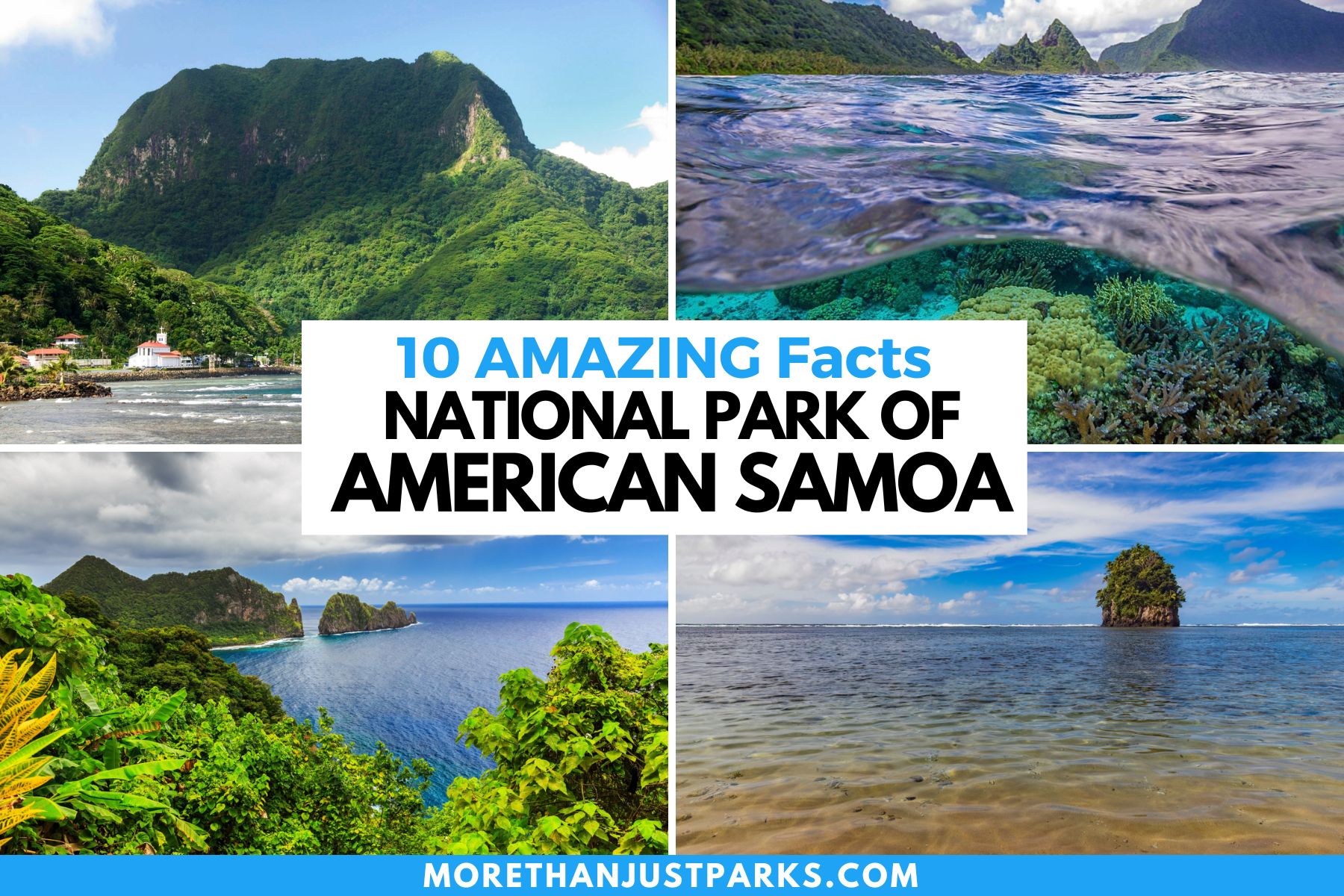
The park spans roughly 13,500 acres across Tutuila, Ta’u, and Ofu, three islands in the Samoan archipelago. Each island offers something completely different. Tutuila has the trails and the history. Ofu has what many consider the most beautiful beach in the South Pacific. Ta’u has cloud forests, the tallest sea cliffs in the world, and flying foxes with three-foot wingspans soaring above the canopy.
Love American Samoa? It's one of 117 threatened public lands destinations we're tracking. Get the free briefing.
And here’s something remarkable. This is the only national park in America with no entrance fee. Not a single dollar. The land was not purchased or seized. It was leased from Samoan village councils who agreed to share their home with visitors, on the condition that their culture and traditions would be protected alongside the natural landscape.
That agreement shapes everything about a visit here. This isn’t a park where you drive up, snap a photo, and leave. This is a place where you slow down, where you learn, and where you experience something no other national park can offer.
Related: 10 Amazing Facts About the National Park of American Samoa
Three Islands, One Spectacular Park
The National Park of American Samoa is unlike any other unit in the system because it exists on three separate islands, each with its own character, its own terrain, and its own reasons to visit. Getting between them requires small inter-island flights on propeller planes, which is part of the adventure.
Tutuila (The Main Island)
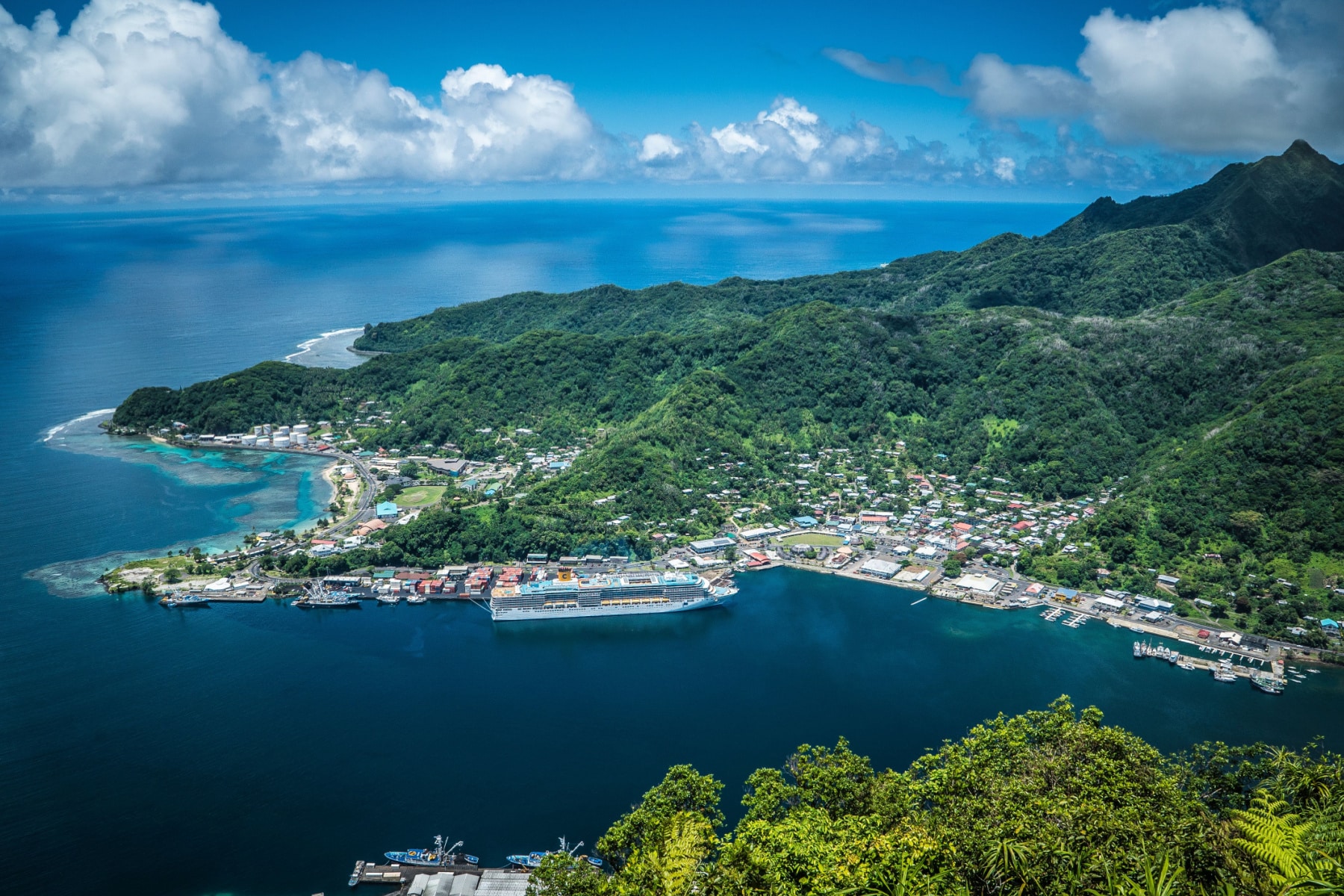
Tutuila is where your journey begins. The island’s main town, Pago Pago (pronounced “Pango Pango”), sits in one of the most dramatic natural harbors in the Pacific. Steep volcanic ridges drop straight into turquoise water, and the lush green mountainsides look like they belong in a fantasy novel.
The park section on Tutuila protects a significant stretch of tropical rainforest along the northern coast, and it’s home to the best hiking in American Samoa.
Mount Alava Trail is the signature hike on Tutuila. This 7-mile round trip climbs nearly 1,600 feet through dense tropical forest to the summit of Mount Alava, where the views take in all of Pago Pago Harbor and the surrounding coastline. The trail follows an old tramway route, and on clear days you can see for miles across the Pacific. We highly encourage anyone with moderate fitness to tackle this one. It is worth every drop of sweat.
World War II Heritage Trail winds through the ridgeline above the harbor, passing gun emplacements and bunkers from the island’s role as a critical naval base during the Pacific campaign. American Samoa was the only U.S. soil south of the equator, and the military infrastructure from that era is still visible along the trail. It’s a fascinating and humbling walk through history.
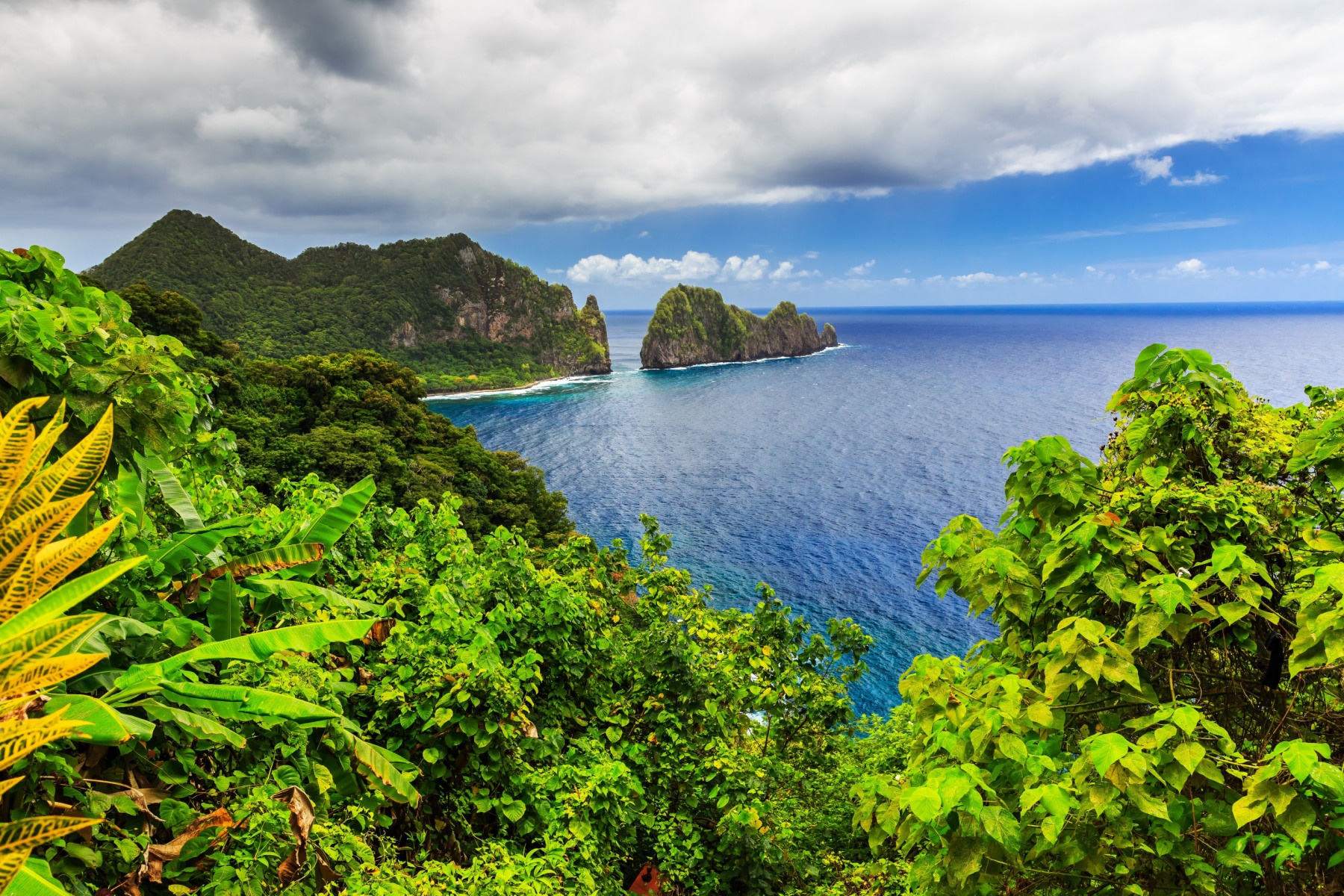
Pola Island Lookout offers one of the most spectacular coastal views in any national park, and you don’t have to hike far to reach it. The tiny island sits just offshore, a dramatic volcanic rock formation surrounded by crashing surf. Keep a sharp eye out for seabirds nesting on the cliffs.
Ofu Island
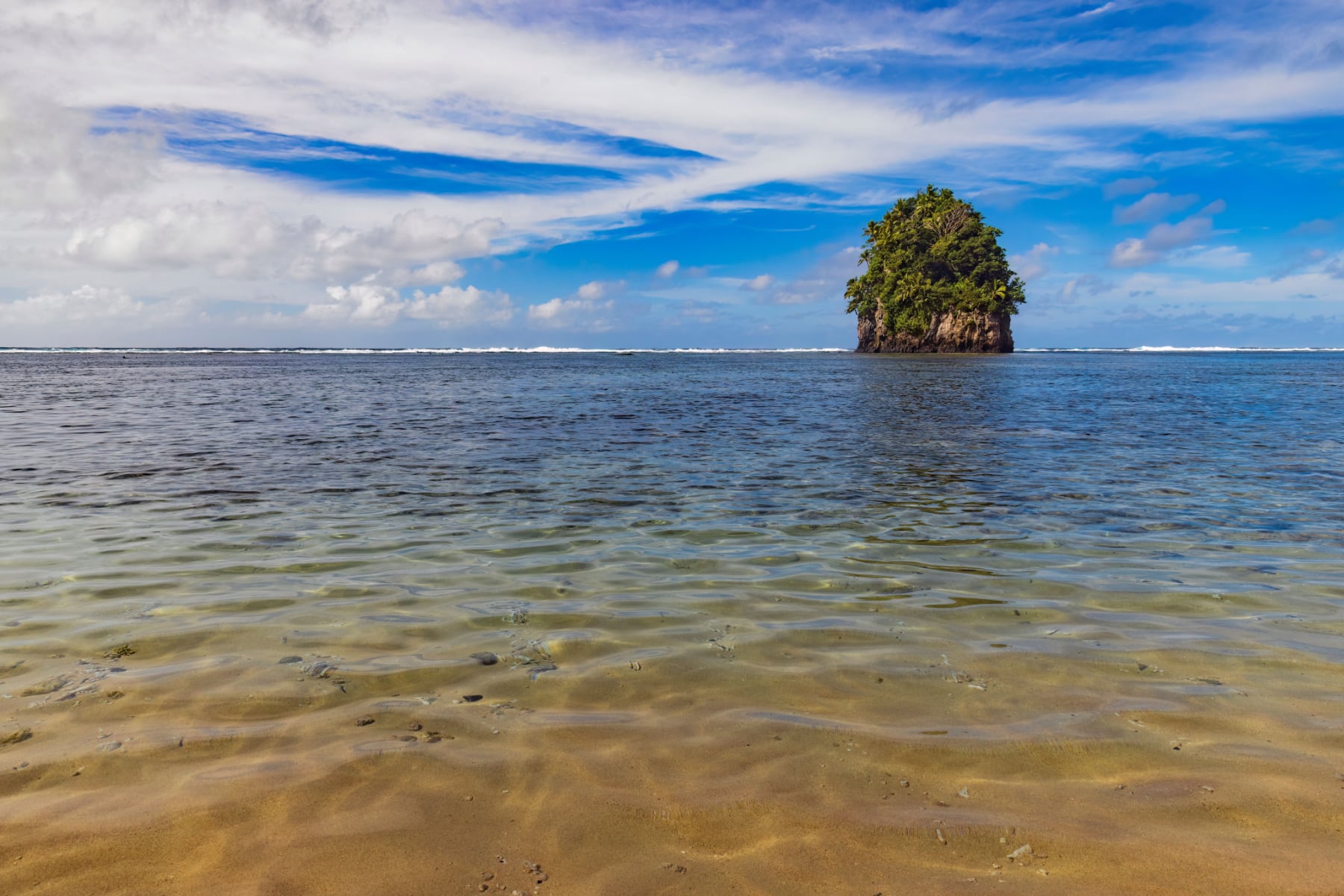
If Tutuila is the park’s backbone, Ofu is its crown jewel.
Ofu Beach is consistently ranked among the most pristine beaches in the world, and when you see it, you’ll understand why. A crescent of white sand stretches along the base of volcanic peaks, with water so clear you can see the coral from the shore. The reef here is remarkable. Marine biologists have called it one of the healthiest coral ecosystems in the Pacific, with species that have shown unusual resilience to warming ocean temperatures.
The snorkeling is world-class. We’re talking about swimming over coral gardens teeming with parrotfish, butterflyfish, surgeonfish, and the occasional reef shark. The water temperature hovers around 80 degrees year-round. You don’t need a wetsuit. You just need reef shoes and a mask.
Ofu feels like stepping into a place the modern world forgot. There are no resorts, no gift shops, no crowds. Just you, the beach, and some of the most spectacular marine life in the national park system.
Ta’u Island
Ta’u is the wildest and least accessible of the three islands, and it rewards those who make the effort to get there.
The park protects the southern flank of Lata Mountain, which rises to 3,170 feet and is cloaked in cloud forest at its summit. This is the largest tract of pristine tropical rainforest in all of American Samoa, and walking through it feels like traveling back thousands of years. The biodiversity is staggering. Ferns the size of trees, orchids clinging to every branch, and a humidity so thick you can almost drink the air.
Ta’u is also home to one of the most spectacular wildlife sights in any national park. Samoan flying foxes (fruit bats with wingspans reaching three feet) roost in the forest canopy and fill the sky at dusk. Watching hundreds of them take flight against a Pacific sunset is one of those experiences that stays with you forever. These are not small animals. They are magnificent, and seeing them in the wild rather than behind glass at a zoo is something truly special.
The island also boasts some of the tallest sea cliffs in the world, dropping over 3,000 feet from the mountain ridgeline straight into the ocean. The scale is hard to comprehend until you’re standing at the edge.
Samoan Culture Is the Heart of This Park
Every national park protects something irreplaceable. At the National Park of American Samoa, that includes a living culture.
Fa’a Samoa, the Samoan way of life, is not a museum exhibit here. It is the fabric of daily life across these islands, and the park was specifically designed to protect and honor it. Village councils (matai) still govern community affairs. Extended families still share resources and responsibilities. Traditional fishing and farming practices still sustain communities that have lived here for over 3,000 years.
The park runs a homestay program that is unlike anything else in the National Park Service. Visitors stay with local Samoan families, share meals, participate in daily life, and learn directly about Samoan customs and traditions. It is the only national park in America that offers this kind of cultural immersion, and we cannot recommend it strongly enough. If you visit, sign up for the homestay. It will be the highlight of your trip.
A few things to know about visiting Samoan villages. Sunday is a day of rest and church. Many villages observe a quiet period (sa) in the early evening for prayer. Dress modestly when visiting villages. And always ask before photographing people or entering a fale (traditional open-air structure). The respect goes both ways, and visitors who approach with genuine curiosity and humility will be welcomed warmly.
The Underwater World
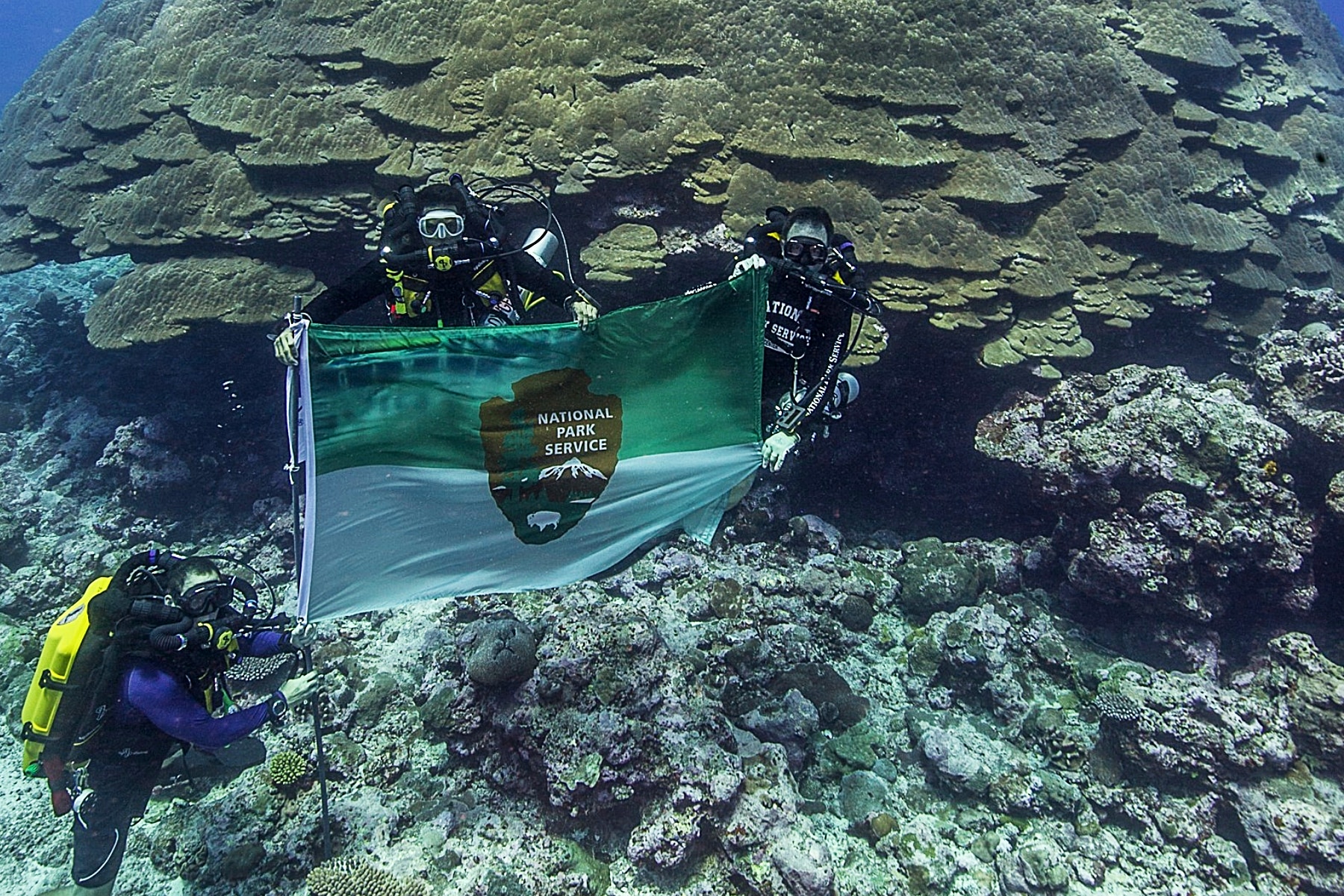
The National Park of American Samoa protects roughly 4,000 acres of ocean, and the coral reefs here are genuinely world-class. Over 250 species of coral and 950 species of fish have been documented in these waters. The reefs around Ofu in particular have attracted international attention from marine scientists studying coral resilience.
You don’t need to be a certified diver to experience this. The best snorkeling is right off the beach at Ofu, where healthy coral starts in just a few feet of water. The visibility is often 100 feet or more. On a calm day, you’ll see giant clams, sea turtles, reef sharks, octopus, and more species of fish than you can count.
The waters around Tutuila also offer excellent snorkeling, particularly near the reef flats on the northern shore. The park’s marine areas are unfished and undeveloped, which is why the ecosystem remains so healthy.
Related: All 63 US National Parks Ranked
Getting to the National Park of American Samoa
Let’s be straightforward about this. Getting to the National Park of American Samoa takes real commitment, and that’s part of what keeps it so pristine.
From the U.S. mainland, the only route is through Honolulu. Hawaiian Airlines operates flights from Honolulu (HNL) to Pago Pago International Airport (PPG) on Tutuila. The flight takes roughly 5.5 hours and crosses the international date line, so you’ll arrive the day before you left. It’s a genuine mind-bender the first time it happens.
Getting between islands requires small propeller planes operated by local carriers. Flights from Tutuila to Ta’u and Ofu run on limited schedules, and weather cancellations are common. Build flexibility into your itinerary. We mean it. If your plan is “fly to Ofu on Tuesday and back on Wednesday,” you may end up stranded for a day or two. That’s not a bug. That’s island life.
Important: American Samoa does not observe daylight saving time and sits in the Samoa Time Zone (UTC-11). No passport is required for U.S. citizens, but you will need a valid government-issued photo ID.
Best Time to Visit
American Samoa is tropical, and temperatures hover around 80 degrees Fahrenheit year-round. There is no cold season. The weather breaks down into two periods.
Dry season (May through October) is the best time to visit. Humidity is lower, rainfall is less frequent, and the skies are clearer for hiking and snorkeling. This is also when the inter-island flights run most reliably.
Wet season (November through April) brings heavier rain, higher humidity, and the possibility of tropical cyclones. The park remains open, and many visitors still have wonderful trips during this period. But trails can be muddy and slippery, and flight cancellations are more common.
Related: 9 Best National Parks to Escape Winter
Practical Tips for Your Visit
The National Park of American Samoa has no entrance fee, no campgrounds, and very limited tourist infrastructure. That’s not a warning. It’s a feature. But it does mean you need to plan ahead. Here’s what we recommend.
- Lodging is limited. On Tutuila, Tradewinds Hotel in Pago Pago and Sadie’s by the Sea are the main options. On Ofu and Ta’u, the homestay program or small family-run guesthouses are often the only choices. Book well in advance.
- Sign up for the homestay program. Contact the park visitor center in Pago Pago when you arrive. This is the single best way to experience the park and the culture.
- Bring reef shoes. The coral is sharp and the rocky shorelines demand them. Do not attempt to snorkel or wade without foot protection.
- Pack light but pack smart. Sunscreen (reef-safe), insect repellent, a good rain jacket, and sturdy hiking shoes. Supplies on the outer islands are extremely limited.
- Cash is still important. While Tutuila has ATMs, the outer islands may not. Bring enough cash for your entire stay on Ofu or Ta’u.
- Cell service is spotty. Coverage exists in Pago Pago but fades quickly outside of town. On the outer islands, don’t count on it at all.
- Plan for 4-7 days minimum. You need at least 2 days on Tutuila for hiking and the visitor center, and at least 2 days on Ofu for the beach and snorkeling. Ta’u adds another 2 days. With flight buffer days, a week is ideal.
Why This Park Matters

The National Park of American Samoa represents something rare in the national park system. It is a place where nature and culture are not treated as separate things to be managed independently. They are understood as one interconnected whole, exactly the way the Samoan people have always understood them.
The coral reefs here are studied by scientists from around the world because they offer clues about how marine ecosystems can survive climate change. The rainforests are home to species found nowhere else on earth. The flying foxes play a critical role as pollinators across the Pacific islands. And the Samoan communities who have stewarded this land for three millennia continue to show us what it looks like to live in genuine relationship with the natural world.
This is not the easiest national park to reach. It is not the most famous. It will never have the visitor numbers of Yellowstone or Yosemite. But for those willing to make the journey, the National Park of American Samoa offers something that no other park in the system can match. A chance to experience one of the last truly wild and culturally intact corners of the planet.
We think it might just be the most extraordinary national park most Americans will never see. And we think that should change.
Related: 10 Least Visited US National Parks | Complete National Parks List
What to Bring to American Samoa
Gear we recommend for American Samoa. Affiliate links support our work at no cost to you.
More Than Just Parks may earn a small commission from purchases made through these links, at no extra cost to you. We only recommend gear we would actually use.
Affiliate disclosure: Some links on this page earn us a small commission at no extra cost to you. We only recommend gear we actually use.


