


The Hollywood Sign went up in 1923 as a real-estate ad for a subdivision called Hollywoodland, and it was supposed to come down after a year and a half. A century later it is the first thing most people picture when they think of Los Angeles. That gap, between what a thing was built for and what it came to mean, runs through almost every landmark in this city.
I spent a career teaching history before I joined my sons at More Than Just Parks, and Los Angeles surprised me. Behind the studios and the freeways sit a folk-art tower one Italian immigrant raised by hand over 33 years, the tar pits that still pull up Ice Age bones in the middle of the city, and a rail station that is the last of the country’s great train terminals. These are the 15 I would send you to, counted down from number 15.
Los Angeles Landmarks At A Glance
Here is a quick comparison of all 15 landmarks before we dig into the stories behind each one.
| Landmark | Type | Year | Neighborhood |
|---|---|---|---|
| Hollywood Sign | Cultural icon | 1923 | Hollywood Hills |
| Griffith Observatory & Park | Observatory / public park | 1935 (observatory) | Los Feliz |
| TCL Chinese Theatre | Historic movie palace | 1927 | Hollywood |
| Santa Monica Pier | Historic pier | 1909 | Santa Monica |
| L.A. Memorial Coliseum | Stadium (NHL) | 1923 | Exposition Park |
| The Getty Center | Art museum | 1997 | Brentwood |
| Hollywood Walk of Fame | Cultural icon | 1960 | Hollywood |
| La Brea Tar Pits & Museum | Fossil site / museum | 1913 (excavations) | Hancock Park |
| Capitol Records Building | Historic-Cultural Monument | 1956 | Hollywood |
| Union Station | Historic rail terminal | 1939 | Downtown |
| Watts Towers | Folk-art sculptures (NHL) | 1921 to 1954 | Watts |
| Universal Studios Hollywood | Film studio / theme park | 1915 (studio) | Universal City |
| The Hollywood Bowl | Outdoor amphitheater | 1922 | Hollywood Hills |
| Walt Disney Concert Hall | Concert hall | 2003 | Downtown |
| Cathedral of Our Lady of the Angels | Cathedral | 2002 | Downtown |
For more California history beyond the city, see our roundup of California landmarks, and if you want to pair your trip with wild country, take a look at the national parks near Los Angeles.
117 public lands destinations are under threat. Get the free briefing that 27,000+ people use to stay informed and take action.

15. Cathedral of Our Lady of the Angels
The Cathedral of Our Lady of the Angels is the mother church of the Roman Catholic Archdiocese of Los Angeles, sitting on Temple Street in the downtown civic center. Spanish architect Rafael Moneo designed it, and it was dedicated in 2002.

The push for a new cathedral grew after the 1994 Northridge earthquake damaged the old Cathedral of Saint Vibiana beyond practical repair. Cardinal Roger Mahony led the project, Moneo’s design was chosen from a field of architects, and construction ran from 1998 to 2002 at a cost of roughly $200 million. The angular stone-and-glass exterior and the light-filled interior drew both praise and criticism, but the building has settled in as a fixture of the downtown skyline and a cultural venue in its own right.
14. Walt Disney Concert Hall
The Walt Disney Concert Hall is home to the Los Angeles Philharmonic and one of the most acoustically refined halls in the world. Lillian Disney, widow of Walt Disney, pledged $50 million in 1987 to start the project, and architect Frank Gehry won the design competition the following year.

Gehry’s sweeping stainless steel forms were inspired by the landscape of Southern California. Construction stretched from 1999 to 2003, slowed in part by the demanding acoustics, which Gehry developed alongside acoustician Yasuhisa Toyota. The main auditorium seats more than 2,200 people in a vineyard-style arrangement that wraps the audience around the stage. Since opening in 2003 it has anchored the Music Center campus next to the Dorothy Chandler Pavilion.
13. The Hollywood Bowl
The Hollywood Bowl is the summer home of the Los Angeles Philharmonic and one of the largest natural outdoor amphitheaters in the United States. Its concentric-arch shell and its setting in a Hollywood Hills canyon make it instantly recognizable.

The story begins in 1919, when the Theatre Arts Alliance began searching for a site for an outdoor venue and settled on the canyon then known as Daisy Dell. The first performance took place in 1922, and the Bowl quickly became a fixture of L.A. summers. Successive shells, including designs associated with Lloyd Wright in the late 1920s, shaped its look, and the venue has hosted everyone from classical orchestras to the Beatles. It remains a beloved gathering place and a working cultural institution.
12. Universal Studios Hollywood
Universal Studios Hollywood is both a working film studio and one of the most popular theme parks in the country, set in the San Fernando Valley at Universal City. Carl Laemmle, founder of Universal Pictures, opened the studio lot in 1915, when the area was still rural.

Early Universal classics included The Hunchback of Notre Dame (1923) and the studio’s run of 1930s monster films. In 1964 the modern Studio Tour launched, letting the public ride a tram through the back lot, and the theme park grew from there. The studio behind Jaws, E.T., and Jurassic Park now pairs its tour with rides, shows, and the adjacent CityWalk entertainment district.
More Things To Do At Universal Studios
- Ride the big attractions. Crowd favorites include Harry Potter and the Forbidden Journey, Transformers: The Ride 3D, Jurassic World The Ride, and The Simpsons Ride.
- Explore the Wizarding World of Harry Potter. Walk the streets of Hogsmeade, try the butterbeer, and tour Hogwarts castle.
- Take the Studio Tour. The tram ride rolls past working soundstages, famous back-lot sets, and special-effects demonstrations.
- Catch a live show. WaterWorld and the Special Effects Show run on regular schedules.
- Walk CityWalk. The free-to-enter district just outside the gates has restaurants, shops, and live music.
11. Watts Towers
The Watts Towers are a group of 17 interconnected steel-and-mosaic sculptures in the Watts neighborhood, the lifework of Italian immigrant Sabato “Simon” Rodia. He built them single-handedly between 1921 and 1954 on the small lot where he lived.

Rodia used scrap steel, mortar, and found objects like broken tile, seashells, and glass, working without scaffolding or machinery. The tallest tower rises nearly 100 feet. After he left in 1954, the city moved to demolish the towers over safety concerns. In 1959 a stress test pulled against the tallest tower with 10,000 pounds of force, and the structure held, settling the question. The towers later became a National Historic Landmark and are preserved today as the Watts Towers of Simon Rodia State Historic Park, owned by California State Parks and operated by the City of Los Angeles.
10. Union Station
Los Angeles Union Station opened in 1939 and is often called the last of the great American railway stations. It pulled the passenger operations of the Southern Pacific, Union Pacific, and Santa Fe railroads under one roof in a single grand terminal near the city’s historic core.

The station was designed by a team led by John and Donald Parkinson, the father-and-son architects also behind Los Angeles City Hall and the Memorial Coliseum. It blends Mission Revival, Spanish Colonial, and Streamline Moderne styles, with a soaring waiting room, decorative tile, and a central courtyard. During World War II it moved enormous numbers of troops. After a mid-century decline, a 1990s restoration brought it back, and it now serves Amtrak, Metrolink, and the L.A. Metro rail system.
9. Capitol Records Building
The Capitol Records Building is the 13-story tower near Hollywood and Vine that looks like a stack of records topped by a stylus. Architect Welton Becket designed it, and it opened in 1956 as the West Coast headquarters of Capitol Records.

Capitol Records was founded in 1942 and grew into one of the most important labels in the world, with Frank Sinatra, Nat King Cole, and later the Beatles recording under its banner. The tower is sometimes called the house that Nat built, a nod to Cole’s record sales. A blinking light atop the spire has long spelled out “Hollywood” in Morse code. The city named it a Historic-Cultural Monument in 2006.
8. La Brea Tar Pits and Museum
The La Brea Tar Pits in Hancock Park hold one of the richest Ice Age fossil records on the planet, documenting the plants and animals of the Los Angeles Basin over the last 50,000 years. The adjacent museum displays much of what has come out of the asphalt.

Natural asphalt has seeped to the surface here for tens of thousands of years, trapping animals whose bones were then preserved. Serious excavation began in 1913 under the Natural History Museum of Los Angeles County, and the on-site museum opened to the public in 1977. Saber-toothed cats, dire wolves, mammoths, and countless smaller species have been recovered, and active digs continue to turn up new specimens today.
7. Hollywood Walk of Fame
The Hollywood Walk of Fame runs along 15 blocks of Hollywood Boulevard and three blocks of Vine Street, with more than 2,700 terrazzo-and-brass stars honoring figures from film, television, music, radio, and theater.
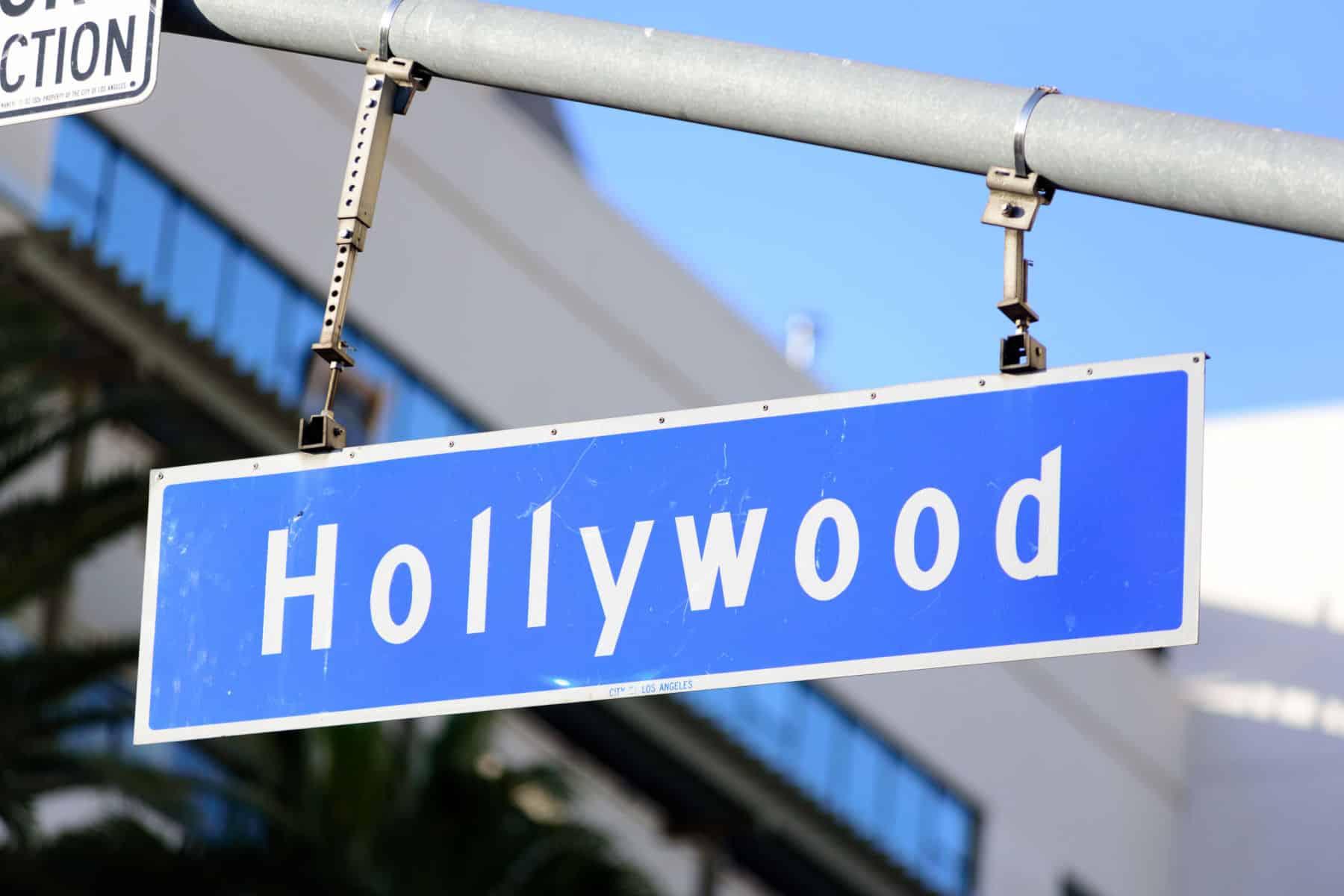
The Hollywood Chamber of Commerce developed the idea in the 1950s to draw visitors back to the boulevard. A set of eight prototype stars went in during 1958, and construction of the permanent walk followed. Actress Joanne Woodward is the name most often tied to the very first star, and her star was unveiled on February 9, 1960. The walk was declared a city historic-cultural landmark in 1978 and continues to add new honorees through ceremonies held throughout the year.
6. The Getty Center
The Getty Center sits on a hilltop in Brentwood and houses the J. Paul Getty Museum’s collection of European paintings, drawings, sculpture, decorative arts, and photographs. Admission is free, though parking is paid, which makes it one of the great no-cost outings in the city.
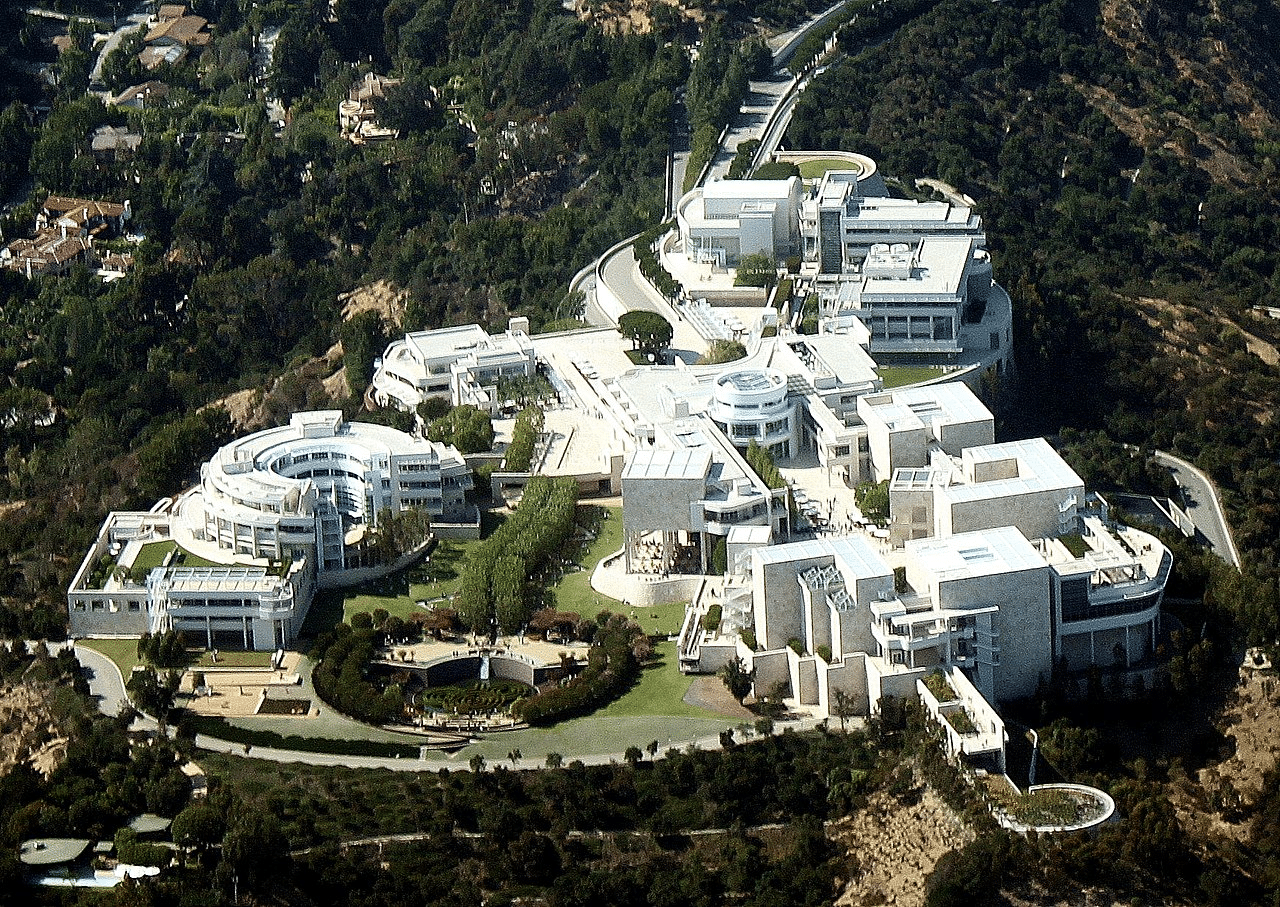
Oil magnate J. Paul Getty began collecting in the 1930s and established the J. Paul Getty Trust in 1953. Architect Richard Meier designed the travertine-clad hilltop campus, which opened in 1997 after more than a decade of work, with a central garden by artist Robert Irwin. The collection holds works by Rembrandt, Van Gogh, Monet, and many others. The museum’s separate Getty Villa in Pacific Palisades houses its Greek, Roman, and Etruscan antiquities. The Getty has navigated high-profile disputes over looted antiquities, returning a number of objects to Italy and Greece.
More Things To Do At The Getty
- See the collection. European paintings and decorative arts from the Middle Ages forward, including Rembrandt, Van Gogh, Monet, and Renoir.
- Walk the Central Garden. Robert Irwin’s living artwork changes with the seasons and frames wide views of the basin.
- Take a guided tour. Free architecture and collection tours run daily and help orient first-time visitors.
- Visit the Getty Villa. The companion site in Pacific Palisades focuses on antiquities and re-creates a Roman country house.
- Stay for the view. The terraces look out over Los Angeles toward the Pacific, especially at sunset.
5. Los Angeles Memorial Coliseum
The Los Angeles Memorial Coliseum in Exposition Park is one of the most storied stadiums in the country. It is the only venue to host the Summer Olympics three times, in 1932, 1984, and the coming 2028 Games, and it has also hosted two Super Bowls and the 1959 World Series.

The Coliseum opened in 1923 as a memorial to Los Angeles veterans of World War I and was later rededicated to veterans of all wars. It has been home to USC football for a century and has hosted the NFL’s Rams and Raiders at different points. Designated a National Historic Landmark in 1984, it underwent a major USC-funded renovation completed in 2019. It remains the home of the USC Trojans and a working centerpiece of L.A. sports.
4. Santa Monica Pier
The Santa Monica Pier juts into the Pacific at the western end of Route 66 and has been a seaside gathering place for more than a century. Its Pacific Park amusement area, with the solar-powered Ferris wheel, is one of the most photographed scenes in Southern California.

The Municipal Pier opened in 1909, and the adjoining Pleasure Pier with its carousel followed in 1916. The 1922 Looff Hippodrome that houses the carousel is a National Historic Landmark. Over the decades the pier weathered storms, neglect, and a near-demolition before a community campaign saved it in the 1970s. Today it draws fishers, families, and visitors to its arcade, restaurants, and small amusement park, and remains a symbol of the California coast.
3. TCL Chinese Theatre
The TCL Chinese Theatre on Hollywood Boulevard is the most famous movie palace in the world. Built by showman Sid Grauman and opened in 1927 as Grauman’s Chinese Theatre, its forecourt of celebrity hand and footprints is a pilgrimage site for film lovers.
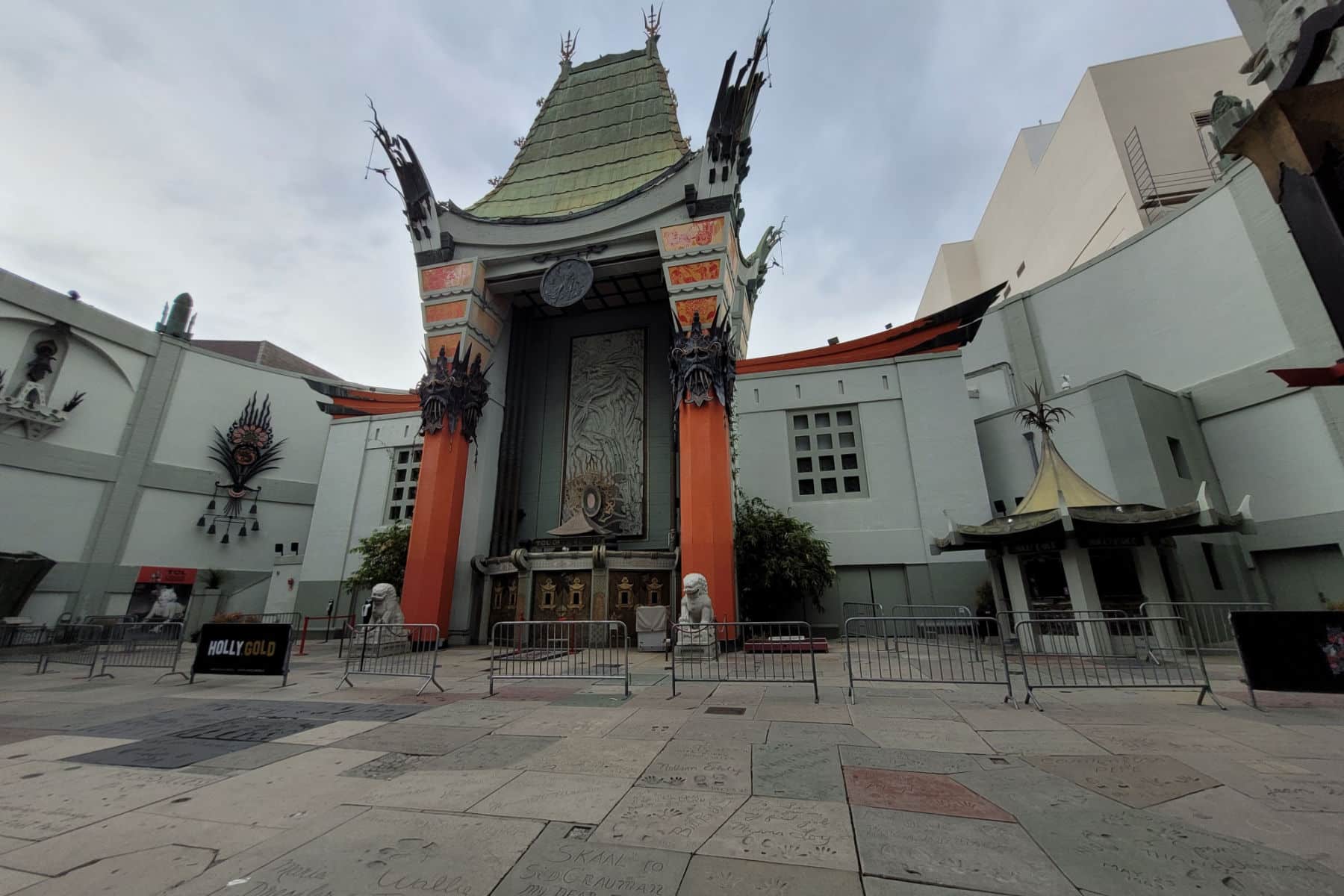
Architect Raymond Kennedy designed the pagoda-style facade for Grauman, who had already built the nearby Egyptian Theatre. The opening was a Hollywood spectacle, and the forecourt tradition of pressing stars’ prints into cement began that same year. Marilyn Monroe, John Wayne, Tom Hanks, and hundreds of others have left their marks. The theater joined the National Register of Historic Places in 1982, was rebranded TCL Chinese Theatre in 2013 after a sponsorship by the Chinese electronics maker TCL, and its main house now holds one of the largest IMAX screens in the world.
2. Griffith Observatory & Park
Griffith Park is one of the largest urban parks in North America, and the Griffith Observatory perched on its southern slope offers free public telescopes and one of the best views in Los Angeles. From its terraces you can see the city, the ocean, and the Hollywood Sign all at once.

Welsh-born philanthropist Colonel Griffith J. Griffith donated more than 3,000 acres to the city in 1896 to create a great public park. He later left funds for an observatory, which opened in 1935 and has welcomed the public free of charge ever since. The park also holds the Greek Theatre, the Los Angeles Zoo, miles of trails, and the site of the old zoo. The observatory has starred in films from Rebel Without a Cause to La La Land, and it remains one of the city’s most cherished public places.
1. Hollywood Sign
Our number one Los Angeles landmark is the Hollywood Sign. It is more than nine white letters on a hillside. It is one of the most recognized symbols on earth, shorthand for ambition, the movies, and the idea that anyone can reinvent themselves here.
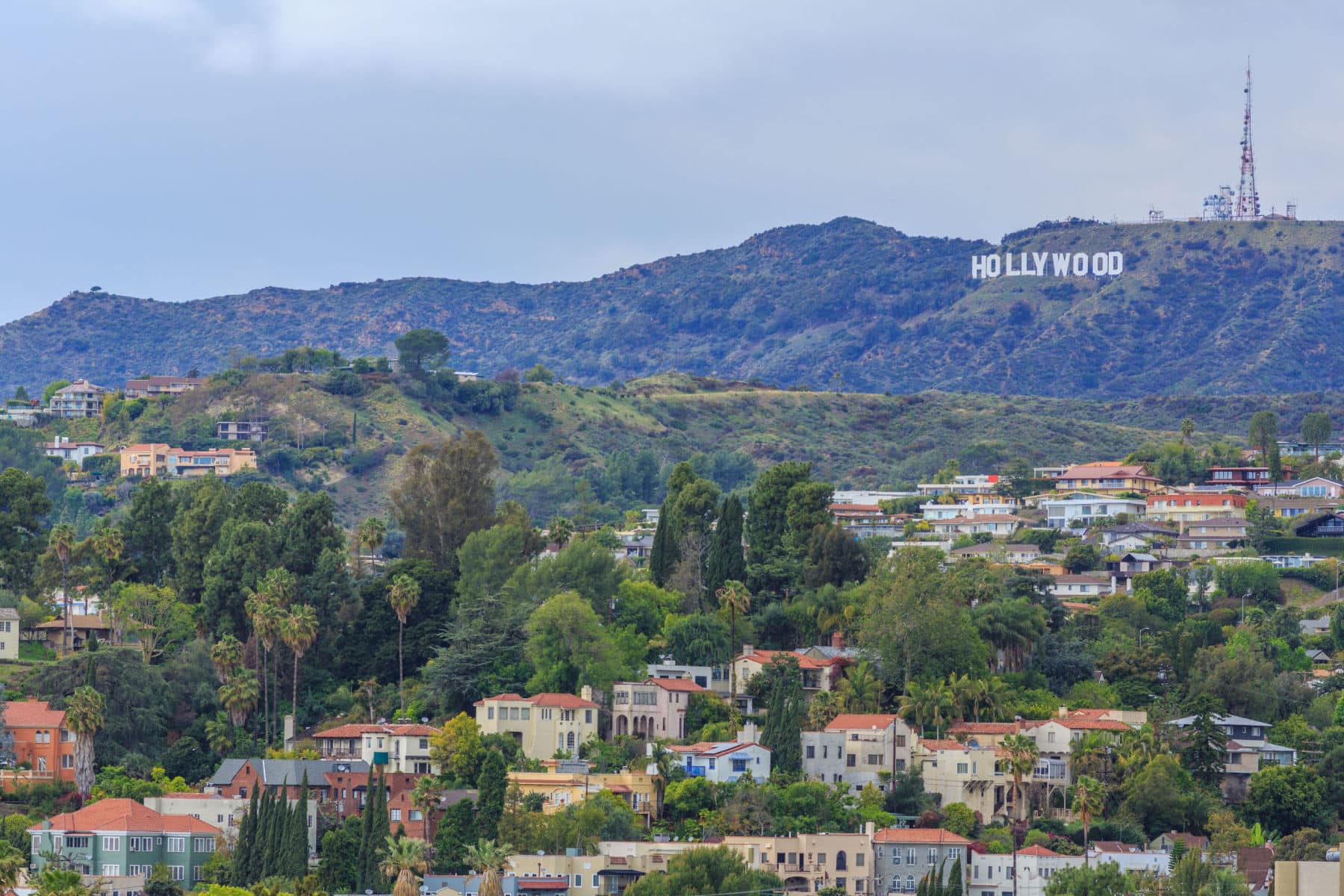
The sign went up in 1923 as an advertisement for a hillside housing development called Hollywoodland. The original letters stood 45 to 50 feet tall, were studded with thousands of light bulbs, and were never meant to last. By the late 1940s the sign had fallen into disrepair, and in 1949 the Hollywood Chamber of Commerce removed the final four letters to leave “Hollywood.” It deteriorated again in the 1970s, when a campaign that included Hugh Hefner and other donors funded a full rebuild in steel, completed in 1978. The sign now sits protected on Mount Lee in Griffith Park, watched over by the Hollywood Sign Trust.
The Full Ranking
- Hollywood Sign
- Griffith Observatory & Park
- TCL Chinese Theatre
- Santa Monica Pier
- Los Angeles Memorial Coliseum
- The Getty Center
- Hollywood Walk of Fame
- La Brea Tar Pits and Museum
- Capitol Records Building
- Union Station
- Watts Towers
- Universal Studios Hollywood
- The Hollywood Bowl
- Walt Disney Concert Hall
- Cathedral of Our Lady of the Angels
This guide does not come out of thin air. More Than Just Parks is a family operation. My sons Will and Jim have spent their adult lives bringing America’s public lands to life through their short films, working with the National Park Service, the Department of the Interior, the USDA, and the U.S. Forest Service along the way. In 2018, after a career teaching history, I joined them to help tell the stories behind these places.
Helpful Related Articles
California Landmarks: The Best Landmarks in California
National Parks Near Los Angeles: National Parks Near Los Angeles
Joshua Tree Guide: Things to Do in Joshua Tree National Park
Best Hikes Joshua Tree: Best Hikes in Joshua Tree National Park
Death Valley Guide: Best Things to Do in Death Valley National Park
Pinnacles Guide: Things to Do in Pinnacles National Park
Channel Islands Facts: Channel Islands National Park Facts
West Coast Parks: Best West Coast National Parks Ranked by Experts


