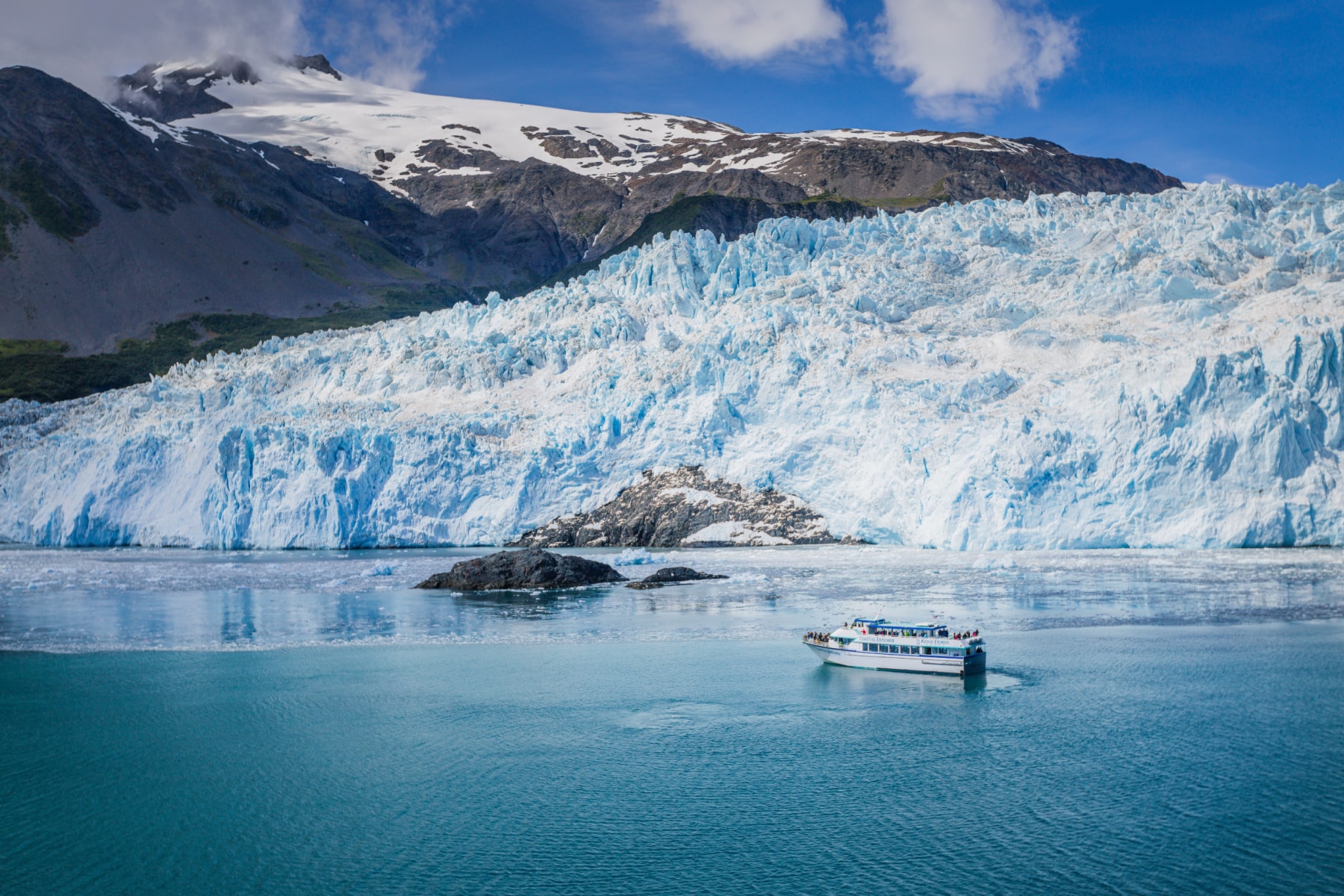


Kenai Fjords National Park Facts. Carved by ice and pounded by the Gulf of Alaska, Kenai Fjords is built around the Harding Icefield and the 38 glaciers that pour out of it. Here are 9 facts about one of Alaska’s most striking parks, checked against the record.
More Than Just Parks is a family operation. My sons Will and Jim have spent years filming America’s national parks for the National Park Service and the Department of the Interior. Let’s get started.
Plan your trip with our full Kenai Fjords National Park guide and our list of Alaska national parks.

Kenai Fjords National Park is a beautiful and wild park located in Alaska. It covers over 600,000 acres of land and is home to a wide variety of plant and animal life, as well as several unique geological features.
Love Kenai Fjords? It's one of 117 threatened public lands destinations we're tracking. Get the free briefing.
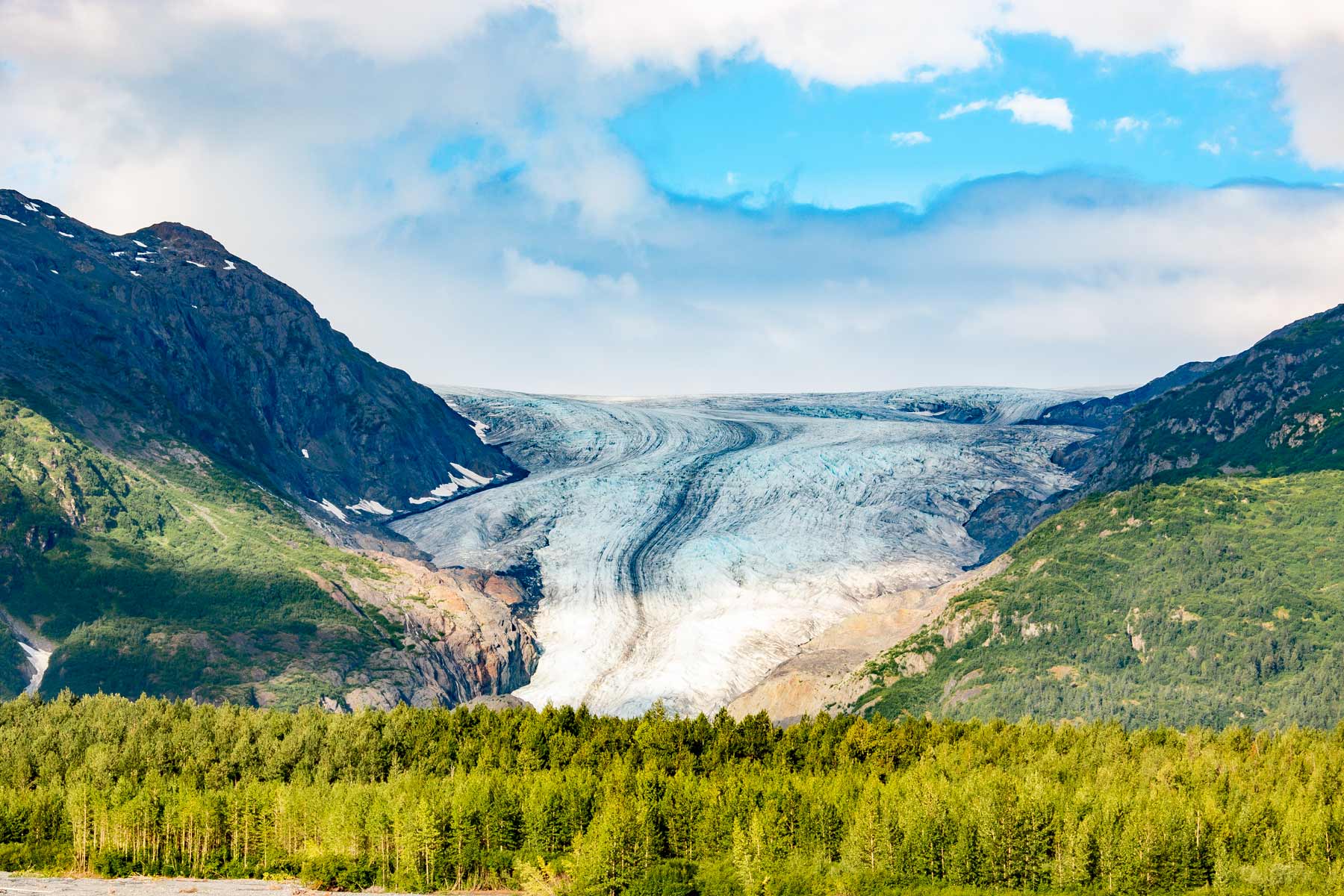
The park is named after the Kenai Fjords, a group of steep, rocky fjords that were carved by glaciers over thousands of years. The park is home to several glaciers fed by the Harding Icefield, the largest icefield contained entirely within the United States.
The park’s landscape is diverse, with forests of spruce and pine trees, alpine meadows, and crystal clear streams and lakes. The park is also home to a wide variety of plant and animal life, including whales, seals, and over 300 species of birds.
There are many ways to explore and enjoy Kenai Fjords National Park. Visitors can go hiking or backpacking on the park’s trails, go fishing or boating in the park’s streams and lakes, or even go whale watching in the park’s beautiful coastal waters.
There are also several campgrounds and lodges located within the park, providing comfortable accommodations for visitors.
Kenai Fjords gives visitors a rare chance to stand at the edge of an active icefield and watch glaciers meet the sea.
CHECK OUT: Alaska National Parks – Helpful Guide For Visiting
- Location: Alaska
- Acreage: Kenai Fjords National Park covers 669,984 acres on the southeast coast of Alaska’s Kenai Peninsula.
- Visitation: Kenai Fjords had 425,369 recreation visits in 2025.
- Elevation: The highest surface on the Harding Icefield is approximately 5,200 feet above sea level. The highest peak within the boundaries of Kenai Fjords, at 6,450 feet, is unnamed.
- Climate and Average Weather Year Round: In Kenai Fjords National Park, the summers are cool, wet, and overcast and the winters are long, freezing, snowy, windy, and mostly cloudy. Over the course of the year, the temperature typically varies from 22°F to 62°F and is rarely below 5°F or above 70°F.
- When Did It Become A National Park? Established as a national monument in 1978, Kenai Fjords became a national park under the Alaska National Interest Lands Conservation Act (ANILCA) of 1980.

Facts About Acadia National Park
1. The Earliest Peoples To Inhabit The Area Were The Alutiiq Of The Outer Kenai Coast
As a retired history teacher and lifelong history buff, I have always been interested by origin stories. For me, one of the most interesting of the Kenai Fjords National Park Facts involves its earliest inhabitants – the Alutiiq.
According to the National Park Service, the Alutiiq are a maritime people who traditionally hunted and subsisted on the outer Kenai Peninsula coast.
“Alutiiq” is a contemporary term describing the indigenous people of the area stretching from Chignik Lagoon on the Alaska Peninsula up to the outer Kenai coast and extending to Prince William Sound.
Archeological evidence indicates they have used the Kenai Fjords area for more than a thousand years
The Alutiiq survived in the area for centuries by following the natural rhythms of Kenai Fjords.
What’s so impressive is how they were able to adapt and survive for centuries in a place that later people would dismiss as rugged and inhospitable.

A Fishing People
The Alutiiq used kayaks to do their hunting, fishing, and gathering chores in the marine environment.
They were a fishing people.
Alutiiq men caught salmon and other fish, and also hunted seals and other marine mammals from their kayaks.
Sometimes they even harpooned whales.
Alutiiq people also sometimes shot birds and small game as well as gathering berries and other plants.
The larger Anyaq boat allowed village residents to pick up and move to different sites throughout the seasons.
By the time the salmon runs began in the summer, the villagers had relocated to fish camps at the stream mouths.
Facts About Biscayne National Park
2. The Great English Explorer Captain James Cook Was One Of The First Europeans To See Kenai Fjords
Another of the interesting Kenai Fjords National Park Facts pertains to the arrival of the Europeans to this area.
The Russian, Alexsei Chirikov, was the first explorer to sight the Kenai Peninsula in 1741.
The great English explorer, Captain James Cook, also came. He sailed along the coast and explored Cook Inlet in 1778.
Captain Cook is considered one of the greatest navigators and explorers of all time and, even before his death, was celebrated as a British national hero and icon.
Cook mapped the east coast of Australia, which paved the way for British settlement 18 years later.
Cook conducted three expeditions to the Pacific Ocean (1768–71, 1772–75, and 1776–79), ranging from the Antarctic ice fields to the Bering Strait and from the coasts of North America to Australia and New Zealand.

Facts About Canyonlands National Park
Take A Deeper Dive
Captain Cook is, in my humble opinion, one of the most interesting explorers to grace the pages of the history books. Three of my favorite “Cook Books” are:
- Captain James Cook: A Biography by Richard Alexander Hough.
- The Journals of Captain Cook by James R. Cook.
- Farther Than Any Man: The Rise and Fall of Captain James Cook by Martin Dugard.

3. The First Europeans To Settle The Region Were Russians
Another of the interesting yet tragic Kenai Fjords facts concerns the first Europeans to settle this part of Alaska.
Grigory Shelikhov and his men established a settlement on Kodiak Island in 1784, which became the first permanent Russian settlement in Alaska.
The settlement was called Three Saints Bay, or Trinity Harbor.
The Native people were soon incorporated into the Russian fur trade as hunters, trappers, and laborers. However, the Russian presence brought new diseases and conflicts, which led to a significant decline in the Native population.
The Russian-American Company, which was chartered by the Russian government in 1799, took over the operations and continued the fur trade, hunting sea otters and other animals in the region until the mid-19th century.
The Russians Mistreated The Native Peoples
Russian traders violently coerced Unangan (Aleut) men to trap beaver and other fur-bearing animals.
The Russians took Unangan women and children hostage, demanding furs in exchange for their lives. While the men were out hunting, the Russians sexually exploited their hostages.
By 1795, the thriving activities of Russian traders led to the forced conscription of up to 1,400 Aleuts at a time.

The Aleuts were forced to travel as far away as Sitka (900 miles). Aleuts who refused could be killed. Most of these native hunters never returned to their villages.
To learn more about this important yet little understood period in Alaska’s history, I recommend: Russians in Alaska: 1732-1867 by Lydia Black.
Facts About Denali National Park
4. The “First Family” Of Seward Were A Remarkable Couple
One of the lesser known yet interesting Kenai Fjords National Park Facts concerns the story of the “First Family.”
Kenai Fjords National Park is located just outside the town of Seward in south-central Alaska, 126 miles south of Anchorage. In researching this article, I learned about an remarkable man whose family became the first family of Seward.
Franklin G. Lowell was a sailor and shipbuilder from West Bath, Maine who sailed around Cape Horn and eventually settled in Sitka, Alaska.
He later moved to the Kenai Peninsula and married Mary Forgal Lowell.

Mary Forgal Lowell
As the matriarch of Seward’s “first family,” and an essential link between two divergent worlds, Mary Forgal Lowell has certainly earned a place in history
Born of a Russian father and Native mother in 1855, Mary Forgal grew up in the vital Russian fur trading station of English Bay (now Nanwalek) on the southern tip of the Kenai Peninsula.
She was taught traditional subsistence practices, even while ships bearing western luxuries arrived regularly in her village. This practical knowledge, and her family connections, would serve her well at a time of rapid change in the territory.

Alaska was transitioning from Russian to American rule, and white men were moving north to partake of Alaska’s bounty, particularly its access to furs. Women like Mary proved invaluable to these newcomers.
Her marriage may have been voluntary or arranged. Either way, both parties were to benefit, Mary from Frank’s status as a white male from a wealthy family, and Frank from Mary’s subsistence skills and her access to Native male hunters. (Source: NPS)

Lowell’s Family Were The First Permanent Residents Of Seward
Lowell began working for the Alaska Commercial Company. In 1889, he became the new agent for the Wrangell station on the outer coast of the Alaska Peninsula.
As an agent for the Alaska Commercial Company and a private entrepreneur, Frank Lowell employed Alutiiq Natives to hunt sea otters and other fur-bearing mammals (black bear, fox, marten, mink, and river otter) on the outer coast of what is now Kenai Fjords National Park.
With his wife Mary, who was of Native and Russian extraction, he settled at the head of Ressurrection Bay, near the site of the present-day Alaska SeaLife Center.

Mary and Frank divorced in 1895, but she went on to raise nine children in the area. The Lowell Family were the only permanent residents at the time of Seward’s founding in 1903.
They were proclaimed by later residents to be Seward’s “First Family.”
Many topographic features in the area are named for the Lowell’s including: Lowell Glacier, Lowell Point and Lowell Peak.

Facts About Dry Tortugas National Park
5. One Of Kenai Fjords Most Famous Landmarks Was Named After A President
One of my favorite Kenai Fjords National Park Facts has to do with one of the park’s most famous landmarks.
The Harding Icefield and its outflowing glaciers cover 700 square miles of Alaska’s Kenai Mountains in glacier ice.
Created more than 23,000 years ago during the Pleistocene Epoch, the Harding Icefield was a small piece of the vast ice sheet that covered much of Southcentral Alaska.
This iconic landmark got its name after the Alaska Railroad was completed in 1923.
President Warren G. Harding made a trip to Alaska to drive the golden spike near Nenana.
Called the “Voyage of Understanding,” this historic trip included the first visit of a sitting president to the U.S. territory of Alaska, as well as the first international visit of an American president to Canada.
The people of Seward were so excited by Harding’s visit that they named the Icefield in his honor

One Of The Largest Ice Fields In The Country
Harding Icefield is one of the largest ice fields in the United States.
The park itself is named for the numerous fjords carved by glaciers moving down the mountains from the ice field.
The field is the source of at least 38 glaciers, the largest of which is Bear Glacier.

It’s An Remarkable Hike
The 8.2-mile round trip Harding Icefield Trail is a spectacular day hike leaving from the Exit Glacier Area.
Starting on the valley floor, the trail winds through cottonwood and alder forests, passes though heather filled meadows and completely climbs well above tree line to a breath-taking view of the Icefield.
The top of the trail is a window to past ice ages – a horizon of ice and snow that stretches as far as the eye can see, broken only by an occasional nunatak, or lonely peak.
Be forewarned: The trail is strenuous! Hikers gain approximately 1,000 feet of elevation with every mile. Allow at least 6-8 hours for this hike.
Although the view from the top is well worth the effort, you need not hike all the way to the top to experience the wonders of this trail. Even a short hike up the trail affords impressive views of the valley floor.

If You Make The Trek Then Be Prepared
Remember the Boy Scout motto. Be prepared! Check on trail conditions before starting out – the upper portion of the trail is often covered with snow through early July and there may be an avalanche danger.
Be prepared for storms, high winds, intense sunlight, and sudden temperature changes. Bring warm clothes, rain gear, sturdy footwear, sunglasses, and sunscreen.
Carry plenty of water (at least 2 liters per person), or bring along a filter – untreated water from streams along the trail may contain Giardia, a parasite that can cause severe abdominal distress.
Stay on the trail. Alpine vegetation is extremely fragile. Careless hikers who cut switchbacks, along with frequent summer rains, cause tremendous erosion.
Volunteers help restore and maintain this trail every year. Please respect their hard work by sticking to the trail. (Source: NPS)

16+ Interesting Grand Canyon Facts
6. Over 50% Of Kenai Fjords Is Covered By Ice
Just when you thought that we couldn’t come up with another remarkable Kenai Fjords National Park Fact, we did. And, in the case of this fact, perhaps it’s best if you just chill while you read about it.
Did you know that approximately 51% of Kenai Fjords National Park is covered with ice?
As a matter of fact, speaking of ice, approximately one quarter (4.6 million acres) of Alaska’s glaciers exist within national parks.
The longest glacier in the park is Bear Glacier. It flows from the Harding Icefield in the distance and terminates in Bear Lagoon.

Bear Glacier Lagoon
As a playground for kayakers, stand-up paddleboarders, and campers, Bear Glacier Lagoon draws a variety of visitors to Kenai Fjords.
Bear Glacier Lagoon is a proglacier lagoon. That’s a lake which forms between a glacier and its moraine.
The lagoon is an remarkable place to explore and to see giant icebergs that have calved from the largest glacier in the park.
Bear Glacier Lagoon is known for its large, building-size icebergs. These icebergs are mostly submerged and can be very dangerous as they can roll or break at any moment.
Visitors should be careful not to get too close to the icebergs as they are slowly melting and it is unpredictable when they will shift and break.
It is important to keep a safe distance from these icebergs as they can be very dangerous.

Facts About Grand Teton National Park
7. Kenai Fjords Features Some Remarkable Wildlife
If you’re someone who loves to watch wildlife then Kenai National Park will not disappoint.
While you might think that the park’s harsh climate is a barrier to the wildlife you are accustomed to seeing in other national parks then you may be surprised to learn just how much wildlife can be found there.
Kenai Fjords National Park is home to a diverse array of marine and land animals.
Marine mammals found in the waters and coastline near the park include sea otters, Dall’s porpoises, harbor porpoises, Steller sea lions, harbor seals, orcas (killer whales), fin whales, gray whales, humpback whales, minke whales, and sei whales.
Land mammals that can be found in the park include black bears, brown bears, beavers, coyotes, mountain goats, river otters, snowshoe hares, little brown bats, lynx, hoary marmots, martens, minks, moose, meadow jumping mice, northern bog lemmings, porcupines, shrews (5 species), red squirrels, voles (4 species), short-tailed weasels, gray wolves, and wolverines.

Facts About Great Basin National Park
Another of my favorite Kenai Fjords National Park Facts has to do with birds. And, of course, the people who love to watch them.
The park is home to a wide variety of bird species, including seabirds, shorebirds, waterfowl, raptors, and songbirds. The park’s coastal cliffs and islands are particularly good places to see seabirds such as puffins, murres, auklets, and kittiwakes.
In addition, the park is home to several species of waterfowl, including loons, grebes, and ducks. Bald eagles and peregrine falcons can also be seen soaring overhead.
Birdwatching tours and guided walks are available in the park, and the park’s visitor centers can provide information on the best places to see specific bird species.
The park features over 190 species of birds and other creatures who call this place home.

Among the birds that you may be able to see at the park are the following:
- Bald Eagle
- Black-Billed Magpie
- Black Oystercatcher
- Marbled Murrelet.Murres
- Peregrine Falcon.Puffins
- Steller’s Jay
25 Famous Landmarks In America Worth Seeing
8. The Exxon Valdez Oil Spill Still Impacts Kenai Fjords Today
On March 24. 1989, at 12:04 am, 1,264,155 barrels of oil were spilled into the no-longer crystal-clean waters of Kenai Fjords.
It proved to be the biggest environmental catastrophe to hit Kenai Fjords National Park.
Approximately 11 million gallons of oil spilled into the waters of Prince William Sound too.

Prince William Sound had been a wilderness before the spill. The Exxon Valdez Disaster dramatically changed all of that, taking a major toll on wildlife in the area.
It killed an estimated 250,000 sea birds, 3,000 otters, 300 seals, 250 bald eagles and 22 killer whales.
Oil from the spill affected more than 1,000 miles of Alaska’s remote and rugged coastline.
Twenty miles of Kenai Fjords coast were doused in oil.

The oil came from onshore wells, but the offshore impacts were devastating.
Recreation and tourism declined dramatically as a result. Resource managers were forced to limit hunting and fishing access because of the damage.
Despite cleanup efforts, oil remains on the park’s beaches to this day.

ALL 63 Us National Parks Ranked By Experts
9. The Park Was Created By Jimmy Carter As Part Of The Largest Single Act Of Conservation In U.S. History
If I had to select which of the Kenai Fjords National Park Facts were my favorite then it would be this one.
The park was created as a part of the largest single act of conservation in U.S. history
That act and the man responsible for it is a fitting way to conclude our list of unexpected facts about this remarkable park.

Jimmy Carter Was The Greatest Conservation President
The Alaska Lands Act
During the presidency of Jimmy Carter, America’s most trusted newsman was legendary CBS News Anchor, Walter Cronkite.
After the historic passage of one of Carter’s most important environmental actions, called the Alaska Lands National Interest Conservation Act (ANILCA), Cronkite had this to say:
“President Carter today more than doubled the size of the National Park System by invoking his executive authority to protect 56 millions acres of Alaskan Wilderness. Environmental groups said Carter has now replaced Teddy Roosevelt as the greatest conservation president of all time.”

The Alaska National Interest Lands Conservation Act (ANILCA) designated more than 100 million acres of federal land in Alaska as new or expanded conservation system units.
13 Reasons Why Jimmy Carter Is America’s Greenest President
You should probably know that this guide does not come out of thin air. More Than Just Parks is a family operation, and my sons Will and Jim have spent their entire adult lives exploring and filming America’s national parks and public lands destinations.
They’ve worked with the National Park Service, the Department of Interior, USDA, and the U.S. Forest Service for years creating films on important places and issues. Their work has been featured in leading publications all over the world. I taught American history for 25 years, and I write our history and travel guides.
- The Earliest Peoples To Inhabit The Area Were The Alutiiq Of The Outer Kenai Coast
- The Great English Explorer Captain James Cook Was One Of The First Europeans To See Kenai Fjords
- The First Europeans To Arrive In The Katmai Area Were Russians
- The “First Family” Of Seward Were An Remarkable Couple
- One Of Kenai Fjords Most Famous Landmarks Was Named After A President
- Over 50% Of Kenai Fjords Is Covered By Ice
- Kenai Fjords Features Some Remarkable Wildlife
- Kenai Fjords National Park Is A Birder’s Paradise
- The Exxon Valdez Oil Spill Still Impacts Kenai Fjords Today
- The Park Was Expanded By Jimmy Carter As Part Of The Largest Single Act Of Conservation In U.S. History

Helpful Articles
Alaska National Parks: 8 Remarkable Alaska National Parks (Tips for Visiting)
Harding Icefield Trail: Hiking the Grand Harding Icefield Trail in Kenai Fjords
Glacier Bay National Park Facts: Glacier Bay National Park Facts
Denali National Park Facts: Facts About Denali National Park
National Parks Ranked: All 63 Best US National Parks Ranked from Best to Worst
List Of National Parks: Official List of US National Parks (Alphabetical & by State)
Map Of National Parks: Printable Maps of the National Parks
What to Bring to Kenai Fjords
Gear we recommend for Kenai Fjords. Affiliate links support our work at no cost to you.
More Than Just Parks may earn a small commission from purchases made through these links, at no extra cost to you. We only recommend gear we would actually use.
Affiliate disclosure: Some links on this page earn us a small commission at no extra cost to you. We only recommend gear we actually use.


